
Whole-grain rye is one of the most filling, fiber-dense grains you can put on your plate, and the research behind it is more solid than most food folklore. The health benefits of rye that hold up best are practical ones: dense rye bread can ease mild constipation, rye meals tend to cause a smaller insulin rise than white wheat bread, and in one 12-week trial people eating rye lost a little more weight than people eating refined wheat [Iversen et al., 2021].
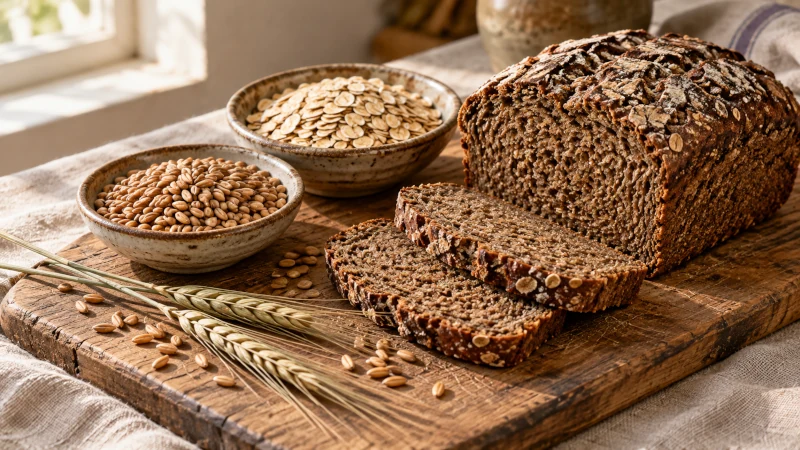
What rye has not been shown to do is make your arteries “more elastic,” treat heart disease, or prevent colon cancer on its own. This guide separates what the evidence supports from what it doesn’t. One caution before anything else: rye contains gluten, so it is off the menu if you have celiac disease [NIDDK, 2020].
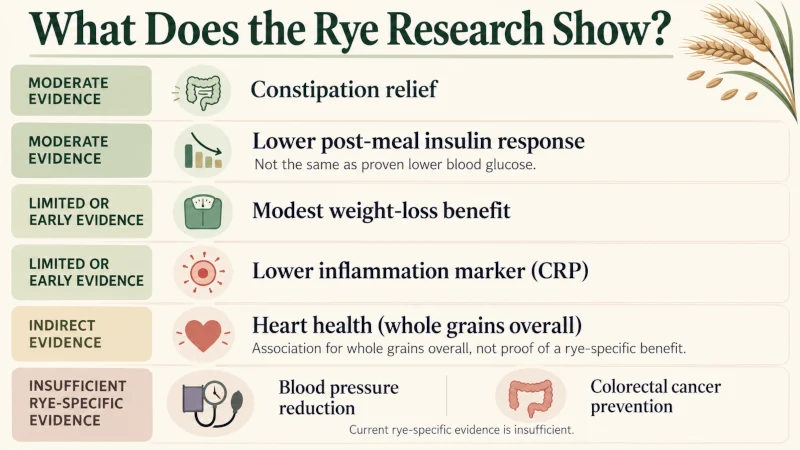
Health benefits of rye at a glance
| Possible benefit | Evidence | What the research shows |
| Easing mild constipation | Moderate — one small randomized trial plus consistent fiber evidence | Whole-grain rye bread sped up gut transit compared with white bread and with usual laxatives in 51 adults [Holma et al., 2010] |
| Lower insulin after meals | Moderate — several small crossover trials | Lower insulin, similar blood glucose vs. wheat bread [Leinonen et al., 1999]; described as well established in a 2018 review [Jonsson et al., 2018] |
| Weight and body fat | Limited — one well-run randomized trial | About 1 kg more weight loss over 12 weeks than refined wheat on a calorie-reduced diet [Iversen et al., 2021] |
| Lower inflammation (CRP) | Early | 28% lower C-reactive protein than wheat in the same trial [Iversen et al., 2021] |
| Heart disease | Indirect — observational data on whole grains in general | More whole grains linked with lower coronary heart disease risk [Aune et al., 2016]; rye-specific outcome data are scarce |
| Colorectal cancer | Insufficient for rye specifically | Whole grains overall linked to lower risk, but rye alone showed no significant association in a large Scandinavian cohort [Kyrø et al., 2013] |
| Blood pressure | Insufficient for rye specifically | Fits a DASH-style pattern; no rye-specific blood pressure trials found |
What’s in rye: grain vs. bread
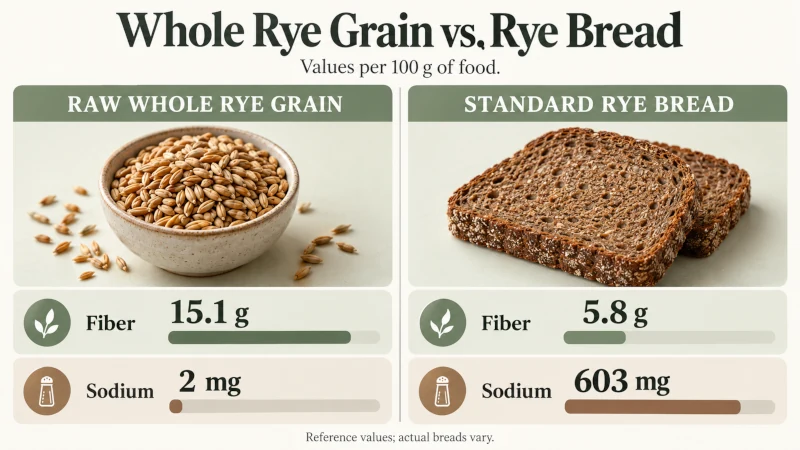
A 100-gram portion of raw whole rye grain provides about 338 calories, 10.3 g of protein, 1.6 g of fat, 75.9 g of carbohydrate and a striking 15.1 g of fiber, with almost no sodium (2 mg) [USDA FoodData Central]. It also carries magnesium, phosphorus, potassium, iron and zinc, plus B vitamins such as thiamin, niacin and B6, and a little selenium. Like other grains, it supplies essentially no vitamin C or vitamin A.
| Nutrient (per 100 g) | Whole rye grain, raw | Rye bread (USDA standard) |
| Calories | 338 kcal | 259 kcal |
| Protein | 10.3 g | 8.5 g |
| Carbohydrate | 75.9 g | 48.3 g |
| Fiber | 15.1 g | 5.8 g |
| Sodium | 2 mg | 603 mg |
| Magnesium | 110 mg | — |
| Iron | 2.63 mg | — |
| Zinc | 2.65 mg | — |
| Potassium | 510 mg | — |
| Selenium | 13.9 µg | — |
Sources: [USDA FoodData Central] (FDC 168884) and [USDA FoodData Central] (FDC 172684)
Notice the gap between the two columns. Bread is wetter than grain, so some dilution is expected, but the standard rye bread entry has far less fiber than the grain and about 603 mg of sodium per 100 g [USDA FoodData Central]. Many supermarket “rye” loaves also blend rye with wheat flour, so the ingredient list matters. A dense whole-rye or whole-kernel loaf is a very different food from a light deli rye.
Most of rye’s fiber is arabinoxylan, and rye contains more of the soluble form than wheat does. That soluble fiber binds water, which is one reason rye bread is so dense and filling [Zadeike et al., 2025].
Digestion: the best-supported benefit
If you want one reason to eat rye, this is it. In a Finnish trial, 51 adults with mild constipation were randomly assigned to whole-grain rye bread, white wheat bread, their usual laxatives, or one of two buttermilk groups [Whole Grains Council, 2010]. Those eating about 240 g of whole-grain rye bread a day had intestinal transit about 23% faster than the white-bread group and 41% faster than the laxative group, with roughly 1.4 more bowel movements a week [NutraIngredients, 2010]. The researchers reported no increase in gastrointestinal side effects [Holma et al., 2010].
That is a small, short study, and 240 g is a lot of bread — more than many people eat in a day. Still, it fits everything else known about high-fiber grains. If you try it, raise your fiber over a few weeks rather than overnight and drink plenty of water; going too fast is what causes gas, bloating and cramps [Mayo Clinic, 2025]. For other options, see these foods that help with constipation.
Rye, bloating and IBS
Rye is high in fructans, short-chain carbohydrates that the small intestine absorbs poorly. In people with irritable bowel syndrome, fructans can trigger bloating and pain — and researchers at Monash University suspect fructans, not gluten, explain much of the relief some people feel when they cut out wheat, rye and barley [Muir, 2017]. If rye bread consistently leaves you uncomfortable, that is a likely reason. Some sourdough breads are lower in these carbohydrates and may suit some people; a dietitian can help you test this properly, after celiac disease has been ruled out.
Blood sugar, insulin and fullness
Rye has an unusual effect that researchers have studied for decades. In a crossover trial in 20 healthy Finnish adults, whole-kernel rye bread produced a lower insulin response than wheat bread at several points between 45 and 150 minutes after eating — even though blood glucose was about the same [Leinonen et al., 1999]. A 2018 review of rye research called this insulin effect well established when rye is compared with wheat bread, and noted that several studies also show rye foods keep people fuller [Jonsson et al., 2018].
Two things to keep in mind. First, a lower insulin response does not mean rye leaves blood sugar untouched; rye bread is still a carbohydrate food, and if you have diabetes it counts toward your carb target like any other bread. Second, these are mostly short, single-meal studies in healthy people. Over the long term, observational studies link higher whole-grain intake in general to roughly 27–30% lower risk of type 2 diabetes [Zadeike et al., 2025]. If you are comparing grains for blood sugar, the research on oats and beta-glucan is worth a look too.
Weight: one well-run trial
The strongest weight evidence comes from the Swedish RyeWeight trial. Researchers randomized 242 adults with overweight or obesity to a calorie-reduced diet built around either high-fiber rye foods or refined wheat foods for 12 weeks. The rye group lost 1.08 kg more weight and 0.54 percentage points more body fat, and their C-reactive protein, a marker of inflammation, was 28% lower than in the wheat group. Other heart and metabolic risk markers showed no consistent differences [Iversen et al., 2021].
About a kilogram over three months is a modest edge, not a weight-loss strategy by itself. Interestingly, the rye group did not report consistently less appetite, so the mechanism is still unclear [Iversen, 2021 (thesis)]. The practical takeaway: if you are already cutting calories, choosing whole-grain rye over white bread may help a little.
Heart health and blood pressure
Older versions of this article claimed rye makes artery walls more elastic and “the blood more fluid.” We could not find human evidence for either claim, so they are gone. What does exist is strong observational evidence for whole grains as a group. A large 2016 meta-analysis of prospective studies found that every additional 90 g of whole grains a day was associated with a 19% lower risk of coronary heart disease and a 22% lower risk of cardiovascular disease [Aune et al., 2016]. Those are associations, not proof, and they cover all whole grains, not rye alone.
For rye specifically, early trials point to benefits for inflammation and blood lipids [Jonsson et al., 2018], and reviewers suggest much of any heart benefit runs through weight and cholesterol [Zadeike et al., 2025]. Swapping refined bread for whole-grain rye fits the advice in foods for healthy arteries.
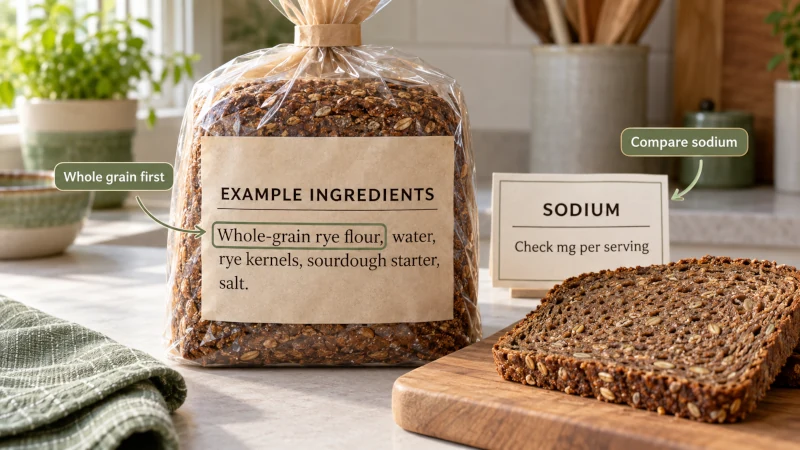
On blood pressure, the grain itself is nearly sodium-free, but bread is not. The DASH eating plan pairs whole grains with lower sodium, and cutting sodium to 1,500 mg a day lowers blood pressure further than 2,300 mg [NHLBI, n.d.]. At around 600 mg of sodium per 100 g of standard rye bread [USDA FoodData Central], a few slices add up, so compare labels if you have high blood pressure.
Does rye protect against colon cancer?
The honest answer is: not proven. The old version of this page said rye was “highly recommended” for people at high colon cancer risk and after surgery to avoid recurrence. The evidence doesn’t support that. In the Scandinavian HELGA cohort of about 108,000 adults followed for a median of 11 years, total whole-grain intake was linked to a lower rate of colorectal cancer, but whole-grain rye on its own showed no significant association [Kyrø et al., 2013]. Proposed mechanisms, such as faster transit and changes in bile acids or gut fermentation, rest mostly on small or laboratory studies [Zadeike et al., 2025].
Rye can be part of a fiber-rich, cancer-protective eating pattern, but it is not a substitute for screening. The CDC recommends colorectal cancer screening starting at age 45, and advises seeing a doctor for changes in bowel habits, blood in or on stool, persistent abdominal pain, unexplained weight loss, or low iron [CDC, 2026].
Who should be careful with rye
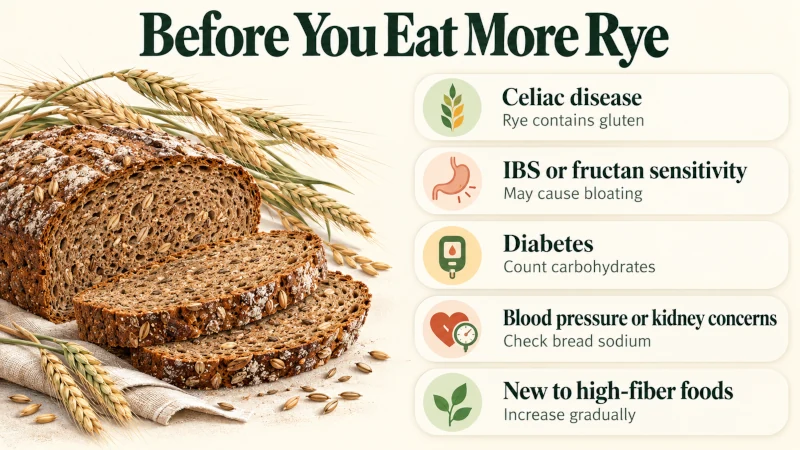
- Celiac disease. Rye contains gluten and must be avoided [NIDDK, 2020]. Products sold as gluten-reduced rye are not reliably safe for celiac disease [Zadeike et al., 2025].
- IBS or fructan sensitivity. Rye is high in fructans and may trigger bloating or pain [Muir, 2017].
- Diabetes. Count rye bread as a carbohydrate. If you take insulin or other glucose-lowering medicine, check with your care team before large diet changes.
- High blood pressure or kidney disease. Watch the sodium in rye breads and crackers [USDA FoodData Central] and follow any sodium or potassium limits your clinician gives you.
- Anyone new to high-fiber foods. Increase slowly and drink fluids to avoid gas and cramps [Mayo Clinic, 2025].
- Ergot. Rye is the cereal most prone to ergot, a fungus that produces toxic alkaloids [Zadeike et al., 2025]. Ergot poisoning (ergotism) is rare today, and the EU sets maximum ergot levels for rye milling products [Food Safety News, 2021]. Commercially milled rye is screened; take more care with home-grown or unsorted grain.
- Pregnancy and breastfeeding. We found no rye-specific warnings for pregnancy or breastfeeding in the sources reviewed; the gluten, fiber and sodium points above still apply. Ask your clinician or dietitian if you are unsure.
Medication interactions: we found no documented drug interactions for rye eaten as food in the sources reviewed.
How to choose and use rye
Read the label. Look for “whole rye,” “whole-grain rye flour” or “rye meal” listed first in the ingredients, the same rule Mayo Clinic gives for any whole-grain bread [Mayo Clinic, 2025]. Lighter “deli rye” loaves often list wheat flour first, so check.
Go dense. Whole-kernel loaves, pumpernickel-style breads and thin rye crispbreads keep more of the grain intact. Sourdough rye may be gentler if wheat-type breads bother you.
Try it beyond bread. Rye flakes make a hearty porridge or muesli base. Whole rye berries can be soaked overnight and simmered until tender, like wheat berries; a pressure cooker shortens the time.
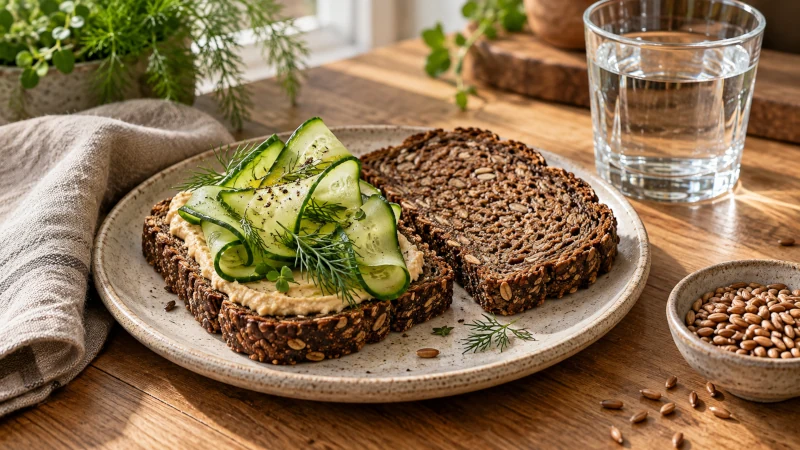
Build a balanced plate. Rye crispbread with hummus from chickpeas, or rye toast with eggs or yogurt and fruit, adds protein and the vitamin C the grain lacks.
Realistic expectations
Rye is a good everyday grain, not a treatment. Expect easier, more regular bowel movements within days to weeks if fiber was low before, steadier fullness after meals, and perhaps a small help with weight if you are already eating less. Do not expect it to lower blood pressure, clear arteries or prevent cancer on its own.

| HEALTH DISCLAIMER: This article is for general education and is not medical advice. It does not diagnose, treat, cure or prevent any disease. Talk with a doctor, registered dietitian or pharmacist before making major diet changes, especially if you have celiac disease, IBS, diabetes, high blood pressure, kidney disease, are pregnant or breastfeeding, or take prescription medicine. Seek prompt care for blood in your stool, a lasting change in bowel habits, severe or persistent abdominal pain, or unexplained weight loss. In an emergency, call 911 or your local emergency number. |
Frequently Asked Questions
Is rye healthier than wheat?
Compared with refined white wheat bread, whole-grain rye has more fiber and tends to produce a smaller insulin rise [Leinonen et al., 1999]. Compared with whole wheat, the differences are smaller; both are whole grains, and both are linked to better health in observational research [Aune et al., 2016].
Does rye bread contain gluten?
Yes. Rye is one of the three gluten grains, with wheat and barley, so people with celiac disease must avoid it [NIDDK, 2020]. Rye bread rises less than wheat bread, but “less gluten” is not “gluten-free.”
Is rye bread good for people with diabetes?
It can fit, but it is still a carbohydrate. Rye’s lower insulin response is a plus [Jonsson et al., 2018]; portion size and what you eat with it matter more. Count it toward your carb target and check your own glucose response.
How much rye bread helps with constipation?
The trial that showed benefit used about 240 g of whole-grain rye bread a day [NutraIngredients, 2010]. Most people should build up gradually and drink more water [Mayo Clinic, 2025]. Constipation that is new, severe or comes with bleeding needs a medical check [CDC, 2026].
Why does rye bread make me bloated?
Rye is high in fructans, which can cause bloating in people with IBS [Muir, 2017]. Eating too much fiber too fast can also do it [Mayo Clinic, 2025].
Should I worry about ergot in rye bread?
For commercially milled rye, generally no. Ergot poisoning is rare today, and the EU sets limits for ergot alkaloids in rye milling products [Food Safety News, 2021].
References
- U.S. Department of Agriculture. FoodData Central, SR Legacy: Rye grain. View source
- U.S. Department of Agriculture. FoodData Central, SR Legacy: Bread, rye View source
- Holma R, et al. Constipation is relieved more by rye bread than wheat bread or laxatives without increased adverse gastrointestinal effects. View source
- Whole Grains Council. Rye Bread Replaces Laxatives View source
- NutraIngredients. Rye beats laxatives for constipation relief: View source
- Leinonen K, Liukkonen K, Poutanen K, Uusitupa M, Mykkänen H. Rye bread decreases postprandial insulin response but does not alter glucose response in healthy Finnish subjects. View source
- Jonsson K, Andersson R, Bach Knudsen KE, et al. Rye and health – Where do we stand and where do we go? Trends in Food Science & Technology. View source
- Iversen KN, Carlsson F, Andersson A, et al. A hypocaloric diet rich in high fiber rye foods causes greater reduction in body weight and body fat than a diet rich in refined wheat: a parallel randomized controlled trial in adults with overweight and obesity (the RyeWeight study). View source
- Iversen KN. High fiber rye foods decrease body weight and body fat and affect metabolic risk markers. View source
- Aune D, Keum N, Giovannucci E, et al. Whole grain consumption and risk of cardiovascular disease, cancer, and all cause and cause specific mortality: View source
- Kyrø C, Skeie G, Loft S, et al. Intake of whole grains from different cereal and food sources and incidence of colorectal cancer in the Scandinavian HELGA cohort. View source
- Zadeike D, Copperstone C, Aleksandrova O, et al. Rye (Secale cereale L.) revisited: nutritional composition, functional benefits, and role in sustainable diets. View source
- National Institute of Diabetes and Digestive and Kidney Diseases. Eating, Diet, & Nutrition for Celiac Disease. View source
- Muir J. Gut feeling: Is a carbohydrate called fructan giving gluten a bad rap? Monash Lens, Monash University. View source
- Mayo Clinic Staff. Dietary fiber: Essential for a healthy diet. View source
- National Heart, Lung, and Blood Institute. DASH Eating Plan. View source
- Centers for Disease Control and Prevention. Symptoms of Colorectal Cancer. View source
- Food Safety News. Europe sets new ergot alkaloids limits. View source


