
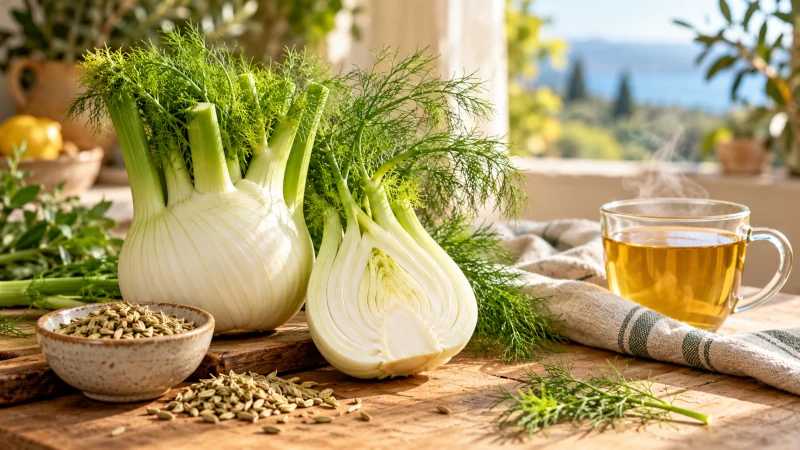
If you want fennel to do one thing well, ask it to help with period cramps or an overfull, gassy stomach. Those are the two fennel health benefits with real support behind them — period pain from a cluster of small clinical trials, bloating from centuries of use that European medicines regulators formally recognize. Most of the other claims you’ll see, from blood-sugar control to “detox,” come from test tubes and lab animals.
The other thing to know up front: the crunchy bulb you slice into a salad and the seeds, extracts, and oils sold as remedies are not the same thing. Fennel as a vegetable is a low-risk food for almost everyone. Concentrated fennel is a different story, and babies, pregnant people, and breastfeeding parents need more care with it.
Bulb, seeds, oil: three very different “fennels”
Fennel (Foeniculum vulgare) belongs to the carrot family, alongside dill, anise, celery, and caraway. Its sweet, licorice-like flavor comes mostly from anethole, the dominant compound in the plant’s essential oil [Badgujar et al., 2014]. The same oil also contains smaller amounts of estragole, which matters for safety and comes up again below.
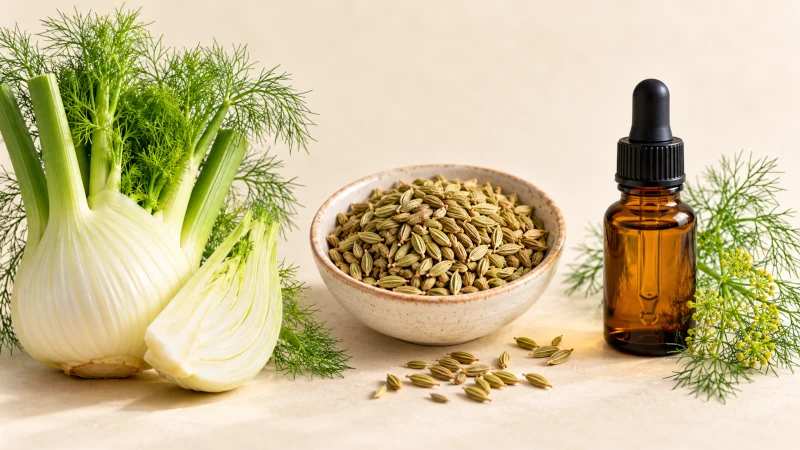
| Fennel bulb | Fennel seeds, extracts, oil | |
| What it is | The swollen leaf base of Florence fennel | Seeds are the dried fruit; extracts and essential oil are concentrated from them |
| How it’s used | A vegetable — raw, roasted, braised | A spice, a tea, or a medicinal product (capsules, drops) |
| Strength | Mild; mostly fiber, water, minerals | Much higher concentration of anethole and estragole |
| Where the evidence sits | Nutrition | Period pain, bloating, and nearly all safety warnings |
Fennel bulb nutrition
Per 100 grams of raw bulb, USDA data list the following [USDA FoodData Central]. Percent Daily Values are calculated against standard adult label values.
| Nutrient | Per 100 g raw bulb | % Daily Value |
| Calories | 31 kcal | — |
| Carbohydrate | 7.3 g | — |
| Fiber | 3.1 g | ≈11% |
| Protein | 1.24 g | — |
| Fat | 0.2 g | — |
| Potassium | 414 mg | ≈9% |
| Vitamin C | 12 mg | ≈13% |
| Folate | 27 µg | ≈7% |
| Calcium | 49 mg | ≈4% |
| Iron | 0.73 mg | ≈4% |
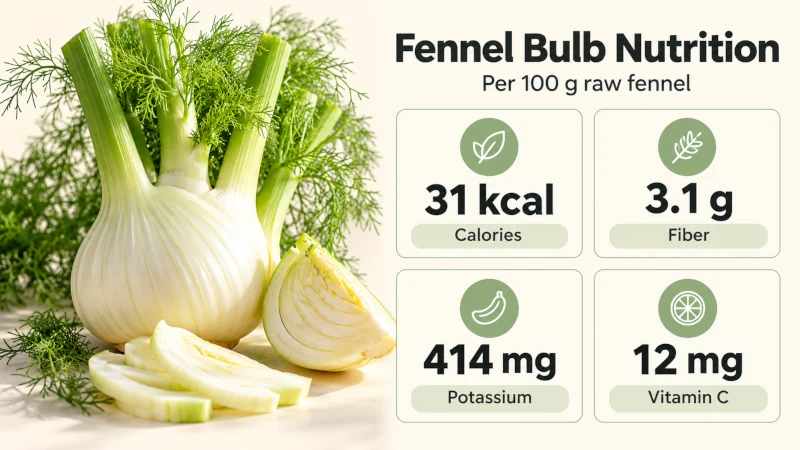
That’s a respectable profile for a vegetable that’s about 90% water: a little fiber, a fair amount of potassium, and some vitamin C and folate for very few calories. It won’t carry your nutrition on its own, but as a regular part of a vegetable-heavy diet it pulls its weight.
Fennel health benefits, graded by the evidence
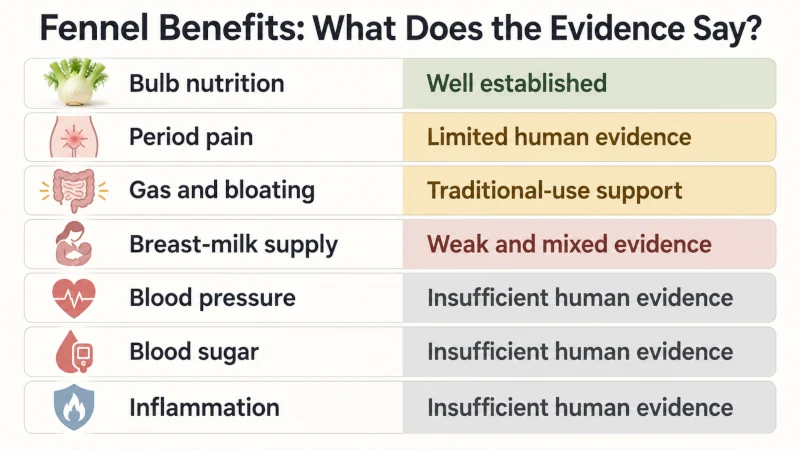
Here is where each common claim actually stands.
| Claim | Best available evidence | Strength |
| Eases period pain | Meta-analysis of 12 small RCTs, all from Iran | Limited but consistent |
| Relieves gas and bloating | Long traditional use; recognized by the EMA; lab data on muscle relaxation | Traditional / regulator-recognized |
| Boosts breast-milk supply | Small studies of mixed herbal teas | Weak and mixed |
| Lowers blood pressure | Animal and lab studies | Insufficient in humans |
| Lowers blood sugar | Diabetic-rat studies | Insufficient in humans |
| Reduces inflammation | Mouse and cell studies | Insufficient in humans |
| Nutrition (bulb) | USDA food composition data | Well established |
Period pain: the strongest human evidence
A 2020 systematic review pooled 12 randomized trials of fennel for primary dysmenorrhea — ordinary menstrual cramps without an underlying condition. Across seven trials comparing fennel with standard drugs (mostly mefenamic acid, one ibuprofen), pain relief came out about the same. Against placebo, fennel did better [Lee et al., 2020].
Before you swap out your ibuprofen, read the fine print. Every trial was run in Iran, most were small, the placebo results varied wildly between studies, and the authors found signs that small positive studies were more likely to be published. They rated the overall robustness as low. Only three trials even checked for side effects.
The products tested were also stronger than tea: 2% fennel-oil drops taken every few hours, or capsules of 30–46 mg extract several times a day, usually for the first few days of a period. If NSAIDs work for you, there’s no reason to switch. If you can’t take them, fennel is one of the better-studied herbal options to raise with your clinician. It is not a treatment for endometriosis, fibroids, or other causes of pelvic pain.
Gas and bloating: long tradition, regulator-recognized
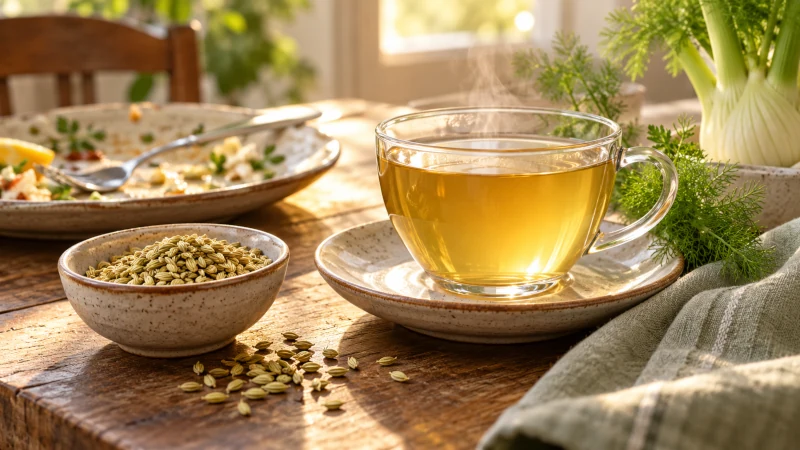
This is fennel’s oldest job, and the European Medicines Agency lists it as a traditional herbal medicine for “mild, spasmodic gastro-intestinal complaints including bloating and flatulence” [EMA, 2024]. “Traditional” is a specific regulatory category: it means long, safe-looking use, not proof from controlled trials. Lab and animal research does show fennel compounds relaxing smooth muscle, which fits the tradition [Badgujar et al., 2014].
So a cup of fennel tea, or a pinch of chewed seeds, after a heavy meal is a reasonable, low-risk thing to try for occasional bloating. For a broader look at which herbs have better evidence for which gut problem, see our guide to herbs for stomach issues. If bloating keeps coming back, it’s worth looking at the usual IBS trigger foods — and at the red flags further down.
Breast-milk supply: popular, but the evidence is thin
Fennel is a classic ingredient in “nursing teas.” The supporting research is small and mostly tests herbal blends, so it’s hard to credit fennel alone. The U.S. National Library of Medicine’s lactation database also records two newborns who became unwell after their mothers drank more than two liters a day of an herbal tea containing fennel, anise, licorice, and goat’s rue; both babies recovered once the tea stopped [LactMed].
European regulators go further and don’t recommend medicinal fennel during breastfeeding at all, noting that anethole passes into breast milk [EMA, 2024]. Fennel in normal food amounts is a different matter. If supply is the worry, a lactation consultant will get you further than any tea. Our fennel seeds guide covers the galactagogue research in more detail.
Blood pressure, blood sugar, inflammation: still lab and animal work
A 2025 review of fennel’s cardiovascular effects found plenty of encouraging lab and animal results — blood-vessel relaxation, a mild diuretic effect, lower blood pressure in hypertensive rats — and said plainly that these remain largely unconfirmed in humans [Zahi et al., 2025]. Blood-sugar findings come from diabetic rats [Badgujar et al., 2014], and anti-inflammatory effects from mouse models [Lee et al., 2015].
Interesting biology, not a treatment. If you take medication for blood pressure or diabetes, keep taking it.
What fennel won’t do
- Help you lose weight on its own. The bulb is low in calories and filling, which helps any eating plan, but no trial shows fennel causes weight loss.
- Prevent or treat cancer. Anethole has shown activity in cell and animal studies only.
- “Detox” you. Your liver and kidneys do that job, and fennel doesn’t measurably speed it up.
- Replace a diagnosis. Persistent gut symptoms, severe periods, or high blood pressure or blood sugar deserve proper evaluation.
How to use fennel
As food
Shave the bulb thin for a salad with lemon and olive oil, roast wedges until the edges caramelize, or braise it in stock. The feathery fronds work like dill. This is the safest way to enjoy fennel, and the only way that adds meaningful nutrition.
As tea
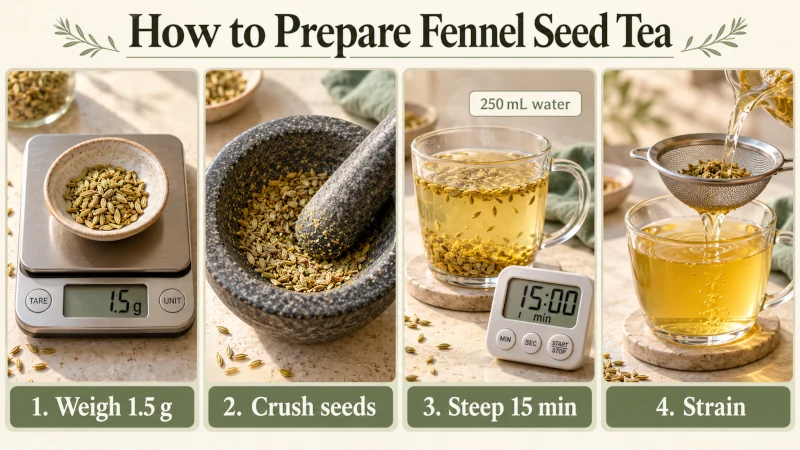
The EMA’s traditional-use monograph sets the adult dose at 1.5 grams of freshly crushed seed steeped in 250 mL (about a cup) of boiling water for 15 minutes, up to three times a day, for no more than two weeks at a stretch [EMA, 2024]. Crushing just before brewing matters, and a small kitchen scale is more reliable than guessing with a spoon. Drinking fennel tea now and then is food-level use; daily medicinal use for weeks is not.
Capsules and essential oil
These are concentrated, and dosing varies by product. The period-pain trials used specific standardized preparations that aren’t easy to match at home. Don’t improvise doses of fennel essential oil, never give it to children, and check with a pharmacist if you take any prescription medicine.
Side effects, interactions, and who should avoid fennel
Food amounts of fennel are well tolerated by most people. The cautions below mostly concern teas taken medicinally, extracts, and essential oil.
Side effects
- Allergy. Reactions can affect the skin or breathing. Avoid fennel if you’re allergic to related plants (anise, caraway, celery, coriander, dill), to anethole, or to mugwort pollen, which cross-reacts [EMA, 2024].
- Sun sensitivity. LactMed advises avoiding excessive sunlight or UV exposure while using fennel [LactMed].
- Stomach upset is possible with large amounts, as with many herbs.
Possible medication interactions
No interactions are formally established in people, but the lab and animal evidence raises a few flags worth taking seriously:
- Drugs processed by the liver enzyme CYP3A4 (including several calcium-channel blockers, some beta-blockers, and some diuretics): fennel inhibits this enzyme in lab studies, which could raise drug levels [Zahi et al., 2025].
- Blood thinners and antiplatelet drugs: fennel oil and anethole reduced platelet clumping in lab and animal work, so a theoretical bleeding risk exists [Zahi et al., 2025].
- Hormone-sensitive conditions and hormonal drugs: fennel extract had estrogen-like effects in female rats [Badgujar et al., 2014]. If you have estrogen-receptor-positive breast cancer, endometriosis, or fibroids, or take tamoxifen or other hormone therapy, ask your specialist before using concentrated fennel.
- Ciprofloxacin: one older rat study reported reduced absorption of this antibiotic when given with fennel [Zhu et al., 1999]. Whether that matters in people is unknown; ask your pharmacist.
Pregnancy, breastfeeding, babies and children
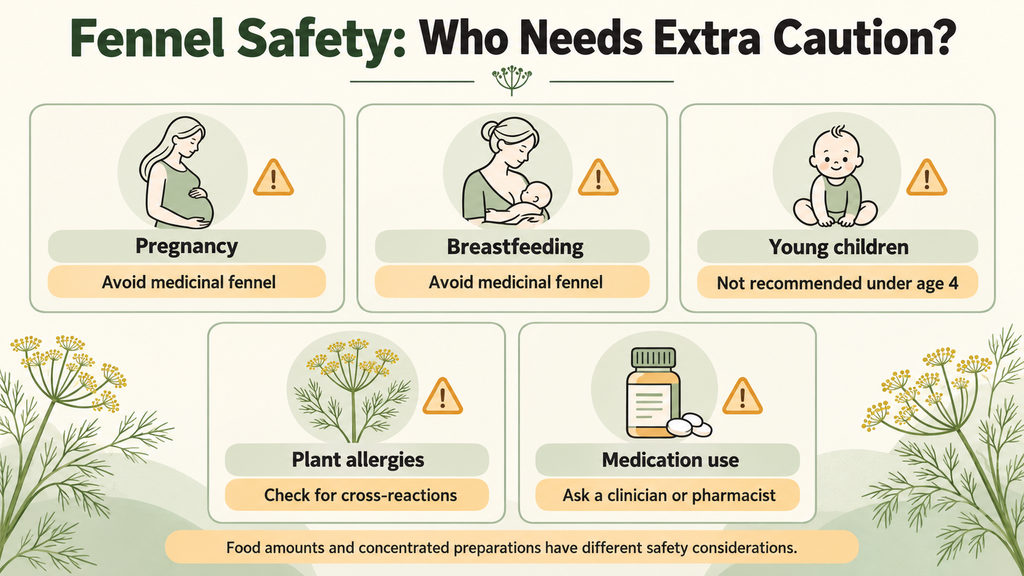
European regulators do not recommend medicinal fennel during pregnancy or breastfeeding because safety hasn’t been established; a mouse study found fennel-seed extract harmful to developing embryos at high doses, and estragole intake should be kept very low in these groups [EMA, 2024]. Fennel as a vegetable or a kitchen spice is not the concern.
Fennel tea is a traditional colic remedy in many families, so this part matters. The EMA does not recommend fennel preparations for children under 4, and for ages 4 to 12 limits them to short courses with strict estragole limits [EMA, 2024]. Not every expert agrees on how big the estragole risk really is: one Italian research group argues that the whole tea, with its protective plant compounds, is far less concerning than pure estragole tested in rodents [Gori et al., 2012]. That debate is unsettled — which is exactly why the safer course is to talk to your pediatrician before giving fennel tea to a baby or young child.
When to see a doctor
Fennel is for mild, occasional discomfort. Skip the tea and get checked if you notice:
- Bloating or abdominal pain that lasts more than a couple of weeks, keeps returning, or wakes you at night
- Blood in your stool, black or tarry stools, vomiting, fever, or unexplained weight loss
- Period pain that stops you working or studying, is getting worse, or doesn’t ease with usual pain relievers
- Symptoms in a baby who has been given fennel tea, such as poor feeding, unusual sleepiness, or floppiness
Call 911 for trouble breathing, throat tightness, or swelling of the lips, tongue, or face after fennel — signs of a serious allergic reaction.
| HEALTH DISCLAIMER: This article is general health information, not medical advice, and it can’t account for your history, medications, or conditions. Fennel can cause allergic reactions and may interact with some medicines. Talk with your doctor, pharmacist, or another qualified clinician before using fennel tea medicinally, fennel supplements, or fennel essential oil — especially if you are pregnant or breastfeeding, caring for an infant or young child, taking prescription medication, or living with a hormone-sensitive condition. Do not stop or change a prescribed treatment because of anything you read here. If you have trouble breathing or facial swelling after using fennel, call 911. |
Frequently Asked Questions
Is it safe to drink fennel tea every day?
An occasional cup is food-level use and fine for most adults. Daily medicinal use is a different thing: European regulators suggest no more than three cups a day for up to two weeks, and they don’t recommend medicinal fennel during pregnancy, breastfeeding, or for children under 4. If symptoms keep you reaching for it every day, that’s a reason to see a clinician.
Does fennel really help period cramps?
Probably, for some people. A 2020 meta-analysis found fennel eased primary period pain about as well as common anti-inflammatory drugs and better than placebo, but the trials were small, all from one country, and judged low in robustness. It’s a reasonable option to discuss if NSAIDs don’t suit you.
Can I give fennel tea to my baby for colic?
Not without your pediatrician’s input. The EMA doesn’t recommend fennel preparations under age 4 because of estragole and a lack of safety data. Some researchers think the risk is overstated, but with an infant, the cautious route is the right one.
Is fennel safe in pregnancy?
Fennel as a vegetable or a seasoning is fine. Medicinal teas, extracts, and essential oil are not recommended in pregnancy because their safety hasn’t been established. Ask your OB or midwife before using anything beyond food amounts.
Which is healthier, the bulb or the seeds?
They do different jobs. The bulb is the nutritious part — fiber, potassium, vitamin C, very few calories. The seeds are what’s used for bloating and period pain, and they’re also where the safety cautions apply.
References
- Badgujar SB, Patel VV, Bandivdekar AH. Foeniculum vulgare Mill: a review of its botany, phytochemistry, pharmacology, contemporary application, and toxicology. BioMed Research International. View source
- Lee HW, Ang L, Lee MS, Alimoradi Z, Kim E. Fennel for reducing pain in primary dysmenorrhea: a systematic review and meta-analysis of randomized controlled trials. View source
- European Medicines Agency, Committee on Herbal Medicinal Products. View source
- Drugs and Lactation Database (LactMed). Fennel. Bethesda (MD): National Institute of Child Health and Human Development. View source
- Zahi A, Rani A, Aktary N, Rahman M, Mekhfi H, Ziyyat A, Park MN, Legssyer A, Kim B. View source
- Lee HS, Kang P, Kim KY, Seol GH. Foeniculum vulgare Mill. View source
- Gori L, Gallo E, Mascherini V, Mugelli A, Vannacci A, Firenzuoli F. Can estragole in fennel seed decoctions really be considered a danger for human health? A fennel safety update. View source
- U.S. Department of Agriculture, Agricultural Research Service. View source


