
If a meal reliably leaves you bloated, cramping, or rushing to the bathroom, food is probably part of your IBS picture. But the real list of IBS foods to avoid is shorter, and far more personal, than most articles admit. Irritable bowel syndrome (IBS) is a long-term disorder of how the gut and brain communicate, and its main features are abdominal pain tied to bowel movements along with diarrhea, constipation, or both [ACG, 2021]. Certain foods can set off symptoms, but the foods that bother you may sit just fine with someone else who has the same diagnosis.
That matters, because the worst thing you can do is cut out dozens of foods at once and stay that way. The approach with the most evidence behind it is a short, structured trial of a low-FODMAP diet, done with a dietitian where possible, followed by carefully adding foods back to learn your personal triggers [AGA, 2022]. FODMAPs are a group of poorly absorbed carbohydrates (the letters stand for fermentable oligosaccharides, disaccharides, monosaccharides, and polyols) that pull water into the gut and get fermented by bacteria, producing gas and stretching the bowel — a common path to IBS pain and bloating [ACG, 2021].
Below are the eight categories most often linked to symptoms, what the evidence actually says about each, and how to tell which ones are yours.
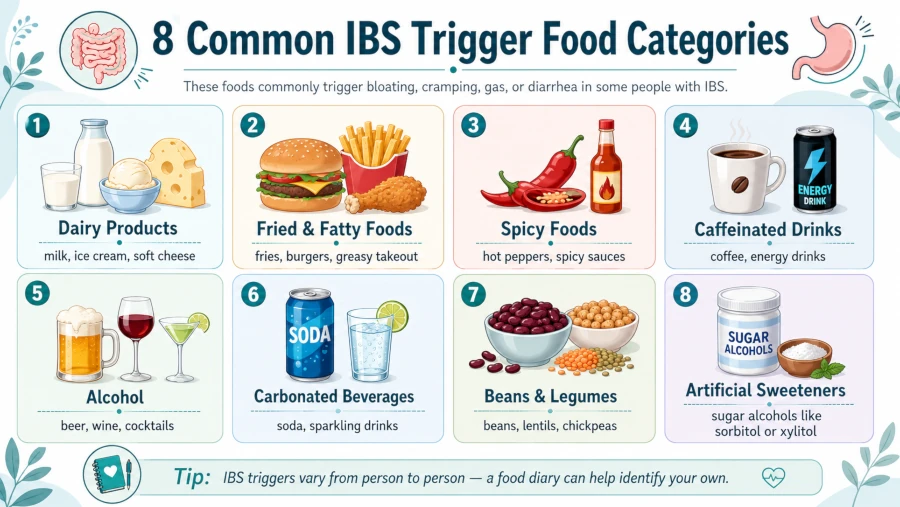
The short answer: there’s no universal “banned” list
Different foods trigger different people, and many people with IBS tolerate “trigger” foods in small portions even when a large serving causes trouble. So treat the list below as a menu of suspects, not a list of foods you must give up forever. Cutting everything indefinitely raises your risk of missing nutrients and developing an unhealthy relationship with food, which is exactly why guidelines push for reintroduction rather than permanent restriction [AGA, 2022].
The 8 IBS foods to avoid most likely to trigger symptoms
The first four foods here, plus the sweeteners further down, are mostly a FODMAP story. The others work through fat, stimulants, or gut sensitivity.
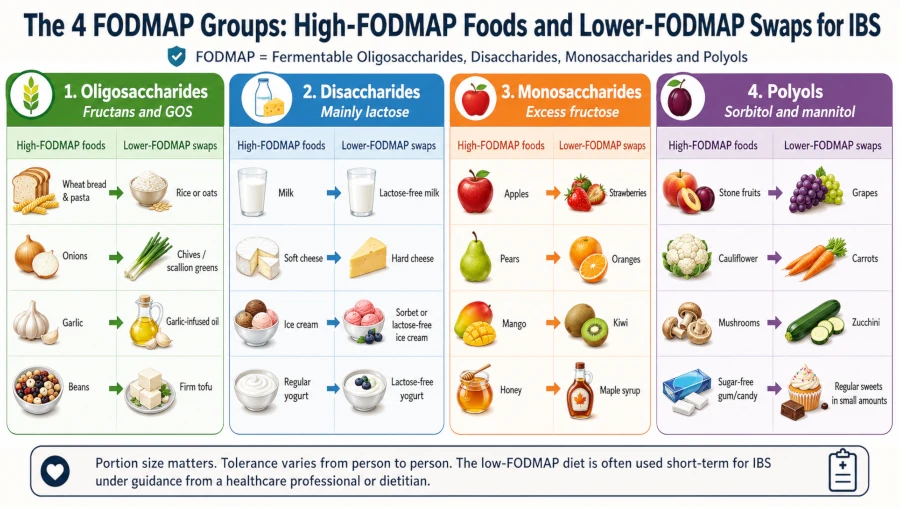
1. Onions, garlic, and other high-fructan vegetables
Onion and garlic are among the most common culprits because they’re rich in fructans, a type of FODMAP, and they hide in sauces, stocks, and seasoning blends. Other higher-FODMAP vegetables include cauliflower, mushrooms, and snow peas [Monash University]. You don’t have to lose the flavor: garlic-infused oil carries the taste without the fructans, since fructans don’t dissolve into oil.
2. Wheat and rye in large amounts
Bread, pasta, and many baked goods made from wheat and rye are significant fructan sources, especially in big portions [Monash University]. For most people with IBS the issue is the fructan carbohydrate, not gluten itself, which is why a strict gluten-free diet isn’t routinely recommended unless celiac disease has been ruled out [ACG, 2021]. Sourdough, spelt in small amounts, oats, and rice-based grains are often easier to tolerate.
3. Beans, lentils, and other legumes
Beans, chickpeas, and lentils contain galacto-oligosaccharides (GOS), FODMAPs that ferment readily and produce gas. This is the legitimate kernel inside the old advice to “avoid legumes.” But canned, well-rinsed lentils and chickpeas in small portions are lower in FODMAPs than the dried, home-cooked versions, so a modest serving may work for you [Monash University].
4. Milk and lactose-heavy dairy
Lactose is a FODMAP, and people with IBS who are also lactose intolerant often react to milk, soft cheeses, and ice cream with bloating, cramps, or diarrhea [NIDDK]. The fix isn’t dropping all dairy — it’s choosing lactose-free milk, hard aged cheeses (naturally very low in lactose), and lactose-free yogurt. Skip the older advice to switch to raw or “untreated” goat milk: goat’s milk still contains lactose, and unpasteurized milk carries a real risk of foodborne infection.
5. Fried and high-fat foods
Large, fatty, and fried meals can stimulate strong colon contractions and speed things up, which may bring on pain or diarrhea in sensitive people [Alberta Health Services]. Practical targets here are deep-fried foods, heavy cream sauces, and very large portions of fatty or processed meat. This — not red meat by itself — is the better-supported reason a steak dinner sometimes backfires, so there’s no need to go fully plant-based. Smaller portions and gentler cooking methods like baking, grilling, or steaming often help. If diarrhea is your main problem, you may find relief from foods that help firm things up.
6. Caffeine and alcohol
Caffeine stimulates activity in the colon, and both caffeine and alcohol are frequently reported triggers, particularly for people whose IBS leans toward diarrhea [Alberta Health Services]. You may not need to quit entirely. Many people do better by capping coffee at one cup, switching to lower-caffeine options later in the day, and keeping alcohol occasional rather than daily.
7. Sugar-free sweeteners and fizzy drinks
Sugar alcohols such as sorbitol, mannitol, and xylitol are polyols — the “P” in FODMAP — with a mild laxative, gas-producing effect [ACG, 2021]. They turn up in sugar-free gum, “diet” candy, and some protein bars and drinks. Carbonated beverages can add to bloating on top of that. Check labels for ingredients ending in “-ol,” and if you chew a lot of gum, that alone can be the hidden trigger.
8. Spicy foods
Chili heat comes from capsaicin, which acts on TRPV1 pain receptors in the gut. People with IBS have more of these receptors in the bowel lining, and that extra density tracks with how much abdominal pain they feel — a likely reason a spicy meal can spark burning, cramping, and urgency [Akbar et al., 2008]. Interestingly, a few small studies have tested whether regular, gradual chili exposure can dull that response over time, with mixed results [capsaicin review, 2022]. The honest takeaway: if spice reliably hurts, ease off; for some people it’s the chili oil and other ingredients in the dish, not the heat alone.
A note on fiber: not all fiber is a trigger
Fiber gets a bad reputation in IBS, but the type matters. Insoluble fiber — wheat bran, the skins of some grains and seeds — can worsen gas, bloating, and loose stools in sensitive people. Soluble fiber, found in oats, psyllium, and the flesh of many fruits, tends to help, and guidelines specifically favor it [ACG, 2021]. If constipation is your main issue, add fiber slowly — about 2 to 3 grams a day — because piling it on quickly causes the very gas you’re trying to avoid [NIDDK]. For more on the gentler end of this spectrum, see the best herbs and options for constipation.
How to find your own triggers (without cutting everything)
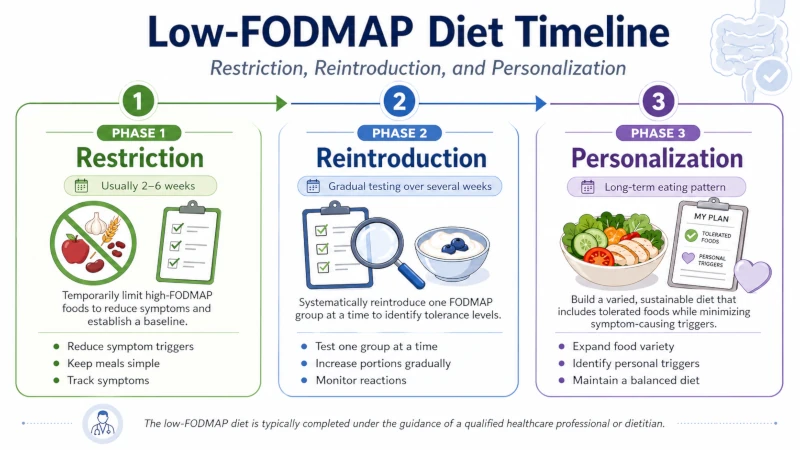
A food and symptom diary is the simplest starting point: write down what you eat and how you feel for two to four weeks, and patterns often surface. From there, the structured low-FODMAP approach has three phases [AGA, 2022]:
- Restriction — reduce high-FODMAP foods for no more than 4 to 6 weeks to see if symptoms ease.
- Reintroduction — add FODMAP groups back one at a time to find which ones you react to, and at what amount.
- Personalization — settle into the least restrictive diet that keeps you comfortable.
The first phase alone is not meant to be permanent. Because the full diet is complex and can lead to nutrient gaps, professional guidelines recommend doing it with a registered dietitian when you can [ACG, 2021].
What to eat instead
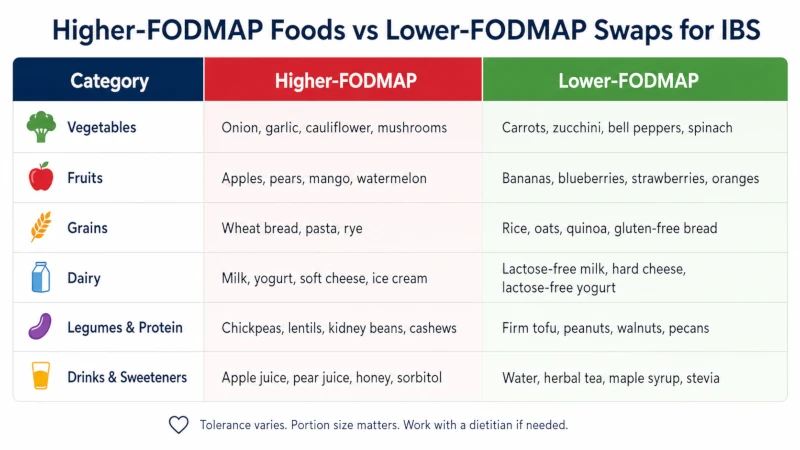
Removing foods is only half the job. Most people with IBS feel better building meals around lower-FODMAP, easy-to-digest staples.
| If you’re cutting back on… | Often easier to tolerate |
|---|---|
| Onion and garlic | Garlic-infused oil, chives, the green tops of scallions |
| Wheat bread and pasta | Oats, rice, sourdough, gluten-free grains |
| Beans and lentils | Small portions of canned, rinsed chickpeas or firm tofu |
| Regular milk and soft cheese | Lactose-free milk, hard aged cheeses, lactose-free yogurt |
| High-FODMAP fruit (apple, pear) | Oranges, grapes, strawberries, ripe banana in moderation |
For a fuller list of foods that tend to sit better with a sensitive gut, and how this all fits next to an anti-inflammatory eating pattern, see those guides.
Who should be cautious with elimination diets
Restrictive diets aren’t right for everyone. Talk to a healthcare professional before starting if you are pregnant or breastfeeding, if the diet is for a child or teen, or if you have any history of disordered eating, since restriction can be physically and psychologically risky in these situations. Older adults and anyone who is underweight or already struggling to meet nutritional needs should also get guidance first. The goal is fewer symptoms, not the longest possible list of forbidden foods.
Red flags: when IBS symptoms need a doctor
IBS is real and treatable, but some symptoms are not typical of it and point toward conditions like inflammatory bowel disease, celiac disease, or colorectal cancer. See a healthcare professional promptly if you have any of these “alarm features” [ACG, 2021; IFFGD]:
- Rectal bleeding or black, tarry stools
- Unexplained weight loss
- Iron-deficiency anemia
- Symptoms that wake you from sleep, including nighttime diarrhea
- A family history of bowel cancer, IBD, or celiac disease
- New IBS-type symptoms that start after age 50 [CAG, 2019]
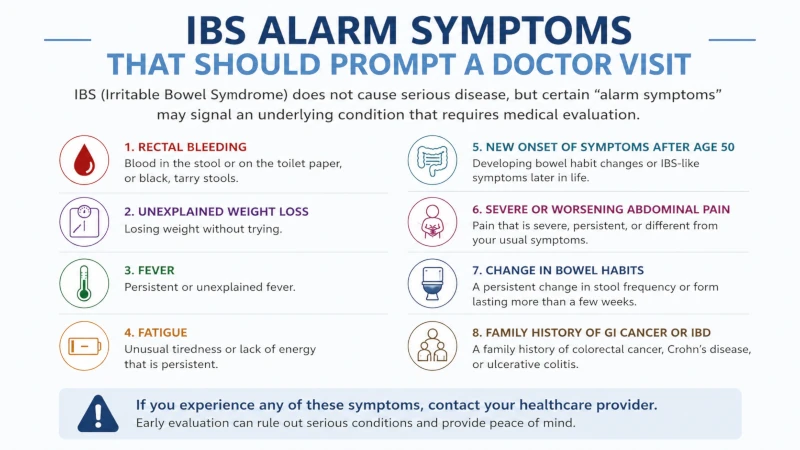
Get urgent care for severe or persistent abdominal pain, ongoing vomiting, signs of dehydration, or significant blood in the stool. None of these belong to a routine IBS flare, and food changes are not the answer for them.
Health Disclaimer: This article is for general education and is not a substitute for personalized medical advice, diagnosis, or treatment. IBS symptoms can overlap with other conditions, so talk with a qualified healthcare professional before making major diet changes, starting an elimination diet, or using supplements — especially if you are pregnant, nursing, managing another health condition, or caring for a child. If you notice any of the red-flag symptoms above, contact a healthcare provider rather than relying on diet changes alone.
Frequently Asked Questions
What is the single worst food for IBS?
There isn’t one. Triggers are individual, though onions, garlic, wheat in large amounts, and lactose-heavy dairy come up most often because they’re high in FODMAPs [ACG, 2021]. A food diary plus a structured low-FODMAP trial is the reliable way to find yours.
Do I have to avoid these foods forever?
Usually not. The low-FODMAP diet is designed as a short test followed by reintroduction, so most people end up avoiding only a few specific foods, and often only in larger amounts [AGA, 2022].
Is it gluten or wheat that bothers people with IBS?
For most, it’s the fructan carbohydrate in wheat, not gluten. A gluten-free diet isn’t routinely recommended for IBS unless celiac disease has been ruled out first [ACG, 2021].
Should everyone with IBS give up dairy?
No. The issue is lactose, and only for people who are lactose intolerant. Lactose-free milk and hard aged cheeses are usually well tolerated [NIDDK].
Can I drink coffee if I have IBS?
Many people can, in moderation. Caffeine stimulates the colon and is a common trigger, so a smaller amount earlier in the day is a sensible test before cutting it out completely [Alberta Health Services].
References
- Lacy BE, Pimentel M, Brenner DM, et al. ACG Clinical Guideline: Management of Irritable Bowel Syndrome. Am J Gastroenterol. 2021;116(1):17–44. View source
- American Gastroenterological Association. AGA Clinical Practice Update on the Role of Diet in IBS: Expert Review. Gastroenterology. 2022. View source
- NIDDK (NIH). Eating, Diet, & Nutrition for Irritable Bowel Syndrome. View source
- Akbar A, Yiangou Y, Facer P, et al. Increased capsaicin receptor TRPV1-expressing sensory fibres in IBS and their correlation with abdominal pain. Gut. 2008;57(7):923–929. View source
- Dietary capsaicin in gastrointestinal health and disease (research review). 2022. View source
- Monash University. The Low FODMAP Diet. View source
- Canadian Association of Gastroenterology. Clinical Practice Guideline for the Management of IBS. 2019. View source
- Alberta Health Services. Nutrition Guideline: GI Care — Irritable Bowel Syndrome. View source
- International Foundation for Gastrointestinal Disorders (IFFGD). Changes You Should Not Ignore. View source
