
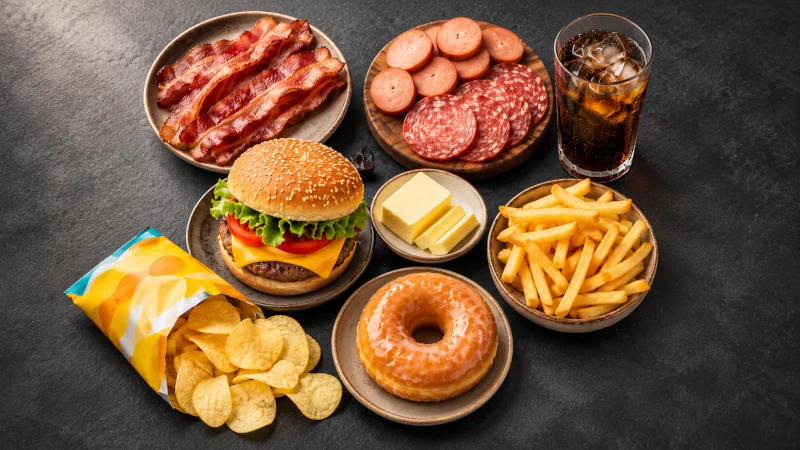
No single meal clogs an artery. Plaque builds over years, and the biggest driver is the overall pattern of what you eat, alongside genes, blood pressure, smoking and blood sugar. Still, some foods push that process along much more than others. The foods that clog arteries most reliably are the ones that raise LDL cholesterol or blood pressure: processed meats, foods heavy in saturated fat, anything made with partially hydrogenated oil, salty packaged food, and a steady diet of added sugar and refined starch.
Some of the usual suspects deserve less blame than they get. Eggs, for most healthy people, are fine in moderation. Coffee is mostly fine too, depending on how you brew it.
What “clogged arteries” actually means
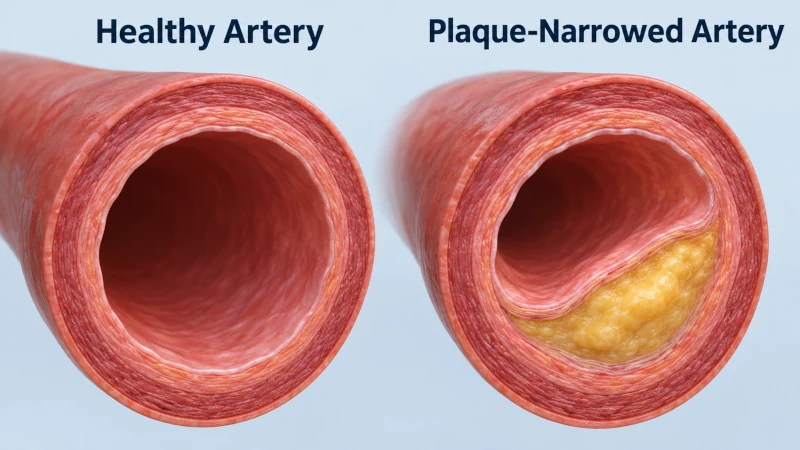
The medical name is atherosclerosis. Plaque, made of fat, cholesterol, calcium and other substances from the blood, builds up inside artery walls. As it grows, the artery narrows and carries less oxygen-rich blood to the heart, brain and other organs [NHLBI, 2024].
Food mostly affects this through a few measurable things: LDL cholesterol, blood pressure, triglycerides, body weight and blood sugar. Saturated fat matters because it raises LDL, the cholesterol carrier most tied to plaque [Sacks et al., 2017]. That is also why the American Heart Association’s 2021 guidance focuses on your whole eating pattern rather than on banning individual foods [Lichtenstein et al., 2021].
You can’t feel your LDL. If you haven’t had it measured recently, a cholesterol test tells you where you stand and how much these changes matter for you.
The foods that clog arteries the worst
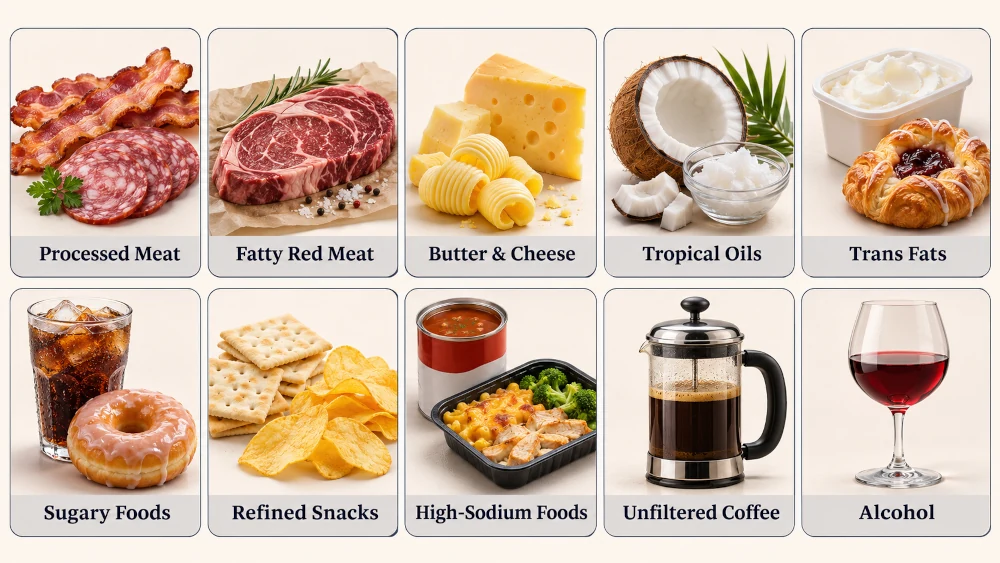
Here is the short version, ranked roughly by how consistently the evidence links each food to heart disease. The sections below explain each one.
| Food | Main problem | Evidence | Easy swap |
| Processed meats | Saturated fat, sodium, preservatives | Consistent in large cohort studies (observational) | Beans, fish, roast chicken |
| Butter, lard, tallow, cream, full-fat cheese | Saturated fat raises LDL | Strong: trials plus mechanism | Olive or canola oil; lower-fat dairy |
| Partially hydrogenated oil | Trans fat raises LDL | Strong; now largely gone from U.S. foods | Read ingredient lists |
| Fatty red meat | Saturated fat | Consistent but smaller than processed meat (observational) | Lean cuts, smaller portions |
| Salty packaged and restaurant food | Sodium raises blood pressure | Strong for blood pressure | Cook more; compare labels |
| Sugary drinks and sweets | Added sugar, weight, triglycerides | Strong expert consensus | Water, unsweetened drinks, fruit |
| Refined grains, ultra-processed snacks | Displace fiber; no heart benefit as a swap | Moderate to strong | Whole grains, nuts |
| Coconut and palm oil | Saturated fat | Strong for LDL | Liquid non-tropical oils |
| Unfiltered coffee | Cafestol raises LDL | Strong for cholesterol; modest effect | Paper-filtered or instant |
| Alcohol | Blood pressure, other organ harm | Mixed for the heart; clear for cancer | Don’t start; cut back |
1. Processed meats
Bacon, sausage, hot dogs, ham, salami and most deli meats have the clearest track record of any single food group. A 2023 meta-analysis from Oxford pooled 13 prospective studies with about 1.4 million people. Each extra 50 grams a day of processed meat (under 2 ounces) was linked to an 18% higher risk of ischemic heart disease. Poultry showed no link at all [Papier et al., 2023].
These are observational studies, so they show association, not proof. But the finding keeps showing up across countries, and processed meat brings both saturated fat and a lot of sodium. If you cut one thing from this list, make it this one.
2. Fatty red meat
Unprocessed beef, pork and lamb also carry risk, though less than processed meat. In the same Oxford analysis, each extra 50 grams a day of unprocessed red meat was linked to a 9% higher risk [Papier et al., 2023]. A separate 2023 meta-analysis in the European Heart Journal found a similar pattern for cardiovascular disease overall [Shi et al., 2023].
Official advice differs here. The AHA recommends choosing lean cuts if you eat meat and avoiding processed forms [Lichtenstein et al., 2021]. The 2025–2030 Dietary Guidelines for Americans list red meat among protein foods and set no specific limit on it, while keeping a cap on saturated fat [USDA/HHS, 2026]. In practice, both point the same way: smaller portions, leaner cuts, and more meals built around beans, fish or poultry.
3. Butter, lard, tallow, cream and full-fat cheese
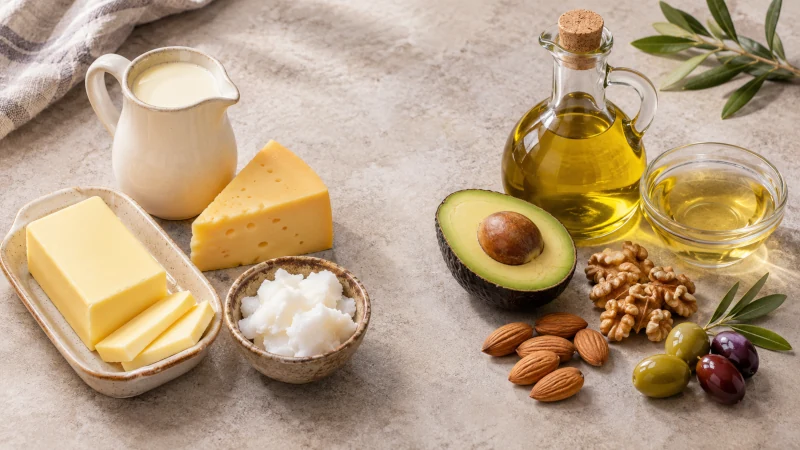
This is the saturated-fat group, and the evidence here is among the strongest for any food group. The AHA’s review of controlled trials found that cutting saturated fat and replacing it with polyunsaturated vegetable oil lowered cardiovascular events by about 30%. Replacing it with refined carbohydrates and sugar did not help [Sacks et al., 2017]. What you eat instead matters as much as what you cut.
How much is too much? The AHA suggests keeping saturated fat under 6% of daily calories, about 13 grams on a 2,000-calorie diet [AHA, Saturated Fat]. The federal Dietary Guidelines set a looser ceiling of 10% of calories [USDA/HHS, 2026]. Those guidelines also name butter and beef tallow as cooking-fat options, which nutrition researchers at Harvard flagged as a mixed message alongside the 10% cap [Harvard Nutrition Source, 2026]. If your LDL is high, the stricter AHA target is the safer one to aim for.
Aged and cured cheeses add a second problem: they are often very salty. A little goes a long way.
4. Coconut and palm oil
Plant-based doesn’t automatically mean heart-friendly. Coconut, palm and palm kernel oils are among the main sources of saturated fat in the diet [AHA, Saturated Fat]. They show up in packaged baked goods, non-dairy creamers and many snack foods. For everyday cooking, liquid non-tropical oils such as olive or canola are the better choice [Lichtenstein et al., 2021].
5. Anything made with partially hydrogenated oil
Artificial trans fat came mainly from partially hydrogenated oils, made by turning liquid vegetable oil into a solid fat. Trans fat raises LDL cholesterol. The FDA ruled in 2015 that these oils were no longer generally recognized as safe, and the final deadline for removing them from U.S. foods was January 1, 2021 [FDA, Trans Fat].
So this is much less of a worry than it was ten years ago. Small amounts of natural trans fat still occur in meat and dairy [FDA, Trans Fat]. If you ever see “partially hydrogenated” on an ingredient list, put it back.
6. Sugary drinks, sweets and pastries
Sugar doesn’t turn directly into plaque, but a steady supply of it feeds weight gain, higher blood sugar and higher triglycerides, all of which strain your arteries. The AHA recommends keeping added sugars under 6% of calories: about 6 teaspoons a day for most women and 9 for most men. One 12-ounce can of regular soda has about 10 [AHA, Added Sugars]. The 2025–2030 Dietary Guidelines go further, saying no amount of added sugar is recommended, suggesting no more than 10 grams per meal, and advising people to avoid sugar-sweetened drinks [USDA/HHS, 2026].
Pastries and doughnuts are a double hit: added sugar plus butter, shortening or tropical oil. If your triglycerides are high, cutting sugar is one of the first changes to make; our guide on how to lower triglycerides naturally covers the rest.
7. Refined grains and ultra-processed snacks
White bread, crackers, chips and most packaged snacks aren’t dramatic villains on their own. The problem is what they replace. The AHA advises choosing whole grains over refined grains and choosing minimally processed foods over ultra-processed ones [Lichtenstein et al., 2021]. And swapping butter for white bread does nothing for your heart, since refined carbohydrates didn’t lower heart disease when used to replace saturated fat [Sacks et al., 2017]. This is one point where the AHA and the 2025–2030 federal guidelines fully agree: avoid highly processed packaged foods, especially salty or sweet ones [USDA/HHS, 2026].
8. Salty packaged and restaurant food
Sodium works on your arteries indirectly, by raising blood pressure, and high blood pressure damages artery walls over time. The AHA recommends no more than 2,300 mg of sodium a day, with 1,500 mg as the ideal for most adults. Americans average more than 3,100 mg. More than 70% of it comes from packaged, prepared and restaurant food, not the salt shaker [AHA, Sodium]. The federal guidelines also set the adult limit below 2,300 mg [USDA/HHS, 2026].
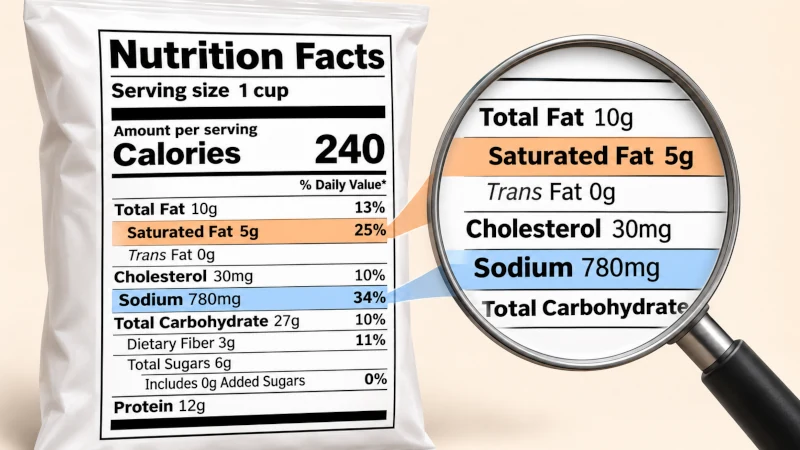
The biggest sources are easy to underestimate: deli meats, cured cheeses, canned soups, frozen meals, sauces and takeout. Comparing the sodium line on two brands of the same food is one of the fastest wins on this list. For more, see 13 foods that cause high blood pressure.
9. Unfiltered coffee
Coffee beans contain two oily compounds, cafestol and kahweol, that raise total and LDL cholesterol. A paper filter traps them. That is why paper-filtered coffee has little effect on cholesterol, while boiled, French press (cafetière) and Turkish coffee raise it [Urgert & Katan, 1997].
Espresso falls in between. In a Norwegian study of more than 21,000 adults over 40, drinking 3 to 5 espressos a day was linked to higher total cholesterol, more so in men. Six or more cups a day of boiled or plunger coffee was too. The study was cross-sectional, so it shows a link at one point in time rather than cause [Svatun et al., 2022].

If your LDL is high and you drink several cups of unfiltered coffee daily, switching to paper-filtered drip or instant is a simple change. For most people drinking filtered coffee, there’s no need to give it up. More on the broader picture in effects of coffee on the body.
10. Alcohol
You may have heard that red wine is good for your heart. Don’t drink for that reason. The AHA’s advice is simple: if you don’t drink, don’t start, and if you do, limit how much [Lichtenstein et al., 2021]. The World Health Organization goes further, stating that no level of drinking is safe for health, largely because alcohol causes several cancers starting at low intakes [WHO, 2023] [Anderson et al., 2023]. The federal guidelines advise drinking less and say pregnant women should avoid alcohol entirely [USDA/HHS, 2026].
What about eggs?
Eggs are a major source of dietary cholesterol: in U.S. diets, meat supplies about 42% of it and eggs about 25% [Carson et al., 2019]. But dietary cholesterol raises blood cholesterol less than saturated fat does for most people. The AHA’s 2019 science advisory concluded that healthy people can include up to one whole egg a day as part of a heart-healthy diet [Carson et al., 2019].
The advisory adds caveats for people with high LDL or other lipid problems, people with diabetes, and people at risk of heart failure. If that’s you, ask your clinician or a dietitian how many eggs fit your plan [Carson et al., 2019]. Often the bigger problem is what comes with the eggs: bacon, sausage, buttered white toast. Egg whites contain no cholesterol and work well in omelets and baking. For a full rundown, see food sources of cholesterol.
What to eat instead
The swaps that matter most follow the AHA’s heart-healthy pattern [Lichtenstein et al., 2021]:
- Fats: cook with olive, canola or another liquid non-tropical oil instead of butter, lard or coconut oil.
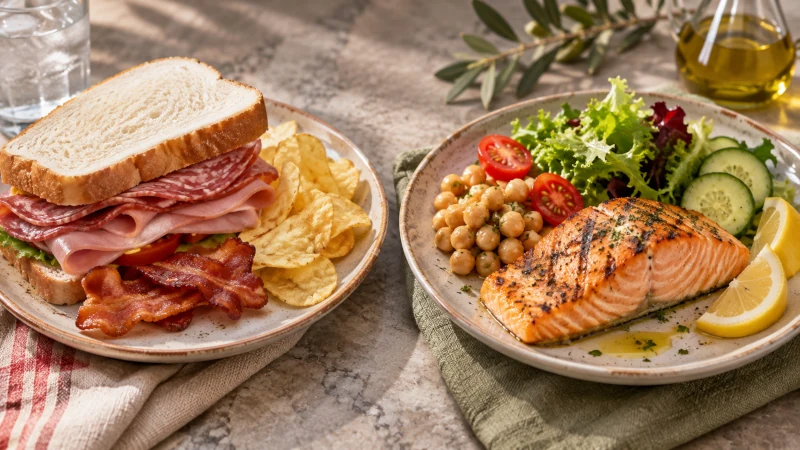
- Protein: get more of it from beans, lentils, nuts and fish. Choose poultry or lean cuts when you eat meat, and keep processed meat rare.
- Dairy: lean toward low-fat or fat-free milk and yogurt, and use strong cheeses in small amounts for flavor.
- Grains: choose whole grains such as oats, brown rice and whole-wheat bread over refined versions.
- Plenty of vegetables and fruit, fresh, frozen or canned without added sugar or salt.
- Drinks: water, unsweetened tea or filtered coffee in place of soda and sweetened coffee drinks.
No single food dissolves plaque. A consistent pattern like this can lower LDL and blood pressure, which slows the process. Our guide to foods that clear arteries goes through the evidence for specific foods.
Who should take this more seriously
Diet matters for everyone, but the stakes are higher if you have high LDL cholesterol, high blood pressure, diabetes, a history of heart attack or stroke, a family history of early heart disease, or you smoke. A few points of care:
- Food changes work alongside medication, not instead of it. Don’t stop or reduce a statin, blood pressure drug or diabetes medicine because you’ve changed your diet. Talk to your prescriber first.
- If you have kidney disease, heart failure, or a prescribed fluid or sodium limit, follow your care team’s targets, which may differ from general advice.
- If you’re pregnant or breastfeeding, avoid alcohol and talk with your prenatal care provider before making big diet changes [USDA/HHS, 2026].
- If your cholesterol stays high despite a good diet, your genes may be a major factor. Ask your doctor about testing and treatment.
A registered dietitian can turn the general advice here into a plan that fits your numbers, budget and cooking habits.
When to get help right away
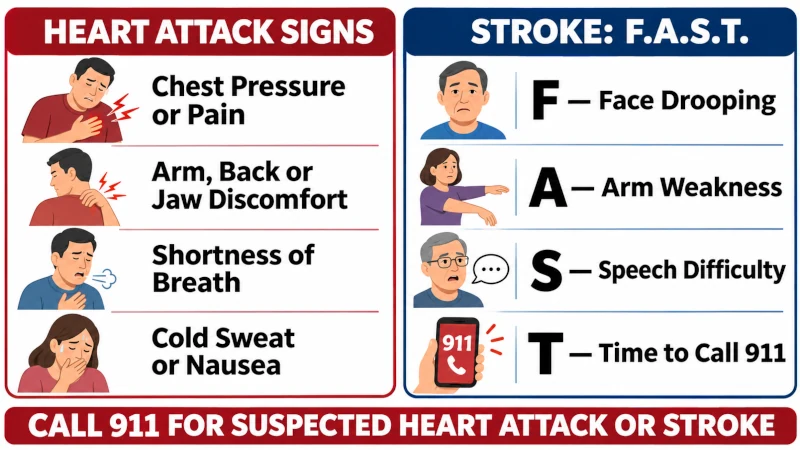
Clogged arteries often cause no symptoms until blood flow is seriously blocked. Call 911 if you or someone with you has signs of a heart attack [AHA, Heart Attack Warning Signs]:
- Chest discomfort, often in the center: pressure, squeezing, fullness or pain that lasts more than a few minutes or goes away and comes back
- Discomfort in one or both arms, the back, neck, jaw or stomach
- Shortness of breath, with or without chest discomfort
- A cold sweat, nausea, lightheadedness, a fast or irregular heartbeat, or unusual tiredness
For stroke, think F.A.S.T.: face drooping, arm weakness, speech difficulty, time to call 911. Call even if the symptoms fade, and note when they started [American Stroke Association].
See your doctor soon, not urgently, if you get chest discomfort or leg pain with exertion that eases with rest, or if you haven’t had your cholesterol and blood pressure checked in several years.
| HEALTH DISCLAIMER: This article is for general education and is not medical advice. It can’t diagnose a condition or replace advice from a doctor, registered dietitian or other qualified health professional who knows your history. Talk to your care team before changing your diet if you have heart disease, diabetes, kidney disease, high cholesterol or high blood pressure, take prescription medication, or are pregnant or breastfeeding. If you think you are having a heart attack or stroke, call 911 now. |
Frequently Asked Questions
What food clogs arteries the most?
Among individual foods, processed meats such as bacon, sausage and deli meats have the most consistent link to heart disease in large studies [Papier et al., 2023]. Overall, though, the pattern matters more than any one food: a diet high in saturated fat, sodium and added sugar raises risk more than any single item.
Can you unclog your arteries with diet?
No food has been shown to dissolve existing plaque. Lowering LDL cholesterol and blood pressure through diet, activity and, when needed, medication slows plaque growth. Your doctor can tell you whether medication makes sense for your numbers.
Is cheese bad for your arteries?
Full-fat cheese is high in saturated fat [AHA, Saturated Fat], and aged or processed cheeses are often salty. Small amounts can fit within the AHA’s saturated-fat target. Larger daily portions make it hard to stay under it.
Is coffee bad for your arteries?
Paper-filtered and instant coffee have little effect on cholesterol. Boiled, French press and Turkish coffee contain cafestol, which raises LDL [Urgert & Katan, 1997]. If your LDL is high, switching brewing methods is an easy fix.
How many eggs a day are safe for your heart?
For healthy people, the AHA says up to one whole egg a day can fit a heart-healthy diet. People with high LDL, diabetes or heart-failure risk should ask their clinician [Carson et al., 2019].
References
- American Heart Association. Saturated Fat. heart.org. View source
- American Heart Association. How much sodium should I eat per day? heart.org. View source
- American Heart Association. Added Sugars. heart.org. View source
- American Heart Association. Warning Signs of a Heart Attack. heart.org. View source
- American Stroke Association. Stroke Symptoms. stroke.org. View source
- Anderson BO, et al. Health and cancer risks associated with low levels of alcohol consumption. Lancet Public Health. View source
- Carson JAS, et al. Dietary Cholesterol and Cardiovascular Risk: A Science Advisory From the American Heart Association. Circulation. View source
- Harvard T.H. Chan School of Public Health, The Nutrition Source. View source
- Lichtenstein AH, Appel LJ, Vadiveloo M, et al. View source
- National Heart, Lung, and Blood Institute. What Is Atherosclerosis? View source
- Papier K, Knuppel A, Syam N, Jebb SA, Key TJ. Meat consumption and risk of ischemic heart disease: View source
- Sacks FM, Lichtenstein AH, Wu JHY, et al. Dietary Fats and Cardiovascular Disease: View source
- Shi W, Huang X, Schooling CM, Zhao JV. Red meat consumption, cardiovascular diseases, and diabetes: View source
- Svatun ÅL, Løchen ML, Thelle DS, Wilsgaard T. Association between espresso coffee and serum total cholesterol: View source
- U.S. Department of Agriculture and U.S. Department of Health and Human Services. View source
- U.S. Food and Drug Administration. Trans Fat. fda.gov. View source
- Urgert R, Katan MB. The cholesterol-raising factor from coffee beans. View source
- World Health Organization. No level of alcohol consumption is safe for our health. View source


