If your skin feels tight after a shower or your hands turn rough every winter, shea butter lotion can be a sensible moisturizer to try. The best formulas soften dry skin, help reduce that papery feeling, and make it easier for your skin barrier to hold on to water. But shea butter lotion is not a cure for eczema, not a scar treatment, and not a substitute for sunscreen.
That distinction matters. Shea butter has a long history of traditional skin use, especially in parts of sub-Saharan Africa, and modern cosmetic science supports its use as a skin-conditioning ingredient. The strongest everyday case for it is simple: it works well as an emollient moisturizer for dry, rough, or easily irritated skin when the formula is chosen carefully [Ugwu-Dike, 2022] [Burnett, 2024].
What shea butter lotion is
Shea butter comes from the kernels of the shea tree. On ingredient labels, you may see it listed as Butyrospermum Parkii Butter, Butyrospermum Parkii Shea Butter, shea butter extract, or a related shea-derived ingredient. It contains a mix of fatty components, including oleic and stearic acid-rich fats, plus smaller unsaponifiable compounds that help explain why it feels rich on the skin [Di Vincenzo, 2005].
A shea butter lotion is not the same thing as raw shea butter. A lotion is a finished formula: shea butter plus water, emulsifiers, preservatives, and often other moisturizers such as glycerin, dimethicone, ceramides, hyaluronic acid, niacinamide, or petrolatum. That full formula matters more than the word “shea” on the front label.
For very dry skin, a cream or ointment often works better than a thin lotion. The American Academy of Dermatology recommends creams or ointments over lotions for dry skin and lists shea butter among useful moisturizer ingredients [AAD, n.d.]. If a product called “shea butter lotion” feels too light, a shea butter cream may be a better fit.
What shea butter lotion can realistically do for your skin
It softens rough, dry skin
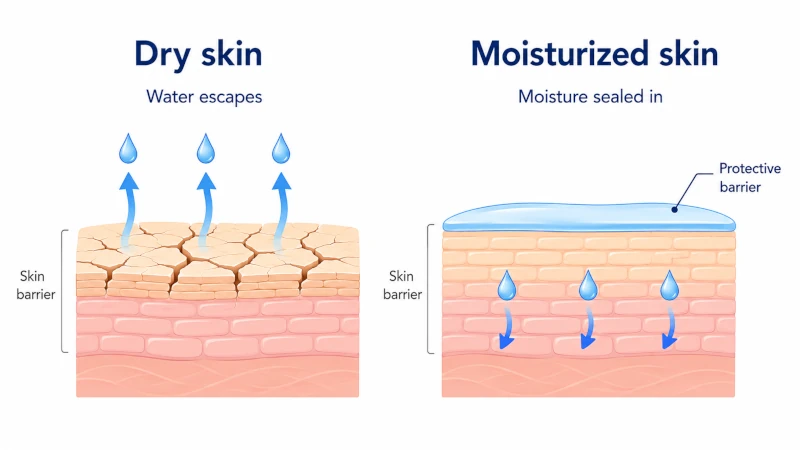
Shea butter is mainly useful because it behaves like an emollient. Emollients smooth the spaces between dry, rough surface cells, which can make skin feel softer and less tight. In real life, that means elbows, knees, shins, heels, and hands may feel more comfortable after consistent use.
This is not instant skin repair. A good moisturizer can improve the feel of dry skin quickly, but barrier recovery usually depends on repeated use and fewer irritants. Shorter warm showers, gentle cleansing, fragrance-free products, and applying moisturizer while skin is still damp all make the lotion work harder for you [AAD, n.d.].
It helps seal in moisture after bathing
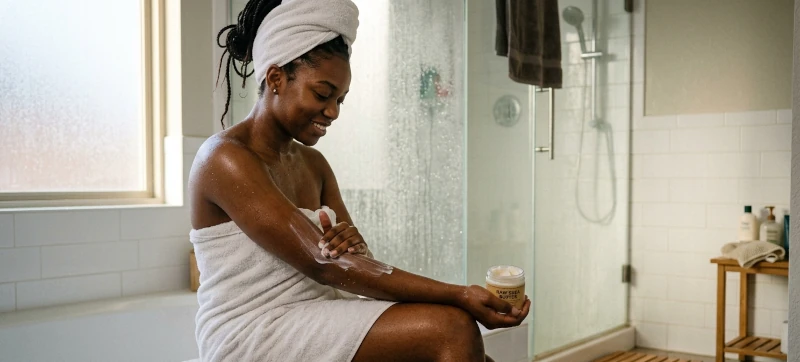
Moisturizers work best when they trap water that is already in or on the skin. That is why timing matters. After a bath, shower, or handwashing, pat your skin until it is damp rather than dripping, then apply shea butter lotion within a few minutes. This simple habit can be more important than buying a more expensive jar.
If your skin is very dry, use shea butter lotion as one layer in a larger routine. A humectant-rich product with glycerin or hyaluronic acid can help attract water, while richer ingredients such as shea butter, petrolatum, dimethicone, or mineral oil help slow water loss. Some people prefer one product that combines both jobs; others layer a lighter hydrating product under a thicker cream.
It may fit eczema-prone routines, but it is not eczema medicine
People with eczema-prone skin often need daily moisturizers. The National Eczema Association lists shea butter among ingredients commonly found in moisturizers for eczema-prone skin, along with oat, aloe, glycerin, and petrolatum [NEA, 2026]. A clinical study also found that a moisturizer containing shea butter extract did not differ in acceptability or efficacy from a ceramide-precursor product in patients with atopic dermatitis, although this does not prove that all shea butter lotions treat eczema [Hon, 2015].
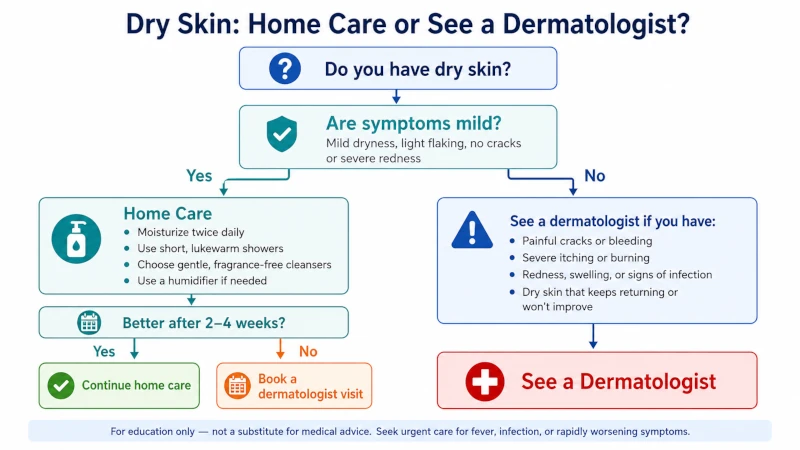
Use careful language here: shea butter lotion may support an eczema care routine, but it does not replace prescribed treatment for active flares. If you have dermatitis, open cracks, oozing, infection, severe itching, or a rash that keeps returning, moisturizer alone may not be enough.
It does not replace sunscreen or proven anti-aging treatments
The original version of this article implied that shea butter lotion shields skin from the sun. That is not safe advice. Unless the product is labeled as a broad-spectrum sunscreen with a tested SPF, it should not be treated as sun protection. The FDA notes that sunscreen active ingredients are the ingredients that protect skin from harmful UV rays, and sun protection should include broad-spectrum sunscreen plus other measures such as shade and protective clothing [FDA, 2026].
Shea butter lotion may make dry skin look smoother because moisturized skin reflects light more evenly. That can temporarily soften the look of fine lines caused by dryness. It should not be described as a wrinkle remover, collagen booster, stretch mark treatment, or scar-fading treatment unless a specific finished product has clinical evidence for that exact claim.
Who may like shea butter lotion most
Shea butter lotion is usually most useful for dry, normal-to-dry, or mature skin that feels rough, flaky, or tight. It can also be helpful for hands exposed to frequent washing, legs that get dry after shaving, and body areas that tend to be thicker and rougher, such as elbows, knees, and heels.
It may be too heavy for some oily or acne-prone faces, especially if the formula also contains heavier oils, waxes, or fragrance. If you want to use shea butter lotion on your face, choose a non-comedogenic, fragrance-free product and patch test first. Body formulas are often richer and more fragranced than facial moisturizers.
| Skin situation | What to look for | What to avoid |
| Very dry body skin | Creamy shea butter lotion or cream with glycerin, petrolatum, dimethicone, ceramides, or mineral oil. | Thin fragranced lotions that feel good for five minutes but leave skin tight again. |
| Sensitive or eczema-prone skin | Fragrance-free formula, simple ingredient list, and ideally a product accepted by a reputable eczema-focused review program. | Essential oils, botanical fragrance blends, deodorant-style scents, and products that sting. |
| Oily or acne-prone face | Light, non-comedogenic facial moisturizer; use shea butter body lotion cautiously. | Heavy body creams on the face if they trigger clogged pores or breakouts. |
| Cracked hands or heels | A richer cream or ointment, applied after washing and before bed; consider cotton gloves or socks overnight. | Ignoring painful cracks, bleeding, spreading redness, or signs of infection. |
How to choose a good shea butter lotion
Start with the ingredient list, not the marketing copy. A strong shea butter lotion for dry skin usually has shea butter plus at least one humectant, such as glycerin or hyaluronic acid, and at least one barrier-supporting or occlusive ingredient, such as dimethicone, petrolatum, mineral oil, ceramides, or richer plant oils.
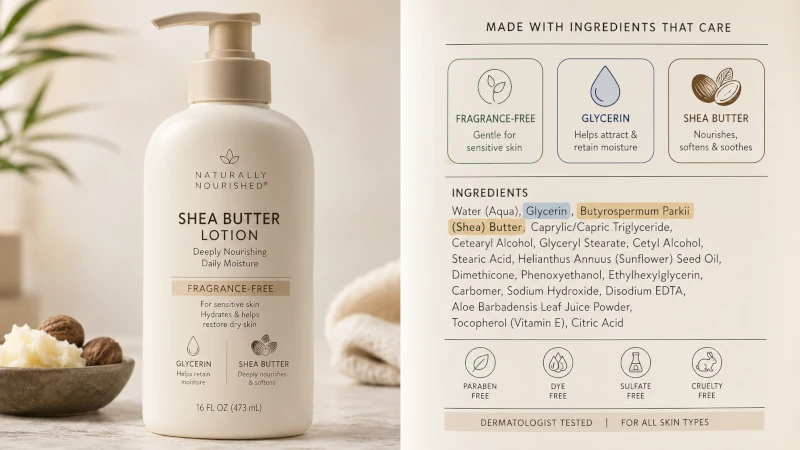
For sensitive skin, fragrance-free is usually safer than scented. “Unscented” is not the same as fragrance-free; unscented products may contain ingredients that mask odor and still bother sensitive skin. The AAD specifically recommends fragrance-free products for dry, sensitive skin [AAD, n.d.].
Do not assume “natural” means gentler. Calendula, lavender, chamomile, citrus oils, and other botanicals can be pleasant in some products, but they can irritate some people. If your skin is reactive, keep the formula boring. Boring skin care often works best.
| Label phrase | What it may mean | How to judge it |
| Unrefined shea butter | Less processed shea butter with a stronger natural scent and color. | May appeal to people who want a simple body butter, but it can feel greasy and may not suit the face. |
| Fragrance-free | No added fragrance ingredients intended to scent the product. | Best starting point for sensitive, dry, or eczema-prone skin. |
| Non-comedogenic | Formulated to be less likely to clog pores. | Helpful for facial use, though individual breakouts can still happen. |
| For eczema-prone skin | Marketing term unless backed by testing or a recognized review program. | Look for a simple formula and, when relevant, programs such as the National Eczema Association Seal of Acceptance [NEA, 2026]. |
| With SPF | May include sunscreen active ingredients. | Only rely on it if the product clearly states broad-spectrum SPF and is used as directed [FDA, 2026]. |
How to use shea butter lotion
Use it like a practical tool, not a beauty ritual you have to make complicated.
- Apply after bathing. Use warm, not hot, water. Pat dry, then apply while skin is still slightly damp.
- Use enough product. A pea-sized amount is not enough for both legs. Skin should feel coated but not slippery after a minute or two.
- Focus on dry zones. Hands, elbows, knees, shins, heels, and forearms often need more frequent application.
- Reapply after handwashing. Keep a small tube near the sink if your hands dry out quickly.
- Layer when needed. If your skin is extremely dry, apply shea butter lotion first and seal rough patches with a thin layer of petrolatum or a thicker cream at night.
- Patch test before facial use. Apply a small amount near the jawline or inner arm for a few days before using it widely on the face.
You can also use a small amount on cuticles or dry hair ends, but keep expectations modest. Shea butter lotion can soften and add slip; it will not repair split ends, strengthen nails from within, or treat scalp disease.
Side effects, allergy cautions, and when to avoid it
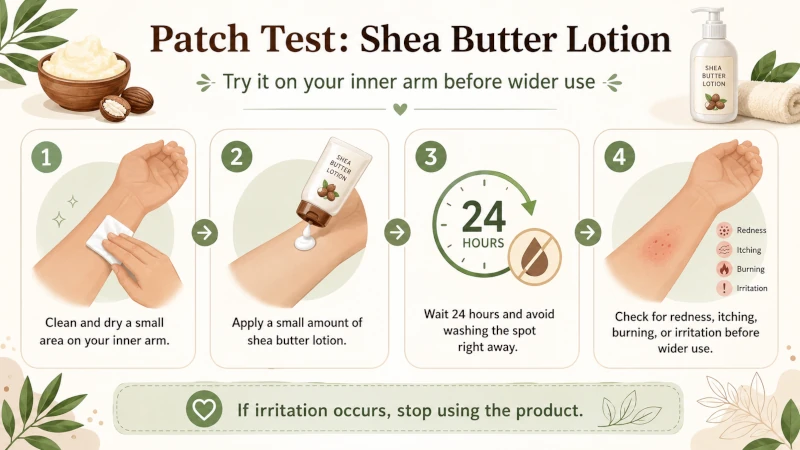
Shea-derived cosmetic ingredients have been assessed as safe in current cosmetic use when formulated to be non-sensitizing, according to the Expert Panel for Cosmetic Ingredient Safety [Burnett, 2024]. That does not mean every product is right for every person. Finished formulas contain preservatives, fragrance ingredients, emulsifiers, plant extracts, and other ingredients that may cause irritation or allergic contact dermatitis in susceptible people.
Stop using the product if you notice burning, stinging that does not settle, swelling, hives, worsening rash, or acne-like bumps in areas where you applied it. If you have a history of severe allergies, patch testing is a good habit. A small study found no detectable IgE-binding soluble proteins in shea butter and noted no reported shea reactions in people with nut allergy at that time, but individual allergy questions should still go to an allergist or dermatologist [Chawla, 2011].
Avoid applying shea butter lotion to deep wounds, infected skin, severe burns, or rapidly spreading rashes. If you are pregnant or breastfeeding, plain topical moisturizers are usually low concern, but be more cautious with medicated products and formulas containing essential oils or strong active ingredients. Ask your clinician if you are unsure.
When to see a dermatologist
Dry skin often improves with better moisturizer habits. But you should seek medical care if dryness is severe, painful, bleeding, spreading, or not improving after a few weeks of careful skin care. The AAD advises seeing a dermatologist when dry skin continues despite home care or when products burn, sting, or irritate your skin [AAD, n.d.].
Get urgent care for signs of infection or a serious allergic reaction: fever, pus, warmth, swelling, red streaks, rapidly spreading redness, severe facial swelling, wheezing, or trouble breathing.
| Health Disclaimer: This article is for educational purposes only and is not a substitute for professional medical advice, diagnosis, or treatment. Skin symptoms can have many causes. Talk with a qualified healthcare professional or dermatologist if you have a persistent rash, severe itching, signs of infection, a known allergy concern, or a skin condition that requires treatment. |
Frequently Asked Questions
Is shea butter lotion good for dry skin?
Yes, it can be. Shea butter is a rich skin-conditioning ingredient, and dermatology guidance lists shea butter among useful ingredients in creams and ointments for dry skin. The best results usually come from applying it after bathing or handwashing while the skin is still slightly damp [AAD, n.d.].
Can shea butter lotion help eczema?
It may help as part of a moisturizing routine for eczema-prone skin, especially if the formula is fragrance-free and gentle. It should not be presented as an eczema treatment or used instead of medication prescribed for a flare.
Can I use shea butter lotion on my face?
Some people can, but body lotions may be too heavy for oily or acne-prone facial skin. Choose a non-comedogenic, fragrance-free facial formula and patch test first.
Does shea butter lotion clog pores?
There is no universal answer because breakouts depend on the whole formula and your skin. Shea butter may be fine for many people on the body, but if a facial product causes clogged pores or bumps, stop using it.
Does shea butter lotion protect you from the sun?
No. Shea butter lotion is not sunscreen unless the finished product is labeled as a broad-spectrum sunscreen with SPF. Use proper sun protection when spending time outdoors [FDA, 2026].
How often should I apply shea butter lotion?
For dry skin, apply at least once daily after bathing and again whenever skin feels dry. Hands may need more frequent use because washing strips moisture.
References
- American Academy of Dermatology. Dermatologists’ top tips for relieving dry skin. Accessed June 22, 2026. View source
- U.S. Food and Drug Administration. Sunscreen: How to Help Protect Your Skin from the Sun. Updated May 11, 2026. View source
- Burnett CL, Bergfeld WF, Belsito DV, et al. Safety Assessment of Butyrospermum parkii (Shea)-Derived Ingredients as Used in Cosmetics. International Journal of Toxicology. 2024;43(1_suppl):82S-95S. View source
- Lin TK, Zhong L, Santiago JL. Anti-Inflammatory and Skin Barrier Repair Effects of Topical Application of Some Plant Oils. International Journal of Molecular Sciences. 2018;19(1):70. View source
- Hon KL, Tsang YC, Pong NH, et al. Patient acceptability, efficacy, and skin biophysiology of a cream and cleanser containing shea butter extract versus a ceramide product in atopic eczema. Hong Kong Medical Journal. 2015. View source
- National Eczema Association. Seal of Acceptance FAQ and eczema-friendly product directory information. Accessed June 22, 2026. View source
- Chawla KK, et al. Shea butter contains no IgE-binding soluble proteins. Journal of Allergy and Clinical Immunology. 2011. View source
- Ugwu-Dike P, et al. A review of ethnomedicinal uses of shea butter for dermatoses in Sub-Saharan Africa. Dermatologic Therapy. 2022. View source
- Di Vincenzo D, Maranz S, Serraiocco A, Vito R, Wiesman Z, Bianchi G. Regional variation in shea butter lipid and triterpene composition. Journal of Agricultural and Food Chemistry. 2005. View source
