
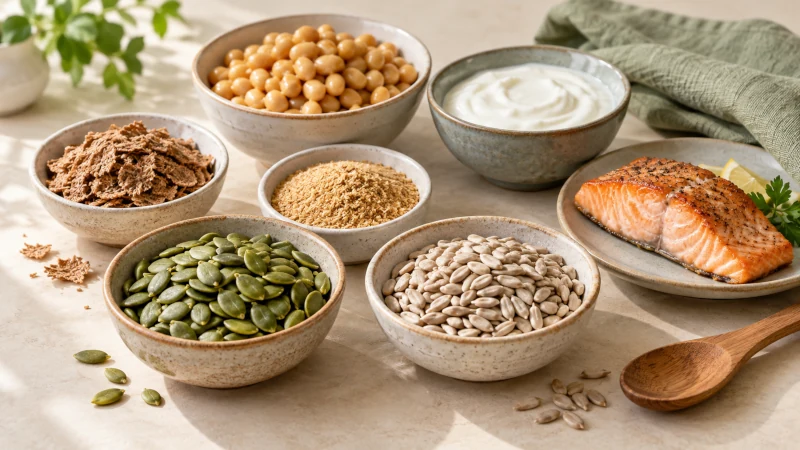
Seeds, bran, wheat germ, soybeans, dairy, and fish are the richest everyday foods high in phosphorus. An ounce of pumpkin or sunflower seeds alone covers roughly half of an adult’s daily requirement. But for most people, the bigger story is that you already get plenty: average U.S. intakes run well above the 700 mg adults need [NIH ODS, 2023]. So the useful questions are which foods deliver phosphorus your body can actually use, and who has reason to eat less of it rather than more.
How much phosphorus you need
Phosphorus is part of every cell. It’s a building block of bones and teeth (where about 85% of your body’s supply sits), of DNA and RNA, and of ATP, the molecule cells use to store and move energy [NIH ODS, 2023].
Adults 19 and older need 700 mg a day, including during pregnancy and breastfeeding. Children and teens aged 9 to 18 need more — 1,250 mg — because their bones are still growing [NIH ODS, 2023].
| Age | Daily need (RDA) |
| 1–3 years | 460 mg |
| 4–8 years | 500 mg |
| 9–18 years (including pregnant or breastfeeding teens) | 1,250 mg |
| 19+ years (including pregnancy and breastfeeding) | 700 mg |
Food labels use a different number, the Daily Value, which is 1,250 mg for adults and children 4 and older. That’s why a food can show “26% DV” on a label while covering nearly half of an adult’s actual requirement [NIH ODS, 2023].
The top foods high in phosphorus
The figures below come from USDA nutrient data. For seeds, bran, and wheat germ, we converted USDA’s per-100-gram values to a one-ounce (28 g) portion so you can compare them fairly.
| Food | Serving | Phosphorus | % of adult RDA (700 mg) |
| Soybeans, mature, boiled | 1 cup | 421 mg | 60% |
| Pumpkin and squash seed kernels, dried | 1 oz | ~350 mg | 50% |
| Sunflower seed kernels, dry roasted | 1 oz | ~327 mg | 47% |
| Wheat bran, raw | 1 oz | ~287 mg | 41% |
| Yogurt, plain, low-fat | 6 oz | 245 mg | 35% |
| Wheat germ, raw | 1 oz | ~239 mg | 34% |
| Salmon, Atlantic, farmed, cooked | 3 oz | 214 mg | 31% |
| Lentils, boiled | ½ cup | 178 mg | 25% |
| Cashews, dry roasted | 1 oz | 139 mg | 20% |
| Brown rice, cooked | ½ cup | 102 mg | 15% |
| Oatmeal, cooked with water | ½ cup | 90 mg | 13% |
| Sesame seeds | 1 tbsp | 57 mg | 8% |
Sources: soybeans [USDA via University Hospitals]; seeds, wheat bran, and wheat germ: [USDA, sunflower seeds], [USDA, pumpkin seeds], [USDA, wheat bran], [USDA, wheat germ]; yogurt through sesame seeds [NIH ODS, 2023].
Pumpkin and sunflower seeds
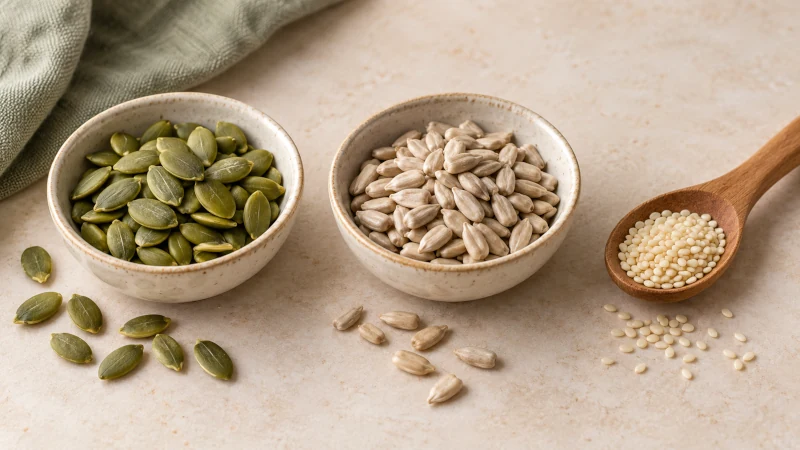
Ounce for ounce, these are the most concentrated phosphorus sources most people keep in the pantry. A small handful of either lands near half your daily need. USDA’s own ranked list puts toasted sunflower kernels and roasted pumpkin seed kernels at the very top of its phosphorus table when measured by the cup [USDA NAL, 2018].
The catch is absorption. Much of the phosphorus in seeds is stored as phytic acid, which your gut can’t fully break down (more on that below). Seeds still earn their place in a varied diet; just treat the milligram count as an upper bound, not a guarantee.
Wheat bran and wheat germ
Bran is the fibrous outer layer of the grain; germ is the small, nutrient-dense embryo. Both are stripped out when wheat is refined into white flour, and both are phosphorus-rich. Raw wheat bran has about 287 mg per ounce [USDA, wheat bran] and raw wheat germ about 239 mg [USDA, wheat germ].
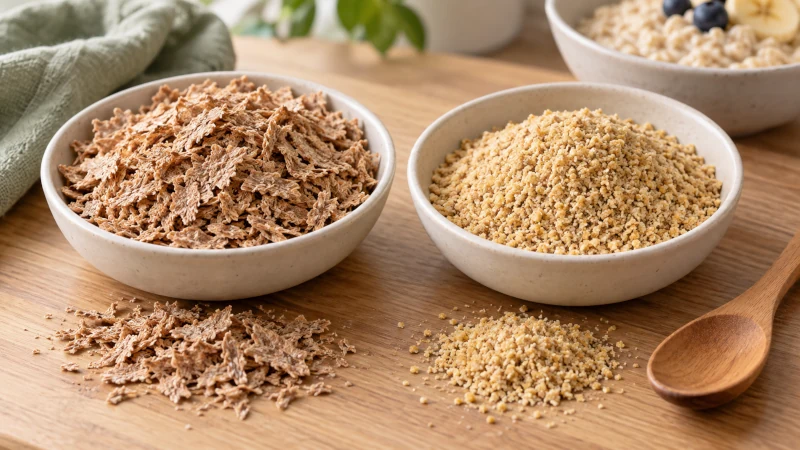
Stir either into oatmeal, yogurt, muffin batter, or a smoothie. Like seeds, both carry much of their phosphorus as phytate. (The oil pressed from wheat germ is a standout for a different nutrient; see our guide to vitamin E-rich foods.)
Soybeans
A cup of boiled mature soybeans has about 421 mg of phosphorus — 60% of an adult’s RDA — along with roughly 29 g of protein and 175 mg of calcium [USDA via University Hospitals]. That combination of calcium and phosphorus in one food is part of why soy foods show up on lists of foods that support bone health.
Sesame seeds and tahini
Sesame seeds are often listed as a top source, but realistic portions matter. One tablespoon provides 57 mg, or about 8% of the adult RDA [NIH ODS, 2023]. They’re a pleasant way to add a bit more — on stir-fries, salads, or as tahini in hummus — rather than a heavy hitter on their own.
Dairy, fish, and meat
Animal foods are the backbone of most people’s phosphorus intake. Dairy alone supplies about 20% of the phosphorus Americans eat [NIH ODS, 2023]. A 6-ounce container of plain low-fat yogurt has 245 mg, a cup of 2% milk 226 mg, and 3 ounces of farmed salmon 214 mg. Your body also absorbs phosphorus from these foods more efficiently than from plants.
Why the milligrams on the chart aren’t what you absorb
Your body absorbs roughly 40% to 70% of the phosphorus naturally present in food, and the rate is higher for animal foods than for plants [NIH ODS, 2023]. The reason is phytic acid, the storage form of phosphorus in seeds, grains, and legumes. Humans lack the enzyme (phytase) needed to break it down, so much of that phosphorus passes through unabsorbed [NIH ODS, 2023].
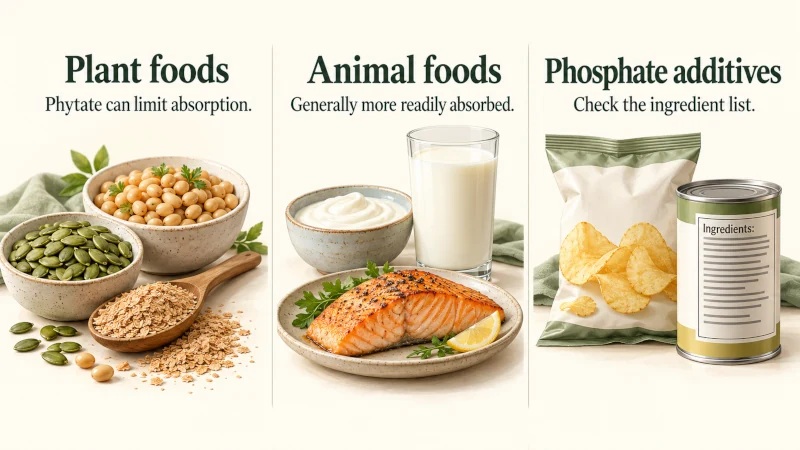
You can shift that somewhat in the kitchen. Soaking, sprouting, and fermenting grains and legumes lower their phytic acid content [Gupta et al., 2015]. Sourdough bread, sprouted grains, and soaked beans are everyday examples. Think of this as a modest improvement in how well you use plant minerals, not a precise boost you can count in milligrams.
Then there’s the phosphorus nobody lists in a “top foods” chart: phosphate additives. Ingredients such as phosphoric acid, sodium phosphate, and sodium polyphosphate are added to many processed foods to hold moisture, preserve color, or stabilize texture. They’re estimated to add 300 to 1,000 mg to daily intake, and about 70% of that phosphorus is absorbed [NIH ODS, 2023]. Estimates put additives at 10% to 50% of phosphorus intake in Western diets [NIH ODS, 2023], so for people who eat a lot of processed food, they can outweigh anything on the chart above.
Does phosphorus hurt your bones?
You’ll often read that phosphorus “steals” calcium, or that you need a strict 1:1 calcium-to-phosphorus ratio to protect against osteoporosis. The evidence is more mixed than that.
What is established: calcium and phosphorus work together. They form hydroxyapatite, the mineral that makes bones and teeth hard, and the same hormones — vitamin D and parathyroid hormone — regulate both [NIH ODS, 2023]. Eating a lot of phosphorus while getting little calcium does raise parathyroid hormone levels.
What isn’t settled is whether that hormone change actually thins bones in everyday eaters. The NIH Office of Dietary Supplements describes the evidence as mixed [NIH ODS, 2023]. One analysis of 1,228 U.S. adults aged 50 and older found that the calcium-to-phosphorus ratio of their diets wasn’t linked to bone density at the hip or spine [Anderson et al., 2017]. That’s a cross-sectional study, so it can’t settle the question, but it does argue against treating the ratio as a bone-health rule.
The practical takeaway is simpler than chasing a ratio. Get enough calcium (most adults need 1,000 to 1,200 mg a day), and lean on whole foods over heavily processed ones. Our guide to foods high in calcium covers which sources your body absorbs best.
Who should watch their phosphorus — and who may not get enough
People with chronic kidney disease
This is the group for whom phosphorus really matters. Damaged kidneys can’t clear phosphorus well, so blood levels rise, which can weaken bones, harm blood vessels, and cause itching and joint pain [NIDDK, 2025]. Severely elevated phosphate is linked to higher mortality in people on dialysis, though high levels don’t show the same association in milder kidney disease [NIH ODS, 2023].
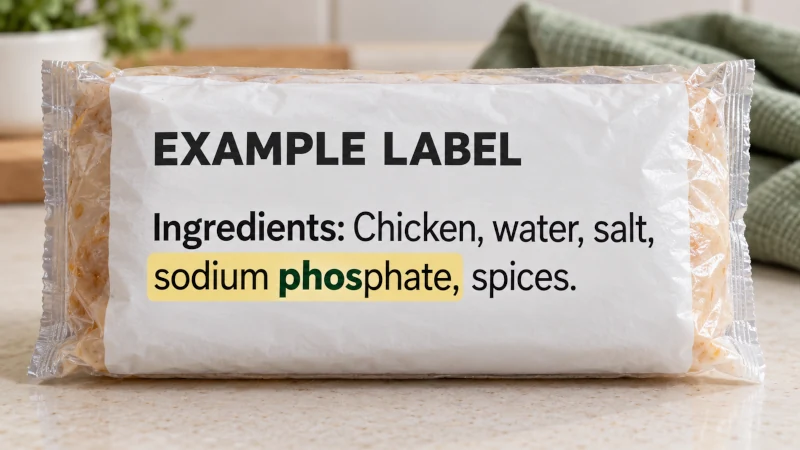
If you have kidney disease, the “high in phosphorus” foods on this page may be ones to limit, not seek out. Standard kidney-diet advice includes avoiding foods with phosphate additives (look for “PHOS” in the ingredient list), choosing more plant proteins because their phosphorus is less absorbable, and eating more fruits and vegetables [NIDDK, 2025]. Your target depends on your stage and blood tests, so work it out with your nephrologist or a renal dietitian rather than from a general list. Some people also need prescription phosphate binders.
People at risk of low phosphorus
Phosphorus deficiency is rare in the U.S. and almost never caused by diet alone [NIH ODS, 2023]. When it happens, it’s usually linked to a medical condition or treatment:
- Premature infants, who miss the third trimester, when most fetal bone mineral is laid down.
- Rare genetic disorders, such as X-linked hypophosphatemic rickets.
- Severe malnutrition, where restarting nutrition can trigger refeeding syndrome — a medical emergency that clinicians actively prevent with monitored phosphorus.
- Long-term antacid use: aluminum-based antacids taken for three months or more can lower phosphorus levels [NIH ODS, 2023].
Low phosphorus can cause loss of appetite, muscle weakness, bone pain, numbness or tingling, and confusion [NIH ODS, 2023]. Those symptoms have many causes, which is exactly why they’re worth a medical visit rather than a dietary fix.
Phosphorus supplements, medications, and safety
Most people don’t need a phosphorus supplement, and the NIH notes that nutrient needs should be met mainly through food [NIH ODS, 2023]. Our overview of phosphorus benefits and functions goes deeper on what the mineral does in the body.
Upper limits. The tolerable upper intake level is 4,000 mg a day for adults 19 to 70, 3,000 mg after age 70, and 3,500 mg during pregnancy [NIH ODS, 2023]. Food alone rarely approaches these in healthy people. Some observational research has linked intakes of 1,000 mg or more a day with higher mortality, but other studies haven’t, and high intakes may simply mark a less healthy diet overall [NIH ODS, 2023].
Medication interactions.
- Antacids containing aluminum hydroxide or calcium carbonate reduce phosphorus absorption [NIH ODS, 2023].
- Laxatives and bowel preps containing sodium phosphate can raise blood phosphate. The FDA has warned that taking more than the labeled dose can be dangerous, especially for people with kidney disease, heart disease, or dehydration [NIH ODS, 2023].
Pregnancy and breastfeeding. Needs don’t increase during pregnancy or breastfeeding for adults (700 mg) or teens (1,250 mg) [NIH ODS, 2023]. Don’t take a phosphorus supplement during pregnancy unless your clinician prescribes one.
Talk to a healthcare professional if you have kidney disease, take antacids or phosphate laxatives regularly, are considering any phosphorus supplement, or notice persistent muscle weakness, bone pain, or confusion. Seek urgent care for severe weakness, confusion, or trouble breathing, particularly after a phosphate laxative or bowel prep, or in someone recovering from severe malnutrition.
| HEALTH DISCLAIMER: This article is for general education and isn’t a substitute for advice from your doctor, dietitian, or pharmacist. Phosphorus needs and limits vary a great deal with kidney function, medications, and life stage. If you have kidney disease, are pregnant or breastfeeding, or take medicines that affect mineral levels, check with a qualified professional before changing your diet or starting any supplement. |
Frequently Asked Questions
What food is highest in phosphorus?
Per ounce, pumpkin and sunflower seeds lead common foods at roughly 330 to 350 mg [USDA, sunflower seeds] [USDA, pumpkin seeds]. Per typical serving, a cup of boiled soybeans (421 mg) is hard to beat [USDA via University Hospitals]. Keep in mind that plant phosphorus is partly bound up as phytate, so you absorb less of it than the label suggests.
Is too much phosphorus bad for you?
For healthy people, high phosphorus intake from food rarely causes problems, and the upper limit for most adults is 4,000 mg a day [NIH ODS, 2023]. It’s a real concern in chronic kidney disease, when the kidneys can’t clear the excess [NIDDK, 2025]. Some observational studies link high intakes with heart and mortality risks, but the findings are inconsistent [NIH ODS, 2023].
Do I need a phosphorus supplement?
Almost certainly not, unless a clinician has prescribed one. Most Americans already eat more than they need, and deficiency is nearly always caused by a medical condition rather than diet [NIH ODS, 2023].
Which high-phosphorus foods should I avoid with kidney disease?
The biggest target is phosphate additives in processed foods, which are absorbed more efficiently than natural phosphorus. Look for “PHOS” in ingredient lists. Plant proteins are generally preferred over animal proteins because less of their phosphorus is absorbed [NIDDK, 2025]. Your exact limits depend on your lab results, so plan them with your kidney care team.
Do you absorb phosphorus from plants as well as from meat?
No. Animal foods give up their phosphorus more readily, while seeds, grains, and legumes store much of theirs as phytic acid, which humans can’t fully digest [NIH ODS, 2023]. Soaking, sprouting, and fermenting can reduce phytic acid [Gupta et al., 2015].
References
- NIH Office of Dietary Supplements. Phosphorus: Fact Sheet for Health Professionals. View source
- NIH Office of Dietary Supplements. Phosphorus: Fact Sheet for Consumers. View source
- U.S. Department of Agriculture, National Agricultural Library. Phosphorus, P (mg): Abridged List Ordered by Nutrient Content in Household Measure. USDA National Nutrient Database for Standard Reference, Legacy (2018). View source
- USDA National Nutrient Database for Standard Reference, Legacy: Wheat bran, crude. View source
- USDA National Nutrient Database for Standard Reference, Legacy: Wheat germ, crude. View source
- USDA National Nutrient Database for Standard Reference, Legacy: Seeds, sunflower seed kernels, dry roasted, without salt. View source
- USDA National Nutrient Database for Standard Reference, Legacy: Seeds, pumpkin and squash seed kernels, dried. View source
- Soybeans, mature cooked, boiled, without salt, 1 cup (USDA nutrient data). University Hospitals Health & Wellness Library. View source
- Gupta RK, Gangoliya SS, Singh NK. Reduction of phytic acid and enhancement of bioavailable micronutrients in food grains. J Food Sci Technol. 2015;52(2):676–684. doi:10.1007/s13197-013-0978-y View source
- Anderson JJB, Adatorwovor R, Roggenkamp K, Suchindran CM. Lack of influence of calcium/phosphorus ratio on hip and lumbar bone mineral density in older Americans: NHANES 2005–2006 cross-sectional data. J Endocr Soc. 2017;1:407–414. PMID 29264495. View source
- UNC Gillings School of Global Public Health. Dietary calcium-phosphorus ratio does not influence bone health in older Americans, study finds. 2017. View source
- National Institute of Diabetes and Digestive and Kidney Diseases. Healthy Eating for Adults with Chronic Kidney Disease. View source


