
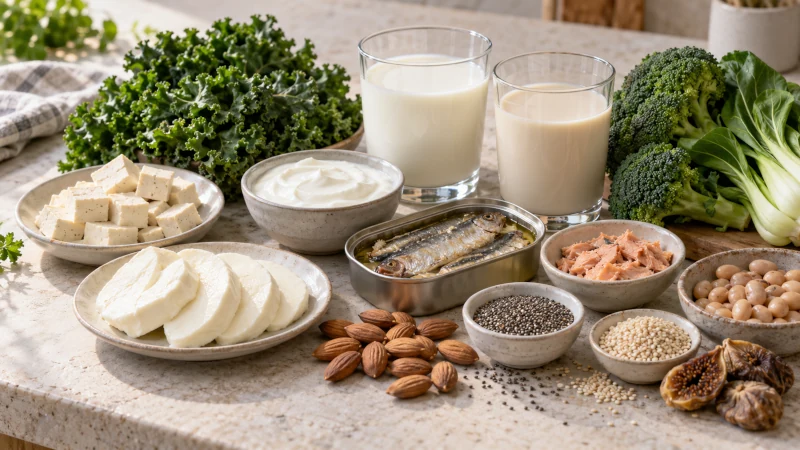
Ask most people to name a food high in calcium and they will say milk. They are not wrong — dairy is the most efficient everyday source, and in the United States roughly 72% of calcium intake comes from dairy products and foods made with them [NIH ODS, 2026]. But it is far from the only option, and if you avoid dairy you can still hit your target from foods high in calcium like calcium-set tofu, canned fish with soft bones, fortified plant milks, low-oxalate greens, seeds, and beans.
One thing this guide does that many calcium lists skip: it separates how much calcium a food contains from how much of it your body can actually use. Those are different numbers, and for some “high-calcium” foods the gap is large. Get both right and building an adequate intake is straightforward, with or without dairy.
How much calcium do you actually need?
Most adults need 1,000 to 1,200 mg a day from food, fortified drinks, and supplements combined [NIH ODS, 2026]. Needs are highest during the teenage growth years and rise again later in life for women. Two points surprise people: pregnancy and breastfeeding do not raise the requirement for adult women (it stays at 1,000 mg, because the gut absorbs calcium more efficiently during pregnancy), and women’s needs jump at 51, not at retirement age.
| Age | Male | Female | Pregnant / breastfeeding |
| 1–3 years | 700 mg | 700 mg | — |
| 4–8 years | 1,000 mg | 1,000 mg | — |
| 9–18 years | 1,300 mg | 1,300 mg | 1,300 mg |
| 19–50 years | 1,000 mg | 1,000 mg | 1,000 mg |
| 51–70 years | 1,000 mg | 1,200 mg | — |
| Over 70 | 1,200 mg | 1,200 mg | — |
Recommended Dietary Allowances from the Food and Nutrition Board [NIH ODS, 2026]. For how these needs are set, whether a supplement is worth it, and the full safety picture, see our companion guide to calcium benefits and how much you need.
The best foods high in calcium, at a glance
Here are strong sources across dairy, fish, and plant foods, with a realistic serving for each. Amounts are rounded and vary with brand, ripeness, and preparation. The Daily Value used on U.S. food labels is 1,300 mg, so a food supplying 20% or more of the DV is considered high in calcium.
| Food | Serving | Calcium | % DV |
| Plain low-fat yogurt | 8 oz | 415 mg | 32% |
| Calcium-fortified orange juice | 1 cup | 349 mg | 27% |
| Part-skim mozzarella | 1.5 oz | 333 mg | 26% |
| Canned sardines, with bones | 3 oz | 325 mg | 25% |
| Nonfat milk | 1 cup | 299 mg | 23% |
| Calcium-fortified soy milk | 1 cup | 299 mg | 23% |
| Firm tofu, calcium-set | ½ cup | 253 mg | 19% |
| Canned pink salmon, with bones | 3 oz | 181 mg | 14% |
| Cooked soybeans | ½ cup | 131 mg | 10% |
| Dried figs | ½ cup | ~120 mg | ~9% |
| Cooked kale | 1 cup | 94 mg | 7% |
| Sesame seeds, whole | 1 tbsp | ~88 mg | ~7% |
| Chia seeds | 1 tbsp | 76 mg | 6% |
| Almonds | 1 oz (~23 nuts) | ~76 mg | ~6% |
| Raw bok choy, shredded | 1 cup | 74 mg | 6% |
| Canned pinto beans | ½ cup | 54 mg | 4% |
Dairy, fish, and fortified-food values from the NIH Office of Dietary Supplements; sesame, almond, and dried-fig values from USDA FoodData Central data. Percent DV is calculated against the 1,300 mg label value.
Dairy: the most efficient everyday source

Milk, yogurt, and cheese earn their reputation because they deliver a lot of calcium in a form the body absorbs well — around 30% [NIH ODS, 2026]. A cup of milk carries about 300 mg, plain yogurt often more, and cheese concentrates it into a small portion (though cheese also brings sodium, so treat it as a topping rather than a base). If you are lactose intolerant, hard cheeses and yogurt are usually easier to tolerate than milk, and lactose-free dairy holds the same calcium as regular.
Non-dairy foods high in calcium
Skipping dairy makes hitting your target harder, not impossible. It takes a little planning, because most single plant servings carry less calcium than a glass of milk. These are the sources that pull the most weight.
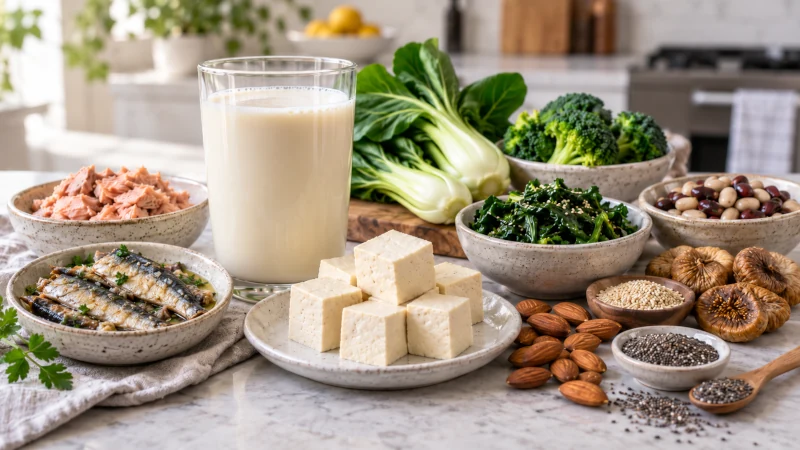
Fortified plant milks, juices, and cereals
This is the simplest swap. Calcium-fortified soy milk and calcium-fortified orange juice each supply about 300 mg per cup — on par with cow’s milk [NIH ODS, 2026]. Two caveats: not every plant milk or juice is fortified, so read the label for at least 20% of the Daily Value; and the added calcium settles, so shake the carton before pouring or you leave much of it at the bottom.
Calcium-set tofu and soybeans
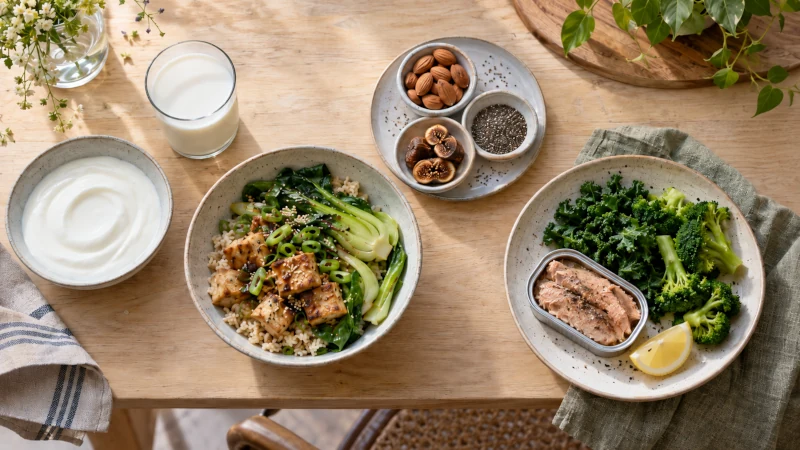
Tofu made with a calcium salt is one of the strongest plant sources on the list — firm calcium-set tofu provides about 253 mg per half cup [NIH ODS, 2026]. The key phrase is “calcium-set”: check the ingredient panel for calcium sulfate, because tofu made with other coagulants carries much less. Whole soybeans (about 131 mg per half cup cooked), edamame, tempeh, and fortified soy milk round out a versatile, well-absorbed group that also brings protein.
Canned fish with edible bones
If you eat fish, this is the rare case where the bones are the point. Canned sardines give roughly 325 mg per 3 ounces and canned pink salmon about 181 mg, all from the soft, fully edible bones [NIH ODS, 2026]. Mash them into the flesh; that is where the calcium lives, along with vitamin D and omega-3 fats. (These are not vegan, but they belong on any honest calcium list.)
Low-oxalate leafy greens: kale, bok choy, broccoli
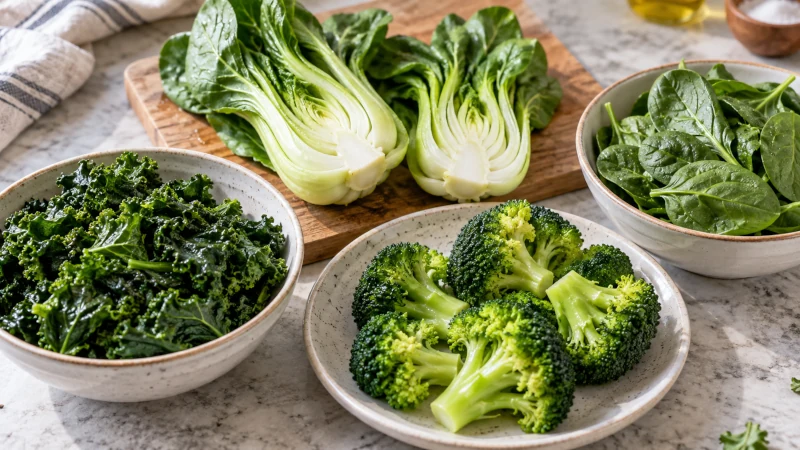
Greens are where the absorption story matters most. Kale, bok choy, and broccoli are low in oxalate, so the body takes up a high share of their calcium — around half, similar to milk, even though the milligrams per serving are lower [NIH ODS, 2026]. Cooked kale runs about 94 mg per cup. Spinach, by contrast, looks high on paper but is a poor calcium source because oxalic acid locks up most of it (more on that below).
Seeds and nuts: sesame, chia, almonds
A tablespoon of whole sesame seeds carries roughly 88 mg of calcium, chia about 76 mg, and an ounce of almonds (around 23 nuts) about 76 mg [USDA FoodData Central]. Two honest caveats worth stating: it is the whole sesame seed that counts — hulled seeds and sesame oil carry far less — and the phytates in seeds and nuts reduce how much of that calcium you absorb. They are useful contributors sprinkled across meals, not a stand-in for a fortified drink or dairy.
Beans, dried figs, and a note on molasses and carob
Beans add a modest amount alongside protein and magnesium (canned pinto beans about 54 mg per half cup; white beans more), and dried figs are an unusual fruit source at roughly 120 mg per half cup [USDA FoodData Central].
Blackstrap molasses is often promoted as a calcium powerhouse, but the number is genuinely unreliable: the generic USDA entry for molasses is only about 41 mg per tablespoon, while branded blackstrap products report anywhere from roughly 100 to 200 mg depending on the boil and the brand [USDA FoodData Central]. Treat it as a minor, variable contributor rather than a reliable source. Carob flour is higher still — about 358 mg per cup — but a cup of it is a baking quantity, not a serving, so its real-world contribution is small.
Why the milligrams on the label aren’t the milligrams you absorb
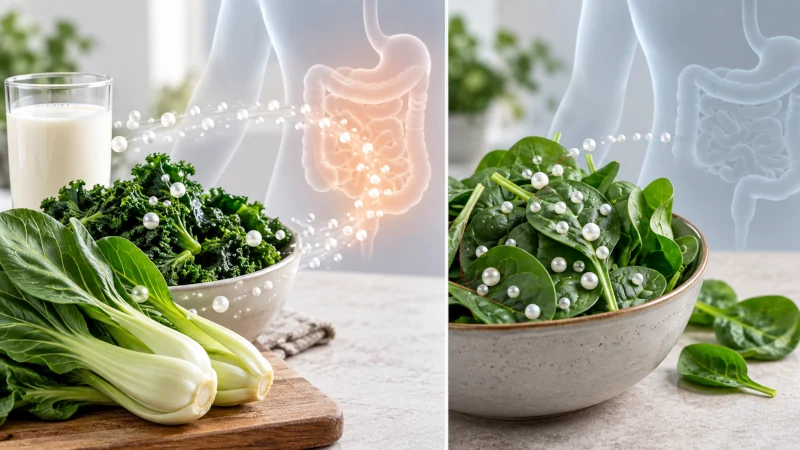
This is the part most calcium articles leave out, and it is the part that actually changes how you eat. Adults absorb only about a quarter to a third of the calcium they consume, and the percentage falls as the dose rises — roughly 45% at an intake of 200 mg at a time, but only about 15% above 2,000 mg [NIH ODS, 2026]. The practical lesson: spreading calcium across the day beats loading it all at once.
The food itself matters too. Three factors move the needle:
- Oxalates lock calcium up. Spinach is the classic trap — it is high in calcium on paper, but only about 5% is absorbed, versus about 27% from milk. Rhubarb, beet greens, and Swiss chard behave the same way, which is why they do not count as calcium sources even though they are healthy foods.
- Phytates have a milder version of the same effect in bran, whole grains, seeds, and legumes. Soaking, sprouting, and leavening reduce them, and in a varied diet the effect is small.
- Vitamin D is the make-or-break partner. Your gut cannot absorb calcium efficiently without it, so a high-calcium diet underdelivers if your vitamin D is low.
That trade-off is exactly why kale, bok choy, and broccoli show up on calcium lists while spinach does not: less calcium per serving, but far more of it usable [NIH ODS, 2026]. If you want the full picture on the calcium–vitamin D partnership and the other nutrients bone needs, our guide to the best foods for osteoporosis and our overview of vitamin D go deeper.
Who needs to pay extra attention
Some groups are more likely to fall short and should be deliberate about food sources:
- Postmenopausal women. Falling estrogen reduces calcium absorption and increases losses, and bone density drops about 1% a year after menopause — which is why the RDA rises to 1,200 mg at 51.
- People who avoid dairy. Those with lactose intolerance or milk allergy, and vegans, usually need fortified foods or a supplement to reach the target, because non-dairy servings are lower.
- Teenagers. Ages 9 to 18 need 1,300 mg a day to build peak bone mass — the highest requirement of any age group.
Overall, about 39% of Americans age 4 and older take in less than the estimated average requirement from food and supplements combined [NIH ODS, 2026], so a shortfall is common rather than unusual.
Can you get too much? Safety, side effects, and interactions
Getting calcium from food is very hard to overdo. Supplements are where caution belongs. The tolerable upper limit — counting food plus pills — is 2,500 mg a day for adults up to 50 and 2,000 mg for those 51 and older [NIH ODS, 2026]. Note that the ceiling drops at exactly the age the recommended intake rises, which narrows the safe window later in life.
Supplemental calcium can cause gas, bloating, and constipation (calcium carbonate more than citrate). On kidney stones, food and pills part ways: dietary calcium actually helps prevent calcium-oxalate stones by binding oxalate in the gut [NIDDK, 2025], whereas the evidence on supplemental calcium is mixed, with some studies linking it to a small increase in stone risk [NIH ODS, 2026].
Calcium also interferes with several common medications — usually a matter of timing, not avoidance [NIH ODS, 2026]:
- Levothyroxine (thyroid): keep calcium carbonate at least 4 hours apart.
- Quinolone antibiotics (ciprofloxacin, moxifloxacin, gemifloxacin): take the antibiotic 2 hours before or after calcium.
- Dolutegravir (HIV) and lithium (bipolar disorder): both appear on the interaction list; long-term lithium can raise blood calcium.
A quick word on supplements
Food first. Supplements exist to close a gap, not to replace a diet, and for people who are not deficient they do not reliably prevent fractures [NIH ODS, 2026]. If you think you fall short, the sensible approach is to estimate your dietary intake, then supplement only the difference — ideally with your clinician’s input. Our guide to calcium benefits, dosing, and supplement forms walks through carbonate versus citrate, timing, and who should talk to a doctor first.
When to talk to a healthcare professional
Most calcium questions are slow-moving nutrition questions. A few signs are not, and deserve prompt attention rather than a grocery list.
Seek urgent or emergency care for:
- A seizure, fainting, or an irregular or racing heartbeat together with muscle spasms, numbness, or tingling.
- Sudden confusion or a marked change in alertness in someone known to have high blood calcium.
See a doctor promptly for:
- Recurring numbness or tingling around the mouth, hands, or feet, or muscle cramps and spasms — common signs of low blood calcium.
- A broken bone from a minor fall, sudden severe back pain, noticeable height loss, or a developing stoop — possible signs of osteoporosis.
- Persistent constipation, nausea, unexplained weight loss, excessive thirst, or frequent urination while taking calcium supplements — possible signs of too much calcium in the blood.
If you simply want to know whether your intake is adequate, that is a primary care or registered dietitian conversation. Bone density screening is generally recommended for women at 65, and earlier for those with risk factors.
| Health disclaimer: This article is for general education and is not a substitute for medical advice, diagnosis, or treatment from a qualified healthcare professional, and it should not be used to start, stop, or change any medication or treatment. Calcium needs and medication interactions vary from person to person. If you are pregnant or breastfeeding, take prescription medication, or have a condition such as kidney disease, a history of kidney stones, hyperparathyroidism, or sarcoidosis, talk with your doctor, a registered dietitian, or your pharmacist before making large changes to your diet or starting a supplement. If you have a medical emergency — such as a seizure, fainting, or an irregular heartbeat with muscle spasms — call 911 right away. |
Frequently Asked Questions
What food has the most calcium per serving?
Among common foods, plain low-fat yogurt (about 415 mg per 8 ounces) and calcium-fortified orange juice (about 349 mg per cup) top the list, followed by cheese, canned sardines with bones, milk, and fortified soy milk [NIH ODS, 2026]. Among plant foods, calcium-set tofu is the strongest single source at about 253 mg per half cup.
How can I get enough calcium without dairy?
It is doable with a bit of planning. Fortified soy milk and fortified orange juice each carry about 300 mg per cup, calcium-set tofu about 253 mg per half cup, and canned sardines with bones about 325 mg per 3 ounces [NIH ODS, 2026]. Low-oxalate greens, seeds, beans, and dried figs help fill in. Most people who avoid dairy need fortified foods or a supplement to reach the target.
Is spinach a good source of calcium?
Not really. Spinach is high in calcium on paper, but its oxalic acid binds most of it, so only about 5% is absorbed — compared with roughly 27% from milk [NIH ODS, 2026]. Low-oxalate greens like kale, bok choy, and broccoli are far better calcium sources despite lower numbers on the label.
Are oranges high in calcium?
For a fruit, oranges are relatively high — a medium orange has roughly 50 to 60 mg — but that is still modest next to dairy or fortified foods. Note the difference between a whole orange and calcium-fortified orange juice, which supplies about 349 mg per cup because calcium is added. Our guide to the benefits of oranges covers the fruit in more detail.
Does cooking reduce the calcium in food?
Very little. Calcium is a stable mineral; the small amount lost in cooking mainly dissolves into the cooking water, so using that liquid in soups or sauces keeps it. Absorption — how much your body takes up — matters far more than cooking losses.
Should I take a calcium supplement to be safe?
Only to fill a genuine gap. If your diet already meets your target, extra supplemental calcium offers little benefit and may slightly raise the risk of kidney stones [NIH ODS, 2026]. Estimate your dietary intake first, then supplement the difference with your clinician’s input.
References
- National Institutes of Health, Office of Dietary Supplements. “Calcium: Fact Sheet for Health Professionals.” Updated June 22, 2026. → View source
- U.S. Department of Agriculture, Agricultural Research Service. FoodData Central — calcium content of foods (sesame seeds, almonds, dried figs, molasses, carob flour). → View source
- National Institute of Diabetes and Digestive and Kidney Diseases. “Eating, Diet, & Nutrition for Kidney Stones.” NIDDK. → View source
Related reading on this site:
• Calcium benefits: what it does, how much you need, and how to get it safely
• 16 of the best foods for osteoporosis
• Vitamin D benefits, sources, and functions


