
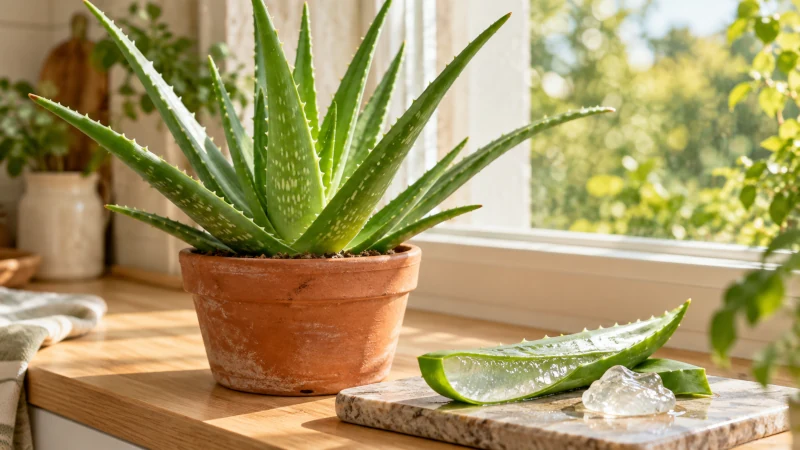
If you keep aloe on the windowsill for kitchen burns and sunburn, you’re using it for the job the evidence supports best. The clear gel inside an aloe vera plant leaf appears to help minor burns heal a little faster and hurt less [NCCIH, 2025]. Past that, the research thins out quickly. And swallowing aloe is a different matter, with real safety questions attached.
Here’s what the gel can and can’t do, how to use your own plant safely, and when a burn needs more than a leaf.
What’s inside an aloe vera plant leaf
An aloe leaf isn’t one substance. It has three parts that people use, and they behave very differently in the body [NCCIH, 2025]:
| Part | What it is | How it’s used | Safety headline |
| Inner gel | Clear, jelly-like pulp from the center of the leaf | Applied to skin; also sold as drinks | Generally well tolerated on skin; occasional burning, itching or rash |
| Latex | Bitter yellow sap just under the green skin | Historically a stimulant laxative | Cramps and diarrhea; removed from U.S. over-the-counter laxatives in 2002 |
| Whole-leaf extract | Crushed whole leaf — gel and latex together | Some supplements and drinks | The unfiltered form caused intestinal tumors in rats |
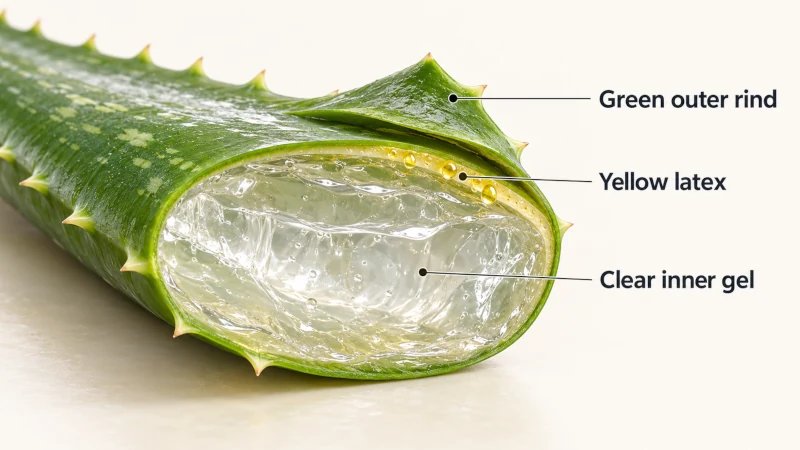
That last row needs one more detail. Whole-leaf extract can be “decolorized” — filtered through activated carbon to strip out most of the anthraquinones, the compounds behind the laxative effect. The International Agency for Research on Cancer classifies the unfiltered, non-decolorized form as a possible human carcinogen [NCCIH, 2025; IARC, 2016]. A 2023 review of animal and lab studies on food-grade aloe drinks containing no more than 10 parts per million of aloin concluded those drinks did not damage DNA [NCCIH, 2025]. That’s reassuring for filtered products, though it isn’t human evidence.
Where the evidence is strongest: minor burns
Burns are aloe’s best case. A 2022 systematic review and meta-analysis from plastic surgeons at NYU Langone searched for randomized trials of aloe on wounds and pooled the four that studied second-degree burns — 133 patients with 163 burns in all. Burns treated with aloe healed about 4.4 days faster, on average, than burns treated with comparison products [Sharma et al., 2022]. NCCIH’s summary of the clinical research lines up: topical aloe gel may speed burn healing and ease burn pain [NCCIH, 2025].
Keep that in proportion. Four small trials is not a large evidence base, and those burns were assessed and treated under medical supervision. For wounds in general the picture is weaker: a 2012 Cochrane review of seven trials reported no high-quality evidence that aloe dressings or gels help acute or chronic wounds heal [Dat et al., 2012]. So the honest grade is “reasonable for minor burns, not proven for wounds generally.”
What about sunburn?
Dermatologists suggest a cool bath or shower, then a moisturizer containing aloe vera or soy on still-damp skin, repeated whenever it stings [AAD, 2024]. That’s advice for comfort and moisture, not a promise that aloe heals sunburn faster. If the skin blisters, you have a second-degree sunburn: leave the blisters alone so they can protect the skin underneath [AAD, 2024].
Promising but limited: acne, psoriasis and mouth conditions
Two small studies found aloe gel, used alongside other treatments, may improve acne. A small amount of research also points to possible benefit for psoriasis, genital herpes, lichen planus, oral submucous fibrosis, mouth sores from dental appliances, and skin damage from radiation therapy [NCCIH, 2025]. Results for radiation-related skin damage are mixed from study to study [MSKCC, 2026].
In practice, treat aloe here as a possible add-on, never a swap for what your dermatologist prescribes. If you’re managing breakouts, which foods are actually linked to acne is a better-supported lever than any gel. With psoriasis, what you eat can influence flares alongside treatment. For a wider, evidence-graded look at plant remedies, see our guide to herbs for skin issues.
Not enough evidence: eczema, slow-healing wounds and gut conditions
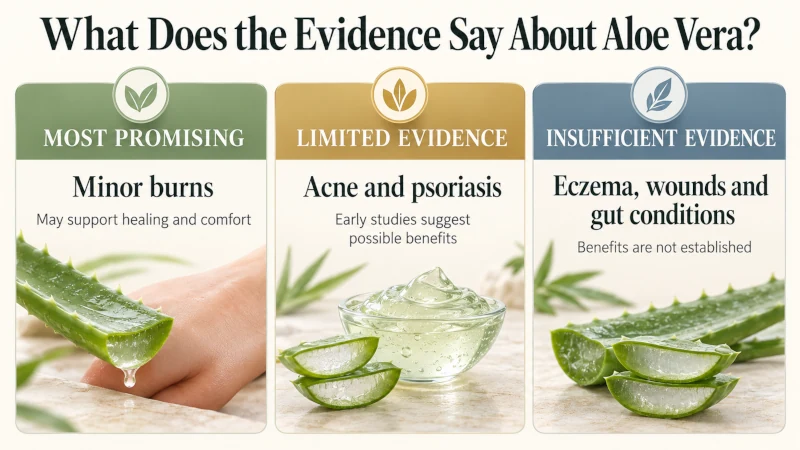
NCCIH lists eczema, diabetic foot ulcers, irritable bowel syndrome and ulcerative colitis among the conditions where there isn’t enough reliable information to say whether aloe helps [NCCIH, 2025]. If eczema is what brought you here, our rundown of which herbs have real evidence for eczema explains why moisturizer and colloidal oatmeal usually do more.
Some herbal sources go much further and recommend fresh aloe for infected wounds, abscesses or as an eye wash. None of those uses has reliable support, and an infected wound needs medical care, not a compress.
Drinking aloe: small benefits, real cautions
A small amount of research suggests aloe taken by mouth may lower blood sugar and HbA1c in people with diabetes. One small study found a specific aloe gel product modestly reduced weight and body fat over 8 weeks in adults with overweight or obesity who also had diabetes or prediabetes [NCCIH, 2025]. Those are early findings from small studies. Short-term use of oral aloe gel, up to 42 days, appeared safe in research settings [NCCIH, 2025]. The risks come mostly from the other parts of the leaf.
Laxative latex
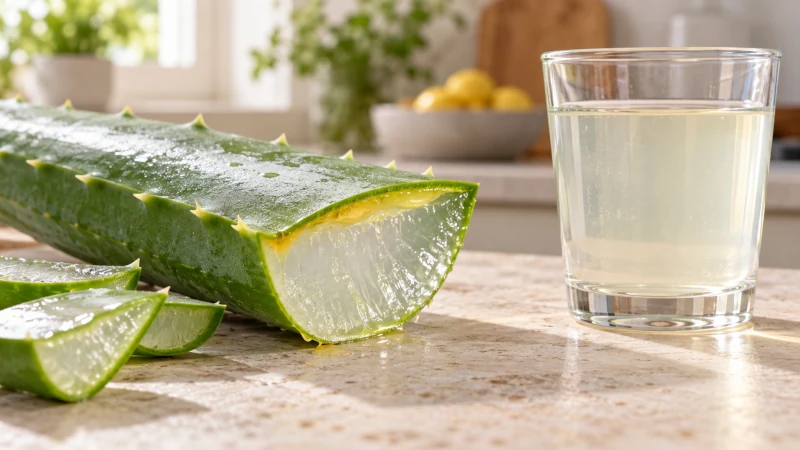
Aloe latex can cause abdominal pain, cramps and diarrhea [NCCIH, 2025]. In 2002 the FDA ruled that aloe laxative ingredients were not generally recognized as safe and effective after manufacturers submitted no mutagenicity, genotoxicity or carcinogenicity data, and the ingredients had to be removed from over-the-counter laxatives by November 5, 2002 [FDA, 2002]. Aloe latex products can still appear as dietary supplements, which the FDA does not approve before sale [NCCIH, 2025].
Liver injury
At least a dozen cases of clinically apparent liver injury linked to oral aloe have been published. The injury usually appeared 3 to 24 weeks after starting, often at high doses taken for constipation, digestion, weight loss or general wellness. It resembled acute viral hepatitis, and it resolved after people stopped taking aloe; no deaths or transplants have been reported [LiverTox, 2022]. LiverTox rates aloe a likely but rare cause of liver injury [LiverTox, 2022].
Cancer findings in rats
In a two-year National Toxicology Program study, rats given non-decolorized whole-leaf extract in their drinking water developed adenomas and carcinomas of the large intestine. Mice in the same study showed no evidence of cancer [NTP, 2013]. That form is not commonly used by consumers, and the human relevance is unknown [NCCIH, 2025] — but supplement labels don’t always say which form you’re getting.
| Claims you may come across: Some herbal sources describe aloe as a treatment for cancer, AIDS, stomach ulcers or radiation exposure. None of these has reliable support from human trials in the sources reviewed here. Memorial Sloan Kettering states that aloe isn’t an effective cancer treatment, and aloe injections used as an alternative cancer therapy have been linked to deaths [MSKCC, 2026]. |
How to use gel from your own plant
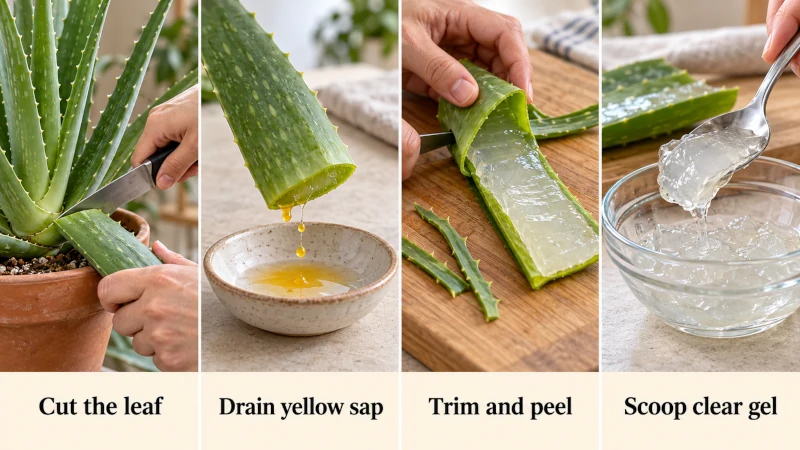
For a minor burn or irritated, unbroken skin, this is a sensible routine:
- Cool the burn first. Hold it under cool — not cold — running water for 10 to 20 minutes [Mayo Clinic, 2024].
- Cut a mature outer leaf close to the base with a clean knife.
- Let the yellow sap drain. Stand the leaf cut-end down for a few minutes, then rinse it. That yellow sap is the latex, which you don’t want mixed into your gel.
- Trim and fillet. Slice off the spiny edges, peel back the green skin and scoop out the clear gel.
- Patch test once. Dab a little on your inner forearm before using it on a larger area — burning, itching and rash have been reported [NCCIH, 2025]. Our guide to patch testing walks through the at-home method.
- Apply a thin layer and cover loosely. A lotion such as aloe can relieve dryness once a burn is cooled; a loosely wrapped clean bandage protects it [Mayo Clinic, 2024].
Skip the gel on deep or open burns, on infected skin, and near your eyes. Don’t swallow homemade gel — you can’t tell how much latex is in it. A store-bought, fragrance-free inner-leaf gel is a fine alternative and is more consistent from batch to batch.
Growing an aloe vera plant at home
Aloe vera has been traded so widely, for so long, that its original native range has been lost; it now grows wild in many dry regions of the world [Chicago Botanic Garden, n.d.]. It’s a tropical plant that likes full sun and dry soil, grows outdoors in USDA zones 8 to 11, and overwinters best indoors above about 59°F [Chicago Botanic Garden, n.d.]. It rarely flowers in a house because blooming takes bright light, warmth and plenty of root room [Chicago Botanic Garden, n.d.].
Give it your brightest window, a pot with a drainage hole and a gritty, fast-draining mix. Water deeply, then let the soil dry out before watering again; soggy soil and rotting roots kill far more aloes than neglect does. Water less in winter.
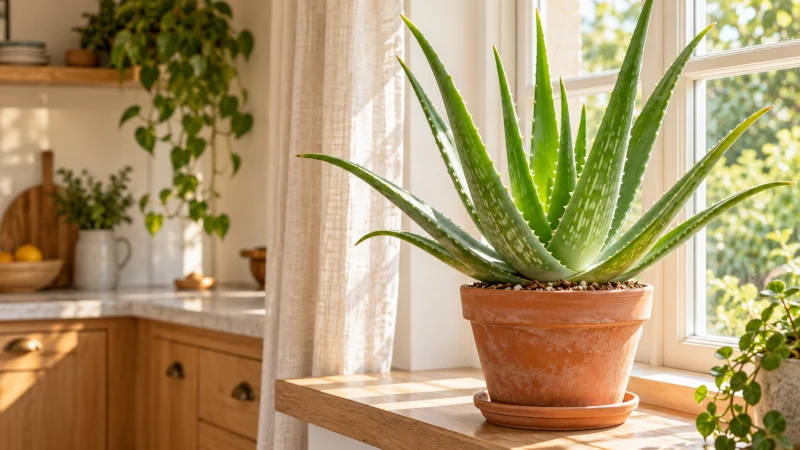
If you have pets, place it carefully. The ASPCA lists aloe as toxic to dogs, cats and horses; eating it can cause vomiting, lethargy and diarrhea [ASPCA, n.d.]. If your pet chews the plant, call your veterinarian or ASPCA Animal Poison Control at (888) 426-4435.
Side effects, interactions and who should avoid aloe
On the skin: generally well tolerated, with occasional burning, itching, rash and eczema [NCCIH, 2025]. Stop if your skin reacts.
By mouth: stomach pain, cramps, diarrhea, nausea, vomiting, low blood potassium and abnormal liver tests have been reported [NCCIH, 2025; MSKCC, 2026].
Medication interactions to know about:
- Digoxin and similar heart drugs: overuse of aloe latex may raise the risk of side effects from cardiac glycosides [NCCIH, 2025].
- Sevoflurane (a surgical anesthetic): one case report describes excessive bleeding during surgery in a patient who had taken oral aloe tablets [MSKCC, 2026]. Tell your surgical team about any aloe supplement.
- Drugs processed by the liver enzymes CYP3A4 and CYP2D6: aloe juice inhibited these enzymes in the lab; whether that matters in people isn’t known [MSKCC, 2026].
- Diabetes medicines: because oral aloe may lower blood sugar [NCCIH, 2025], combining it with glucose-lowering drugs could, in theory, add to their effect. No source reviewed here documents this interaction directly — ask your pharmacist.
Expert sources don’t fully agree on oral aloe. NCCIH notes short-term oral gel appeared safe in studies [NCCIH, 2025], while Memorial Sloan Kettering advises discouraging internal use because of possible adverse effects and inconclusive clinical data [MSKCC, 2026]. Given that split, skipping oral aloe is the cautious choice.
Who should avoid oral aloe:
- People who are pregnant or breastfeeding — gel, latex and whole-leaf extract taken by mouth may be unsafe [NCCIH, 2025; MSKCC, 2026].
- Anyone taking digoxin or another cardiac glycoside [NCCIH, 2025], or anyone scheduled for surgery [MSKCC, 2026].
- Children, and anyone with liver disease or a digestive condition such as ulcerative colitis or Crohn’s disease, unless a clinician has said otherwise.
- Anyone who reacted to aloe on the skin.
When to see a doctor
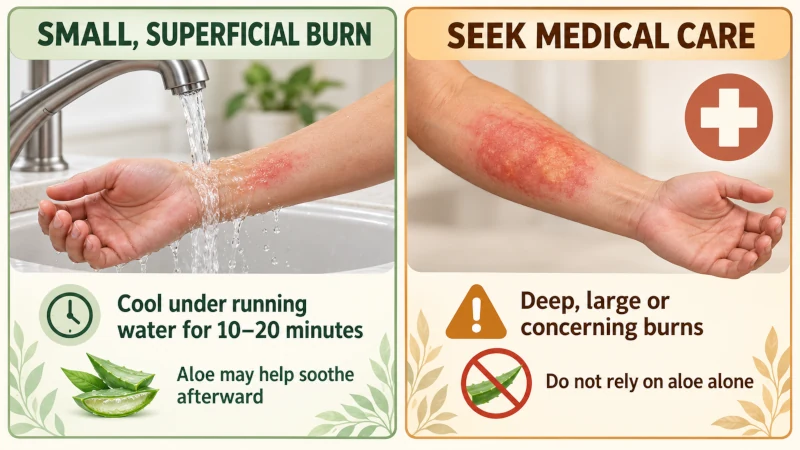
- Get emergency care for burns that are deep or that involve the hands, feet, face, groin, buttocks, a major joint or a large area of the body [Mayo Clinic, 2024], and for electrical or strong chemical burns [Mayo Clinic, First aid].
- See a clinician if a minor burn isn’t healing after about two weeks — most do within that time [Mayo Clinic, 2024] — or if it becomes more painful, red, swollen or starts to ooze.
- Stop oral aloe and call your doctor if you notice yellowing of the skin or eyes, itching, pain under the right ribs, or unusual fatigue — the symptoms described in published cases of aloe-related hepatitis [LiverTox, 2022].
- Large sunburn blisters or a sunburn that makes you feel ill deserves a medical check rather than another layer of gel.
| HEALTH DISCLAIMER This article is for general education and is not medical advice, diagnosis or treatment. Aloe gel may soothe minor burns and irritated skin, but it does not replace care for deep, large or infected burns. Talk with your doctor or pharmacist before taking any aloe product by mouth — especially if you are pregnant or breastfeeding, giving it to a child, have liver, heart or digestive disease, take digoxin, diabetes medicine or other prescription drugs, or have surgery coming up. For a serious burn, call 911 or go to an emergency room. |
Frequently Asked Questions
Is it safe to put aloe gel straight from the plant on my skin?
For most people, on intact skin or a minor burn, yes. Drain the yellow sap first, patch test a small area, and stop if you get burning, itching or a rash [NCCIH, 2025]. Keep it off deep or open wounds.
Can I drink aloe vera juice?
Small studies of short-term oral aloe gel haven’t shown serious harm, but products containing latex or unfiltered whole-leaf extract carry risks, including cramps, diarrhea and rare liver injury [NCCIH, 2025; LiverTox, 2022]. Avoid it if you’re pregnant, breastfeeding, take digoxin or have surgery planned, and ask your pharmacist first.
Does aloe vera help sunburn?
It can make sunburned skin feel better. Dermatologists recommend a moisturizer containing aloe vera or soy after a cool shower [AAD, 2024]. There isn’t good evidence that it speeds sunburn healing.
Is the yellow liquid in aloe leaves dangerous?
That yellow sap is latex, a stimulant laxative that can cause cramps and diarrhea if swallowed [NCCIH, 2025]. The FDA removed aloe from over-the-counter laxatives in 2002 [FDA, 2002]. Let it drain away before using the gel.
Is aloe vera safe during pregnancy?
Taking aloe by mouth may be unsafe during pregnancy and breastfeeding [NCCIH, 2025]. For skin use, ask your obstetric provider before relying on it.
Is my aloe plant safe around my cat or dog?
No. The ASPCA lists aloe as toxic to dogs, cats and horses, causing vomiting, lethargy and diarrhea [ASPCA, n.d.]. Keep it out of reach and call your vet if it’s been chewed.
References
- National Center for Complementary and Integrative Health. Aloe Vera: Usefulness and Safety. NIH; View source
- Sharma S, Alfonso AR, Gordon AJ, Kwong J, Lin LJ, Chiu ES. Second-Degree Burns and Aloe Vera: A Meta-analysis and Systematic Review. Adv Skin Wound Care. View source
- Dat AD, Poon F, Pham KBT, Doust J. Aloe vera for treating acute and chronic wounds. View source
- U.S. Food and Drug Administration. Status of Certain Additional Over-the-Counter Drug Category II and III Active Ingredients. Final rule. View source
- National Toxicology Program. Toxicology and Carcinogenesis Studies of a Nondecolorized Whole Leaf Extract of Aloe barbadensis Miller (Aloe vera) in F344/N Rats and B6C3F1 Mice (Drinking Water Studies). View source
- IARC Working Group on the Evaluation of Carcinogenic Risks to Humans. Some Drugs and Herbal Products. View source
- LiverTox: Clinical and Research Information on Drug-Induced Liver Injury. Aloe Vera. NIDDK; View source
- Memorial Sloan Kettering Cancer Center. About Herbs: Aloe Vera. View source
- American Academy of Dermatology. How to treat sunburn. View source
- Mayo Clinic Staff. Burns: Diagnosis and treatment. Mayo Clinic; View source
- Mayo Clinic Staff. Burns: First aid. Mayo Clinic. View source
- ASPCA Animal Poison Control Center. Toxic and Non-toxic Plants: Aloe. View source
- Chicago Botanic Garden. Plant Finder: Aloe vera (Medicine Plant). View source


