
Bite into a raw quince and you’ll probably want to spit it out. It’s hard, sour, and mouth-puckeringly astringent — an unripe pear that fights back. Cooked, though, it turns fragrant and rose-gold, which is where the real quince fruit benefits begin.
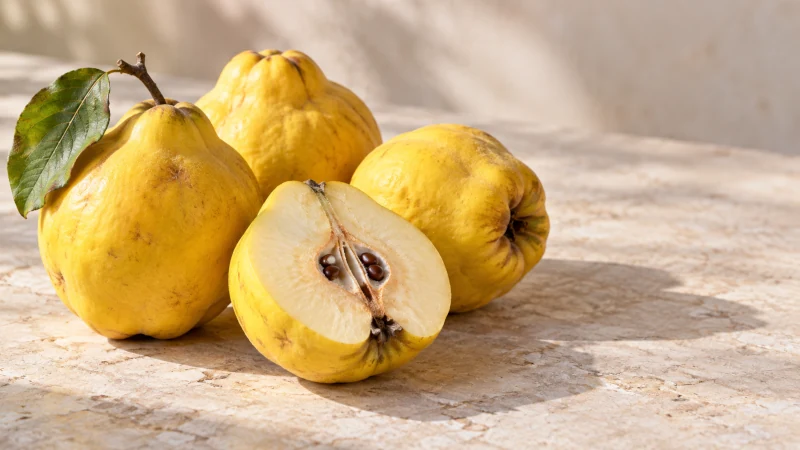
Here’s the honest version first. Quince is a low-calorie source of soluble fiber (mostly pectin), vitamin C, and polyphenol antioxidants. The strongest human evidence for any specific effect is modest: a couple of small trials using concentrated quince syrup for nausea and reflux during pregnancy. Most of the bolder claims you’ll see come from lab dishes and rats, not people [Kostecka-Gugała, 2024]. This guide separates what quince can do from what it probably can’t — and covers the one safety issue that rarely gets mentioned.
Quince nutrition facts
The figures below are for raw quince (Cydonia oblonga) per 100 grams, from USDA FoodData Central (FDC #168163). One medium fruit weighs roughly 90 grams.
| Nutrient | Per 100 g (raw) | % Daily Value (approx.) |
| Calories | 57 kcal | — |
| Carbohydrate | 15.3 g | 6% |
| — of which fiber | 1.9 g | 7% |
| Protein | 0.4 g | 1% |
| Fat | 0.1 g | 0% |
| Vitamin C | 15 mg | ~17% |
| Copper | 0.13 mg | ~14% |
| Potassium | 197 mg | 4% |
| Iron | 0.7 mg | 4% |
| Calcium | 11 mg | 1% |
| Magnesium | 8 mg | 2% |
Source: USDA FoodData Central, FDC #168163. DV based on a 2,000-calorie diet.
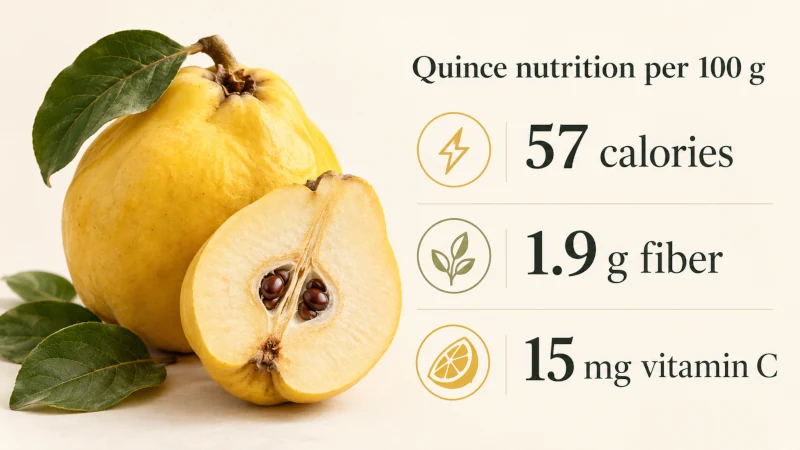
A few things stand out. Quince is genuinely low in calories and fat. Its most notable nutrient is vitamin C, at about 15 mg per 100 g — roughly a sixth of a day’s requirement, and in the same range peer-reviewed analyses report for the fruit [Kostecka-Gugała, 2024]. Copper is the quiet standout mineral. Potassium and iron are present but modest.
One correction worth making, since the older version of this page (and many others) repeats it: quince is not a meaningful source of vitamin E. USDA doesn’t report measurable vitamin E in the fruit’s flesh. The notable vitamin E figures in the literature come from Japanese quince (Chaenomeles) seed oil — a different product from the fruit you’d cook and eat [Kostecka-Gugała, 2024].
What quince is (and why you can’t eat it raw)
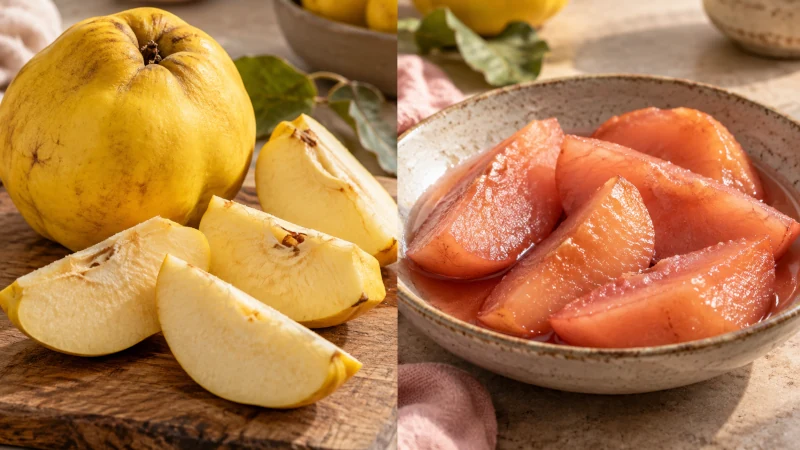
Quince is a pome fruit in the rose family, closely related to apples and pears. Its flesh is high in organic acids, tannins, and stone-cell grit, which is why almost no one eats it raw — across cultures it’s cooked into jelly, paste (Spanish membrillo), jam, or poached [Kostecka-Gugała, 2024]. Cooking mellows the astringency and develops the pink color and perfume the fruit is loved for.
That astringency is a clue to its traditional uses, which center on the gut. Two components do most of the work: pectin, a soluble fiber, and tannins, the compounds that make your mouth feel dry.
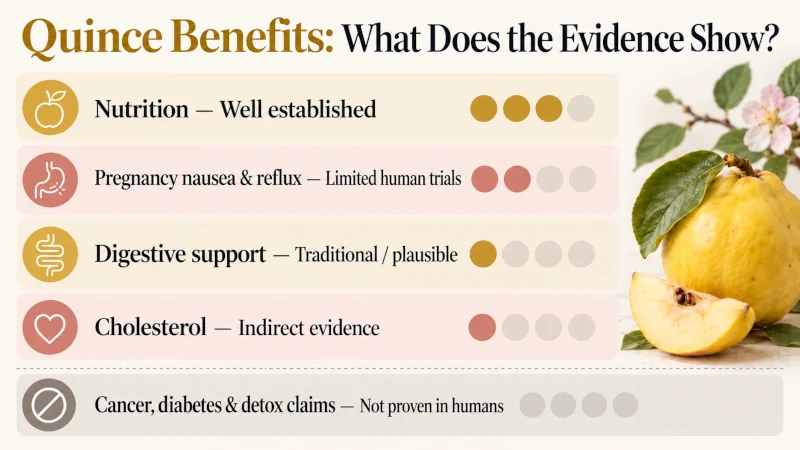
Quince fruit benefits, graded by the evidence
Digestive support: pectin and astringent tannins
This is quince’s oldest and most plausible role. Pectin is a soluble, gel-forming fiber that adds bulk and helps regulate bowel movements, and quince pulp is genuinely pectin-rich — averaging around 2 g per 100 g, notably more than most common fruits [Kostecka-Gugała, 2024]. The astringent tannins, meanwhile, have a drying, anti-inflammatory action on the intestinal lining, which is the basis for the traditional use of quince (cooked, and often as a first solid food after a stomach upset) to firm up loose stools.
How strong is this? It’s traditional and mechanistically reasonable, not proven in trials. The antidiarrheal reputation rests on the tannin and pectin content plus long-standing use and preclinical work, rather than on controlled human studies of eating the fruit [Kostecka-Gugała, 2024]. If you’re recovering from a bout of diarrhea, cooked quince can be a gentle option alongside the usual bland foods — see our guide to what to eat during a colitis flare for the same principle applied more broadly. A related astringent fruit, sapota, works on the same tannin principle. Just remember that quince jelly is loaded with sugar, which is not what you want when your gut is irritated.
Heart and cholesterol: a small, indirect effect
The old version of this page stated flatly that quince pectin “helps reduce cholesterol.” The accurate version is more measured. Soluble fibers, including pectin, do produce small but real reductions in total and LDL cholesterol — a well-conducted meta-analysis of 67 trials found that soluble fiber at 2–10 g per day modestly lowers LDL, with pectin performing similarly to oat fiber and psyllium [Brown et al., 1999].
The catch is dose. That benefit shows up at several grams of soluble fiber a day, while a whole quince supplies under 2 g of total fiber. So one fruit contributes to a fiber-rich, heart-supportive pattern, but it isn’t going to move your cholesterol on its own, and there are no human trials testing quince fruit specifically for this. (Guava, another pectin-rich fruit, has at least one small human trial behind its lipid claims — see what the research says about guava and cholesterol.)
Animal studies add some intrigue: quince flavonoid extracts improved cholesterol and triglyceride profiles in hyperlipidemic rats [Kostecka-Gugała, 2024]. That’s promising for future research, but rat data don’t transfer directly to people.
Antioxidants and polyphenols
Here the content claim is on solid ground. Quince is unusually rich in polyphenols — chlorogenic acid, procyanidins, and quercetin derivatives — and typically carries about twice the total phenolics of an apple, with correspondingly higher antioxidant activity in lab assays [Kostecka-Gugała, 2024]. Those compounds are the likely basis for much of quince’s traditional medicinal reputation.
The honest caveat: high antioxidant activity in a test tube is not the same as a proven health outcome in a person. Antioxidant-rich foods fit sensibly into a healthy diet, but eating quince for its antioxidants should be framed as a reasonable food choice, not a treatment for any disease.
Nausea and reflux in pregnancy: the strongest human data
The best human evidence for quince is also the most specific. In a randomized trial of 76 pregnant women with mild-to-moderate nausea and vomiting, quince syrup reduced symptom scores more than vitamin B6 over the study period [J Obstet Gynaecol, 2017]. In a separate randomized trial of 137 pregnant women with gastroesophageal reflux (GERD), concentrated quince sauce worked about as well as ranitidine for symptom relief [Shakeri et al., 2018].
Two things to keep in mind. First, these trials used concentrated quince syrup or sauce, not a slice of fruit — so they don’t tell you that eating quince will settle your stomach. Second, they were small and mostly single-center, and reviews of this research note a meaningful risk of bias. They’re encouraging, not definitive. If you’re pregnant and considering a quince preparation for nausea or reflux, treat it as something to raise with your obstetric provider rather than a proven remedy.
What quince won’t do
Quince is a nutritious fruit, not a medicine. Despite what some sites imply, there’s no reliable human evidence that quince cures or prevents cancer, reverses diabetes, treats heart disease, or “detoxifies” anything. Much of the excitement online is extrapolated from cell and animal studies, which is exactly where those claims should stay until human trials catch up [Kostecka-Gugała, 2024].
How to use and prepare quince
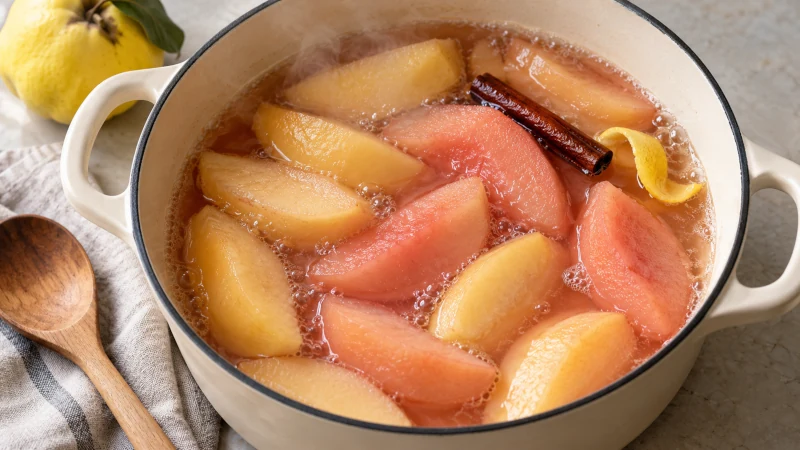
- Cooked/poached: Peel, core, and simmer in water (often with a little sugar and spice) until soft and pink. This is the most nutrition-forward way to enjoy it.
- Quince jelly and paste (membrillo): The classic preparation, made by cooking the pulp with roughly its own weight in sugar — so the finished product is more than half sugar. Delicious, but treat it as a sweet, not a health food.
- Added to other dishes: Quince pairs well with apples and pears in compotes and bakes, and with roasted meats.
A note on the fuzzy seeds and their mucilage: quince seed mucilage is used traditionally as a soothing agent, but that’s a specialized preparation. For everyday eating, see the seed-safety point below.
Safety, side effects, and who should be careful
For most people, cooked quince in normal food amounts is safe and well tolerated. Beyond that, a few realistic cautions:
- Sugar load: Quince jelly, paste, and membrillo are very high in sugar. If you’re managing blood sugar or weight, count them as you would any sweet. The fresh cooked fruit is the better everyday choice.
- Digestive sensitivity: A sudden jump in fiber can cause gas or bloating in some people; increase gradually.
- Medications, pregnancy, and breastfeeding: There’s little formal data on drug interactions with quince as a food, and no established safety data for concentrated quince supplements or syrups in pregnancy and breastfeeding beyond the small trials above. The whole cooked fruit is generally considered fine in pregnancy; concentrated preparations are a conversation to have with your clinician first.
- Who should be cautious: Anyone with a known rose-family fruit allergy, and anyone using concentrated quince products alongside prescription medication, should check with a pharmacist or doctor.
The seeds: don’t crush or eat them ground
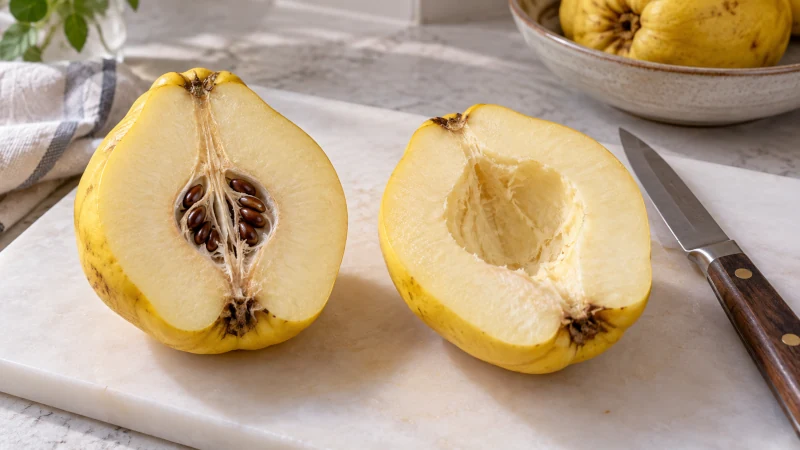
Quince seeds — like apple and pear seeds — contain amygdalin, a cyanogenic compound that can release small amounts of cyanide when seeds are crushed, ground, or chewed and then digested [Kostecka-Gugała, 2024]. The reassuring part: C. oblonga seeds are relatively low in amygdalin, and intact seeds that pass through aren’t the concern. The practical rule is simple — don’t crush, grind, or deliberately eat quince seeds, don’t give them to children, and discard the core when you cook.
When to talk to a healthcare professional
Quince is food, not treatment. See a professional rather than relying on quince if you have:
- Diarrhea lasting more than about two days, or any diarrhea with blood, high fever, severe abdominal pain, or signs of dehydration
- Persistent heartburn or reflux, trouble swallowing, unexplained weight loss, or black/tarry stools
- Nausea and vomiting in pregnancy severe enough to prevent keeping fluids down (a reason to seek care promptly)
- Any chronic condition (diabetes, heart disease) you’re hoping a food will manage
| Health Disclaimer: This article is for educational and informational purposes only and is not a substitute for professional medical advice, diagnosis, or treatment. Quince is a nutritious food and is generally safe when cooked and eaten in normal amounts, but the health effects described here range from well-established (its fiber and vitamin C content) to limited or preliminary (its digestive, cholesterol, and pregnancy-symptom effects). Do not use quince or quince preparations to self-treat a medical condition. If you are pregnant, breastfeeding, taking prescription medication, managing a chronic condition, or experiencing any of the warning signs above, talk with a qualified healthcare professional before making changes based on this content. |
Frequently Asked Questions
Are quince fruit benefits backed by science?
Partly. Quince’s nutrition (fiber, vitamin C, polyphenol antioxidants) is well documented, and there are two small randomized trials supporting concentrated quince preparations for nausea and reflux in pregnancy [J Obstet Gynaecol, 2017; Shakeri et al., 2018]. Broader claims about cancer, diabetes, or heart disease mostly come from lab and animal studies, not human trials [Kostecka-Gugała, 2024].
Can you eat quince raw?
Usually not enjoyably. Most varieties are too hard, sour, and astringent to eat raw and are cooked into jelly, paste, or compote instead [Kostecka-Gugała, 2024].
Is quince good for diarrhea?
Traditionally yes — its pectin and astringent tannins are the basis for using cooked quince to firm up loose stools — but this rests on tradition and mechanism rather than controlled human trials. Skip the sugary jelly when your gut is upset, and see a doctor for diarrhea lasting more than two days or with blood, fever, or dehydration.
Does quince lower cholesterol?
Only modestly and indirectly. Soluble fiber like pectin produces small LDL reductions at several grams a day [Brown et al., 1999], but one quince has under 2 g of total fiber, so it contributes to a fiber-rich diet rather than lowering cholesterol on its own.
Are quince seeds poisonous?
The seeds contain amygdalin, a cyanogenic compound, though C. oblonga seeds are relatively low in it. Don’t crush, grind, or eat the seeds, and keep them away from children; discard the core when cooking [Kostecka-Gugała, 2024].
Is quince safe during pregnancy?
The whole cooked fruit is generally considered fine. Concentrated quince syrups or sauces have only small trials behind them and aren’t established as safe in pregnancy beyond those studies — ask your provider before using them.
References
- USDA FoodData Central. Quinces, raw (FDC #168163). U.S. Department of Agriculture, Agricultural Research Service. View source
- Kostecka-Gugała A. Quinces (Cydonia oblonga, Chaenomeles sp., and Pseudocydonia sinensis) as Medicinal Fruits of the Rosaceae Family. Antioxidants. 2024;13(1):71. doi:10.3390/antiox13010071. View source
- Brown L, Rosner B, Willett WW, Sacks FM. Cholesterol-lowering effects of dietary fiber: a meta-analysis. Am J Clin Nutr. 1999;69(1):30–42. PMID 9925120. View source
- Comparison of quince with vitamin B6 for treatment of nausea and vomiting in pregnancy: a randomised clinical trial. J Obstet Gynaecol. 2017;37(8). PMID 28631509. View source
- Shakeri A, Hashempur MH, Mojibian M, Aliasl F, Bioos S, Nejatbakhsh F. Ranitidine vs quince (Cydonia oblonga mill) sauce on GERD in pregnancy: a randomised, open-label, active-controlled clinical trial. J Obstet Gynaecol. 2018;38(7):899–905. PMID 29553843. View source


