
Natural Health Message — Herbs, Remedies & Nutrition for Whole-Body Wellness.
  • Health Conditions
    • Cancer & Prevention
    • Cardiovascular Health
    • Digestive Health
    • Eye & Vision
    • Immune & Infections
    • Metabolic Health
    • Musculoskeletal Health
    • Nervous System
    • Reproductive Health
    • Respiratory Health
    • Skin Health
    • Urinary Health
  • Nutrition
    • Diet
    • Foods
    • Recipes
  • Remedies
    • Alternative Treatments
    • Herbal Remedies
    • Herbs
    • Lifestyle & Habits
  • Supplements and Reviews
    • General Supplements
    • Minerals
    • Nitric Oxide
    • Reviews
    • Vitamins
Home | Foods | Health Benefits of Persimmon: Reduces Intestinal Inflammation and Stops Diarrhea
Foods

Health Benefits of Persimmon: Reduces Intestinal Inflammation and Stops Diarrhea

by Donald Rice Updated: November 13, 2024
written by Donald Rice Published: August 1, 2022Updated: November 13, 2024
Naturalhealthmessage.com receives compensation from some of the companies, products, and services listed on this page. Advertising Disclosure
0FacebookTwitterPinterestTumblrVKWhatsappEmail
2.3K

Contents

  • 1 Persimmon Nutritional Facts
  • 2 Health Benefits of Persimmon
    • 2.1 American Persimmon
    • 2.2 Persimmon Scientific Facts
    • 2.3 How to Use and Prepare Persimmon
        • 2.3.0.1 REFERENCES

The Greeks knew about the health benefits of persimmon centuries ago. Whether orange or bright red, persimmons evoke blazing flames. Their scientific name, Diospyros, is Greek for “fire of Zeus.” However, once eaten, persimmons act entirely contrary to what would be expected of a “blazing fire.” They are an exceptional emollient for the digestive tract, particularly in the intestine.

health benefits of persimmon

Persimmon Nutritional Facts

The persimmon’s gelatinous pulp contains no proteins or fats. However, the following substances are noteworthy:

Helpful Products

See practical kitchen and nutrition tools.

Shop Kitchen Essentials

As an Amazon Associate I earn from qualifying purchases.

SUGARS – Each one hundred grams of persimmon pulp contains fifteen grams of sugar. The most plentiful are fructose, followed by glucose and saccharose.

PECTIN and MUCILAGE – These complex carbohydrates are responsible for the gelatinous consistency of persimmon pulp. Persimmons and apples are among the most pectin-rich fruits (one percent). Pectin and mucilage comprise the essential components of what is known as soluble vegetable fiber, which represents 3.6 percent of the persimmon’s weight.

Pectin and mucilage retain water, increasing fecal volume and facilitating evacuation. They also contain sugars, which keep them from being rapidly absorbed (as with pure sugar) but at a controlled pace. They also retain the cholesterol found in the digestive tract from animal-based foods, removing a portion through the feces. But the immediate effect of these pectin and mucilage is soothing and reducing inflammation in the walls of the digestive tract, particularly toward the end, the large intestine.

TANNINS – These phenolic compounds are potent astringents. They coagulate proteins, forming a dry-resistant coating on the mucosa. Tannins are immediately recognized for their harsh taste: the more tannins, the greater the astringent effect. There are varieties of persimmon with higher tannin content than others. However, in all of them, the tannin almost disappears during the final stages of ripening. The maximum tannin concentration in persimmons is in October, when the fruit has not reached its peak ripeness, usually in November in the Northern Hemisphere.

CAROTENOIDS – These are substances derived from beta-carotene, from which the body produces vitamin A. For this reason, they are called provitamin A. Contemporary interest in carotenoids is due to their proven antioxidant properties, which prevent cellular aging, stop the process of arteriosclerosis, and act to prevent cancer.
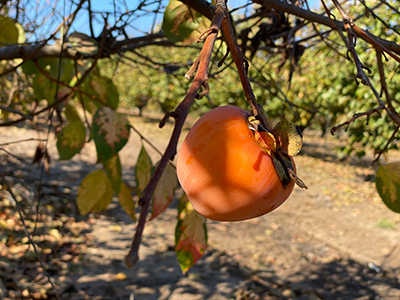
single persimmon fruit on the tree

Among the fifteen carotenoids in persimmons, lycopene (also found in tomatoes) and cryptoxanthin predominate. These carotenoids are responsible for persimmons’ orange or reddish color. Persimmons are among the richest fruits in carotenoids (provitamin A). One hundred grams of persimmon provides 22 percent of the adult’s daily need for vitamin A. One medium persimmon weighing 250 grams is enough to supply half the RDA (Recommended Daily Allowance) for this vitamin.

VITAMIN C – Persimmons contain 16 mg per one hundred grams. One medium persimmon (250 grams) supplies 40 percent of the daily need for this vitamin. While persimmons are not the richest fruit in vitamin C, they contain a significant amount sufficient to facilitate the absorption of the iron they also have.

IRON – This is the most abundant mineral (in terms of daily need) contained in the persimmon, after potassium. A 250-gram persimmon provides ten percent of an adult’s daily requirement for iron, which is considerable for fresh fruit.

Health Benefits of Persimmon

The following are the medicinal applications of the persimmon:
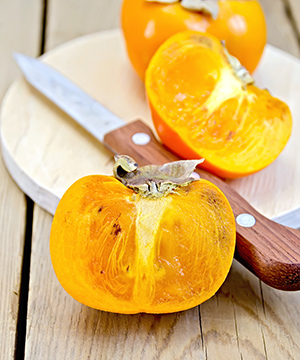
sliced very ripe persimmon with knife visible
The ripest persimmons contain less astringent tannin but provide emollient and anti-inflammatory effects within the digestive system.

1. Health benefits of persimmon (INTESTINAL DISORDERS) – Persimmons soothe and dry the digestive system’s walls. This is due to the combined action of their tannin (astringents) and their pectin and mucilage (emollient). The astringent effect is more intense in certain varieties and those not completely ripe. In addition to their astringent effect, persimmons are anti-inflammatory because of their many pectin and mucilage content. The carotenoids they contain also contribute to this effect.

They are beneficial in cases of diarrhea or colitis (inflammation of the large intestine) from any cause. Three to six persimmons a day aid in quickly regulating intestinal movement and reducing inflammation in the digestive tract’s mucosa. Completely ripe persimmons of softer varieties contain little tannin and are less astringent. A soft pulp with no harshness characterizes these.

This means they are less effective against diarrhea than more astringent or less ripe varieties. However, they retain their anti-inflammatory effect on the intestine, which is helpful in chronic colitis, intestinal spasms (cramps), excess gas, and irritable bowel syndrome.

2. Health benefits of persimmon (CARDIOVASCULAR CONDITIONS) – Persimmons are low in fat and sodium yet rich in carotenoids, which protect the arteries. They are highly recommended for those with general arteriosclerosis, high blood pressure, and cardiovascular conditions.

3. Health benefits of persimmon (ANEMIA) – Although persimmons’ iron content is not exceptionally high, it is highly absorbable because the fruit also contains vitamin C. Eating ample amounts of persimmons is recommended in cases of iron deficiency anemia, the most widespread type of anemia.

4. Health benefits of persimmon (DIABETES) – Although persimmons are a sweet fruit, people with diabetes tolerate them well for two reasons:

  • More than half of their fifteen percent sugars are FRUCTOSE, and natural sugar is found in fruit. This type of sugar requires less insulin for utilization in the cells. Because of this, people with diabetes, whose pancreas produces less insulin, tolerate and absorb fructose better than other sugars.
  • Persimmons’ abundant vegetable fiber in the form of pectin retains sugars in the intestine, releasing them little by little. Thus, the diabetic experiences no rapid burst of fructose and glucose into the bloodstream, which is harmful.

Persimmons can be safely eaten by people with diabetes, who may benefit from their positive action on the digestive system and their carotenoid and iron content.

American Persimmon

Another species of persimmon, Diospyros virginiana L., is grown in North America. It is also known as wild persimmon. Its composition resembles Japanese persimmon but contains more sugars, minerals, and vitamin C.

Persimmon Scientific Facts
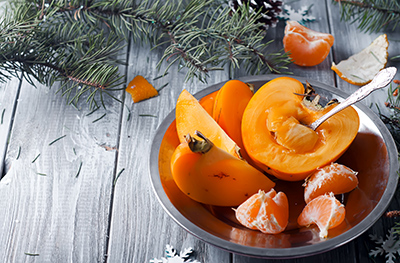
sliced ripe persimmon with 3 cloves of tangerine in a bowl
  1. Scientific name – Diospyros kaki L.
  2. Other names – Kaki fruit, Sharon fruit, Chinese fig, and Common persimmon.
  3. French – Kaki.
  4. Spanish – Caqui, palosanto.
  5. German – Kaki.
  6. Description – The aggregate fruit of the persimmon tree, a deciduous tree growing to 4 m of the botanical family Ebenaceae. The fruit is eaten almost overripe.
  7. Environment – Originally from Japan, its cultivation has spread through semitropical areas in Southern Europe and the American continent.

How to Use and Prepare Persimmon

  1. FRESH – Edible persimmons are only available in the fall, so it is necessary to take advantage of the opportunity to enjoy them in abundance. In case of diarrhea, up to six a day may be eaten.
  2. PERSIMMON PUREE – This is a highly prized ingredient in cremes, jams, jellies, and compotes. It goes well with tofu, cottage cheese, yogurt, and cream.

DISCLAIMER: All content on this website is presented solely for educational and informational objectives. Do not rely on the information provided as a replacement for advice, diagnosis, or treatment from a qualified medical expert. If you are pregnant, nursing, or have any preexisting medical concerns, talk to your doctor before using any herbal or natural medicines.

REFERENCES
  1. George D. Pamplona-Roger, M.D. “Encyclopedia of Foods and Their Healing Power.” George D. Pamplona-Roger, M.D. Encyclopedia of Foods and Their Healing Power. Trans. Annette Melgosa. Vol. 2. Chai Wan: Editorial Safeliz, 2005. 222, 223, 224. Print.
  2. WebMD: https://www.webmd.com/diet/health-benefits-persimmon
  3. Journal of Functional Foods: https://www.sciencedirect.com/science/article/pii/S2211926423003065
  4. Journal of Medicinal Food: https://www.ncbi.nlm.nih.gov/pmc/articles/PMC4817420

Related posts:

  1. Pineapple Health Benefits: The Most Amazing Food for the Stomach
  2. Top 5 Loquat Fruit Benefits: Excellent and Effective Anti-Diabetic
  3. All About Eggs: Unlocking the Amazing Benefits
  4. Cashew Benefits
are persimmons high in sugarpersimmon benefitspersimmon benefits for diabetespersimmon fruitpersimmon fruit benefitspersimmon fruit benefits for diabetespersimmon fruit benefits for skinpersimmon fruit calories
0 FacebookTwitterPinterestTumblrVKWhatsappEmail
Donald Rice
Donald Rice

Donald Rice is a natural health advocate and health writer focused on nutrition, wellness, and alternative health education. He creates clear, research-based content designed to help readers better understand health topics through reputable sources, including peer-reviewed studies, academic institutions, government health agencies, and established medical organizations.

previous post
Quince Fruit Benefits: Intestinal Astringent and a Powerful Emollient
next post
Rice Health Benefits: What the Evidence Actually Says

You may also like

Acerola Cherry vs Orange Vitamin C: The Complete Comparison

Published: April 8, 2026

Acerola Cherry vs Camu Camu: Which Vitamin C Superfruit Wins?

Updated: April 9, 2026

Barbados Cherry: What It Is, Where It’s From, and Why Everyone Calls It...

Updated: April 9, 2026

How to Grow Acerola Cherry: A Complete Guide for Home Gardeners

Updated: April 9, 2026

Acerola Cherry for Immunity: Can It Really Help You Fight Colds?

Updated: April 8, 2026

Acerola Cherry for Skin: Vitamin C, Collagen & Anti-Aging Benefits

Updated: April 8, 2026
Best Health and Wellness Blogs - OnToplist.com

Recent Posts

  • Best Exercises for Flat Feet in Adults

  • What Are Flat Feet? Causes, Types, and Common Symptoms

  • Flat Feet and Fallen Arches: Causes, Symptoms, and What Helps

  • Cardiovascular and Pulmonary Disease: What Every Patient Should Know

  • Acerola Cherry Supplements: 7 Important Things to Look for Before You Buy

Random Articles

Health Benefits of Oats
Hedge Hyssop: Uncover the Potential Health Benefits
Zinc Benefits: What It Does, How Much You Need, and How to Use It Safely

Health Benefits of Yams: Lowers Triglycerides & Nourishes

Recent Articles

Sambucus Elderberry Gummies: Experience the Benefits of Natures Way
African Tick Bite Fever
St. John’s Wort Plant: A Natural Mood Booster? Studies Show Effectiveness Comparable to Antidepressants for Mild to Moderate Depression

Featured

Amazing Recipe for Mexican Salad
Health Benefits of Cabbage: Excellent Food That Heals Ulcers
How to Lose Stubborn Belly Fat Without Surgery: An Effective Guide

@2024 – All Right Reserved. Natural Health Message.

  • About Us
  • Contact Us
  • Advertising Disclosure
  • Medical Advice Disclaimer
We use cookies on our website to give you the most relevant experience by remembering your preferences and repeat visits. By clicking “Accept All”, you consent to the use of ALL the cookies. However, you may visit "Cookie Settings" to provide a controlled consent.
Cookie SettingsAccept All
Manage consent

Privacy Overview

This website uses cookies to improve your experience while you navigate through the website. Out of these, the cookies that are categorized as necessary are stored on your browser as they are essential for the working of basic functionalities of the website. We also use third-party cookies that help us analyze and understand how you use this website. These cookies will be stored in your browser only with your consent. You also have the option to opt-out of these cookies. But opting out of some of these cookies may affect your browsing experience.
Necessary
Always Enabled
Necessary cookies are absolutely essential for the website to function properly. These cookies ensure basic functionalities and security features of the website, anonymously.
CookieDurationDescription
cookielawinfo-checkbox-analytics11 monthsThis cookie is set by GDPR Cookie Consent plugin. The cookie is used to store the user consent for the cookies in the category "Analytics".
cookielawinfo-checkbox-functional11 monthsThe cookie is set by GDPR cookie consent to record the user consent for the cookies in the category "Functional".
cookielawinfo-checkbox-necessary11 monthsThis cookie is set by GDPR Cookie Consent plugin. The cookies is used to store the user consent for the cookies in the category "Necessary".
cookielawinfo-checkbox-others11 monthsThis cookie is set by GDPR Cookie Consent plugin. The cookie is used to store the user consent for the cookies in the category "Other.
cookielawinfo-checkbox-performance11 monthsThis cookie is set by GDPR Cookie Consent plugin. The cookie is used to store the user consent for the cookies in the category "Performance".
viewed_cookie_policy11 monthsThe cookie is set by the GDPR Cookie Consent plugin and is used to store whether or not user has consented to the use of cookies. It does not store any personal data.
Functional
Functional cookies help to perform certain functionalities like sharing the content of the website on social media platforms, collect feedbacks, and other third-party features.
Performance
Performance cookies are used to understand and analyze the key performance indexes of the website which helps in delivering a better user experience for the visitors.
Analytics
Analytical cookies are used to understand how visitors interact with the website. These cookies help provide information on metrics the number of visitors, bounce rate, traffic source, etc.
Advertisement
Advertisement cookies are used to provide visitors with relevant ads and marketing campaigns. These cookies track visitors across websites and collect information to provide customized ads.
Others
Other uncategorized cookies are those that are being analyzed and have not been classified into a category as yet.
SAVE & ACCEPT
Natural Health Message — Herbs, Remedies & Nutrition for Whole-Body Wellness.
  • Health Conditions
    • Cancer & Prevention
    • Cardiovascular Health
    • Digestive Health
    • Eye & Vision
    • Immune & Infections
    • Metabolic Health
    • Musculoskeletal Health
    • Nervous System
    • Reproductive Health
    • Respiratory Health
    • Skin Health
    • Urinary Health
  • Nutrition
    • Diet
    • Foods
    • Recipes
  • Remedies
    • Alternative Treatments
    • Herbal Remedies
    • Herbs
    • Lifestyle & Habits
  • Supplements and Reviews
    • General Supplements
    • Minerals
    • Nitric Oxide
    • Reviews
    • Vitamins