
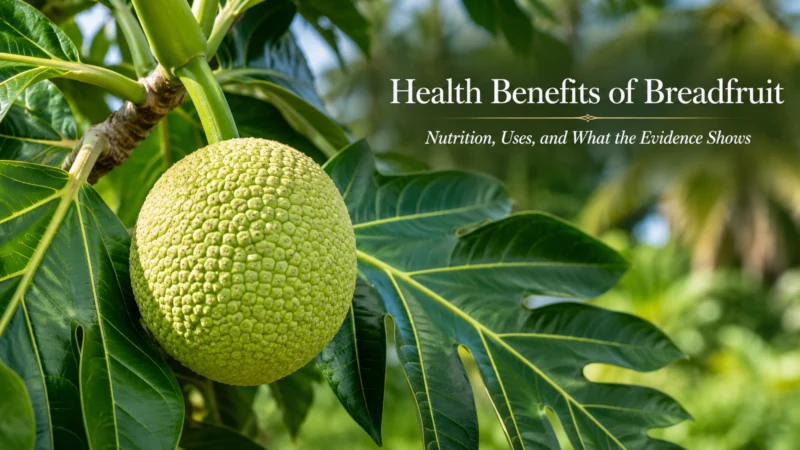
Breadfruit is one of the highest-yielding food crops in the tropics, yet most people in the United States have never tried it. A single tree can produce hundreds of pounds of starchy, filling fruit each year — enough to feed a family. The health benefits of breadfruit come down to what this fruit actually contains: complex carbohydrates, a useful amount of fiber, potassium, vitamin C, and B vitamins, all in a naturally gluten-free package with almost no fat.
If you have eaten baked potato or boiled taro, you already know what cooked breadfruit feels like. Its mild, slightly sweet taste makes it a versatile base for both savory and sweet dishes. This guide covers breadfruit’s verified nutrition, the health benefits that evidence supports, practical ways to prepare it, and the safety information that most breadfruit articles leave out.
What Is Breadfruit?
Breadfruit (Artocarpus altilis) is a large, round or oblong fruit that grows on a tropical tree in the mulberry family (Moraceae). The tree can reach 20 meters tall and is native to the western Pacific — particularly New Guinea and nearby islands. Over the past 3,000 years, Polynesian voyagers carried breadfruit across the Pacific, and in the late 1700s European colonizers introduced it to the Caribbean as a cheap food source for enslaved laborers [Mehta et al., Frontiers in Nutrition, 2023].
Today, breadfruit grows across the Caribbean, Central America, Southeast Asia, and parts of Africa. In the United States it is cultivated in Hawaii and available frozen, canned, or occasionally fresh in Caribbean and Asian grocery stores. It is closely related to jackfruit, another large tropical fruit in the same genus.
Breadfruit Nutrition Facts
One cup (about 220 g) of raw breadfruit provides roughly the following, based on USDA data [USDA FoodData Central]:
| Nutrient | Per 1 cup (220 g) raw | % Daily Value |
| Calories | 227 kcal | — |
| Total carbohydrate | 60 g | 22% |
| Dietary fiber | 11 g | 39% |
| Protein | 2.4 g | 5% |
| Total fat | 0.5 g | 1% |
| Potassium | 1,078 mg | 23% |
| Vitamin C | 64 mg | 71% |
| Thiamin (B1) | 0.24 mg | 20% |
| Niacin (B3) | 2.0 mg | 12% |
| Magnesium | 55 mg | 13% |
| Cholesterol | 0 mg | 0% |
Breadfruit is about 71% water. Once dried into flour, the macronutrient profile shifts substantially — it becomes roughly 76% carbohydrate with 3–4% protein, making dried breadfruit compositionally similar to wheat flour but without the gluten.
How Breadfruit Compares to Other Staples
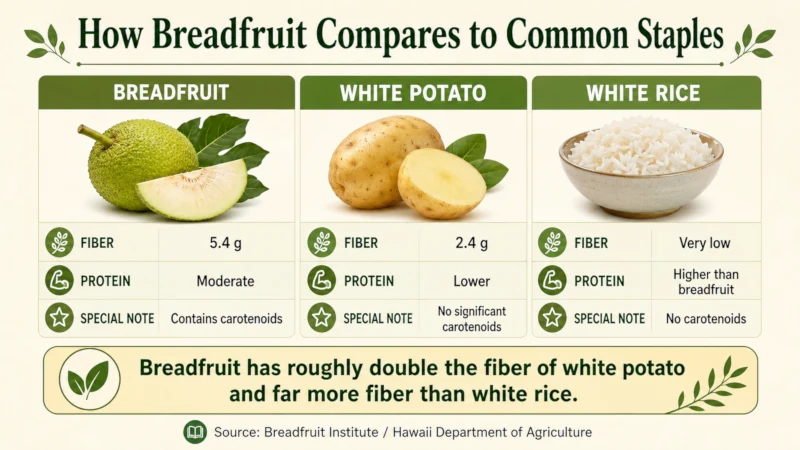
A side-by-side look at breadfruit, white potato, and white rice (all per 100 g) helps put the numbers in context. This comparison comes from the Breadfruit Institute’s nutritional fact sheet [Ragone, Breadfruit Institute / Hawaii Dept. of Agriculture, 2014]:
Breadfruit has roughly double the fiber of white potato (5.4 g vs. 2.4 g per 100 g) and more than 15 times the fiber of white rice. It also provides some carotenoids — including beta-carotene and lutein — that neither white potato nor white rice contain. Protein content (about 4 g per 100 g in raw breadfruit) is higher than potato but somewhat lower than rice, though the quality of that protein turns out to be surprisingly good.
Health Benefits of Breadfruit
A Useful Source of Fiber
With roughly 11 g of fiber per cup, breadfruit covers about 39% of the daily value. That fiber is a mix of soluble and insoluble types. Soluble fiber slows the absorption of sugar and helps manage cholesterol; insoluble fiber adds bulk and supports regular bowel movements. A fiber-rich diet is consistently linked with lower risk of heart disease, type 2 diabetes, and colorectal cancer, though no single food produces those effects on its own.
Rich in Potassium, Low in Sodium
A single cup of breadfruit delivers more than 1,000 mg of potassium — about 23% of the daily value — while containing almost no sodium. Diets higher in potassium and lower in sodium support healthy blood pressure, which is one reason potassium-rich foods feature in heart-healthy eating patterns like DASH. Breadfruit won’t treat high blood pressure, but as part of a balanced diet it contributes meaningfully to your daily potassium intake.
Vitamin C and B Vitamins
Raw breadfruit provides about 64 mg of vitamin C per cup — roughly 71% of the daily value. That makes it one of the better tropical fruit sources of this antioxidant vitamin, which supports immune function and helps the body make collagen. Breadfruit is also a good source of thiamin (B1) and niacin (B3), both of which the body needs for converting food into energy. Cooking reduces vitamin C, so raw or lightly cooked preparations preserve the most.
Naturally Gluten-Free
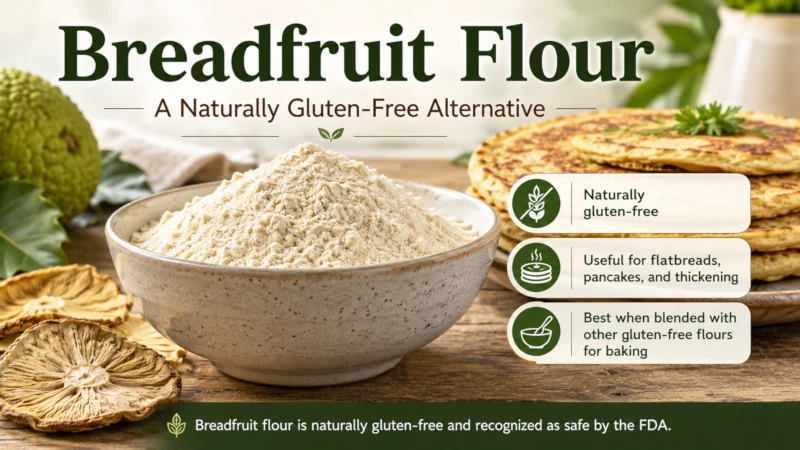
Breadfruit contains no gluten, and the FDA has accepted breadfruit flour as generally recognized as safe (GRAS) for use in food products [Liu et al., PLOS One, 2020]. This makes breadfruit flour a practical alternative for people with celiac disease or gluten sensitivity. It won’t rise like wheat flour on its own — you’ll typically mix it with other gluten-free flours for baking — but it works well in flatbreads, pancakes, and as a thickener.
Contains All Essential Amino Acids
Breadfruit isn’t high in total protein, but the protein it does contain includes the full spectrum of essential amino acids. A 2015 study that evaluated 49 breadfruit cultivars found them especially rich in phenylalanine, leucine, isoleucine, and valine — and the cultivar Ma’afala scored higher in protein quality than corn, wheat, rice, soybean, or potato [Liu et al., Amino Acids, 2015]. This matters most for food security in tropical regions where breadfruit may be a dietary staple. For a US reader, it means breadfruit contributes useful amino acids even though you wouldn’t rely on it as your primary protein source.
Antioxidant Compounds
Beyond vitamins, breadfruit contains flavonoids and other phenolic compounds that show antioxidant activity in laboratory tests. A 2023 review noted that breadfruit produces over 70 phytochemicals, mainly flavones and flavonoids [Mehta et al., Frontiers in Nutrition, 2023]. Whether these compounds deliver measurable health benefits in people who eat breadfruit as food — rather than in concentrated extracts in a lab dish — is not yet established. The antioxidant content is a reasonable bonus, not a reason to treat breadfruit as a medicine.
How to Prepare and Eat Breadfruit
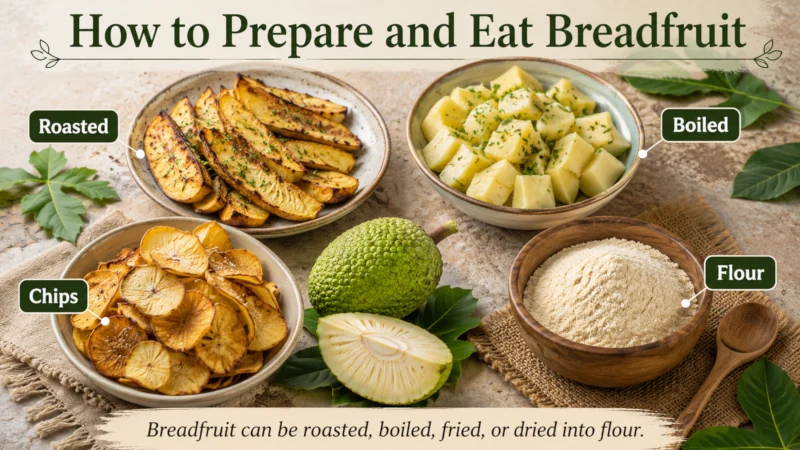
Breadfruit is almost always eaten cooked. Mature fruit has a starchy, potato-like texture; ripe fruit turns softer and sweeter.
Pulp: Mature breadfruit can be boiled, steamed, roasted, baked, or fried. Think of it as you would a potato — it goes into curries, stews, chowders, and salads. Roasting it directly over a flame until the skin blackens is a traditional Pacific Island method. Ripe breadfruit is sweet enough for desserts, smoothies, and baked goods.
Seeds: Some breadfruit varieties produce large, edible seeds that are roasted or boiled. The flavor and texture recall chestnuts. Seeds are higher in protein and fat than the flesh.
Flour: Peeled, sliced breadfruit is dried and ground into a gluten-free flour. The coarse meal can substitute for breadcrumbs, while the finer flour works in flatbreads, pancakes, pasta, and as a thickener. Because breadfruit flour lacks gluten, it won’t create the elastic structure of wheat bread on its own — blending it with other flours or binding agents helps. Breadfruit flour pairs well with coconut in many traditional recipes.
Safety, Side Effects, and Interactions
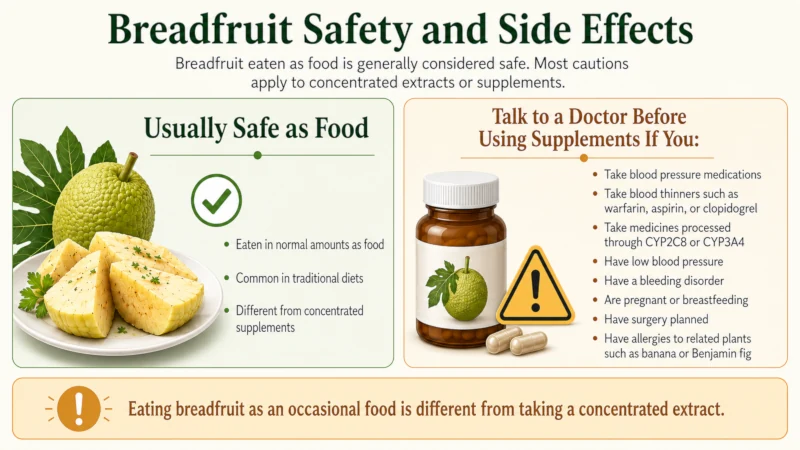
Breadfruit eaten as a food in normal amounts is considered safe [WebMD — Breadfruit monograph]. The safety concerns below apply to concentrated breadfruit extracts or supplements, not to eating the fruit in meals.
Potential Allergic Reactions
People who are allergic to bananas or Benjamin fig (Ficus benjamina) may also react to breadfruit, since they share the Moraceae family. If you have a known latex allergy or sensitivity to related fruits, check with an allergist before trying breadfruit.
Medication Interactions
WebMD’s monograph lists several moderate interactions for medicinal-strength breadfruit [WebMD — Breadfruit]:
Blood pressure medications: Breadfruit may lower blood pressure. Taking concentrated breadfruit alongside antihypertensive drugs could cause blood pressure to drop too low.
Blood-thinning medications: Breadfruit may slow blood clotting, which could increase bruising or bleeding if you take anticoagulants such as warfarin, aspirin, or clopidogrel.
Liver-metabolized drugs: Breadfruit may affect how the liver breaks down certain medications processed through CYP2C8 and CYP3A4 enzymes, including some NSAIDs, statins, and other common drugs.
If you take any of these medications, talk to your healthcare provider before using breadfruit supplements or extracts. Eating breadfruit as an occasional food is a different level of exposure than taking a concentrated supplement.
Pregnancy and Breastfeeding
Breadfruit as a food has a long history of safe consumption in tropical cultures, including by pregnant and breastfeeding women. However, there is not enough research on concentrated breadfruit extracts during pregnancy or breastfeeding. Stick to the fruit as food, and avoid medicinal preparations unless your healthcare provider advises otherwise.
Who Should Be Cautious
People with low blood pressure should be aware that breadfruit may lower blood pressure further. Those with bleeding disorders should avoid concentrated breadfruit products. Anyone planning surgery should mention breadfruit supplement use to their surgeon, since it may affect clotting.
| Health Disclaimer: This article is for general education and is not medical advice. It does not replace diagnosis, treatment, or guidance from a qualified healthcare professional. Talk to your doctor, pharmacist, or a registered dietitian before making significant dietary changes or using breadfruit supplements — especially if you are pregnant or breastfeeding, have low blood pressure, a bleeding disorder, or take prescription medications including blood thinners, blood pressure drugs, or medications processed by the liver. If you experience signs of a severe allergic reaction (swelling of the lips, tongue, or throat; difficulty breathing; widespread hives), call 911 immediately. |
Frequently Asked Questions
Is breadfruit good for you?
Yes, as part of a balanced diet. It is a filling, low-fat source of complex carbohydrates, fiber, potassium, and vitamin C. It is not a superfood or a medicine — it is a nutritious starchy fruit that fits well alongside other whole foods.
Is breadfruit gluten-free?
Yes. Breadfruit is naturally gluten-free, and the FDA has recognized breadfruit flour as GRAS. It can be used as a flour alternative for people with celiac disease or gluten sensitivity, though it won’t behave exactly like wheat flour in baking.
Can you eat breadfruit raw?
Mature breadfruit is usually cooked — boiled, roasted, steamed, or fried — because raw mature fruit is starchy and hard to digest. Fully ripe breadfruit, which is soft and sweet, can be eaten raw, though most people still prefer it cooked or blended into drinks and desserts.
Does breadfruit interact with any medications?
In concentrated form (supplements or extracts), breadfruit may interact with blood pressure medications, blood thinners, and drugs metabolized by certain liver enzymes (CYP2C8 and CYP3A4). If you take any of these medications, talk to your healthcare provider before using breadfruit supplements. Eating breadfruit as a food in normal amounts is generally not a concern.
References
- U.S. Department of Agriculture, Agricultural Research Service. FoodData Central — Breadfruit, raw. Accessed July 2026. View source
- Ragone, D. Breadfruit Nutritional Value and Versatility. Breadfruit Institute / National Tropical Botanical Garden & Hawaii Department of Agriculture, 2014. View source (PDF)
- Mehta KA, Quek YCR, Henry CJ. Breadfruit (Artocarpus altilis): Processing, nutritional quality, and food applications. Frontiers in Nutrition. 2023;10:1156155. PMID: 37006932. View source
- Liu Y, Ragone D, Murch SJ. Breadfruit (Artocarpus altilis): A source of high-quality protein for food security and novel food products. Amino Acids. 2015;47(4):847-856. PMID: 25588988. View source
- Liu Y, Brown PN, Ragone D, Gibson DL, Murch SJ. Breadfruit flour is a healthy option for modern foods and food security. PLOS One. 2020;15(7):e0236300. PMID: 32702056. View source
- WebMD. Breadfruit — Uses, Side Effects, and More. Therapeutic Research Center, LLC. Accessed July 2026. View source
