
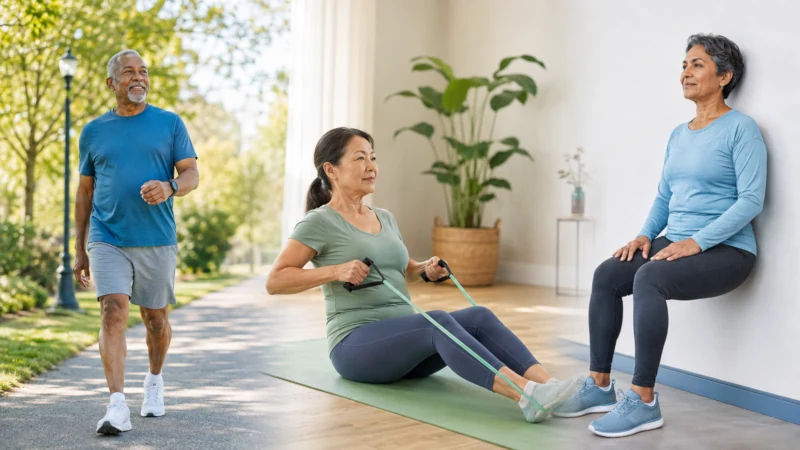
Exercise for blood pressure is one of the most evidence-backed, cost-free tools available for managing hypertension — yet it is also one of the most misunderstood. Many beginners check their blood pressure immediately after a walk, see the numbers jump, and worry they have made things worse. What they have actually witnessed is a normal cardiovascular response to physical effort. The benefit that matters — a sustained reduction in resting blood pressure — builds over weeks, not minutes.
This guide explains how to use walking, strength training, Zone 2 cardio, and isometric holds to lower resting blood pressure over time. It covers what the evidence actually shows for each exercise type, how to start safely if you are a beginner or on medication, and a conservative four-week plan you can begin today.
If you take blood pressure medication, have heart disease, kidney disease, or are pregnant, please speak with your clinician before starting a new exercise programme. Exercise may reduce your medication needs over time — but adjustments should always be directed by your prescriber.
Why Exercise Lowers Blood Pressure
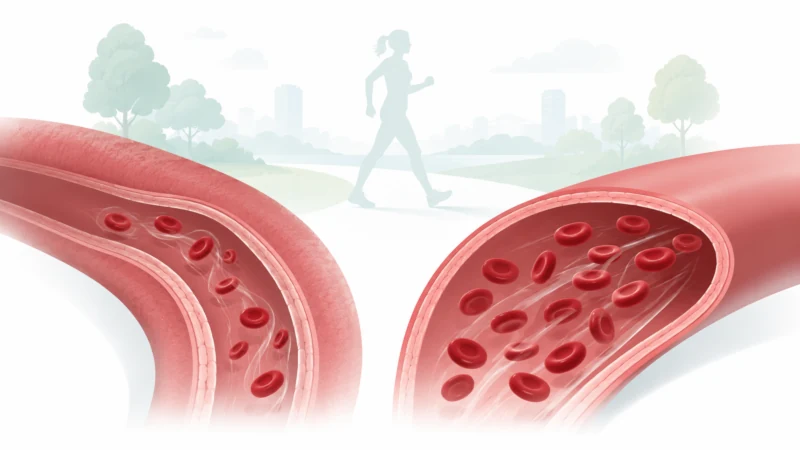
Aerobic and resistance exercise lower resting blood pressure through several overlapping mechanisms. Physical activity reduces arterial stiffness, improves endothelial (vessel-lining) function, lowers sympathetic nervous system activity, and supports healthy body weight and insulin sensitivity — all of which contribute to lower resting pressure [Cornelissen & Smart, 2013].
A 2013 meta-analysis of randomised controlled trials found that aerobic training reduced systolic pressure by approximately 3.5 mmHg and diastolic pressure by about 2.5 mmHg across all participants — with larger reductions in people who started with higher blood pressure [Cornelissen & Smart, 2013]. A 2023 large-scale network meta-analysis of 270 trials found that isometric exercise produced the largest reductions of any exercise type tested [Edwards et al., 2023]. Even modest reductions in systolic pressure (3–5 mmHg) are clinically meaningful — associated with meaningfully lower cardiovascular disease and stroke risk at the population level [AHA, 2018].
What Most Beginners Get Wrong
Measuring blood pressure too soon after exercise
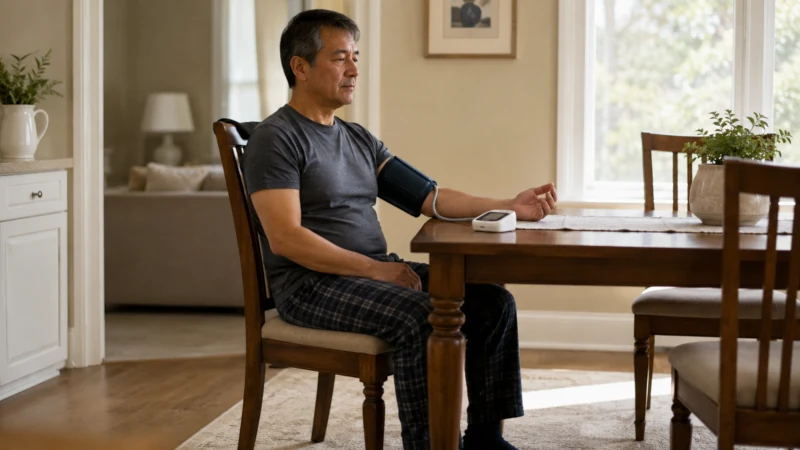
Blood pressure naturally rises during and immediately after physical effort — this is normal cardiovascular physiology, not a warning sign. Resting blood pressure should be measured after sitting quietly for at least five minutes, with your feet flat on the floor and your arm supported at heart level [Pickering et al., 2005]. For technique details, see the home blood pressure monitoring guide.
Assuming harder is always better
Moderate-intensity aerobic exercise — where you can still hold a short conversation — produces reliable, sustained blood pressure reductions. Very high-intensity effort is more demanding and carries greater injury risk for beginners, while producing similar or only marginally larger BP effects [Edwards et al., 2023]. Building a sustainable base first is the wiser approach.
Overlooking isometric exercise
Wall sits and handgrip squeezes often look too simple to be effective. Yet the 2023 network meta-analysis found isometric exercise produced the largest blood pressure reductions of any training mode tested — wall squats reduced systolic pressure by approximately 10 mmHg, maintained even with once-weekly sessions after an initial 12-week programme [Cohen et al., 2023]. For the full isometric protocol, see the detailed guide to isometric exercise for blood pressure.
Fear of strength training
Resistance exercise performed with controlled breathing, moderate loads, and higher repetitions is safe and effective for most people with hypertension. Current AHA guidance explicitly recommends resistance training as a component of blood pressure management [AHA Scientific Statement, 2021]. The key safety rule is straightforward: never hold your breath during a lift.
What the Evidence Shows for Each Exercise Type
The following table summarises expected blood pressure effects, beginner dosing, and key cautions for the four main exercise types covered in this guide.
| Exercise Type | Beginner Dose | Expected BP Effect | Tradeoffs / Cautions |
| Aerobic exercise (walking, cycling, swimming) | 150 min/week moderate intensity, or 75 min/week vigorous; can split into 10-min bouts | Systolic ↓ 3–6 mmHg Diastolic ↓ 2–5 mmHg | Most accessible. Counts even in short sessions. Joint stress with high-impact running; low-impact alternatives (cycling, swimming) suit most people. |
| Strength training (resistance, bodyweight) | 2 days/week, 1–3 sets of 10–15 reps, moderate load | Systolic ↓ 2–4 mmHg Diastolic ↓ 2–4 mmHg | Builds muscle, improves insulin sensitivity. Learn proper form; controlled breathing is essential. Avoid breath-holding during lifts. |
| Isometric exercise (wall sit, handgrip) | 3 sessions/week, 4 × 2 min holds at 30% max contraction, 1 min rest between | Systolic ↓ 8–10 mmHg Diastolic ↓ 4–5 mmHg | Largest BP reduction in 2023 network meta-analysis. Low time commitment. Temporarily raises BP during hold — never hold breath. Check with clinician if uncontrolled hypertension. |
| Zone 2 cardio (sustained moderate effort) | 150–180 min/week at 60–70% max heart rate; use talk test | Systolic ↓ 3–6 mmHg Diastolic ↓ 2–5 mmHg | Supports mitochondrial health and fat oxidation. Easy to sustain long-term. Use talk test rather than heart rate monitor if on beta-blockers. |
These figures are population averages from meta-analyses. Individual responses vary based on genetics, baseline blood pressure, diet, sleep, stress, medication, and consistency of training. Think of exercise as raising the probability of a beneficial outcome, not guaranteeing a specific number.
If You Take Blood Pressure Medication
Beta-blockers suppress the normal heart-rate response to exercise, so target heart-rate zones will not be accurate for you. Use the talk test instead: you should be able to speak in short sentences but not sing comfortably. If you cannot speak at all, slow down.
As your fitness improves and resting blood pressure drops, your prescriber may review your dosing. Never reduce or stop blood pressure medication on your own. If you consistently record systolic readings below 110 mmHg, or experience dizziness, lightheadedness, or unusual fatigue during exercise, report this to your clinician before your next session.
When starting an exercise programme, begin with 5–10 minute sessions and monitor how you feel. Some people experience dizziness in the first few weeks, particularly at the beginning of medication treatment or after dose changes. Persistent dizziness is a signal to speak with your prescriber, not to push through.
Safety: When to Stop and Seek Medical Advice
Stop exercising and seek urgent medical care if you experience:
- Chest pain, pressure, or tightness during or after exercise.
- Severe or sudden shortness of breath disproportionate to your effort level.
- Palpitations or irregular heartbeat that feel new or alarming.
- Sudden dizziness, loss of balance, or near-fainting.
- Pain, numbness, or tingling in the left arm, jaw, or back during exercise.
If your resting blood pressure is consistently above 180/120 mmHg, consult your clinician before beginning a new exercise programme. The 2025 AHA/ACC hypertension guideline recommends lifestyle interventions including 75–150 minutes of weekly combined aerobic and resistance activity — but starting with medical guidance at very high pressure levels is prudent [AHA/ACC, 2025].
How to Start: A Step-by-Step Approach
Step 1 — Build your aerobic base

If you have been mostly sedentary, begin with three 10-minute walks per week at a comfortable conversational pace. You should be able to talk in short sentences without gasping. This is Zone 2 cardio — the intensity at 60–70% of your maximum heart rate that supports cardiovascular adaptation and blood pressure reduction [Cleveland Clinic, 2025].
After two weeks, add five minutes to each session or add a fourth day. Progress is gradual because your cardiovascular system, joints, and connective tissue all need adaptation time. Do not skip steps because you feel fine — the purpose of gradual progression is to build a base that holds.
The American Heart Association recommends 150 minutes per week of moderate aerobic activity for general cardiovascular health [AHA Physical Activity Recommendations]. Three 10-minute walks spread through the day achieve comparable blood pressure effects to a single 30-minute session [AHA, Getting Active to Control High Blood Pressure]. Choose the format that fits your life.
Walking after meals offers an added benefit: it helps blunt post-meal blood sugar spikes, which over time may further support blood pressure control. For more on this strategy, see the guide to walking after meals for blood pressure.
Step 2 — Add strength training
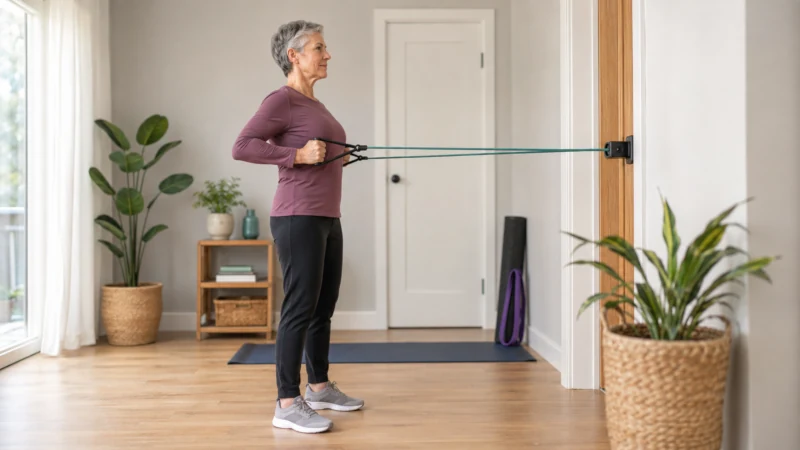
Once you are consistently meeting 30 minutes most days (or 90+ minutes per week), introduce resistance exercise twice weekly. No gym is needed — bodyweight squats, wall push-ups, modified planks, and resistance band rows all qualify.
Start with one set of 10–12 repetitions per exercise, using a weight or resistance you can control throughout. The critical rule: breathe out during the exertion phase, breathe in during the recovery phase. Never hold your breath. Breath-holding during lifting causes a sharp, temporary spike in blood pressure that can be dangerous for people with poorly controlled hypertension [AHA Scientific Statement, 2021].
After four weeks, add a second set per exercise. After another four weeks, consider a third set or a slightly greater resistance. The goal is not maximum effort — it is building lean muscle and improving metabolic health, both of which contribute to lower resting blood pressure over time.
If joint pain or arthritis makes traditional resistance training difficult, isometric holds are an excellent alternative. Wall sits build significant quadriceps and lower-body strength without the dynamic knee loading of squats.
Step 3 — Add isometric training (optional but highly effective)
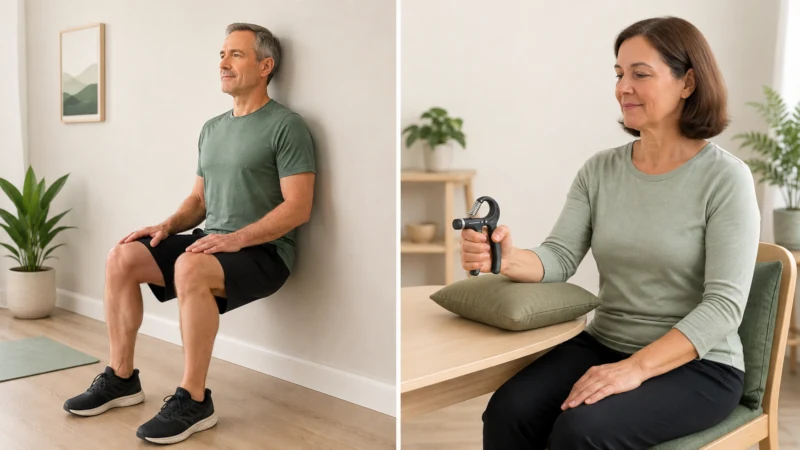
After four to six weeks of consistent aerobic and resistance work, consider adding isometric holds. The evidence-supported protocol: four repetitions of two-minute holds at approximately 30% of your maximum voluntary contraction, with one minute of rest between repetitions, performed three times per week [Edwards et al., 2023].
For wall sits, you should feel moderate tension in your thighs — not to the point of intense shaking or pain. For handgrip holds, use 30% of your maximum squeeze strength, alternating hands. Always breathe throughout. Blood pressure rises temporarily during an isometric hold; the beneficial reduction occurs in the hours and days that follow, accumulating over weeks.
Importantly, research suggests that blood pressure reductions achieved during a 12-week isometric programme can be maintained with as little as one session per week thereafter [Cohen et al., 2023]. This makes it a realistic long-term tool.
Track resting blood pressure — not post-exercise readings
Measure your resting blood pressure once or twice per week, at the same time each morning, after at least five minutes of quiet sitting. Look for trends over four to eight weeks, not day-to-day fluctuations. Most studies find measurable reductions after eight to twelve weeks of consistent training.
4-Week Beginner Exercise Plan
This plan is deliberately conservative. If you are already active, you can progress more quickly. If you have significant health limitations, reduce the pace further. The principle is the same at either speed: gradual, consistent progress builds results that last.
| Week | Aerobic Activity | Strength Training | Isometric (optional) | Total Time |
| Week 1 | 3 × 10 min walk | — | — | 30 min |
| Week 2 | 4 × 10 min walk | — | — | 40 min |
| Week 3 | 4 × 15 min walk | 1 × bodyweight circuit (squats, wall push-ups, plank hold) | — | ~70 min |
| Week 4 | 5 × 15 min walk or 3 × 20 min walk | 2 × bodyweight circuit | 1 × 4 × 2 min wall sit | ~100–115 min |
From week five onward, continue building: extend aerobic sessions to 30 minutes, increase strength training volume, and maintain isometric sessions three times per week. By week eight to twelve, you may begin to see measurable reductions in your morning resting blood pressure.
Quick Checklist
- Measure resting blood pressure correctly: seated, arm supported at heart level, after at least five minutes of quiet rest — never immediately after exercise.
- Start with 10-minute walks if you have been sedentary; add five minutes or a session every two weeks.
- Aim for 150 minutes per week of moderate aerobic activity. Three 10-minute bouts count as well as one 30-minute session.
- Add strength training twice per week. Use controlled breathing throughout — exhale on effort, inhale on recovery. Never hold your breath.
- Use the talk test for Zone 2: you should be able to speak in short sentences, but not sing comfortably.
- If you want joint-friendly training and maximum blood pressure reduction, try isometric wall sits: four rounds of two minutes, three times per week.
- Track resting blood pressure weekly, not daily. Look for trends over four to eight weeks.
- If you take blood pressure medication or have heart disease, confirm the plan with your clinician first.
- Stop and seek care if you experience chest pain, unusual breathlessness, palpitations, or sudden dizziness during exercise.
| HEALTH DISCLAIMER: This article about exercise for blood pressure is for educational purposes only and is not medical advice. If you have high blood pressure, heart disease, kidney disease, or are pregnant, or take prescription medications, speak with a qualified clinician before changing your treatment, diet, exercise plan, or supplements. Do not stop or adjust blood pressure medication without first consulting your prescriber. |
Frequently Asked Questions
How long before exercise lowers my blood pressure?
Most studies show measurable reductions in resting blood pressure after eight to twelve weeks of consistent exercise [Cornelissen & Smart, 2013]. Do not judge your progress by readings in the first two to four weeks. Track weekly averages and look for a downward trend over at least one month.
Can I split my exercise into short sessions?
Yes. Three 10-minute walks produce comparable blood pressure benefits to a single 30-minute session [AHA, Getting Active to Control High Blood Pressure]. Choose whichever format is easier to sustain.
Will exercise alone bring my blood pressure to a normal range?
It depends on where you start and how many other factors are involved. Exercise typically lowers systolic pressure by 3–10 mmHg, with isometric exercise at the higher end of that range. If your resting systolic is 145 mmHg, exercise may bring it to 135–140 mmHg — a meaningful improvement, but possibly still above the optimal target (below 130 mmHg for most people according to current guidelines). Exercise is one powerful tool in a broader plan that often includes diet, sleep, stress management, and possibly medication.
Is isometric exercise safe with high blood pressure?
For most people with hypertension, yes — provided you breathe continuously throughout each hold and start conservatively. If your resting systolic is consistently above 180 mmHg, consult your clinician before beginning. The temporary rise in blood pressure during the hold is part of the mechanism; the lasting reduction occurs in recovery.
What if I take beta-blockers?
Beta-blockers blunt the heart-rate response to exercise, making target-zone calculations unreliable. Use the talk test as your primary guide. If your blood pressure improves with exercise, report this to your prescriber — medication dosing may need review. Never reduce or stop medication without clinical guidance.
Is it safe to lift heavy weights?
Maximum-effort lifts with breath-holding cause large, acute blood pressure spikes and are not recommended for people with poorly controlled hypertension [AHA Scientific Statement, 2021]. Lighter loads (50–70% of maximum), higher repetitions (10–15 per set), and controlled breathing are both safer and effective for blood pressure management.
Exercise lowers blood pressure by improving vascular function, reducing arterial stiffness, supporting metabolic health, and lowering sympathetic nervous system tone. Walking, strength training, Zone 2 cardio, and isometric holds all produce measurable benefits when performed consistently.
The key insight most beginners miss: do not judge progress by your blood pressure reading five minutes after exercise. Judge by your resting blood pressure — measured correctly, tracked over weeks — and look for a gradual downward trend.
Exercise will not erase a poor diet, chronic sleep deprivation, or high stress. But it is one of the most powerful, evidence-backed lifestyle levers available. Start with 10 minutes today. Build from there.
References
- Pickering TG, et al. Recommendations for blood pressure measurement in humans and experimental animals. Circulation. 2005;111(5):697–716. → View source
- Cornelissen VA, Smart NA. Exercise training for blood pressure: a systematic review and meta-analysis. J Am Heart Assoc. 2013;2(1):e004473. → View source
- Pescatello LS, et al. Physical activity to prevent and treat hypertension: a systematic review. Med Sci Sports Exerc. 2019;51(6):1314–1323. → View source
- American Heart Association. Physical Activity Guidelines for Americans — AHA Summary. Circ Cardiovasc Qual Outcomes. 2018;11(11):e005263. → View source
- American Heart Association. AHA Recommendations for Physical Activity in Adults and Kids. 2024. → View source
- American Heart Association. Getting Active to Control High Blood Pressure. 2024. → View source
- American Heart Association. Physical Activity as a Critical Component of First-Line Treatment for Elevated Blood Pressure or Cholesterol (Scientific Statement). Hypertension. 2021;78(2):e26–e37. → View source
- American Heart Association / American College of Cardiology. New High Blood Pressure Guideline Emphasizes Prevention, Early Treatment. August 2025. → View source
- Edwards JJ, et al. Exercise training and resting blood pressure: a large-scale pairwise and network meta-analysis of randomised controlled trials. Br J Sports Med. 2023;57(20):1317–1326. → View source
- Cohen DD, et al. Reductions in systolic blood pressure achieved by hypertensives with three isometric training sessions per week are maintained with a single session per week. J Clin Hypertens. 2023;25(4):380–387. → View source
- Cleveland Clinic. What To Know About Heart Rate Zones. October 2025. → View source
- Edwards JJ, Wiles J, O’Driscoll J. Mechanisms for blood pressure reduction following isometric exercise training: a systematic review and meta-analysis. J Hypertens. 2022;40(11):2299–2306. → View source
- Inder JD, et al. Isometric exercise training for blood pressure management: a systematic review and meta-analysis. Hypertens Res. 2016;39(2):88–94. → View source
