
Natural Health Message — Herbs, Remedies & Nutrition for Whole-Body Wellness.
  • Health Conditions
    • Cancer & Prevention
    • Cardiovascular Health
    • Digestive Health
    • Eye & Vision
    • Immune & Infections
    • Metabolic Health
    • Musculoskeletal Health
    • Nervous System
    • Reproductive Health
    • Respiratory Health
    • Skin Health
    • Urinary Health
  • Nutrition
    • Diet
    • Foods
    • Recipes
  • Remedies
    • Alternative Treatments
    • Herbal Remedies
    • Herbs
    • Lifestyle & Habits
  • Supplements and Reviews
    • General Supplements
    • Minerals
    • Nitric Oxide
    • Reviews
    • Vitamins
Home | Vitamins | Vitamin E Benefits, Functions, Sources, and Dosage Information
Vitamins

Vitamin E Benefits, Functions, Sources, and Dosage Information

by Donald Rice Published: November 23, 2024
written by Donald Rice Published: November 23, 2024
Naturalhealthmessage.com receives compensation from some of the companies, products, and services listed on this page. Advertising Disclosure
0FacebookTwitterPinterestTumblrVKWhatsappEmail
1.4K

Contents

  • 1 Vitamin E Sources
  • 2 Natural vs. Synthetic Forms
  • 3 Deficiency Symptoms
  • 4 Cautions
  • 5 Dosage
      • 5.0.1 REFERENCES

The foremost function of vitamin E is as an antioxidant that protects against heart disease, cancer, and strokes. It oxygenates the cells and tissues and reduces the need for oxygen. Prevents unsaturated fatty acids and oil-soluble vitamins from being destroyed in the body. It dilates blood vessels and thus improves circulation. This vitamin also prevents tissue scar formation in burns. It protects and helps the arteries, capillaries, lungs, and reproductive organs.
Featured Picks

Browse popular supplements, vitamins, and minerals.

Browse Supplements

As an Amazon Associate I earn from qualifying purchases.

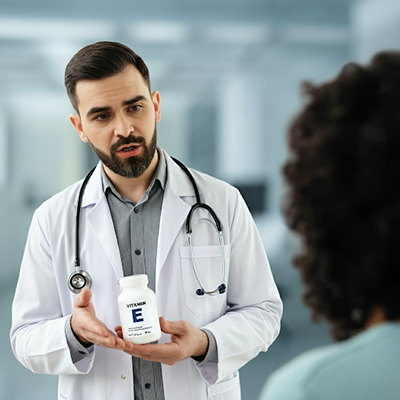
a doctor talking to a patient about the importance of vitamin E

Vitamin E is also used in treating varicose veins, angina pectoris, burns, leg ulcers, reproductive problems, infertility (male and female), emphysema, and hypoglycemia. It lessens the likelihood of miscarriages. Vitamin E enters the fatty portion of cell membranes, stabilizing and protecting them from compounds (such as lead, mercury, and other heavy metals). Also, toxic compounds (such as benzene, carbon tetrachloride, cleaning solvents, drugs, radiation, and your free-radical metabolites).

Thanks to its strong antioxidant effects, a high-E diet (or taking of worthwhile vitamin E supplements) exerts a protective effect in many common health conditions. It protects the thymus gland circulating white blood cells from damage. It is important in immune function, especially during stress and chronic viral illness (such as AIDS and chronic viral hepatitis). It reduces LDL cholesterol and increases HDL cholesterol. When taken in higher doses, it offers significant protection against cancer.

(In one study, patients with low vitamin E levels had a 50 percent greater risk of cancer.) Vitamin E helps relieve many post-menstrual symptoms, including fibrocystic breast disease. It is effective in reducing hot flashes and menopausal vaginal complaints. The list of diseases it protects against is quite numerous.

Vitamin E Sources

  • Best sources – Fresh, cold-pressed wheat germ oil and flaxseed oil. (Because flaxseed oil is so rich in omega-3 and omega-6 fatty acids, which prevent cancer, it is the best oil to take. Buy cold-pressed, keep it in the refrigerator, and do not cook it.
  • Other sources – Other un-refined, cold-pressed, crude vegetable oils also have vitamin E. Soy oil and sunflower oil are good, but corn oil is somewhat less. All whole raw or sprouted seeds, nuts, and grains contain vitamin E. It is also in green, leafy vegetables and eggs.

Natural vs. Synthetic Forms

Be sure you are getting natural vitamin E, not synthetic. Synthetics are worthless; do not purchase or use them. Read the label: Natural E is written “tocopherols” or “d-tocopherol.” Natural alpha-tocopherol (the most active form of E) is “alpha-tocopherol” (or “d-alpha-tocopherol”). The synthetic is “tocopheryl” [with a “y”] or “dl-alpha-tocopherol” [with “dl”]. Mixed tocopherols contain alpha, beta, and delta tocopherol. Alpha-tocopherol (d-alpha-tocopherol) has the highest activity level and is preferred by many specialists. But mixed tocopherols are also good. Another commercial form is “water-soluble vitamin E.” Although much more expensive, it is no more absorbable or useful in the body than the natural oil-soluble type.

Deficiency Symptoms

Nerve damage, muscle weakness, poor coordination, involuntary movement of the eyes, and breaking of red blood cells (leading to hemolytic anemia). In premature infants, vitamin E deficiency is characterized by hemolytic anemia and a severe eye disorder (retrolental fibroplasia). Pulmonary embolism, strokes, heart disease, coronary degeneration, testicle degeneration, miscarriages, sterility, muscular disorders, red-blood cell fragility. Fat malabsorption syndromes, such as cystic fibrosis, celiac disease, and post-gastrectomy syndrome. Premature infants. Hereditary conditions of red blood cells, such as sickle-cell anemia and thalassemia.

Needed for Assimilation – Vitamins A, C, D, and E.

Cautions

Iron supplements destroy vitamin E. Rancid oil does, too. Do not eat rancid grains or other foods, including even slightly old wheat germ oil. Many interested in better health never eat wheat germs since it is difficult to obtain fresh and keep it from going rancid before being eaten. You can consider toasted wheat germ to be rancid. One study suggested that those with high blood pressure, heart conditions, or rheumatic heart disease should not take over 400-600 IU of vitamin E daily. However, all other reports indicated that vitamin E was safe in any quantity. The healing strengthening power of vitamin E is not perceived until one takes at least 200-600 mg daily.
a woman holding a vitamin E pill

Dosage

RDA 15 IU / ODA 400 IU / TDA 1200 IU. Usually measured in international units (IU), but sometimes in milligrams (mg). One mg is equal to 1.5 IU. Recommended: Normal dosage is 400-800 IU daily. Menopausal patients should take 800 IU daily until hot flashes subside, and then lower to 400 IU daily. Diabetic patients given 1350 IU daily experienced lowered insulin need, and their glucose tolerance and insulin activity improved. Of 87000 nurses, those who took 100 IU of vitamin E for two years had a 41 percent lower risk of heart disease. 400-800 IU dosages provide better oxidative protection for those in high-stress situations.

HEALTH DISCLAIMER: The information on this website is for educational uses only and is not a substitute for professional medical advice. Always consult an authorized healthcare provider for any health concerns before using any herbal or natural remedy. We do not establish, treat, cure, or prevent any disease. Reliance on any material from this website is solely at your own risk. We are not responsible for any adverse effects resulting from the use of information or products mentioned on this website.

REFERENCES

Vance Ferrell, Harold M. Cherne, M.D. 2010. The Natural Remedies Encyclopedia. Altamont : Harvestime Books, 2010. pp. 107. Vol. Seventh.

Related posts:

  1. Vitamin E-rich Foods: List of 30 Foods You Should Be Eating or Avoiding
  2. A Comprehensive List of Carbohydrate Foods for Energy and Nutrition: We Breakdown 30 of The Best and Worst Sources
  3. Anti-Inflammatory Supplements That Reduce Inflammation
  4. Women’s Health: Important Vitamins and Minerals
itamin e deficiencyvitamin e benefitsvitamin e capsules benefitsvitamin e foods
0 FacebookTwitterPinterestTumblrVKWhatsappEmail
Donald Rice
Donald Rice

Donald Rice is a natural health advocate and health writer focused on nutrition, wellness, and alternative health education. He creates clear, research-based content designed to help readers better understand health topics through reputable sources, including peer-reviewed studies, academic institutions, government health agencies, and established medical organizations.

previous post
Vitamin D Benefits, Dosage, Deficiency Symptoms, and Functions
next post
Vitamin F Benefits, Sources, Functions, and Dosage Information

You may also like

Vitamin C Complex Sources, Functions, Dosage, and Information

Updated: May 16, 2026

Vitamin F Benefits, Sources, Functions, and Dosage Information

Updated: November 26, 2024

Vitamin D Benefits, Dosage, Deficiency Symptoms, and Functions

Published: November 23, 2024

Vitamin A Benefits, Sources, Dosage, and Functions

Updated: May 16, 2026

B Complex Vitamins

Updated: May 16, 2026

Vitamin D Shots: Top 3 Reasons To Unlock Your Health Potential with The...

Updated: November 23, 2024
Best Health and Wellness Blogs - OnToplist.com

Recent Posts

  • Best Exercises for Flat Feet in Adults

  • What Are Flat Feet? Causes, Types, and Common Symptoms

  • Flat Feet and Fallen Arches: Causes, Symptoms, and What Helps

  • Cardiovascular and Pulmonary Disease: What Every Patient Should Know

  • Acerola Cherry Supplements: 7 Important Things to Look for Before You Buy

Random Articles

Boneset Plant: An Amazing Natural Remedy from Nature’s Pharmacy
Can You Smoke Catnip? The Surprising Truth Revealed
6 of The Best Foods For Eye Health

Vitamin D Shots: Top 3 Reasons To Unlock Your Health Potential with The Sunshine Boost You Need

Recent Articles

9 Fantastic Heart Healthy Foods That Prevent Stroke
Ginger Oil: 10 Fiery Reasons to Spice Up Your Life
Magnesium-Rich Foods: Discover The Top 30 Animal and Plant-Based Sources

Featured

9 Amazing and Calming Foods to Eat For IBS
Health Benefits of Rye: Helps Provide Flexibility to The Arteries
13 Popular Foods That Cause High Blood Pressure

@2024 – All Right Reserved. Natural Health Message.

  • About Us
  • Contact Us
  • Advertising Disclosure
  • Medical Advice Disclaimer
We use cookies on our website to give you the most relevant experience by remembering your preferences and repeat visits. By clicking “Accept All”, you consent to the use of ALL the cookies. However, you may visit "Cookie Settings" to provide a controlled consent.
Cookie SettingsAccept All
Manage consent

Privacy Overview

This website uses cookies to improve your experience while you navigate through the website. Out of these, the cookies that are categorized as necessary are stored on your browser as they are essential for the working of basic functionalities of the website. We also use third-party cookies that help us analyze and understand how you use this website. These cookies will be stored in your browser only with your consent. You also have the option to opt-out of these cookies. But opting out of some of these cookies may affect your browsing experience.
Necessary
Always Enabled
Necessary cookies are absolutely essential for the website to function properly. These cookies ensure basic functionalities and security features of the website, anonymously.
CookieDurationDescription
cookielawinfo-checkbox-analytics11 monthsThis cookie is set by GDPR Cookie Consent plugin. The cookie is used to store the user consent for the cookies in the category "Analytics".
cookielawinfo-checkbox-functional11 monthsThe cookie is set by GDPR cookie consent to record the user consent for the cookies in the category "Functional".
cookielawinfo-checkbox-necessary11 monthsThis cookie is set by GDPR Cookie Consent plugin. The cookies is used to store the user consent for the cookies in the category "Necessary".
cookielawinfo-checkbox-others11 monthsThis cookie is set by GDPR Cookie Consent plugin. The cookie is used to store the user consent for the cookies in the category "Other.
cookielawinfo-checkbox-performance11 monthsThis cookie is set by GDPR Cookie Consent plugin. The cookie is used to store the user consent for the cookies in the category "Performance".
viewed_cookie_policy11 monthsThe cookie is set by the GDPR Cookie Consent plugin and is used to store whether or not user has consented to the use of cookies. It does not store any personal data.
Functional
Functional cookies help to perform certain functionalities like sharing the content of the website on social media platforms, collect feedbacks, and other third-party features.
Performance
Performance cookies are used to understand and analyze the key performance indexes of the website which helps in delivering a better user experience for the visitors.
Analytics
Analytical cookies are used to understand how visitors interact with the website. These cookies help provide information on metrics the number of visitors, bounce rate, traffic source, etc.
Advertisement
Advertisement cookies are used to provide visitors with relevant ads and marketing campaigns. These cookies track visitors across websites and collect information to provide customized ads.
Others
Other uncategorized cookies are those that are being analyzed and have not been classified into a category as yet.
SAVE & ACCEPT
Natural Health Message — Herbs, Remedies & Nutrition for Whole-Body Wellness.
  • Health Conditions
    • Cancer & Prevention
    • Cardiovascular Health
    • Digestive Health
    • Eye & Vision
    • Immune & Infections
    • Metabolic Health
    • Musculoskeletal Health
    • Nervous System
    • Reproductive Health
    • Respiratory Health
    • Skin Health
    • Urinary Health
  • Nutrition
    • Diet
    • Foods
    • Recipes
  • Remedies
    • Alternative Treatments
    • Herbal Remedies
    • Herbs
    • Lifestyle & Habits
  • Supplements and Reviews
    • General Supplements
    • Minerals
    • Nitric Oxide
    • Reviews
    • Vitamins