If you’re weighing the benefits of black cohosh, here’s the honest short version: the herb is mainly studied as a remedy for the hot flashes and night sweats of menopause, and the evidence there is real but mixed. For most of the other things it gets sold for — stronger bones, better mood, cancer prevention, “cellular detox” — the science is thin or missing. It also carries a small but genuine safety signal around the liver that’s worth understanding before you start.
What black cohosh actually is
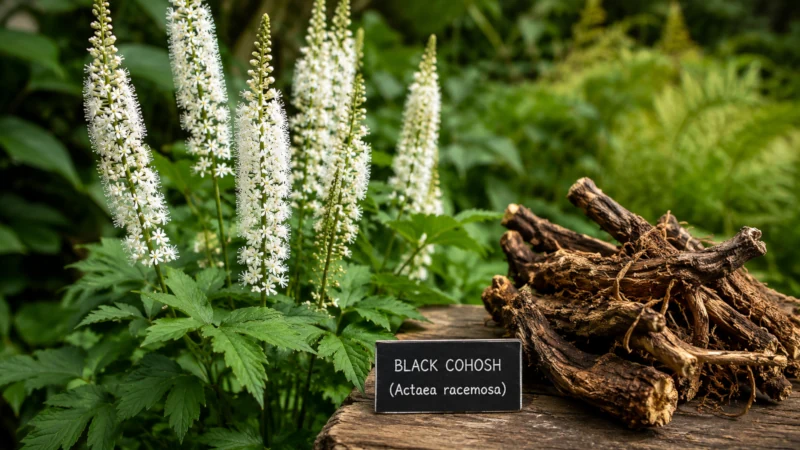
Black cohosh (Actaea racemosa, formerly Cimicifuga racemosa) is a tall woodland plant in the buttercup family, native to eastern North America. The medicinal part is the root and underground stem, dried and sold as capsules, tablets, and liquid extracts. [NIH Office of Dietary Supplements, 2020] Native Americans used it for a range of complaints — musculoskeletal pain, fever, cough, and menstrual problems — and it was adopted in German medicine for women’s health in the late 1800s. [NIH Office of Dietary Supplements, 2020] Today it’s promoted almost entirely for menopause. [NCCIH, 2024]
One practical thing to know up front: products vary a lot. The compounds thought to be active — a group called triterpene glycosides — differ from bottle to bottle, and researchers still can’t say for certain which ingredients, if any, do the work. [NIH Office of Dietary Supplements, 2020] That variation is part of why the studies disagree.
Benefits of black Cohosh: easing hot flashes and night sweats
This is the one use with a serious body of research behind it, so it’s worth being precise about what that research says.
A 2023 meta-analysis pooling 22 trials and 2,310 women found that black cohosh extracts modestly improved overall menopause symptoms and hot flashes compared with placebo, with small-to-moderate effect sizes (a Hedges’ g of about 0.32 for hot flashes). [Sadahiro et al., Menopause, 2023] That’s a measurable benefit — not a dramatic one.
Older and equally serious reviews were less convinced. A 2012 Cochrane review of 16 trials concluded there was insufficient evidence to either support or reject black cohosh for menopause symptoms. [NIH Office of Dietary Supplements, 2020] A large 2016 analysis in JAMA found no significant reduction in hot flashes. [NIH Office of Dietary Supplements, 2020] Professional bodies have stayed cautious: the American College of Obstetricians and Gynecologists and the North American Menopause Society both conclude the data don’t show herbal options like black cohosh clearly outperform placebo. [NIH Office of Dietary Supplements, 2020]
Putting that together the way NCCIH now does: black cohosh is potentially helpful for overall menopause symptoms and hot flashes, but the benefit is inconsistent and modest, and it is not a replacement for hormone therapy. [NCCIH, 2024] If night sweats are your main problem, it’s one of several options worth understanding — you can compare them in our guide to natural remedies for night sweats.
What it probably won’t do: mood, anxiety, and depression
The same 2023 meta-analysis that found a hot-flash benefit found no significant improvement in anxiety or depressive symptoms. [Sadahiro et al., Menopause, 2023] So if low mood or anxiety is your central menopause complaint, black cohosh isn’t a well-supported answer, and it’s worth raising with a clinician instead.
A realistic timeline
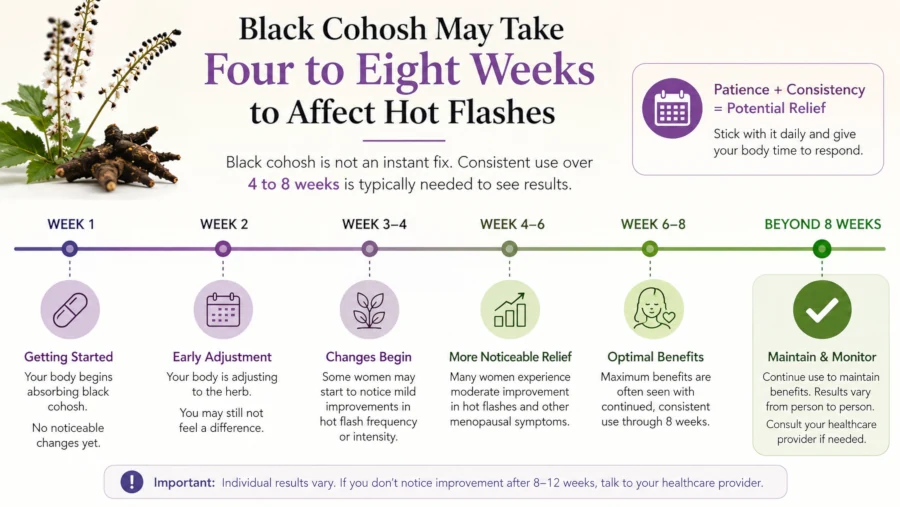
In trials, when black cohosh helps, women usually notice within about four to eight weeks. If two months pass with no change, it’s unlikely to start working — a good moment to stop and reconsider rather than keep going.
What about all the other “benefits”?
Black cohosh gets marketed for a long list of conditions. Here’s where each one actually stands.
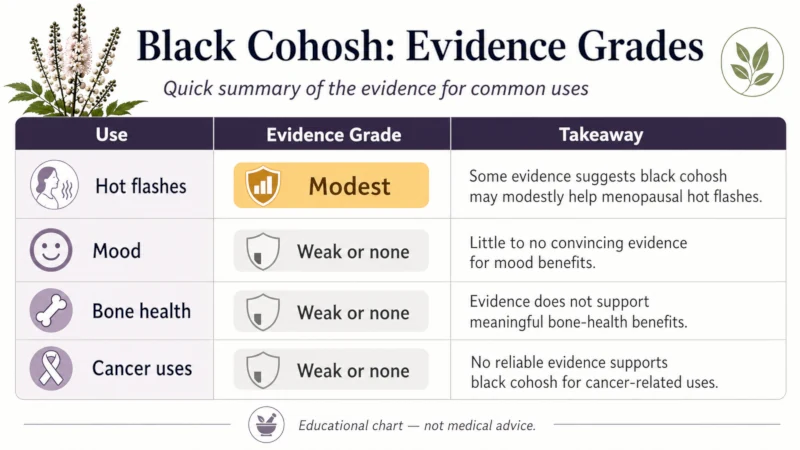
| Claimed use | What the evidence shows |
| Hot flashes & night sweats (menopause) | The strongest case, though still mixed. A 2023 meta-analysis is cautiously positive; older reviews and medical societies are more skeptical. |
| Menstrual cramps & PMS | Long traditional use, but no good clinical evidence that it works. |
| Mood, anxiety, depression | Studied and not supported — trials show no benefit over placebo. |
| Bone health / osteoporosis | Not enough reliable human evidence; some trials found no effect on bone density. |
| Anti-inflammatory / antioxidant | Laboratory-dish hypotheses only; no evidence of a health benefit in people. |
| Cancer prevention | Not supported — and there’s actually a safety caution here, not a benefit. |
For a broader look at herbs traditionally used across women’s health, our overview of powerful herbs for women puts black cohosh in context alongside others.
The cancer claim, corrected
This one is sometimes sold backwards, so it’s worth flagging plainly. Black cohosh is not a proven cancer preventive. Laboratory and animal results are genuinely mixed — some suggest it slows certain cancer cells, while at least one study found it increased the spread of breast cancer in mice — and none of that supports taking it to prevent cancer. [Memorial Sloan Kettering, 2022] More important for everyday decisions: because it was long assumed to act like estrogen, there’s lingering uncertainty about whether it’s safe for women who’ve had breast or uterine cancer. That group should treat it with caution and check with their oncologist, not reach for it expecting protection. [NCCIH, 2024]
Does black cohosh work like estrogen?
For years it was described as a phytoestrogen — a plant stand-in for estrogen. Newer research undercuts that picture: black cohosh doesn’t appear to change estrogen, luteinizing hormone, or follicle-stimulating hormone levels, and it shows no systemic estrogenic effect in studies. [Drugs and Lactation Database (LactMed), 2021] The current thinking is that any benefit comes from effects on brain chemistry — serotonin and related pathways involved in temperature control — rather than hormones. [Memorial Sloan Kettering, 2022] The honest bottom line is that the mechanism is still unsettled. [NIH Office of Dietary Supplements, 2020]
How to take it
Most studied products are standardized extracts taken at roughly 40 mg of root and rhizome per day, often split into two doses; the widely researched product Remifemin is a common example, and many extracts are standardized to about 1 mg of triterpene glycosides per daily dose. [NIH Office of Dietary Supplements, 2020]
A few practical habits make a trial safer and more informative: give it four to eight weeks, use the lowest dose that seems to help, and avoid stacking it with several other menopause supplements at once — combining them makes it impossible to tell what’s working and multiplies the chance of an interaction.
Side effects and safety
For most people in studies, black cohosh has been well tolerated, with side effects no more common than placebo. [NIH Office of Dietary Supplements, 2020] When they do occur, the usual ones are mild and pass on their own [Memorial Sloan Kettering, 2022]:
- Stomach upset and nausea
- Headache
- Dizziness
- Skin rash
Two issues matter more than the everyday side effects.
The liver: the one signal to respect
This is the real safety story. Worldwide, at least 83 cases of liver problems — ranging from raised liver enzymes to, rarely, liver failure — have been reported in people using black cohosh products. [NIH Office of Dietary Supplements, 2020] A causal link has never been proven, and some cases may trace back to contaminated or mislabeled products rather than the herb itself. [NCCIH, 2024] Even so, both Australian regulators and the U.S. Pharmacopeia recommend a liver-warning label on these products. [NIH Office of Dietary Supplements, 2020] The sensible read: serious liver injury from black cohosh is rare, but real enough to respect.
Product quality feeds into this. Some supplements sold as black cohosh have been found to contain the wrong plant or undisclosed herb mixtures. [NCCIH, 2024] Because supplements aren’t reviewed by the FDA before they’re sold, choosing a reputable brand with independent third-party testing genuinely matters. [Drugs and Lactation Database (LactMed), 2021]
Warning signs to stop and get help
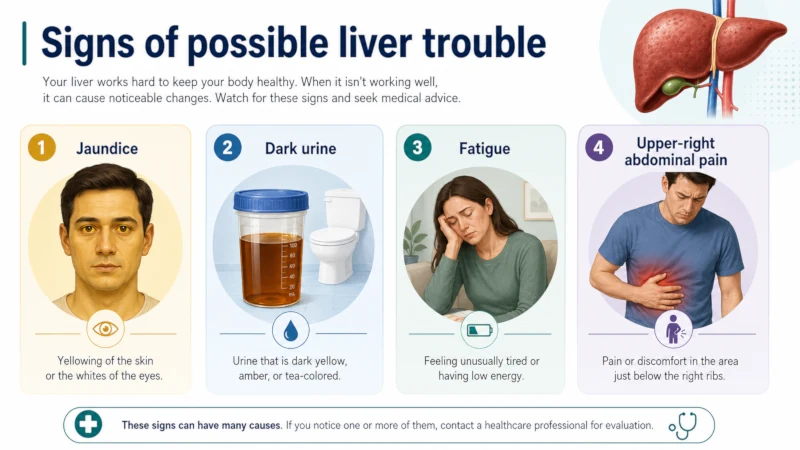
While taking black cohosh, stop and contact a healthcare provider promptly if you develop dark urine, yellowing of the skin or eyes (jaundice), unusual or persistent fatigue, nausea that won’t settle, or pain in the upper-right side of your abdomen. These can be signs of liver trouble. [NCCIH, 2024]
Who should avoid black cohosh
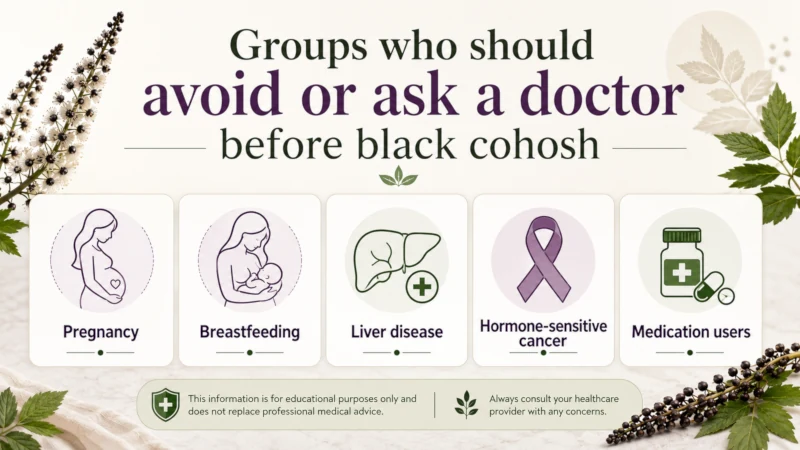
Some people should steer clear, or at least clear it with a professional first:
- Pregnancy — avoid unless your provider advises otherwise; it hasn’t been rigorously tested in pregnancy and may stimulate the uterus. [Memorial Sloan Kettering, 2022]
- Breastfeeding — there’s no safety data in nursing mothers or infants, and some experts advise against it. [Drugs and Lactation Database (LactMed), 2021]
- Liver disease — avoid it. [NIH Office of Dietary Supplements, 2020]
- A history of breast or uterine cancer (or high risk) — its safety in hormone-sensitive conditions is unclear; talk to your oncologist first. [NCCIH, 2024]
- Anyone on regular prescription medication — black cohosh has no firmly established drug interactions, partly because it hasn’t been studied much. [NIH Office of Dietary Supplements, 2020] Laboratory and case-report signals do exist around tamoxifen, the chemotherapy drugs doxorubicin and docetaxel, medicines processed by the CYP3A4 liver enzyme, and simvastatin, so check with a pharmacist or doctor before combining. [Memorial Sloan Kettering, 2022]
One more caution: don’t confuse black cohosh with blue cohosh. They’re different plants, and blue cohosh carries more serious risks — it shouldn’t be used to bring on labor. [NCCIH, 2024]
When to talk to a healthcare professional
Menopausal symptoms that are wearing you down deserve a real conversation, not just a supplement. See a provider if hot flashes or night sweats are disrupting your sleep or daily life, if symptoms started abruptly or come with anything unusual (unexplained weight loss, a breast lump, unexpected bleeding), or if you’ve given black cohosh a couple of months without benefit. Hormone therapy and several non-hormonal prescription options have stronger evidence behind them, and a clinician can tell you whether they fit your personal history. [NCCIH, 2024]
| Health Disclaimer This article is for general educational purposes only and is not a substitute for professional medical advice, diagnosis, or treatment. Black cohosh can affect the liver and may not be appropriate during pregnancy or breastfeeding, with liver disease, with a history of hormone-sensitive cancer, or alongside certain medications. Always talk with a qualified healthcare provider before starting any herbal supplement, and don’t delay or replace medical care based on what you read here. If you develop signs of liver trouble — jaundice, dark urine, or persistent fatigue — stop use and seek medical attention. |
Frequently Asked Questions
How long does black cohosh take to work?
In clinical trials, women who respond usually notice a difference within about four to eight weeks. If eight weeks pass with no change, it’s unlikely to help you, and that’s a reasonable point to stop.
Does black cohosh contain estrogen or act like it?
It was long assumed to, but newer studies show no systemic estrogenic effect and no clear change in estrogen, LH, or FSH levels [Drugs and Lactation Database (LactMed), 2021]. Any benefit more likely comes from effects on brain chemistry. Despite this, its safety in hormone-sensitive cancers still isn’t settled, so that group should be cautious.
Is black cohosh safe for the liver?
For most people in studies it’s well tolerated, but rare cases of serious liver injury have been reported, and a cause hasn’t been proven [NIH Office of Dietary Supplements, 2020]. Avoid it if you have liver disease, and stop and seek care if you notice jaundice, dark urine, or unusual fatigue.
Can I take black cohosh for menopausal mood swings or anxiety?
The evidence doesn’t support it for mood, anxiety, or depression — trials found no meaningful benefit over placebo [Sadahiro et al., Menopause, 2023]. Its (modest) evidence is specifically for hot flashes and night sweats.
Can I take it with my other medications?
There are no firmly established interactions, but black cohosh is understudied, and there are theoretical concerns with tamoxifen, certain chemotherapy drugs, CYP3A4-processed medicines, and simvastatin [Memorial Sloan Kettering, 2022]. Run it past a pharmacist or doctor first.
Is black cohosh the same as blue cohosh?
No. They’re unrelated plants with different risk profiles, and blue cohosh in particular can be dangerous. Don’t substitute one for the other [NCCIH, 2024].
References
- National Center for Complementary and Integrative Health. Black Cohosh: Usefulness and Safety. NCCIH, updated November 2024. → View source
- Office of Dietary Supplements, National Institutes of Health. Black Cohosh — Fact Sheet for Health Professionals. NIH ODS, updated 2020. → View source
- Sadahiro R, Matsuoka LN, Zeng B-S, et al. Black cohosh extracts in women with menopausal symptoms: an updated pairwise meta-analysis. Menopause. 2023;30(7):766–773. DOI: 10.1097/GME.0000000000002196. → View source
- Drugs and Lactation Database (LactMed). Black Cohosh. National Institute of Child Health and Human Development, updated 2021 (PMID 30000840). → View source
- Memorial Sloan Kettering Cancer Center. Black Cohosh — Integrative Medicine. MSKCC, updated May 2022. → View source
