
If you drink diet soda and want a straight answer: for most people, the sweetener in it is safe at the amounts anyone realistically consumes. That is the position of the U.S. Food and Drug Administration, the European Food Safety Authority, and the World Health Organization’s own expert committee on food additives. Aspartame is also one of the most heavily studied ingredients in the food supply — the FDA says it has reviewed more than 100 studies looking for toxic effects [FDA, 2025].
That is not the whole story. In July 2023 the WHO’s cancer agency listed aspartame as “possibly carcinogenic to humans,” which made headlines and left a lot of people confused about what to do. One group genuinely must avoid it. And “safe” is not the same thing as “good for you.” Here is what the evidence supports, where it is thin, and where the experts still disagree.
What aspartame is, and where you’ll find it
Aspartame is about 200 times sweeter than table sugar and sold under the brand names NutraSweet, Equal, and Sugar Twin [FDA, 2025]. Chemically it is two amino acids — aspartic acid and phenylalanine — joined together with a methyl group. Your gut breaks it apart rapidly and completely into those components, which are the same substances you absorb from ordinary protein-containing foods [FDA, 2025].
Because so little is needed to sweeten something, it contributes almost no calories. You will find it in diet soft drinks, chewing gum, gelatin, ice cream, yogurt, breakfast cereal, tabletop packets, toothpaste, and medications such as cough drops and chewable vitamins [WHO, 2023].
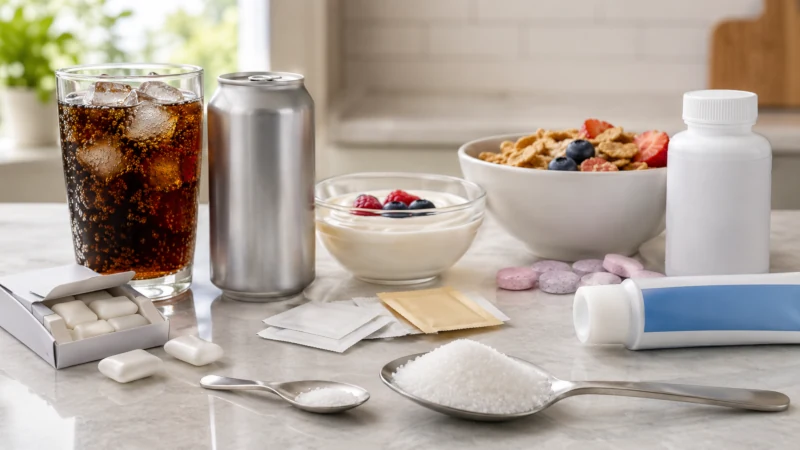
One practical detail worth knowing: aspartame is not heat stable. It loses its sweetness when heated, which is why it generally isn’t used in baked goods [FDA, 2025].
Is aspartame safe? Three agencies, three answers that fit together
The FDA’s position
The FDA concludes aspartame is safe for the general population when used under approved conditions, and has set an acceptable daily intake (ADI) of 50 mg per kilogram of body weight per day. The ADI is the amount considered safe to consume every day across a lifetime, and it is built by taking the highest dose that caused no adverse effect in testing and dividing it by a safety factor [FDA, 2025].
The WHO issued two verdicts on the same day — and they don’t contradict each other
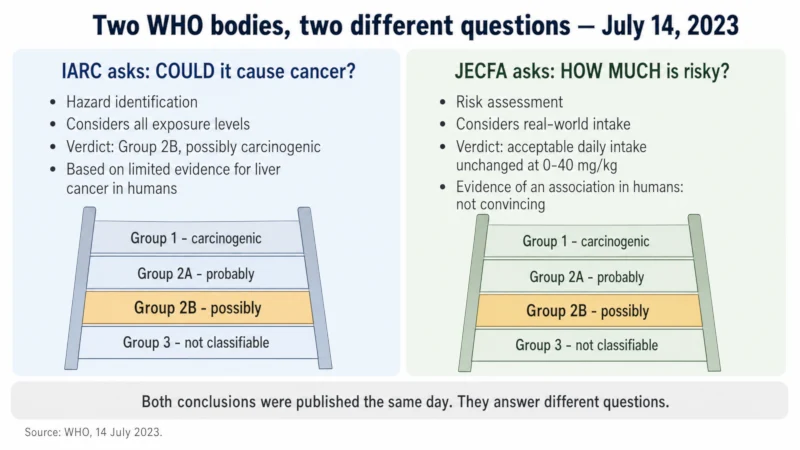
On July 14, 2023, the International Agency for Research on Cancer (IARC) classified aspartame as possibly carcinogenic to humans, Group 2B, citing limited evidence for cancer in humans — specifically hepatocellular carcinoma, a type of liver cancer. That same day, the Joint FAO/WHO Expert Committee on Food Additives (JECFA) reaffirmed the acceptable daily intake of 0–40 mg/kg body weight and said the evidence of an association between aspartame and cancer in humans is “not convincing” [WHO, 2023].
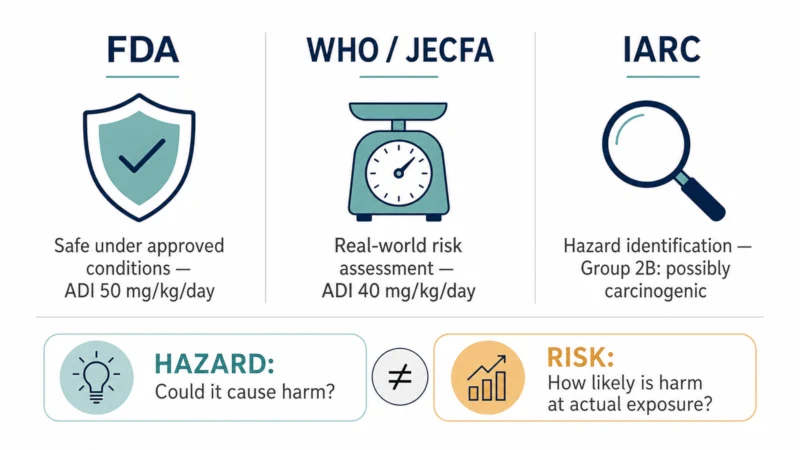
The two bodies were answering different questions. IARC asks whether something could cause cancer under any exposure — a hazard question. JECFA asks how much risk there actually is at real-world intakes. Group 2B is the third of four strength-of-evidence levels, used when there is limited but unconvincing evidence in humans, or convincing evidence in animals, but not both [WHO, 2023].
EFSA’s full re-evaluation
Europe’s food safety agency completed its first full risk assessment of aspartame in 2013 and concluded the ADI of 40 mg/kg body weight per day is protective for the general population. Its panel ruled out genotoxicity and carcinogenicity, found no evidence that aspartame harms the brain or nervous system or affects behavior or cognitive function in children or adults, and found no risk to a developing fetus from aspartame-derived phenylalanine at the ADI — with the exception of women who have phenylketonuria [EFSA, 2013].
How much aspartame is actually a lot?
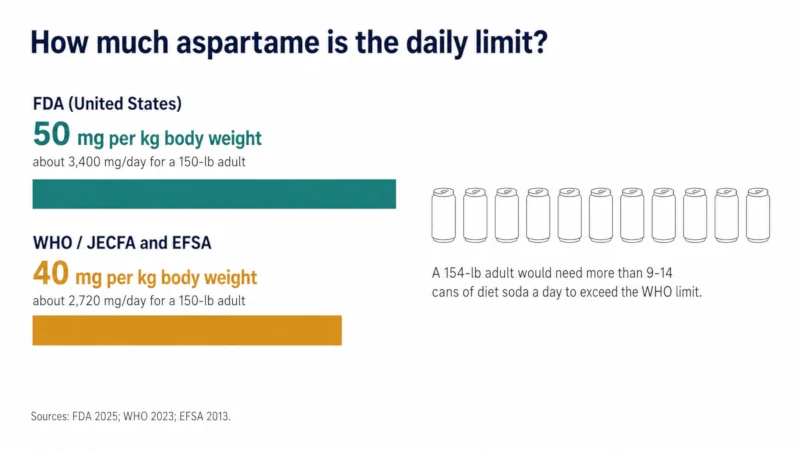
The numbers are less dramatic than the debate suggests. WHO puts it plainly: a can of diet soft drink contains roughly 200 to 300 mg of aspartame, so a 154-pound (70 kg) adult would need to drink more than 9 to 14 cans in a day to exceed the acceptable daily intake, assuming no aspartame from any other source [WHO, 2023]. The FDA frames the same idea differently: a 132-pound person would need about 75 tabletop sweetener packets a day to reach its ADI [FDA, 2025].
| FDA (United States) | JECFA / WHO | EFSA (Europe) | |
| Acceptable daily intake | 50 mg per kg body weight | 40 mg per kg body weight | 40 mg per kg body weight |
| Works out to, for a 150-lb (68 kg) adult | about 3,400 mg/day | about 2,720 mg/day | about 2,720 mg/day |
| Everyday equivalent | about 75 tabletop packets/day | more than 9–14 cans of diet soda/day (70 kg adult) | — |
The per-person milligram figures are simple arithmetic from each agency’s published ADI, not separate agency estimates. Sources: FDA, 2025; WHO, 2023; EFSA, 2013.
The methanol and formaldehyde claim, examined honestly
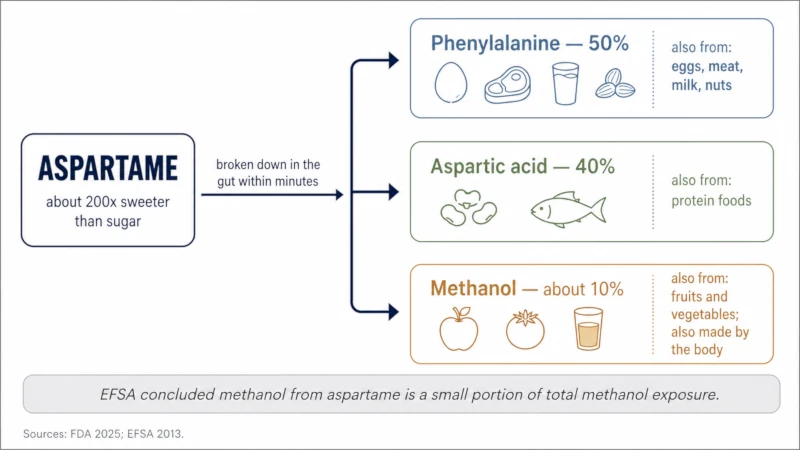
This is the argument you will run into most often, and its opening premise is chemically correct. Roughly a tenth of aspartame’s weight is a methyl group, released as methanol during digestion. The body converts methanol to formaldehyde, then to formic acid. Formaldehyde is a genuinely nasty molecule at high exposures.
The conclusion drawn from that premise is where it falls apart, and the reason is dose. EFSA examined all three breakdown products specifically — phenylalanine, aspartic acid, and methanol — and concluded that methanol derived from aspartame is a small portion of a person’s total methanol exposure. Methanol is present in, or released from, fruits and vegetables, and the body produces it naturally. It becomes toxic only at extremely high exposures, such as from consumption of some home-distilled spirits [EFSA, 2013].
For a sense of scale: using WHO’s figure of 200–300 mg of aspartame in a can of diet soda, and aspartame’s roughly 10% methanol content by weight, a can yields on the order of 20 to 30 mg of methanol. That is arithmetic rather than a laboratory measurement, but it puts the number in the range of what a serving of ordinary fruit or vegetable juice supplies — far below the levels at which methanol causes harm.
The related claim that heating a diet drink turns it dangerous also doesn’t survive contact with the chemistry. Heat degrades aspartame into the same components it already breaks into during digestion, and the practical result is lost sweetness — which is exactly why manufacturers don’t use it in baking [FDA, 2025]. EFSA reviewed the breakdown products and found no safety concern at current exposure levels [EFSA, 2013].
Aspartame and cancer: what the evidence actually shows
The National Cancer Institute lays out the underlying studies, and they are genuinely mixed. IARC’s finding of a possible liver cancer association rested on three studies covering four cohorts, which looked at artificially sweetened beverages during periods when those drinks mostly contained aspartame. One found an association with liver cancer across the whole cohort. A second found one only among people with diabetes. A third found none. A fourth study, published after the IARC panel met, also found no association [NCI, 2023].
Other large studies point the other way. In the NIH-AARP Diet and Health Study, which followed more than 500,000 people, higher consumption of aspartame-containing beverages was not associated with lymphoma, leukemia, or brain cancer [NCI, 2023]. The French NutriNet-Santé cohort found the opposite signal: adults with the highest aspartame intake were slightly more likely to develop cancer overall, breast cancer, and obesity-related cancers than those who consumed none [NCI, 2023].
Observational studies like these have a built-in limitation the NCI is explicit about: people who differ in how much artificial sweetener they consume also differ in other ways, and those other differences may account for the different cancer rates [NCI, 2023].
The regulators disagree with each other here, and you should know that rather than be handed one side. The FDA says it reviewed the same studies IARC relied on, identified significant shortcomings in them, and disagrees with the conclusion that they support classifying aspartame as a possible carcinogen [FDA, 2025]. IARC and WHO, for their part, said the limited evidence underscores the need for better studies with longer follow-up [WHO, 2023]. The honest summary: an unresolved question at the low end of concern, not a settled danger and not a settled all-clear.
Headaches, seizures, and “aspartame sensitivity”
Plenty of people say aspartame gives them headaches, and those reports deserve to be taken seriously rather than waved away. Blinded testing is where it gets complicated.
In a 2015 randomized, double-blind crossover study, 48 adults — half of whom identified themselves as aspartame-sensitive — ate a cereal bar containing aspartame or a matched control bar on separate occasions. Researchers tracked symptoms, psychological measures, blood biochemistry, and metabolic markers, and found no evidence of any acute adverse response in either group. The authors were careful about the limits: the study tested a single dose and could not rule out chronic or cumulative effects [Sathyapalan et al., PLOS ONE, 2015].
EFSA’s panel reached a similar conclusion from the broader literature, finding no evidence of neurotoxicity and no effect on behavior or cognitive function in children or adults [EFSA, 2013].
None of that means your symptoms aren’t real. Individual responses to foods are poorly captured by group averages, and cutting aspartame out costs you nothing if it helps. What the research does not support is the broader claim that aspartame causes seizures, sudden cardiac death, or neurological disease in the general population.
Aspartame, weight, and blood sugar
Sweeteners like aspartame contribute few or no calories and generally will not raise blood sugar levels [FDA, 2025]. That is the reason many people with diabetes use them, and why the swap from regular soda to diet soda feels like an obvious win.
WHO takes a more skeptical view of the long game. In May 2023 it released a guideline recommending against the use of non-sugar sweeteners to control body weight or reduce the risk of noncommunicable diseases. Its systematic review found that these sweeteners confer no long-term benefit in reducing body fat in adults or children, and suggested possible undesirable effects from long-term use, including an increased risk of type 2 diabetes, cardiovascular disease, and mortality in adults [WHO, 2023].
Two caveats matter enormously here, and they often get dropped in coverage. WHO classified the recommendation as conditional — its own term — because the link between sweeteners and disease outcomes might be confounded by the baseline characteristics of the people who use them and by complicated patterns of use. And the recommendation explicitly does not apply to people who already have diabetes [WHO, 2023].
A reasonable practical reading: replacing sugary drinks with diet versions is a sensible interim step if it helps you cut added sugar. Replacing them with water or unsweetened drinks is the better long-term destination. WHO’s own framing is that people should reduce the overall sweetness of the diet, starting early in life [WHO, 2023]. If you’re working on that, our guide to cutting back on sugar step by step covers the practical side.
Who should avoid aspartame — and who should just check first
People with phenylketonuria (PKU): avoid it
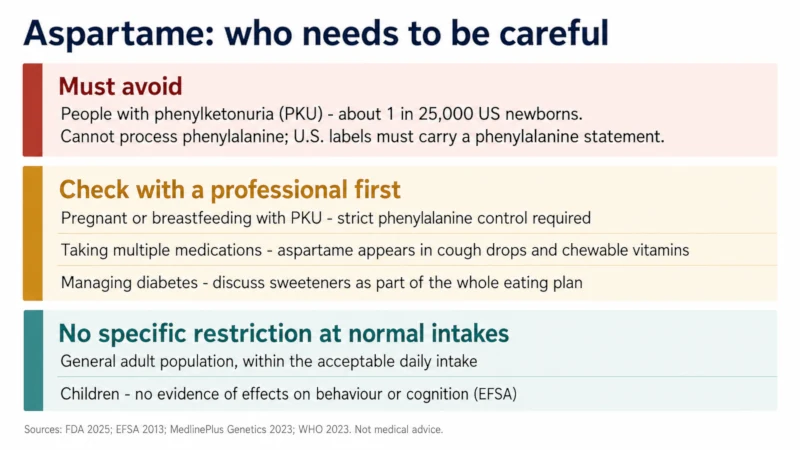
This is the one absolute. PKU is an inherited disorder that occurs in about 1 in 25,000 U.S. newborns. People with it cannot process phenylalanine, which then builds to levels that damage the brain. Aspartame is a concentrated source of phenylalanine and should be avoided [MedlinePlus Genetics, 2023]. That is precisely why every aspartame-containing product sold in the U.S. must carry a statement on the label telling people with PKU that it contains phenylalanine [FDA, 2025]. Newborns are routinely screened for PKU with a heel-prick test before leaving the hospital [FDA, 2025].
Pregnancy and breastfeeding
EFSA’s panel specifically examined pregnancy and found no risk to the developing fetus from aspartame-derived phenylalanine at the acceptable daily intake — again, with the exception of women who have PKU [EFSA, 2013]. For those women the stakes are high: babies born to mothers with PKU who are not following a low-phenylalanine diet have a significant risk of intellectual disability, along with higher risks of low birth weight, heart defects, and pregnancy loss [MedlinePlus Genetics, 2023]. If you are pregnant and unsure where you stand, that is a short conversation with your doctor or a registered dietitian.
If you have diabetes
WHO’s recommendation against non-sugar sweeteners for weight control does not apply to people with pre-existing diabetes [WHO, 2023]. Decisions about sweeteners are worth making alongside your overall eating plan rather than in isolation — our roundup of foods that support steadier blood sugar and the basics on what blood sugar numbers mean are a reasonable starting point.
Children
EFSA found no evidence that aspartame affects behavior or cognitive function in children [EFSA, 2013]. WHO’s broader advice still applies: reduce the sweetness of the diet overall, starting early, rather than substituting one sweet taste for another [WHO, 2023].
Medications and interactions
None of the major safety reviews cited on this page identify drug interactions as a concern with aspartame. What they do flag is where it turns up: aspartame is used in medications including cough drops and chewable vitamins [WHO, 2023]. For anyone counting phenylalanine because of PKU, that matters, and a pharmacist can check your specific prescriptions and over-the-counter products.
If you think you react to it
Trying a few weeks without aspartame and then reintroducing it is a reasonable personal experiment. Keep expectations calibrated: an unblinded home test can’t distinguish a real reaction from expectation, and it isn’t a diagnosis. If symptoms are severe, frequent, or getting worse, get them evaluated rather than assuming you’ve found the cause.
Claims you’ll run into online, and what the evidence says
| Claim | What the evidence shows |
| Aspartame is 10% methanol, which becomes formaldehyde in your body | The chemistry is right; the conclusion isn’t. EFSA reviewed all three breakdown products and concluded methanol from aspartame is a small portion of total methanol exposure, with no safety concern at current intakes [EFSA, 2013]. |
| Heating aspartame — in the sun, or in cooking — makes it toxic | Heat degrades aspartame into components it already breaks into during digestion; the practical result is lost sweetness, which is why it isn’t used in baking [FDA, 2025]. |
| Aspartame caused Gulf War illness | VA does not attribute these illnesses to aspartame. It recognizes chronic multisymptom illness in Gulf War veterans as presumptively service-connected without regard to cause, and prefers not to use the term “Gulf War Syndrome” because symptoms vary so widely [VA, 2026]. |
| Aspartame is behind sudden cardiac death in young athletes | No evidence supports this, and the numbers usually quoted are far off. Across 20 years of NCAA data, sudden cardiac death occurred in roughly 1 in 43,348 male athletes and 1 in 164,504 female athletes, and the overall rate fell over the study period [American Heart Association, 2023]. |
| FDA approval was rushed through against the science | The regulatory record is public and more complicated than either side’s version. FDA approved aspartame in 1974, stayed the approval in 1975 after questions about the manufacturer’s studies, audited those studies, and reinstated marketing in 1981. In 1987 the Government Accountability Office concluded FDA had adequately followed its food additive approval process [FDA regulatory timeline, 2023]. |
If you’d rather cut back anyway
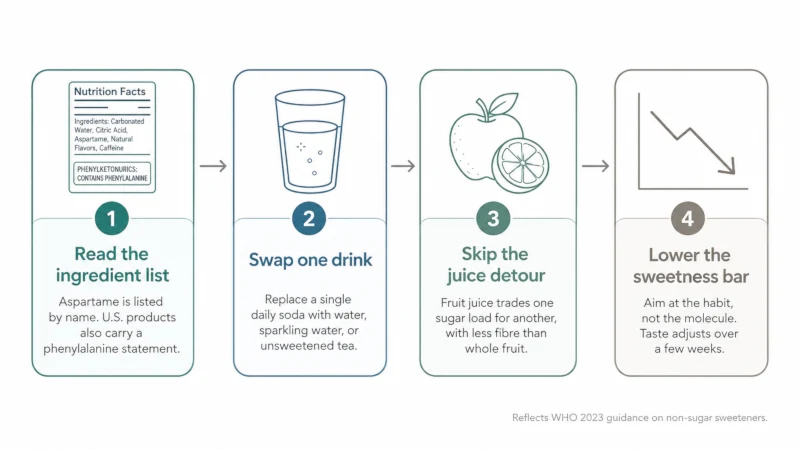
Wanting less of something in your diet doesn’t require it to be poison. If you’d prefer to reduce aspartame, this is what actually works:
- Read the ingredient list, not the front of the package. Aspartame is listed by name, and U.S. products containing it also carry a phenylalanine statement.
- Go one drink at a time. Swapping a single daily diet soda for sparkling water or unsweetened tea is more durable than a total overhaul.
- Don’t assume fruit juice is the upgrade. It delivers more sugar with less fiber than whole fruit.
- Aim at the sweetness habit rather than the specific molecule — that’s the point WHO is making, and it lines up with what a heart-healthy eating pattern looks like generally.
- Check medications and chewable vitamins if you’re avoiding it strictly. That’s where it hides.
When to talk to a doctor
Aspartame doesn’t cause medical emergencies. But symptoms people sometimes attribute to it can have causes that do need attention, and that is the risk worth naming.
Call 911 or go to an emergency room if you have:
- A sudden, severe headache that peaks within seconds, or a headache with fever, stiff neck, confusion, weakness, slurred speech, or vision loss
- A first-ever seizure, or a seizure lasting more than five minutes
- Chest pain, pressure, or fainting during exertion
- Swelling of the lips, tongue, or throat, or difficulty breathing after eating or drinking anything
Make an appointment with your doctor if you have:
- Headaches that are new, more frequent, or different in character from your usual ones
- Unexplained weight loss, yellowing of the skin or eyes, or persistent abdominal pain
- Symptoms you’ve been managing on your own for weeks by eliminating foods, without improvement
Self-diagnosing a food reaction is the most common way a treatable condition goes unexamined. If cutting out aspartame doesn’t resolve what you’re feeling, that’s information worth bringing to a doctor.
| HEALTH DISCLAIMER: This article is for general education and information only. It is not medical advice, a diagnosis, or a treatment plan, and it is not a substitute for care from a qualified professional. Talk to your doctor, and where relevant a registered dietitian or pharmacist, before making changes if you are pregnant or breastfeeding, managing diabetes or another chronic condition, taking prescription medication, or feeding a child with a diagnosed metabolic disorder. People with phenylketonuria should follow the phenylalanine limits set by their care team. Never delay seeking medical advice because of something you read here. If you think you are having a medical emergency, call 911. |
Frequently Asked Questions
Is it safe to drink diet soda every day?
For most people, yes, at ordinary amounts. A 154-pound adult would need more than 9 to 14 cans a day to exceed the WHO acceptable daily intake [WHO, 2023]. A separate question is whether a daily diet soda is the habit you want long term; WHO’s guidance leans toward water and less sweetness overall [WHO, 2023].
Does aspartame cause cancer?
The evidence is limited and inconsistent. IARC classified it Group 2B, possibly carcinogenic, based on limited human evidence for liver cancer, while JECFA concluded the evidence of an association in humans is not convincing and left the intake limit unchanged [WHO, 2023]. The FDA disagrees with the IARC classification and says it found significant shortcomings in the studies behind it [FDA, 2025]. Group 2B is the same category that contains many everyday exposures; it signals an open question, not an established cause.
Is aspartame worse than sugar?
They fail differently. Excess added sugar has well-established links to weight gain and cardiometabolic risk. Aspartame’s risks are less certain and appear smaller, but WHO found no long-term body-fat benefit from non-sugar sweeteners and flagged possible long-term harms [WHO, 2023]. Neither is the answer; less sweetness overall is.
Why does the label say “phenylalanine”?
Because U.S. law requires it. Aspartame contains phenylalanine, and people with phenylketonuria need to know it is there so they can stay within their limits [FDA, 2025]. If you don’t have PKU, the statement isn’t a warning aimed at you.
Does aspartame cause weight gain?
Trials substituting low- and no-calorie sweetened beverages for sugar-sweetened ones have shown small improvements in body weight, while WHO’s systematic review found no long-term benefit in reducing body fat [NCI, 2023] [WHO, 2023]. The likeliest explanation is that a sweetener swap alone doesn’t change the eating pattern around it.
I get headaches after diet soda. Am I imagining it?
Not necessarily — but blinded testing hasn’t confirmed a group-level effect. A double-blind crossover study in adults who identified as aspartame-sensitive found no acute adverse response on symptom, psychological, or biochemical measures [Sathyapalan et al., PLOS ONE, 2015]. Avoiding it costs you nothing. If the headaches are frequent, severe, or changing, get them looked at rather than assuming the cause.
References
- U.S. Food and Drug Administration. Aspartame and Other Sweeteners in Food. Current as of Feb 27, 2025. → View source
- U.S. Food and Drug Administration. Timeline of Selected FDA Activities and Significant Events Addressing Aspartame. Current as of May 30, 2023. → View source
- WHO / IARC / JECFA. Aspartame hazard and risk assessment results released. Joint news release, July 14, 2023. → View source
- World Health Organization. WHO advises not to use non-sugar sweeteners for weight control in newly released guideline. May 15, 2023. → View source
- European Food Safety Authority. EFSA completes full risk assessment on aspartame and concludes it is safe at current levels of exposure. Dec 10, 2013. → View source
- National Cancer Institute. Artificial Sweeteners and Cancer. Reviewed Aug 29, 2023. → View source
- MedlinePlus Genetics, U.S. National Library of Medicine. Phenylketonuria. Updated Apr 25, 2023. → View source
- Sathyapalan T, Thatcher NJ, Hammersley R, et al. Aspartame Sensitivity? A Double Blind Randomised Crossover Study. PLOS ONE. 2015;10(3):e0116212. → View source
- American Heart Association. NCAA athletes’ sudden cardiac death rate fell over 20 years, still higher in some athletes. Scientific Sessions 2023. → View source
- U.S. Department of Veterans Affairs. Gulf War Veterans’ Medically Unexplained Illnesses. Updated July 15, 2026. → View source
