The althea plant earns its reputation in one narrow, well-documented way. Its root, soaked in water, releases a slippery gel that coats an irritated throat or gut lining and takes the edge off. That is the heart of the althea plant benefits story, and it is the basis on which Europe’s medicines regulator approves marshmallow root products — though on grounds of long-standing traditional use rather than clinical trial proof (European Union herbal monograph on Althaea officinalis L., radix, 2016).
Knowing which of those two things you are getting matters. Below is what the root does, how to prepare it so it actually works, what it will not do, and where the safety limits sit.
What the althea plant is
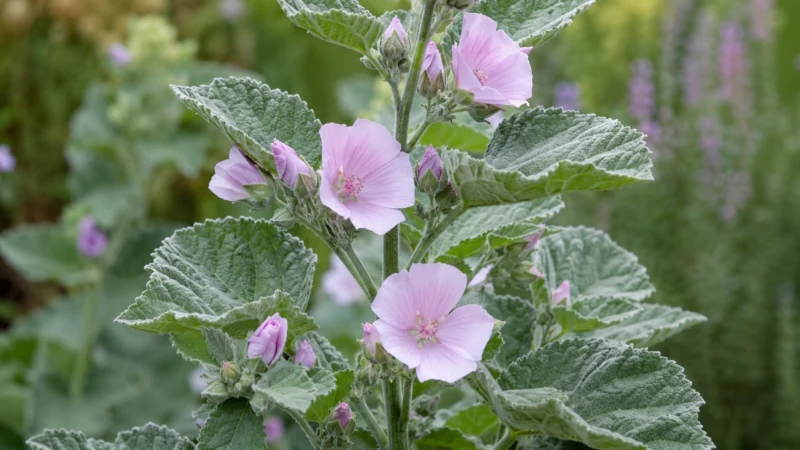
Althaea officinalis is a perennial in the mallow family, Malvaceae. Its native range runs from Europe east to Central Siberia and western Pakistan, and into north-west Africa, in temperate ground — characteristically damp ground: marshes, riverbanks, ditches (Kew Plants of the World Online, 2026). English names include marshmallow, marsh mallow and white mallow; older herbals add mortification root and sweet weed. It is guimauve in French, malvavisco in Spanish.
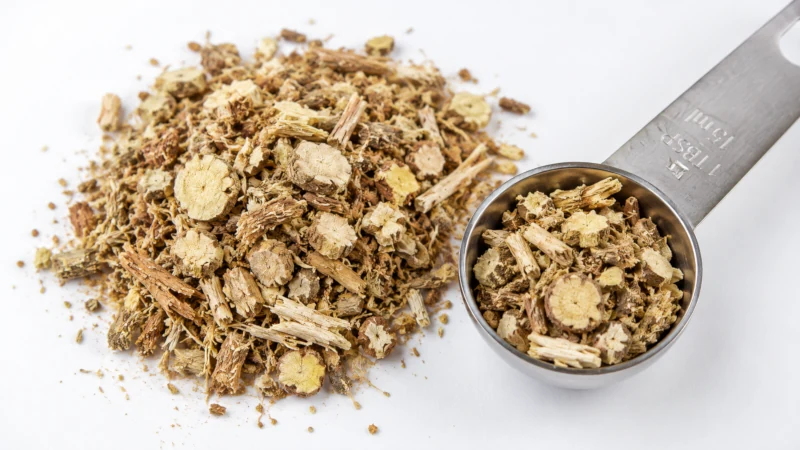
The part that matters medicinally is the root, lifted in autumn from plants at least two years old. European Pharmacopoeia standards specify dried root, peeled or unpeeled, with a swelling index of at least 10 — a direct measure of how much gel it forms in water (EMA assessment report on Althaea officinalis L., radix, 2016). Leaves and flowers hold mucilage too, but the root holds more, and the root is what regulators assessed.
Ancient writers mention althaea often, though the identification is shakier than herb books usually admit. Theophrastus described an althaea with yellow flowers and Dioscorides one with rose-red flowers, and neither description clearly matches this species (EMA assessment report, 2016). What is solid is the unbroken documentary trail through European pharmacopoeias and handbooks from the 1920s onward.
The mucilage does the work
Dried althea root is roughly 5 to 11.6% mucilage, varying with the point in the growing season at which it is harvested, alongside about 11% pectin, 25–35% starch, around 10% sucrose and 0.14–0.28% flavonoids (EMA assessment report, 2016). The mucilage is a mixture of large water-soluble polysaccharides — rhamnogalacturonans, arabinans, glucans — that swell in water into a viscous gel.
That gel is understood to settle over the mucous membranes of the mouth, throat and gut as a physical film, shielding them from whatever is irritating them. The direct evidence for the coating step is thinner than the confidence with which it is usually asserted. The main supporting study applied purified marshmallow polysaccharides to isolated pig cheek membranes and found moderate, concentration-dependent adhesion — an ex vivo model that does not reproduce a real mouth with saliva in it (EMA assessment report, 2016).
Notice what the mechanism implies. A physical barrier acts where it touches. Marshmallow root does not treat an infection, damp down inflammation throughout the body, or reach the lower airways. It makes an irritated surface feel less raw while the cause resolves on its own.
Althea plant benefits: what the evidence actually supports
Dry cough and throat irritation — the best-documented use
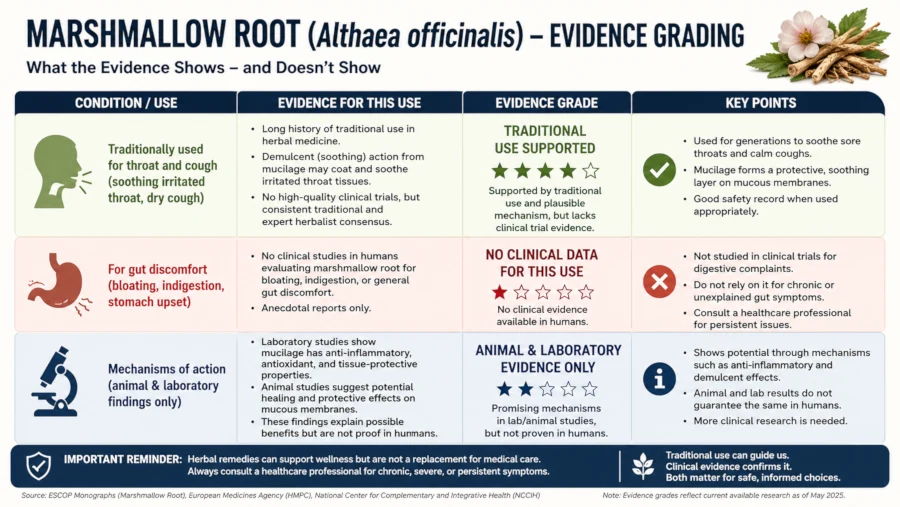
The EU herbal monograph lists marshmallow root as a demulcent for the symptomatic treatment of oral or pharyngeal irritation and the dry cough that accompanies it (EU herbal monograph on Althaea officinalis L., radix, 2016).
The category is “traditional use”, not “well-established use”, and that distinction is the whole story. A traditional-use registration means there is not enough clinical trial evidence to demonstrate effectiveness, but the effect is plausible and the preparation has been used safely for at least 30 years, including 15 within the EU (EMA summary for the public: marshmallow root, 2016).
Here is the human evidence, strongest first:
- A double-blind, placebo-controlled trial in 63 people whose dry cough was caused by ACE-inhibitor blood pressure medication. Thirty took althea drops (20 drops, three times daily) for four weeks. Mean cough score fell from 2.66 to 1.23; in the placebo group it drifted from 2.70 to 2.33, which was not significant. Regulators accepted this as supporting traditional use only, because the herbal preparation was never adequately described — nobody can say what was in the drops (Rouhi & Ganji 2007, as assessed in the EMA assessment report, 2016).
- Two uncontrolled studies of marshmallow syrup in roughly 900 children, from a few months old to twelve. Physicians and parents rated it good or very good in 84–90% of cases. With no comparison group and no objective measurement, these cannot show the syrup beat time and attention (EMA assessment report, 2016).
- Two consumer surveys covering 822 people who bought marshmallow root lozenges or syrup at pharmacies. Most reported relief within about ten minutes. Three minor adverse events were logged, all with the syrup. Self-selected buyers rating a product they chose and paid for is the weakest design of the three (Fink, Schmidt & Kraft, Complementary Medicine Research, 2018).
Fast onset is the consistent thread, and it fits the mechanism — a coating either works on contact or it does not work. Fast relief is also, inconveniently, what placebo produces most reliably in cough research.
Mild stomach and gut discomfort — plausible, largely untested
The same monograph covers marshmallow root as a demulcent for symptomatic relief of mild gastrointestinal discomfort in adults and adolescents (EU herbal monograph, 2016). The footing here is weaker still. Regulators found no clinical data at all for this indication and drew no conclusions from trials; the listing rests on documented long-standing use plus the plausibility of the coating mechanism (EMA assessment report, 2016).
One rat study on hypolaetin-8-glucoside, a flavonoid found in the plant, showed it prevented stress-induced gastric lesions, though less effectively than cimetidine (EMA assessment report, 2016). That is a single isolated compound, injected, in rodents — a long way from a cup of tea.
Reasonable, then, for occasional mild indigestion or a sore, irritated stomach. Not a treatment for gastritis, ulcers, colitis or reflux, and not a reason to postpone getting any of them diagnosed. Where food and drink are driving the irritation, changing what you consume will do more than any tea — see our guide to foods that make gastritis worse.
What laboratory and animal work adds
Preclinical findings point consistently in one direction without proving anything about people:
- Isolated marshmallow polysaccharide, given by mouth to guinea pigs, suppressed citric-acid-induced cough dose-dependently; at 50 mg/kg the effect was comparable to codeine at 10 mg/kg. Airway relaxation was ruled out as the mechanism.
- In cats, both root extract and isolated polysaccharide reduced coughing — less than codeine, more than two non-narcotic cough drugs.
- Aqueous root extract improved the viability of human epithelial cells in culture, with no effect on fibroblasts.
All three are summarised in the EMA assessment report, 2016. Animal cough models force coughing chemically in a way human colds do not, and a dose per kilogram in a guinea pig is not a teaspoon of syrup in an adult. Read these as reasons the traditional use is plausible, not as evidence that it works.
Claims that do not hold up
Three things get attached to althea root that the regulatory record does not support. It is not a laxative — that property belongs to its relative high mallow, and the EU monograph gives althea root no bowel indication whatsoever. Its detailed constituent profile lists no meaningful vitamin C. And it does not treat teething: handing a child a piece of root to chew is a choking hazard, and marshmallow root preparations are not recommended under three years of age in any form (EU herbal monograph, 2016; EMA assessment report, 2016).
How to prepare althea root — cold water, not boiling
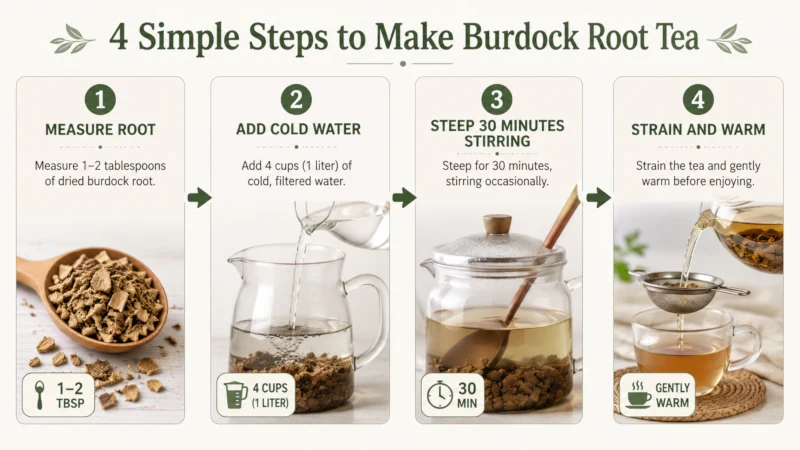
Nearly every traditional and regulatory preparation of this root is a cold macerate, not a hot infusion and not a decoction. Boiling is not the method here.
The German Commission E method, reproduced in the European assessment: 2–5 g of cut or ground root in 150 ml of cold water for 30 minutes, stirring frequently; strain, then warm it before drinking if you prefer it warm, up to three times a day (EMA assessment report, 2016). The monograph adds that the macerate should be used immediately after it is made (EU herbal monograph, 2016).
Doses used in licensed European products:
| Who | Preparation | Single dose | Daily maximum |
| Adults and adolescents (throat / dry cough) | Cold macerate of cut root in 150 ml water, several times daily | 0.5–3 g root | 15 g root |
| Adults and adolescents (mild gut discomfort) | Cold macerate, 3 times daily | 3–5 g root | 15 g root |
| Children 6–11 (throat / dry cough) | Cold macerate, 3 times daily | 0.5–1.5 g root | 4.5 g root |
| Children 3–5 (throat / dry cough) | Cold macerate, 3 times daily | 0.5–1 g root | 3 g root |
| Children under 3 | Not recommended in any form | — | — |
Source: EU herbal monograph on Althaea officinalis L., radix, EMA/HMPC/436679/2015, 12 July 2016.
Honey improves the taste and is mildly soothing in its own right, but never give honey to a baby under 12 months (NHS, 2026). If you are combining althea with other soothing plants, our overview of herbs for the lungs sets out which ones suit a dry cough versus a productive one.
Stop and get advice if throat or cough symptoms persist beyond one week while using it, or if gut symptoms persist beyond two weeks (EU herbal monograph, 2016).
Side effects, interactions, and who should avoid althea
Side effects
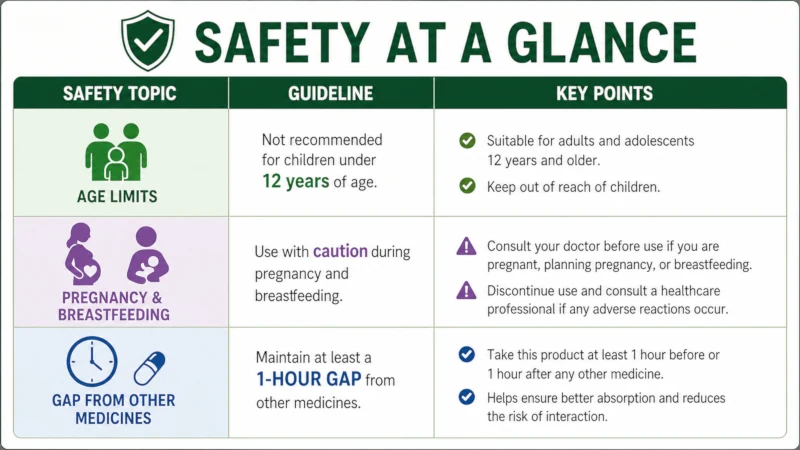
When European regulators assessed these preparations, no side effects had been reported, and none are listed in the monograph (EMA summary for the public, 2016). Across roughly 912 children in the two observational studies, one developed obstructive bronchitis and one developed bronchopneumonia requiring hospital admission; the treating physicians judged these “unrelated” and “unlikely” to be related to the syrup (EMA assessment report, 2016). The consumer surveys recorded three minor events among 822 users (Fink et al., 2018). The single contraindication in the monograph is hypersensitivity to marshmallow root itself.
Medicines: space the doses out
This one is genuinely unsettled, and worth saying plainly rather than picking the more dramatic version. Several herbal reference texts propose that the mucilage film could delay absorption of other drugs taken at the same time. No study in humans or in animals has confirmed it. Regulators kept it out of the interactions section for exactly that reason, then added it to the warnings as a precaution: do not take marshmallow root within half an hour to an hour of any other medicine (EU herbal monograph, 2016; EMA assessment report, 2016). Spacing them out costs nothing, so space them out.
Pregnancy and breastfeeding
Not recommended. Safety in pregnancy and lactation has not been established, no fertility data exists, and no reproductive or developmental toxicity testing has been carried out (EU herbal monograph, 2016). Absence of evidence is not evidence of harm here, but it is a reason to ask your midwife or doctor first rather than assume.
Children
Water-based preparations are not recommended under 3 years — not because harm is documented, but because a cough in a very young child warrants medical assessment rather than self-treatment. Lozenges and other solid forms are not recommended under 6. The gut indication has no adequate data under 12. Alcohol-containing extracts are not recommended under 18 (EU herbal monograph, 2016).
Diabetes and blood sugar
Marshmallow polysaccharide lowered blood glucose in non-diabetic mice — injected into the abdominal cavity, not swallowed (EMA assessment report, 2016). That is thin evidence for any effect in people. The more practical concern is the opposite one: marshmallow syrup is heavily sweetened with sucrose, so if you are managing blood sugar, count the syrup as sugar.
Buying it
Herbal supplements sold in the United States are not reviewed by the FDA for safety or effectiveness before they go on sale, and what is printed on the label does not always match what is in the bottle (NCCIH, 2020). A licensed traditional herbal medicine, or plain dried root from a supplier that tests for contaminants, is more predictable than an unstandardised blend.
Red flags: when to stop self-treating and see a doctor
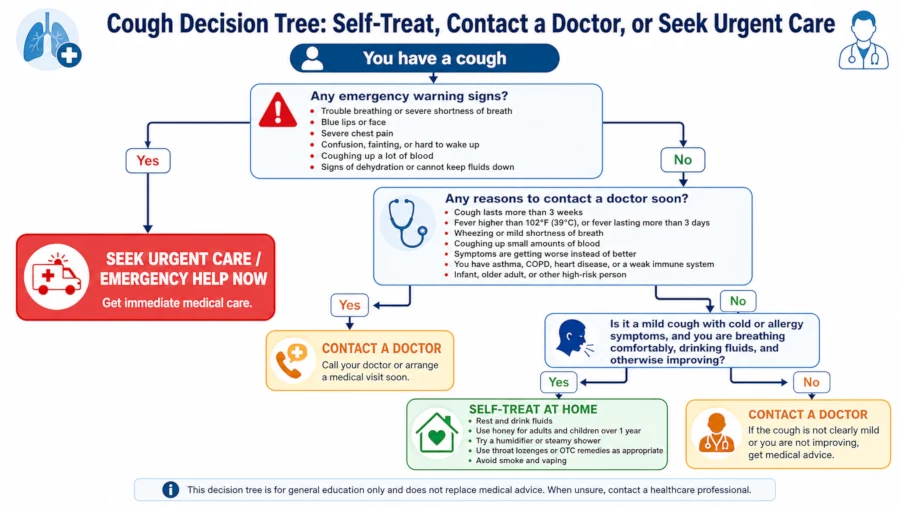
Marshmallow root is for mild, self-limiting irritation. The monograph itself says to consult a doctor if breathlessness, fever or purulent sputum develop while using it (EU herbal monograph, 2016).
See a doctor if:
- your cough has lasted more than three weeks
- you are losing weight without trying
- your immune system is weakened — by chemotherapy or diabetes, for example
Get urgent advice the same day if:
- the cough is severe or getting worse quickly
- you feel very unwell
- you have chest pain
- the side of your neck is swollen and painful
- you are finding it hard to breathe
- you are coughing up blood
Those thresholds come from NHS guidance on cough, 2026. On the digestive side, persistent stomach pain, vomiting blood, black stools, difficulty swallowing or unexplained weight loss need investigation rather than a soothing tea. For gargles and local throat measures alongside medical care, see our roundup of natural ear, nose and throat remedies.
| HEALTH DISCLAIMER: This article is for general education and information. It is not medical advice, and it is not intended to diagnose, treat, cure or prevent any disease. Marshmallow root preparations are registered on the basis of traditional use, which means their effectiveness has not been established by clinical trials. Speak with a doctor, pharmacist or other qualified health professional before using althea root if you are pregnant or breastfeeding, giving it to a child, taking prescription medicines, or managing an ongoing condition such as diabetes, asthma or a digestive disorder. Seek prompt medical care for breathing difficulty, chest pain, coughing up blood, a cough lasting more than three weeks, or persistent digestive symptoms. |
Frequently Asked Questions
Is althea root the same thing as marshmallow root?
Yes. Althaea officinalis is the botanical name; marshmallow root, marsh mallow and white mallow are common names for the same plant, and althaeae radix is the pharmaceutical name used in European monographs (Kew Plants of the World Online, 2026; EU herbal monograph, 2016).
Do marshmallow sweets have any of these benefits?
No. Nothing in this article applies to confectionery. If you want the demulcent effect, you need the dried root prepared in cold water, or a licensed marshmallow root syrup or lozenge.
How quickly does it work?
For throat irritation, most users in the pharmacy surveys reported relief within about ten minutes, which is consistent with a coating that acts on contact (Fink et al., 2018). It is symptom relief, so it wears off and needs repeating rather than building up over days.
Why cold water instead of a hot tea?
The traditional and regulatory preparations for this root are cold macerates, and the monograph specifies macerate rather than infusion or decoction. Prepare it cold for 30 minutes, then warm it after straining if you want a warm drink (EMA assessment report, 2016; EU herbal monograph, 2016).
Can I take it alongside my prescription medicines?
No specific interactions have been reported. As a precaution, because the mucilage might in theory slow absorption, leave half an hour to an hour between marshmallow root and any other medicine, and tell your pharmacist you are taking it (EU herbal monograph, 2016).
Can children take it?
Water-based preparations are used from age 3 upward at reduced doses; solid forms such as lozenges from age 6; alcohol-containing extracts not before 18. Under 3, it is not recommended, because a cough in a very young child should be assessed by a clinician (EU herbal monograph, 2016).
References
- Committee on Herbal Medicinal Products (HMPC). European Union herbal monograph on Althaea officinalis L., radix (EMA/HMPC/436679/2015). European Medicines Agency, 12 July 2016. View source
- Committee on Herbal Medicinal Products (HMPC). Assessment report on Althaea officinalis L., radix (EMA/HMPC/436680/2015). European Medicines Agency, 12 July 2016. View source
- European Medicines Agency. Herbal medicine: summary for the public — Marshmallow root, Althaea officinalis L., radix (EMA/570566/2016). 22 November 2016. View source
- Fink C, Schmidt M, Kraft K. Marshmallow root extract for the treatment of irritative cough: two surveys on users’ view on effectiveness and tolerability. Complementary Medicine Research. 2018;25(5):299–305. PMID 30064132; doi:10.1159/000489560. (Article in German.) View source
- Rouhi H, Ganji F. Effect of Althaea officinalis on cough associated with ACE inhibitors. Pakistan Journal of Nutrition. 2007;6(3):256–258. Cited and described here as assessed by the HMPC. View source
- NHS. Cough. nhs.uk, page last reviewed 8 December 2023; page updated July 2026. View source
- National Center for Complementary and Integrative Health (NCCIH). Dietary and Herbal Supplements. NIH, last updated February 2020. View source
- POWO. Althaea officinalis L. Plants of the World Online, Royal Botanic Gardens, Kew, 2026. View source
