The opium poppy plant (Papaver somniferum) is the original source of some of the most valuable medicines humans have ever had, and of some of the most destructive drugs. Morphine and codeine come straight from it. So does the raw material for heroin. One plant, both stories. If you’ve landed here after reading that the opium poppy is a gentle natural remedy for pain, insomnia, or a toothache, the honest answer is more complicated — and the gap between helpful and deadly comes down to dose and processing, which is exactly what you can’t control at home.
One plant, two opposite outcomes
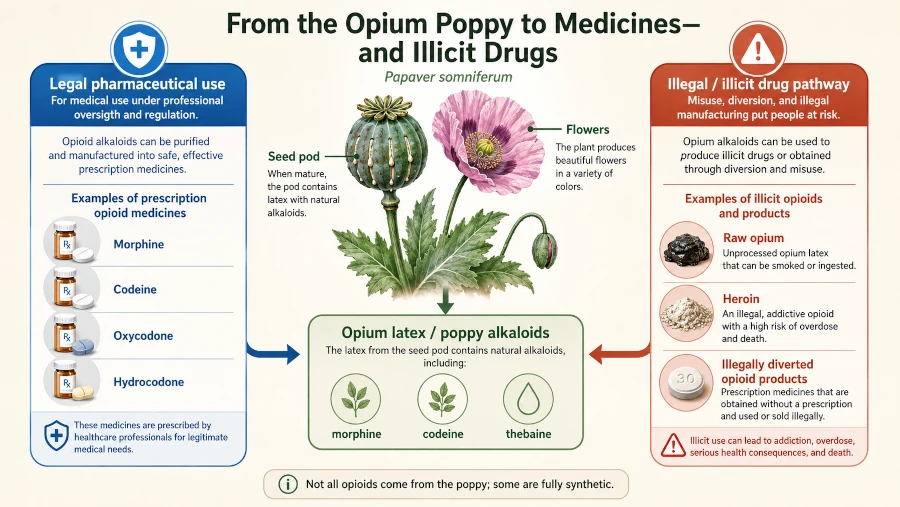
The chemistry that lets a palliative care team ease the pain of a dying patient is the same chemistry that can stop a healthy person’s breathing in their sleep. Natural opioids — morphine, codeine, thebaine — are all made in the seed pods of this single species [NIDA, 2025]. Whether they help or harm depends on who’s giving them, how much, in what form, and under whose supervision. Pharmaceutical companies and hospitals manage that with precise dosing and monitoring. A pot on a kitchen stove cannot.
That’s the throughline for everything below. The plant is genuinely important. It’s also genuinely dangerous outside medical control, and most of the trouble comes from people trying to use it as a do-it-yourself remedy.
From ancient Sumer to morphine: a short history
People have known about the opium poppy for a very long time. References to it appear in Sumerian records thousands of years ago, and Greek physicians including Dioscorides described poppy preparations for pain and sleep. Arab physicians of the medieval period spread its use across Europe and Asia, often for diarrhea.
The turning point came in the early 1800s, when the German pharmacist Friedrich Sertürner isolated a pure alkaloid from opium and named it morphine, after Morpheus, the Greek god of dreams. Isolating the active compound made precise dosing possible — and also made far more potent, more addictive products possible. Later came semi-synthetic derivatives, including diacetylmorphine, marketed as heroin. A 16th-century Spanish physician, Andrés de Laguna, reportedly called the poppy “a tasteful poison.” That phrase has aged well.
What’s actually inside an opium poppy
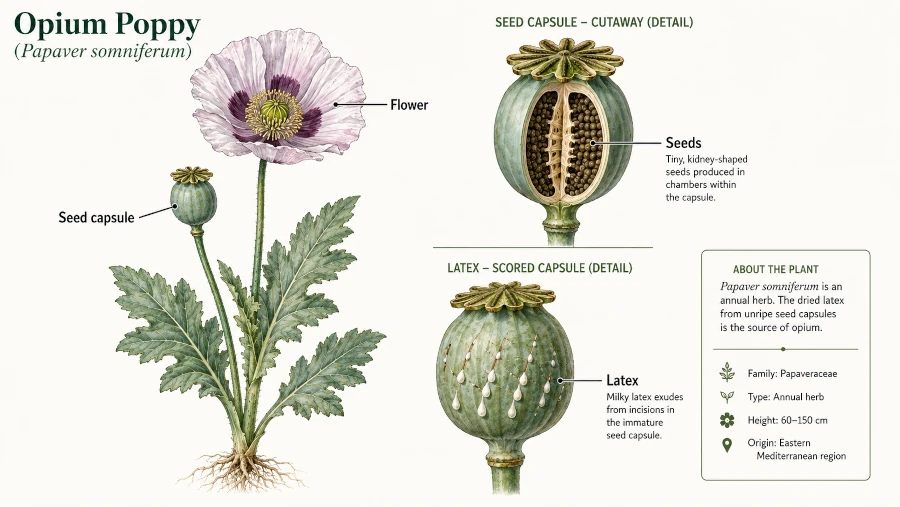
When the unripe seed capsule is scored, it weeps a milky latex that dries into the gummy brown substance called opium. Opium is a mixture of more than 20 alkaloids, generally grouped into two chemical families [Pamplona-Roger, 2000]:
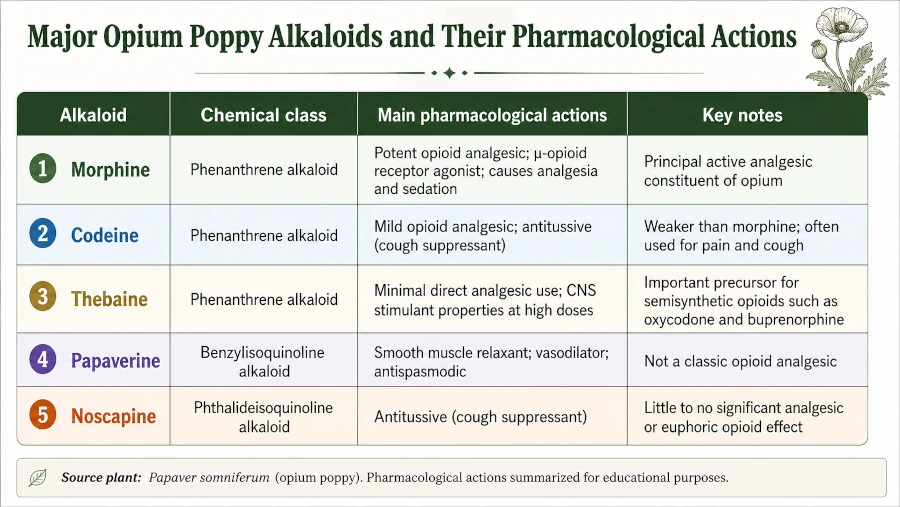
- Phenanthrenes — morphine (the most abundant, and a powerful pain reliever), codeine (milder, historically used to suppress coughs), and thebaine (used as a chemical starting point for other drugs).
- Benzylisoquinolines — papaverine and noscapine, which relax smooth muscle and were historically used for spasms.
Major alkaloids at a glance
| Alkaloid | Family | Action / historical use |
| Morphine | Phenanthrene | Most abundant; powerful pain relief; also slows breathing |
| Codeine | Phenanthrene | Milder; historically used to suppress cough |
| Thebaine | Phenanthrene | Not used directly; chemical starting point for other opioids |
| Papaverine | Benzylisoquinoline | Relaxes smooth muscle (antispasmodic) |
| Noscapine | Benzylisoquinoline | Antispasmodic; historically a cough agent |
Morphine dominates opium’s effects simply because there’s more of it. The same compound that relieves severe pain also slows breathing — and at high doses, that respiratory effect is what kills.
How the opium poppy is used in medicine today
This is where the plant earns its place. Poppy-derived opioids remain essential medicines. The World Health Organization includes morphine on its Model List of Essential Medicines, and opioids are a core part of palliative care and pain relief worldwide; access to morphine is used internationally as a benchmark for whether a country can adequately treat suffering at the end of life [Lancet/DOME, 2024]. Opioids are very effective for relieving acute pain after surgery or injury, cancer pain, and pain in end-of-life care, and weaker ones are still sometimes used for cough or diarrhea [APA, 2024].
Crucially, modern medicine almost never uses crude opium or homemade poppy preparations. It uses purified, precisely measured compounds — morphine, codeine, oxycodone (made from poppy thebaine), and others — prescribed and monitored by clinicians [NIDA, 2025]. The benefit comes from the control, not from the plant being “natural.”
Poppy seeds: the everyday — and mostly safe — side of the plant
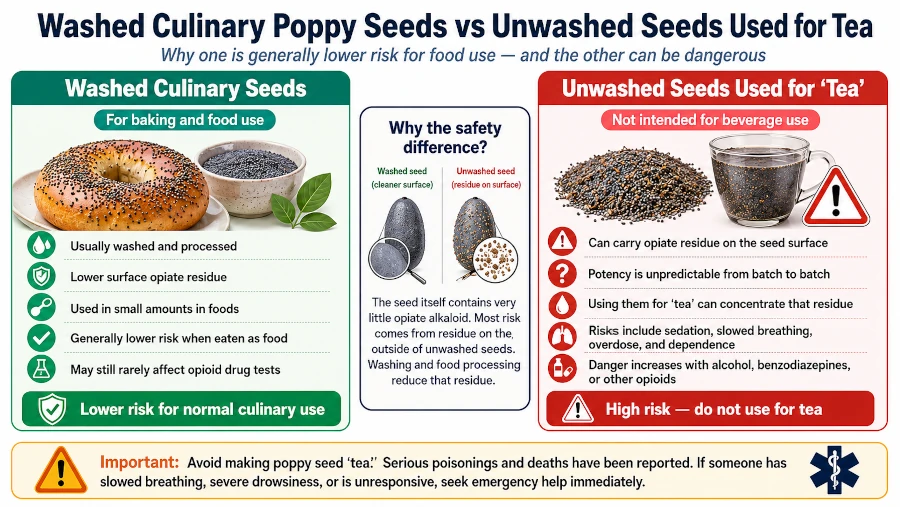
Here’s the reassuring part. The poppy seeds on your bagel or in a lemon-poppy cake come from this same plant, and they’re generally fine to eat. The seeds themselves contain only trace amounts of opiates; the FDA is not advising people to avoid poppy-seed foods [FDA, 2026]. Properly washed and processed seeds, and seeds that have been baked into food, carry very little alkaloid [FDA, 2026].
What about poppy seed oil and nutrition?
Poppy seeds are nutritionally respectable. They provide unsaturated fats (notably linoleic acid), fiber, and minerals such as calcium, phosphorus, and magnesium. Cold-pressed poppy seed oil is used as a culinary oil and contains no meaningful amount of the narcotic alkaloids [PMC, 2025]. That said, claims that poppy seeds or their oil specifically lower cholesterol or “improve the nervous system” are mostly inferred from their nutrient profile rather than proven in people — treat them as a pleasant, mineral-rich food, not a medicine.
Why poppy seeds can trigger a positive drug test
Because the seeds sit inside opium-producing pods, they can pick up traces of morphine and codeine on their surface during harvesting. Eating poppy seeds can sometimes make a urine drug test come back positive for opiates [WebMD]. The U.S. Defense Department has warned service members about this, and anti-doping agencies have warned athletes [Scientific American, 2024]. It’s not a myth — though it’s the surface residue, not the seed itself, that’s responsible.
The real hazard: homemade poppy “tea” and decoctions
If you take one thing from this page, take this. The most dangerous thing people do with the opium poppy plant is brew it — soaking unwashed poppy seeds or pods to extract the opiates and drinking the result. It’s often marketed online as a “natural” remedy for pain, anxiety, or insomnia. It has killed people.
The problem is dose. The amount of morphine on unwashed seeds or in pods varies wildly from batch to batch — by orders of magnitude — so there is no reliable “safe amount,” and one batch can be many times stronger than the last [FDA, 2025]. The FDA has noted that “tea” is even a misnomer: it’s a cold-water rinse of the opiate residue, not a gentle infusion [FDA, 2025].
As of its 2025 review, the FDA had received reports of nine deaths linked to homemade poppy seed tea, most from morphine poisoning [FDA, 2025]. A watchdog group counted at least 19 deaths and dozens of overdoses tied to contaminated poppy seeds by 2021 [CSPI, 2025]. In one widely reported case, a 24-year-old man who used poppy seed tea for anxiety and insomnia died of morphine poisoning after rinsing seeds he’d bought online [Scientific American, 2024].
That is the precise context the old “boil a few poppy capsules and drink it before bed” advice belongs to. There is no home recipe that makes the dose predictable, which is why this article gives none.
It’s also worth being honest about something the original folk literature got right: even when poppy preparations dull pain or force sleep, they don’t fix what’s causing the pain or the insomnia. Masking a symptom with an opioid while the underlying problem goes unaddressed is its own kind of harm.
Addiction, dependence, and overdose
Opioids from the poppy are addictive, and that risk rises steeply with potency and purity. Crude opium is dangerous; isolated morphine is more so; semi-synthetic derivatives like heroin are more addictive still [NIDA, 2025]. Dependence can build after a relatively short period of regular use: the body adapts, tolerance grows, and stopping triggers withdrawal — body aches, diarrhea, sweating, agitation, nausea [SAMHSA]. As one common description puts it, people first take opioids to feel good and later take them to avoid feeling terrible. The clinical name for the more severe pattern is opioid use disorder, and effective, evidence-based treatments exist, including methadone, buprenorphine, and naltrexone [NIDA, 2025].
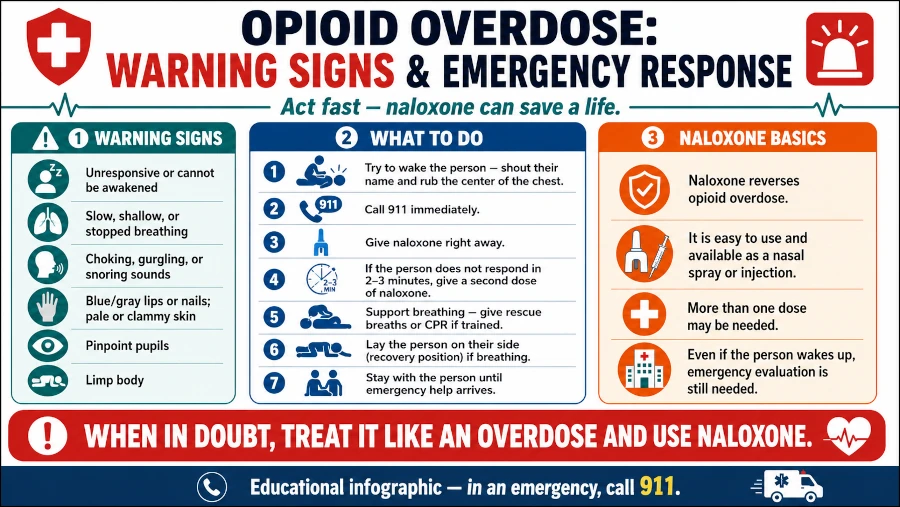
Overdose warning signs and what to do
Opioid overdose is a medical emergency. The classic “triad” is pinpoint pupils, depressed breathing, and a reduced level of consciousness [StatPearls, 2025]. Call emergency services immediately if you see:
- Slow, shallow, or stopped breathing, or gurgling/snoring/choking sounds from someone who can’t be woken [CDC, 2025]
- Unresponsiveness — they won’t wake to shouting or a firm sternum rub [SAMHSA]
- Blue or gray lips, fingernails, or face [CDC, 2025]
- Limp body, clammy skin
If an opioid overdose is suspected: call 911 (or your local emergency number) right away, give naloxone if it’s available, and stay until help arrives. Naloxone (for example, Narcan) is a safe medication that can reverse opioid overdose, works within minutes, and does no harm if opioids turn out not to be involved [CDC, 2025] [WHO, 2025]. Because its effect can wear off before the opioid does, the person still needs emergency care even if they wake up [SAMHSA]. If you’ve been given naloxone but the person isn’t breathing, rescue breaths can keep oxygen flowing while you wait [Harm Reduction Coalition].
Who should be especially cautious
Some people face higher risk and should steer well clear of any poppy preparation outside a doctor’s care:
- Anyone combining it with alcohol, sedatives, or other opioids. Alcohol and other central-nervous-system depressants stack with opioids and raise the risk of fatal breathing suppression. Never mix them.
- Pregnant and breastfeeding people. Opioids cross to the baby; use in pregnancy can lead to neonatal opioid withdrawal, and these substances pass into breast milk. Poppy preparations are not appropriate here outside medical supervision.
- Older adults and anyone with breathing problems such as sleep apnea or chronic lung disease, who are more vulnerable to respiratory depression.
- People taking other medications. Opioids interact with many drugs — benzodiazepines, certain antidepressants, gabapentinoids, and more. Tell a pharmacist or doctor about everything you take.
- Children. Keep poppy seeds and any poppy product out of reach; small bodies are far more sensitive to opioids [WebMD].
When in doubt, talk to a healthcare professional before using anything derived from this plant — and seek urgent care for severe or worsening pain rather than self-treating it.
Is it legal to grow the opium poppy?
In the United States, this is murkier than most gardeners realize. Under the federal Controlled Substances Act, the opium poppy and “poppy straw” are Schedule II controlled substances, and federal law makes no exception for ornamental or culinary cultivars of Papaver somniferum [DEA]. Clean, food-grade seeds are exempt and legal to buy and eat; extracting or processing opium from the plant is not. The plants are widely sold and grown ornamentally, and enforcement in practice tends to focus on intent and scale — but the legal default is stricter than the garden-center shelf suggests. Laws vary by country, so check your local rules.
| Health disclaimer This article is for general education only. It is not medical advice and is not a substitute for diagnosis or treatment from a qualified clinician. Nothing here should be read as instructions for preparing or using opium poppy, poppy pods, or poppy seed “tea.” Homemade poppy preparations have caused fatal poisonings and are not safe to make or take. If you’re managing pain, insomnia, anxiety, or are pregnant, nursing, or taking other medications, talk to a doctor or pharmacist before using any herbal or natural product. If you think someone is overdosing, call your local emergency number immediately. |
Frequently Asked Questions
Is the opium poppy plant the same plant that gives us poppy seeds?
Yes. Culinary poppy seeds come from Papaver somniferum, the same species used to produce opium. The seeds themselves contain only trace opiates and are generally safe as food; the danger lies in the latex from the pods, not in a sprinkle of seeds on bread [FDA, 2026].
Can eating poppy seeds make me fail a drug test?
It can. Seeds can carry surface traces of morphine and codeine from the pods, and that’s sometimes enough to produce a positive opiate result on a urine test [WebMD] [Scientific American, 2024].
Is poppy seed tea a safe natural remedy for pain or sleep?
No. The opiate content of unwashed seeds and pods is unpredictable, so there’s no reliable safe dose. The FDA has linked homemade poppy seed tea to deaths from morphine poisoning [FDA, 2025]. This is one of the clearest “don’t do this at home” cases in herbal lore.
Are poppy-derived medicines like morphine and codeine still used?
Yes — extensively, and for good reason. Morphine is on the WHO list of essential medicines and is central to treating severe and end-of-life pain. The difference from home use is purity, precise dosing, and medical supervision [Lancet/DOME, 2024].
What are the warning signs of an opioid overdose?
Very slow or stopped breathing, gurgling or snoring sounds from someone who can’t be woken, pinpoint pupils, and blue or gray lips or fingertips. Call emergency services immediately and give naloxone if you have it [CDC, 2025] [StatPearls, 2025].
Is it legal to grow opium poppies?
Clean seeds for food are legal in the U.S., but Papaver somniferum itself and poppy straw are Schedule II under federal law, with no carve-out for ornamental plants. Extracting opium is illegal. Rules differ by country and state [DEA].
References
- National Institute on Drug Abuse (NIDA). Opioids. View source
- National Institute on Drug Abuse (NIDA). Medications for Opioid Use Disorder. View source
- U.S. Food & Drug Administration. Opiate Alkaloids on Poppy Seeds. View source
- U.S. FDA / Federal Register (Jan 15, 2025). Growing, Harvesting, Processing, and Distribution of Poppy Seeds — Industry Practices Related to Opiate Alkaloids. View source
- Center for Science in the Public Interest (CSPI). FDA to set standard for opiate contamination in poppy seeds. View source
- World Health Organization. Opioid overdose (fact sheet). View source
- Centers for Disease Control and Prevention. About Naloxone. View source
- StatPearls (NCBI Bookshelf). Opioid Toxicity. View source
- SAMHSA. Opioid Overdose Prevention Toolkit — Five Essential Steps for First Responders. View source
- The Lancet Commission / Distributed Opioids in Morphine Equivalents (DOME): A Global Measure of Availability for Palliative Care. View source
- American Psychiatric Association. Opioid Use Disorder. View source
- Scientific American (2024). Poppy Seed Tea Can Trigger a Morphine Overdose. View source
- WebMD. Poppy Seed — Uses, Side Effects, and Precautions. View source
- DEA Museum. Opium Poppy (Nature’s Addictive Plants). View source
- Pamplona-Roger GD. Encyclopedia of Medicinal Plants. Editorial Safeliz, 2000.
