Blessed herb (Geum urbanum) is a small woodland plant in the rose family that European herbalists have used for centuries, mainly as an astringent rinse for sore gums and as a bitter tonic for sluggish digestion. You may also see it called wood avens, herb bennet, clove root, or St. Benedict’s herb. Here is the honest picture: the root contains compounds that do interesting things in the laboratory, but almost none of that work has been tested in people. Treat it as a traditional remedy with a thin evidence base — not a proven treatment.
What blessed herb is
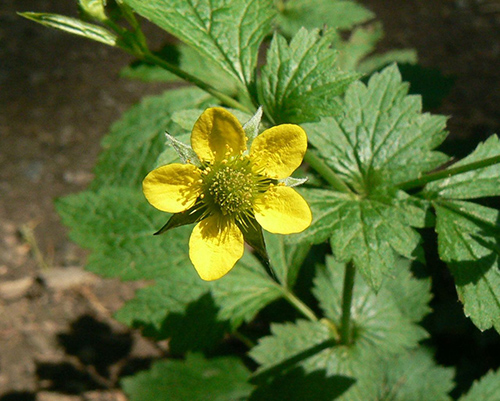
It grows in shady, damp places — woodland edges, hedgerows, the foot of old walls — across Europe, parts of Asia, and North America. The plant is modest: 30 to 60 cm tall, with toothed leaves and small yellow flowers, each with five petals. The part herbalists use is underground. The short rhizome and root smell faintly of cloves when freshly dug, and that scent comes from eugenol, the same aromatic oil that gives cloves their warmth and bite. That is why older texts call the plant “clove root.”
The name is old. The medieval Latin herba benedicta — “the blessed herb” — reflects a belief that the root could ward off evil; Hildegard of Bingen called it benedicta in the 12th century. Later herbalists used the dried root to bring down fevers and sometimes proposed it as a home substitute for cinchona (quinine) bark. The fever claims don’t hold up to modern scrutiny, but the plant survives in herbal practice for gum and digestive complaints.
What’s actually in blessed herb
Most of the plant’s activity is pinned on two groups of compounds. The roots are rich in tannins — astringent plant chemicals that bind proteins, which is why a strong brew tastes dry and puckering and can briefly tighten irritated tissue. Among these are ellagitannins, and one called gemin A is the dominant compound in the root [Granica et al., 2016]. The volatile oil is mostly eugenol, the clove-scented part, which has mild antiseptic and local numbing effects. Chemists have also identified gallic and ellagic acid derivatives and a range of flavonoids [Bunse et al., 2022].
What the evidence says about blessed herb’s benefits
No clinical trials have tested blessed herb in humans for any condition. The research that exists is almost entirely laboratory work — isolated cells, bacteria in dishes, and a few animal studies. That doesn’t make the plant worthless. It does mean any “benefit” is a reasonable hypothesis rather than a demonstrated result.

Gum and mouth inflammation
This is the use with the most direct support, and even that support is indirect. In a 2016 laboratory study, researchers in Poland exposed human neutrophils — immune cells central to gum disease — to Geum urbanum root extracts and to purified gemin A. The extracts lowered the release of inflammatory enzymes and signaling molecules that drive the shift from gingivitis to the more destructive periodontitis [Granica et al., 2016]. That lines up with the old practice of using avens rinses for bleeding, inflamed gums. But it was a test-tube study on cells, not a trial in people, so it cannot tell you whether a homemade rinse would help your gums.
Digestive upsets and diarrhea
Astringent, tannin-rich plants have a long folk history for diarrhea and stomach upset, on the idea that tannins tighten the gut lining and cut down secretions. Blessed herb fits that pattern, and the bitter compounds in the root may nudge appetite and digestion. The limitation is the same one that runs through this whole plant: the digestive uses, including for chronic gastritis, rest on tradition and plausibility, not human studies. Short-lived diarrhea usually clears on its own with fluids and rest. Diarrhea that is bloody or lasts more than a couple of days needs medical care, not a herbal brew.
Antioxidant and antibacterial activity in the lab
Extracts of the root and the above-ground parts mop up free radicals and slow the growth of several bacteria in laboratory tests, with the larger tannin molecules doing most of the antibacterial work [Bunse et al., 2022]. A 2021 study reported that some extracts killed bladder-cancer cells in culture and showed modest antiviral activity, while a parallel test in mice found no signs of acute toxicity at the doses used [Zaharieva et al., 2021]. These are early, preclinical findings. “Kills cancer cells in a dish” is a starting point for research, not evidence that the plant treats cancer in a person.
Here is how the main claims stack up.
| Claimed use | What the evidence is | How strong |
| Sore, inflamed gums (rinse) | One lab study on human immune cells | Limited; lab only |
| Diarrhea, indigestion (oral) | Traditional use; tannins are astringent | Weak; no human data |
| Antioxidant / antibacterial | Several test-tube (in vitro) studies | Limited; lab only |
| Anticancer, antiviral | Cell-culture and animal studies | Early-stage; preclinical |
| Fever, eye infections | Historical use only | No credible support |
How blessed herb is traditionally used
If you still want to try it for a minor, self-limiting problem such as mild gum soreness, here is how it has traditionally been prepared — with the reminder that none of these are standardized or clinically tested.
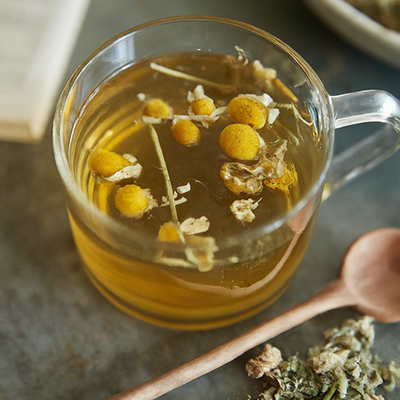
- Infusion (tea): dried root or leaves steeped in just-boiled water; traditional texts use roughly 1 to 3 grams of root per cup. It tastes bitter and drying, and is not sweetened in traditional use.
- Mouth rinse or gargle: the cooled infusion swished around the mouth and spat out for sore gums or mouth irritation.
- Topical compress: a cooled, strained infusion applied to minor skin irritation.
One firm rule: do not put blessed herb — or any homemade herbal preparation — in your eyes. Older herbals recommend avens eyewashes and drops for conjunctivitis. That advice is unsafe. Foods and herbal extracts are not sterile, and putting them in the eye can introduce bacteria and make an infection worse [American Academy of Ophthalmology]. Eugenol, the plant’s main aromatic oil, is also an eye irritant. For any eye problem, use sterile, doctor-approved products.
Safety, side effects, and who should avoid it
Blessed herb has no established safe dose, and like any tannin-heavy plant it can cause trouble if overused.
- Side effects: strong, high-tannin brews can irritate the stomach and bring on nausea, and the astringency is hard on sensitive guts. Tannins also bind iron from food, so drinking strong infusions with meals can lower iron absorption — worth knowing if you are prone to iron-deficiency anemia.
- Allergy and irritation: eugenol is a recognized contact allergen, and some people get mouth or skin irritation from clove-scented preparations.
- Pregnancy and breastfeeding: there is no safety data, so the sensible choice is to avoid it.
- Children: not recommended, again because there is no data on safe use.
- Rose-family allergy: avoid it if you react to other Rosaceae plants.
Tell your doctor or pharmacist before using it, especially if you take prescription medicines or manage a chronic condition. Tannins and other plant compounds can change how the body absorbs drugs and nutrients, and herbal supplements are not reviewed for safety or effectiveness before they are sold [NCCIH, 2023]; [NIH ODS].
A realistic expectation: at best, blessed herb is a mild traditional remedy for minor, short-lived complaints. It is not a substitute for dental care, and it will not treat an infection, a serious gut illness, or any chronic disease.
When to skip the home remedy and see a professional
Get medical or dental care, rather than reaching for a herbal rinse, if you have any of these:
- gums that bleed heavily or won’t stop, a tooth abscess, facial swelling, or fever
- diarrhea lasting more than two days, or any blood in your stool
- severe or persistent abdominal pain
- eye redness with pain, light sensitivity, or any change in vision
| Health Disclaimer This article is for general education and information only. It is not medical advice and is not a substitute for diagnosis or treatment from a qualified health professional. Blessed herb has not been tested in clinical trials, and statements here have not been evaluated by the U.S. Food and Drug Administration. Do not use it to treat or delay care for any medical condition. If you are pregnant or breastfeeding, give it to a child, take prescription medicines, or have a health condition, talk with your doctor or pharmacist before using any herbal preparation. For eye, dental, or urgent symptoms, seek professional care. |
Frequently asked questions
Is blessed herb safe to take?
For most healthy adults, an occasional weak infusion is unlikely to cause harm, but “unlikely” is not the same as “studied.” There is no established safe dose. Strong, repeated brews can upset the stomach because of their high tannin content, and people who are pregnant or breastfeeding, young children, and anyone on regular medication should avoid it until they’ve checked with a clinician.
Does blessed herb actually work for gum problems?
Possibly, as a short-term rinse — but the evidence is thin. A laboratory study showed root extracts calmed inflammatory activity in human immune cells, which fits the traditional use, yet no study has tested it in people with gum disease. It is not a replacement for brushing, flossing, and seeing a dentist.
Can you use blessed herb for diarrhea?
Its astringent tannins are the reason folk medicine used it this way, and that logic is reasonable for mild, short-lived cases. But there are no human studies, and diarrhea that is severe, bloody, or lasts more than two days needs medical attention rather than a herbal remedy.
Is it safe to use blessed herb as eye drops or an eyewash?
No. Despite old recipes that suggest it, you should never put blessed herb or any homemade herbal liquid in your eyes. These preparations are not sterile and can introduce bacteria, and eugenol in the plant can irritate the eye. Use only sterile, doctor-approved eye products.
Can I take blessed herb during pregnancy?
There is no safety data for blessed herb in pregnancy or breastfeeding, so the cautious and sensible choice is to avoid it and ask your healthcare provider about safer options.
References
- National Institutes of Health, Office of Dietary Supplements (ODS). Dietary Supplements: What You Need To Know. → View source
- Granica S, Kłębowska A, Kosiński M, et al. Effects of Geum urbanum L. root extracts and its constituents on polymorphonuclear leucocytes functions. Significance in periodontal diseases. Journal of Ethnopharmacology. 2016;188:1–12. → View source
- Bunse M, Mailänder LK, Lorenz P, Stintzing FC, Kammerer DR. Evaluation of Geum urbanum L. extracts with respect to their antimicrobial potential. Chemistry & Biodiversity. 2022;19(2):e202100850. → View source
- Zaharieva MM, Dimitrova LL, Philipov S, et al. In vitro antineoplastic and antiviral activity and in vivo toxicity of Geum urbanum L. extracts. Molecules. 2021;27(1):245. → View source
- American Academy of Ophthalmology. Pink Eye: Quick Home Remedies. → View source
- National Center for Complementary and Integrative Health (NCCIH). Using Dietary Supplements Wisely. → View source
