
Lettuce won’t cure anything, but it earns its spot on your plate. The health benefits of lettuce are real and fairly modest: a big bowl gives you volume, water, and a useful amount of vitamin K and folate for very few calories, especially if you pick romaine or leaf lettuce over iceberg. What lettuce probably won’t do is put you to sleep. That reputation comes mostly from mouse studies and concentrated seed extracts, not from salad.
Two groups need to pay a little more attention: people taking the blood thinner warfarin, and anyone at higher risk from food poisoning.
Lettuce nutrition: why the type matters
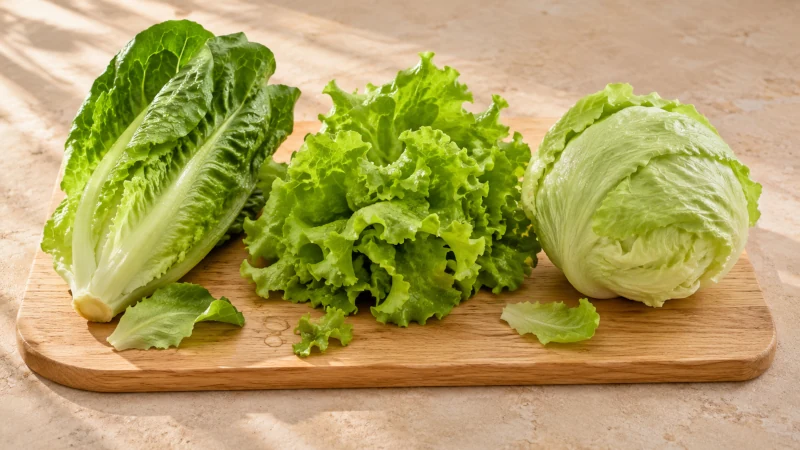
Garden lettuce (Lactuca sativa) is about 95% water [WebMD, 2026; Cleveland Clinic, 2024], so it’s light on almost everything per bite. The real differences between types sit in the leaves’ vitamins. A cup of shredded romaine carries roughly three and a half times the vitamin K and four times the folate of a cup of iceberg [University Hospitals, n.d.; University Hospitals, n.d.].
| Per 1 cup, shredded, raw | Romaine | Green leaf | Iceberg |
| Calories | 8 | 5 | 8 |
| Fiber | 1.0 g | 0.5 g | 0.7 g |
| Vitamin K | 48 mcg | 63 mcg | 13 mcg |
| Folate (DFE) | 64 mcg | 14 mcg | 16 mcg |
| Potassium | 116 mg | 70 mg | 78 mg |
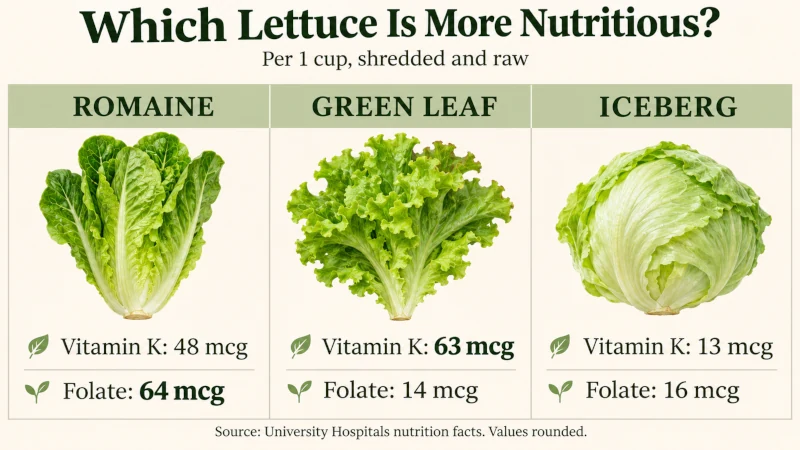
Source: University Hospitals nutrition-facts pages for each type [University Hospitals, n.d.], rounded. A cup of each type weighs a little differently, so treat small gaps loosely.
For scale, adults need about 90 mcg of vitamin K a day (women) or 120 mcg (men) [NIH ODS, n.d.]. One cup of romaine covers roughly half a woman’s daily amount.
If you like iceberg’s crunch, keep eating it. It’s still a vegetable, and the NIH lists iceberg among the most common sources of vitamin K in the U.S. diet [NIH ODS, n.d.]. But mixing in darker leaves gets you much more from the same bowl. A Cleveland Clinic dietitian puts the gap at six to 20 times more vitamin A, vitamin K and lutein in red and green leaf lettuce than in iceberg [Cleveland Clinic, 2024].
One thing lettuce isn’t is a vitamin C source. Databases disagree on romaine (one lists about 11 mg per cup, another under 2 mg) [University Hospitals, n.d.; MyFoodData, n.d.], but either figure is small next to a whole orange or even the lemon juice you might squeeze over the leaves.
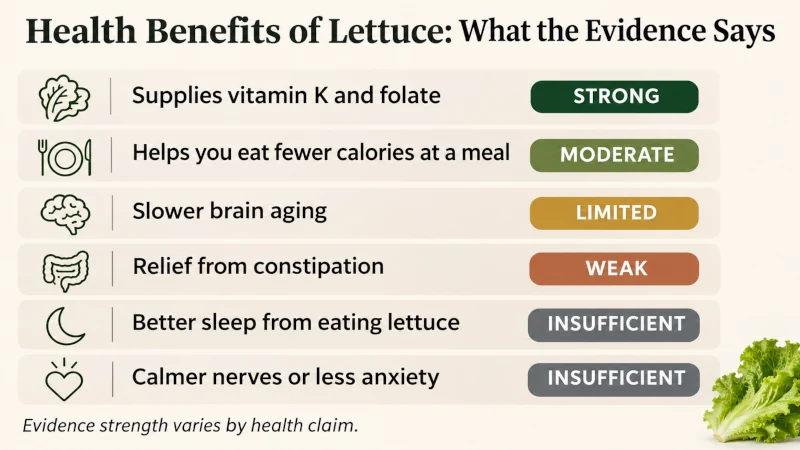
Health benefits of lettuce, graded by evidence
| Claimed benefit | Strength of evidence | What it’s based on |
| Helps you eat fewer calories at a meal | Moderate | Short-term controlled feeding studies in women |
| Supplies vitamin K and folate | Strong | Food composition data |
| Slower brain aging | Limited | One observational study of leafy greens as a group |
| Better sleep from eating lettuce | Insufficient | Mouse studies; small trials of lettuce seed, not leaves |
| Relief from constipation | Weak | Lettuce is low in fiber |
| Calmer nerves or less anxiety | Insufficient | One small seed-oil pilot; no trials of eating lettuce found |
It can help you eat less at a meal
This is the best-supported benefit, and it comes from volume rather than anything special in the leaf. In a Penn State lab study, 42 women ate a required first-course salad before an all-you-want pasta lunch. Low-calorie salads cut total lunch calories by 7% (small portion) and 12% (large portion) compared with no salad. Salads loaded with extra dressing and cheese did the opposite, raising intake by 8% and 17% [Rolls et al., 2004].
A follow-up in 46 women found that adding a fixed salad trimmed meal calories by 11%. When the women could eat as much or as little salad as they liked, the effect wasn’t significant [Roe et al., 2012]. So the salad has to actually get eaten, and the toppings matter as much as the lettuce.
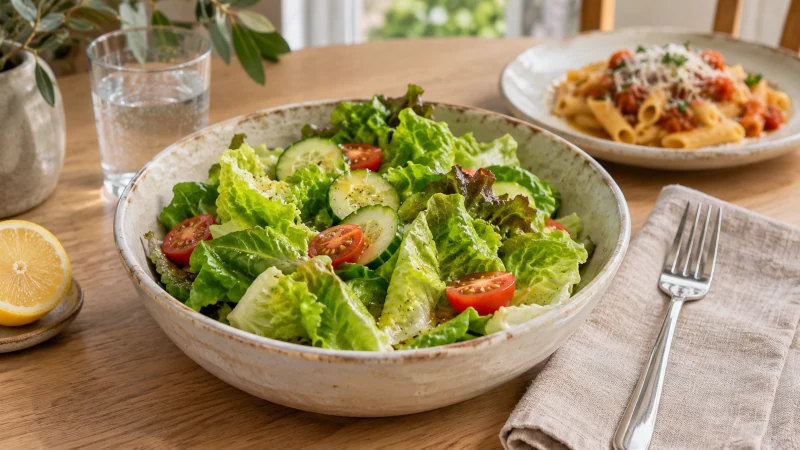
These were single-meal experiments, not weight-loss trials. They show a useful habit rather than a diet: start with a big, lightly dressed salad. For more on foods that keep you full, see our guide to foods that make it easier to lose weight.
A meaningful source of vitamin K and folate
Vitamin K supports normal blood clotting and bone health [Cleveland Clinic, 2024]. Lettuce, especially romaine and leaf types, is a steady everyday source, as the table above shows. Whether eating more lettuce lowers fracture risk hasn’t been tested directly, so treat bone benefits as a reason to get enough vitamin K overall, not as a lettuce-specific effect.
Romaine is also a reasonable folate source at about 64 mcg per cup [University Hospitals, n.d.], and darker leaves carry far more vitamin A and lutein than iceberg [Cleveland Clinic, 2024].
Leafy greens and brain aging
In a Chicago study that followed older adults for an average of 4.7 years, people in the top fifth for leafy-green intake (a median of about 1.3 servings a day) had slower cognitive decline. The researchers described the gap as equal to being about 11 years younger [Morris et al., 2018]. Lettuce salad was one of the three greens counted, alongside spinach and kale or collards [American Academy of Neurology, 2017].
This is an association, not proof. People who eat a lot of greens tend to differ in other ways, and the study can’t show the greens caused the difference. It’s still a reasonable reason to make greens a daily habit.
Fiber, water and digestion
Lettuce’s water content counts toward your fluids, and its crunch makes a plate feel fuller. Its fiber, though, is modest at about 0.5 to 1 g per cup [University Hospitals, n.d.; University Hospitals, n.d.]. That’s fine as part of a vegetable-rich diet, but calling lettuce a constipation remedy oversells it. Prunes, kiwifruit and other high-fiber foods for constipation do more.
Lettuce and blood sugar
A cup of romaine has about 1.5 g of carbohydrate [University Hospitals, n.d.], so it barely affects blood sugar and fits easily into a diabetes meal plan. That makes it a good filler, not a treatment. If blood sugar is your main concern, foods with soluble fiber such as oats have been studied much more directly.
Does lettuce help you sleep?
Lettuce has a long folk reputation as a sleep aid, and researchers have taken it seriously enough to test it [Kim et al., 2017]. The catch is what they tested.
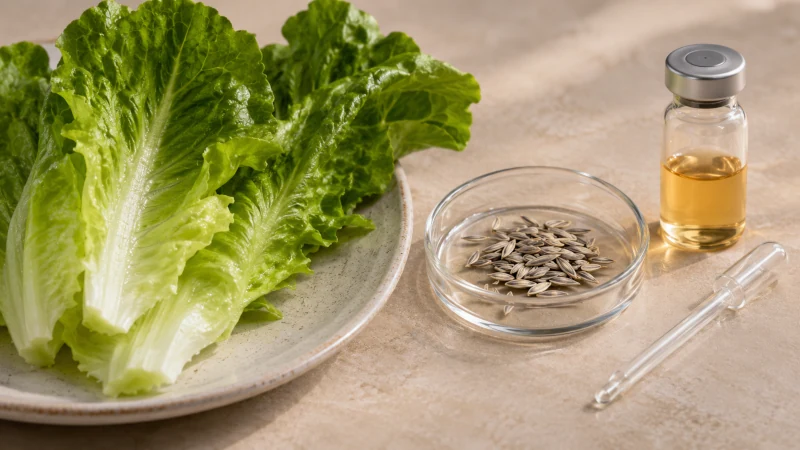
What the studies actually tested
Mice, not people. Lettuce extract injected into mice made a sedative drug’s effect last longer [Ghorbani et al., 2013]. In another mouse study, romaine seed extract shortened the time to fall asleep, and leaf extract lengthened sleep only at the higher dose, 160 mg per kilogram of body weight [Kim et al., 2017]. Those are concentrated extracts, nothing like a dinner salad.
Seeds, not leaves. The human trials used lettuce seed. In a one-week pilot, 60 adults with insomnia took a 1,000 mg lettuce seed oil capsule or a placebo each night. Among those who finished, 72% on the oil were rated much improved versus 20% on placebo. Only the patients were blinded, the trial was short, and the company that makes the capsule supplied them, with one author affiliated with it [Yakoot et al., 2011]. A two-week trial in 100 pregnant women found better sleep scores with 1,000 mg of lettuce seed a day than with placebo [Safari Pour et al., 2018].
Verdict: there isn’t enough evidence that eating lettuce improves sleep. Even health sites that list sleep among lettuce’s benefits note it’s unknown whether raw lettuce does what the extracts did [WebMD, 2026]. A salad for supper does no harm, but if poor sleep has lasted weeks or is affecting your days, see a doctor. They can look for causes and offer treatments with much stronger evidence.
Wild lettuce is a different plant
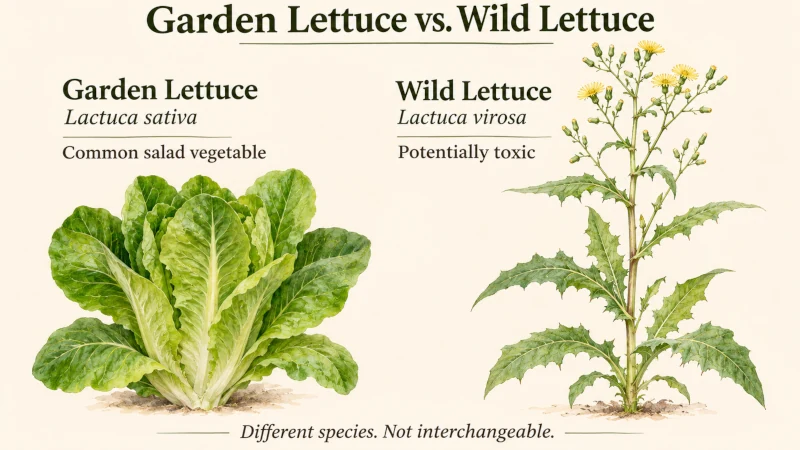
Wild lettuce (Lactuca virosa) is a separate species from the lettuce in your fridge. Its milky sap was used as a painkiller and sedative before the Victorian era, and it can be toxic: doctors in northern Iran described eight people who became ill after eating it. All recovered, though one needed 48 hours in intensive care [Besharat et al., 2009]. Don’t forage it, and don’t treat a wild lettuce product as if it were salad greens.
How to get more out of a salad
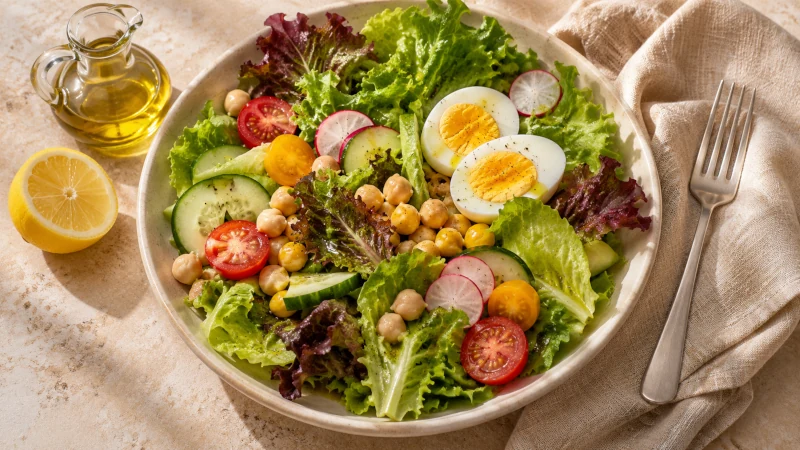
- Mix your leaves. Romaine, green leaf and red leaf bring far more vitamin K and carotenoids than iceberg alone [Cleveland Clinic, 2024].
- Dress it lightly. A drizzle of oil and a squeeze of lemon keeps a salad low in calories; heavy dressing and cheese can turn a filling starter into a high-calorie one [Rolls et al., 2004].
- Eat it first. A fixed salad before the main course cut total meal calories in controlled studies [Roe et al., 2012].
- Make it a meal. Lettuce alone is low in protein. Add beans, eggs, fish or tofu so a salad dinner actually keeps you going.
- Cook the sturdy leaves. Tougher outer leaves can be wilted or braised like other greens instead of thrown away.
Safety: who should be careful with lettuce
If you take warfarin
You don’t have to give up lettuce. NIH advice for people on warfarin is to keep vitamin K intake consistent, because sudden changes can strengthen or weaken the drug [NIH ODS, n.d.]. The type you eat matters here. Switching from occasional iceberg to a daily romaine or leaf-lettuce salad is a real increase (roughly 13 mcg versus 48 to 63 mcg per cup) [University Hospitals, n.d.; University Hospitals, n.d.; University Hospitals, n.d.]. Tell your doctor or anticoagulation clinic before you make a big change, and keep your usual habits steady between INR checks.
Food safety and washing

Because lettuce is usually eaten raw, cooking never gets a chance to kill germs on it. From 2014 to 2021, CDC recorded 78 outbreaks linked to leafy greens, mainly lettuce, causing 2,028 illnesses, 477 hospitalizations and 18 deaths. Germs found on leafy greens include E. coli, norovirus, Salmonella, Listeria and Cyclospora [CDC, n.d.].
CDC’s advice [CDC, n.d.]:
- Rinse leaves under running water, rubbing them gently with your hands.
- Don’t soak them in a sink or bowl, where germs can spread between leaves.
- Skip soap, vinegar and produce washes, and never use bleach.
- Greens labeled “ready to eat,” “triple washed” or “no washing necessary” don’t need rewashing.
- Washing reduces germs but can’t remove all of them.
Adults 65 and older, children under 5, people with weakened immune systems, and pregnant women are more likely to get seriously ill from food poisoning [CDC, n.d.]. If that’s you, take these steps seriously and pay attention to recall notices.
Pregnancy and breastfeeding
Eating lettuce is fine in pregnancy and adds folate. Pregnancy does make some foodborne germs, such as Listeria, more likely to cause illness [CDC, n.d.], so wash and store greens carefully. Lettuce seed and wild lettuce supplements are a different matter. One small trial reported better sleep with lettuce seed in pregnant women [Safari Pour et al., 2018], but a single two-week study can’t establish safety, and we found no studies of these supplements during breastfeeding. Check with your obstetric provider before taking either.
Allergy
Lettuce allergy is uncommon [WebMD, 2026]. If your mouth, lips or throat itch or swell after eating it, stop and talk to a doctor; trouble breathing needs emergency care.
When to see a doctor
After eating lettuce or salad, call your doctor if you have [CDC, n.d.]:
- Diarrhea or vomiting that lasts more than 2 days
- Bloody stool or bloody urine
- A fever above 102°F
- Signs of dehydration: little or no urine, very dark urine, intense thirst, dizziness
Get emergency care for signs of hemolytic uremic syndrome (HUS), a serious complication of some E. coli infections: little or no urination, loss of pink color in the cheeks or inside the lower eyelids, unexplained bruising or tiny red spots, or unusual tiredness or confusion [CDC, n.d.]. Dehydration develops quickly in young children, so don’t wait with them.
HEALTH DISCLAIMER: This article is for general education and isn’t a substitute for advice, diagnosis or treatment from a qualified health professional. Talk to your doctor or pharmacist before changing your diet if you take warfarin or another blood thinner, and before using lettuce seed, wild lettuce or any herbal sleep product, especially if you are pregnant, breastfeeding, taking medication or managing a health condition. If you think you have food poisoning with any of the warning signs above, seek medical care.
Frequently Asked Questions
Which type of lettuce is healthiest?
Romaine and leaf lettuces. Per cup, romaine has about four times the folate of iceberg, and both romaine and green leaf carry several times more vitamin K [University Hospitals, n.d.; University Hospitals, n.d.; University Hospitals, n.d.]. Mixing types is a simple way to get more from a salad.
Is iceberg lettuce worthless?
No. It’s low in calories, mostly water, and still adds some vitamin K: about 14 mcg per cup [NIH ODS, n.d.]. It just carries far less than darker leaves.
Will eating lettuce at night help me sleep?
Probably not in any noticeable way. The sleep findings come from mice and from lettuce seed products, not from eating leaves [Kim et al., 2017; Yakoot et al., 2011]. If insomnia is persistent, talk to a doctor.
Can I eat lettuce if I take warfarin?
Yes. The key is to eat about the same amount of vitamin K from day to day [NIH ODS, n.d.]. Check with your care team before switching to large daily servings of romaine or leaf lettuce.
Do I need to wash bagged salad?
Not if the label says “ready to eat,” “triple washed” or “no washing necessary.” Rinse other greens under running water rather than soaking them [CDC, n.d.].
References
- American Academy of Neurology. Eating leafy greens may be linked to slower brain aging. View source
- Besharat S, Besharat M, Jabbari A. Wild lettuce (Lactuca virosa) toxicity. View source
- Centers for Disease Control and Prevention. Lettuce, Other Leafy Greens, and Food Safety. View source
- Centers for Disease Control and Prevention. People at Increased Risk for Food Poisoning. View source
- Centers for Disease Control and Prevention. Food Safety. View source
- Centers for Disease Control and Prevention. E. coli: Signs and Symptoms. View source
- Cleveland Clinic. 5 Health Benefits of Lettuce. View source
- Ghorbani A, Rakhshandeh H, Sadeghnia HR. Potentiating effects of Lactuca sativa on pentobarbital-induced sleep. View source
- Kim HD, Hong KB, Noh DO, Suh HJ. Sleep-inducing effect of lettuce (Lactuca sativa) varieties on pentobarbital-induced sleep. View source
- Morris MC, Wang Y, Barnes LL, Bennett DA, Dawson-Hughes B, Booth SL. Nutrients and bioactives in green leafy vegetables and cognitive decline: prospective study. View source
- MyFoodData. Nutrition Facts for Romaine Lettuce (USDA SR data). View source
- National Institutes of Health, Office of Dietary Supplements. Vitamin K: Fact Sheet for Health Professionals. View source
- Roe LS, Meengs JS, Rolls BJ. Salad and satiety: the effect of timing of salad consumption on meal energy intake. Appetite. View source
- Rolls BJ, Roe LS, Meengs JS. Salad and satiety: energy density and portion size of a first-course salad affect energy intake at lunch. View source
- Safari Pour Z, Hosseinkhani A, Asadi N, et al. Double-blind randomized placebo-controlled trial on efficacy and safety of Lactuca sativa L. View source
- University Hospitals. Nutrition Facts: Lettuce, cos or romaine, raw, 1 cup shredded. View source
- University Hospitals. Nutrition Facts: Lettuce, iceberg, raw, 1 cup shredded or chopped. View source
- University Hospitals. Nutrition Facts: Lettuce, green leaf, raw, 1 cup shredded. View source
- WebMD Editorial Team; reviewed by Mikstas C. Lettuce: Health Benefits, Nutrients, Preparation, and More. View source
- Yakoot M, Helmy S, Fawal K. Pilot study of the efficacy and safety of lettuce seed oil in patients with sleep disorders. View source


