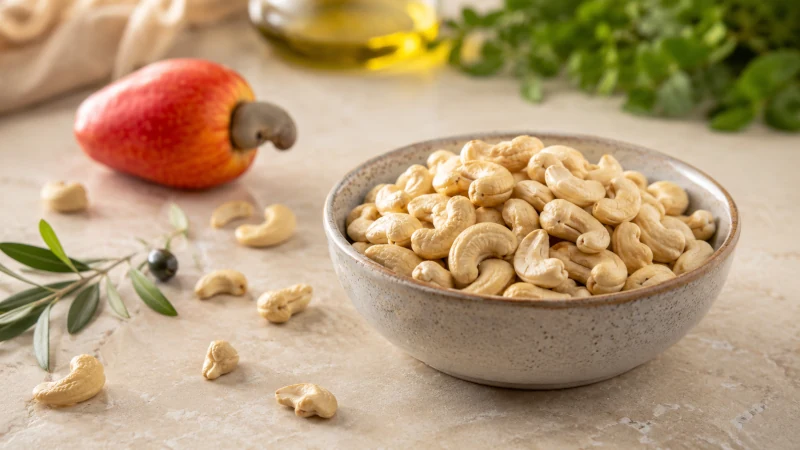
The real cashew benefits come down to one idea: cashews are a nutrient-dense seed that fits well into a heart-healthy eating pattern, but they are not a medicine and not the magic nut some sites make them out to be. A 1-ounce handful gives you protein, fiber, healthy fats, copper, and a useful dose of magnesium [USDA, 2022]. The catch is that most of the strongest evidence is about nuts in general, not cashews specifically, and the cashew-only studies are smaller and more mixed than the headlines suggest.
This guide separates what the research supports from what it doesn’t, gives you real numbers, and flags who should be careful — including the people for whom cashews can be genuinely dangerous.
What’s actually in a cashew
Despite the name, a cashew is a seed, not a true nut. It grows on the bottom of the cashew apple, the fruit of Anacardium occidentale, a tropical tree that’s now farmed across India, Vietnam, parts of Africa, and Brazil. Nutritionally, cashews sit a little apart from other tree nuts: they’re lower in fiber, slightly higher in carbohydrate, and most of their fat is the monounsaturated kind found in olive oil.
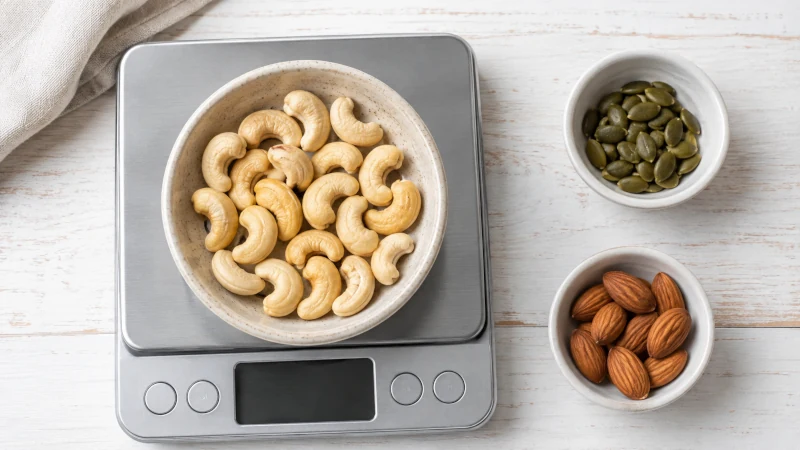
Here’s how a standard serving compares with a 100-gram portion, using USDA figures for raw, unsalted cashews:
| Nutrient | Per 1 oz (28 g, about 18 cashews) | Per 100 g |
| Calories | ~157 kcal | 553 kcal |
| Protein | ~5 g | ~18 g |
| Total fat (mostly monounsaturated) | ~12 g | ~44 g |
| Carbohydrate | ~9 g | ~30 g |
| Fiber | ~1 g | ~3 g |
| Magnesium | ~82 mg (about 20% DV) | 292 mg |
| Copper | ~0.6 mg (about 65% DV) | 2.2 mg |
| Phosphorus | ~166 mg | 593 mg |
| Potassium | ~185 mg | 660 mg |
| Zinc | ~1.6 mg | 5.8 mg |
| Iron | ~1.9 mg | 6.7 mg |
Source: USDA FoodData Central, raw cashew nuts. DV = Daily Value. Roasting and salting change the numbers slightly; salted cashews add sodium, and dry-roasted cashews run a bit lower in magnesium (~73 mg per ounce).
Cashews stand out most for copper and magnesium. They are a good source of magnesium — not the top one. Pumpkin seeds (about 150 mg per ounce) and almonds beat them, and so do many magnesium-rich foods. The older claim that cashews are “one of the richest plant sources of magnesium” overstates it.
Cashew benefits, ranked by how strong the evidence is
Nutrition labels tell you what’s in a food. They don’t tell you what it does in your body. For that, you need trials. Here’s where cashews actually stand.
Heart health: strong for nuts, promising for cashews
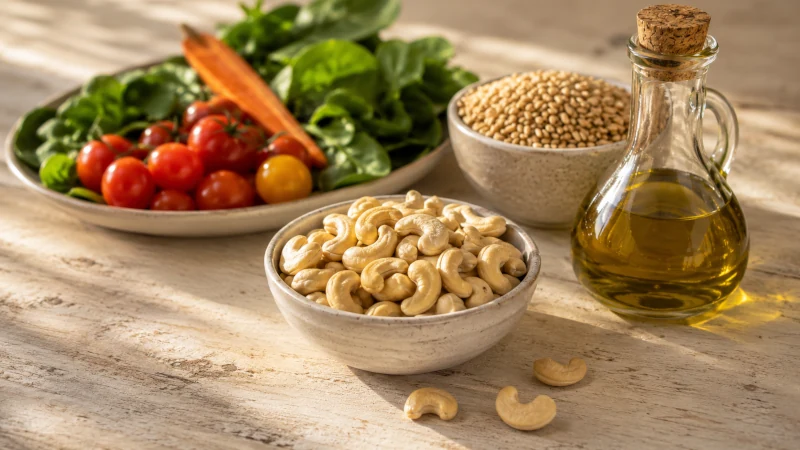
The best evidence is for nuts as a group. A dose-response meta-analysis of prospective studies found that each 28 grams of nuts a day was linked to roughly 21% lower cardiovascular disease risk and about 29% lower coronary heart disease risk, along with lower all-cause mortality [Aune et al., 2016]. In the PREDIMED trial, adding about 30 grams of mixed nuts daily to a Mediterranean diet cut major cardiovascular events by roughly 28% over five years [Liu et al., 2020].
Cashews almost certainly share in this benefit, but two caveats matter. Those studies used mixed nuts, often heavy on walnuts and almonds. And cashews are the one common tree nut left out of the U.S. FDA’s qualified health claim linking tree nuts to reduced heart-disease risk — because about a third of their fat is saturated [Baer et al., 2019]. That doesn’t make cashews unhealthy. It means the regulators wanted more cashew-specific proof.
Cholesterol: genuinely mixed
This is where honesty matters. In a 4-week controlled-feeding crossover trial of adults with high or at-risk LDL cholesterol, swapping in 28 to 64 grams of cashews a day lowered LDL cholesterol by about 5% and total cholesterol by about 4%, with no change in HDL or triglycerides [Mah et al., 2017]. Encouraging.
But a tightly controlled trial feeding 1.5 servings (about 42 grams) of cashews a day found no effect on blood lipids or other cardiovascular markers [Baer et al., 2019]. And a meta-analysis pooling 392 participants concluded that cashew intake had no significant effect on the overall lipid profile [Mohammadifard et al., 2020]. Read together: cashews may nudge LDL down in people who already have high cholesterol, but you should not expect dramatic changes, and the average person’s numbers may not move at all.
Blood pressure and HDL: a modest, repeatable signal
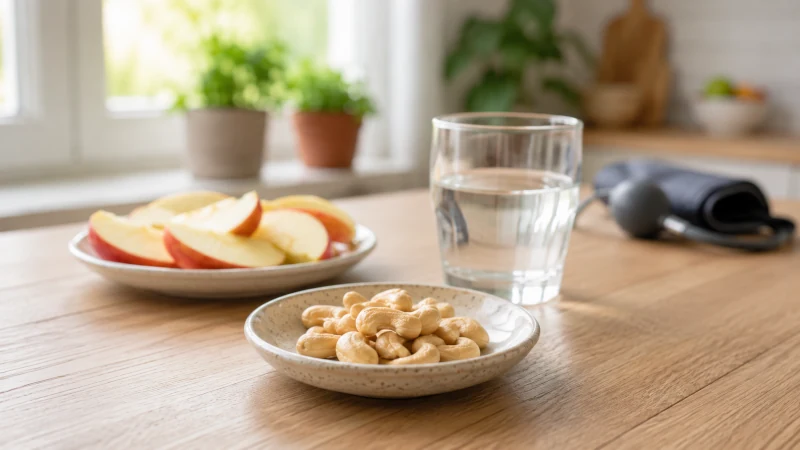
The most consistent cashew-specific finding is a small drop in systolic blood pressure. In a 12-week randomized trial of 300 adults in India with type 2 diabetes, 30 grams of cashews a day lowered systolic pressure by about 5 mmHg and raised HDL (“good”) cholesterol slightly, without harming blood sugar or body weight [Mohan et al., 2018]. The same meta-analysis above also pointed to a possible systolic-pressure reduction [Mohammadifard et al., 2020]. Worth noting: the diabetes trial was funded by a cashew-industry body, which is a reason to weigh it alongside independent data rather than on its own.
Magnesium and potassium plausibly explain part of this. Both minerals help blood vessels relax, and cashews supply a fair amount of each.
Blood sugar: reassuring, not transformative
Cashews have a relatively low glycemic load, and their fat and protein blunt the speed at which carbohydrates hit your bloodstream. Trials in people with type 2 diabetes consistently show that moderate cashew intake doesn’t worsen blood sugar, weight, or waist size [Mohan et al., 2018]. What the evidence does not show is that cashews meaningfully lower blood sugar on their own. They’re a safe swap for refined snacks, not a glucose treatment.
Magnesium, nerves, and muscle
Magnesium is a cofactor in more than 300 enzyme reactions, including muscle and nerve function and blood-sugar control [NIH ODS, 2022]. Adults need 310–420 mg a day, and many people fall short. An ounce of cashews covers roughly a fifth of that, which is a genuine contribution. Low magnesium can show up as muscle cramps, fatigue, and irritability, so foods like cashews, walnuts, seeds, and leafy greens are sensible ways to top up. Just keep the claim in proportion: cashews help you reach your magnesium target; they don’t “fix nerves” or cure anxiety.
What cashews probably won’t do
A few claims circulate widely with little behind them. Cashews won’t “detox” you, melt fat, reverse diabetes, or prevent cancer. The skin- and hair-growth claims tied to copper are mechanistic guesses, not outcomes shown in trials. And while nuts in general are linked to better weight control — partly because some of their fat isn’t fully absorbed and they keep you full [Healthline, 2025] — cashews are calorie-dense at about 157 calories an ounce. Eating them by the cupful in front of the TV is an easy way to overshoot.
Are “raw” cashews safe to eat?
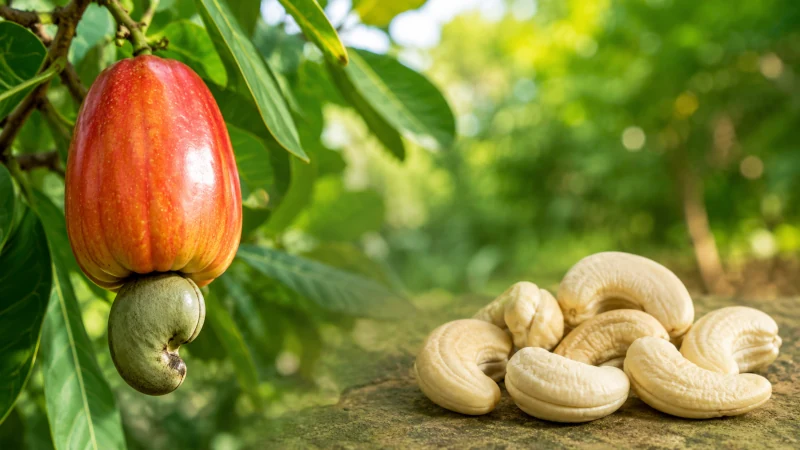
Mostly yes, with an asterisk. Cashews belong to the same plant family as poison ivy, mango, and pistachio. Their shells contain urushiol-like oils (anacardic acid) that can burn skin. Truly raw, unprocessed cashews are not safe to handle or eat, which is why even cashews sold as “raw” have been steamed to strip those oils [Healthline, 2025]. The kernels on a store shelf are safe. The takeaway is simple: don’t try to harvest or shell cashews yourself.
Side effects, interactions, and who should avoid cashews
Cashew allergy — the serious one
This deserves real attention. Cashew is now the most common cause of tree-nut anaphylaxis in children across Europe, and reactions can be triggered by tiny amounts — less than a teaspoon. In registry data spanning 2007 to 2024, most people who reacted hadn’t known they were allergic beforehand [European Anaphylaxis Registry, 2025]. Cashew and pistachio allergies often overlap. If you or your child has a known tree-nut or pistachio allergy, treat cashews as off-limits unless an allergist clears them, and carry prescribed epinephrine.
Red flags that need emergency care (call your local emergency number):
- Trouble breathing, wheezing, or throat tightness
- Swelling of the lips, tongue, or face
- Widespread hives with vomiting, dizziness, or fainting
These can appear within minutes of even a trace exposure. Hidden cashew shows up in pesto, vegan cheeses and sauces, and some baked goods, so label-reading matters.
Kidney stones, IBS, and sodium
If you’re prone to calcium-oxalate kidney stones, cashews are relatively high in oxalates and worth limiting. They’re also high in FODMAPs, the fermentable carbs that can trigger bloating and discomfort in people with irritable bowel syndrome [GoodRx, 2025]. And salted cashews can add up fast on sodium — choose unsalted or lightly salted if you’re watching blood pressure.
Pregnancy, breastfeeding, and medications
For most people who aren’t allergic, cashews are a fine part of a balanced diet in pregnancy and breastfeeding. There’s no good evidence that avoiding nuts during pregnancy prevents allergy in the baby. If you take blood-pressure medication, the small pressure-lowering effect of a nut-rich diet is usually welcome but worth mentioning to your clinician. Magnesium from food is safe; high-dose magnesium supplements are a different story and can interact with certain antibiotics and other drugs [NIH ODS, 2022].
A realistic portion
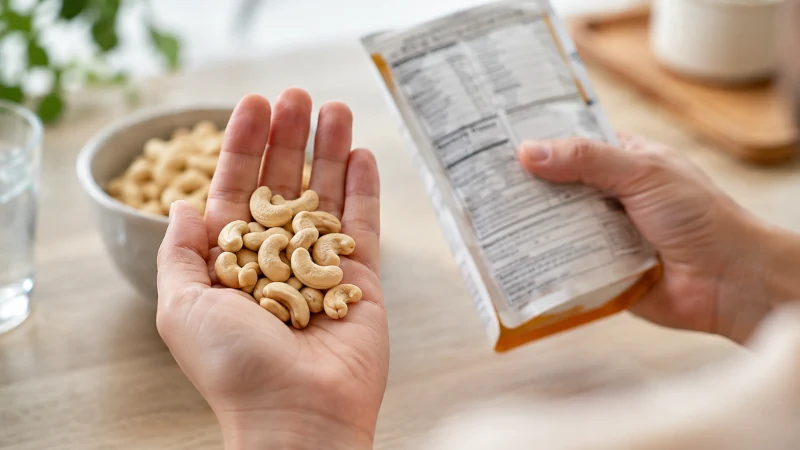
Most of the trials that showed benefits used about 28 to 45 grams a day — a small handful to a generous one. That’s a sensible target: enough to contribute meaningful nutrients, not so much that the calories work against you. Unsalted, and swapped in for a less healthy snack rather than added on top, is the version most likely to help.
| Health Disclaimer: This article is for general education and information only. It is not medical advice and is not a substitute for diagnosis or treatment by a qualified healthcare professional. Cashews can cause severe, potentially life-threatening allergic reactions in some people. If you are pregnant or breastfeeding, have a nut or pistachio allergy, take prescription medication, or have a chronic condition such as kidney stones, diabetes, or IBS, talk to your doctor, pharmacist, or registered dietitian before making changes to your diet. If you think you are having an allergic reaction, seek emergency care immediately. |
Frequently asked questions
How many cashews should I eat a day?
A small handful — roughly 28 to 45 grams, or about 18 to 28 cashews — matches the amounts used in studies and keeps the calories reasonable. Unsalted is best if you’re watching sodium or blood pressure.
Do cashews lower cholesterol?
Sometimes, modestly. One controlled trial found about a 5% drop in LDL cholesterol in people who already had high cholesterol, but other trials and a pooled analysis found no significant effect. Don’t rely on cashews alone to manage cholesterol.
Are cashews good for people with diabetes?
They can be. Cashews have a low glycemic load and, in trials, didn’t raise blood sugar or weight while modestly improving blood pressure and HDL. They support a diabetes-friendly diet but are not a treatment.
Why are raw cashews not really raw?
Cashew shells contain irritant oils related to those in poison ivy. Even cashews labeled “raw” have been steamed to remove them, which is what makes them safe to eat.
Can a cashew allergy be dangerous?
Yes. Cashew is a leading cause of severe allergic reactions in children, and tiny amounts can trigger anaphylaxis. Anyone with a known tree-nut or pistachio allergy should avoid cashews unless cleared by an allergist.
References
- Are cashews good for you? Health benefits and downsides. GoodRx (2025). → View source
- U.S. Department of Agriculture, FoodData Central. Nuts, cashew nuts, raw (2022). → View source
- National Institutes of Health, Office of Dietary Supplements. Magnesium — Fact Sheet for Health Professionals (2022). → View source
- Mah E, et al. Cashew consumption reduces total and LDL cholesterol: a randomized, crossover, controlled-feeding trial. J Nutr (2017). → View source
- Baer DJ, Novotny JA. Consumption of cashew nuts does not influence blood lipids or other markers of cardiovascular disease in humans: a randomized controlled trial. Am J Clin Nutr (2019). → View source
- Mohan V, et al. Cashew nut consumption increases HDL cholesterol and reduces systolic blood pressure in Asian Indians with type 2 diabetes: a 12-week randomized controlled trial. J Nutr (2018). → View source
- Mohammadifard N, et al. The effects of cashew nut intake on lipid profile and blood pressure: a systematic review and meta-analysis of randomized controlled trials. Complement Ther Med (2020). → View source
- Aune D, et al. Nut consumption and risk of cardiovascular disease, total cancer, all-cause and cause-specific mortality: a systematic review and dose-response meta-analysis. BMC Medicine (2016). → View source
- Liu X, et al. Changes in nut consumption and subsequent cardiovascular disease risk (incl. PREDIMED findings). J Am Heart Assoc (2020). → View source
- Tree nut-induced anaphylaxis: a growing concern for cashew — European Anaphylaxis Registry (2025). → View source
- Petre A. Are cashews good for you? Nutrition, benefits, and downsides. Healthline (2025). → View source
