
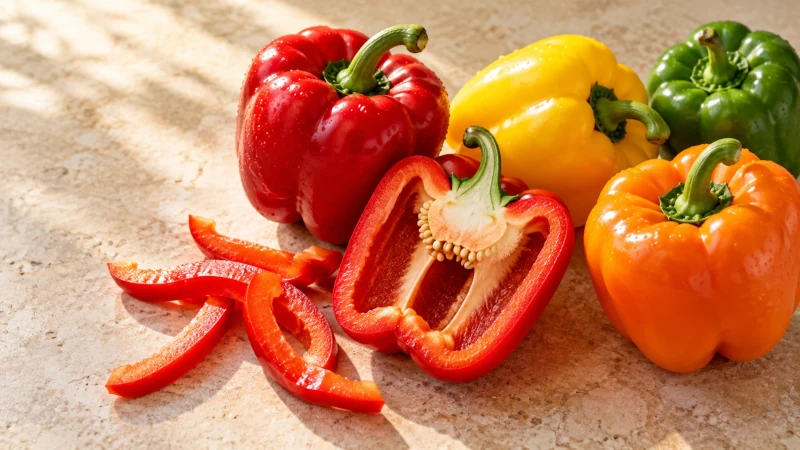
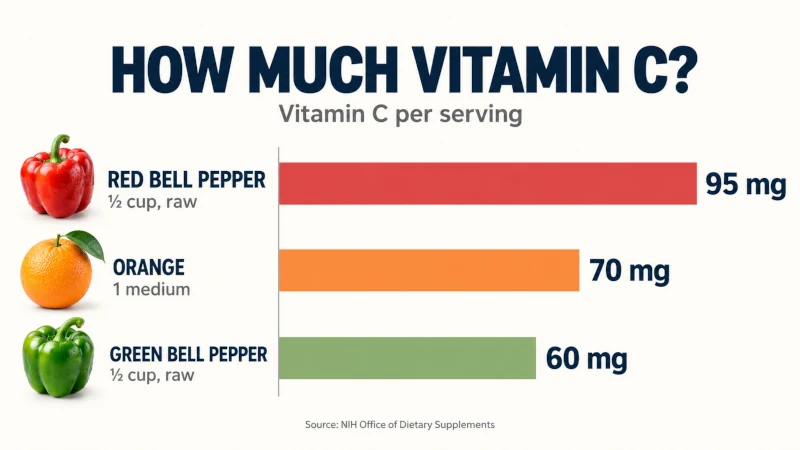
Bell peppers are one of the easiest ways to cover your vitamin C for the day. Half a cup of raw red bell pepper supplies about 95 mg — more than an adult’s full daily requirement, and more than a medium orange [NIH ODS, 2025]. That’s the headline among bell pepper benefits, and it rests on solid nutrient data. The rest of the list is real but smaller: some provitamin A in red peppers, eye-friendly pigments in orange ones, a little fiber, and only about 39 calories in a whole chopped cup [Cleveland Clinic, 2026].
A few popular claims don’t hold up as well. Bell peppers won’t fix indigestion, they aren’t a laxative, and no study shows they prevent stomach or colon cancer by themselves. Here’s what the evidence supports, what’s been stretched, and who should take a little care.
Bell Pepper Nutrition: What’s in One Cup
Bell peppers (Capsicum annuum) are mostly water, which is why they’re so light. These figures are for one cup of chopped, raw red bell pepper.
| Nutrient | Amount | % Daily Value |
| Calories | 39 | — |
| Carbohydrate | 9 g | — |
| Fiber | 3 g | — |
| Sugar | 6 g | — |
| Protein | 1.5 g | — |
| Vitamin C | 191 mg | 212% |
| Vitamin A | 234 mcg | 26% |
| Vitamin B6 | 0.43 mg | 25% |
| Folate | 69 mcg | 17% |
| Vitamin E | 2.4 mg | 12% |
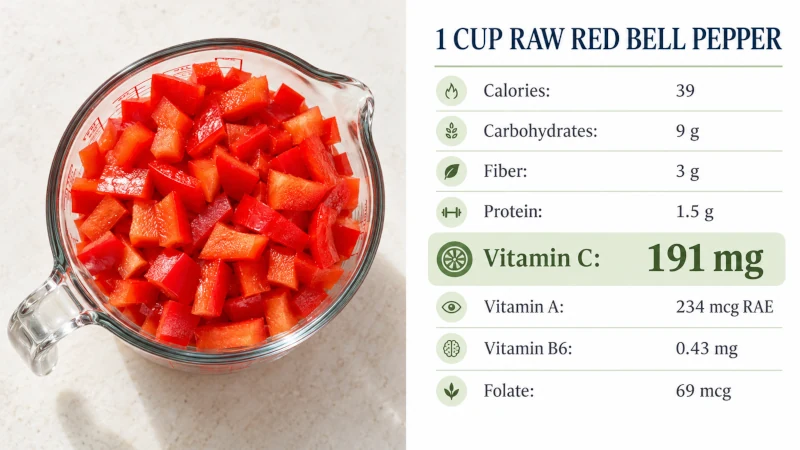
Source: [Cleveland Clinic, 2026]. Values shift a little by color and size.
One correction to a figure you may see elsewhere: red peppers are a moderate source of vitamin A, not a top-tier one. Half a cup provides about 117 mcg RAE, or 13% of the Daily Value [NIH ODS, 2025]. Carrots supply several times more per serving. Peppers still help — they just aren’t the vitamin A heavyweight they’re sometimes made out to be.
Does Color Matter?
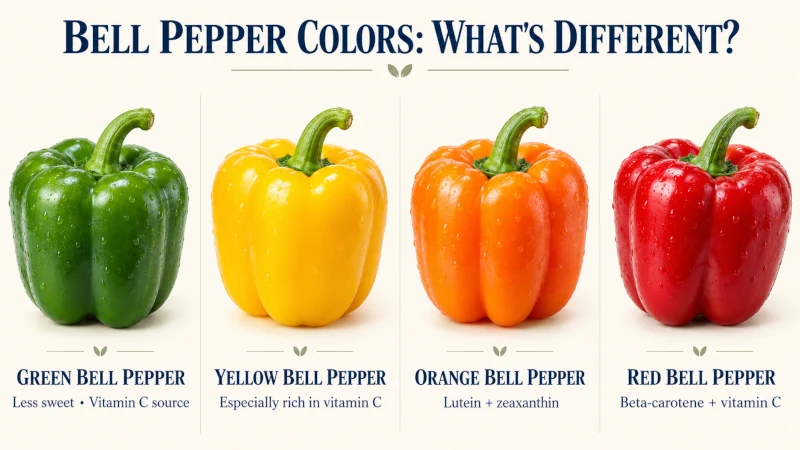
Green, yellow, orange, and red bell peppers come from the same plant. Green peppers are picked before they ripen; the others are ripe, which is why they cost more and taste sweeter [Tufts, 2015]. Ripening changes the mix of nutrients:
| Color | What stands out |
| Green | Least sweet, slightly bitter. Still a good vitamin C source — about 60 mg per half cup [NIH ODS, 2025]. |
| Yellow | Very high in vitamin C (about 184 mg per 100 g in USDA figures cited by Tufts) but almost no beta-carotene [Tufts, 2015]. |
| Orange | The richest in lutein and zeaxanthin [Cleveland Clinic, 2026]. In one lab analysis, orange pepper had the highest share of zeaxanthin of any vegetable tested, about 37% of its carotenoids [Sommerburg et al., 1998]. |
| Red | Sweetest and highest in beta-carotene; about 95 mg vitamin C per half cup [NIH ODS, 2025]. |
A Tufts carotenoid researcher’s verdict was that the differences aren’t big enough to crown one color the winner [Tufts, 2015]. Buy the ones you’ll actually eat. Mixing colors gets you a bit of everything.
Bell Pepper Benefits Backed by Evidence
Vitamin C in a serving you’ll actually eat
Adults need 90 mg of vitamin C a day (men) or 75 mg (women), and people who smoke need 35 mg more [NIH ODS, 2025]. A handful of red pepper strips gets most people there. Vitamin C helps maintain the skin’s barrier, supports wound healing, and is used by several kinds of immune cells [Carr & Maggini, 2017]. The payoff comes from getting enough, consistently — and peppers are a cheap, easy way to do that.
Vitamin C is fragile, though. It dissolves in water and breaks down with heat, and steaming or microwaving loses less than longer cooking [NIH ODS, 2025]. Eat some peppers raw and cook the rest quickly. For a side-by-side look at how fruit sources compare, see our acerola cherry vs. orange vitamin C breakdown.
Getting more iron out of plant foods
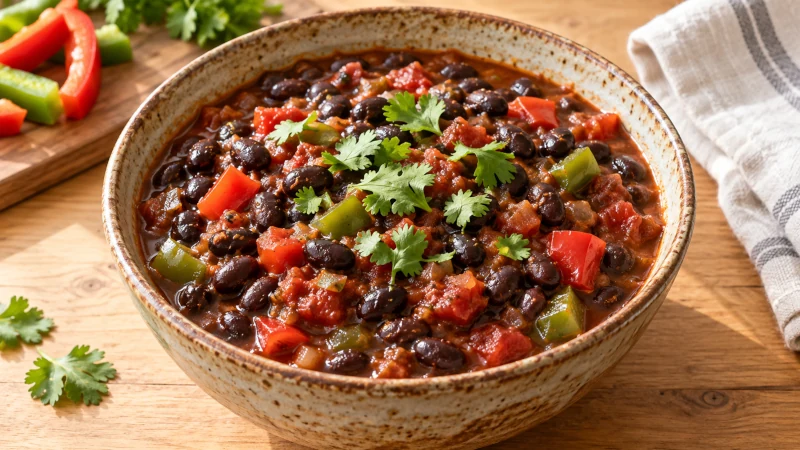
This benefit gets overlooked. Vitamin C improves absorption of non-heme iron, the type in plant foods [NIH ODS, 2025]. Peppers in a bean chili, a lentil salad, or a tofu stir-fry make the iron in those foods easier for your body to use. The same trick helps with leafy greens, as our guide to spinach’s real health benefits explains.
Carotenoids for your eyes — promising, with caveats
Red peppers carry beta-carotene, which your body turns into vitamin A as needed. Orange peppers stand out for zeaxanthin, one of the two pigments (with lutein) that collect in the macula, the part of the retina responsible for sharp central vision [Sommerburg et al., 1998].
The best human evidence for these pigments comes from supplements, not food. In the AREDS2 trial, adding lutein and zeaxanthin to an eye-vitamin formula showed no extra benefit at first; after 10 years of follow-up, people on that version had about a 20% lower risk of progressing to late age-related macular degeneration than people on the older beta-carotene version [NIH ODS, 2025]. Everyone in that trial already had AMD, so it tells us nothing direct about peppers preventing it. Count orange peppers as one useful source in an eye-friendly diet. If you’ve been diagnosed with AMD, our age-related macular degeneration guide covers who benefits from supplements.
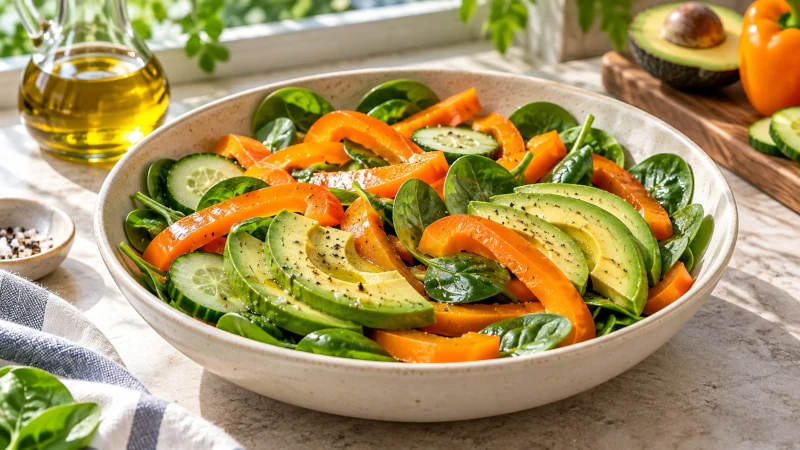
One easy upgrade: eat peppers with a little fat. In a small study of 11 adults, adding avocado to a salad raised beta-carotene absorption about 15-fold and lutein about 5-fold, and a couple of tablespoons of avocado oil worked about as well [Unlu et al., 2005]. Olive oil on roasted peppers does the same job.
Low-calorie volume for blood sugar and weight
At roughly 39 calories and 9 grams of carbohydrate per cup [Cleveland Clinic, 2026], bell peppers add crunch and bulk without moving your totals much. The American Diabetes Association lists peppers among non-starchy vegetables, which are low in both calories and carbs [ADA], and the CDC’s plate method suggests filling half your plate with non-starchy vegetables [CDC, 2024].
That makes peppers a natural fit for a diabetes-friendly or weight-conscious way of eating. It doesn’t make them a treatment: we found no research showing bell peppers lower blood sugar or cause weight loss on their own. Our diabetes and blood sugar resource center has more on the bigger picture.
A modest fiber contribution
A cup of red pepper gives you about 3 grams of fiber, against a daily target of roughly 25 to 38 grams for adults [Cleveland Clinic, 2026]. That’s a fair contribution to regular digestion — not a laxative effect.
You may have read that peppers stimulate gastric juices and ease indigestion thanks to capsaicin. Bell peppers have no capsaicin; sweet bell peppers score zero on the Scoville heat scale [Ohio State University, eXtension]. We also found no human research showing bell peppers treat indigestion.
Do Bell Peppers Help Prevent Cancer?
Possibly as part of a bigger pattern, but not on their own. The World Cancer Research Fund’s expert panel concluded that diets higher in non-starchy vegetables and fruit probably protect against several cancers, including those of the mouth, throat, larynx, and esophagus — while noting that evidence for any single cancer is limited [WCRF]. That conclusion is about overall eating habits, not one vegetable. Our evidence-graded guide to a cancer-preventing diet puts peppers in context with the rest of your plate.
“Antioxidant” doesn’t automatically mean protective, either. In a large trial of male smokers, beta-carotene supplements raised lung cancer risk by 18% [NIH ODS, 2025]. The serious harms tied to beta-carotene came from high-dose supplements, not from eating vegetables — one more reason to get carotenoids from food.
The Evidence at a Glance
| Claim | Evidence | What it means for you |
| Rich source of vitamin C | Strong | Half a cup of red pepper covers an adult’s daily need. |
| Helps absorb iron from plant foods | Strong (well-established) | Pair peppers with beans, lentils, tofu, or greens. |
| Supports eye health | Limited for peppers | Supplement trials were in people with AMD. Peppers are a reasonable food source of the same pigments. |
| Helps with diabetes or weight | Indirect | Fits recommended eating patterns; no pepper-specific trials found. |
| Prevents cancer | Limited / pattern-level | Vegetable-rich diets probably lower risk of some cancers. No evidence for peppers alone. |
| Eases indigestion; works as a laxative | Insufficient (traditional claim) | No supporting human research found. Bell peppers contain no capsaicin. |
Who Should Be Careful With Bell Peppers
For most people, bell peppers are about as low-risk as food gets. A few situations call for some attention.
Pollen-food (oral) allergy
Some people with birch pollen allergy react to certain raw fruits and vegetables, and one allergy department’s patient handout lists green pepper among the birch-linked foods [Kaiser Permanente]. Typical symptoms are itching or mild swelling of the lips, mouth, or throat shortly after eating, and cooking often breaks down the proteins responsible [ACAAI].
Get medical care promptly — and call 911 for any trouble breathing — if a reaction spreads beyond your mouth, makes swallowing hard, causes whole-body symptoms, or happens with cooked peppers. An allergist can tell you whether you should carry an epinephrine auto-injector [ACAAI].
Nightshades and arthritis
Bell peppers belong to the nightshade family, along with tomatoes, potatoes, and eggplant, and they’re often blamed for joint pain. A spokesperson for the Arthritis Foundation told Tufts that research hasn’t found nightshades worsen arthritis — peppers are even on the foundation’s list of best vegetables for arthritis. If you suspect a food trigger, try a supervised elimination diet rather than cutting out whole food groups on your own [Tufts, 2019].
Iron overload (hemochromatosis)
Because vitamin C increases iron absorption, the NIH notes that high vitamin C intakes could worsen iron overload in people with hereditary hemochromatosis; its warning centers on high doses [NIH ODS, 2025]. If you have this condition, ask your doctor or dietitian how vitamin C–rich foods and meals fit into your plan.
Medications, pregnancy, and breastfeeding
We didn’t find documented drug interactions or pregnancy- or breastfeeding-specific warnings for bell peppers eaten as food in the sources reviewed for this article. Food safety matters more here: rinse peppers under running water before cutting, skip soap and commercial produce washes, and refrigerate cut produce [FDA, 2024]. If you follow a medically restricted diet, check with your care team before making big changes to how much produce you eat.
Sensitive stomachs
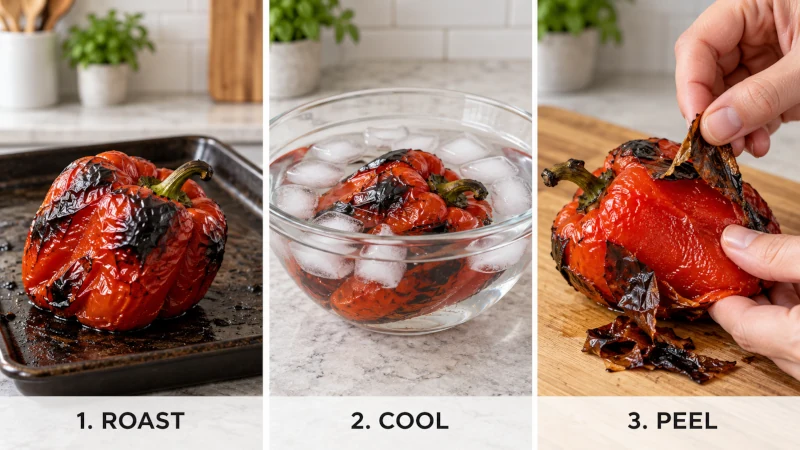
Some people find raw pepper skins hard to digest. That’s a common complaint rather than a well-studied effect, and the fix is simple: roast whole peppers until the skin blisters, dunk them in ice water, and the skins slip off.
Don’t try to manage ongoing heartburn, bloating, or abdominal pain by experimenting with foods. See a doctor, and go promptly if you have trouble swallowing, unexplained weight loss, repeated vomiting, or black or bloody stools.
How to Get the Most From Bell Peppers
- Eat some raw, cook the rest quickly. Raw slices keep the most vitamin C; steaming or microwaving loses less than long cooking [NIH ODS, 2025].
- Add a little fat. Olive oil, avocado, or nuts help you absorb the carotenoids [Unlu et al., 2005].
- Pair with plant iron. Beans, lentils, tofu, and leafy greens absorb better alongside vitamin C [NIH ODS, 2025].
- Rotate colors. Red for beta-carotene, orange for zeaxanthin, yellow and red for vitamin C.
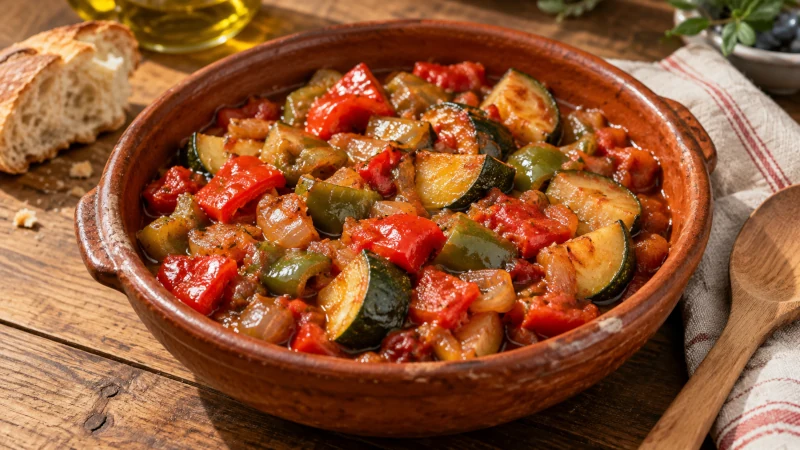
- Cook them in quantity. Spanish pisto — peppers stewed with tomatoes, zucchini, and onion — is a classic way to eat a lot at once. Paprika, which is dried ground red pepper, adds color and flavor, though a sprinkle won’t replace a serving of fresh peppers.
| Health Disclaimer: This article is for general education and isn’t medical advice. It can’t replace diagnosis, treatment, or guidance from a qualified healthcare professional. Bell peppers are a food, not a treatment for any disease. If you have a food allergy, hereditary hemochromatosis, a medically restricted diet, or symptoms that concern you — or if you’re pregnant or breastfeeding and have questions about your diet — talk with your doctor, a registered dietitian, or your pharmacist. |
Frequently Asked Questions
Which color bell pepper is the healthiest?
There’s no single winner. Red has the most beta-carotene, orange the most lutein and zeaxanthin, and red and yellow lead on vitamin C. Green has less vitamin C than red but is still a good source [NIH ODS, 2025]. The differences are small enough that eating any color is a good choice [Tufts, 2015].
Are bell peppers healthier raw or cooked?
Both have a place. Raw keeps more vitamin C, which is sensitive to heat [NIH ODS, 2025]. Cooking with a little oil makes carotenoids easier to absorb. Eating them both ways covers you.
Do bell peppers have more vitamin C than oranges?
Yes. Half a cup of raw red pepper has about 95 mg, compared with about 70 mg in a medium orange. Half a cup of green pepper has about 60 mg [NIH ODS, 2025].
Are bell peppers good for people with diabetes?
They fit well. The ADA lists peppers as a non-starchy vegetable, low in calories and carbohydrate [ADA]. They support a balanced meal plan but don’t lower blood sugar on their own.
Are nightshades like bell peppers bad for arthritis?
Research hasn’t shown that nightshades worsen arthritis, and the Arthritis Foundation includes peppers among its recommended vegetables. If you suspect a trigger, try an elimination diet with professional guidance [Tufts, 2019].
Can you be allergic to bell peppers?
Yes. One documented pattern is pollen-food allergy: some people with birch pollen allergy react to raw green pepper [Kaiser Permanente]. Mouth itching or swelling is typical; symptoms beyond the mouth, or trouble breathing or swallowing, need prompt medical care [ACAAI].
References
- National Institutes of Health, Office of Dietary Supplements. Vitamin C — Fact Sheet for Health Professionals. View source
- National Institutes of Health, Office of Dietary Supplements. Vitamin A and Carotenoids — Fact Sheet for Health Professionals. View source
- Cleveland Clinic. Health Benefits of Bell Peppers (with Lara Whitson, RD, LD). View source
- Tufts Health & Nutrition Letter. Which Color of Bell Pepper Has Most Nutrients? (Elizabeth J. Johnson, PhD). View source
- Sommerburg O, Keunen JEE, Bird AC, van Kuijk FJGM. Fruits and vegetables that are sources for lutein and zeaxanthin: the macular pigment in human eyes. View source
- Unlu NZ, Bohn T, Clinton SK, Schwartz SJ. Carotenoid absorption from salad and salsa by humans is enhanced by the addition of avocado or avocado oil. View source
- Carr AC, Maggini S. Vitamin C and Immune Function. View source
- World Cancer Research Fund. Wholegrains, vegetables, fruit and beans — evidence for our recommendations. View source
- American Diabetes Association. Non-Starchy Vegetables. View source
- Centers for Disease Control and Prevention. Diabetes Meal Planning. View source
- Tufts Health & Nutrition Letter. The Buzz about Nightshades. View source
- American College of Allergy, Asthma & Immunology. Pollen Food Allergy Syndrome. View source
- Kaiser Permanente Medical Center, Department of Allergy, Asthma & Immunology (South San Francisco). Oral Allergy Syndrome (patient handout, PDF). View source
- Hernandez-Garcia C, Zhang Z (The Ohio State University). Pepper Heat. Plant Breeding and Genomics, eXtension. View source
- U.S. Food and Drug Administration. Selecting and Serving Produce Safely. View source


