
Cabbage is a low-calorie cruciferous vegetable with fiber, vitamin C, vitamin K, and plant compounds called glucosinolates. The health benefits of cabbage are real, but they are best understood as part of a balanced diet – not as proof that cabbage can cure ulcers, prevent cancer by itself, or replace medical treatment.
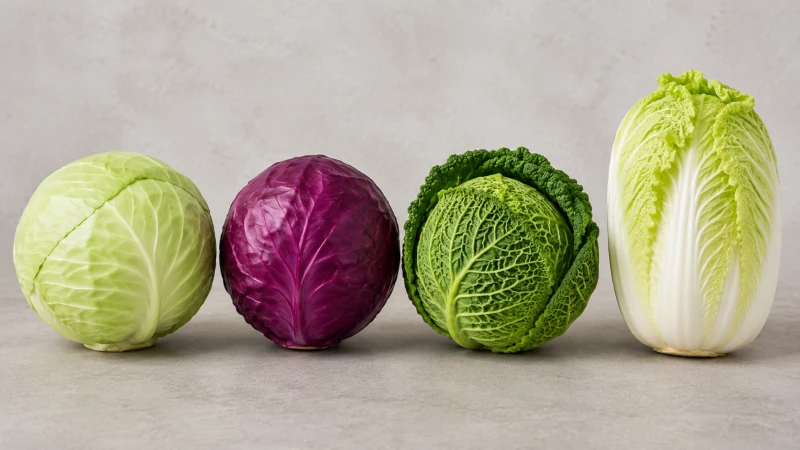
Green cabbage, red cabbage, Savoy cabbage, Napa cabbage, Brussels sprouts, broccoli, cauliflower, and kohlrabi all belong to the larger brassica family. They differ in taste, texture, color, and nutrient levels, but they share many of the same useful plant compounds.
Is cabbage good for you?
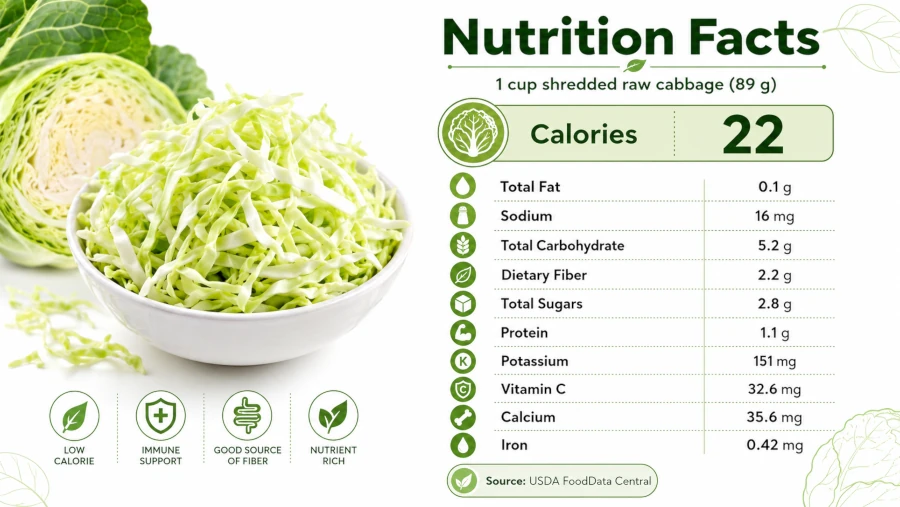
Yes. Cabbage is a practical, affordable vegetable that can help you eat more fiber-rich, nutrient-dense food without adding many calories. One cup of shredded raw cabbage has about 18 calories, 4 grams of carbohydrate, 2 grams of fiber, 1 gram of protein, and 28 mg of vitamin C, according to USDA SNAP-Ed data [USDA SNAP-Ed, n.d.].
That makes cabbage especially useful for people trying to improve diet quality, add more vegetables, manage appetite, or build meals around whole foods. It is not a “superfood” in the medical sense. Its value comes from regular use as one vegetable among many.
Cabbage nutrition facts
Per 1 cup shredded raw cabbage, about 70 grams:
| Nutrient | Approximate amount |
| Calories | 18 |
| Carbohydrates | 4 g |
| Fiber | 2 g |
| Sugars | 2 g |
| Protein | 1 g |
| Fat | 0 g |
| Sodium | 13 mg |
| Vitamin C | 28 mg |
Source: USDA SNAP-Ed cabbage nutrition listing [USDA SNAP-Ed, n.d.].
Cabbage also contains vitamin K, a nutrient involved in blood clotting and bone metabolism. Vitamin K is useful, but it matters for people taking warfarin or similar anticoagulants because sudden changes in vitamin K intake can affect how those medicines work [NIH ODS, 2021]; [Mayo Clinic, 2024].
Main health benefits of cabbage
1. Supports digestion with fiber
Cabbage contains fiber, which helps add bulk to the diet. Fiber is one reason vegetables are linked with better digestive regularity. The National Institute of Diabetes and Digestive and Kidney Diseases recommends getting enough fiber and adding it gradually, especially for people trying to prevent or manage constipation [NIDDK, n.d.].
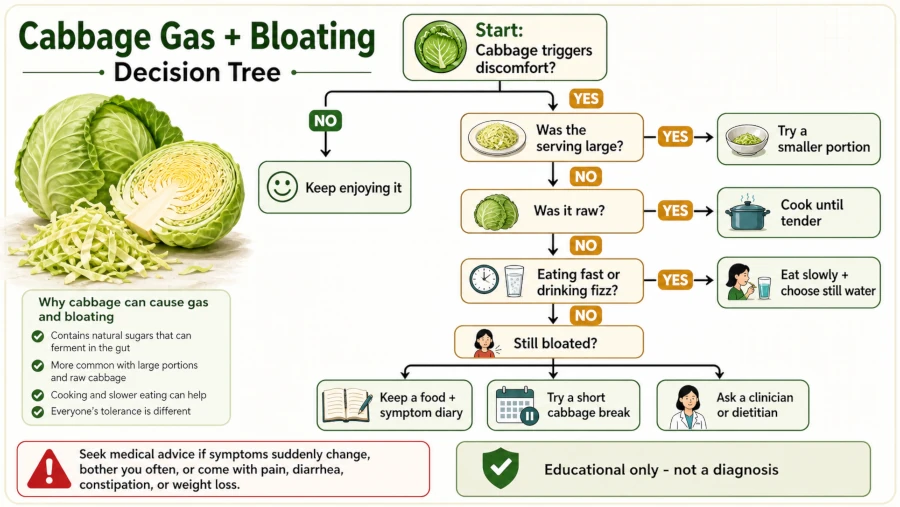
The caution is that cabbage can also cause gas or bloating in some people. MedlinePlus lists cabbage among foods that may produce gas, especially for people who already deal with bloating or digestive sensitivity [MedlinePlus, 2024].
A simple way to improve tolerance is to start with smaller portions, cook cabbage instead of eating it raw, and avoid suddenly adding large amounts of cabbage, beans, bran, and other high-fiber foods at the same meal.
2. Provides vitamin C and antioxidant compounds
Cabbage is a useful source of vitamin C. Vitamin C acts as an antioxidant and is needed for normal collagen formation, immune function, and wound healing. Adult men generally need 90 mg per day, adult women need 75 mg per day, and people who smoke need an extra 35 mg per day [NIH ODS, 2025].
A cup of raw shredded cabbage provides about 28 mg of vitamin C, so it can contribute meaningfully to daily intake without relying on supplements [USDA SNAP-Ed, n.d.]. Red cabbage also contains anthocyanins, the red-purple pigments found in many blue, red, and purple plant foods. These compounds are being studied for antioxidant and anti-inflammatory effects, but eating red cabbage should still be framed as a healthy food choice rather than a medical treatment.
3. May support a cancer-prevention eating pattern
Cabbage belongs to the cruciferous vegetable family. Cruciferous vegetables contain glucosinolates, which can break down into biologically active compounds such as isothiocyanates and indoles. These compounds have been studied for possible effects on enzymes, inflammation, oxidative stress, and cancer-related processes [National Cancer Institute, 2012].
Human evidence is mixed. The National Cancer Institute notes that some studies suggest benefits for certain cancer-related biomarkers, but results vary by cancer type and study design. It is difficult to separate the effect of cruciferous vegetables from the overall diet and lifestyle habits of people who eat more vegetables [National Cancer Institute, 2012].
A careful claim would be: cabbage may help support a cancer-prevention dietary pattern, especially when it replaces highly processed foods and is eaten along with other vegetables, fruits, whole grains, beans, and healthy protein sources. It should not be described as preventing, treating, curing, or stopping cancer.
4. Fits heart-health and blood-pressure-friendly meals
Cabbage is naturally low in calories, fat, and sodium. It works well in meals built around vegetables, beans, whole grains, fish, poultry, or other minimally processed foods. The World Health Organization describes healthy diets as varied, balanced, and based mainly on minimally processed foods, with attention to fiber, sodium, unhealthy fats, and overall diet quality [WHO, 2026].
Cabbage alone will not lower blood pressure or reverse heart disease. Still, it can fit naturally into a heart-health eating pattern. For readers interested in broader dietary support, link internally to your page on foods that may support healthy blood pressure where the context fits.
5. Helps with fullness and weight management
Because cabbage is low in calories and contains fiber and water, it can make meals feel larger and more filling. That can help people who are trying to manage body weight without relying on extreme restriction. The CDC notes that adults are advised to eat about 2-3 cup-equivalents of vegetables daily, yet only a small share of adults meet vegetable intake recommendations [CDC, 2022].
Cabbage soup diets and extreme cabbage-only plans are not a good idea. They are repetitive, nutritionally limited, and hard to maintain. A better approach is to use cabbage in normal meals: slaws, soups, stir-fries, tacos, grain bowls, fermented sides, or roasted vegetable plates. You can naturally link to your page on foods to eat to lose weight when discussing filling, lower-calorie foods.
6. Fermented cabbage may support gut bacteria
Sauerkraut and kimchi are made from fermented cabbage. Fermentation can produce lactic acid bacteria and other compounds that may influence the gut microbiome. Fermented foods are an active area of nutrition research, but benefits depend on the food, the fermentation process, whether the product contains live cultures, and the person eating it.
Fermented cabbage can also be high in sodium. People with high blood pressure, heart failure, kidney disease, or sodium restrictions should check labels and use small portions. For a related internal link, this section is a natural place to point readers to your page on sauerkraut health benefits.
Cabbage juice for ulcers: promising old research, but not a treatment
The old article included strong claims about cabbage juice and ulcers. There is some historical evidence behind the idea, but it needs careful context.
A 1949 study reported faster healing times in 13 patients with peptic ulcers who received fresh cabbage juice. The study described average healing times of 10.4 days for seven duodenal-ulcer patients and 7.3 days for six gastric-ulcer patients, compared with longer healing times reported in standard-therapy groups from the literature [Cheney, 1949].
That research is interesting, but it is old, small, and not enough to support cabbage juice as an ulcer treatment today. Peptic ulcers can be caused by Helicobacter pylori infection, nonsteroidal anti-inflammatory drugs such as ibuprofen or naproxen, and other medical problems. They may require testing, acid-suppressing medicine, antibiotics, or urgent care.
Do not use cabbage juice instead of medical care for burning stomach pain, black stools, vomiting blood, unexplained weight loss, trouble swallowing, severe abdominal pain, or anemia symptoms.
Raw, cooked, or fermented: which is best?
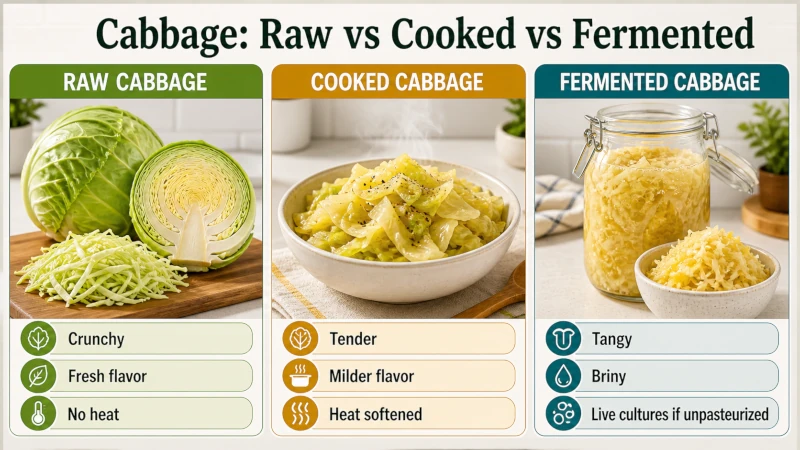
Each form has strengths.
- Raw cabbage gives crunch and preserves vitamin C well. It works in slaw, salads, tacos, and wraps. It may cause more gas for sensitive people.
- Cooked cabbage is often easier to digest. Steaming, sauteing, roasting, or adding cabbage to soups can soften the fiber and reduce harshness. Avoid overcooking if you want better flavor and texture.
- Fermented cabbage such as sauerkraut or kimchi may add beneficial microbes if it is unpasteurized and still contains live cultures. It can also be salty, so small servings are usually smarter than large bowls.
- Red cabbage adds anthocyanins and color. It works well raw, lightly sauteed, roasted, or braised with vinegar.
- Napa cabbage has a milder texture and is often easier to use in soups, stir-fries, and lighter salads.
Types of cabbage and how they compare
| Type | Best uses | Notes |
| Green cabbage | Slaw, soup, stir-fry, roasting, cabbage rolls | Affordable, versatile, sturdy |
| Red cabbage | Slaw, braised dishes, tacos, salads | Contains anthocyanin pigments |
| Savoy cabbage | Soups, wraps, sauteed dishes | Tender, crinkled leaves |
| Napa cabbage | Stir-fries, soups, kimchi, salads | Mild flavor and softer texture |
| Brussels sprouts | Roasting, sauteing, steaming | Same broader brassica family |
| Kohlrabi | Raw sticks, slaw, roasting | Crisp bulb and edible greens |
Broccoli and cauliflower are close botanical relatives of cabbage, but they deserve separate pages because their nutrient profiles and culinary uses differ. You can link to your existing page on broccoli health benefits and to cauliflower where relevant.
Who should be careful with cabbage?
People taking warfarin or similar blood thinners
Cabbage contains vitamin K, and vitamin K can interfere with warfarin’s effect. The goal is usually not to avoid cabbage completely. Mayo Clinic and NIH guidance emphasize keeping vitamin K intake consistent from day to day and week to week [Mayo Clinic, 2024]; [NIH ODS, 2021].
If you take warfarin, ask your healthcare team how much cabbage and other vitamin K-rich vegetables fit your plan.
People with IBS, bloating, or sensitive digestion
Cabbage can trigger gas, bloating, and abdominal discomfort in some people. This is more likely with large portions, raw cabbage, or sudden increases in fiber. Cleveland Clinic describes the low-FODMAP diet as a short-term elimination approach sometimes used for IBS and other functional digestive symptoms, ideally with guidance from a clinician or dietitian [Cleveland Clinic, 2022].
Try cooked cabbage in small portions first. If symptoms are persistent, painful, or accompanied by weight loss, diarrhea, bleeding, vomiting, or fever, get medical advice.
People with thyroid disease or low iodine intake
Cruciferous vegetables contain compounds that can affect iodine use in the thyroid under certain conditions. For most people eating normal portions, cabbage is not a thyroid problem. Risk is more plausible with very high intakes of raw cruciferous vegetables, low iodine intake, or existing thyroid disease.
People with hypothyroidism, goiter, or iodine deficiency do not usually need to avoid cabbage completely, but they may do better with moderate portions and cooked forms. Anyone with thyroid disease should follow their clinician’s advice, especially if making major diet changes.
People with ulcer symptoms or digestive bleeding
Cabbage juice should not replace evaluation for suspected ulcers, gastritis, reflux complications, or digestive bleeding. Seek urgent care for vomiting blood, black or tarry stools, fainting, severe abdominal pain, chest pain, or unexplained weight loss.
How to add cabbage to meals
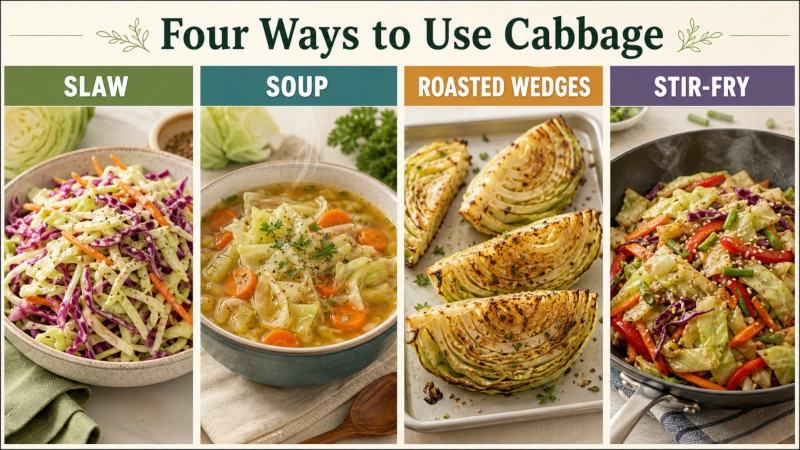
Cabbage is easiest to use when it becomes a routine ingredient rather than a special health project.
- Add shredded cabbage to tacos, wraps, or grain bowls.
- Roast cabbage wedges with olive oil, garlic, and black pepper.
- Add chopped cabbage to vegetable soup during the last 10-15 minutes of cooking.
- Use red cabbage in slaw with vinegar, apple, carrots, and herbs.
- Stir-fry Napa cabbage with tofu, chicken, mushrooms, or eggs.
- Use a small spoonful of sauerkraut as a fermented topping rather than a large salty side.
- Mix cabbage with beans or lentils only if your digestion tolerates both well.
For readers focused on metabolic health, cabbage can be mentioned as a non-starchy vegetable in broader dietary patterns, but it should not be presented as lowering blood sugar like a drug. If you want to build internal topical authority, link naturally to your page on blood sugar levels from a broader diabetes or prediabetes context.
| Health disclaimer This article is for educational purposes only and is not a substitute for medical advice, diagnosis, or treatment. Cabbage is a nutritious food, but it should not be used as a treatment for ulcers, cancer, thyroid disease, high blood pressure, diabetes, infections, or digestive disorders. Talk with a qualified healthcare professional if you take warfarin or other blood thinners, have thyroid disease, have ongoing digestive symptoms, are pregnant or breastfeeding and considering major diet changes, or have symptoms that may require medical care. |
Frequently Asked Questions
Is cabbage healthier raw or cooked?
Both can be healthy. Raw cabbage keeps a crisp texture and provides vitamin C, while cooked cabbage is often easier to digest. If raw cabbage causes gas or bloating, try smaller portions or cook it lightly.
Can cabbage prevent cancer?
No food can be said to prevent cancer by itself. Cabbage is a cruciferous vegetable, and cruciferous vegetables contain glucosinolates that are being studied for cancer-related effects. Human evidence is mixed, so the safest claim is that cabbage can support a healthy, vegetable-rich eating pattern linked with lower chronic disease risk [National Cancer Institute, 2012].
Is cabbage good for constipation?
It can help some people because it contains fiber. Fiber should be increased gradually, and fluids matter too. If constipation is severe, persistent, painful, or linked with bleeding or unexplained weight loss, seek medical care [NIDDK, n.d.].
Does cabbage cause gas?
Yes, it can. Cabbage is one of the foods that may produce gas and bloating in sensitive people [MedlinePlus, 2024]. Cooking cabbage, eating smaller portions, and increasing fiber slowly may help.
Is cabbage safe if I take warfarin?
Cabbage can fit into a warfarin diet, but consistency matters. Vitamin K can affect warfarin, so sudden large changes in cabbage or other vitamin K-rich foods may change how the medication works [Mayo Clinic, 2024].
Is cabbage juice good for ulcers?
Older small studies reported faster ulcer healing with cabbage juice, but the evidence is not strong enough for modern treatment guidance [Cheney, 1949]. Ulcer symptoms should be evaluated by a healthcare professional.
References
- USDA SNAP-Ed. “Cabbage.” View source
- National Cancer Institute. “Cruciferous Vegetables and Cancer Prevention.” View source
- National Institutes of Health, Office of Dietary Supplements. “Vitamin C – Health Professional Fact Sheet.” View source
- National Institutes of Health, Office of Dietary Supplements. “Vitamin K – Health Professional Fact Sheet.” View source
- Mayo Clinic. “Warfarin diet: What foods should I avoid?” View source
- National Institute of Diabetes and Digestive and Kidney Diseases. “Constipation.” View source
- MedlinePlus. “Abdominal bloating.” View source
- Cheney G. “Rapid healing of peptic ulcers in patients receiving fresh cabbage juice.” California Medicine. 1949. View source
- Centers for Disease Control and Prevention. “Adults Meeting Fruit and Vegetable Intake Recommendations – United States, 2019.” View source
- World Health Organization. “Healthy diet.” View source
- Cleveland Clinic. “Low FODMAP Diet.” View source
