
Mushrooms give you a lot of nutrition for very few calories. A 100-gram serving of raw white mushrooms (about 1½ cups sliced) has 22 calories and supplies riboflavin, niacin, pantothenic acid, copper, selenium, and potassium [USDA FoodData Central, n.d.]. They are also the richest dietary source of ergothioneine, an antioxidant the body cannot make on its own [Kalaras et al., 2017]. Those are the solid health benefits of mushrooms. The bigger claims about cancer, dementia, and diabetes rest mostly on observational studies and lab research, so they are worth knowing about but not worth overselling.
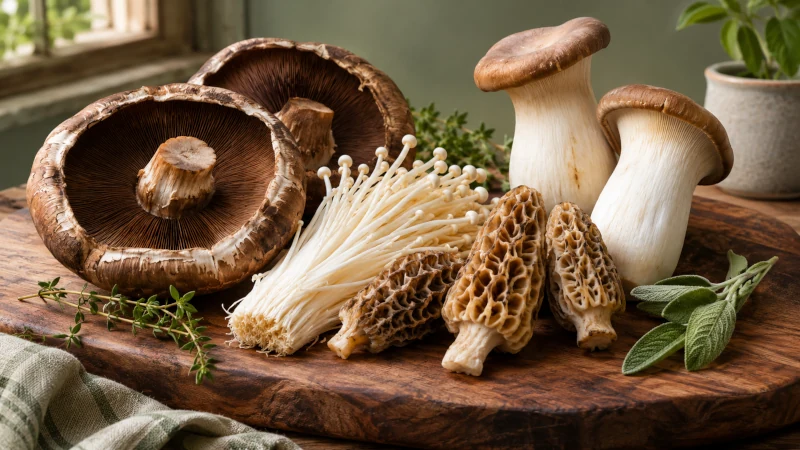
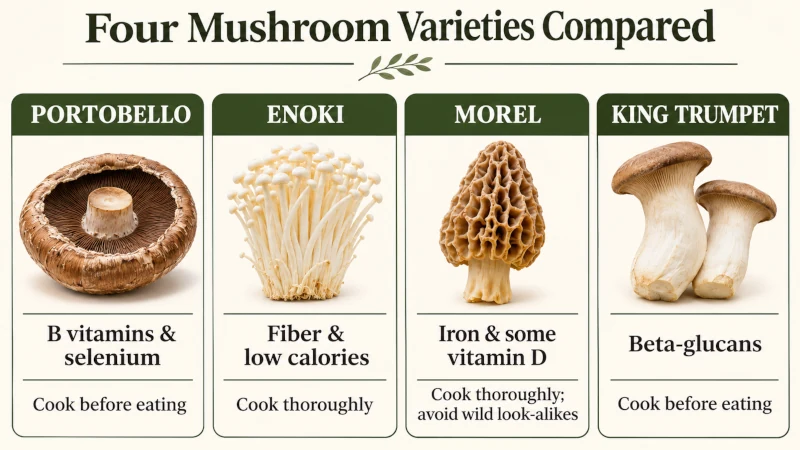
This guide covers what the research actually shows, how four popular varieties (portobello, enoki, morel, and king trumpet) differ, and the safety rules that matter more than most articles admit, especially for morels and enoki.
| QUICK FACTS: which mushroom is which? White button, cremini, and portobello are one species, Agaricus bisporus, sold at different colors and stages of maturity [Encyclopaedia Britannica, n.d.]. Enoki is Flammulina velutipes, also called golden needle mushroom [Tang et al., 2016]. King trumpet (also sold as king oyster) is Pleurotus eryngii, a member of the oyster mushroom family [Araújo et al., 2025]. Morels belong to the genus Morchella and are not related to button mushrooms. Poisonous look-alikes called false morels exist [Lagrange & Vernoux, 2020]. |
Mushroom nutrition: what 100 grams gives you
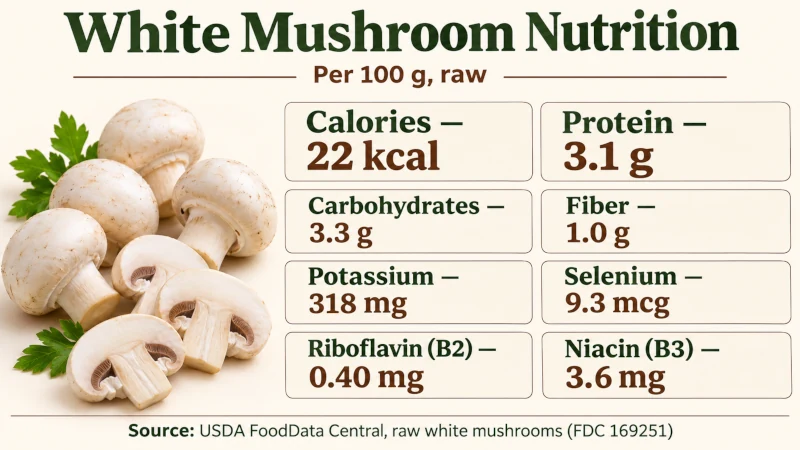
Here is the USDA profile for raw white mushrooms, the type most people buy [USDA FoodData Central, n.d.]. Brown cremini and portobellos are the same species, so their profiles are broadly similar.
| Nutrient (per 100 g raw) | Amount | Why it matters |
| Calories | 22 kcal | Very low energy density; bulks up meals |
| Protein | 3.1 g | Modest; not a replacement for beans, eggs, or meat on its own |
| Carbohydrate / fiber | 3.3 g / 1.0 g | Little effect on blood sugar |
| Fat | 0.3 g | Nearly fat-free until cooked in oil or butter |
| Riboflavin (B2) | 0.40 mg | Energy metabolism |
| Niacin (B3) | 3.6 mg | Energy metabolism |
| Pantothenic acid (B5) | 1.5 mg | Energy and fat metabolism |
| Copper | 0.32 mg | Iron use, connective tissue |
| Selenium | 9.3 mcg | Adults need 55 mcg a day |
| Potassium | 318 mg | Blood pressure; adult needs are 2,600–3,400 mg a day |
| Vitamin D | 0.2 mcg | Negligible unless the mushrooms were UV-treated |
Selenium and potassium targets: [NIH ODS, Selenium] [NIH ODS, Potassium].
Mushrooms have slightly more protein than a potato and fewer than a third of the calories (22 vs. 77 per 100 grams). Their potassium is useful, though a medium banana delivers more per serving. They are not a meaningful source of calcium, vitamin C, or vitamin E [USDA FoodData Central, n.d.]. One practical note: boiling or microwaving pulls water-soluble B vitamins and potassium into the cooking liquid, so a quick sauté, or using the liquid in a soup or sauce, keeps more of them [Harvard T.H. Chan School of Public Health, 2024].
Health benefits of mushrooms: what the research supports
The evidence below is ordered from strongest to weakest. Each heading tells you what kind of study stands behind it.
A low-calorie way to eat less meat
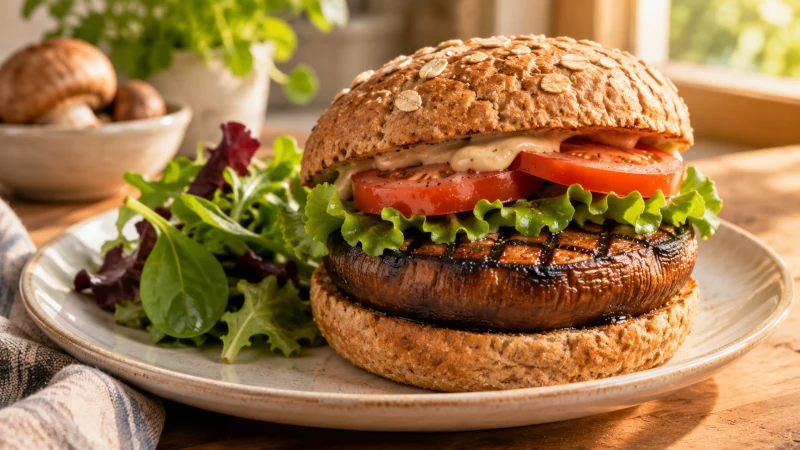
This is the best-tested benefit, and it is mostly about substitution. In a lab-feeding study, people served mushroom lunches instead of beef lunches ate about 420 fewer calories per meal and did not make up the difference over the four-day test [Appetite, 2008]. A one-year randomized trial in 73 adults with obesity then tested the idea in real life: those told to swap mushrooms for red meat lost more weight than those on a standard diet (about 7 pounds, or 3.6% of body weight), largely kept it off, and saw improvements in waist size and blood pressure [Poddar et al., 2013].
That is a single, small trial, and much of the effect likely comes from eating fewer calories rather than anything unique to mushrooms. Still, it is a practical tactic: chopping mushrooms into ground meat for tacos, burgers, or pasta sauce cuts calories without shrinking the portion.
Blood sugar and diabetes: helpful food, not a treatment
Mushrooms are low in carbohydrate and calories, which makes them an easy fit for diabetes-friendly meals. Claims that they “reduce the need for insulin” come from animal experiments, though, and human data are thin. Two large prospective cohort studies found no significant link between mushroom intake and type 2 diabetes [Harvard T.H. Chan School of Public Health, 2024]. Short trials with king trumpet mushrooms in people with obesity have shown smaller blood sugar rises after meals (covered in the king trumpet section below). If you manage diabetes, treat mushrooms as a good food choice, keep following your care plan, and use your blood sugar readings rather than any single food to judge what works.
Ergothioneine and glutathione
Mushrooms are the highest dietary source of ergothioneine. Penn State researchers who measured it alongside glutathione, another major antioxidant, found that levels varied more than twentyfold between species, with wild porcini highest and common white buttons lower, though still above most other foods [Kalaras et al., 2017]. Shiitake, oyster, and maitake contain roughly three to four times as much ergothioneine as white buttons [Beelman et al., 2019].
What this means for health is still being worked out. Researchers suspect ergothioneine may help explain the associations with cancer and brain health below, but no trial has shown that eating more of it prevents disease. And antioxidant supplements in general have not been shown to prevent cancer in randomized trials [National Cancer Institute, 2017], which is a good reason to get these compounds from food rather than pills.
Cancer risk: promising but observational
A 2021 meta-analysis pooled 17 observational studies and found that people who ate the most mushrooms had a 34% lower risk of cancer overall than those who ate the least [Ba et al., 2021]. When individual cancers were examined, though, the only clear link was with breast cancer, possibly because few of the included studies examined other cancer types [Ba et al., 2021]. The authors reported that eating about 18 grams a day, roughly ⅛ to ¼ cup, was associated with a 45% lower risk [Penn State, 2021].
The picture is genuinely mixed. Two large prospective cohort studies found no significant association between mushroom intake and cancer [Harvard T.H. Chan School of Public Health, 2024]. Observational studies cannot rule out that mushroom eaters differ in other healthy ways. Mushrooms are a reasonable part of a cancer-conscious diet; they are not a prevention strategy on their own, and they are not a cancer treatment.
Brain health in older adults
In a Singapore study of 663 adults aged 60 and older, those who ate more than two portions of cooked mushrooms a week (a portion was about ¾ cup) had lower odds of mild cognitive impairment than those who ate them less than once a week, after accounting for age, education, smoking, and several chronic diseases [Feng et al., 2019]. Because the study measured diet and cognition at the same time, it cannot show that mushrooms protected anyone’s memory [Harvard T.H. Chan School of Public Health, 2024]. It is an interesting lead, nothing more yet.
Vitamin D, if the mushrooms saw UV light
Mushrooms contain ergosterol, which turns into vitamin D2 when exposed to ultraviolet light, much as human skin makes vitamin D in the sun [Harvard T.H. Chan School of Public Health, 2024]. Ordinary indoor-grown white mushrooms have almost none: about 0.2 mcg per 100 grams [USDA FoodData Central, n.d.]. Mushrooms deliberately treated with UV light are a different product. WebMD reports that a UV-treated portobello, or four to five UV-treated white mushrooms, can supply up to 400 IU [WebMD, 2025], against an adult target of 600 IU (15 mcg) a day [NIH ODS, Vitamin D]. Amounts vary, so check the package label, which will usually say “high in vitamin D” or list it on the Nutrition Facts panel.
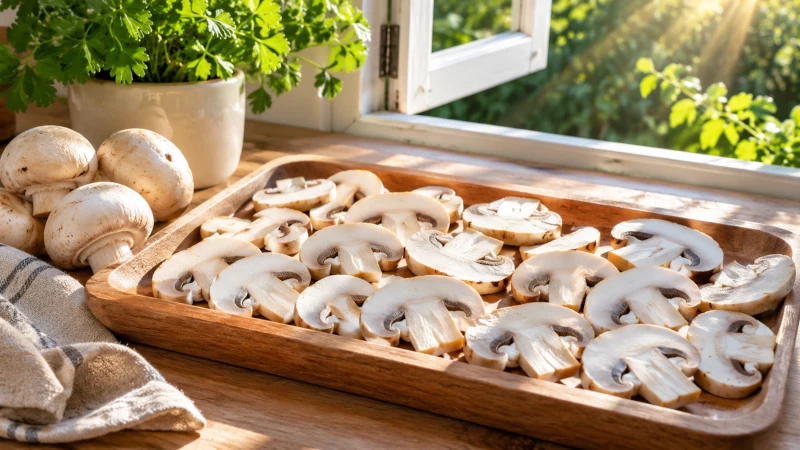
Tip: you can try setting fresh sliced mushrooms in direct midday sun for a while before cooking. Sun exposure does raise vitamin D in mushrooms [Harvard T.H. Chan School of Public Health, 2024], but the amount of vitamin D you get is unpredictable, so do not rely on it to treat a deficiency.
Mushrooms and gout
Many older diet guides tell people with gout to avoid mushrooms because they contain purines. The best evidence does not back that up. In a 12-year study of more than 47,000 men, higher intake of meat and seafood raised gout risk, but a moderate intake of purine-rich vegetables did not [Choi et al., 2004]. If you have gout, cutting back on red meat, organ meats, shellfish, and alcohol matters far more than skipping mushrooms. Your rheumatologist or dietitian can tailor this to you.
Health benefits of portobello mushrooms
A portobello is a fully grown brown Agaricus bisporus, the same species as white button and cremini mushrooms, harvested once the cap has opened wide [Encyclopaedia Britannica, n.d.]. So the health benefits of portobello mushrooms largely match those above: very few calories, B vitamins, potassium, and copper. A half-cup of grilled portobello supplies about 13 mcg of selenium, roughly a quarter of an adult’s daily need [NIH ODS, Selenium].
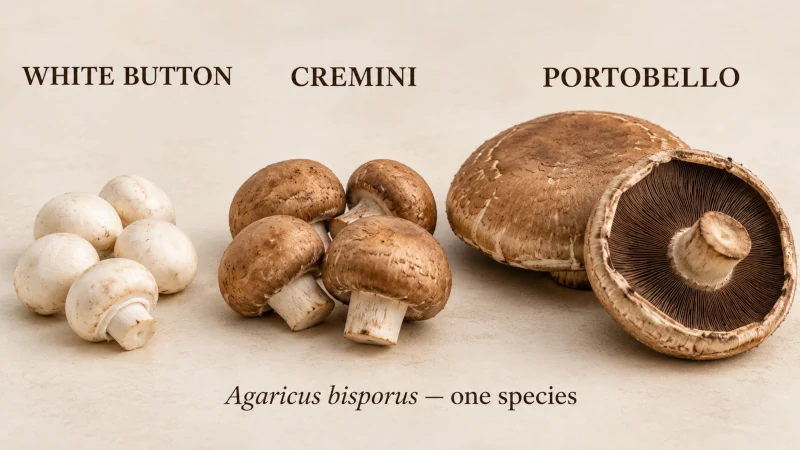
Two things set portobellos apart. Their size and dense texture make them the easiest mushroom to use in place of meat, which ties directly to the weight evidence above: a grilled portobello cap in place of a beef patty saves several hundred calories. And they are widely sold UV-treated, which makes them one of the more practical food sources of vitamin D if you buy the labeled kind [WebMD, 2025]. Common brown mushrooms like portobellos contain less ergothioneine than shiitake, oyster, or king oyster mushrooms [Penn State, 2021].
Portobellos should be cooked; see the raw-versus-cooked section below.
Health benefits of enoki mushrooms
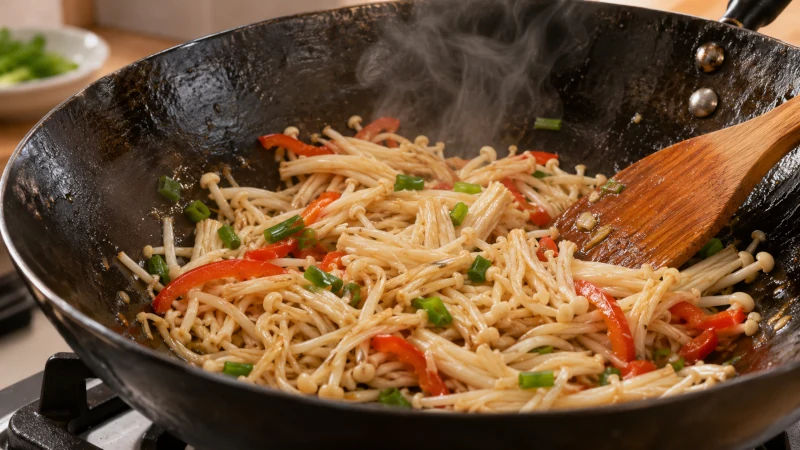
Enoki grow in clusters of long, thin white stems with tiny caps and have a mild flavor and crunchy texture. They are low in calories and contain protein and fiber; one analysis found that dietary fiber made up about 29% of the dry weight of raw enoki, mostly the insoluble kind [Tang et al., 2016].
Most of what you will read about the health benefits of enoki mushrooms, such as lower cholesterol, lower blood pressure, immune effects, and anticancer activity, comes from cell, hamster, rat, and mouse studies, often using concentrated extracts. A major review of enoki research does not describe human trials for these effects and notes that data on how well people digest and absorb enoki’s compounds are still lacking [Tang et al., 2016]. Enjoy enoki as a nutritious, low-calorie vegetable-like food, not as medicine.
| Food safety: always cook enoki Enoki mushrooms have been linked to two multistate Listeria outbreaks in the United States and more than 20 recalls since 2020, and many samples tested during the second outbreak carried the bacteria [CDC, 2023]. The 2020 outbreak sickened 36 people in 17 states; 31 were hospitalized and 4 died [CDC, 2020]. CDC advises people who are pregnant, 65 or older, or have a weakened immune system not to eat raw enoki, and recommends cooking enoki thoroughly [CDC, 2023]. In practice, that means simmering or stir-frying until hot throughout, not dropping them into a bowl of hot broth at the table, and keeping raw enoki away from foods that will not be cooked. |
Health benefits of morel mushrooms
Morels are prized spring mushrooms with a honeycomb-patterned cap. Nutritionally they stand out for iron: 100 grams of raw morels contain about 12.2 mg, and about 5.1 mcg (206 IU) of vitamin D [WebMD, 2026]. Wild morels exposed to sunlight can carry considerably more vitamin D than indoor-grown mushrooms [Harvard T.H. Chan School of Public Health, 2024].
Beyond that, the health benefits of morel mushrooms are mostly unproven in people. A 2023 systematic review of morel research describes antioxidant, anti-inflammatory, and immune effects, but the evidence comes almost entirely from mouse experiments, cell cultures, and test-tube assays [Li et al., 2023]. The same review flags pesticide residues and heavy metals as concerns with wild-harvested morels [Li et al., 2023].
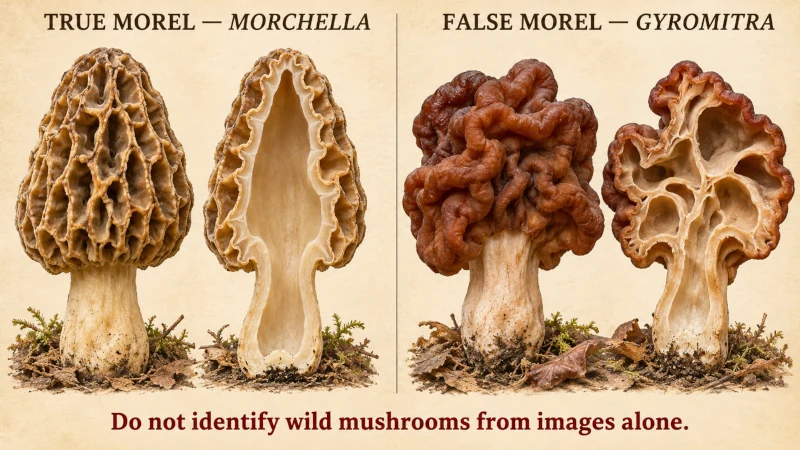
| Food safety: morels must be cooked, and false morels can be deadly Never eat morels raw or undercooked. In spring 2023, 51 people became ill after eating at a Bozeman, Montana restaurant; three were hospitalized and two died. Eating morels was strongly associated with the illness [CDC MMWR, 2024]. The specific toxin is not fully understood, and thorough cooking is the recommended precaution [CDC MMWR, 2024]. A toxicology review classes true morels as edible only when properly cooked and links large amounts of raw or poorly cooked morels to digestive and temporary neurological symptoms [Lagrange & Vernoux, 2020]. Even properly identified true morels can make you sick if you eat a large amount, eat them undercooked, or eat them with alcohol. Eating them safely in the past does not guarantee you will tolerate them next time [Michigan Dept. of Community Health, 2011]. Beware false morels (Gyromitra). These look-alikes contain gyromitrin, which the body converts to a toxic compound; the review calls them inedible and notes that parboiling to “detoxify” them has been reported as ineffective [Lagrange & Vernoux, 2020]. Buy morels from a reputable seller, or forage only with an experienced expert who has confirmed the identification. |
Health benefits of king trumpet mushrooms
King trumpet mushrooms (Pleurotus eryngii, also sold as king oyster) have thick, meaty white stems and small caps. Sliced into rounds and seared, they are a popular stand-in for scallops. They are part of the oyster mushroom family, which tends to contain more ergothioneine than white buttons, cremini, and portobellos [Penn State, 2021]. Their fiber includes beta-glucans, a type of carbohydrate studied for effects on blood sugar and appetite [Araújo et al., 2025].
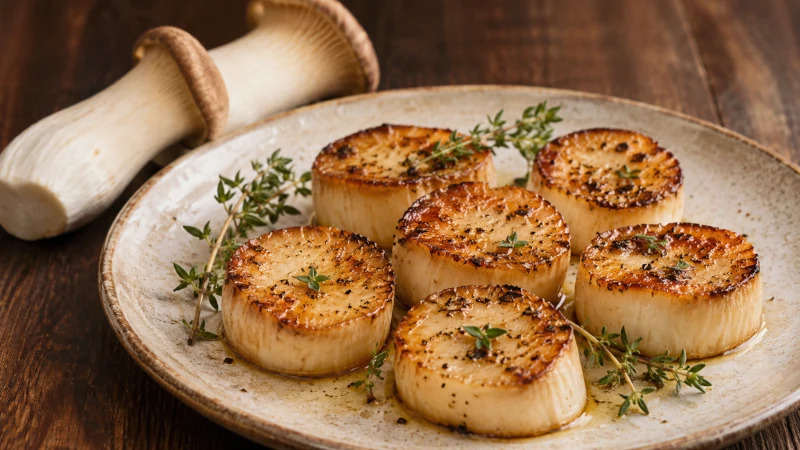
Among the four varieties here, king trumpet has the most direct human research, though it is still early. In a crossover study, people with obesity and metabolic problems who ate a meal containing baked king trumpet mushrooms had a smaller blood sugar rise afterward and felt less hungry than after a control meal [Kleftaki et al., 2022a]. A three-month randomized trial in 100 adults with metabolic disorders then gave half of them a daily 6-gram snack of baked, UV-treated king trumpet slices alongside standard diet advice. That group saw fasting glucose fall by about 11 mg/dL, lost more weight, and raised their vitamin D levels compared with advice alone [Kleftaki et al., 2022b].
Keep the limits in view. The trial was not blinded, and the snack was a specially processed, vitamin D-enriched product, not a supermarket mushroom [Kleftaki et al., 2022b]. A 2025 review of oyster-family mushrooms concluded that most evidence for king trumpet is still from animals, with variable results and no standard preparation [Araújo et al., 2025]. Animal work on cholesterol, for example, has not yet been tested in people [Araújo et al., 2025]. King trumpets are a good food; any metabolic benefit in everyday portions remains to be shown.
The four varieties side by side
| Portobello | Enoki | Morel | King trumpet | |
| Species | Agaricus bisporus (mature) | Flammulina velutipes | Morchella spp. | Pleurotus eryngii |
| Standout nutrition | Selenium, potassium, B vitamins; vitamin D if UV-treated | Fiber, low calorie | High iron; some vitamin D | Beta-glucans; more ergothioneine than portobello |
| Strongest human evidence | Indirect: meat-substitution trial | None for specific health effects | None for specific health effects | Small short-term and 3-month trials on blood sugar |
| Main safety point | Cook before eating | Cook thoroughly (Listeria) | Cook thoroughly; avoid false morels | Cook before eating |
| Best uses | Grilled caps, burger swap | Soups, hot pot, stir-fries | Sautéed, sauces, pasta | Seared “scallops,” roasting |
Raw or cooked? How to prepare mushrooms
White, cremini, and portobello mushrooms contain agaritine, a natural compound that caused tumors in some mouse studies. How much this matters for people is disputed. An industry-funded review concluded that agaritine from eating cultivated mushrooms poses no known risk to healthy people, noting that the worrying results came from high doses of purified chemicals rather than mushrooms [Roupas et al., 2010]. An independent toxicology review takes a more cautious line: it estimates any extra lifetime cancer risk as very small, notes that no human data exist, and still recommends avoiding raw or poorly cooked button mushrooms and morels [Lagrange & Vernoux, 2020]. Harvard’s Nutrition Source, for its part, lists button and enoki mushrooms as foods that can be eaten raw or cooked [Harvard T.H. Chan School of Public Health, 2024].
A sensible middle path: cooking reduces agaritine and costs you nothing in flavor, so cook mushrooms most of the time and treat a few raw slices in a salad as an occasional thing. Enoki and morels are the exceptions; cook those every time for the reasons above.
Cooking tips that keep the nutrition: wipe or briefly rinse mushrooms just before cooking; sauté or roast in a small amount of oil (mushrooms soak up fat, which raises the calorie count quickly); and if you simmer them, use the liquid. Canned, frozen, and dried mushrooms are all fine options. Soak dried mushrooms until fully rehydrated before cooking them through.
Who should be careful with mushrooms
Store-bought culinary mushrooms are safe for most people when cooked. These groups need extra care:
- Pregnant people, adults 65 and older, and anyone with a weakened immune system: never eat raw enoki, and cook all mushrooms thoroughly, because of Listeria risk [CDC, 2023]. Cooked cultivated mushrooms are otherwise a normal part of a pregnancy or breastfeeding diet. Avoid wild-foraged mushrooms and mushroom supplements during pregnancy and breastfeeding unless your clinician approves them.
- People with advanced kidney disease or on potassium-raising medicines: mushrooms contribute potassium, and standard intake targets do not apply when the kidneys cannot clear it normally [NIH ODS, Potassium]. Ask your renal dietitian how they fit your plan.
- People with mushroom allergies or sensitivities: some people react to mushrooms with stomach upset or allergic symptoms [Harvard T.H. Chan School of Public Health, 2024]. Stop eating them and see a clinician if you get hives, swelling, or wheezing.
- People taking medications: we did not find well-documented interactions between medicines and normal food portions of culinary mushrooms. Concentrated mushroom supplements and extracts are a different matter and are not covered by this article; check with your doctor or pharmacist before taking them, especially with diabetes, blood-thinning, or immune-suppressing medicines.
- Anyone foraging: wild mushrooms can be poisonous, and some deadly species resemble edible ones. Do not eat wild mushrooms unless an expert has identified them [Harvard T.H. Chan School of Public Health, 2024].
Wild mushrooms: when to get urgent help
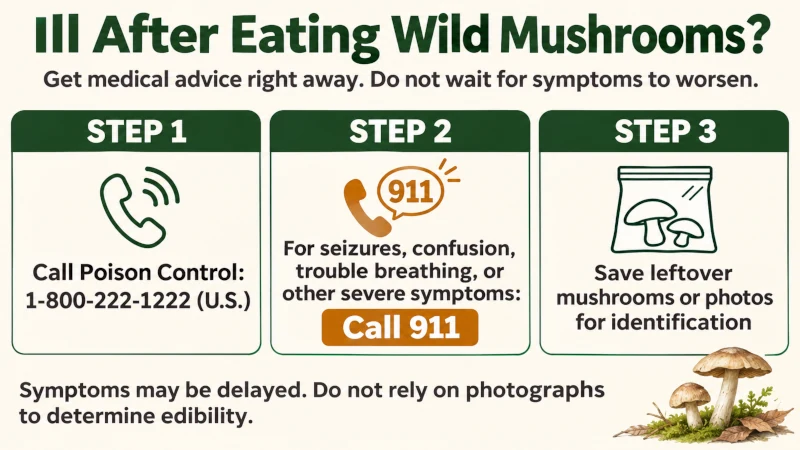
If you or someone else develops symptoms after eating wild mushrooms, see a doctor right away [Michigan Dept. of Community Health, 2011]. Warning signs of false morel poisoning include nausea, vomiting, abdominal pain, diarrhea, dizziness, headache, and muscle cramps; serious cases can progress to confusion, seizures, jaundice, or unusual bruising and bleeding. Symptoms usually start 6 to 48 hours after eating, so a delay does not mean you are in the clear [Michigan Dept. of Community Health, 2011].
What to do: call Poison Control at 1-800-222-1222 (United States), or 911 for severe symptoms such as trouble breathing, seizures, or confusion. Save any leftover mushrooms in a paper bag or take a photo to help with identification [Michigan Dept. of Community Health, 2011].
| HEALTH DISCLAIMER: This article is for general education and is not a substitute for advice, diagnosis, or treatment from a qualified healthcare professional. Mushrooms are a healthy food for most people, but they do not treat or prevent any disease. If you are pregnant or breastfeeding, have a chronic condition such as diabetes, kidney disease, or a weakened immune system, or are considering mushroom supplements or extracts, talk with your doctor, pharmacist, or a registered dietitian first. If you think someone has eaten a poisonous mushroom, call Poison Control (1-800-222-1222 in the U.S.) or emergency services right away. |
Frequently Asked Questions
Are mushrooms good for you to eat every day?
For most people, yes. Cooked culinary mushrooms are low in calories and supply B vitamins, potassium, copper, selenium, and ergothioneine [USDA FoodData Central, n.d.] [Kalaras et al., 2017]. Observational research links regular intake with lower cancer risk, but that link is not proven to be cause and effect [Ba et al., 2021].
Which mushroom is the healthiest?
There is no single winner. Shiitake, oyster, maitake, and king oyster have more ergothioneine than white or brown button mushrooms [Penn State, 2021]; morels are high in iron [WebMD, 2026]; and UV-treated mushrooms are the best source of vitamin D [WebMD, 2025]. Eating a variety covers the most ground.
Can you eat mushrooms raw?
Cultivated button mushrooms and enoki are sometimes eaten raw [Harvard T.H. Chan School of Public Health, 2024], but cooking reduces agaritine and kills bacteria. Never eat morels or enoki raw, and cook all mushrooms if you are pregnant, older, or immunocompromised [CDC, 2023] [CDC MMWR, 2024].
Are mushrooms a good source of vitamin D?
Only if they were exposed to UV light. Regular indoor-grown mushrooms contain very little [USDA FoodData Central, n.d.]; UV-treated ones can provide a substantial share of the 600 IU adult daily target [NIH ODS, Vitamin D]. Look for vitamin D on the label.
Should I avoid mushrooms if I have gout?
Probably not. A large study found that purine-rich vegetables, a group that includes mushrooms, did not raise gout risk, while meat and seafood did [Choi et al., 2004]. Confirm your diet plan with your doctor.
References
- U.S. Department of Agriculture, Agricultural Research Service. FoodData Central, SR Legacy: “Mushrooms, white, raw” View source
- Harvard T.H. Chan School of Public Health. The Nutrition Source: Mushrooms. View source
- NIH Office of Dietary Supplements. Vitamin D: Fact Sheet for Health Professionals. View source
- NIH Office of Dietary Supplements. Selenium: Fact Sheet for Health Professionals. View source
- NIH Office of Dietary Supplements. Potassium: Fact Sheet for Health Professionals. View source
- Ba DM, Ssentongo P, Beelman RB, Muscat J, Gao X, Richie JP. Higher mushroom consumption is associated with lower risk of cancer: View source
- Penn State News. Higher mushroom consumption is associated with a lower risk of cancer. View source
- Feng L, Cheah IK, Ng MM, Li J, Chan SM, Lim SL, Mahendran R, Kua EH, Halliwell B. View source
- Choi HK, Atkinson K, Karlson EW, Willett W, Curhan G. Purine-rich foods, dairy and protein intake, and the risk of gout in men. View source
- Poddar KH, Ames M, Hsin-Jen C, Feeney MJ, Wang Y, Cheskin LJ. Positive effect of mushrooms substituted for meat on body weight, body composition, and health parameters. View source
- Lack of energy compensation over 4 days when white button mushrooms are substituted for beef. View source
- Kalaras MD, Richie JP, Calcagnotto A, Beelman RB. Mushrooms: a rich source of the antioxidants ergothioneine and glutathione. View source
- Beelman RB, Kalaras MD, Richie JP Jr. Micronutrients and bioactive compounds in mushrooms: a recipe for healthy aging? View source
- National Cancer Institute. Antioxidants and Cancer Prevention. View source
- Roupas P, Keogh J, Noakes M, Margetts C, Taylor P. Mushrooms and agaritine: a mini-review. J Funct Foods. View source
- Lagrange E, Vernoux JP. Warning on false or true morels and button mushrooms with potential toxicity linked to hydrazinic toxins: an update. View source
- Petruzzello M. Portobello mushroom. Encyclopaedia Britannica. View source
- WebMD Editorial Team, McQueen J. Health Benefits of Mushrooms. View source
- Wendt T. Health Benefits of Morel Mushrooms. WebMD. View source
- Tang C, Hoo PC, Tan LT, Pusparajah P, Khan TM, Lee LH, Goh BH, Chan KG. Golden needle mushroom: a culinary medicine with evidenced-based biological activities and health promoting properties. View source
- Centers for Disease Control and Prevention. Outbreak of Listeria Infections Linked to Enoki Mushrooms. View source
- Centers for Disease Control and Prevention. Listeria Outbreak Linked to Enoki Mushrooms View source
- Outbreak Linked to Morel Mushroom Exposure – Montana, 2023. View source
- Michigan Department of Community Health. Fact Sheet: False Morels vs. View source
- Li Y, Chen H, Zhang X. Cultivation, nutritional value, bioactive compounds of morels, and their health benefits: a systematic review. View source
- Araújo PL, et al. Pleurotus mushrooms in nutrition and health: clinical and preclinical insights for nutraceutical development. View source
- Kleftaki SA, Simati S, Amerikanou C, et al. Pleurotus eryngii improves postprandial glycaemia, hunger and fullness perception, and enhances ghrelin suppression in people with metabolically unhealthy obesity. View source
- Kleftaki SA, Amerikanou C, Gioxari A, et al. A randomized controlled trial on Pleurotus eryngii mushrooms with antioxidant compounds and vitamin D2 in managing metabolic disorders. View source


