
Most claims you’ll read about passion flower benefits come down to two things the research actually supports: easing mild anxiety and helping people relax before sleep. Passion flower (Passiflora incarnata) is a climbing vine native to the southeastern United States, and people have brewed its leaves and flowers into a calming tea for generations. The modern studies are smaller and fewer than the marketing suggests, but they point in a consistent direction. This is a gentle herb for nervous tension and short-term stress, not a cure for any disease. Here’s what the evidence shows, how people use it, and when to leave it on the shelf.
What passion flower is, and how it might work
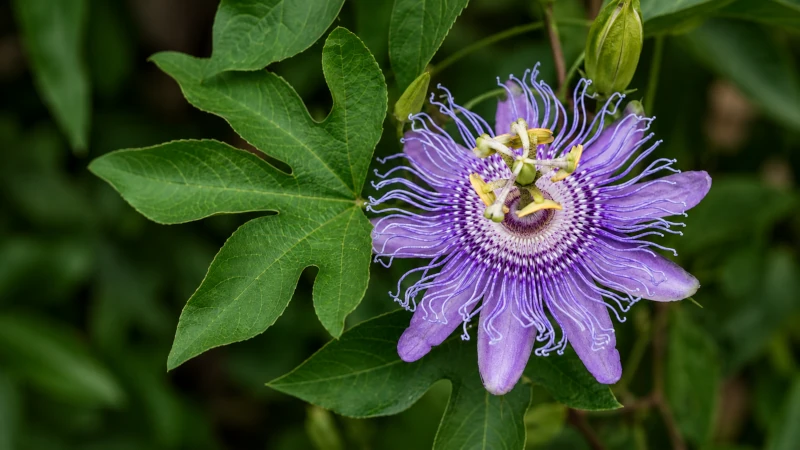
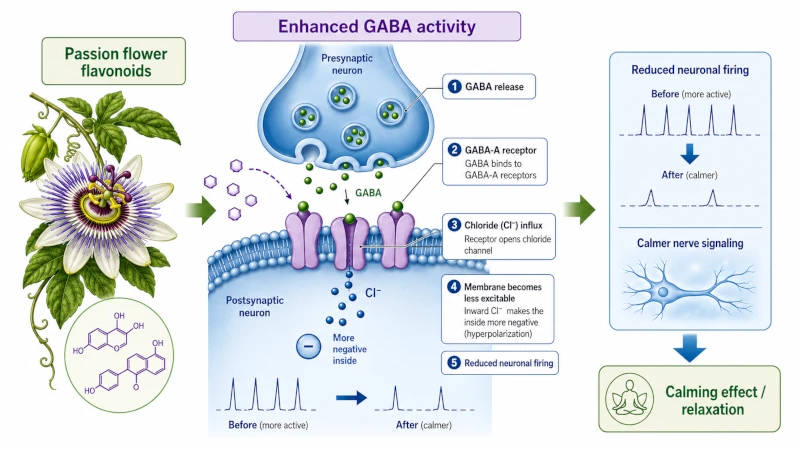
Passiflora incarnata is one of roughly 500 species in the Passiflora genus, and it’s the one found in most teas and supplements. Its calming reputation is usually traced to GABA (gamma-aminobutyric acid), a brain messenger that quiets nerve-cell activity and produces a settling effect. That’s the same broad target prescription sedatives act on, though passion flower works far more gently. [NCCIH, 2024]
Lab studies suggest the plant’s flavonoids nudge GABA activity upward, but researchers still can’t say exactly which compound does the work, or how much of an oral dose reaches the brain. [NCCIH, 2024] So treat the mechanism as a reasonable explanation rather than a settled fact. As for its history: 16th-century Spanish explorers in South America recorded Indigenous use of the plant, and it later entered European folk medicine as a sedative. [NCCIH, 2024]
Passion flower benefits the research supports
Mild anxiety and everyday nervous tension
This is the strongest use, and even here the evidence is modest. In a four-week trial of 36 adults with generalized anxiety disorder, a passion flower extract worked about as well as oxazepam, a benzodiazepine, at lowering anxiety scores. The practical difference: oxazepam acted faster but caused more trouble with daytime job performance. [Akhondzadeh, 2001] That’s a single small pilot, so read it as promising, not proof.
Pooling the controlled trials runs into the same wall. A Cochrane review concluded there were simply too few good trials to draw firm conclusions about whether passion flower treats anxiety, even though individual results lean positive. [Miyasaka, 2007] Memorial Sloan Kettering lands in the same place: small studies suggest a real anti-anxiety effect, but long-term safety and effectiveness aren’t established. [MSKCC, 2023]
If you already use other calming botanicals, passion flower belongs to a wider family of herbs for the nervous system that share this GABA-related mechanism.
Anxiety before surgery or dental work
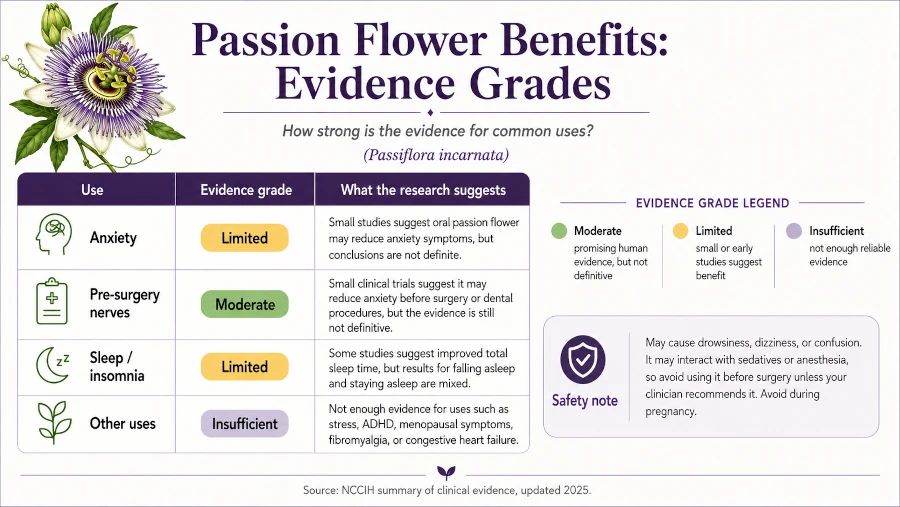
The most consistent findings come from short, high-stress moments rather than chronic conditions. In a trial of 60 adults having day surgery, a single 500 mg dose of Passiflora incarnata about 90 minutes beforehand lowered pre-operative anxiety compared with placebo, without leaving patients more sedated or slowing their recovery. [Movafegh, 2008] A separate dental study found passion flower controlled anxiety about as well as midazolam, a sedative often used before procedures. [Dantas, 2017]
One important caveat: passion flower may interact with the drugs used during anesthesia, so don’t take it before a procedure unless your surgeon or anesthesiologist approves. [NCCIH, 2024]
Sleep
The sleep evidence is thinner and more mixed. In a small crossover study, 41 healthy adults who drank a cup of passion flower tea nightly for a week rated their sleep quality higher than during a placebo week. [Ngan & Conduit, 2011] But the federal review is more guarded: a little research suggests oral passion flower might increase total sleep time in people with insomnia, while its effect on how quickly you fall asleep, and stay asleep, is inconsistent across studies. [NCCIH, 2024] For mild, occasional restlessness it may help you wind down. For a chronic sleep disorder, it isn’t a dependable fix.
Where the claims outrun the evidence
Plenty of pages credit passion flower with treating epilepsy, ADHD, menopausal hot flashes, high blood pressure, and drug or alcohol withdrawal. Federal reviewers put most of these in the “not enough evidence” column, including ADHD, congestive heart failure, menopausal symptoms, fibromyalgia, and general stress. [NCCIH, 2024] A few early studies have tested passion flower as an add-on during narcotic withdrawal, but that work is preliminary and was done under medical supervision; it isn’t something to attempt alone.
If withdrawal is the real concern, talk to a clinician and review evidence-based options for supplements used during alcohol withdrawal rather than self-treating. And there’s no good human evidence that passion flower controls seizures, so it should never replace a prescribed treatment.
How people use passion flower
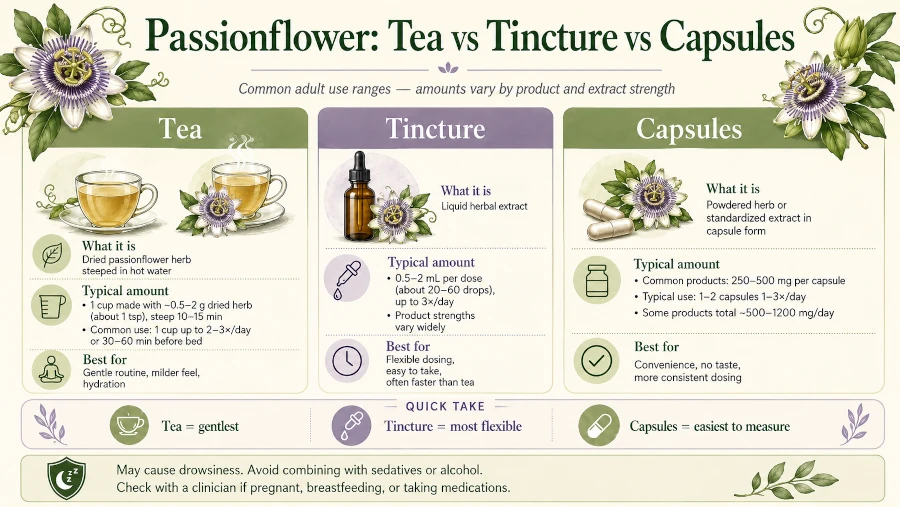
Passion flower comes as dried herb for tea, as liquid tinctures and extracts, and as capsules. There’s no official standardized dose, partly because products vary so much in strength, and partly because the U.S. Food and Drug Administration hasn’t evaluated passion flower for safety or effectiveness as a drug. [WebMD, 2024] The amounts below reflect what’s typical in studies and traditional use. They are not a prescription.
| Form | Typical amount | Good to know |
| Tea (dried herb) | About 1 tsp (≈2 g) steeped in hot water, up to 3× a day; one cup 30–60 min before bed for sleep | The mildest form and an easy place to start low |
| Tincture | Follow the product label; commonly 10–30 drops in water | Strength varies widely between brands |
| Capsules / extract | Study doses ranged from ≈200–500 mg of extract | The 500 mg pre-surgery dose came from a clinical trial, not everyday use |
| Standardized extract (anxiety trial) | ≈45 drops a day in one GAD study | Used short-term under study conditions |
Effects tend to be subtle. Many people notice a mild calming effect within an hour for situational stress; for ongoing anxiety, give it a couple of weeks and don’t expect a dramatic change.
Side effects, interactions, and who should avoid it
Common side effects
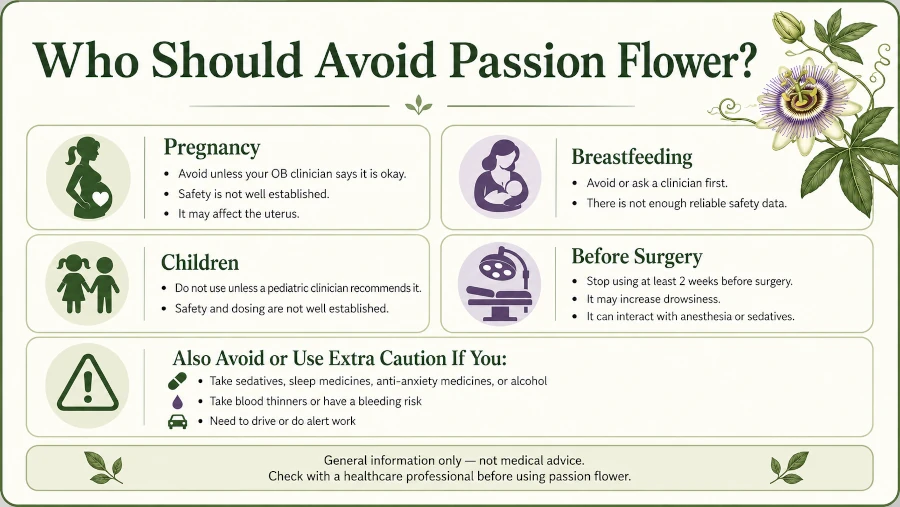
Passion flower is generally considered safe for short-term use in healthy adults. The most commonly reported side effects are drowsiness, dizziness, and confusion. [NCCIH, 2024] Because it can make you sleepy, don’t drive or operate machinery until you know how it affects you.
Interactions to watch
- Sedatives and other depressants. Passion flower can add to the effect of sleeping pills, benzodiazepines, and alcohol, increasing drowsiness. [NCCIH, 2024]
- Anesthesia. Avoid it before surgery unless your care team approves, because of possible interactions with anesthetic drugs. [NCCIH, 2024]
- Blood thinners. Some references advise caution with anticoagulants, so tell your provider everything you take. [Drugs.com, 2026]
Who should avoid passion flower
- Pregnancy. Avoid it. Passion flower is considered contraindicated in pregnancy because it may stimulate the uterus. [Drugs.com, 2026]
- Breastfeeding. There isn’t enough safety data, so it’s best avoided.
- Children. It hasn’t been well studied in kids; don’t give it to a child without a pediatrician’s guidance. [NCCIH, 2024]
- Heart-rhythm problems. Use is generally discouraged in people with cardiac arrhythmias. [Drugs.com, 2026]
- Before any surgery. Stop well ahead of a scheduled procedure unless told otherwise. [NCCIH, 2024]
Realistic expectations
Passion flower is a mild, supportive herb. It won’t treat an anxiety disorder, depression, or insomnia on its own, and it’s not a substitute for therapy, prescribed medication, or medical care. Used sensibly and short-term, it’s a low-risk way to take the edge off everyday tension. That’s the honest ceiling on what it does.
When to talk to a healthcare professional
Herbal calm is fine for ordinary stress, but some symptoms need a real evaluation. Reach out to a clinician if:
- anxiety, panic, or insomnia is interfering with your work, relationships, or daily life
- low mood or anxiety lasts more than two weeks
- you have a heart condition, are pregnant or breastfeeding, or take prescription medication
- you notice a fast or irregular heartbeat, fainting, or an allergic reaction after taking it
Seek urgent care for chest pain or severe shortness of breath. If you ever have thoughts of harming yourself, contact a crisis line or emergency services right away. In the U.S. and Canada you can call or text 988. A sedative herb is never the right tool for a crisis, and reaching out for support is a sign of strength.
| Health Disclaimer This article is for general education and information only. It is not medical advice, and it is not a substitute for diagnosis or treatment from a qualified healthcare professional. Passion flower is a dietary supplement, not an approved drug, and supplements are not regulated for safety or effectiveness the way medicines are. Talk to your doctor or pharmacist before using passion flower, especially if you are pregnant, breastfeeding, scheduled for surgery, taking prescription medication, or managing a health condition. Never stop or change a prescribed treatment without medical guidance. If you are in crisis, contact your local emergency number or a crisis helpline immediately. |
Frequently asked questions
Does passion flower actually work for anxiety?
It may help with mild, short-term anxiety. Small trials found a passion flower extract reduced anxiety about as well as the benzodiazepine oxazepam, and it eased nerves before surgery and dental work. [Akhondzadeh, 2001] [Movafegh, 2008] But a Cochrane review found too few quality trials to draw firm conclusions, so think of the benefit as modest and best suited to everyday tension. [Miyasaka, 2007]
How long does passion flower take to work?
For situational stress, many people feel a mild calming effect within about 30 to 60 minutes. For ongoing anxiety or sleep issues, give it a couple of weeks of consistent use, and keep your expectations realistic.
Can I take passion flower every night for sleep?
Short-term, occasional use is low-risk for most healthy adults, but the evidence for chronic insomnia is mixed. [NCCIH, 2024] Don’t combine it with other sedatives or alcohol, and check with your provider before using any sleep aid nightly over the long term.
Is it safe to take passion flower with antidepressants or anxiety medication?
Passion flower can add to the sedating effect of benzodiazepines, sleeping pills, and alcohol. [NCCIH, 2024] Before combining it with any prescription, including antidepressants or anti-anxiety drugs, ask your doctor or pharmacist.
Is passion flower safe during pregnancy?
No. It’s considered contraindicated in pregnancy because it may stimulate the uterus, and it’s best avoided while breastfeeding too. [Drugs.com, 2026]
What’s the difference between passion flower and passionfruit?
Passionfruit is the edible fruit, usually from Passiflora edulis. The calming herb uses the leaves and flowers of Passiflora incarnata. The fruit is food; the medicinal preparations come from the above-ground parts of the plant.
References
- National Center for Complementary and Integrative Health (NCCIH). Passionflower: Usefulness and Safety. 2024. → View source
- Memorial Sloan Kettering Cancer Center. Passionflower. Integrative Medicine herb monograph. 2023. → View source
- Miyasaka LS, Atallah AN, Soares BG. Passiflora for anxiety disorder. Cochrane Database of Systematic Reviews. 2007. → View source
- Akhondzadeh S, Naghavi HR, Vazirian M, et al. Passionflower in the treatment of generalized anxiety: a pilot double-blind randomized controlled trial with oxazepam. J Clin Pharm Ther. 2001;26(5):363–367. → View source
- Movafegh A, Alizadeh R, Hajimohamadi F, et al. Preoperative oral Passiflora incarnata reduces anxiety in ambulatory surgery patients: a double-blind, placebo-controlled study. Anesth Analg. 2008;106(6):1728–1732. → View source
- Dantas LP, de Oliveira-Ribeiro A, de Almeida-Souza LM, Groppo FC. Effects of passiflora incarnata and midazolam for control of anxiety in patients undergoing dental extraction. Med Oral Patol Oral Cir Bucal. 2017;22(1):e95–e101. → View source
- Ngan A, Conduit R. A double-blind, placebo-controlled investigation of the effects of Passiflora incarnata (passionflower) herbal tea on subjective sleep quality. Phytother Res. 2011;25(8):1153–1159. → View source
- Drugs.com. Passion Flower (Natural Medicines monograph). Reviewed 2026. → View source
- WebMD. Passion Flower: Overview, Uses, Side Effects, Dosing. 2024. → View source
