
Finding anti-inflammatory diet for IBS recipes that actually work for a sensitive gut is harder than most food websites make it look. Ingredients celebrated for their health properties — onion, garlic, beans, large portions of fruit, and certain vegetables — are among the most common FODMAP triggers for people with IBS. And yet, a recipe does not have to be bland, nutritionally stripped, or boring to be easier on your digestion.
This page offers three practical meal ideas built on an anti-inflammatory framework, with IBS-aware ingredient swaps layered in where they matter most. Before diving into the recipes, one distinction is worth understanding clearly.
An anti-inflammatory eating pattern and a low FODMAP diet are not the same thing. An anti-inflammatory approach encourages minimally processed foods, healthy fats, lean proteins, and colorful produce — a useful long-term framework. But the most evidence-based dietary strategy specifically designed for IBS is a limited trial of a low FODMAP diet, ideally with the support of a registered dietitian. The National Institute of Diabetes and Digestive and Kidney Diseases (NIDDK) and the American College of Gastroenterology (ACG) both recommend this structured approach as the first-line dietary intervention for IBS symptoms. [NIDDK, n.d.] [ACG, 2020]
Think of these recipes as practical meal ideas, not universal “safe foods.” IBS tolerance varies significantly between individuals, and even foods that work well for one person may not work for another. Portion size matters too.
What Makes a Recipe IBS-Aware?
An IBS-aware recipe is not defined by a rigid list of “safe” foods. It is shaped by a few practical principles:
- It avoids or minimizes the most common high-FODMAP ingredients, particularly onion, garlic, large portions of legumes, excess fruit juice, and specific vegetables like cauliflower and mushrooms.
- It keeps flavor profiles simpler, especially while symptoms are unsettled, so it is easier to identify any problem ingredient.
- It builds in swap options, because no single recipe suits every person with IBS.
- It respects portion size. Even foods that are generally well tolerated can cause symptoms in large quantities.
Common High-FODMAP Ingredients to Watch
Monash University, the research group that developed the low FODMAP diet, identifies several ingredient categories that frequently cause symptoms in FODMAP-sensitive individuals. For a fuller breakdown, see our guide to common IBS food triggers: [Monash University, n.d.]
- Onion and garlic (high in fructans) — among the most frequently reported IBS triggers
- Mushrooms — high in mannitol
- Legumes such as chickpeas, lentils, and most beans in standard portions — high in GOS
- Large amounts of certain fruits including apples, mangoes, and watermelon
- Wheat and rye in significant amounts — high in fructans
Garlic-infused oil is a useful workaround. Because the fructan in garlic is water-soluble rather than oil-soluble, infusing oil with garlic and removing the pieces before cooking delivers the flavor without the FODMAPs. Monash University has confirmed this approach is safe for most people on a low FODMAP diet. [Monash University, 2015]
Why Portion Size Changes Everything
A food is not simply “high FODMAP” or “low FODMAP” in isolation. The amount you eat matters. The ACG patient guide specifically notes that some foods shift from lower to higher FODMAP categories depending on serving size. [ACG, n.d.] This is one of the strongest arguments for working with a GI-trained dietitian, who can help you identify your actual personal tolerances rather than applying generic rules.
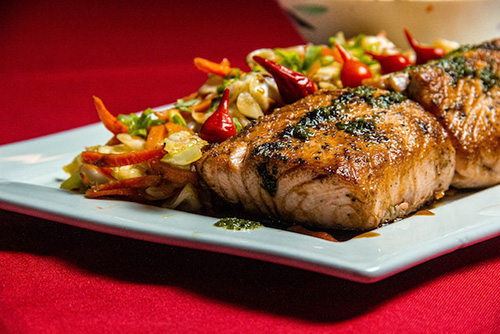
Recipe 1: Lemon-Herb Salmon With Roasted Zucchini and Carrots
Salmon is naturally free of FODMAPs and is a good source of omega-3 fatty acids. Zucchini and carrots are both listed as low FODMAP vegetables in typical serving sizes by Monash University. This meal skips onion, garlic, and legumes, making it a solid starting point for people who are new to IBS-aware cooking.
Ingredients (Serves 2)
- 2 salmon fillets (skin on or off)
- 2 medium zucchini, sliced into half-moons
- 3 medium carrots, peeled and cut into rounds
- 1 tablespoon extra-virgin olive oil
- 1 teaspoon dried oregano
- 1 teaspoon dried thyme or rosemary
- 1 tablespoon fresh lemon juice (optional — see notes)
- Salt and black pepper to taste
Instructions
- Preheat the oven to 400°F (205°C).
- Toss the zucchini and carrots on a lined sheet pan with half the olive oil, half the herbs, and a pinch of salt and pepper. Spread in a single layer.
- Rub the salmon with the remaining olive oil, lemon juice if using, and the rest of the herbs.
- Roast the vegetables for 10 minutes.
- Nestle the salmon on the pan (or use a second pan) and roast for a further 10–12 minutes, until the fish flakes easily with a fork.
- Serve warm.
IBS-Aware Swaps and Notes
- Lemon juice: Lemon is generally low FODMAP in small amounts and is not a common trigger, but if acidic foods worsen reflux or upper-GI symptoms for you, reduce the amount or skip it.
- Carrots: A standard portion is low FODMAP. If larger portions cause bloating for you, reduce to one medium carrot and add more zucchini instead.
- Garlic and onion: Both are intentionally excluded. If you want a savory depth, drizzle a small amount of garlic-infused olive oil over the dish after removing it from the oven.
- Keep seasoning simple at first: This makes it easier to isolate any problem ingredient rather than troubleshooting a heavily spiced dish.
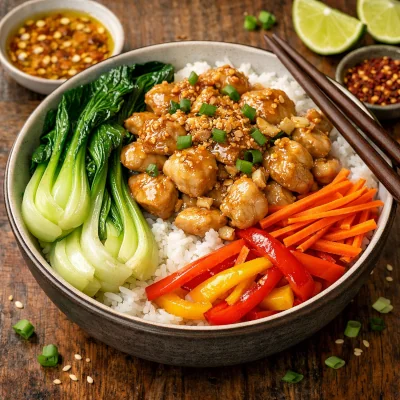
Recipe 2: Ginger Chicken Rice Bowl With Garlic-Infused Oil
This rice bowl uses garlic-infused olive oil instead of raw or cooked garlic — an approach Monash University specifically endorses for getting garlic flavor without the FODMAPs. [Monash University, 2015] Ginger is low FODMAP and has a long history of use for digestive discomfort. Plain cooked chicken and white rice are among the most reliably tolerated foods across different IBS presentations.
Ingredients (Serves 2)
- 1 cup uncooked white rice
- 2 boneless, skinless chicken breasts or thighs, sliced into strips
- 1 tablespoon garlic-infused olive oil (commercial or homemade oil-only infusion)
- 1 teaspoon fresh ginger, finely grated
- 1 cup bok choy, roughly chopped (or substitute spinach)
- 1 medium carrot, thinly sliced
- 1 medium red bell pepper, thinly sliced
- 2 teaspoons low-sodium tamari or gluten-free soy sauce
- 1 teaspoon sesame oil
- Salt and black pepper to taste
- Optional: sesame seeds for garnish
Instructions
- Cook the rice according to package directions.
- Heat the garlic-infused olive oil in a large skillet or wok over medium heat.
- Add the chicken strips and cook, stirring occasionally, until browned and cooked through (internal temperature 165°F / 74°C).
- Stir in the ginger, carrot, and bell pepper. Cook for 3–4 minutes, stirring frequently.
- Add the bok choy or spinach and cook until just wilted, about 1–2 minutes.
- Remove from heat and stir in the tamari and sesame oil.
- Serve over the cooked rice. Garnish with sesame seeds if desired.
IBS-Aware Swaps and Notes
- Why garlic-infused oil: Regular garlic and onion are high in fructans. The fructan compounds are water-soluble, not oil-soluble, so they do not leach into oil. Commercially prepared garlic-infused oil, or oil heated with garlic cloves that are then discarded, is safe for most people on a low FODMAP diet. [Monash University, 2015]
- Bok choy: Listed as low FODMAP in standard serving sizes. If it does not agree with you, spinach is a reliable substitute.
- Bell pepper: Green bell pepper is lower FODMAP than red in larger quantities. Small portions of red are generally fine. If you are very sensitive, use green.
- Sesame oil: Use sparingly. High-fat meals can trigger symptoms, particularly in diarrhea-predominant IBS.
- Tamari vs. soy sauce: Most tamari is gluten-free, which matters if you are also sensitive to wheat. Check the label.
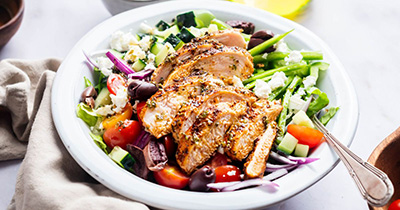
Recipe 3: Greek-Style Chicken Salad With Onion-Free Dressing
A classic Greek salad normally contains red onion, which is a significant fructan source and one of the most frequently reported IBS triggers. [Monash University, n.d.] This version leaves the onion out entirely. The dressing is made from scratch to avoid store-bought dressings that may contain garlic powder or other hidden FODMAP ingredients. Feta cheese is lower in lactose than many soft cheeses and is often tolerated in small amounts by people who are otherwise dairy-sensitive. [ACG, 2020]
Ingredients (Serves 2)
- 2 cooked chicken breasts, sliced (grilled or poached plain)
- 4 cups mixed greens or romaine lettuce
- 1 medium cucumber, diced
- 1 cup cherry tomatoes, halved
- 1/4 cup Kalamata olives, pitted
- 2–3 tablespoons crumbled feta cheese (optional)
- 2 teaspoons extra-virgin olive oil
- 1 teaspoon fresh lemon juice or red wine vinegar
- 1/2 teaspoon dried oregano
- Salt and black pepper to taste
Instructions
- Arrange the greens, cucumber, tomatoes, olives, and chicken in a large salad bowl.
- In a small bowl, whisk together the olive oil, lemon juice or vinegar, oregano, salt, and pepper.
- Pour the dressing over the salad and toss gently to combine.
- Top with a small amount of crumbled feta if you tolerate dairy.
- Serve immediately.
IBS-Aware Swaps and Notes
- No red onion: Intentionally excluded. Chives are a low FODMAP substitute that adds a mild onion flavor. [Monash University, n.d.]
- Feta cheese: Hard and aged cheeses including feta tend to be lower in lactose than soft cheeses or milk. Start with a small amount to test your tolerance.
- Tomatoes: Cherry tomatoes are listed as low FODMAP in standard serving sizes. If acidic foods generally worsen your symptoms, use fewer tomatoes and a smaller amount of dressing.
- Olives: Low FODMAP in typical serving sizes.
Anti-Inflammatory Diet vs. Low FODMAP Diet: Where These Recipes Fit
These three recipes use an anti-inflammatory framework — emphasizing lean proteins, olive oil, vegetables, and minimal processing. But they are not formal low FODMAP meals verified through a structured elimination protocol. For a detailed side-by-side breakdown, see our full anti-inflammatory vs. low FODMAP comparison.
According to the AGA’s 2022 Clinical Practice Update, published in Gastroenterology, the low FODMAP diet is currently the most evidence-based dietary intervention for IBS. The ACG’s 2020 clinical guideline also recommends a limited trial of the low FODMAP diet as the first-line dietary approach. [ACG, 2020]
These recipes can serve as a practical middle ground: they skip the most common high-FODMAP culprits and include swap notes for individual variation. But they are not a substitute for a structured FODMAP trial if your symptoms are persistent or severe.
| Question | Anti-inflammatory pattern | Low FODMAP diet |
| Main goal | Broader healthy eating pattern | Targeted IBS symptom control |
| IBS-specific? | No — but useful as a framework | Yes, designed for IBS |
| Best use case | Long-term eating habits | Short-term structured elimination |
| Reintroduction phase? | Not required | Yes — essential to the process |
| Dietitian recommended? | Helpful, especially for IBS | Strongly recommended |
| Evidence level for IBS | Limited / indirect | Moderate (ACG 2020; AGA 2022) |
Practical Tips for Cooking With IBS
Beyond which foods you choose, a few habits make IBS cooking more manageable. For more on which foods tend to be easier on the gut, see our guide to IBS-friendly foods.
- Keep meal timing consistent. Long gaps between meals or very large portions in one sitting can worsen symptoms for many people. Steadier, moderate-sized meals tend to be easier on the gut. [NIDDK, n.d.]
- Change one thing at a time. If you swap multiple ingredients at once, it becomes nearly impossible to tell which change helped or hurt.
- Rely on repeating meals during flares. Return to meals you already know you tolerate. Experimentation is best done during calmer periods.
- Keep a simple symptom record. Even a rough note of what you ate and when symptoms appeared can help you spot patterns. [NIDDK, n.d.]
- Do not assume “healthy” equals “IBS-safe.” Nutritious foods can still trigger bloating, pain, or altered bowel habits. IBS is not simply about eating more or less healthily.
When to Seek More Help
Dietary adjustments can help manage IBS symptoms, but they are not a standalone solution for everyone. Certain warning signs should prompt medical evaluation rather than further self-management through diet alone.
Contact a healthcare professional promptly if you experience:
- Unintended weight loss
- Blood in the stool or rectal bleeding
- Symptoms that wake you from sleep at night
- A family history of colorectal cancer or inflammatory bowel disease
- Severe, worsening, or rapidly changing symptoms
- Nutritional concern because you have eliminated a wide range of foods
- Anxiety around food that is affecting your quality of life or resembling disordered eating
The AGA and ACG both note that restrictive diets are not appropriate for everyone and are best undertaken thoughtfully, especially in people with a history of disordered eating, malnutrition risk, or complex medical histories. [AGA, 2022] [ACG, 2020]
| HEALTH DISCLAIMER: This article is for educational purposes only. It is not a substitute for medical advice, diagnosis, or treatment. Always speak with a qualified healthcare professional or registered dietitian before making major dietary changes, especially if your IBS symptoms are severe, persistent, or associated with unintended weight loss, gastrointestinal bleeding, nighttime symptoms, or concerns about nutritional adequacy. If any of those warning signs apply to you, seek medical attention promptly. |
Frequently Asked Questions
Can I follow an anti-inflammatory diet and a low FODMAP diet at the same time?
To a reasonable extent, yes. Many anti-inflammatory staples — salmon, chicken, olive oil, zucchini, carrots, leafy greens, rice — are also low or lower in FODMAPs. The overlap is imperfect, but the two approaches are not mutually exclusive. The key difference is that the low FODMAP diet has a specific three-phase protocol (elimination, reintroduction, personalization) that provides structured information about your personal triggers. An anti-inflammatory approach alone does not do that. For significant symptoms, a GI-trained dietitian can help you combine both approaches sensibly.
Is garlic-infused oil really safe if I have IBS?
According to Monash University’s research, commercially prepared garlic-infused oil — or oil in which garlic has been heated and then removed — is safe for most people following a low FODMAP diet. The fructan compounds in garlic are water-soluble, not oil-soluble, so they do not leach into the oil. Oil in which garlic pieces remain, or water-based garlic infusions, should be avoided. [Monash University, 2015]
How do I know if a recipe is causing my IBS symptoms or something else is?
A simple symptom diary is genuinely useful here. Note what you ate, when you ate it, and when symptoms appeared. IBS symptoms often arise within a few hours of eating a trigger food, though some people notice effects the following morning. Tracking this over two to four weeks, and changing only one ingredient at a time, gives you the clearest picture of what is affecting you personally.
Are these recipes suitable during an IBS flare?
During a flare, it is usually better to rely on meals you already know you tolerate rather than trying new recipes. Start with very plain versions — for example, plain cooked rice with a small portion of plain chicken — and reintroduce additional ingredients one at a time as symptoms settle.
Should I see a dietitian before making these changes?
If your symptoms are frequent, severe, or confusing, yes — seeing a GI-trained dietitian before making major changes is worthwhile. The AGA’s 2022 update specifically recommends dietitian involvement when implementing the low FODMAP diet, because the protocol requires structured reintroduction to be meaningful, and because restrictive diets carry real risks for some patients. [AGA, 2022] For milder cases, these recipes can serve as a sensible starting point.
References
- National Institute of Diabetes and Digestive and Kidney Diseases (NIDDK). Irritable Bowel Syndrome: Eating, Diet, & Nutrition. → View source
- National Institute of Diabetes and Digestive and Kidney Diseases (NIDDK). Treatment for Irritable Bowel Syndrome. → View source
- Chey WD, Hashash JG, Manning L, Chang L. AGA Clinical Practice Update on the Role of Diet in Irritable Bowel Syndrome: Expert Review. Gastroenterology. 2022;162(6):1737-1745.e5. doi:10.1053/j.gastro.2021.12.248. → View source
- Lacy BE, Pimentel M, Brenner DM, et al. ACG Clinical Guideline: Management of Irritable Bowel Syndrome. Am J Gastroenterol. 2021;116(1):17-44. doi:10.14309/ajg.0000000000001036. → View source
- American College of Gastroenterology (ACG). Low-FODMAP Diet. Updated April 2026. → View source
- Monash University FODMAP Research Team. Cooking with Onion and Garlic — Myths and Facts. 2015. → View source
- Monash University. High and Low FODMAP Foods. → View source
