
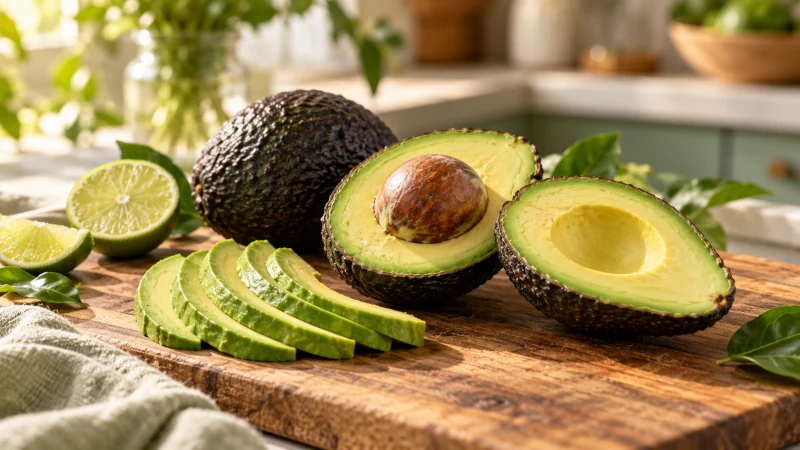
Avocado is good for most people, but its proven benefits are steadier and smaller than the internet suggests. The best-supported avocado health benefits show up when avocado takes the place of butter, cheese, or processed meat: LDL cholesterol tends to drift down, and in long-term studies people who eat avocado a couple of times a week have fewer heart attacks. Evidence for blood sugar, weight, and gut health is encouraging but thin. And two popular claims, that avocado treats anemia or works as an aphrodisiac, don’t hold up.
Here’s why the fruit gets so much attention. A medium avocado (about one cup of flesh) has roughly 240 calories, 22 grams of fat, mostly monounsaturated, 10 grams of fiber, and about 730 mg of potassium [USDA FoodData Central]. For the full breakdown by half and whole fruit, see our complete avocado nutrition facts. This guide sticks to one question: what eating avocado actually does for your health, and how sure we are.
What Are the Main Health Benefits of Avocado?
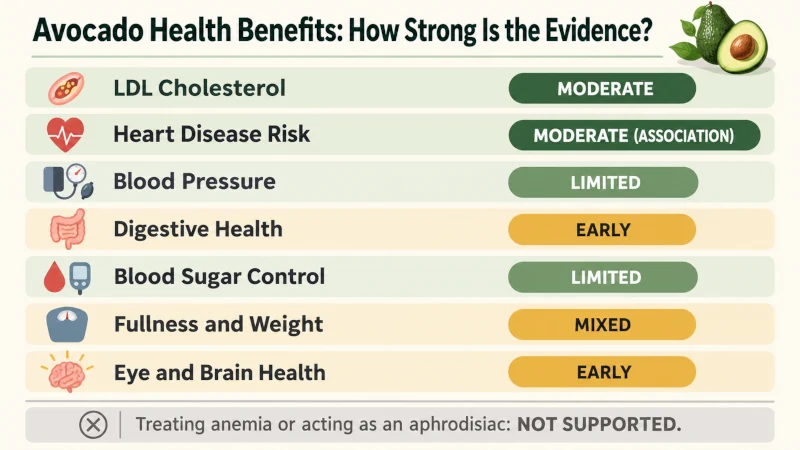
| Possible benefit | Best human evidence | How strong |
| Lower LDL cholesterol | Randomized trials; meta-analyses disagree on size | Moderate, modest effect |
| Lower heart disease risk | One large 30-year observational study | Moderate (association only) |
| Lower blood pressure | Pooled trials: about 1 mmHg lower systolic | Limited, very small |
| Gut health | One 12-week trial measuring gut bacteria | Early |
| Blood sugar control | Single-meal studies; no change in fasting glucose | Limited |
| Fullness and weight | Meal studies; 6-month trial showed no weight change | Mixed |
| Absorbing nutrients from vegetables | Small, well-controlled absorption studies | Consistent, but small |
| Eye and brain health | One small 6-month trial | Early |
| Treating anemia; aphrodisiac | No supporting human trials found | Not supported |
Avocado and Cholesterol Levels
The most striking result comes from a tightly controlled feeding study. Forty-five adults with overweight or obesity rotated through three cholesterol-lowering diets for five weeks each, with all food provided. On the diet that included one Hass avocado a day, LDL fell 13.5 mg/dL from baseline, compared with 8.3 mg/dL on a fat-matched diet without avocado and 7.4 mg/dL on a lower-fat diet. Only the avocado diet significantly reduced the number of LDL particles [Wang, 2015]. It’s a clean test of the idea, but nobody eats like a feeding study.
Real life looks more modest. In the Habitual Diet and Avocado Trial (HAT), 1,008 adults with a large waist either added one large avocado a day to their usual diet for six months or kept eating normally. LDL dropped by about 2.5 mg/dL and total cholesterol by 2.9 mg/dL in the avocado group [WebMD/The Hospitalist, 2022], and the authors concluded the overall effect on cardiometabolic risk factors was minimal [Lichtenstein, 2022].
Reviews that pool the trials don’t fully agree. A 2018 meta-analysis of 18 studies found no significant change in total or LDL cholesterol, but a small rise in HDL [Mahmassani, 2018]. A 2025 analysis of 10 randomized trials found the reverse pattern: LDL about 3.75 mg/dL lower, with no meaningful change in HDL, total cholesterol, or triglycerides [GRADE meta-analysis, 2025]. Read together, avocado can nudge LDL down a little. It isn’t a substitute for cholesterol medication.
Why the swap matters more than the avocado

The pattern behind those mixed results is simple. The American Heart Association recommends keeping saturated fat under 6% of calories and replacing saturated-fat foods with unsaturated fats [AHA]. Avocado’s fat is mostly the unsaturated kind, so it helps most when it pushes something else off the plate. Adding a daily avocado on top of an unchanged diet, as HAT did, produced the smallest effect.
Easy swaps that do the work:
- Mashed avocado on toast instead of butter or cream cheese
- Sliced avocado in a sandwich instead of cheese or mayonnaise
- Avocado in a salad in place of a creamy dressing
- Pureed avocado instead of butter in some baked goods, swapped one-for-one [Harvard T.H. Chan]
Avocado and Cardiovascular Health
The largest study on actual heart outcomes followed 68,786 women from the Nurses’ Health Study and 41,701 men from the Health Professionals Follow-up Study for 30 years. Compared with people who rarely or never ate avocado, those who ate at least two servings a week (one serving was half an avocado) had a 16% lower risk of cardiovascular disease and a 21% lower risk of coronary heart disease. There was no link with stroke. Replacing half a serving a day of margarine, butter, eggs, yogurt, cheese, or processed meat with avocado was associated with a 16% to 22% lower risk [Pacheco, 2022].
That’s a meaningful finding, but it’s observational. It shows that avocado eaters had fewer heart events, not that avocado caused the difference. The participants were mostly nurses and other health professionals, diet was self-reported every four years, and people who buy avocados may differ in other ways that statistical adjustment can’t fully capture. The authors’ own conclusion was careful: replacing certain fat-containing foods with avocado could lower risk. That’s the right way to read it. Avocado earns a “moderate” rating on our evidence-graded list of heart-healthy foods for the same reason.
Who pays for avocado research
Harvard’s Nutrition Source notes that much of the published avocado research is funded by avocado industry groups [Harvard T.H. Chan]. Several of the trials in this guide were supported by the Hass Avocado Board, including HAT [WebMD/The Hospitalist, 2022], the satiety, belly-fat, gut and eye studies described below, and, according to a republished industry announcement, the 2015 cholesterol trial [ITFNet, 2015]. The 30-year cohort study was not industry-funded, according to its disclosure. Funding doesn’t make a result wrong (HAT’s main result was null), but it is a reason to weigh effect sizes carefully.
Avocado and Blood Pressure
Avocado’s case here rests mostly on potassium. A medium avocado has about 730 mg of potassium and only about 11 mg of sodium [USDA FoodData Central]. Most Americans get less potassium than recommended, and the NIH says that eating more potassium while cutting sodium might help lower blood pressure and reduce stroke risk [NIH ODS].
Avocado-specific trials show only a tiny effect. The 2025 pooled analysis found systolic pressure about 1 mmHg lower with avocado [GRADE meta-analysis, 2025], and in HAT, blood pressure and other metabolic syndrome measures didn’t differ between groups [HealthDay, 2022]. Think of avocado as one potassium-rich food in a lower-sodium eating pattern, not a blood pressure treatment. If you take blood pressure medication, keep taking it.
Digestive Health and Fiber
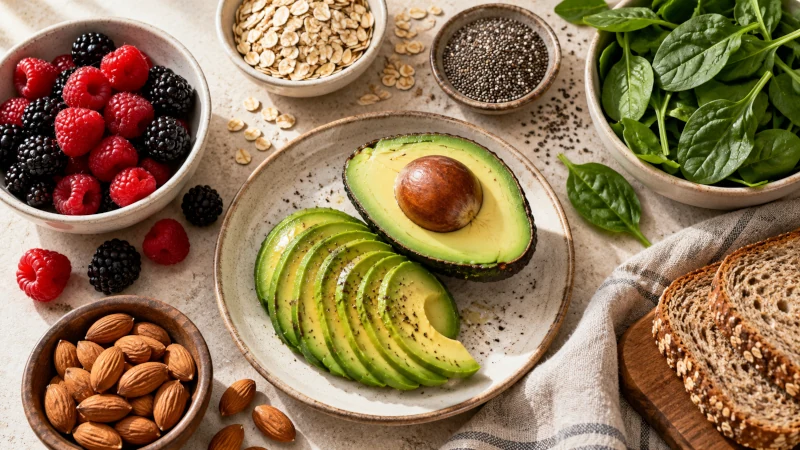
With about 10 grams of fiber per medium fruit [USDA FoodData Central], avocado is one of the most fiber-dense fruits you can buy. Most of that fiber is insoluble, with some soluble fiber too [Harvard T.H. Chan].
There’s early evidence it feeds your gut bacteria. In a 12-week randomized trial of 163 adults with overweight or obesity, people given one meal a day containing avocado (175 g for men, 140 g for women) ended up with more fiber-fermenting bacteria, greater microbial diversity, lower bile acids in stool, and more short-chain fatty acids than people eating similar meals without avocado [Thompson, 2021]. The study measured gut markers, not symptoms or disease, and it was funded by the Hass Avocado Board and the USDA [FoodNavigator-USA, 2021]. Call it promising.
If you have irritable bowel syndrome, larger portions of avocado can be a problem. The portion guidance in our avocado nutrition facts guide covers how much tends to be tolerated.
Avocado and Blood Sugar Management
Avocado is low in digestible carbohydrate and has a glycemic index of about 40, well inside the low range [Harvard T.H. Chan]. On its own, it barely moves blood glucose.
The more useful question is what happens when avocado replaces carbohydrate. In a crossover study of 31 adults with overweight or obesity, swapping some of a high-carbohydrate breakfast for a whole avocado produced a smaller insulin rise than the low-fat control meal [Zhu, 2019]. Over longer periods the picture is flatter. Eating one avocado a day for 12 weeks didn’t improve glucose tolerance or insulin sensitivity in a trial of 105 adults [Khan, 2021], and pooled trials show no significant change in fasting glucose [GRADE meta-analysis, 2025].
So avocado is a sensible swap for refined carbs if you have diabetes or prediabetes, but it isn’t a treatment. Our guide to normal blood sugar levels and what moves them explains the targets worth tracking.
Satiety and Weight Management
Fat and fiber together can keep you full. In the breakfast study above, the whole-avocado meal suppressed hunger more than the low-fat meal, people reported feeling more satisfied, and levels of the fullness hormone PYY rose [Zhu, 2019]. That was a single six-hour test, funded by the Hass Avocado Board [Illinois Tech, 2019].
Longer trials are less exciting. HAT’s main goal was to see whether a daily avocado shrank visceral (deep belly) fat. It didn’t, and body weight stayed similar in both groups [Lichtenstein, 2022]. In the 12-week trial, women who ate a daily avocado saw some fat shift away from the deep visceral layer, while men saw no change [Khan, 2021]; that study was also industry-funded [FreshFruitPortal, 2021].
The honest takeaway is that avocado is weight-neutral. A daily avocado didn’t cause weight gain in six months, but it won’t melt fat either. At around 240 calories per medium fruit, it fits best as a replacement for something, not an extra.
Absorption of Fat-Soluble Nutrients
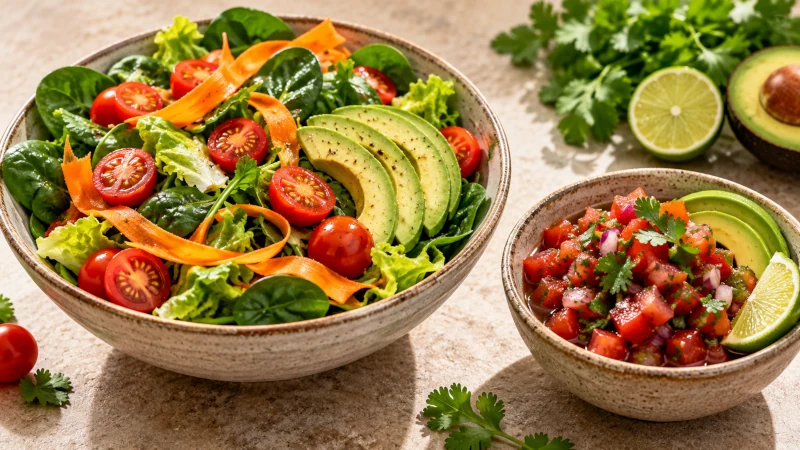
This is one of the more practical benefits of eating avocado, and one of the least known. Carotenoids such as beta-carotene, lycopene, and lutein dissolve in fat, so you absorb little of them from a fat-free salad. In controlled absorption studies, adding 150 g of avocado to salsa raised lycopene absorption 4.4-fold and beta-carotene 2.6-fold. Adding the same amount to a salad of lettuce, spinach, and carrots raised alpha-carotene absorption 7.2-fold, beta-carotene 15.3-fold, and lutein 5.1-fold. Half that amount of avocado worked about as well [Unlu, 2005].
The studies were small, but the effect was large. Put a few slices of avocado on salads, tomato dishes, and vegetable bowls.
Eye Health and Other Potential Benefits
Avocados contain lutein and zeaxanthin, carotenoids concentrated in the eye. Diets rich in these compounds are associated with lower rates of macular degeneration and cataracts [Harvard T.H. Chan], though no study shows avocado itself prevents eye disease. In one six-month trial of 40 healthy adults aged 50 and older, eating one avocado a day raised blood lutein by 25% and increased macular pigment, with small improvements on some attention and memory tests [Scott, 2017]. It was a small, industry-supported study [UC ANR, 2017], so treat the brain-health angle as early.
Avocado is also a good source of folate, with about 120 mcg DFE in a medium fruit [USDA FoodData Central]. That helps toward the 600 mcg DFE recommended in pregnancy, but food folate doesn’t replace a supplement. The NIH advises anyone who could become pregnant to get 400 mcg of folic acid a day from supplements or fortified foods on top of a healthy diet [NIH ODS].
Claims that don’t hold up
Anemia. A medium avocado has less than 1 mg of iron [USDA FoodData Central], a small fraction of what most adults need. It can be part of a healthy diet, but it won’t correct iron-deficiency anemia. If you’re tired, pale, or short of breath, get a blood test first, and see our guide to foods for healthy blood for the foods that actually move iron levels.
Aphrodisiac. The romantic reputation comes partly from the Nahuatl word ahuacatl, the origin of “avocado,” and its double meaning; the history of the name is covered in our guide to the avocado tree. We found no clinical trials testing avocado as an aphrodisiac or a fertility food.
Nerves, depression, and ulcers. Some herbal sources recommend avocado for nervousness, depression, or stomach ulcers. We found no human trials supporting any of these uses.
How Much Avocado Should You Eat?
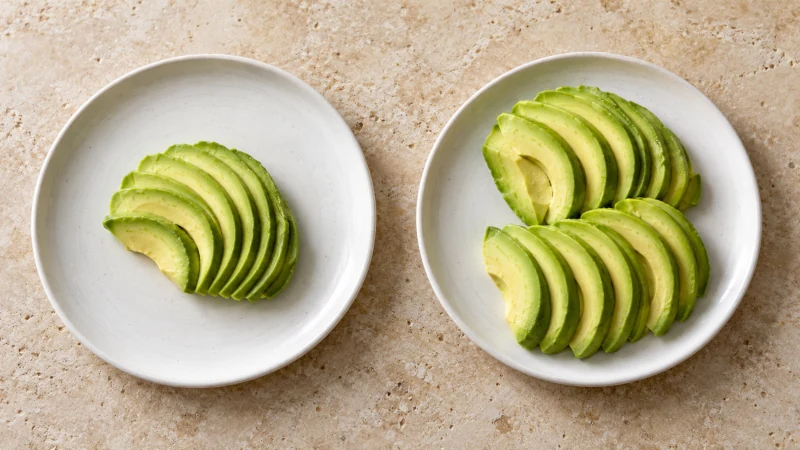
There’s no official avocado limit for healthy adults. The research gives two useful markers. The heart-health association appeared at two or more half-avocado servings a week [Pacheco, 2022], and a large avocado every day for six months didn’t cause weight gain [Lichtenstein, 2022]. For most people, somewhere between half an avocado a few times a week and one a day fits comfortably, ideally in place of butter, cheese, mayonnaise, or processed meat.
A few practical tips from Harvard’s Nutrition Source [Harvard T.H. Chan]: a ripe avocado yields to gentle pressure, and a hard one usually ripens in two to three days on the counter. Browned flesh is unappetizing but safe to eat; lemon or lime juice and an airtight container slow it down. To remove the pit safely, press it out from the skin side with your thumb instead of stabbing it with a knife.
Potential Risks, Allergies, and Medication Considerations
For most people, avocado is simply a healthy food. These are the exceptions.
Kidney disease and potassium-raising medicines. This is the most important caution. If you have chronic kidney disease or take an ACE inhibitor (such as benazepril), an angiotensin receptor blocker (such as losartan), or a potassium-sparing diuretic (such as spironolactone), your blood potassium can climb too high even from typical amounts of food [NIH ODS]. At about 730 mg per fruit, avocado counts as a high-potassium food. Ask your doctor or a renal dietitian how much fits your plan.
Warfarin. A medium avocado has about 32 mcg of vitamin K [USDA FoodData Central], and avocado has turned up in case reports of possible warfarin interactions. A review of the evidence called it scarce and suggested clinicians simply ask about recent avocado intake when INR results become unstable [Norwood, 2015]. The evidence is thin and mixed. If you take warfarin, tell your anticoagulation clinic before making a big change in how much avocado you eat.
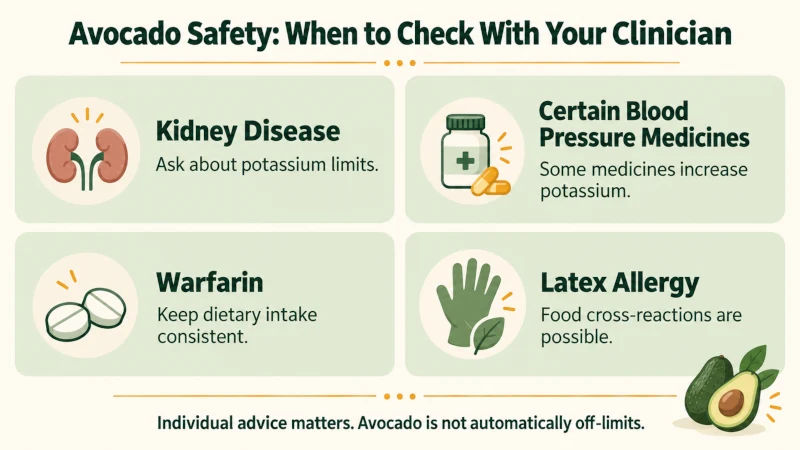
Latex allergy. People allergic to natural rubber latex can react to certain foods because the proteins look alike, a pattern called latex-fruit syndrome. Banana, avocado, kiwi, and papaya are the fruits most often involved, and reactions range from mouth itching to anaphylaxis [Gromek, 2024]. If latex gloves or balloons give you hives or swelling, ask an allergist before eating avocado regularly.
Pregnancy and breastfeeding. Avocado fits a pregnancy diet as a folate-containing food, but keep taking the folic acid your clinician recommends [NIH ODS]. Everything in this guide refers to the fruit flesh. Avocado leaves and seeds are a different matter, with mostly lab and animal data and real safety questions; see our research on avocado leaves before using them medicinally.
When to get medical help
- Call 911 or go to an emergency room for swelling of the lips, tongue, or throat, trouble breathing, or widespread hives after eating avocado.
- Talk to your kidney care team before eating more high-potassium foods if you have kidney disease or take the medicines listed above.
- Call your anticoagulation clinic if your INR changes after a shift in your diet.
- See a clinician for fatigue, pale skin, or shortness of breath instead of treating suspected anemia with food alone.
| HEALTH DISCLAIMER: This article is for general education and is not medical advice, diagnosis, or treatment. Avocados are a food, not a medicine, and they don’t cure or prevent any disease. Talk with your doctor, pharmacist, or a registered dietitian before making major diet changes if you have kidney disease, take warfarin or medicines that affect potassium (such as ACE inhibitors, ARBs, or potassium-sparing diuretics), have a latex or food allergy, or are pregnant or breastfeeding. Seek emergency care right away for signs of a severe allergic reaction. |
Frequently Asked Questions
Is it OK to eat an avocado every day?
For most people, yes. In a six-month trial, a daily avocado didn’t cause weight gain and slightly lowered LDL cholesterol [Lichtenstein, 2022]. People who need to limit potassium, and people on warfarin, should check with their clinician first.
Does avocado lower cholesterol?
Modestly. Controlled trials show the clearest LDL drop when avocado replaces saturated fat [Wang, 2015]. Adding avocado without changing anything else produces a much smaller effect.
Is avocado good for people with diabetes?
It’s a reasonable choice. Avocado has a low glycemic index [Harvard T.H. Chan], and replacing refined carbohydrate with avocado lowered the insulin response to a meal [Zhu, 2019]. It hasn’t been shown to improve long-term blood sugar control on its own.
Will eating avocado make me gain weight?
Not in the largest trial, where a daily avocado for six months left body weight unchanged [Lichtenstein, 2022]. Portions still matter, since a medium avocado has about 240 calories.
Can avocado help with anemia?
Not meaningfully. A medium avocado has under 1 mg of iron [USDA FoodData Central]. Anemia needs testing to find the cause, and iron-rich foods or treatment chosen with your doctor.
References
- U.S. Department of Agriculture, FoodData Central. Avocados, raw, all commercial varieties, 1 cup cubes (record 171705), as reproduced by University Hospitals. View source
- Harvard T.H. Chan School of Public Health. The Nutrition Source: Avocados. View source
- Pacheco LS, Li Y, Rimm EB, et al. Avocado Consumption and Risk of Cardiovascular Disease in US Adults. View source
- Lichtenstein AH, Kris-Etherton PM, Petersen KS, et al. Effect of Incorporating 1 Avocado Per Day Versus Habitual Diet on Visceral Adiposity: View source
- WebMD. An avocado a day doesn’t shrink belly fat but helps cholesterol. View source
- HealthDay. Eating a daily avocado does not reduce visceral fat. View source
- Wang L, Bordi PL, Fleming JA, Hill AM, Kris-Etherton PM. Effect of a Moderate Fat Diet With and Without Avocados on Lipoprotein Particle Number, Size and Subclasses in Overweight and Obese Adults. View source
- ITFNet. Republished Hass Avocado Board announcement on the Wang 2015 trial (funding statement). View source
- Mahmassani HA, Avendano EE, Raman G, Johnson EJ. Avocado consumption and risk factors for heart disease: a systematic review and meta-analysis. View source
- Effects of Avocado Products on Cardiovascular Risk Factors in Adults: A GRADE-Assessed Systematic Review and Meta-Analysis. View source
- American Heart Association. Saturated Fat. View source
- NIH Office of Dietary Supplements. Potassium: Fact Sheet for Consumers. View source
- NIH Office of Dietary Supplements. Folate: Fact Sheet for Consumers. View source
- Thompson SV, Bailey MA, Taylor AM, et al. Avocado Consumption Alters Gastrointestinal Bacteria Abundance and Microbial Metabolite Concentrations among Adults with Overweight or Obesity: View source
- FoodNavigator-USA. Avocados and gut health. View source
- Zhu L, Huang Y, Edirisinghe I, Park E, Burton-Freeman B. Using the Avocado to Test the Satiety Effects of a Fat-Fiber Combination in Place of Carbohydrate Energy in a Breakfast Meal. View source
- Illinois Institute of Technology. News release on avocado satiety study. View source
- Khan NA, Edwards CG, Thompson SV, et al. Avocado Consumption, Abdominal Adiposity, and Oral Glucose Tolerance Among Persons with Overweight and Obesity. View source
- FreshFruitPortal. Avocados change belly fat distribution in women. View source
- Unlu NZ, Bohn T, Clinton SK, Schwartz SJ. Carotenoid absorption from salad and salsa by humans is enhanced by the addition of avocado or avocado oil. View source
- Scott TM, Rasmussen HM, Chen O, Johnson EJ. Avocado Consumption Increases Macular Pigment Density in Older Adults: A Randomized, Controlled Trial. View source
- UC Agriculture and Natural Resources, Topics in Subtropics. Eat More Avocados. View source
- Norwood DA, Parke CK, Rappa LR. A Comprehensive Review of Potential Warfarin-Fruit Interactions. View source
- Gromek W, Kołdej N, Świtała S, Majsiak E, Kurowski M. Revisiting Latex-Fruit Syndrome after 30 Years of Research: View source


