
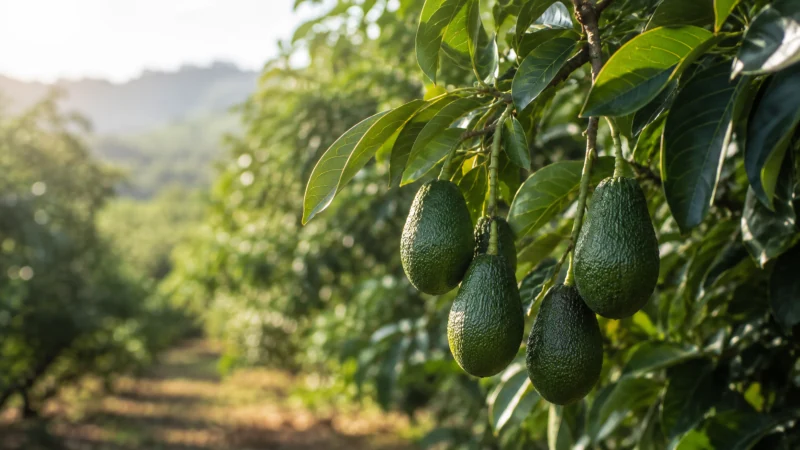
Most of what’s worth knowing about avocado tree benefits comes down to one part of the plant: the fruit. Eaten in place of butter, cheese, or processed meat, avocado is one of the genuinely heart-friendly swaps you can make in an ordinary diet — rich in monounsaturated fat, fiber, and potassium, with almost no sugar and no cholesterol. The leaves, the big central seed, and homemade avocado oil all have long histories in folk medicine, but the evidence behind them is thin, and a couple of those traditional uses are worth actively skipping.
So this guide does two things. It lays out the avocado tree benefits that hold up when you look at the research, and it’s honest about the ones that are tradition rather than proof — including where a little caution matters.
What the avocado tree actually is
The avocado tree, Persea americana, is an evergreen in the laurel family (Lauraceae) — the same family as bay laurel and cinnamon. It’s native to Mexico and Central America, where people have eaten its fruit for thousands of years, and it’s now grown across warm regions worldwide [Missouri Botanical Garden, Persea americana]. In good conditions the tree can reach 30 to 60 feet, though grafted orchard trees are usually kept much shorter for easier picking.
You may have read that “avocado” literally means “testicle” in the Aztec language. It’s a fun story, and there’s a thread of truth to it — the word comes from the Nahuatl ahuacatl — but Nahuatl scholars point out that the primary meaning was simply the fruit, with the anatomical sense being slang at most, the way English speakers say “nuts” [IFLScience, 2022]. Good etymology, shaky biology.
For health purposes, the part that matters is the buttery flesh. That’s where nearly all the real avocado tree benefits live.
What’s inside an avocado
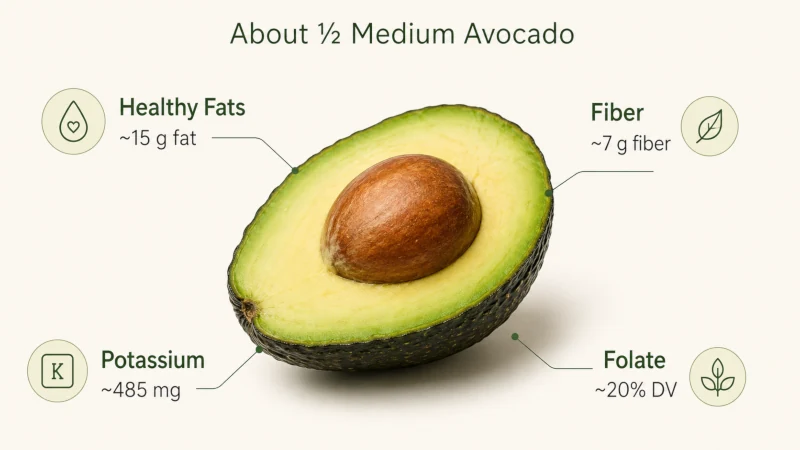
Avocado is unusual for a fruit: most of its calories come from fat, not sugar. A whole medium avocado has roughly 240 calories, 22 grams of fat (about 15 grams of it monounsaturated), 10 grams of fiber, and only a gram or so of sugar, along with no cholesterol and very little sodium [Harvard T.H. Chan School of Public Health, The Nutrition Source]. The dominant fat is oleic acid — the same monounsaturated fat that defines olive oil.
| Per ~1/2 medium avocado (~100 g) | Amount | Why it matters |
| Calories | ~160 | Energy-dense; portion matters |
| Fat (mostly monounsaturated) | ~15 g | Oleic acid, the olive-oil fat |
| Fiber | ~7 g | Digestion, fullness, cholesterol |
| Potassium | ~485 mg | Blood-pressure balance |
| Folate | ~20% DV | Especially important in pregnancy |
| Vitamin K, E, B6 | Meaningful | Clotting, antioxidant, metabolism |
| Sugar | <1 g | Barely moves blood sugar |
Figures are approximate and reflect USDA FoodData Central values summarized by Harvard’s Nutrition Source; a whole fruit is roughly double these numbers. For a fuller breakdown, see our avocado nutrition facts guide.
One honest caveat worth keeping in mind: a lot of published avocado research has been funded by avocado industry groups, which is one reason careful reviewers describe several benefits as promising rather than proven [Harvard T.H. Chan, The Nutrition Source].
The benefits that hold up — from eating the fruit
Heart health and cholesterol
This is the strongest part of the avocado story, and it comes with an important asterisk.
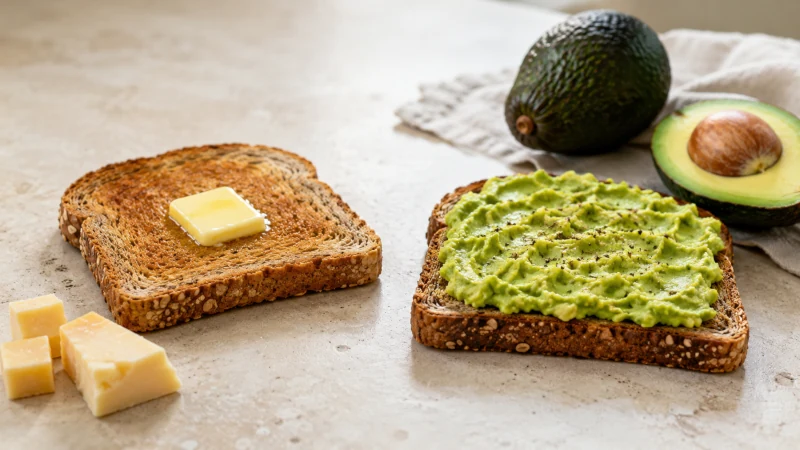
In a 30-year study of more than 110,000 US health professionals, people who ate at least two servings of avocado a week had about a 16% lower risk of cardiovascular disease and a 21% lower risk of coronary heart disease than those who rarely ate it [Pacheco et al., J Am Heart Assoc, 2022]. No link was found with stroke. This was an observational study built on self-reported diets, so it shows association, not proof of cause — but it’s the largest, longest look we have, and the benefit was clearest when avocado replaced butter, cheese, eggs, or processed meat rather than being piled on top of them [American Heart Association, 2022; Harvard Health, 2022].
The controlled-trial evidence on cholesterol is more mixed. A systematic review and meta-analysis found only a small overall drop in total cholesterol and no significant change in LDL across all groups — but in people who started with high cholesterol, avocado lowered LDL by around 9 mg/dL. The authors rated the overall certainty as low to very low [James-Martin et al., J Acad Nutr Diet, 2024]. In plain terms: avocado is a legitimately heart-friendly food, most useful when it stands in for saturated fat, and most likely to nudge cholesterol in people who have it to lose — not a magic number-mover for everyone.
The mechanism is unglamorous and real: swapping saturated fat for the monounsaturated fat in avocado, olive oil, and nuts is one of the more dependable dietary ways to lower LDL. It’s the same logic behind the broader list of foods for healthy arteries, and it’s covered further in our companion guide to the health benefits of avocado.
Blood pressure and potassium
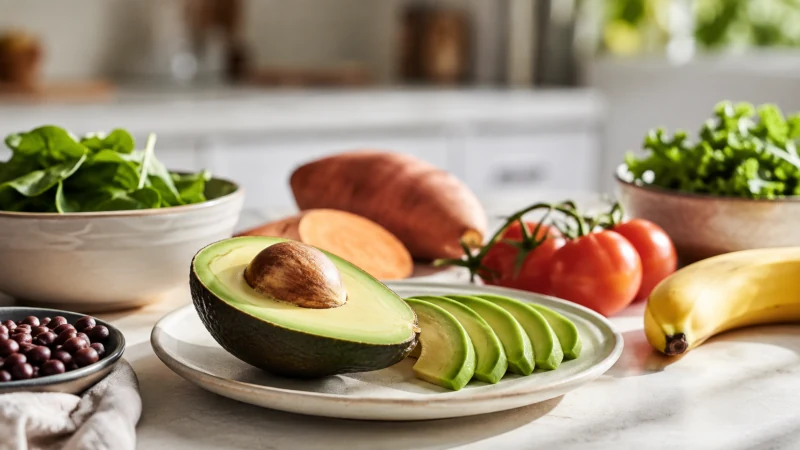
Avocado is a strong potassium source — more per gram than a banana — and potassium helps balance the effect of sodium on blood pressure [Harvard T.H. Chan, The Nutrition Source]. Some trials have picked up a small reduction in systolic blood pressure with regular avocado intake, though the effect is modest and part of a bigger dietary picture rather than a standalone treatment. Think of it as one supportive piece of a potassium-rich, produce-heavy eating pattern.
Blood sugar, fiber, and staying full
Because avocado is low in sugar and high in fiber and fat, it barely raises blood sugar, which is why it fits comfortably into diabetes-friendly and lower-carbohydrate eating [Harvard T.H. Chan, The Nutrition Source]. That same fiber-and-fat combination helps with fullness: adding avocado to a meal tends to blunt afterward hunger, and in studies it hasn’t led to weight gain despite the calories. Plant-based eating patterns that include avocado are also associated with lower type 2 diabetes risk — but that’s the whole pattern doing the work, not avocado on its own.
Folate, and why it matters in pregnancy
One medium avocado supplies close to a third of the daily folate target [Ford et al., Foods, 2023]. Folate supports healthy fetal development, and US dietary guidance flags it as a nutrient many people of reproductive age don’t get enough of. The fruit’s flesh is safe and nutritious in pregnancy as an ordinary food — a more accurate benefit than the old claim that avocado is a “remedy for anemia.” It does contain some iron plus vitamin C, but the amount is modest; avocado is not a serious iron source and won’t treat iron-deficiency anemia on its own.
Avocado oil and your skin: reasonable vs. wishful
Avocado oil is rich in oleic acid and vitamin E, and as a plain moisturizer it’s a reasonable, gentle emollient — which is why it turns up in lotions and creams. Where the claims get ahead of the evidence is medical territory. Research suggesting avocado oil speeds wound healing or eases eczema comes largely from animal and laboratory studies, such as a rat model showing more collagen and less inflammation in treated wounds [de Oliveira et al., 2013]. Promising, but not the same as proof in people.
And some popular claims simply don’t hold up. There’s no good evidence that avocado oil prevents pregnancy stretch marks, cures dandruff, or stops hair loss — topical oils generally can’t do those things, however nourishing they feel [Medical News Today]. If you like avocado oil as a moisturizer, use it; just don’t expect it to treat a medical condition. Patch-test first if your skin is reactive.
What about the leaves and the seed?
Here’s where tradition and evidence part ways, and where a little caution is genuinely warranted.
Avocado leaves have a long history as a digestive tea in Mexico and Central America, and the large seed has been mashed into folk poultices and decoctions. Laboratory and animal studies do show that avocado seed extracts have antioxidant and antimicrobial activity, and seed extracts lowered cholesterol and blood sugar in diabetic rats [California Avocado Commission]. That’s the exciting-sounding part. The sobering part is that there are no human feeding studies establishing that eating avocado seed is safe or effective, and food scientists and growers alike advise sticking to the flesh.
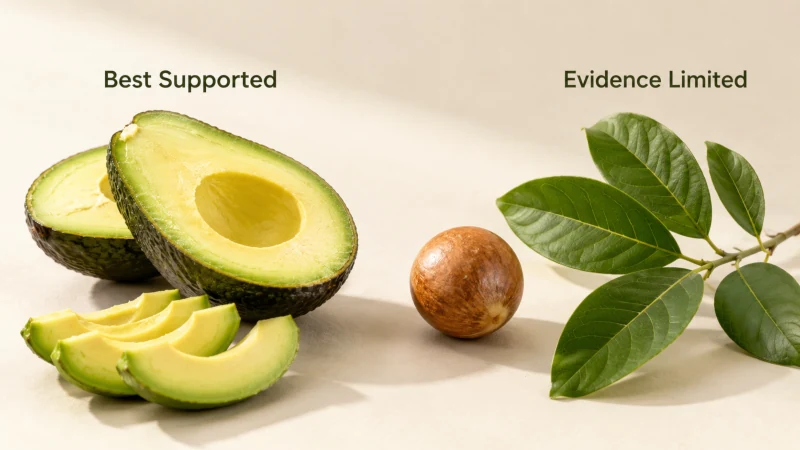
There are concrete reasons for that caution. The seed contains compounds you don’t want in quantity, including amygdalin (a cyanogenic compound) and tannins, and the plant’s parts carry a natural toxin called persin. The leaves hold the highest concentration of persin of any part of the tree — enough to cause heart and other damage in animals [Merck Veterinary Manual]. Persin doesn’t harm humans in the small amounts found in the fruit’s flesh, but boiling up leaves or seeds to drink daily is a very different exposure, and one nobody has shown to be safe.
The practical takeaway: enjoy the fruit freely, treat leaf teas as unproven traditional practice rather than medicine, and don’t drink seed decoctions as a home remedy for parasites, infections, or anything else.
Safety, side effects, and who should be careful
For most people, avocado flesh is a safe, everyday food. A few situations deserve a closer look.
Avocado allergy and latex-fruit syndrome. Avocado is one of the fruits most linked to latex-fruit syndrome: roughly 30 to 50% of people allergic to natural rubber latex also react to certain plant foods, avocado among them [Medical News Today; PMC review, 2024]. Reactions range from an itchy mouth to, rarely, anaphylaxis. If you have a latex allergy or react to banana, kiwi, or chestnut, talk with an allergist before making avocado a staple. Get emergency help (call 911) for throat swelling or trouble breathing after eating it.
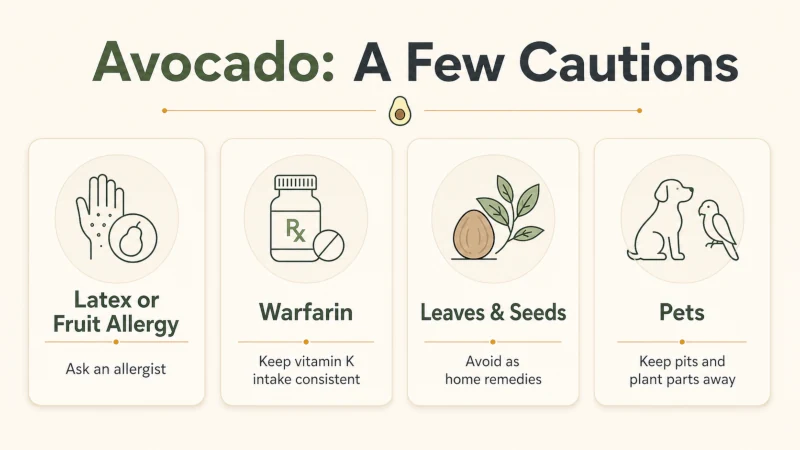
If you take warfarin. Avocado contains vitamin K, which can theoretically counter the blood thinner warfarin, and a few old case reports raised the concern. But the amount of vitamin K in a serving is far below the level thought to interfere with the drug [Dreher & Davenport, 2013]. The sensible middle ground: you don’t need to avoid avocado, but keep your intake of vitamin-K foods roughly steady week to week and tell whoever manages your warfarin dose.
Leaves and seeds. As above — human safety hasn’t been established, so don’t consume them as remedies.
A note for pet owners. Persin makes avocado genuinely dangerous to birds, rabbits, horses, and ruminants like goats and sheep, and the large pit is a choking and intestinal-obstruction hazard for dogs [ASPCA; Merck Veterinary Manual]. Keep avocado, its skin, and its pit away from your animals, and call your veterinarian or the ASPCA Animal Poison Control Center (888-426-4435) if a pet eats some.
Pregnancy and breastfeeding. The fruit is a safe, folate-rich food during pregnancy. The caution applies only to concentrated leaf or seed preparations, which should be avoided.
When to see a doctor
Avocado is food, not treatment. See a doctor rather than relying on any food if you’re trying to manage high cholesterol, high blood pressure, or diabetes — these need real monitoring, and diet works alongside, not instead of, prescribed care. Book a visit if you’ve never had your cholesterol or blood pressure checked, or if you have persistent digestive symptoms you were hoping a leaf tea might fix. And treat these as emergencies: chest pain or pressure, pain spreading to the arm, neck, or jaw, sudden shortness of breath, or stroke signs (face drooping, arm weakness, slurred speech) — call 911 right away.
| Health Disclaimer: This article is for general education only and is not medical advice or a substitute for care from a qualified professional. It does not diagnose, treat, cure, or prevent any disease. Talk to your doctor, pharmacist, or a registered dietitian before making major diet changes or using any herbal preparation — especially if you are pregnant or breastfeeding, take prescription medication such as a blood thinner, or have a latex or food allergy. Never give avocado, its skin, or its pit to pets. If you think you are having a medical emergency, call 911. |
Frequently Asked Questions
Are avocado tree benefits mostly from the fruit or the whole plant?
Almost entirely the fruit. Its flesh carries the heart-friendly fats, fiber, potassium, and folate behind avocado’s reputation. The leaves and seed have traditional uses but little human evidence, and they concentrate compounds — including persin — that make them a poor bet as home remedies [California Avocado Commission; Merck Veterinary Manual].
Does avocado actually lower cholesterol?
It can help, mainly when it replaces saturated fat like butter or cheese, and the effect is clearest in people who already have high cholesterol — where trials showed an LDL drop of roughly 9 mg/dL, at low overall certainty [James-Martin et al., 2024]. It’s a helpful food, not a substitute for medication.
How much avocado is a reasonable amount to eat?
Half to one avocado a day fits most healthy diets. In the large heart study, benefits showed up at about two servings a week [Pacheco et al., 2022]. Because it’s calorie-dense, use it in place of other fats rather than on top of them.
Is it safe to eat the avocado seed?
There’s no human research showing it’s safe or beneficial, and it contains amygdalin, tannins, and persin, so the current advice is to skip it and eat the flesh [California Avocado Commission].
Can I eat avocado if I have a latex allergy?
Maybe not comfortably. About 30–50% of people with a latex allergy also react to foods like avocado, a link called latex-fruit syndrome, with reactions from an itchy mouth to (rarely) anaphylaxis [Medical News Today]. Check with an allergist first.
References
- Harvard T.H. Chan School of Public Health. “Avocados.” The Nutrition Source. → View source
- Pacheco LS, Li Y, Rimm EB, et al. “Avocado Consumption and Risk of Cardiovascular Disease in US Adults.” J Am Heart Assoc. 2022;11:e024014. doi:10.1161/JAHA.121.024014. → View source
- American Heart Association. “Eating two servings of avocados a week linked to lower risk of cardiovascular disease.” 2022. → View source
- James-Martin G, Brooker PG, Hendrie GA, et al. “Avocado Consumption and Cardiometabolic Health: A Systematic Review and Meta-Analysis.” J Acad Nutr Diet. 2024;124:233–248. → View source
- Harvard Health Publishing. “Enjoy avocados? Eating one a week may lower heart disease risk.” 2022. → View source
- Ford NA, Spagnuolo P, Kraft J, Bauer E. “Nutritional Composition of Hass Avocado Pulp.” Foods. 2023;12:2516. → View source
- Dreher ML, Davenport AJ. “Hass Avocado Composition and Potential Health Effects.” Crit Rev Food Sci Nutr. 2013. → View source
- Merck Veterinary Manual. “Avocado (Persea spp) Toxicosis in Animals.” → View source
- ASPCA. “The Scoop on Avocado and Your Pets.” → View source
- California Avocado Commission. “Are Avocado Pits Edible and Safe to Eat?” → View source
- Medical News Today. “Avocado allergy: Causes, symptoms, how to manage.” → View source
- “Revisiting Latex-Fruit Syndrome after 30 Years of Research.” (PMC11278189) → View source
- Medical News Today. “Avocado oil for skin: benefits and how to use it.” → View source
- de Oliveira AP, et al. “Effect of Semisolid Formulation of Persea Americana Mill (Avocado) Oil on Wound Healing in Rats.” 2013. (PMC3614059 / PMID 23573130) → View source
- Missouri Botanical Garden. “Persea americana.” Plant Finder. → View source
- IFLScience. “Fact Check: Are Avocados Really Named After Testicles?” 2022. → View source
