
If you’re wondering whether sarsaparilla root can clear your skin, ease sore joints, or “purify” your blood, here’s the plain answer up front: people have leaned on this root for centuries, and laboratory research hints at a few interesting effects, but almost none of those effects have been confirmed in people.
Most claims about sarsaparilla plant health benefits rest on tradition and test-tube studies rather than clinical trials [Drugs.com, 2025]. That doesn’t make the plant worthless — it makes it something to understand realistically before you spend money on a supplement.
What sarsaparilla actually is
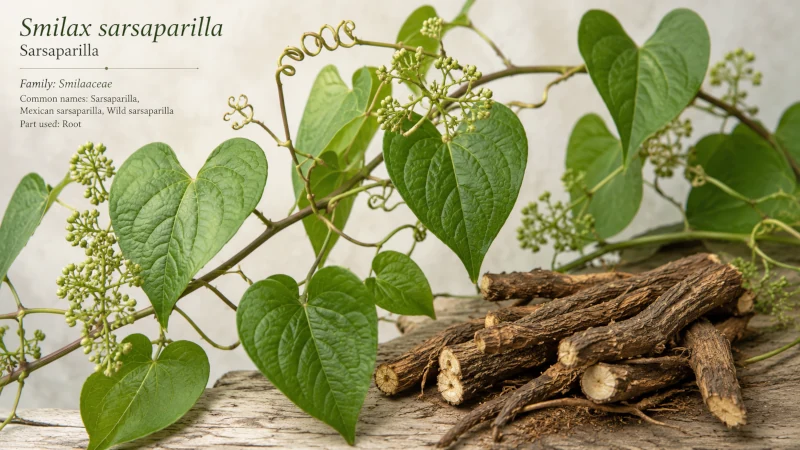
Sarsaparilla is the root of climbing Smilax vines. Several species are sold under the name, including Smilax officinalis, S. regelii, and S. aristolochiifolia. You’ve almost certainly tasted it: the root is a natural flavoring in old-fashioned root beer and other soft drinks, and the U.S. FDA treats it as a flavoring substance for foods and drinks [WebMD, 2026].
Two easy mix-ups are worth clearing up. “Indian sarsaparilla” comes from a different plant entirely (Hemidesmus indicus), and Smilax glabra (chinaroot, used in traditional Chinese medicine) contains different chemistry and shouldn’t be assumed to work the same way [WebMD, 2026]; [Memorial Sloan Kettering, 2022]. The root itself is rich in steroidal saponins — compounds such as sarsasaponin and sarsasapogenin — along with plant sterols and flavonoids, which is where most of the research interest sits [Drugs.com, 2025].
A short history behind the “blood purifier” reputation
Sarsaparilla built its name in the 1500s. The Spanish physician Nicolás Monardes wrote about using it for syphilis in 1574, and in 1812 there were reports of Portuguese soldiers with syphilis recovering faster on sarsaparilla than on mercury, the brutal standard of the day [Drugs.com, 2025]. Over the centuries it was used across many cultures for skin problems, arthritis, fever, digestive complaints, leprosy, and even cancer [Drugs.com, 2025]. The old idea that it “cleanses the blood” reflects a pre-modern theory of illness rather than a measured effect on your bloodstream — useful to know when you see the word “depurative” on a label.
Sarsaparilla plant health benefits: what the evidence shows
Here’s the reality behind the most common claims. Where an effect has only been seen in cells or animals, treat it as a lead for future research, not a promise for your body.
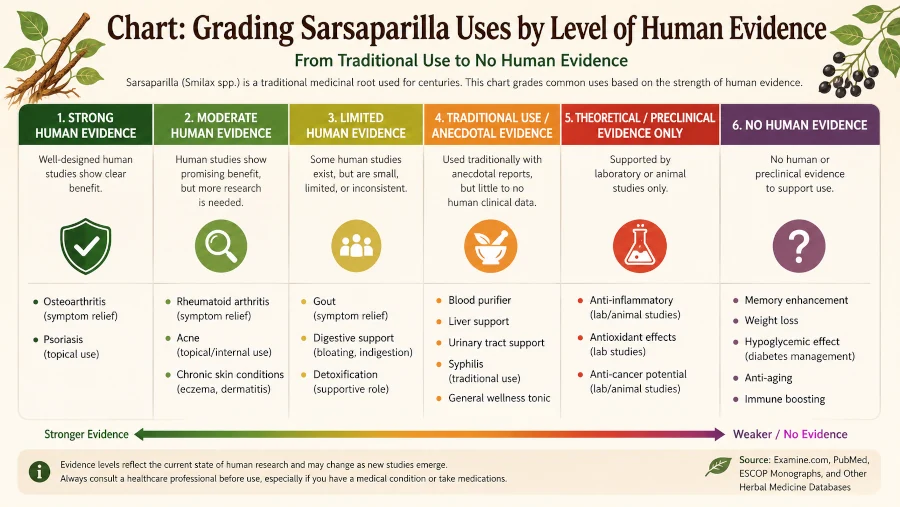
| Traditional use | What research shows | Evidence strength |
| Skin: psoriasis, eczema, acne | A flavonoid called astilbin eased psoriasis-like lesions in mice; no human trials. | Early animal/lab only |
| Joint pain, arthritis | Extracts reduced inflammation in rat studies; human data are missing. | Early animal/lab only |
| Gout / high uric acid | Lowered uric acid in rats; one small human study was positive but methodologically weak. | Limited, mixed |
| Diuretic / fluid balance | Increased urination is a commonly reported effect and appears in animal studies. | Reported + animal |
| Cancer | Some lab and animal signals, but leading cancer centers state it has not been shown to treat or prevent cancer. | No human evidence |
| Testosterone / muscle building | It does not contain anabolic steroids and has no proven performance effect. | Not supported |
| Syphilis / STDs | Used for centuries but never reliably cured these infections; they need modern treatment. | Historical only |
Sources: Drugs.com (2025), WebMD (2026), Memorial Sloan Kettering (2022).
Skin: psoriasis, eczema, and acne
Skin is sarsaparilla’s oldest reputation, and it’s where the lab signal is most interesting. In a mouse model of psoriasis, a flavonoid found in Smilax called astilbin calmed the overactive skin-cell growth and immune activity that drive psoriasis-like lesions [Drugs.com, 2025]. That’s promising, but it’s an animal study — no clinical trials have shown that taking sarsaparilla clears psoriasis, eczema, or acne in people. If your skin flares are ongoing, diet and proven treatments do more of the heavy lifting; see our guide to foods that can aggravate acne for a practical starting point.
Joint pain and arthritis
Several Smilax extracts have reduced inflammation and swelling in rat studies, which fits the plant’s long folk use for rheumatism [Drugs.com, 2025]. Again, that hasn’t been tested in people with arthritis, so think of sarsaparilla as unproven rather than effective here. What you eat has better-supported effects on joint inflammation — our rheumatoid arthritis diet guide covers the foods worth prioritizing.
Gout and uric acid
This is the one area with any human data. Animal studies show reduced uric acid, and a small clinical study of a combination remedy lowered serum uric acid — though reviewers flagged real weaknesses in how it was run [Drugs.com, 2025]. So the evidence is genuinely mixed and thin. Sarsaparilla is not a substitute for gout treatment, but pairing any herbal interest with gout-friendly eating is the more reliable move.
The diuretic and “detox” angle
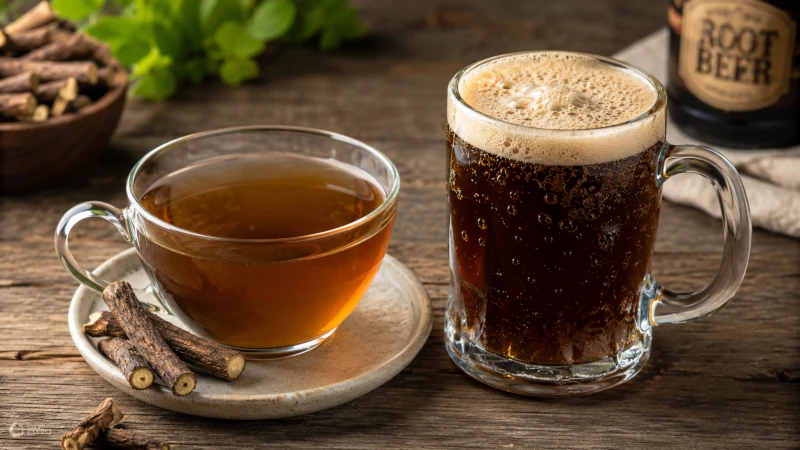
One effect people notice is needing to urinate more — increased diuresis shows up both in reports and in animal work [Drugs.com, 2025]. That’s the grain of truth behind “detox” marketing, but making more urine is not the same as removing toxins or treating disease. If you’re drawn to diuretic herbs, it helps to understand how the urinary system responds to plants like these, and how close relatives such as couch grass are traditionally used.
Cancer, infections, and other lab findings
You’ll find headlines about anticancer and antimicrobial “activity.” In the lab, Smilax extracts have shown effects against various cancer cell lines and microbes, and the related species S. glabra has antioxidant and antitumor signals in cell studies [Drugs.com, 2025]. But Memorial Sloan Kettering states plainly that Smilax glabra has not been shown to treat or prevent cancer, because those effects have never been tested in humans [Memorial Sloan Kettering, 2022]. Treat any cancer or infection claim as unproven.
The testosterone and bodybuilding myth
Sarsaparilla is sometimes sold as a natural steroid or testosterone booster. It contains plant steroids (saponins), but those are not anabolic steroids and there’s no reliable evidence it raises testosterone or improves athletic performance [Drugs.com, 2025]. Save your money.
How people take it — and why there’s no proven dose
Sarsaparilla comes as tea, capsules, powder, and liquid tinctures. There’s an important catch: there are no clinical trials establishing a therapeutic dose for any use [Drugs.com, 2025]. Supplement labels also aren’t verified by the FDA, and the amount of active compounds varies with the species, growing conditions, and processing — so two bottles can behave differently [WebMD, 2026]. If you decide to try it, follow the product label, start low, and check with a pharmacist or doctor first rather than chasing a “correct” dose that the science doesn’t actually define.
Safety, side effects, and who should avoid it
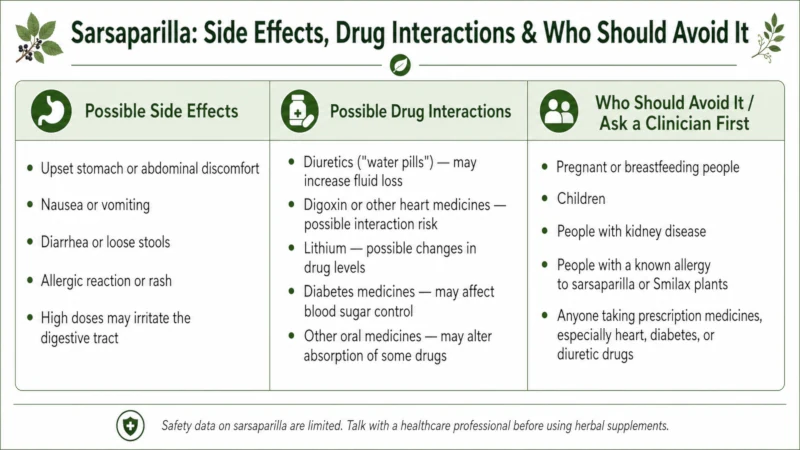
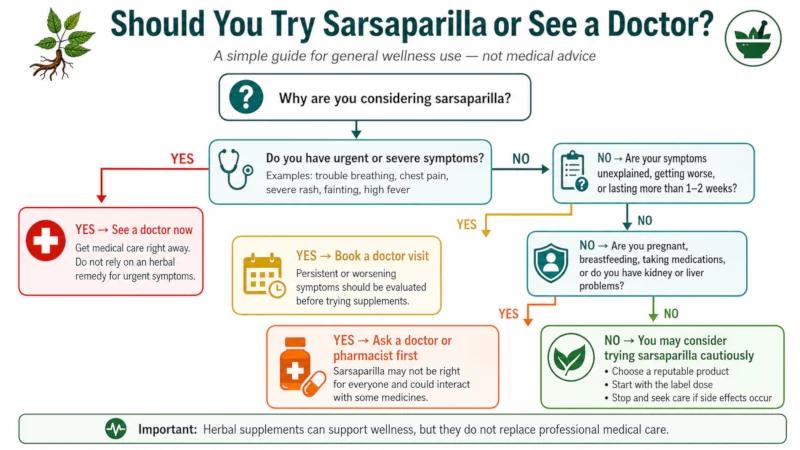
Common side effects. The two most reported are an upset stomach and needing to urinate more often [WebMD, 2026]. Inhaling sarsaparilla root dust has caused occupational asthma in workers who handle it [Drugs.com, 2025].
Allergic reactions. Stop and get urgent help for signs of a serious reaction — trouble breathing or wheezing, swelling of the face, lips, or throat, a fast heartbeat, dizziness or fainting, or widespread hives [WebMD, 2026].
Drug interactions. Most interaction data are theoretical or from animals, but a few are worth flagging. Sarsaparilla may increase how much of the heart drug digoxin (digitalis) your body absorbs and may add to the effect of prescription water pills (diuretics) [Drugs.com, 2025]; [WebMD, 2026]. Compounds in the related S. glabra may also affect enzymes that process many medications, though the clinical importance isn’t known [Memorial Sloan Kettering, 2022]. Tell your clinician about every supplement you take.
Pregnancy and breastfeeding. Avoid it. Safety hasn’t been established, and at least one Smilax species shows hormone-like (estrogenic and anti-estrogenic) activity in the lab [Drugs.com, 2025].
Who should be extra cautious. Skip sarsaparilla if you’re allergic to Smilax plants, and check with a professional first if you have kidney or liver problems [WebMD, 2026].
When to see a professional
- A psoriasis, eczema, or arthritis flare that isn’t improving, or is spreading and painful.
- Any concern about a sexually transmitted infection — these need testing and real treatment, not an herb.
- Gout attacks, or high uric acid you’re trying to manage.
- You take prescription medicine, especially a heart medication or a diuretic.
And treat sudden breathing trouble or facial swelling after taking any supplement as an emergency.
So, is sarsaparilla worth trying?
As a flavor and a piece of herbal history, sarsaparilla is harmless fun for most healthy adults. As a treatment, it’s a plant with a big traditional reputation and a small, mostly preclinical evidence base — encouraging hints in cells and animals, very little tested in people, and no proven dose. If you enjoy it as a tea, that’s a reasonable, low-stakes choice. If you’re counting on it to fix psoriasis, arthritis, gout, or anything more serious, the realistic expectation is that it won’t do the job on its own, and the safer path is proven care plus, if you want, a supplement your clinician has signed off on.
| Health Disclaimer: This article is for general education and is not medical advice, diagnosis, or treatment. Sarsaparilla is a dietary supplement, not an approved medicine, and its benefits for any specific condition are not well established. Do not use it to replace care for a diagnosed illness. If you are pregnant or breastfeeding, have kidney or liver problems, or take prescription medicine, talk with a doctor or pharmacist before trying it. Seek prompt medical care for any serious or worsening symptoms. |
Frequently Asked Questions
Does sarsaparilla really clean your blood?
“Blood cleansing” is a traditional idea, not a measured medical effect. Sarsaparilla can make you urinate more, which is likely what the folklore is describing, but there’s no evidence it removes toxins or treats disease [Drugs.com, 2025].
Can sarsaparilla boost testosterone or help with muscle building?
No. It contains plant steroids, but these are not anabolic steroids, and there’s no reliable evidence it raises testosterone or improves performance [Drugs.com, 2025].
Is sarsaparilla safe to drink every day?
For most healthy adults, occasional use as a tea or flavoring is generally well tolerated, with upset stomach and extra urination being the usual complaints [WebMD, 2026]. Because there’s no established dose and product strength varies, daily long-term use is best discussed with a pharmacist or doctor.
Can it cure psoriasis or eczema?
No cure has been shown in people. A Smilax flavonoid improved psoriasis-like lesions in mice, but that hasn’t translated into human evidence [Drugs.com, 2025].
Who should not take sarsaparilla?
Avoid it if you’re pregnant or breastfeeding or allergic to Smilax, and check with a professional first if you have kidney or liver problems or take prescription medicine, especially digoxin or a diuretic [WebMD, 2026]; [Drugs.com, 2025].
References
- Drugs.com (2025). Sarsaparilla: Uses, Benefits & Dosage. Wolters Kluwer / Drugs.com. Medically reviewed; last updated July 22, 2025. View source
- WebMD (2026). Sarsaparilla: Uses, Side Effects, and More. Written by Chelsey McIntyre, PharmD; medically reviewed by Beth Johnston, BCPS, PharmD; March 11, 2026. View source
- Memorial Sloan Kettering Cancer Center (2022). Smilax glabra: Purported Benefits, Side Effects & More. Integrative Medicine, About Herbs. Last updated July 12, 2022. (Related Chinese species, distinct from true sarsaparilla.) View source
