
Contents
- 1 Medical disclaimer
- 2 How to increase nitric oxide naturally
- 3 Why movement supports vessel function
- 4 The beginner routine you can actually keep
- 5 What about “hard” exercise?
- 6 Sleep: the underrated BP lever
- 7 Stress: focus on what you’ll actually do
- 8 Food supports lifestyle
- 9 What to track
- 10 Common mistakes
- 11 Frequently Asked Questions
- 12 Next Reads
- 13 References
Medical disclaimer
This article on how to increase nitric oxide naturally is for educational purposes only and is not medical advice. If you have high blood pressure, heart disease, kidney disease, are pregnant, or take prescription medications, talk with a qualified clinician before changing treatment or starting supplements.

How to increase nitric oxide naturally
The most reliable way to support nitric oxide (NO) is not a fancy supplement—it’s consistent movement, better sleep, and a diet pattern that includes nitrate‑rich vegetables.[5] Regular exercise is associated with improvements in endothelial function and NO‑related markers in people with hypertension.[7] If you’re tracking blood pressure, lifestyle changes become easier to validate and stick with.[8]
Why movement supports vessel function
Your blood vessels respond to the “flow” of blood. When you move, blood flow increases, and the lining of your arteries gets signals that support healthy function.[1] Over time, this can improve how vessels behave (including NO signaling) in many people.[7]
The beginner routine you can actually keep
If you do nothing else, do the walking plan. It’s the highest “benefit per effort” habit for most people.
| Week | Walking goal | Optional add-on | What to track |
| 1 | 10–15 min, 5 days | 1 easy stretch session | Minutes walked and BP trend |
| 2 | 15–20 min, 5 days | 2 short strength sessions (10 min) | Minutes and sleep rating |
| 3 | 20–30 min, 5 days | Brisk pace 2 days | Symptoms and recovery |
| 4 | 30 min, 5 days | Strength 2–3x/week | Weekly totals |
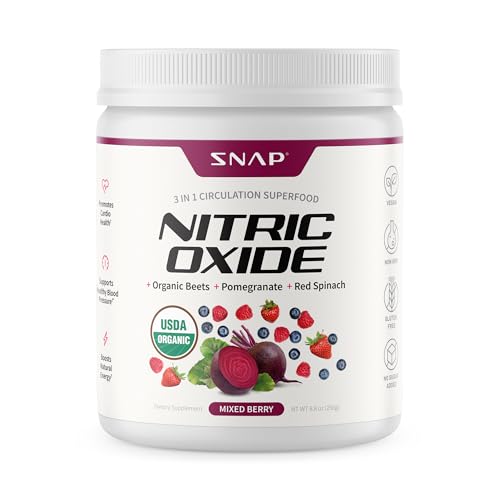
- Heart Health & Circulation Support: This plant-based nitric oxide supplement is formulated with organic beetroot to support healthy circulation and heart health, helping you maintain an active lifestyle.*
- Clean, Natural Energy Support: Our beetroot supplement helps support healthy energy metabolism—without added sugars or stimulants. Offers a natural, caffeine-free option to support healthy energy levels.
What about “hard” exercise?
Harder exercise can be helpful, but you don’t need it to start. If you’re new, build the habit first. In studies of people with hypertension, exercise interventions have been linked with improved endothelial function.[7] If you have known heart disease or symptoms, get clinician guidance before intense training.
Sleep: the underrated BP lever
Poor sleep can push BP higher and make cravings/stress worse the next day. You don’t need perfect sleep—just a repeatable routine.
- Set a consistent wake time (even on weekends).
- Get morning light within 30–60 minutes of waking (if possible).
- Cut caffeine 8 hours before bed (or earlier if sensitive).
- Keep the bedroom cool and dark.
Stress: focus on what you’ll actually do
Stress management doesn’t have to be spiritual or time-consuming. Pick one small practice and make it automatic.
| Practice | Time | When to do it | Why it helps adherence |
| 3 slow breaths | 30 seconds | Before BP measurement | Calms measurement anxiety |
| Short walk | 5–10 min | After meals | Pairs with habit you already have |
| Write 1 worry and 1 next step | 2 min | Before bed | Stops mental looping |
Food supports lifestyle
Lifestyle changes are easier when food is simple. If you want one food rule: add nitrate‑rich greens most days. Dietary nitrate has evidence for modest BP effects in some settings.[5]
What to track
Tracking is the difference between “I think it helped” and “I can see it helped.”
| Track | How often | Goal |
| BP trend | Daily or 4–5x/week | See the trend (not single spikes).[8] |
| Walking minutes | Weekly total | Consistency > intensity |
| Sleep quality | 1–5 rating | Spot patterns with BP |
| Caffeine/alcohol notes | As needed | Explain outlier days |
| Symptoms | As needed | Safety (dizziness, headaches) |
Common mistakes
- Doing too much at once → change one habit per week.
- Relying on motivation → schedule a repeating time.
- Not tracking BP consistently → trends require consistency.[8]
- Jumping to supplements first → food + movement first.[5] [7]
Frequently Asked Questions
- How long until lifestyle changes show up in BP? Some people see changes quickly, but confirm with a 2–4 week trend.[8]
- Do I need a gym? No. Walking and simple strength is enough to start.
- What if my BP spikes after exercise? Short-term spikes can happen. Look at overall trends and talk to your clinician if concerned.
- Should I add supplements too? Only after you’ve built a baseline and your clinician agrees.
Next Reads
- Nitric Oxide: The Complete Guide for Blood Pressure & Heart Health
- Nitric Oxide and Blood Pressure: What It Does and What to Track
- Nitric Oxide Foods: Nitrate‑Rich List + Easy Meal Ideas
- Nitric Oxide Supplements for Blood Pressure (Safety First)
- Lifestyle Habits That Support Nitric Oxide
- Mouthwash, Oral Bacteria, and Nitric Oxide
References
- [1] Carlström M, Montenegro MF. Nitric Oxide Signaling and Regulation in the Cardiovascular System: Recent Advances. Pharmacol Rev. 2024. https://pubmed.ncbi.nlm.nih.gov/38866562/
- [5] Norouzzadeh M, et al. Plasma nitrate, dietary nitrate, blood pressure, and vascular health biomarkers: systematic review and dose‑response meta‑analysis of RCTs. Nutr J. 2025. https://pubmed.ncbi.nlm.nih.gov/40128734/
- [7] Liang C, et al. Exercise interventions for the effect of endothelial function in hypertension patients: systematic review and meta‑analysis. 2024. (Open access via PMC) https://pmc.ncbi.nlm.nih.gov/articles/PMC11180684/
- [8] 2025 AHA/ACC/AANP/AAPA/ABC/ACCP/ACPM/AGS/AMA/… Guideline for the Prevention, Detection, Evaluation, and Management of High Blood Pressure in Adults. Hypertension. 2025. https://www.ahajournals.org/doi/10.1161/HYP.0000000000000249
Last updated: 2026-01-22