Contents
- 1 Medical disclaimer
- 2 Nitric Oxide Foods
- 3 Beginner explanation: why nitrate foods matter
- 4 Nitrate pathway in one sentence
- 5 The grocery list
- 6 How to eat nitrate foods without turning it into a job
- 7 Meal ideas
- 8 How fast can you notice anything?
- 9 A simple 14‑day food experiment
- 10 Important mouthwash note
- 11 Safety notes
- 12 Frequently Asked Questions
- 13 Next Reads
- 14 References
Medical disclaimer
This article about nitric oxide foods is for educational purposes only and is not medical advice. If you have high blood pressure, heart disease, kidney disease, are pregnant, or take prescription medications, talk with a qualified clinician before changing treatment or starting supplements.
Nitric Oxide Foods
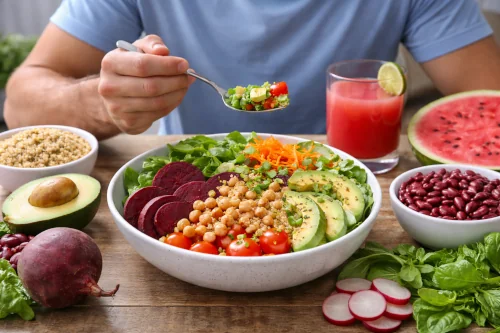
The most reliable “food-first” way to support nitric oxide (NO) is eating nitrate‑rich vegetables (think arugula, spinach, beetroot, and other leafy greens). Your body can convert nitrate → nitrite → NO, a pathway that has been studied for blood pressure and vascular function.[3] [4] Meta‑analyses suggest dietary nitrate can modestly lower blood pressure in some settings.[5] It’s supportive care—not a replacement for guideline‑based treatment.[8]
Beginner explanation: why nitrate foods matter
Nitric oxide is a tiny “relax” signal made by your blood vessel lining. When it’s available, arteries can open a bit more easily and blood flows with less resistance.[1]
There are two common ways people talk about boosting NO:
1) the enzyme pathway (your body makes NO from amino acids), and
2) the nitrate pathway (your body makes NO from nitrate found in certain vegetables).[3]
This article focuses on the nitrate pathway because it’s practical, food-based, and has a strong evidence trail compared with many supplement claims.[3] [4]
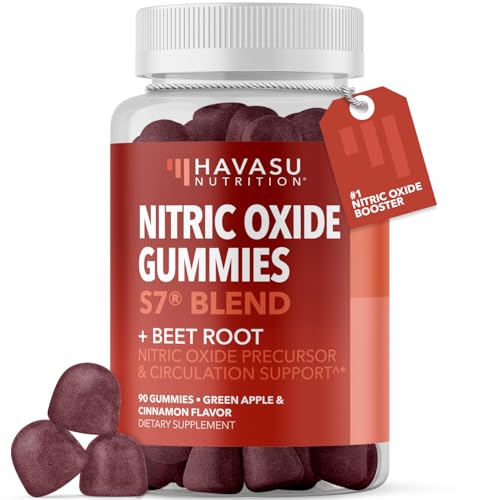
Nitric Oxide Booster - Formulated with l-arginine and beet root, our nitric oxide gummies support nitric oxide production, helping to enhance vitality and endurance for both men and women.
Nitrate pathway in one sentence
You eat nitrate (from vegetables) → helpful mouth bacteria convert some nitrate into nitrite → your body can use nitrite to support NO signaling, especially in certain conditions.[3]
The grocery list
You don’t need to memorize nitrate numbers. The pattern is simple: leafy greens + beets + a few “supporting players.”
Use this list as your shopping shortcut:
| Food group | Examples | Easy way to use | Beginner goal |
| Leafy greens (often highest) | Arugula, spinach, romaine, spring mix | Big salad, smoothie add-in, sauté | 1–2 cups most days |
| Beetroot | Fresh beets, roasted beets, beet juice | Roast + add to bowls; small juice shot | 2–4x/week |
| Other veggies | Celery, radish, bok choy | Snack + dip; stir-fry | Rotate weekly |
| Herbs/boosters | Parsley, cilantro | Add to salads/soups | “Sprinkle habit” |
How to eat nitrate foods without turning it into a job
- Pick 1 “default” salad: greens + olive oil + lemon + protein.
- Add greens to one cooked meal: toss spinach into eggs, soups, or pasta at the end.
- Use a “color rule”: at least 2 colors of plants per day.
- Keep it realistic: consistency beats perfection for BP trends.[8]
Meal ideas
| Meal | What to do | Why it works |
| Breakfast smoothie | Handful spinach, frozen berries and yogurt/water | Easy daily greens |
| Lunch salad bowl | Arugula, chicken/beans, olive oil and lemon | High nitrate greens and protein |
| Dinner add-on | Sauté spinach/greens as a side | Simple habit stacking |
| Beet side | Roasted beets in a container for 3–4 days | Convenient nitrate source |
How fast can you notice anything?
Some people see BP changes within days, but don’t trust a single reading. Look at a 2–4 week trend, measured consistently.[8]
A simple 14‑day food experiment
If your goal is blood pressure support, test one change at a time. Here’s the easiest experiment:
| Days | What you do | What you track |
| 1–7 | Keep diet stable, measure BP consistently | Baseline BP trend and notes |
| 8–21 | Add 1–2 servings/day of leafy greens + beet 2–3x/week | BP trend, servings and symptoms |
Important mouthwash note
The nitrate pathway relies partly on mouth bacteria. Frequent antibacterial mouthwash can reduce nitrate → nitrite conversion and has been studied for effects on BP.[9] [10] This does NOT mean “never use mouthwash,” but it does mean: if you’re trying nitrate foods for BP support, consider being thoughtful about frequent antibacterial mouthwash use (talk to your dentist/clinician if you have gum disease or special needs).
Safety notes
- If you’re on BP meds and your readings drop and you feel dizzy/lightheaded, pause the experiment and talk to your clinician.
- If you have kidney disease or complex heart history, discuss major dietary changes with your clinician.[12]
- Food-first is generally safer than stacking multiple vasodilating supplements.
Frequently Asked Questions
- Do I need beet juice? No. Beetroot is one option. Many leafy greens are nitrate-rich too.[3] [6]
- Can I cook the vegetables? Yes. Raw vs cooked can change some nutrients, but the bigger win is eating them consistently.
- Should I avoid nitrate because of cancer risk? In foods, nitrates come packaged with antioxidants and plant compounds; the concern is different from processed meats. If you’re worried, discuss with your clinician.
- What’s the simplest daily habit? One big serving of leafy greens most days + a BP log for 2–4 weeks.[8]
- What if I don’t like salads? Use cooked greens (sautéed spinach) or blend greens into a smoothie.
Next Reads
- Nitric Oxide: The Complete Guide for Blood Pressure & Heart Health
- Nitric Oxide and Blood Pressure: What It Does and What to Track
- Nitric Oxide Foods: Nitrate‑Rich List + Easy Meal Ideas
- Nitric Oxide Supplements for Blood Pressure (Safety First)
- Lifestyle Habits That Support Nitric Oxide
- Mouthwash, Oral Bacteria, and Nitric Oxide
References
- [1] Carlström M, Montenegro MF. Nitric Oxide Signaling and Regulation in the Cardiovascular System: Recent Advances. Pharmacol Rev. 2024. https://pubmed.ncbi.nlm.nih.gov/38866562/
- [3] Lidder S, Webb AJ. Vascular effects of dietary nitrate via the nitrate‑nitrite‑nitric oxide pathway. Br J Clin Pharmacol. 2013. https://pmc.ncbi.nlm.nih.gov/articles/PMC3575935/
- [4] d’El‑Rei J, et al. Beneficial Effects of Dietary Nitrate on Endothelial Function and Blood Pressure Levels. Curr Hypertens Rep. 2016. https://pmc.ncbi.nlm.nih.gov/articles/PMC4819099/
- [5] Norouzzadeh M, et al. Plasma nitrate, dietary nitrate, blood pressure, and vascular health biomarkers: systematic review and dose‑response meta‑analysis of RCTs. Nutr J. 2025. https://pubmed.ncbi.nlm.nih.gov/40128734/
- [6] Olas B. The Cardioprotective Role of Nitrate‑Rich Vegetables. Nutrients. 2024. (Open access via PMC) https://pmc.ncbi.nlm.nih.gov/articles/PMC10931520/
- [8] 2025 AHA/ACC/AANP/AAPA/ABC/ACCP/ACPM/AGS/AMA/… Guideline for the Prevention, Detection, Evaluation, and Management of High Blood Pressure in Adults. Hypertension. 2025. https://www.ahajournals.org/doi/10.1161/HYP.0000000000000249
- [9] Bondonno CP, et al. Antibacterial mouthwash blunts oral nitrate reduction and increases blood pressure in treated hypertensive adults. 2015. https://pubmed.ncbi.nlm.nih.gov/25359409/
- [10] Joshipura K, et al. Over‑the‑counter mouthwash use, nitric oxide and hypertension risk. Blood Press. 2020. (Open access via PMC) https://pmc.ncbi.nlm.nih.gov/articles/PMC7125030/
- [12] Lee J, et al. Nitric oxide in the kidney: its physiological role and pathophysiological implications. 2008. (Open access via PMC) https://pmc.ncbi.nlm.nih.gov/articles/PMC3894485/
Last updated: 2026-01-21