
The health benefits of Celtic sea salt are modest: it can add a pleasant mineral flavor and crisp texture to food, but it has not been shown to provide special improvements in hydration, digestion, blood pressure, sleep, or “detoxification.” Celtic sea salt is still salt. Like ordinary table salt, it supplies sodium chloride, and the sodium adds up quickly if you use too much. [Mayo Clinic, 2023]
That does not make it a bad ingredient. A small pinch can make vegetables, soups, eggs, and homemade meals taste better. The useful question is not whether Celtic sea salt is a miracle product. It is whether the flavor and texture help you cook satisfying food while staying within a sensible sodium limit.
What Celtic sea salt is
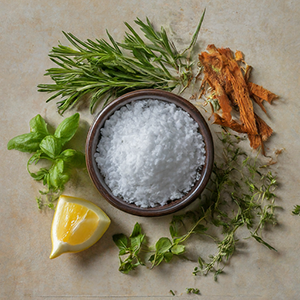
Celtic sea salt is a minimally processed sea salt, often sold as grey salt or sel gris. It is traditionally harvested from coastal salt ponds. Its moisture, grain size, and trace minerals can affect its color, texture, and taste.
Those trace minerals are real, but they do not turn sea salt into a meaningful source of magnesium, potassium, calcium, or iron. Mayo Clinic notes that sea salt and table salt have the same basic nutritional value and comparable amounts of sodium by weight. The practical difference is mostly culinary. [Mayo Clinic, 2023]
What are the health benefits of Celtic sea salt?
Celtic sea salt is often promoted as an electrolyte supplement, a hydration aid, a digestive tonic, or a blood-pressure-friendly alternative to table salt. Good human evidence does not support those broad claims. Its clearest benefit is simpler: it can help food taste good, which may make home cooking more appealing.
| Claim | What the evidence supports | Practical takeaway |
| It is a healthier replacement for table salt | Sea salt and table salt have comparable sodium by weight. Sea salt may retain trace minerals, but the amounts are not a reliable way to meet mineral needs. | Choose it for taste and texture, not as a mineral supplement. |
| It improves everyday hydration | Most people can meet routine hydration needs with water and regular meals. Electrolyte drinks may be useful after substantial fluid losses or prolonged sweating, but Celtic sea salt has no proven special advantage. | Do not treat salted water as a daily wellness requirement. |
| It lowers blood pressure | Celtic sea salt still contains sodium. Excess sodium can increase blood pressure, and reducing sodium can improve heart health. | Use less salt overall if you have high blood pressure or have been advised to limit sodium. |
| It supports gut health or nutrient absorption | There is no good clinical evidence that Celtic sea salt improves the gut microbiome or increases nutrient absorption in a meaningful way. | Do not use it as a digestive supplement. |
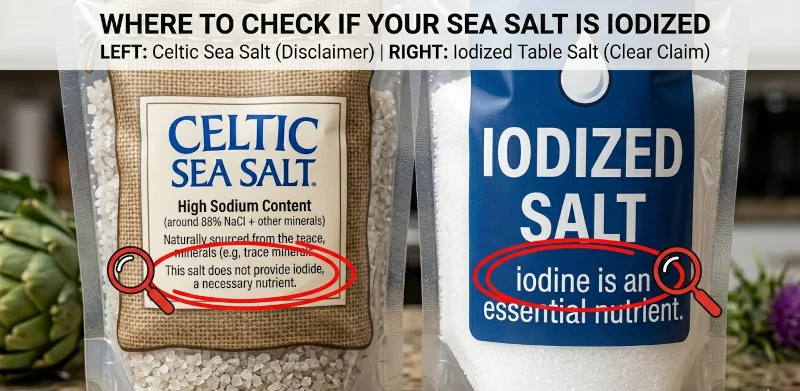
| It provides iodine | Most specialty sea salts are not iodized unless the label says otherwise. | Check the package. Do not assume grey sea salt supplies iodine. |
Celtic sea salt vs. table salt
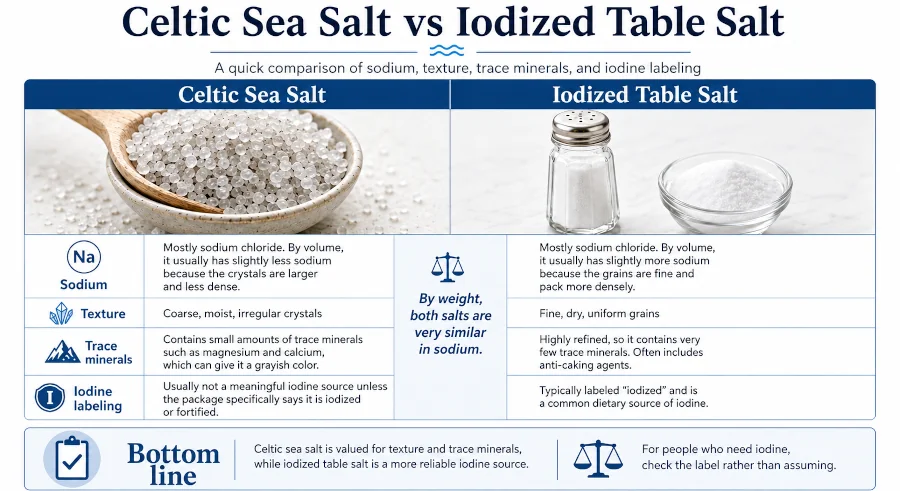
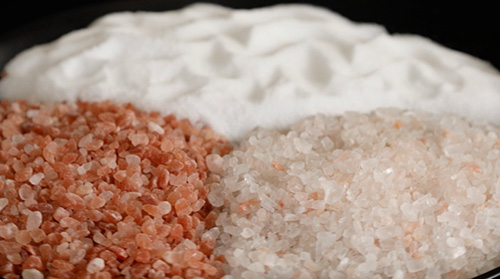
The differences matter most in the kitchen and on the label. Coarse Celtic sea salt can taste different and may feel less salty by the teaspoon because large, irregular crystals pack differently than fine table salt. By weight, though, sodium remains comparable. Measuring by weight or checking the Nutrition Facts label is more reliable than assuming a coarse salt is automatically lower in sodium. [Mayo Clinic, 2023]
| Feature | Celtic sea salt | Iodized table salt |
| Main ingredient | Sodium chloride | Sodium chloride |
| Sodium by weight | Comparable to table salt | Comparable to sea salt |
| Texture | Often moist and coarse | Usually dry and fine |
| Trace minerals | May contain small amounts that affect color and flavor | Usually fewer trace minerals after processing |
| Iodine | Usually not iodized unless the label says so | Often fortified with iodine |
| Best reason to choose it | Flavor and finishing texture | Predictable measuring and an easy source of iodine when iodized |
How much Celtic sea salt can you use?
For adults and teenagers, U.S. federal guidance recommends less than 2,300 milligrams of sodium per day. The American Heart Association also recommends no more than 2,300 milligrams a day and says an ideal limit of no more than 1,500 milligrams a day fits most adults, especially people with high blood pressure. [CDC, 2026] [AHA, 2025]
One teaspoon of table salt contains about 2,400 milligrams of sodium, according to the CDC. Crystal size changes how much salt fits in a spoon, so use the sodium number on your product label when you can. [CDC, 2026]
The FDA uses 2,300 milligrams as the Daily Value for sodium. On a Nutrition Facts label, 5% Daily Value or less per serving is considered low, while 20% or more is considered high. [FDA, 2024]
Salt added at the table is only part of the picture. More than 70% of sodium in the typical U.S. diet comes from packaged, prepared, and restaurant foods. A small finishing pinch on roasted vegetables may fit your plan better than a large serving of a heavily salted ready-made meal. [AHA, 2025]
Is Celtic sea salt in water a good idea?
Adding Celtic sea salt to a glass of water is popular on social media, but most people do not need salted water for routine hydration. Water and ordinary meals generally cover day-to-day needs. Adding salt also increases your sodium intake, which may work against a sodium-reduction plan.
There are situations where fluids with electrolytes can be useful. Mayo Clinic notes that adults with mild to moderate dehydration caused by diarrhea, vomiting, or fever may improve with more fluids, while people exercising outdoors in hot or humid weather may benefit from water or a sports drink containing electrolytes and carbohydrates. Severe dehydration is a medical emergency. [Mayo Clinic, 2025]
A casual pinch of salt in water is not a substitute for a properly formulated oral rehydration solution or medical care. Seek help promptly if you cannot keep fluids down, feel confused, faint, have very little urine, or have signs of severe dehydration.
Who should limit or avoid Celtic sea salt?
Celtic sea salt is not a medication, so it does not have a standard dose or a typical drug-style interaction list. The concern is its sodium content. Your clinician may give you a personal sodium target based on your health history, blood pressure, kidney function, and medications.
High blood pressure, heart disease, and fluid retention
Too much sodium can raise blood pressure and increase the risk of heart disease and stroke. If you are working on blood pressure, treat Celtic sea salt the same way you would treat any other salt: use it sparingly and look for the bigger sources of sodium in packaged food, sauces, deli meats, restaurant meals, and snacks. [CDC, 2026]
Diet quality matters too. Pair a lower-sodium plan with foods that naturally fit a heart-supportive eating pattern. These related guides on foods that lower blood pressure and home blood pressure monitoring can help you turn the advice into a routine.
Chronic kidney disease
People with chronic kidney disease may need to control sodium to reduce fluid buildup, swelling, blood-pressure problems, and strain on the heart. The National Kidney Foundation also cautions that potassium needs vary with kidney function and medications. Do not switch to a potassium-heavy salt substitute without checking with your healthcare team. [National Kidney Foundation, n.d.]
Pregnancy, breastfeeding, and iodine
Most specialty salts, including sea salt, are not iodized. The NIH Office of Dietary Supplements advises checking the label for the words “iodized” or “iodide.” Iodine matters during pregnancy, and people who are pregnant need about 50% more iodine than other adults. If Celtic sea salt replaces iodized salt in your kitchen, make sure you have another reliable iodine source and discuss supplements with your clinician. [NIH ODS, 2024]
How to use Celtic sea salt in cooking
Celtic sea salt works best as a flavoring ingredient, not a wellness ritual. Its coarse texture makes it useful as a finishing salt, where a small amount can be noticeable. Try crushing a few grains between your fingers over roasted vegetables, eggs, beans, fish, or a homemade salad.
Taste food before adding more. Build flavor with lemon, vinegar, garlic, herbs, toasted spices, and vegetables. If you are looking for food-first ideas, these nitrate-rich vegetables are useful additions to a varied diet.
If your household depends on salt as a source of iodine, keep iodized salt available or choose a sea salt that is clearly labeled iodized. The World Health Organization recommends that salt consumed in the home be iodized while also emphasizing lower overall salt intake. [WHO, 2026]
When to talk with a healthcare professional
Ask for individualized advice before increasing salt intake or adding salt to water if you have high blood pressure, chronic kidney disease, heart failure, swelling, or a prescribed sodium restriction. A clinician or registered dietitian can help you set a sodium target that fits your condition and the foods you actually eat.
Get urgent medical care for possible severe dehydration, including confusion, fainting, very little urine, a rapid heartbeat, or an inability to keep fluids down. Salted water is not an emergency treatment.
| Health Disclaimer: This page is for general education and is not a substitute for medical advice, diagnosis, or treatment. Salt needs vary. Talk with a qualified healthcare professional before changing your sodium intake if you have high blood pressure, kidney disease, heart disease, fluid retention, pregnancy-related concerns, or a prescribed diet. Seek urgent care for signs of severe dehydration or any medical emergency. |
Frequently Asked Questions
Is Celtic sea salt the healthiest salt?
No single salt is the healthiest choice for everyone. Celtic sea salt can be a good culinary option because of its flavor and texture. It is not meaningfully lower in sodium by weight than table salt, and its trace minerals do not make it a substitute for nutrient-rich foods. If iodine is a concern, check whether the package says iodized. [Mayo Clinic, 2023] [NIH ODS, 2024]
Does Celtic sea salt contain iodine?
Usually not. Many specialty sea salts are not iodized. Read the label and look for “iodized” or “iodide” if you want salt that contributes iodine. [NIH ODS, 2024]
Does Celtic sea salt in water improve hydration?
There is no good evidence that Celtic sea salt provides a special hydration benefit for everyday use. Water and regular meals are enough for most people. Electrolyte-containing drinks may be helpful after substantial fluid losses or prolonged sweating, but severe dehydration needs medical care. [Mayo Clinic, 2025]
Can Celtic sea salt lower blood pressure?
No. Celtic sea salt contains sodium, and excess sodium can raise blood pressure. People with high blood pressure should follow the sodium target recommended by their clinician. [CDC, 2026] [AHA, 2025]
How much Celtic sea salt should you use each day?
There is no Celtic-sea-salt-specific daily dose. Count its sodium as part of your full day. U.S. guidance recommends less than 2,300 milligrams of sodium daily for adults and teenagers, while the American Heart Association says no more than 1,500 milligrams is an ideal limit for most adults. [CDC, 2026] [AHA, 2025]
References
- Centers for Disease Control and Prevention. “About Sodium and Health.” Updated March 31, 2026. → View source
- American Heart Association. “How Much Sodium Should I Eat Per Day?” Last reviewed July 15, 2025. → View source
- Mayo Clinic. “Sea Salt vs. Table Salt: What’s the Difference?” Updated September 15, 2023. → View source
- National Institutes of Health, Office of Dietary Supplements. “Iodine Fact Sheet for Consumers.” → View source
- Mayo Clinic. “Dehydration: Diagnosis and Treatment.” → View source
- U.S. Food and Drug Administration. “Sodium in Your Diet.” → View source
- National Kidney Foundation. “Nutrition and Kidney Disease, Stages 1–5 (Not on Dialysis).” → View source
- World Health Organization. “Sodium Reduction.” Updated May 11, 2026. → View source
