
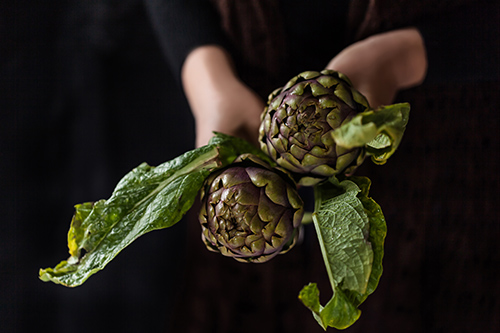
Most claims about artichoke health benefits trace back to two things the plant actually does in humans: it can ease the bloating and discomfort of indigestion, and it can modestly lower cholesterol. The rest — liver detox claims, blood sugar effects, weight loss — is a mix of plausible mechanism and early evidence that has not yet been confirmed in large trials. This page sorts the strong findings from the weak ones so you can decide whether globe artichoke (Cynara scolymus) belongs in your kitchen, your supplement cabinet, or neither.
Artichoke has been used medicinally in the Mediterranean for centuries, and standardized leaf extracts are sold across Europe for digestive complaints. Published randomized trials are small and mostly short-term, but several were placebo-controlled and produced consistent results. [Holtmann et al., 2003] [Sahebkar et al., 2018]
At a Glance: What Artichoke Has Actually Been Studied For
| Use | What human studies suggest | Evidence strength |
| Functional dyspepsia (chronic indigestion) | Reduces fullness, bloating, nausea, and early satiety in 4–6 week trials | Moderate (small RCTs) |
| High cholesterol / triglycerides | Modest reductions in total cholesterol, LDL, and triglycerides over 6–12 weeks | Moderate (meta-analyses) |
| Non-alcoholic fatty liver disease (NAFLD) | Improvements in liver enzymes (ALT, AST) in a few small trials | Early / limited |
| Blood sugar control | Small trials; inulin content may slow glucose absorption | Limited |
| Liver “detox” | Increases bile flow; no human evidence that this “detoxifies” the liver in any meaningful sense | Mechanistic only |
| Weight loss, blood pressure, cancer prevention | Mostly cell and animal data; do not rely on artichoke for these | Insufficient |
The rest of this guide explains where these conclusions come from, how much artichoke is typically used in studies, and who should not take artichoke supplements without speaking to a clinician first.
What Is Artichoke?
Globe artichoke is a thistle in the Compositae (Asteraceae) family, native to the Mediterranean basin and now cultivated worldwide. The plant produces a tall, branched stem with grey-green segmented leaves and large violet flower heads. Two parts matter in health discussions:
- The flower head (what you eat) — the fleshy base of each leaf-like bract and the central “heart.” Whole boiled or steamed artichoke is a high-fibre, low-calorie vegetable.
- The leaves (what is extracted for supplements) — bitter, not eaten directly, but rich in the compounds responsible for most studied effects.
A medium cooked artichoke (about 120 g) supplies roughly 60 kcal, 4 g fibre, 4 g protein, and useful amounts of folate, vitamin K, vitamin C, magnesium, and potassium. [USDA FoodData Central, 2019] Most of the calories come from inulin, a prebiotic fibre that ferments in the colon and tends to be better tolerated than glucose in people with diabetes — though it can also cause gas and bloating in sensitive guts.
Active Compounds: Where the Effects Come From
Artichoke leaves contain several biologically active polyphenols. The three that matter most:
| Compound | What it does | Where it is |
| Cynarin (1,5-dicaffeoylquinic acid) | Increases bile production; thought to be central to the digestive and lipid effects | Mainly the leaves |
| Chlorogenic acid | Antioxidant; studied for slowing carbohydrate absorption and reducing oxidative stress | Leaves, heart, stem |
| Luteolin (and luteolin-7-glucoside, sometimes called cynaroside) | Flavonoid with anti-inflammatory activity; may reduce cholesterol synthesis in liver cells (lab studies) | Leaves |
| Sesquiterpene lactones (e.g. cynaropicrin) | Bitter principles; partly responsible for choleretic effect | Leaves |
| Inulin (fibre) | Prebiotic; ferments to short-chain fatty acids; very low impact on blood glucose | Heart and stem |
Because the most-studied compounds concentrate in the leaves, almost all clinical research uses standardized leaf extract — not whole artichoke. Eating the vegetable gives you fibre, micronutrients, and small amounts of the active compounds, but it is not a direct substitute for the doses tested in trials. [Bioactive Compounds review, 2023]
Evidence-Based Artichoke Health Benefits
1. Indigestion and Functional Dyspepsia
Evidence: moderate. This is the most consistent finding for artichoke in humans. In a 2003 multicentre randomized trial, 247 adults with functional dyspepsia took either 320 mg of artichoke leaf extract three times daily or placebo for six weeks. Overall symptom scores fell significantly more in the extract group, and quality-of-life scores on the Nepean Dyspepsia Index improved alongside them. [Holtmann et al., 2003]
A later double-blind trial combined ginger and artichoke extracts in 126 adults with functional dyspepsia and reported faster relief of nausea, fullness, and bloating versus placebo over four weeks. [Giacosa et al., 2015] The European Medicines Agency’s herbal monograph recognizes artichoke leaf for the symptomatic relief of dyspepsia based on this type of evidence, while noting that the data is limited.
Practical translation: if your indigestion is non-ulcer, recurring, and worse with fatty meals, a four- to six-week trial of standardized artichoke leaf extract is reasonable to discuss with your doctor. It is not appropriate for severe symptoms, weight loss, vomiting blood, or new heartburn over age 50 — those need diagnostic workup, not herbs.
2. Cholesterol and Triglycerides
Evidence: moderate. A 2018 meta-analysis pooled nine randomized trials in 702 adults and reported that artichoke leaf extract reduced total cholesterol by roughly 17.6 mg/dL, LDL cholesterol by 14.9 mg/dL, and triglycerides by 9.2 mg/dL on average. [Sahebkar et al., 2018] A narrative review the same year, also led by Sahebkar, put the typical effective dose at 2–3 g of extract per day across 6–12 weeks. [Sahebkar et al., 2018b]
An 8-week trial in 92 overweight adults with mild high cholesterol also found that 500 mg of leaf extract twice daily raised HDL while lowering LDL, total cholesterol, and the total-to-HDL ratio. [Rondanelli et al., 2013]
These reductions are real but modest — roughly half to one third of what a moderate statin dose typically achieves. If your cholesterol numbers sit just outside the target range and your cardiovascular risk is otherwise low, artichoke may be a reasonable addition to diet and exercise. It is not a substitute for statins or other prescribed lipid therapy if your risk is elevated.
3. Non-Alcoholic Fatty Liver Disease (NAFLD)
Evidence: early-stage. A handful of small randomized trials in adults with ultrasound-confirmed NAFLD have reported reductions in liver enzymes (ALT, AST) and improvements in fatty infiltration after 8–12 weeks of artichoke leaf extract. These trials are small (often 50–100 participants), short, and conducted in single centres. Larger, longer studies are needed before artichoke can be considered standard care for fatty liver. [Pamplona-Roger review, 2023]
For now, artichoke is an adjunct, not a treatment. The single most evidence-supported intervention for NAFLD remains weight loss of 5–10% of body weight, combined with reduced added sugar and increased physical activity.
4. Blood Sugar and Type 2 Diabetes
Evidence: limited. The flower head is genuinely a diabetes-friendly food: it is low in net carbohydrate, high in fibre, and its inulin content has a negligible effect on blood glucose because it is fermented rather than absorbed as sugar. Whether concentrated artichoke leaf extract improves glycaemic control is less clear. A few small studies have reported modest reductions in fasting glucose, often in studies combining artichoke with other ingredients, which makes the artichoke contribution hard to isolate.
In people with diagnosed diabetes, artichoke should be considered a complementary food choice, not a glucose-lowering treatment. Insulin and oral hypoglycaemic medications must be adjusted by your diabetes care team, not by adding supplements.
5. Bile Flow and “Liver Detox” Claims
Evidence: mechanistic. Artichoke leaf is genuinely choleretic — it increases bile flow from the liver. This was shown in a 1994 human study using duodenal intubation after a single dose of extract. Increased bile flow is the plausible mechanism behind the digestive and lipid effects above.
It is not the same thing as “detoxing” the liver. The liver detoxifies endogenous and external chemicals through enzyme systems that are not measurably enhanced by artichoke. Claims that artichoke “cleanses” the liver in any general sense are marketing language, not a clinical finding. If you have hepatitis, cirrhosis, or any chronic liver condition, your care should come from a hepatologist, not from supplements.
Other foods that genuinely support liver health — like cruciferous vegetables, coffee, and oily fish — have more substantial human data behind them.
Forms of Artichoke and Typical Doses
The form matters. Eating an artichoke and taking a leaf extract are not the same intervention.
| Form | Typical use | Notes |
| Whole cooked artichoke | 1 medium artichoke = ~4 g fibre, low calorie. Steam or boil whole until a bract pulls away easily. | Best choice for everyday digestive and metabolic benefits. |
| Standardized leaf extract (capsule) | 300–640 mg, 2–3 times daily, taken with meals. Trials commonly use 1,500–2,700 mg/day total. | This is what most clinical trials use. Look for products standardized to a defined caffeoylquinic acid or cynarin content. |
| Leaf infusion / tea | 1–2 g dried leaf per cup, up to three cups daily before meals | Provides less reliable dosing than a standardized extract; bitter taste. |
| Fresh juice / liquid extract | Follow product label | Concentration varies widely between products. |
Doses above come from clinical trials and from established herbal monographs, not from population recommendations. There is no government-set “recommended intake” for artichoke leaf extract. [EMA Cynarae folium monograph]
Safety, Side Effects, and Drug Interactions
Common side effects
Artichoke leaf extract is generally well tolerated in studies lasting up to 12 weeks. The side effects reported most often are mild and gastrointestinal:
- Flatulence and bloating (especially in the first 1–2 weeks; mostly from inulin)
- Hunger or mild stomach cramping
- Loose stools
- Allergic reactions — itching, rash, or, rarely, anaphylaxis — in people sensitive to plants in the Asteraceae family (daisy, ragweed, marigold, chrysanthemum)
Drug interactions
Routine resources list no major or moderate drug interactions for artichoke leaf, but the data is genuinely thin. [Drugs.com NPP] Two cautions are worth noting:
- CYP450 metabolism. Polyphenols and flavonoids from artichoke have inhibited CYP3A4 and CYP2C9 enzymes in laboratory work. A 2017 case report described severe muscle, blood, and liver toxicity in an elderly polymedicated woman that her care team attributed in part to interaction between artichoke infusion and colchicine plus other CYP3A4 substrates. [Romero-Martínez et al., 2017] One case is not proof of a class effect, but it is a reason to be cautious if you take colchicine, certain statins, calcium channel blockers, immunosuppressants, or other narrow-therapeutic-index drugs metabolized by CYP3A4.
- Theoretical bile interactions. Because artichoke increases bile flow, it could in theory affect the absorption of medicines that depend on bile (some lipid-soluble drugs). Take supplements at a different time of day from prescription medication and discuss the timing with your pharmacist.
The NCCIH advisory on herb–drug interactions applies here: tell every prescriber and pharmacist about every supplement you take.
Who should avoid artichoke supplements
- People with bile duct obstruction or gallstones — increased bile flow can worsen symptoms or trigger a stone-related episode. Do not use without medical supervision.
- People allergic to daisies, ragweed, marigold, or chrysanthemums — cross-reactivity is common in the Asteraceae family.
- Pregnant or breastfeeding women — there is not enough safety data on concentrated extracts to recommend them. Eating whole artichoke as a food is fine.
- Children — concentrated leaf extracts have not been studied in paediatric populations and are not appropriate.
- People taking colchicine, certain statins, or other CYP3A4-sensitive medicines — discuss with a clinician first.
When to Talk to a Healthcare Professional
Artichoke is a food and a mild herbal remedy. It does not replace medical evaluation. See a clinician — and do not rely on artichoke — if any of the following apply:
- Indigestion that has lasted more than a few weeks, woken you at night, or come with unintentional weight loss
- Vomiting blood, black stools, or trouble swallowing
- New heartburn that starts after age 50
- Yellowing of skin or eyes, dark urine, or pale stools (possible liver or bile-duct problem)
- Right-upper-abdominal pain that comes in waves after meals (possible gallstones)
- Cholesterol or fatty-liver findings that your doctor has flagged as needing treatment, not lifestyle alone
- A new herbal supplement plan if you take prescription medications, especially blood thinners, statins, immunosuppressants, or diabetes drugs
Diet and lifestyle remain the foundation. Other foods that may help liver health, onions and other quercetin-rich foods, and the artichoke as a vegetable are all useful as part of a broader pattern, not as standalone treatments.
Realistic Expectations
If you decide to try artichoke leaf extract for indigestion or cholesterol, set a clear endpoint. Most trials have run 6–12 weeks. Decide ahead of time what you would consider a useful result (for example: fewer indigestion episodes per week, or a 10–15 mg/dL drop in LDL on a follow-up lipid panel) and re-check at the end of that window. If nothing has changed, stop. Stacking supplements indefinitely is how side effects and interactions creep in.
Two practical points worth remembering. First, the strongest data is for standardized leaf extract — not for vegetable consumption, juice, or unstandardized tinctures. Second, the size of the effect across studies is real but modest. Artichoke is unlikely to transform your numbers; it can nudge them, sometimes meaningfully, especially alongside diet changes and exercise.
| IMPORTANT — PLEASE READ This article is for general educational and informational purposes only. It is not a substitute for professional medical advice, diagnosis, or treatment. Artichoke leaf extract can interact with medication, can worsen gallbladder symptoms, and should not be used to self-treat chronic indigestion, high cholesterol, liver disease, or diabetes without medical supervision. Always speak to a qualified healthcare professional before starting a supplement, especially if you are pregnant or breastfeeding, take prescription medication, or have any pre-existing condition. Stop and seek care if you experience an allergic reaction, jaundice, severe abdominal pain, or any new and unexplained symptom. |
Frequently Asked Questions
Is eating artichokes as good as taking artichoke leaf extract?
For nutritional fibre, folate, and general diet quality, yes. For the cholesterol and digestive effects shown in clinical trials, no. The studied compounds are concentrated in the leaves, not the heart or bracts. Eating artichoke is healthy; it is not the same intervention as taking 1,500–2,700 mg of standardized extract daily.
How long until artichoke supplements work?
Most randomized trials report measurable changes by 4–6 weeks for indigestion and 6–12 weeks for cholesterol. If you have seen no benefit after 12 weeks of consistent use at a trial-comparable dose, it is unlikely to start working — stop and reassess.
Can artichoke help with weight loss?
Whole artichoke is filling and low in calories, which can support a calorie-controlled diet. But artichoke leaf extract is not a weight-loss agent. Products marketed for weight loss that include artichoke usually rely on other ingredients (caffeine, green tea, bitter orange) or simply on calorie reduction.
Is artichoke safe if I have gallstones?
Possibly not. Artichoke increases bile flow, which can trigger pain or a gallbladder attack if a stone is partly blocking a bile duct. Do not take artichoke leaf extract for any indication if you have known gallstones unless your doctor specifically advises it. Eating cooked artichoke as part of a meal is unlikely to cause problems for most people, but discuss it with your clinician if you have had a stone-related episode.
Does artichoke detoxify the liver?
Artichoke increases bile output, which is a normal liver function — not a “detox.” There is no good evidence that artichoke clears toxins, repairs liver damage, or substitutes for medical treatment of any liver disease. Small trials in fatty liver disease have shown improvements in liver enzymes, which is promising but not the same thing as the broad detoxification claims you see on supplement bottles.
References
- Holtmann G, Adam B, Haag S, et al. Efficacy of artichoke leaf extract in the treatment of patients with functional dyspepsia: a six-week placebo-controlled, double-blind, multicentre trial. Alimentary Pharmacology & Therapeutics, 2003. → View source
- Sahebkar A, Pirro M, Banach M, et al. Lipid-lowering activity of artichoke extracts: a systematic review and meta-analysis. Critical Reviews in Food Science and Nutrition, 2018. → View source
- Sahebkar A, Sahraian MA, et al. The effect of artichoke on lipid profile: a review of possible mechanisms of action. Pharmacological Research, 2018. → View source
- Rondanelli M, Giacosa A, Opizzi A, et al. Beneficial effects of artichoke leaf extract supplementation on increasing HDL-cholesterol in subjects with primary mild hypercholesterolaemia: a double-blind, randomized, placebo-controlled trial. International Journal of Food Sciences and Nutrition, 2013. → View source
- Giacosa A, Guido D, Grassi M, et al. The effect of ginger and artichoke extract supplementation on functional dyspepsia: a randomised, double-blind, and placebo-controlled clinical trial. Evidence-Based Complementary and Alternative Medicine, 2015. → View source
- European Medicines Agency, Committee on Herbal Medicinal Products. Cynarae folium: European Union herbal monograph. EMA/HMPC, last updated 2018. → View source
- National Center for Complementary and Integrative Health. Herb-drug interactions: information for health professionals. NCCIH, ongoing. → View source
- U.S. Department of Agriculture. Artichokes, (globe or french), cooked, boiled, drained, without salt — FoodData Central. USDA Agricultural Research Service. → View source
- Wider B, Pittler MH, Thompson Coon J, Ernst E. Artichoke leaf extract for treating hypercholesterolaemia. Drugs.com Natural Products database, ongoing. → View source
- Salem MB, Affes H, Ksouda K, et al. Pharmacological studies of artichoke leaf extract and their health benefits — review. Antioxidants (MDPI), 2023. → View source
- Salata C, Ferreira-Pêgo C. Bioactive compounds from artichoke and application potential. Acta Médica Portuguesa, 2023. → View source
- Romero-Martínez BS, Yáñez-Polanco JJ, Yáñez-Sosa AL. Case report: severe hematological, muscle and liver toxicity caused by drugs and artichoke infusion interaction in an elderly polymedicated patient. Current Drug Safety, 2017. → View source
- Examine.com editorial team. Artichoke extract: benefits, dosage, and side effects. Examine.com, updated 2025. → View source
