
Lentils earn their reputation honestly. One cup of cooked lentils gives you about 18 grams of protein, 16 grams of fiber, and roughly 90% of a day’s folate, with less than a gram of fat [UH Nutrition Facts]. The best-supported health benefits of lentils are practical ones: they fill common nutrient gaps, they lower LDL cholesterol a little, and they are one of the gentler carbohydrate foods for blood sugar. They are not a cure for anemia, diabetes, or anything else, and a few of the most repeated claims about them don’t hold up.
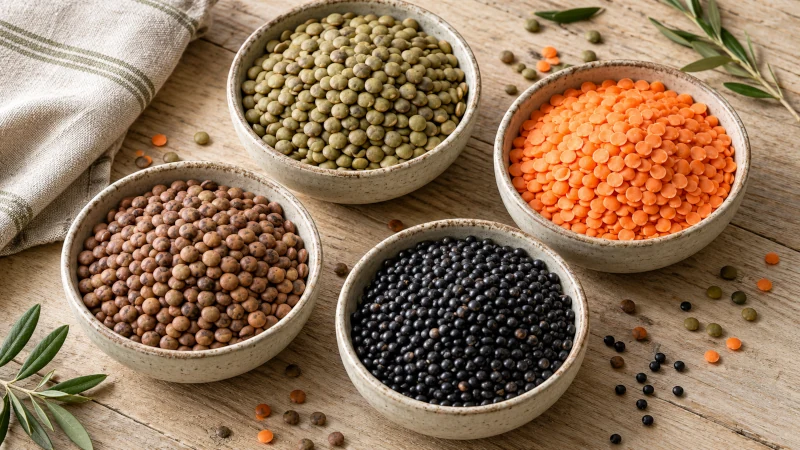
Here is what lentils do well, how strong the evidence is for each benefit, and who should be a bit careful with them.
Lentil nutrition at a glance
These values are for one cup of lentils, boiled without salt [UH Nutrition Facts]. Percent Daily Values are shown only where we checked the Daily Value against NIH sources.
| Nutrient (1 cup cooked) | Amount | Notes |
| Calories | 230 | |
| Protein | 17.9 g | |
| Carbohydrate | 39.9 g | Count these if you manage diabetes with insulin or carb counting |
| Fiber | 15.6 g | Both soluble and insoluble fiber |
| Folate | 358 mcg | About 90% DV (DV 400 mcg) [NIH ODS, 2018] |
| Iron | 6.6 mg | About 37% DV (DV 18 mg); plant (nonheme) iron [NIH ODS, 2025] |
| Potassium | 731 mg | Relevant if you have kidney disease |
| Magnesium | 71 mg | |
| Zinc | 2.5 mg | |
| Manganese / Copper | 1.0 mg / 0.5 mg | |
| Thiamin (B1) / Vitamin B6 | 0.33 mg / 0.35 mg | |
| Fat | 0.75 g | Very low, but not zero |
| Calcium / Vitamin C | 38 mg / 3 mg | Low; pair lentils with foods that supply these |
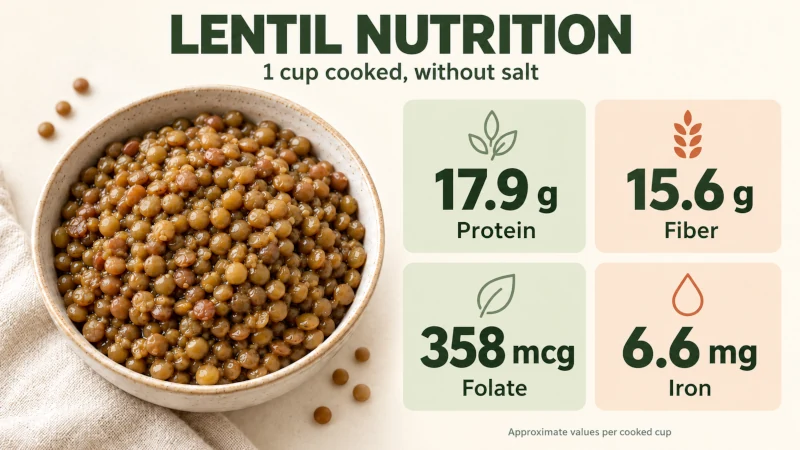
Source: lentils, mature seeds, cooked, boiled, without salt, 1 cup [UH Nutrition Facts]. Values rounded. Fiber note: [Harvard Nutrition Source, 2025].
Two things stand out. Folate and fiber are unusually high for a single food, and the protein is substantial for something this cheap. What lentils lack is just as useful to know: they bring little calcium or vitamin C, which is why they work best as part of a meal rather than the whole of it.
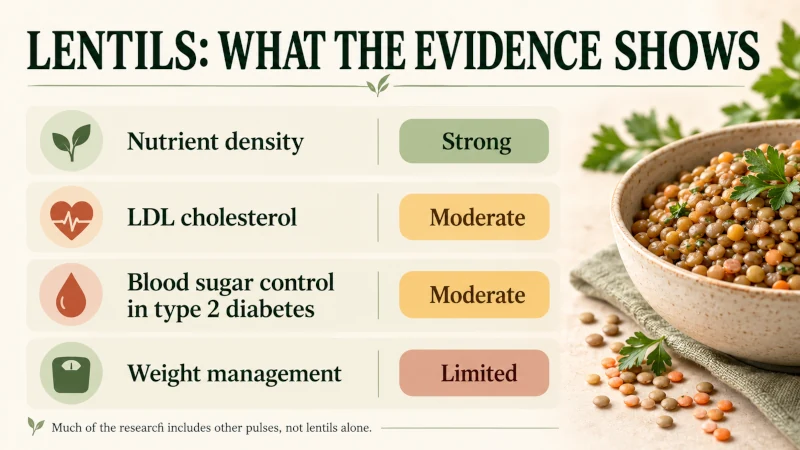
Health benefits of lentils, graded by evidence
Most lentil research pools lentils with beans, chickpeas and dried peas under the label “pulses” or “legumes.” Lentils alone are rarely studied, so the evidence below is for the food group lentils belong to.
| Benefit | Strength of evidence | What the research found |
| Nutrient density | Strong | Composition data: high folate, fiber, iron and protein per serving |
| Lower LDL cholesterol | Moderate | Meta-analysis of 26 trials: a small, consistent LDL drop [CMAJ meta-analysis, 2014] |
| Blood sugar control in type 2 diabetes | Moderate | Randomized trials, including a 3-month legume trial [Jenkins, 2012] |
| Preventing type 2 diabetes | Mixed | Observational studies disagree [Harvard Nutrition Source, 2024] |
| Blood pressure | Limited to moderate | Pooled trials: about 2 mm Hg lower systolic [Linus Pauling Institute, 2019] |
| Regularity | Supported for fiber generally | Fiber plus fluids softens stool [NIDDK, 2018a] |
| Body weight | Limited | Mostly observational [Harvard Nutrition Source, 2024] |
| Preventing or treating anemia | Supportive only | A useful iron and folate source; not a treatment |
Cholesterol: a modest, real drop in LDL
The best evidence comes from a 2014 meta-analysis of 26 randomized trials with 1,037 participants. Diets that included pulses, at a median of 130 grams a day (roughly one serving), lowered LDL cholesterol by 0.17 mmol/L compared with control diets [CMAJ meta-analysis, 2014]. That is about 6.6 mg/dL [Linus Pauling Institute, 2019]. The same analysis found no significant change in apolipoprotein B or non-HDL cholesterol, two other markers of cardiovascular risk.
So the effect is real but small. A daily serving of lentils is a sensible part of a heart-healthy diet. It won’t replace cholesterol medication if your doctor has prescribed it.
Blood sugar: one of the gentler carbohydrate foods
Lentils are a carbohydrate food, about 40 grams per cup [UH Nutrition Facts], but a slow one. They contain resistant starch, which digests slowly and may blunt blood sugar rises [Harvard Nutrition Source, 2025].
The clearest trial randomized adults with type 2 diabetes to a low-glycemic-index diet that added at least one cup a day of beans, chickpeas or lentils, or to a high wheat-fiber diet, for three months. HbA1c (a three-month blood sugar average) fell by 0.5 percentage points on the legume diet versus 0.3 on the wheat-fiber diet, and systolic blood pressure dropped more as well [Jenkins, 2012]. A meta-analysis of 41 trials also found pulses improved fasting glucose, insulin and long-term glucose markers, with larger effects in people who already had diabetes [Linus Pauling Institute, 2019].
Whether lentils help prevent diabetes is less clear. One large U.S. cohort found no link, while a Chinese cohort found a 38% lower risk among the highest legume eaters [Harvard Nutrition Source, 2024]. If you take insulin or another glucose-lowering medicine, tell your care team before making a big change to your carbohydrate foods, because your readings may shift.
Iron and anemia: a good source, with a catch
Half a cup of cooked lentils supplies about 3 mg of iron, 17% of the Daily Value [NIH ODS, 2025]. That makes lentils one of the better plant sources, and the reason they top most lists of foods for anemia.
The catch is absorption. Lentil iron is nonheme iron, the plant form, and your body takes up less of it. NIH estimates iron absorption at about 5% to 12% on vegetarian diets versus 14% to 18% on mixed diets with meat and seafood, which is why people who eat no meat are advised to aim for 1.8 times the usual iron intake [NIH ODS, 2025].
You can tilt the odds in your favor:
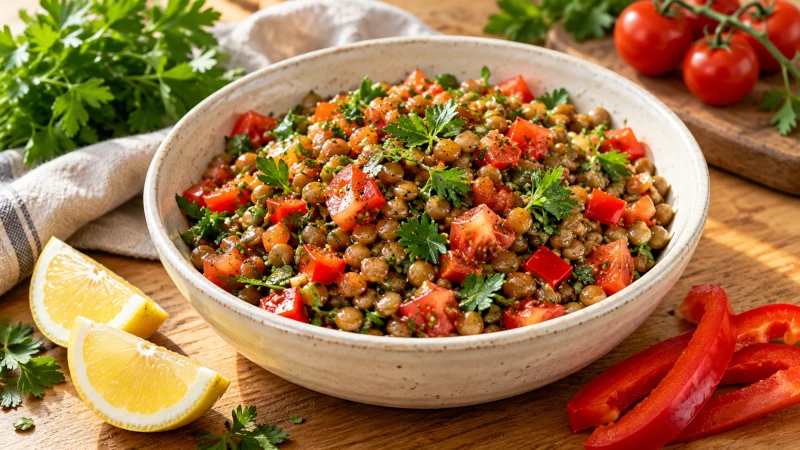
- Add vitamin C to the same meal. A squeeze of lemon on your lentils, tomatoes in the pot, or peppers on the side boosts nonheme iron absorption [NIH ODS, 2025].
- Keep tea and coffee between meals. Certain polyphenols reduce nonheme iron absorption, and calcium may as well [NIH ODS, 2025].
Keep this in proportion. On a typical varied diet, these enhancers and inhibitors make only a small difference to most people’s overall iron status [NIH ODS, 2025]. And lentils are not a treatment for anemia. If you have symptoms such as unusual tiredness, pale skin, shortness of breath, or cravings for ice or clay, see a clinician rather than self-treating, since anemia can come from blood loss that needs to be found [Mayo Clinic].
Folate and pregnancy: helpful, but not a substitute for folic acid
One cup of cooked lentils provides about 358 mcg of folate [UH Nutrition Facts]. Adults need 400 mcg DFE a day, rising to 600 mcg during pregnancy and 500 mcg while breastfeeding [NIH ODS, 2018]. Pregnancy also raises the iron requirement to 27 mg a day [NIH ODS, 2025]. Lentils help with both, which makes them a genuinely good pregnancy food.
One point matters more than any food list. The protection against neural tube defects, serious birth defects of the brain and spine, has been shown for folic acid, the form in supplements and fortified foods. The CDC recommends 400 mcg of folic acid every day for anyone who could become pregnant, starting at least a month before conception [CDC, 2026], and the U.S. Preventive Services Task Force recommends a supplement with 400 to 800 mcg [NIH ODS, 2018]. Eat the lentils and take the folic acid. For more folate-rich options, see our guide to foods high in folate.
Digestion and regularity
Lentils are one of the legumes NIDDK lists as a good fiber source for constipation. Fiber, taken with enough fluid, makes stools softer and easier to pass [NIDDK, 2018a]. Most of this evidence comes from fiber research in general rather than trials of lentils specifically.
If you don’t eat much fiber now, build up slowly. NIDDK advises adding fiber a little at a time so your body can adjust [NIDDK, 2018a]; our practical guide to increasing fiber has a step-by-step approach.
Blood pressure and weight: promising, less certain
In pooled feeding trials, pulses at a median of 162 grams a day lowered systolic blood pressure by about 2.25 mm Hg, with no effect on diastolic pressure [Linus Pauling Institute, 2019]. Modest, but in the same direction as the diabetes trial above.
For weight, the evidence is weaker. Protein and fiber may help you feel full, and a U.S. survey found people who ate beans had lower body weight, smaller waists and a 22% lower risk of obesity [Harvard Nutrition Source, 2024]. That kind of study can’t show that beans caused the difference, since bean eaters may differ in other ways.
Claims that outrun the evidence
- “Lentils must be combined with rice at the same meal to make a complete protein.” Not necessary. Your body draws on amino acids from everything you eat across the day, and nutrition experts no longer advise pairing proteins at a single meal [MedlinePlus, 2025]. See our guide to protein-rich vegetarian foods.
- “Lentils are acidifying, so balance them with alkalizing foods.” There is no good evidence that you need to “balance” lentils for pH. Eat them with vegetables and fruit because the meal is more nutritious, not to change your body’s acidity.
- “Lentils have more iron than meat, so they fix anemia.” Lentils do contain plenty of iron, but less of it is absorbed than iron from meat [NIH ODS, 2025], and anemia needs a diagnosis, not just a menu.
How to cook and eat lentils for the most benefit
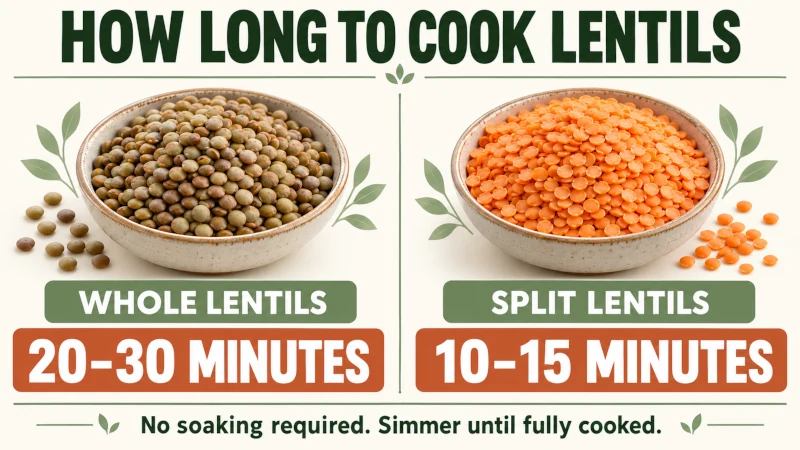
Lentils are the easiest legume to cook. They don’t need soaking: whole lentils simmer in about 20 to 30 minutes and split lentils in 10 to 15 [Harvard Nutrition Source, 2025].
- Cook them all the way. Raw legumes, lentils included, are among the foods highest in lectins. Boiling inactivates most of them, but low-heat slow cooking may not [Harvard Nutrition Source, 2022]. Undercooked lentils are also hard to digest and can upset your stomach [Harvard Nutrition Source, 2025]. Don’t eat them raw.
- Canned lentils count. They’re already cooked; rinsing them cuts the sodium [Harvard Nutrition Source, 2025].
- Pair for iron. Finish dal with lemon, cook lentil soup with tomatoes, or toss a lentil salad with red peppers [NIH ODS, 2025].
- Pair for calcium. Because lentils are low in calcium, serve them alongside greens, yogurt or another calcium source if you rely on them often.
- Go easy at first. Start with a half-cup serving and increase over a few weeks if lentils are new to you [NIDDK, 2018a].
Side effects, interactions, and who should be careful
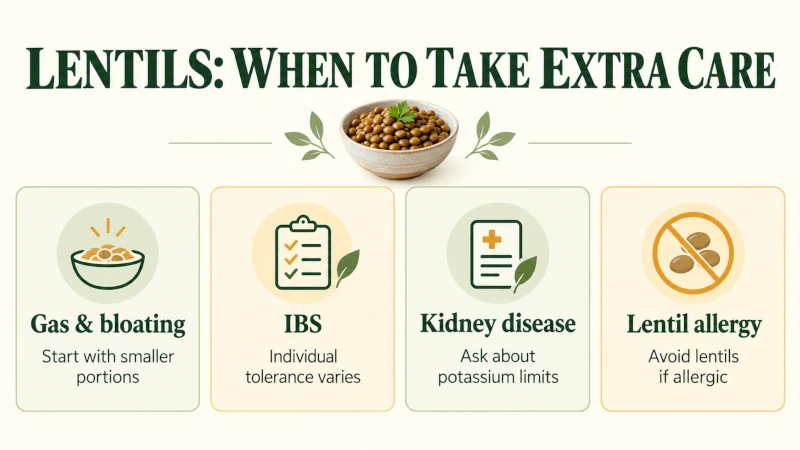
For most people lentils are an everyday food with no special risks beyond some gas. A few groups should take more care.
- Gas and bloating. NIDDK lists legumes, including lentils, among foods that can cause excess gas [NIDDK, 2021]. Gut bacteria ferment resistant starch and oligosaccharides, which produces the gas [Harvard Nutrition Source, 2024]. Smaller portions and a gradual increase usually help. If you have irritable bowel syndrome, legumes may be a trigger; a short, supervised trial of a low-FODMAP diet is one option [NIDDK, 2021].
- Kidney disease. The National Kidney Foundation lists lentils among higher-potassium foods. If you’ve been told to limit potassium, work with your doctor or a renal dietitian on portions rather than guessing [National Kidney Foundation].
- Gout. In a 12-year study of 47,150 men, eating purine-rich vegetables at moderate levels was not linked to a higher gout risk, while more meat and seafood was [Gout cohort study, 2004]. The study involved men only, so treat it as reassuring rather than conclusive. Our guide to foods that cause gout covers what does trigger flares.
- Medications. We found no well-established drug interactions with lentils eaten as food. Interactions in the NIH fact sheets involve supplements: folate supplements, for example, can interfere with methotrexate used for cancer [NIH ODS, 2018]. If you’re on methotrexate, ask your doctor before adding folate supplements, but you don’t need to avoid lentils on that account.
- Pregnancy and breastfeeding. Lentils are a good choice; just cook them thoroughly and keep taking folic acid as advised [CDC, 2026].
- Food allergy. If you’ve reacted to lentils or other legumes before, avoid them and ask your doctor about allergy testing. Swelling of the lips or throat or trouble breathing after eating is an emergency; call 911.
When to see a doctor
Diet changes are a reasonable first step for mild, everyday issues. They are not enough when something else may be going on. Get medical advice if you notice:
- Signs of iron deficiency: extreme tiredness, weakness, pale skin, chest pain, a fast heartbeat, shortness of breath, dizziness, or cravings for ice, dirt or clay [Mayo Clinic].
- Heavy periods or regular use of aspirin, ibuprofen or naproxen alongside those symptoms, since both can cause blood loss [Mayo Clinic].
- Constipation with rectal bleeding, blood in your stool, or continual abdominal pain, or constipation that doesn’t improve with self-care [NIDDK, 2018b].
| HEALTH DISCLAIMER: This article is for general education and is not a substitute for professional medical advice, diagnosis, or treatment. Lentils are a nutritious food, but they do not treat anemia, diabetes, high cholesterol, or any other condition on their own. Talk with your doctor or a registered dietitian before making major diet changes if you are pregnant or planning pregnancy, have kidney disease, gout, diabetes treated with medication, irritable bowel syndrome, or a food allergy. Do not stop a prescribed medicine or skip prenatal folic acid because of anything you read here. If you have symptoms of anemia or signs of bleeding, see a healthcare professional. |
Frequently Asked Questions
Are lentils healthier than beans?
They’re close cousins with similar strengths, and most studies group them together [CMAJ meta-analysis, 2014]. Lentils’ main practical advantage is speed: no soaking and 10 to 30 minutes of cooking [Harvard Nutrition Source, 2025].
How many lentils should I eat a day?
There’s no official lentil target. The cholesterol benefit appeared at about 130 grams of pulses a day, roughly one serving [CMAJ meta-analysis, 2014], and the diabetes trial used at least one cup a day [Jenkins, 2012]. If lentils give you gas, start with a half-cup and build up.
Do lentils help with anemia?
They supply both iron and folate, which your body needs for red blood cells, and pairing them with vitamin C improves iron uptake [NIH ODS, 2025]. But food is not a treatment for diagnosed anemia; get tested if you have symptoms [Mayo Clinic].
Can I eat lentils if I have diabetes?
Yes. Trials in people with type 2 diabetes found legume-rich, low-glycemic diets improved HbA1c [Jenkins, 2012]. Lentils still carry about 40 grams of carbohydrate per cup, so count them in your meal plan [UH Nutrition Facts].
Are canned lentils as good as dried?
They’re a convenient, already-cooked option. Rinse them to reduce the sodium [Harvard Nutrition Source, 2025].
Do I need to soak lentils?
No. Soaking isn’t necessary for lentils [Harvard Nutrition Source, 2025]. What matters is cooking them fully, since boiling is what inactivates most lectins [Harvard Nutrition Source, 2022].
References
- University Hospitals. Nutrition Facts: Lentils, mature seeds, cooked, boiled, without salt (1 cup). View source
- NIH Office of Dietary Supplements. Iron: Fact Sheet for Health Professionals. View source
- NIH Office of Dietary Supplements. Folate: Fact Sheet for Health Professionals. View source
- Centers for Disease Control and Prevention. About Folic Acid. View source
- Effect of dietary pulse intake on established therapeutic lipid targets for cardiovascular risk reduction: View source
- Jenkins DJA, Kendall CWC, Augustin LSA, et al. Effect of legumes as part of a low glycemic index diet on glycemic control and cardiovascular risk factors in type 2 diabetes mellitus: View source
- Higdon J, Drake VJ. Legumes. Micronutrient Information Center, Linus Pauling Institute, Oregon State University. View source
- Harvard T.H. Chan School of Public Health, The Nutrition Source. Lentils. View source
- Harvard T.H. Chan School of Public Health, The Nutrition Source. Legumes and Pulses. View source
- Harvard T.H. Chan School of Public Health, The Nutrition Source. Lectins. View source
- National Institute of Diabetes and Digestive and Kidney Diseases. Eating, Diet, & Nutrition for Gas in the Digestive Tract. View source
- National Institute of Diabetes and Digestive and Kidney Diseases. Eating, Diet, & Nutrition for Constipation. View source
- National Institute of Diabetes and Digestive and Kidney Diseases. Constipation. View source
- National Kidney Foundation. Potassium in Your CKD Diet. View source
- MedlinePlus, U.S. National Library of Medicine. Amino acids. View source
- Purine-rich foods, dairy and protein intake, and the risk of gout in men. View source
- Mayo Clinic. Iron deficiency anemia: Symptoms and causes. View source


