
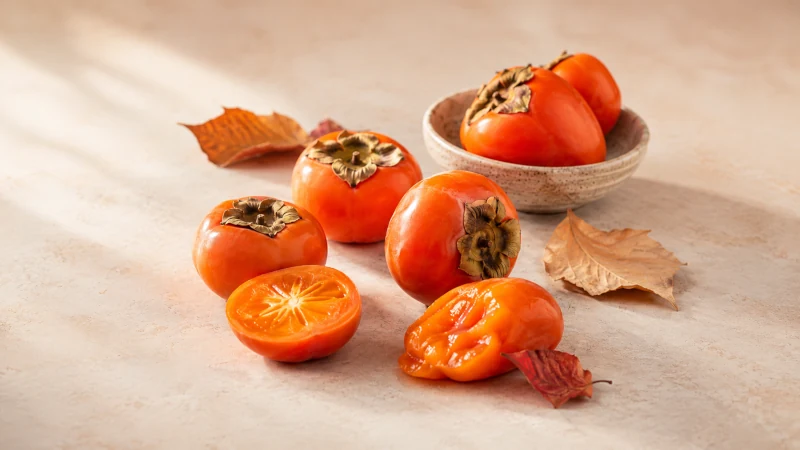
Persimmons earn their place on your plate for straightforward reasons: they are low in fat, high in soluble fiber, and one of the best fruit sources of provitamin A carotenoids. That is the honest core of the health benefits of persimmon — a nutrient-dense fall fruit that fits well into a heart- and gut-friendly diet. What persimmons are not is a cure. You will find pages claiming they prevent cancer, reverse hardened arteries, or fix anemia; the evidence does not go that far. And almost none of those pages mention the one real hazard worth knowing before you eat a bowlful: unripe persimmons can, in the wrong circumstances, clump into a hard stomach mass called a bezoar.
Here is what the research and the nutrition data actually show, graded by how solid each claim is, plus who should be cautious and how to enjoy persimmons without the downside.
Health benefits of Persimmons: the difference that matters most
Persimmons come from trees in the genus Diospyros, and, like tomatoes, they are botanically berries [WebMD, 2024]. For eating and for safety, the split that counts is astringent versus non-astringent, because that tracks tannin content.
- Non-astringent (e.g., Fuyu). Squat and tomato-shaped, low in tannin, pleasant to eat while still firm and crisp.
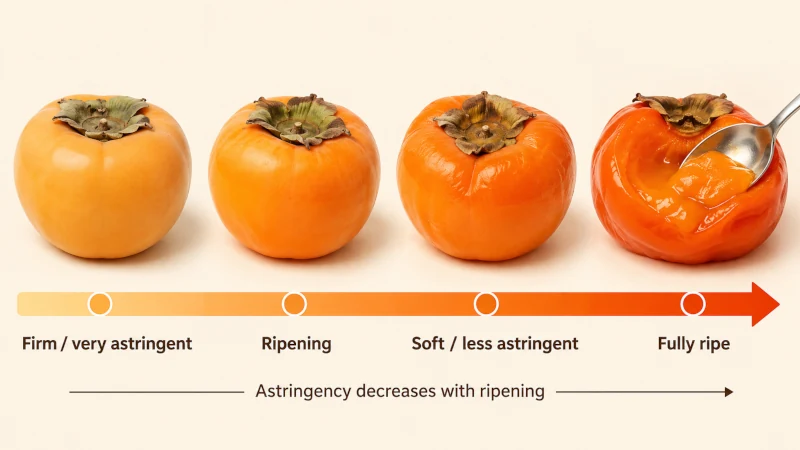
- Astringent (e.g., Hachiya, and American persimmons). Acorn-shaped, high in tannin when firm, and unpleasantly mouth-puckering until they ripen to a soft, jelly-like texture. Eaten too early, they are both inedible and riskier for bezoar formation.
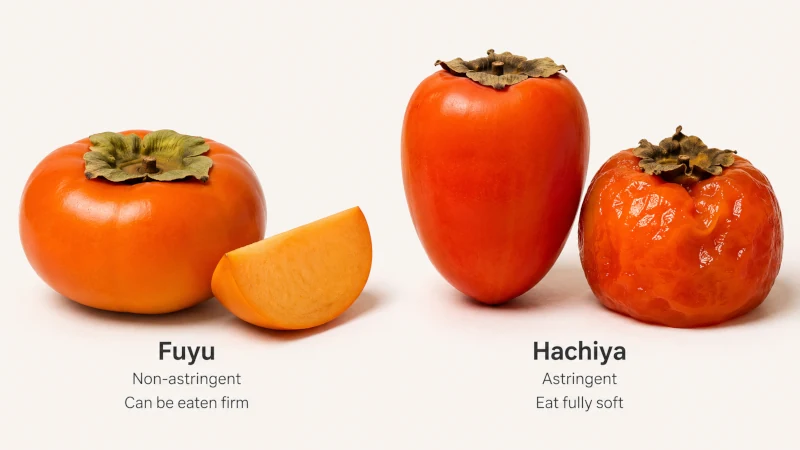
Tannin fades as the fruit ripens, which is why a fully soft astringent persimmon tastes sweet rather than harsh. Two species dominate: the Japanese or Asian persimmon (Diospyros kaki) sold in most supermarkets, and the smaller native American persimmon (Diospyros virginiana), which tends to be higher in vitamin C and sugar [USDA FoodData Central].
Persimmon nutrition, per 100 grams
A 100-gram serving of raw Japanese persimmon — a little over half a medium Fuyu — delivers about 70 calories, most of it from natural sugars, alongside a useful dose of fiber and provitamin A [USDA FoodData Central]. The standout micronutrient is manganese; the fruit is only a minor source of iron, despite claims to the contrary.
| Nutrient | Per 100 g | % Daily Value* |
| Calories | 70 kcal | — |
| Carbohydrate | 18.6 g | 7% |
| of which sugars | 12.5 g | — |
| Fiber | 3.6 g | 13% |
| Protein | 0.6 g | 1% |
| Fat | 0.2 g | 0% |
| Vitamin A (as provitamin A) | 81 µg RAE | 9% |
| Vitamin C | 7.5 mg | 8% |
| Manganese | 0.36 mg | 15% |
| Potassium | 161 mg | 3% |
| Iron | 0.15 mg | 1% |
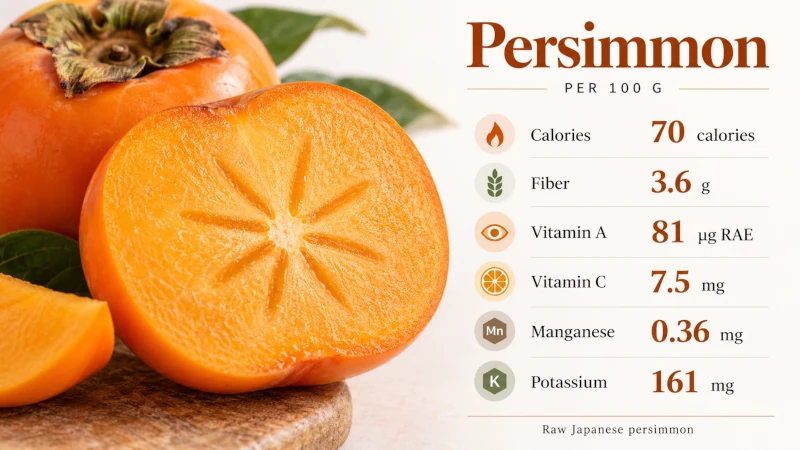
*Percent Daily Values are approximate, based on a 2,000-calorie adult diet. Values are for Japanese (Fuyu/Hachiya-type) persimmon, raw; native American persimmons run higher in vitamin C and sugar. Source: USDA FoodData Central.
What each benefit is really worth
Before the section-by-section detail, here is the quick version — the common claims set against what the evidence supports.
| Claim you’ll see online | What the evidence actually supports | Grade |
| Soothes the gut / eases mild diarrhea | Pectin plus astringent tannins is a plausible mechanism with long traditional use; no strong clinical trials in people. | Traditional + mechanistic |
| Good for the heart / arteries | Fits a fiber- and potassium-rich pattern that lowers cardiovascular risk. Cholesterol-lowering data mostly used concentrated persimmon fiber, not the whole fruit. | Limited / supportive |
| Rich in protective carotenoids | True as a nutrition fact: persimmon is one of the richest food sources of β-cryptoxanthin. Disease-prevention effects in humans remain preliminary. | Strong (nutrient) / early (effects) |
| Safe, even helpful, for diabetes | Fiber blunts the sugar spike, but persimmon is still a high-sugar fruit and portion matters; diabetes is also a bezoar risk factor. | Mixed |
| Great source of iron for anemia | Not supported. Persimmon supplies about 1% of the daily iron target, and its tannins can reduce iron absorption. | Not supported |
| Prevents cancer / reverses arteriosclerosis | No food prevents cancer or reverses artery disease. Antioxidant-rich diets track with lower risk, which is not the same as a cure. | Not supported |
Digestion: a traditional soother, not a treatment
Persimmons combine two things that act on the gut in opposite-seeming ways: pectin and mucilage (soluble fiber that absorbs water and feels soothing) and tannins (astringent compounds that have a drying, binding effect). That pairing is the basis for the fruit’s long traditional use in calming loose stools, especially with less-ripe, higher-tannin fruit. The mechanism is real, but human clinical trials testing persimmon for diarrhea or colitis are lacking, so this belongs in the traditional-use column rather than the proven-treatment one.
If you want the evidence-graded rundown of foods for loose stools and constipation, our guide to foods for the intestines covers where persimmon fits. The soluble fiber may also feel gentler than harsh insoluble fiber for some people managing inflammation, which is why softer, ripe fruit is sometimes included among foods to eat with colitis — again as a tolerated food, not a remedy.
Heart and arteries: helpful pattern, modest fruit
No food unclogs an artery, and persimmon is no exception. What it can do is contribute soluble fiber and potassium to the kind of overall eating pattern that lowers cardiovascular risk over time. A small human study of persimmon-derived tannin fiber reported lower cholesterol, but that used a concentrated fiber preparation rather than the fruit you eat [WebMD, 2024], so it is promising rather than proof that eating persimmons lowers cholesterol. Treat persimmon as one produce choice within a broader approach — the mechanisms that actually move the needle are laid out in our guide to foods for healthy arteries.
Carotenoids and β-cryptoxanthin: a genuinely rich source
This is where persimmon quietly shines. After butternut squash, persimmon is the richest common food source of β-cryptoxanthin, a provitamin A carotenoid, supplying roughly 1,447 micrograms per 100 grams [Burri, 2016]. β-cryptoxanthin is an antioxidant that the body can convert to vitamin A, and higher dietary intake is associated with lower risk of some cancers and degenerative conditions in observational and laboratory studies [Burri, 2016]. Those associations are encouraging but preliminary — they describe people whose diets are rich in these foods, which is not the same as showing the fruit prevents disease. The safe, accurate takeaway: persimmon is an excellent way to get carotenoids and provitamin A, which support normal vision and immune function.
Blood sugar and diabetes: nuance, not a green light
Older advice that people with diabetes can eat persimmons freely oversimplifies. The fruit’s soluble fiber does slow how quickly its sugars enter the blood, which softens the glucose spike, and lab work on persimmon-peel flavonoids shows antioxidant and anti-glycation activity [WebMD, 2024]. But a persimmon is still a high-sugar fruit — about 12 to 21 grams of sugar depending on size — so portion control matters, and it should be counted as part of the day’s carbohydrate. There is a second reason for caution specific to this fruit: diabetes is one of the recognized risk factors for persimmon bezoars, covered next.
Iron and anemia: a claim that doesn’t hold up
Some persimmon pages call it a strong source of iron for anemia. The numbers say otherwise: 100 grams supplies about 0.15 mg of iron, roughly 1% of the daily target [USDA FoodData Central]. Its vitamin C can help the body absorb non-heme iron from other foods eaten in the same meal, but the fruit’s own tannins can work in the opposite direction and reduce iron absorption. If iron is your goal, choose actual iron-rich foods — our list of foods rich in iron is a better starting point.
The safety catch: persimmon bezoars
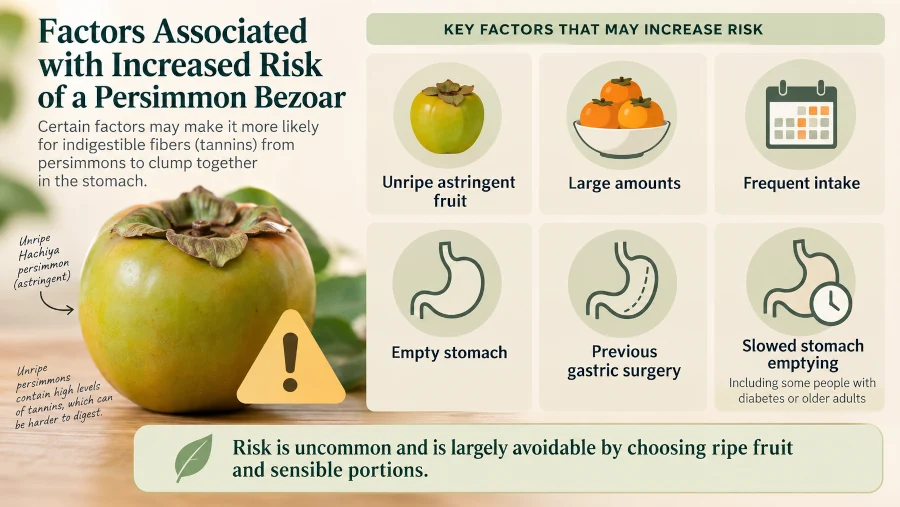
The most important thing missing from most persimmon articles is this: the same tannins that make unripe fruit astringent can, under gastric acid, bind with proteins and fiber into a hard, cohesive mass called a diospyrobezoar. In a 2025 case report, a bezoar removed from a patient’s small intestine was found to be over 98% tannin [Habuka, 2025]. These masses can cause stomach pain, nausea, vomiting, and, in serious cases, a bowel obstruction that needs endoscopic or surgical removal.
Bezoars are uncommon, and an occasional ripe persimmon is not a concern for most people. The risk rises with a recognizable set of factors:
- Eating unripe, high-tannin (astringent) fruit
- Eating large quantities, or persimmons daily over time
- Eating them on an empty stomach
- A history of gastric surgery, diabetes with slowed stomach emptying (gastroparesis), or older age with sluggish digestion — all of which slow the stomach’s ability to clear the fruit [Habuka, 2025]
The reassuring part is that this is largely avoidable: eat persimmons ripe, keep portions sensible, and don’t make unripe astringent fruit a daily habit if you fall into a higher-risk group.
Side effects, interactions, and who should be careful
For most people, persimmons are well tolerated and allergic reactions are rare. Beyond the bezoar issue, a few practical points:
- Common, mild effects. The astringency of under-ripe fruit is unpleasant but harmless; large amounts of any high-fiber fruit can cause gas or loose stools.
- Interactions. Persimmon has no well-documented drug interactions, but its tannins can bind minerals like iron in the same meal; if you take iron supplements, separate them from large tannin-rich servings.
- Blood sugar. People with diabetes should count persimmon as carbohydrate and watch portions, and be aware of the higher bezoar risk noted above.
- Who should be most careful. Anyone with prior stomach surgery, gastroparesis, or a history of bezoars should limit persimmons — particularly unripe ones — and check with their clinician.
- Pregnancy and breastfeeding. Ripe persimmon in ordinary food amounts is generally considered fine. As with any new food, introduce it gradually, avoid large quantities of unripe fruit, and raise any specific concerns with your doctor.
See a healthcare professional promptly for persistent abdominal pain, repeated vomiting, a hard or swollen belly, or an inability to pass stool or gas — these can signal an obstruction and are not something to manage at home.
How to choose, ripen, and eat them
Match your approach to the type. A Fuyu is ready when firm to slightly soft and can be sliced like an apple into salads or eaten out of hand. A Hachiya must be fully soft — almost custard-like — before it loses its astringency; scoop the pulp with a spoon or use it in baking. To speed ripening, keep astringent fruit at room temperature, ideally in a paper bag with an apple or banana. Persimmon pulp works well in oatmeal, yogurt, quick breads, and compotes, and pairs nicely with cottage cheese or tofu.

| Health Disclaimer: This article is for general education and is not medical advice, and it does not diagnose, treat, cure, or prevent any disease. It is not a substitute for care from a qualified professional. Talk with your doctor, pharmacist, or a registered dietitian before making significant diet changes or using persimmon for a health concern — especially if you have had gastric surgery, have diabetes or slowed stomach emptying, are managing kidney disease, or are pregnant or breastfeeding. If you have severe abdominal pain, persistent vomiting, or signs of a bowel obstruction, seek medical care right away. |
Frequently Asked Questions
Are persimmons safe to eat every day?
For most people, a ripe persimmon a day is fine. Daily large quantities, unripe astringent fruit, or persimmons combined with prior stomach surgery, diabetes, or slowed digestion raise the risk of a bezoar, so those groups should keep intake modest and favor fully ripe fruit.
What is the main health benefit of persimmon?
Its combination of soluble fiber and provitamin A carotenoids — persimmon is one of the richest food sources of β-cryptoxanthin. That supports normal vision and fits a fiber-rich, heart-friendly diet, though it is a nutritious food rather than a treatment for any condition.
Can people with diabetes eat persimmons?
Usually yes, in controlled portions. The fiber slows the sugar release, but persimmon is still high in sugar and should be counted as carbohydrate. People with diabetes are also at higher risk of bezoars, so ripe fruit and sensible amounts are the safe approach.
Do persimmons help with diarrhea?
Traditionally, yes — the tannins and pectin have an astringent, binding effect, and less-ripe fruit is more astringent. This is traditional use rather than a clinically proven treatment, and eating a lot of unripe fruit carries its own bezoar risk, so it is not a strategy to lean on heavily.
Are persimmons a good source of iron?
No. A serving provides only about 1% of the daily iron target, and its tannins can reduce iron absorption. For iron, other foods are far better choices.
References
- U.S. Department of Agriculture, FoodData Central. “Persimmons, Japanese, raw” (SR Legacy 169941). Nutrition figures. View source
- WebMD. “Health Benefits of Persimmons.” Medically reviewed by Kathleen M. Zelman, RD, LD, MPH, Oct 15, 2024. View source
- Burri BJ, La Frano MR, Zhu C. “Absorption, metabolism, and functions of β-cryptoxanthin.” Nutrition Reviews. 2016;74(2):69–82. PMID 26747887; PMC4892306. View source
- Butt MS, Sultan MT, Aziz M, et al. “Persimmon (Diospyros kaki) fruit: hidden phytochemicals and health claims.” EXCLI Journal. 2015;14:542–561. PMID 27047315; PMC4817420. View source
- Habuka M, Yamagiwa M, Yonezawa M, et al. “Diospyrobezoar (Persimmon Bezoar)-Induced Intestinal Obstruction in an Older Patient: A Case Report.” Cureus. 2025;17(7). PMC12256139. View source


