
The rice health benefits most worth knowing are practical ones: rice is gluten-free, naturally very low in sodium, easy to digest, and — in its whole-grain form — a source of fiber and minerals tied to better heart health. The trade-offs are just as real, including arsenic, a higher glycemic load with white rice, and a protein that isn’t complete on its own. What follows walks through both sides using current data from the FDA, EFSA, the FAO, the USDA, and peer-reviewed human studies.
Roughly half the world eats rice as a daily staple, and the FAO estimates it supplies about 20% of the world’s dietary energy [FAO, 2004]. Here’s what the evidence supports, what’s mixed, and what to actually do in the kitchen.
What’s actually in a serving of rice
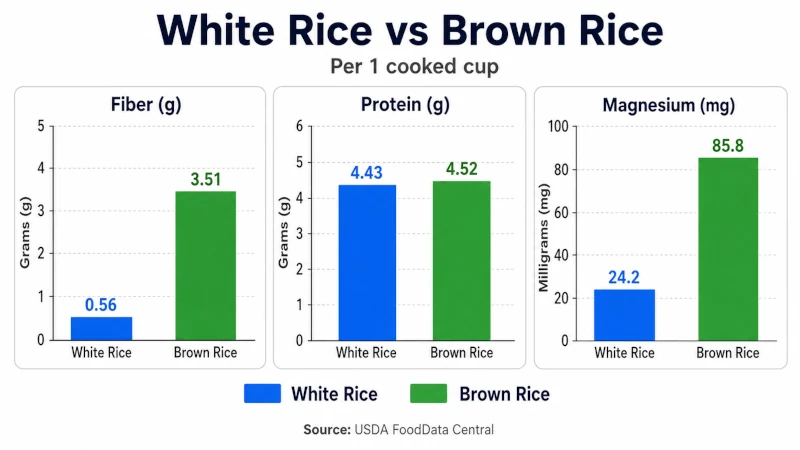
A cup (about 158 g) of cooked long-grain white rice provides roughly 205 kcal, 4 g of protein, 45 g of carbohydrate, and around 0.6 g of fiber, with only about 1–2 mg of sodium [USDA FoodData Central]. The same amount of cooked long-grain brown rice runs a little higher — roughly 218 kcal, 5 g of protein, and around 3.5 g of fiber — plus more magnesium, phosphorus, manganese, and selenium [USDA FoodData Central]. White rice is usually enriched with iron and B vitamins to replace what milling strips out, but the natural fiber and much of the magnesium are gone for good [FAO, 2004].
Two practical points sit under those numbers. First, rice protein is incomplete — lysine is its limiting amino acid, which is why traditional cooking pairs it with beans and lentils [FAO, 2004]. Second, rice has almost no fat and almost no sodium, which is why it slots neatly into heart- and kidney-friendly diets.
Evidence-based rice health benefits
1. A reliable, gluten-free source of energy
Rice contains no gluten, so it’s a cornerstone of the gluten-free diet for people with celiac disease and non-celiac gluten sensitivity [MedlinePlus, 2024]. Because most of its calories come from easily digested starch, plain rice is also gentle on an unsettled gut. If you’re newly diagnosed, it helps to have a broader list of gluten-free foods and a primer on foods to avoid with celiac disease. One caution: flavored rice mixes and rice-pasta blends can contain wheat-based additives, so read labels.
2. Rice, rice water, and rehydration in diarrheal illness
In serious diarrhea, what saves lives is oral rehydration — the fluid and electrolytes, not the rice itself. A Cochrane review of 22 trials found that rice-based oral rehydration salts cut first-day stool output in people with cholera by about 67 mL/kg in children and 51 mL/kg in adults compared with standard glucose-based ORS; in non-cholera diarrhea the benefit was small (around 4 mL/kg) [Fontaine et al., Cochrane 2000]. Worth knowing: that review has since been withdrawn from the Cochrane Library, so treat it as suggestive rather than current guidance.
For everyday gastroenteritis at home, plain rice, stewed apples, and yogurt are reasonable foods to reintroduce once vomiting settles — but a commercial oral rehydration solution is what actually replaces lost salts. Rice water can add some fluid and starch that’s easy to tolerate; it is not a substitute for ORS in a sick child.
When to seek care: get medical help for diarrhea with blood, a fever above 102°F (39°C), signs of dehydration (little or no urine, dizziness, sunken eyes in a child), or symptoms lasting more than 24 hours in a young child or a few days in an adult.
3. Naturally low in sodium
Plain cooked rice has about 1–2 mg of sodium per cup [USDA FoodData Central]. The WHO recommends adults keep sodium under 2,000 mg a day, and calls cutting sodium one of the most cost-effective ways to lower blood pressure across a population [WHO, 2026]. Nearly all the sodium in a typical rice meal comes from what’s added — soy sauce, salty broths, cured meats, processed sides. Cook rice in unsalted water and it stays a genuinely low-sodium food.
4. Whole-grain rice and long-term heart health
Brown rice is a whole grain, in the same broad category as oats and whole wheat. A 2016 dose-response meta-analysis pooling 45 prospective studies found that each extra 90 g/day of whole grains (about three servings) was associated with a 19% lower risk of coronary heart disease, a 22% lower risk of cardiovascular disease overall, and a 15% lower risk of cancer death [Aune et al., BMJ 2016]. The same review found no comparable protective signal for white rice [Aune et al., BMJ 2016]. These are observational associations, not proof — but they line up with long-standing advice from Harvard’s Nutrition Source to choose whole grains over refined when you can [Harvard Nutrition Source].
5. Rice bran oil and cholesterol
Rice bran oil is a separate story from the grain. A 2016 systematic review of 11 randomized controlled trials found that adding rice bran oil to the diet lowered total cholesterol by about 12.6 mg/dL and LDL by about 6.9 mg/dL on average, with no significant overall change in HDL [Jolfaie et al., 2016]. The likely drivers are its monounsaturated fats and gamma-oryzanol. The effects are modest and the trials were short, so think of rice bran oil as a reasonable cooking-oil swap that supports diet and any prescribed therapy — not a treatment on its own.
6. Pairs with legumes for a more complete protein
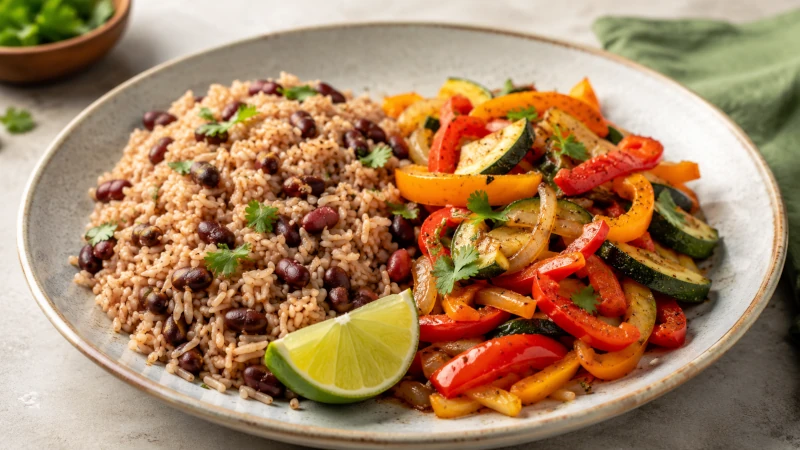
Rice is low in lysine; beans, lentils, and peas are low in methionine but rich in lysine. Eat them across the same day — they don’t have to share a plate — and the amino acid profiles fill in for each other [FAO, 2004]. It’s why dishes like lentils and brown rice, gallo pinto, kitchari, and dal-chawal turn up across so many cuisines. For a wider look at plant staples, see the best foods for humans.
White, brown, or parboiled — which to pick
None of them is a wrong choice; they differ on fiber, glycemic load, nutrient density, and arsenic. The figures below draw on USDA FoodData Central, [Consumer Reports, 2014], and [WebMD, 2024].
| Type | White (long-grain) | Brown (long-grain) | Parboiled |
| Fiber (per cooked cup) | ≈0.6 g | ≈3.5 g | ≈1.4 g |
| Glycemic index (approx.) | 64–73 | 50–55 | 38–48 |
| Thiamin (B1) | Low; added back by enrichment | High (intact bran/germ) | High (steam pushes it inward) |
| Inorganic arsenic | Lower than brown of same type | ~80% higher than white | Similar to white |
| Cook time | 15–20 min | 40–50 min | 20–25 min |
If blood sugar is your main concern, parboiled or basmati rice has a lower glycemic index than standard white. If you’re after fiber and minerals, brown wins on nutrition but carries more arsenic. A sensible middle path many dietitians suggest: rotate rice types and other grains rather than eating brown rice at every meal [Consumer Reports, 2014].
Risks worth understanding
Type 2 diabetes risk from high white-rice intake
A meta-analysis of four large cohorts (352,384 adults, 13,284 new diabetes cases, followed 4–22 years) found that each daily serving of white rice was associated with an 11% higher risk of type 2 diabetes [Hu et al., BMJ 2012]. The link was strongest in Asian populations eating rice three-plus times a day and weaker in Western groups who eat it less. An earlier U.S. analysis found that swapping 50 g/day of white rice for brown was tied to about a 16% lower risk [Sun et al., Arch Intern Med 2010]. These are observational findings — they don’t prove cause — but they’re consistent enough that Harvard’s Nutrition Source and diabetes guidance both favor whole grains over refined [Harvard Nutrition Source].
Arsenic in rice
Rice pulls inorganic arsenic from soil and water more readily than most grains. The FDA treats inorganic arsenic as a carcinogen, models a small increase in lifetime lung and bladder cancer risk from rice, and has set an action level of 100 parts per billion for inorganic arsenic in infant rice cereal [FDA, 2016]. Longer-term exposure is also linked to skin cancer, and EFSA’s 2024 update concluded that dietary inorganic arsenic remains a health concern across European populations [EFSA, 2024].
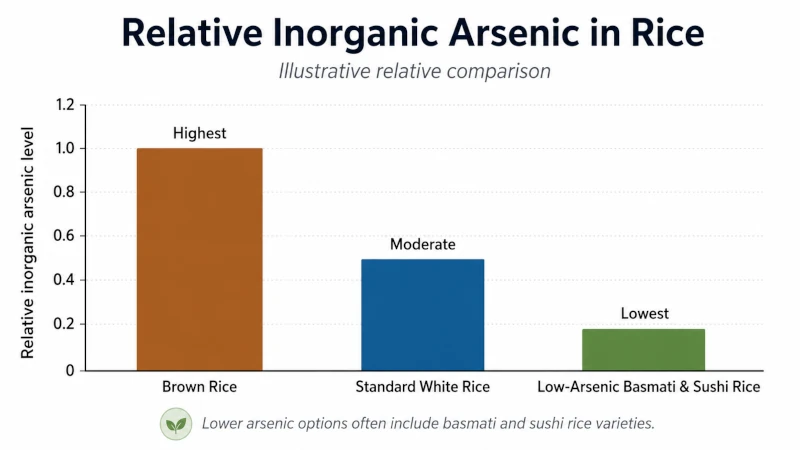
Independent testing by Consumer Reports found brown rice averaged about 80% more inorganic arsenic than white rice of the same type, and that white basmati from California, India, or Pakistan — plus U.S. sushi rice — averaged about half the arsenic of most other rices [Consumer Reports, 2014]. On cooking, the sources don’t fully agree: Consumer Reports puts the reduction from rinsing and cooking in excess water at about 30% [Consumer Reports, 2014], while the FDA’s own testing found cooking in six-to-ten parts water and draining removed 40–60% — though it also washes out some water-soluble vitamins [FDA, 2016]. Either way, rinsing and extra water help; variety helps more.
Iron absorption and phytates
Brown rice contains phytates, which bind iron and zinc in the gut and lower how much you absorb. The long-standing fix is simple: include a vitamin C source — citrus, peppers, tomato — with the meal to boost non-heme iron uptake [FAO, 2004]. Vegetarians and pregnant readers should pay particular attention here.
Beriberi and white rice — history and current relevance
Beriberi, from thiamin (vitamin B1) deficiency, became epidemic in parts of Asia in the late 19th century when powered mills introduced polished white rice. Today it’s seen mostly in alcohol use disorder — the leading cause of thiamin deficiency in industrialized countries — and where people depend on unenriched white rice [NIH Office of Dietary Supplements]. Thiamin enrichment of white rice in the U.S. and many other countries has made primary beriberi rare there, though it persists in food-insecure settings and certain medical contexts.
Practical kitchen tips for everyday rice
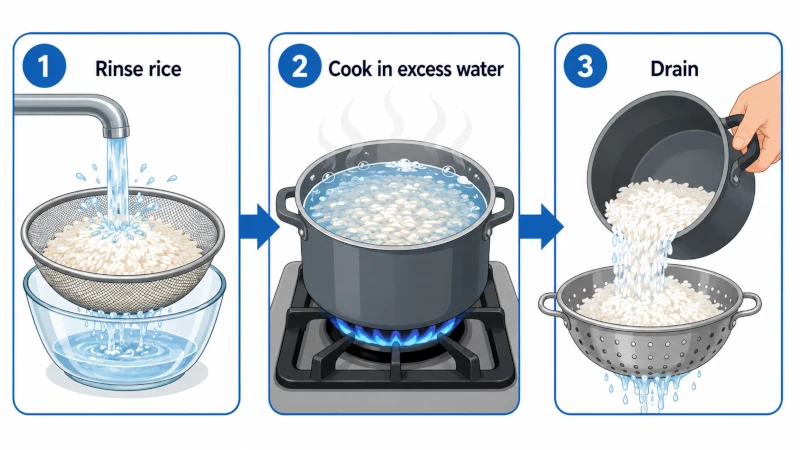
- Rinse before cooking. Cover the rice, swirl, and pour off the cloudy water two or three times. This removes surface starch and a little arsenic.
- Use extra water when you want less arsenic. Six-to-ten parts water to one part rice, drained at the end, lowers inorganic arsenic (about 30–60% depending on the source), though it also removes some water-soluble vitamins.
- Pair with vegetables and a protein. Beans, lentils, fish, eggs, or tofu plus a colorful vegetable turns a starchy side into a balanced plate.
- Cool and store rice safely. Cooked rice left at room temperature for hours can grow Bacillus cereus, which causes vomiting and diarrhea. Refrigerate within an hour and reheat until steaming.
- Rotate your grains. Quinoa, buckwheat, millet, and barley carry very little arsenic and broaden the nutrient mix.
Who should be careful with rice
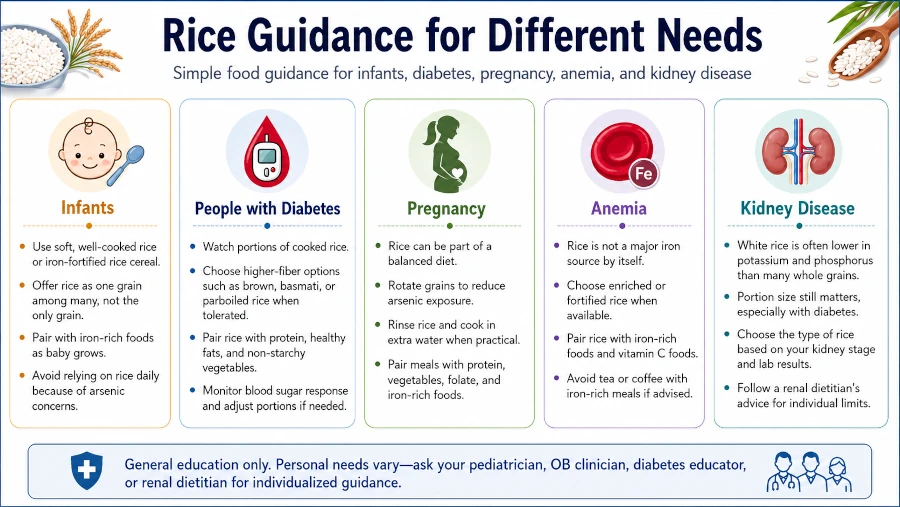
For most healthy adults, rice — including white rice — is fine as part of a varied diet. A few groups need closer attention.
- Infants and young children. The FDA recommends a variety of first grains rather than rice cereal alone, because infants are more sensitive to inorganic arsenic per pound of body weight [FDA, 2016].
- People with type 2 diabetes or prediabetes. Favor parboiled, basmati, or brown rice over standard white, watch portions (often about ½–¾ cup cooked per meal), and pair rice with protein, fat, and fiber to blunt the glucose rise.
- Pregnant readers and toddlers. Keep rice and rice products to a few servings a week and vary the grains. Consumer Reports advises that children under 5 shouldn’t drink rice drinks in place of milk [Consumer Reports, 2014], and the FDA urges variety in infants’ and toddlers’ grains [FDA, 2016].
- People with iron-deficiency anemia. Brown rice’s phytates can cut iron uptake. Add a vitamin C–rich food at the same meal, or ask a clinician about supplementation.
- Anyone with chronic kidney disease. Brown rice is higher in potassium and phosphorus than white. If your nephrologist has set potassium or phosphate limits, white rice may actually be the recommended choice — confirm with your care team.
Realistic expectations
Rice on its own won’t lower your cholesterol, reverse diabetes, or cure a digestive disease. The honest frame: the right type of rice, in sensible portions, fits comfortably inside eating patterns already tied to better heart and metabolic health — Mediterranean, DASH, and traditional plant-forward Asian diets. Most of the health story is what you put alongside the rice.
| Health Disclaimer This article is for general education and is not medical advice, diagnosis, or treatment. Talk with your doctor, a registered dietitian, or your pediatrician before making significant dietary changes — especially if you are pregnant, breastfeeding, feeding an infant, managing diabetes or kidney disease, taking prescription medication, or have any condition that affects how your body handles food. Information is current as of the publication date; nutrition science continues to evolve. |
Frequently Asked Questions
Is rice good or bad for you?
Neither, on its own. In sensible portions and paired with vegetables and protein, rice fits well into a healthy diet. Eating large amounts of refined white rice every day — especially without other whole grains — is associated with higher type 2 diabetes risk [Hu et al., BMJ 2012].
Is brown rice healthier than white rice?
Brown rice has more fiber, magnesium, and B vitamins and is linked to better heart and metabolic outcomes [Aune et al., BMJ 2016]. It also averages more inorganic arsenic. For most people the nutrition edge outweighs the arsenic concern — as long as you’re not eating it at every meal.
How worried should I be about arsenic in rice?
Informed, not alarmed. Vary your grains (especially for infants), and where possible choose lower-arsenic rice — white basmati from California, India, or Pakistan, or U.S. sushi rice [Consumer Reports, 2014]. Rinsing and cooking in excess water reduce arsenic by roughly 30–60% depending on the method.
Does rice water help with diarrhea?
Rice water can add some fluid and easy-to-tolerate starch, but for moderate or severe diarrhea — especially in children — a commercial oral rehydration solution is the proven treatment because it supplies the right balance of sodium, potassium, and glucose [Fontaine et al., Cochrane 2000].
Can people with celiac disease eat rice?
Yes — rice is naturally gluten-free and is a core staple of the gluten-free diet [MedlinePlus, 2024]. Watch for processed rice products (flavored mixes, rice-pasta blends) that may contain wheat-based additives.
References
- FAO. Rice and Human Nutrition (International Year of Rice, 2004). Food and Agriculture Organization of the United Nations. View source
- U.S. Department of Agriculture, Agricultural Research Service. FoodData Central. View source
- Hu EA, Pan A, Malik V, Sun Q. White rice consumption and risk of type 2 diabetes: meta-analysis and systematic review. BMJ. 2012;344:e1454. doi:10.1136/bmj.e1454. View source
- Sun Q, Spiegelman D, van Dam RM, et al. White rice, brown rice, and risk of type 2 diabetes in US men and women. Arch Intern Med. 2010;170(11):961–969. doi:10.1001/archinternmed.2010.109. View source
- Aune D, Keum N, Giovannucci E, et al. Whole grain consumption and risk of cardiovascular disease, cancer, and all cause and cause specific mortality. BMJ. 2016;353:i2716. doi:10.1136/bmj.i2716. View source
- Jolfaie NR, Rouhani MH, Surkan PJ, Siassi F, Azadbakht L. Rice Bran Oil Decreases Total and LDL Cholesterol in Humans. Horm Metab Res. 2016;48(7):417–426. doi:10.1055/s-0042-105748. View source
- Fontaine O, Gore SM, Pierce NF. Rice-based oral rehydration solution for treating diarrhoea. Cochrane Database Syst Rev. 2000;(2):CD001264. (Later WITHDRAWN, 2007.) View source
- U.S. Food and Drug Administration. FDA proposes limit for inorganic arsenic in infant rice cereal (2016). View source
- U.S. Food and Drug Administration. Arsenic in Rice and Rice Products Risk Assessment (2016). View source
- European Food Safety Authority. Update of the risk assessment of inorganic arsenic in food (18 Jan 2024). View source
- Consumer Reports. How much arsenic is in your rice? (November 2014). View source
- Harvard T.H. Chan School of Public Health, The Nutrition Source. Whole Grains. View source
- WebMD. Health Benefits of Rice (medically reviewed December 2024). View source
- National Institutes of Health, Office of Dietary Supplements. Thiamin — Fact Sheet for Health Professionals. View source
- World Health Organization. Sodium reduction — fact sheet (2026). View source
- MedlinePlus, U.S. National Library of Medicine. Celiac disease (updated Feb 2024). View source
