
Litchi fruit is a sweet, floral-tasting tropical fruit with one standout strength: vitamin C. A 100-gram serving of raw litchis, about 10 fruits, gives you 71.5 mg, close to a full day’s needs for most adults [USDA, 2019; NIH ODS, 2021]. That is more vitamin C, gram for gram, than a raw orange [USDA, 2019c].
Beyond vitamin C, the story is more modest than many websites claim. Most reported benefits for cholesterol, blood sugar, and cancer come from lab dishes, animal studies, or a concentrated supplement, not from people eating the fruit. And there is one safety point every litchi lover should know: the fruit contains natural compounds that have been linked to dangerous drops in blood sugar in undernourished children who ate litchis on an empty stomach [Shrivastava, 2017]. Eating them with or after a meal, not in place of one, is the simple habit that matters most.
Litchi at a Glance
- Scientific name: Litchi chinensis Sonn.
- Other names: lychee, lichi. Litchi and lychee are the same fruit.
- Spanish: litchi, mamoncillo chino. German: Litschi.
- Family: the soapberry family, Sapindaceae.
- Origin: native to Southeast Asia and prized by the Cantonese since ancient times. It is grown commercially in China and India [Britannica] and in more than 20 countries overall [Zhao, 2020].
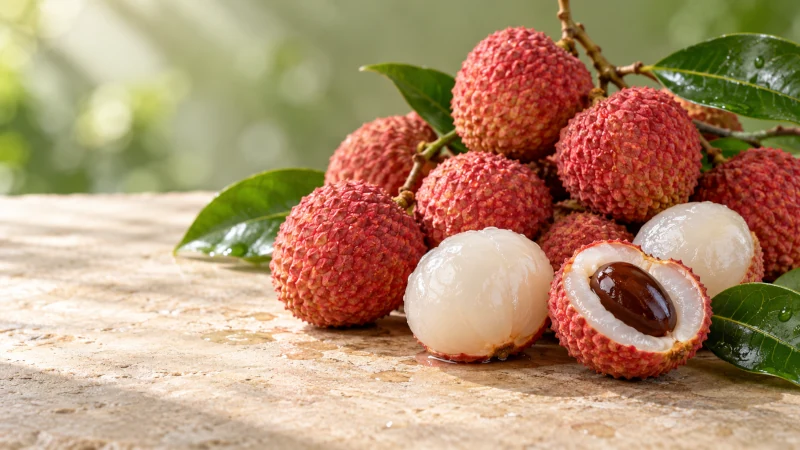
- The fruit: round to oval, about 1 inch (25 mm) across, with a bumpy strawberry-red skin around translucent white flesh and a single brown seed. Fresh flesh tastes aromatic and musky; dried flesh is very sweet [Britannica].
Litchi Fruit Nutrition Facts
Litchis are mostly water and natural sugar, with almost no fat or protein. Here is how 100 grams of raw litchi compares with the same weight of raw orange, using USDA data.
| Per 100 g (raw) | Litchi (about 10 fruits) | Orange |
| Calories | 66 kcal | 47 kcal |
| Water | 81.8 g | 86.8 g |
| Carbohydrate | 16.5 g | — |
| Total sugars | 15.2 g | 9.35 g |
| Fiber | 1.3 g | 2.4 g |
| Protein | 0.83 g | — |
| Fat | 0.44 g | — |
| Vitamin C | 71.5 mg | 53.2 mg |
| Potassium | 171 mg | 181 mg |
| Copper | 0.148 mg | — |
| Vitamin A | 0 | — |
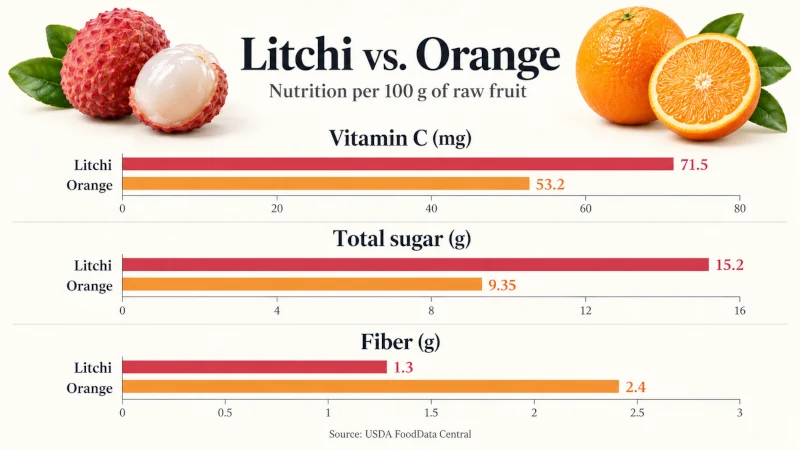
Sources: USDA FoodData Central, Litchis, raw (FDC 169086) and Oranges, raw, all commercial varieties (FDC 169097). One litchi without peel and seed weighs about 9.6 g. A dash means the value is not shown here.
Two things stand out. The vitamin C is real: you get about a third more per gram than from an orange [USDA, 2019; USDA, 2019c]. If vitamin C is your main reason for buying fruit, see how acerola cherries compare with oranges, and our guide to the benefits of oranges.
The fiber is not. At 1.3 g per 100 g, litchi has about half the fiber of an orange and is not a meaningful fiber source. If you are trying to eat more fiber, these fiber-rich foods do far more of the work. Litchi also carries more sugar than an orange, which matters if you are watching carbohydrates.
What the Research Says About Litchi Fruit Benefits
Litchi has a long history in traditional Chinese medicine for stomach ulcers, cough, diarrhea, and diabetes, and lab and animal studies have found a wide range of activity in its extracts [Zhao, 2020; Ibrahim, 2015]. The question is whether eating the fruit does anything measurable for people. For most claims, that research has not been done.
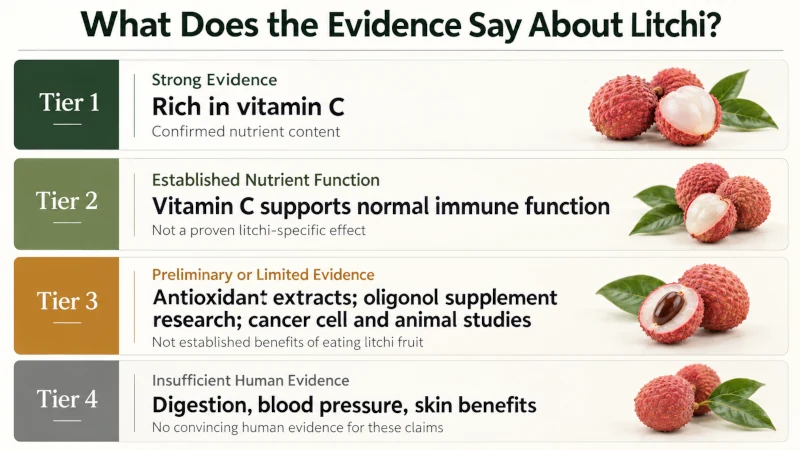
| Claim | Evidence strength | What it rests on |
| Rich in vitamin C | Strong | Direct USDA nutrient analysis |
| Supports normal immune function | Established for vitamin C | Vitamin C’s known role in the body; not tested for litchi itself |
| Antioxidant, protects cells | Early (lab and animal) | Extracts of pulp, peel, and seed |
| Lowers triglycerides or helps weight control | Limited | One small human trial of oligonol, a litchi-derived supplement |
| Prevents or treats cancer | Early (lab and animal only) | Cell and animal studies; no human trials |
| Improves digestion | Insufficient | Low fiber; no human studies found |
| Lowers blood pressure | Insufficient | Listed among lab and animal effects only |
| Improves skin | Insufficient | No human studies found |
Vitamin C: the benefit you can count on
Your body uses vitamin C to make collagen for tissue repair and wound healing, to absorb iron from plant foods, and to keep the immune system working properly. It also acts as an antioxidant. Adult women need 75 mg a day and adult men 90 mg; smokers need an extra 35 mg [NIH ODS, 2021]. A 100 g serving of litchis covers most or all of that.
Keep your expectations realistic, though. For most people, regular vitamin C does not stop you from catching a cold, although it may make colds slightly shorter or milder. Taking it after symptoms start does not seem to help [NIH ODS, 2021]. Litchis fit into an eating pattern that supports normal immune function, but no single fruit prevents infection.
Antioxidants and polyphenols: promising in the lab
Litchi contains polyphenols, including flavonoids and proanthocyanidins, along with polysaccharides. In lab and animal research these compounds show antioxidant, anti-inflammatory, and liver-protective activity, among others [Zhao, 2020; Ibrahim, 2015]. That is a reasonable starting point for research. It is not proof that a bowl of litchis protects your cells in any way you would notice.
Cholesterol and weight: mostly about a supplement
The human evidence here comes from oligonol, a processed product made from litchi fruit polyphenols, not from the fruit. In a 12-week double-blind trial, 60 overweight or obese Saudi women took oligonol or a placebo; 47 finished. The oligonol group’s triglycerides fell, and they did not gain weight, while the placebo group did. No side effects were reported [Bahijri, 2018].
That is one small study, in one group of women, using a concentrated extract. It says little about eating fresh litchis, which deliver about 15 g of sugar per 100 g [USDA, 2019].
Cancer: no human evidence yet
Litchi compounds slow cancer cell growth in lab dishes and shrink tumors in some animal studies. The authors of a 2024 critical review conclude that clinical studies are still needed before litchi products can be used for cancer prevention or treatment [Bishayee, 2024; Emanuele, 2017]. For eating patterns with much stronger evidence, see our cancer-preventing diet guide.
Digestion, blood pressure, and skin
These claims are common online, but we found no human studies supporting any of them for litchi fruit. With modest fiber and less potassium than an orange, there is no strong nutritional reason to expect a special effect either [USDA, 2019; USDA, 2019c].
Litchi and Low Blood Sugar: Why Not to Eat It on an Empty Stomach
Litchi flesh naturally contains two compounds, hypoglycin A and methylenecyclopropylglycine (MCPG). They block the body’s ability to burn fat for fuel when blood sugar is low. In a well-fed person, the liver has stored glucose to fall back on. In an undernourished child who skipped dinner, it may not, and blood sugar can crash overnight [Shrivastava, 2017; Sarkar, 2020].
What happened in Muzaffarpur
Muzaffarpur is India’s largest litchi-growing region, and for years it saw yearly outbreaks of a deadly brain illness in children. In 2014, 390 children aged 15 or younger were admitted to two hospitals with seizures or altered consciousness, and 122 of them (31%) died. Of the 327 children tested on admission, 204 had blood sugar of 70 mg/dL or less [Shrivastava, 2017].
Compared with other hospitalized children, those who fell ill were far more likely to have eaten litchis in the previous 24 hours, and skipping the evening meal made that risk worse. Breakdown products of the litchi toxins showed up in the urine of 48 of 73 sick children tested and in none of 15 controls. Tests for infections and pesticides were negative. Investigators recommended limiting litchi, making sure children ate an evening meal, and correcting low blood sugar quickly [Shrivastava, 2017].
The same pattern held in a 2019 outbreak: sick children were about five times more likely than neighborhood children to have eaten litchis in the week before and to have skipped the previous evening’s meal [Ponnaiah, 2023].
Where scientists still disagree
Not everyone accepts that the toxins are the whole explanation. A 2020 review notes that part of the scientific community still questions the diagnosis [Sarkar, 2020], and a 2025 review argues that malnutrition, unripe fruit, an empty stomach, and possibly environmental factors work together, pointing out that people eat litchis safely around the world [Soni, 2025]. The evidence is strongest for the combination: undernutrition, fasting, and a lot of litchi.
Toxin levels also vary. They differ between litchi varieties and with storage time [Yang, 2020], are a particular concern in unripe fruit [Logesh, 2023], and MCPG is present in the seeds, rising as the seeds mature [Sharma, 2025].
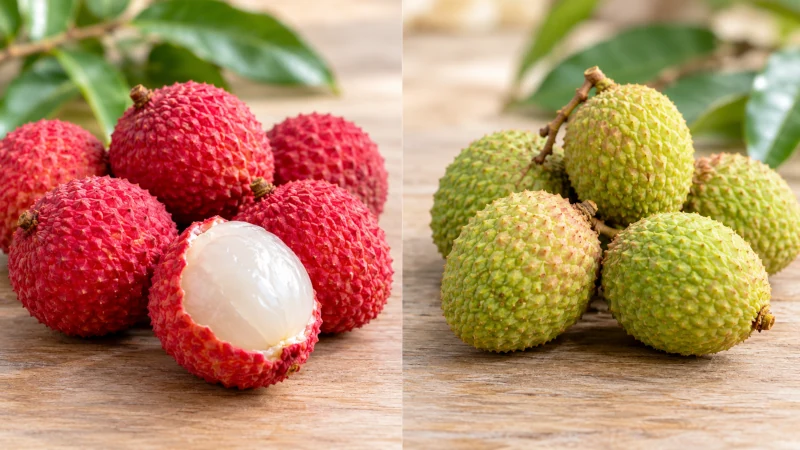
| How to eat litchi safely: Eat litchis with or after a meal, not instead of one. This matters most for children. Choose fully ripe, red fruit. Skip greenish, unripe litchis. Eat only the white flesh. Throw away the seed and peel. Don’t let a child fill up on litchis, especially in the evening or after missing a meal.Know the signs of low blood sugar, such as shakiness, sweating, confusion, and unusual sleepiness. |
Who Should Be Careful With Litchi Fruit
People with a fruit, latex, or pollen allergy. Litchi allergy is uncommon but can be severe. Case reports describe hives, swelling of the lips and tongue, and trouble breathing within 15 to 30 minutes of eating litchi, in both a 26-year-old man and a 12-year-old girl [Raap, 2007; Niggemann, 2002]. Litchi contains profilin, a protein that cross-reacts with many pollens and plant foods [Fäh, 1995], and reactions have been linked to latex [Niggemann, 2002] and mugwort pollen [Raap, 2007] sensitivity. If you have a latex allergy or react to other raw fruits, ask an allergist before trying litchi. Reviews also list itching and diarrhea among reported reactions [Zhao, 2020].
People with diabetes. A 100 g serving of raw litchi has about 15 g of sugar [USDA, 2019], so count it as a carbohydrate serving and pair it with a meal. Dried litchis are far more concentrated, at 66 g of sugar per 100 g [USDA, 2019b], and canned litchis are usually packed in syrup. If you take insulin or another medicine that can cause low blood sugar, don’t use litchis to replace a meal.
Children. Children are the group affected in the outbreaks described above. Serve litchis as part of a meal or snack after eating, not as a substitute for dinner.
Pregnancy and breastfeeding. The sources reviewed here do not identify a pregnancy-specific risk from eating ripe litchi as food, and the same eat-with-a-meal advice applies. We found no safety studies on oligonol or other litchi extract supplements in pregnancy or breastfeeding, so avoid those unless your doctor recommends them.
Medicines and supplements. We found no documented interactions between litchi fruit and medicines in the sources reviewed. Litchi extracts are another matter: they are concentrated, little studied in people, and show blood-sugar-lowering effects in lab and animal studies [Zhao, 2020]. If you take diabetes medicine, talk to your pharmacist before trying a litchi supplement.
How to Choose, Store, and Eat Litchi
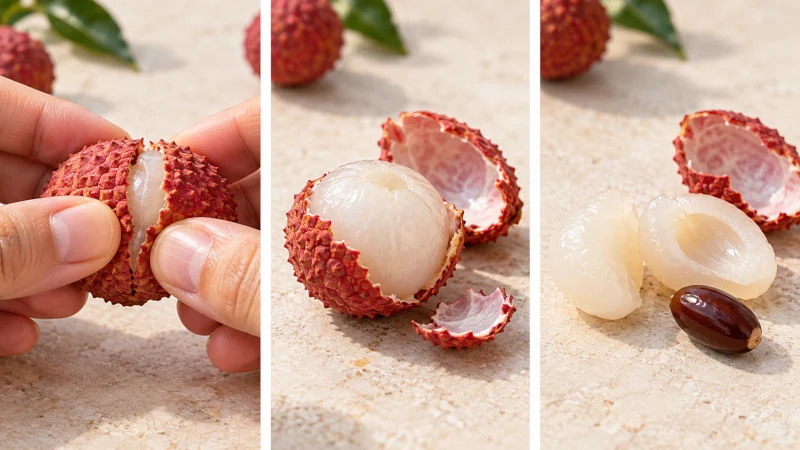
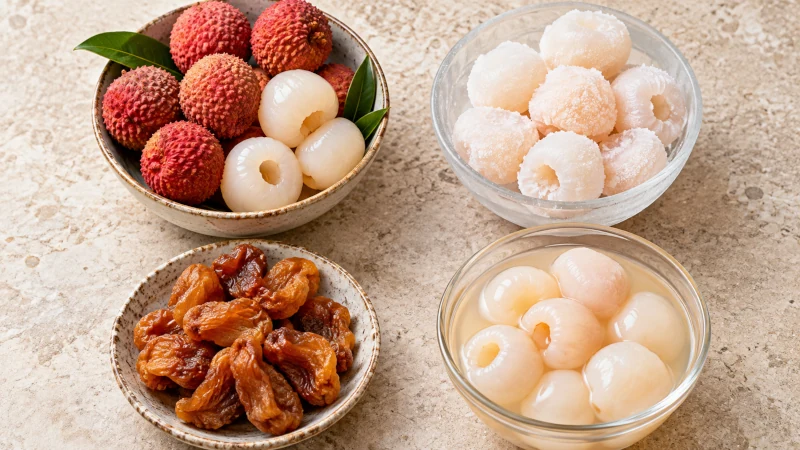
Fresh. Look for fruit with fully red skin. Peel it with your fingers, eat the juicy white flesh, and discard the seed. The texture is a lot like a grape, and it works well in fruit salads and even alongside rice dishes.
Dried. Drying concentrates everything. Per 100 g, dried litchi has 277 calories, 66 g of sugar, and 183 mg of vitamin C [USDA, 2019b]. A small handful goes a long way.
Frozen. Freezing is a practical way to enjoy litchis past their short season. Eat them partly thawed as a cold snack.
Canned. Canned litchis usually come in syrup, which adds sugar. Choose fruit packed in juice or light syrup when you can, and drain it.
When to Get Medical Help
Call 911 or your local emergency number right away if, after eating litchi:
- you or someone else has swelling of the lips, tongue, or throat, trouble breathing, widespread hives, or feels faint. These are signs of a severe allergic reaction.
- a child becomes very sleepy, confused, hard to wake, or has a seizure, especially after eating litchis and missing a meal. Low blood sugar needs fast treatment [Shrivastava, 2017].
See a doctor or allergist if your mouth itches or tingles after eating litchi, even mildly, before you eat it again.
| HEALTH DISCLAIMER: This article is for general education and is not a substitute for advice, diagnosis, or treatment from a qualified healthcare professional. Litchi is a food, not a treatment for any disease. If you are pregnant or breastfeeding, have diabetes, have food or latex allergies, take prescription medicines, or are considering a litchi extract supplement, talk with your doctor, pharmacist, or a registered dietitian first. If you think someone is having a severe allergic reaction or a low blood sugar emergency, call 911 or your local emergency number. |
Frequently Asked Questions
Is litchi the same as lychee?
Yes. Litchi, lychee, and lichi are spellings for the same fruit, Litchi chinensis.
How many litchis can I eat in a day?
There is no official limit. About 10 fruits (roughly 100 g) give you 66 calories, 15 g of sugar, and most of a day’s vitamin C [USDA, 2019; NIH ODS, 2021]. Eat them with or after a meal rather than on an empty stomach.
Is it dangerous to eat litchi on an empty stomach?
For undernourished children who skip meals, it has been linked to severe low blood sugar and brain illness [Shrivastava, 2017; Ponnaiah, 2023]. Healthy, well-fed adults are not the group affected in these outbreaks, but eating litchis after a meal is an easy precaution for everyone.
Is litchi good for people with diabetes?
It can fit in moderation. Raw litchi has about 15 g of sugar per 100 g, compared with about 9 g in an orange [USDA, 2019; USDA, 2019c]. Count it as a carbohydrate serving, eat it with a meal, and avoid dried or syrup-packed litchis, which carry much more sugar.
Can you eat litchi seeds?
No. Discard the seed. It contains MCPG, one of the toxins linked to low blood sugar, and levels rise as the seed matures [Sharma, 2025].
Are dried or canned litchis as healthy as fresh?
Dried litchis keep plenty of vitamin C but pack 66 g of sugar per 100 g [USDA, 2019b]. Canned litchis usually add sugar from syrup. Fresh or frozen fruit is the better everyday choice.
References
- U.S. Department of Agriculture, Agricultural Research Service. Litchis, raw. FoodData Central, SR Legacy, FDC ID 169086. View source
- U.S. Department of Agriculture, Agricultural Research Service. Litchis, dried. View source
- U.S. Department of Agriculture, Agricultural Research Service. Oranges, raw, all commercial varieties. View source
- National Institutes of Health, Office of Dietary Supplements. Vitamin C: Fact Sheet for Consumers. View source
- Encyclopaedia Britannica. Lychee (Litchi chinensis). View source
- Encyclopaedia Britannica. List of plants in the family Sapindaceae. View source
- Zhao L, Wang K, Wang K, et al. Nutrient components, health benefits, and safety of litchi (Litchi chinensis Sonn.): View source
- Ibrahim SR, Mohamed GA. Litchi chinensis: medicinal uses, phytochemistry, and pharmacology. View source
- Emanuele S, Lauricella M, Calvaruso G, et al. Litchi chinensis as a functional food and a source of antitumor compounds: an overview and a description of biochemical pathways. Nutrients. View source
- Bishayee A, Kavalakatt J, Sunkara C, et al. Litchi (Litchi chinensis Sonn.): A comprehensive and critical review on cancer prevention and intervention. View source
- Bahijri SM, Ajabnoor G, Hegazy GA, et al. Supplementation with oligonol prevents weight gain and improves lipid profile in overweight and obese Saudi females. View source
- Shrivastava A, Kumar A, Thomas JD, et al. Association of acute toxic encephalopathy with litchi consumption in an outbreak in Muzaffarpur, India, 2014: a case-control study. View source
- Ponnaiah M, Dikid T, Yadav R, et al. Litchi consumption and missed meals continue to be associated with acute encephalopathy syndrome among children: View source
- Sarkar A, Datta D, Datta SK, et al. Acute encephalopathy in children in Muzaffarpur, India: a review of aetiopathogenesis. Trans R Soc Trop Med Hyg. View source
- Soni R, Das S, Sahni GS, et al. Is lychee-associated encephalopathy in children a straightforward case of toxicity or a complex metabolic and environmental cascade? Toxicol Lett. View source
- Logesh R, Das N, Sellappan G, et al. Unripe fruits of Litchi chinensis (Gaertn.) Sonn.: An overview of its toxicity. View source
- Yang J, Zhu X, Zhang P, et al. Detection of toxic methylenecyclopropylglycine and hypoglycin A in litchi aril of three Chinese cultivars. View source
- Sharma S, Oulkar D, Pongener A, et al. Determination of alpha-methylenecyclopropylglycine in Shahi and China litchi cultivars at three different maturity stages. View source
- Fäh J, Wüthrich B, Vieths S. Anaphylactic reaction to lychee fruit: evidence for sensitization to profilin. Clin Exp Allergy. View source
- Niggemann B, Reibel S, Hipler C, Wahn U. Anaphylactic reaction to lychee in a 12-year-old girl: cross-reactivity to latex? View source
- Raap U, Schaefer T, Kapp A, Wedi B. Exotic food allergy: anaphylactic reaction to lychee. J Investig Allergol Clin Immunol. View source


