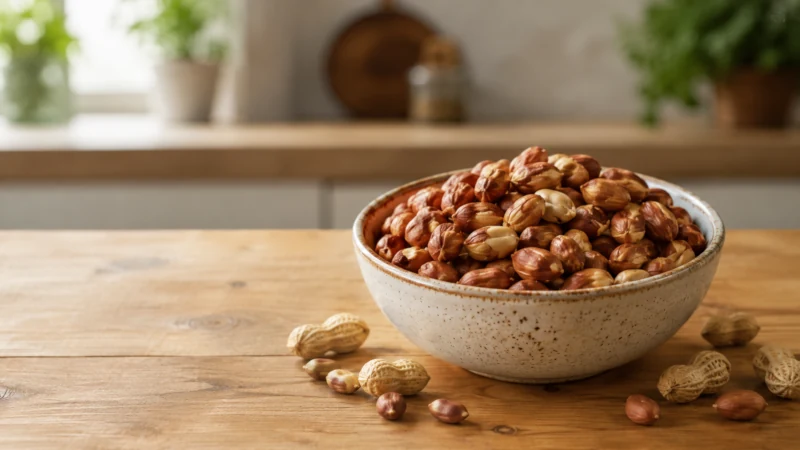
The health benefits of peanuts hold up surprisingly well when you look at the actual research: regular peanut intake is linked to lower LDL cholesterol, lower cardiovascular risk, and better appetite control, with the strongest evidence coming from large randomized trials and meta-analyses published in the last five years.
Peanuts are technically legumes, not nuts, but nutritionally they cluster with tree nuts. The Harvard T.H. Chan School of Public Health calls them “actually really healthy” and notes that their fat is mostly the unsaturated kind that helps lower LDL [Harvard T.H. Chan, 2018]. A 2023 systematic review of 153 trials in Advances in Nutrition found that habitual peanut and tree-nut consumption reduces total cholesterol, LDL cholesterol, triglycerides, and apolipoprotein B [Houston et al., 2023].
Below is what’s solid, what’s overstated, and how to fit peanuts into your diet without overdoing it. If you want the skin-focused angle, see our companion piece on peanut health benefits for the skin.
What’s actually in a handful of peanuts
One ounce of dry-roasted peanuts — roughly 28 grams, or about 28 peanuts — gives you the following, according to USDA FoodData Central:
| Nutrient | Per 1 oz (28 g) | Notes |
| Calories | ~166 | Energy-dense; portion matters |
| Protein | 6.7 g | Highest plant-protein content of any common nut |
| Total fat | 14 g | About 80% unsaturated |
| Monounsaturated fat | ~7 g | Same fat family as olive oil |
| Saturated fat | 1.9 g | Low |
| Carbohydrates | 6 g | — |
| Fiber | 2.4 g | — |
| Sodium (unsalted) | <5 mg | Salted versions add 90–230 mg per oz |
| Niacin (B3) | 3.8 mg | 24% Daily Value |
| Magnesium | 50 mg | 12% DV |
| Vitamin E | 2.2 mg | 15% DV |
| Folate | 41 mcg | 10% DV |
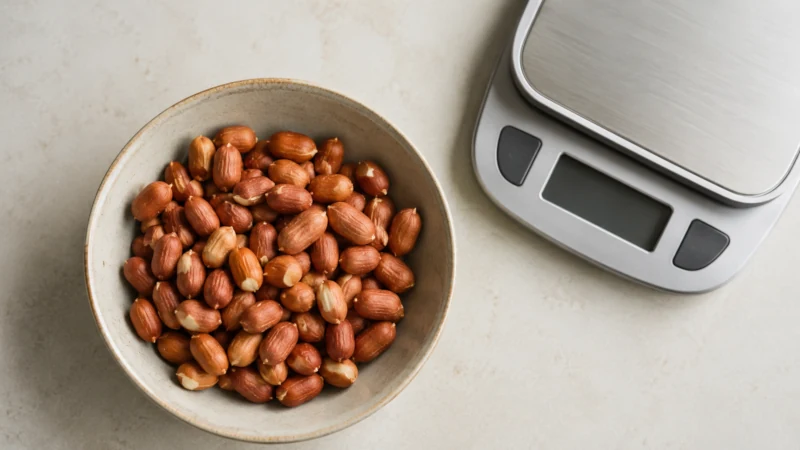
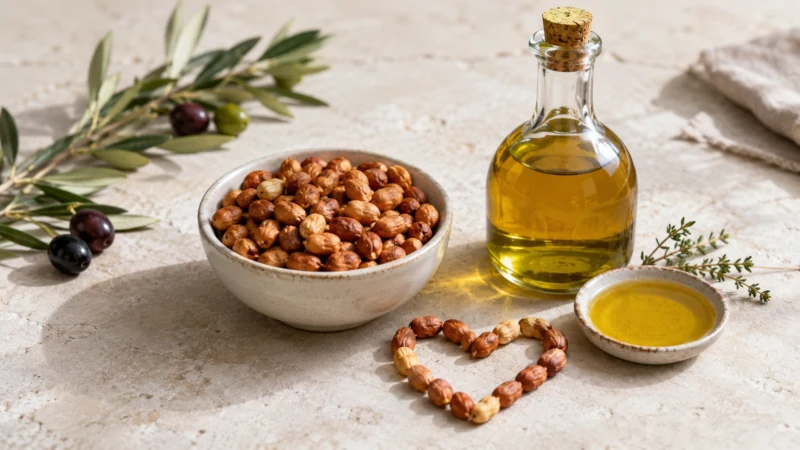
That handful gives you the plant-based protein of an egg, more fiber than a slice of whole-wheat bread, and a real dose of niacin, magnesium, and vitamin E. The fat profile is the part most people get wrong — peanut fat is closer to olive oil than to butter [USDA FDC, 2024].
A note on portion: a common claim says 40 g of peanuts equals 16 peanuts. The math doesn’t work — 40 g is closer to 40 peanuts. One ounce (about 28 g, or 28 peanuts) is the standard serving in U.S. dietary guidance.
Heart and cholesterol: where the evidence is strongest
The clearest health benefit of peanuts is for the cardiovascular system, and the effect size lines up across different study types.
Cholesterol changes in randomized trials
A 2023 meta-analysis in Advances in Nutrition pooled 129 randomized controlled trials of tree nuts and peanuts and found statistically significant reductions in LDL cholesterol, total cholesterol, triglycerides, and apolipoprotein B with habitual consumption [Houston et al., 2023]. Certainty of evidence was rated moderate for several lipid ratios, lower for individual lipids — honest results, not hype.
ARISTOTLE: a peanut-specific 6-month trial
The ARISTOTLE randomized controlled trial assigned 63 healthy adults to roasted skin-on peanuts (25 g/day), peanut butter (32 g/day), or a control fat for six months. Both peanut groups improved their lipid profile compared with control. The companion meta-analysis (40 trials, around 2,330 adults) found peanut consumption significantly lowered total cholesterol and triglycerides [Parilli-Moser et al., 2022].
Long-term cohort data
Researchers at Harvard T.H. Chan School of Public Health followed nearly 210,000 nurses and health professionals for up to 32 years. People who ate one ounce of peanuts five or more times a week had a 14% lower risk of cardiovascular disease and a 20% lower risk of coronary heart disease compared with rare nut eaters [Guasch-Ferré et al., 2017, JACC].
The mechanism researchers point to is the unsaturated fat profile plus the phenolics, resveratrol, and phytosterols in the skin. For a practical reader, the takeaway is that consistent intake — not a giant occasional handful — is what tracks with better outcomes.
Weight: why high-calorie peanuts don’t usually cause weight gain
Peanuts run about 160 calories an ounce, so the intuition is that they should drive weight gain. The data don’t agree. A widely cited review in the American Journal of Clinical Nutrition concluded that nut consumption does not produce the weight gain calorie math predicts [Tan, Dhillon & Mattes, 2014]. Three reasons stand out:
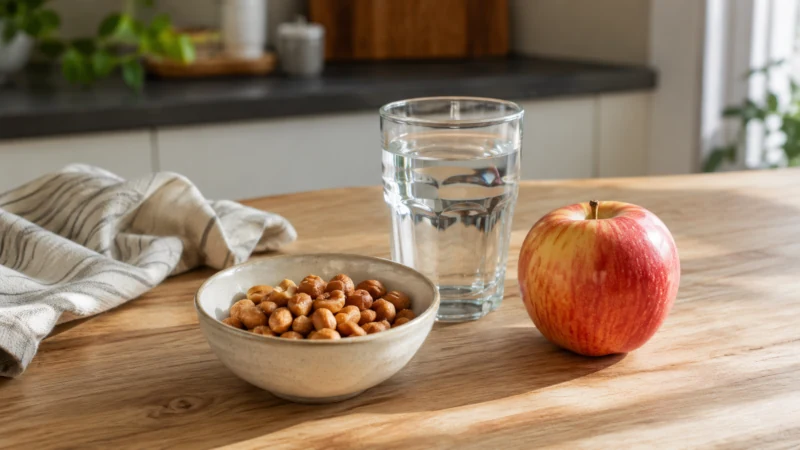
- Peanuts increase satiety, so people compensate at later meals.
- Some of the fat passes through the gut undigested because peanut cell walls are tough — measured fecal fat losses are real, not theoretical.
- Daily intake nudges resting energy expenditure up slightly.
A 2021 systematic review confirmed that nuts, including peanuts, do not lead to weight gain in randomized trials, even when participants aren’t told to compensate [Guarneiri & Cooper, 2021]. None of this means unlimited peanuts are fine — it means a daily ounce or two is unlikely to derail a healthy weight and may help curb between-meal hunger.
Other potential benefits — and what’s overstated
Type 2 diabetes
Replacing refined grains or red meat with peanuts is associated with lower type 2 diabetes risk in long-running Harvard cohort studies. Peanuts have a low glycemic index and supply magnesium and fiber, both linked to insulin sensitivity. This evidence is observational, not from large randomized prevention trials, so the right framing is association rather than proven prevention.
Brain and “anti-Alzheimer” claims
Peanuts contain resveratrol, the same polyphenol found in red wine. The amount is small — around 80 micrograms per ounce of in-shell raw peanuts. Laboratory studies on resveratrol and brain function use doses thousands of times higher. The Linus Pauling Institute at Oregon State University notes that resveratrol bioavailability in humans is low, and there is no high-quality human evidence that peanut-level resveratrol prevents Alzheimer’s disease or measurably boosts cognition [Linus Pauling Institute, 2024]. Peanuts are a reasonable part of a brain-healthy diet, but resveratrol is not the reason to reach for them.
Gallstones
A 2004 American Journal of Clinical Nutrition analysis of more than 80,000 women in the Nurses’ Health Study found that frequent nut consumption (including peanuts) was associated with about a 25% lower risk of cholecystectomy [Tsai et al., 2004]. The study is observational, but it’s one of the larger looks at the question.
How to eat them: form, salt, and skins
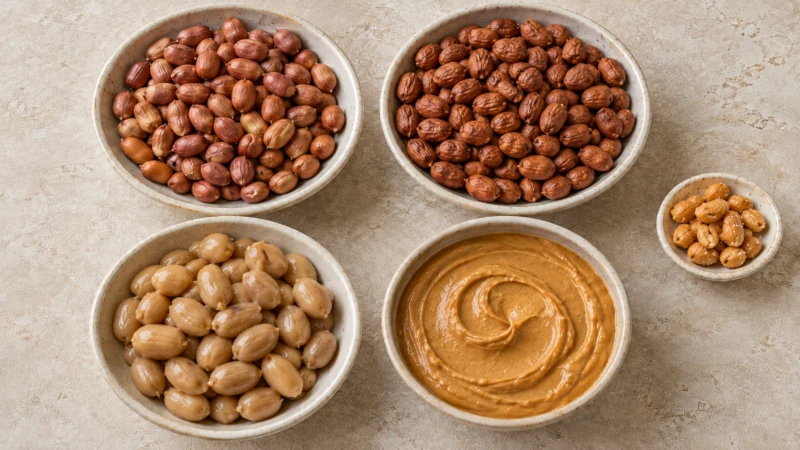
A few choices change the nutrition profile more than people realize:
- Skin-on, dry-roasted, unsalted keeps the polyphenols, keeps sodium near zero, and avoids added oils. Harvard nutrition researcher Vasanti Malik specifically recommends the skin-on form.
- Salted peanuts can add 90 to 230 mg of sodium per ounce. If you watch blood pressure, this matters.
- Honey-roasted and sweetened versions add sugar and calories without adding nutrients.
- Peanut butter is fine if the label reads peanuts (and maybe salt) and nothing else. Brands with hydrogenated oils or added sugar are closer to a sweet spread.
- Boiled peanuts retain notably more resveratrol than roasted peanuts — interesting if you boil them at home.
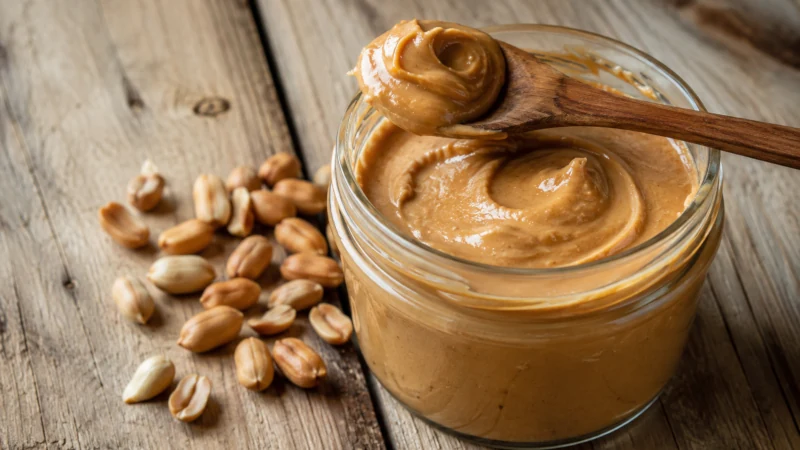
A reasonable daily portion is one ounce (about 28 peanuts, or two level tablespoons of peanut butter). Two ounces is the upper end before calories start to displace foods you also need. The almond health benefits and walnut health benefits pages on this site cover how other nuts fit alongside peanuts, and the magnesium-rich foods article includes peanuts as one of the better plant sources.
Safety and considerations
Peanut allergy
Peanut allergy is one of the most common serious food allergies in children, but the evidence on prevention has reversed in the last decade. The landmark LEAP trial showed that early, regular peanut introduction in high-risk infants reduced peanut allergy at age 5 by about 81% compared with avoidance [Du Toit et al., 2015, NEJM]. The follow-up LEAP-Trio study, published in 2024, found the protective effect carried into adolescence — a 71% relative reduction in peanut allergy through the teen years [NIAID, 2024].
Based on these trials, the 2017 NIAID Addendum Guidelines for the Prevention of Peanut Allergy recommend introducing infant-safe forms of peanut — smooth peanut butter thinned with water, or peanut puff snacks softened in milk — starting around 4 to 6 months, with timing and form depending on the child’s allergy risk. Whole peanuts are a choking hazard in young children and should not be given to babies and toddlers.
Anyone with a diagnosed peanut allergy needs to avoid peanuts entirely and carry an epinephrine auto-injector if prescribed. Oral immunotherapy options exist but only under specialist supervision.
Aflatoxins
Peanuts can be contaminated with aflatoxins, mycotoxins produced by Aspergillus molds that grow on improperly stored crops. Aflatoxins are linked to liver cancer at high chronic doses. The U.S. FDA sets an action level of 20 parts per billion for total aflatoxins in peanut products, and the U.S. peanut industry generally enforces a stricter 15 ppb internal limit [FDA, 2024]. According to the FDA, there has never been an aflatoxin-linked human illness outbreak from peanuts in the United States. Risk is higher in regions with weaker regulation and poor crop storage.
To minimize exposure at home: buy from reputable brands, store peanuts cool and dry, and discard any peanut that looks moldy, shriveled, or discolored.
Sodium
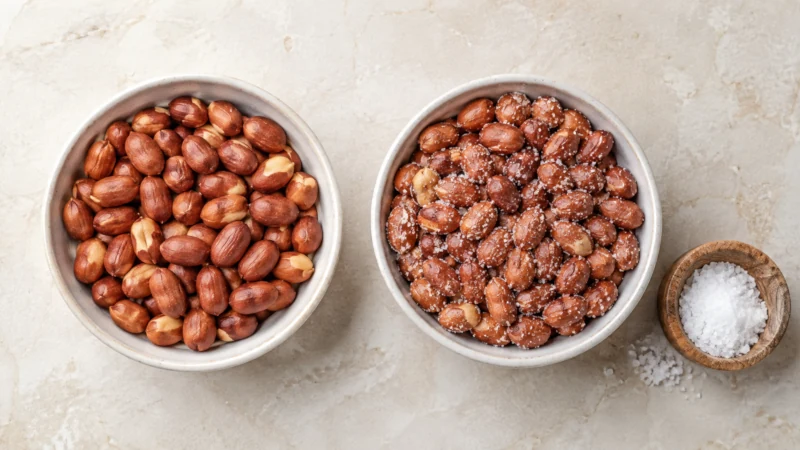
Salted peanuts add up fast. The American Heart Association recommends staying under 2,300 mg of sodium per day, with an ideal limit of 1,500 mg for most adults. A 1-oz serving of dry-roasted salted peanuts runs 90 to 230 mg depending on the brand, so two or three handfuls can take a real bite out of that budget.
Who should be cautious
- Anyone with a diagnosed peanut allergy, of course.
- Infants under about 4–6 months, before complementary foods are appropriate.
- Children under 4, who should not be given whole peanuts because of choking risk.
- Anyone on a strict low-sodium diet eating salted or flavored peanuts.
- People taking blood thinners (especially warfarin) who eat very large amounts — high-dose vitamin E can interact. Routine peanut servings are not a problem; talk to a clinician if you eat unusually large quantities.
When to talk to a healthcare professional
See a clinician if you or your child has any sign of allergic reaction after eating peanuts (swelling, hives, wheezing, vomiting, throat tightness). For severe reactions — trouble breathing, collapse — call emergency services right away. If you have high cholesterol, diabetes, or kidney disease and want to change your diet significantly, work with your doctor or a registered dietitian rather than guessing at portions. Our cardiovascular health covers diet-and-heart topics in more depth.
| Health Disclaimer: This article is for educational purposes only and is not a substitute for medical advice, diagnosis, or treatment. Nutrition needs vary by age, sex, health conditions, and medications. If you are pregnant or breastfeeding, have a diagnosed peanut allergy, are introducing peanuts to an infant, take prescription medication (especially for cholesterol, blood pressure, or blood clotting), or have a chronic illness, talk with a qualified healthcare professional before making significant dietary changes. Call emergency services for any severe allergic reaction (trouble breathing, throat tightness, collapse). |
Frequently Asked Questions
How many peanuts should I eat per day?
A standard serving is one ounce — about 28 peanuts or 2 tablespoons of peanut butter. The cohort studies that found cardiovascular benefits used roughly 1 ounce, five or more days per week. Two ounces is a reasonable upper end for most adults.
Are roasted peanuts healthier than raw?
Dry-roasted, unsalted, skin-on peanuts are the form most commonly recommended. Roasting reduces some heat-sensitive nutrients but lowers aflatoxin risk and improves flavor. Raw peanuts are fine if sourced safely; avoid any that look soft, moldy, or shriveled.
Is peanut butter as healthy as whole peanuts?
Close to it, if the label reads peanuts (and maybe salt) and nothing else. Skip versions with hydrogenated oils, added sugar, or palm oil.
Do peanuts cause inflammation?
No quality evidence supports the idea that whole peanuts cause systemic inflammation in healthy people. In randomized trials, peanut consumption either had no effect on inflammatory markers or modestly lowered them.
Should I introduce peanut to my baby?
For most infants without severe eczema or known egg allergy, current NIAID guidance is to introduce infant-safe peanut foods (smooth peanut butter thinned with water; softened peanut puffs) around 4–6 months. For infants with severe eczema or egg allergy, ask your pediatrician about allergy testing first.
Are peanuts safe during pregnancy?
For people without a peanut allergy, peanuts are considered safe in pregnancy and can be part of a healthy diet. Older advice to avoid peanuts during pregnancy to prevent allergy in the child has been reversed by current evidence.
References
- Houston L, Probst YC, Singh MC, Neale EP. Tree Nut and Peanut Consumption and Risk of Cardiovascular Disease: A Systematic Review and Meta-Analysis of Randomized Controlled Trials. Advances in Nutrition. 2023;14(5):1029-1049. → View source
- Parilli-Moser I, Hurtado-Barroso S, Guasch-Ferré M, Lamuela-Raventós RM. Effect of Peanut Consumption on Cardiovascular Risk Factors: A Randomized Clinical Trial and Meta-Analysis. Frontiers in Nutrition. 2022;9:853378. → View source
- Guasch-Ferré M, Liu X, Malik VS, Sun Q, Willett WC, Manson JE, et al. Nut Consumption and Risk of Cardiovascular Disease. Journal of the American College of Cardiology. 2017;70(20):2519-2532. → View source
- Tan SY, Dhillon J, Mattes RD. A review of the effects of nuts on appetite, food intake, metabolism, and body weight. American Journal of Clinical Nutrition. 2014;100(Suppl 1):412S-422S. → View source
- Guarneiri LL, Cooper JA. Intake of Nuts or Nut Products Does Not Lead to Weight Gain, Independent of Dietary Substitution Instructions: A Systematic Review and Meta-Analysis of Randomized Trials. Advances in Nutrition. 2021;12(2):384-401. → View source
- Tsai CJ, Leitzmann MF, Hu FB, Willett WC, Giovannucci EL. Frequent nut consumption and decreased risk of cholecystectomy in women. American Journal of Clinical Nutrition. 2004;80(1):76-81. → View source
- Du Toit G, Roberts G, Sayre PH, Bahnson HT, Radulovic S, Santos AF, et al. Randomized Trial of Peanut Consumption in Infants at Risk for Peanut Allergy. New England Journal of Medicine. 2015;372(9):803-813. → View source
- Du Toit G, Huffaker MF, Radulovic S, Feeney M, Fisher HR, Byron M, et al. Follow-up to Adolescence after Early Peanut Introduction for Allergy Prevention. NEJM Evidence (2024). Summarized by NIAID/NIH news release: “Introducing peanut in infancy prevents peanut allergy into adolescence.” → View source
- National Institute of Allergy and Infectious Diseases. Addendum Guidelines for the Prevention of Peanut Allergy in the United States: Report of the NIAID-Sponsored Expert Panel. 2017. → View source
- U.S. Food and Drug Administration. CPG Sec. 570.375: Aflatoxins in Peanuts and Peanut Products. Compliance Policy Guide. → View source
- U.S. Department of Agriculture, Agricultural Research Service. FoodData Central: Peanuts, all types, dry-roasted, without salt (FDC ID 173806). → View source
- Linus Pauling Institute, Oregon State University. Micronutrient Information Center: Resveratrol. → View source
- Harvard T.H. Chan School of Public Health. “Peanuts and peanut butter can be healthy” — interview with Vasanti Malik, ScD. → View source
