If you’re looking for the best herbs for high blood pressure, here’s the honest version most articles won’t give you: a small number of herbs — mainly garlic and hibiscus — have real human-trial evidence behind them, but the effect is modest, and no herb comes close to replacing the proven steps for lowering blood pressure. A few popular “blood pressure herbs” have almost no good evidence at all, and a handful can actually raise your pressure or interfere with your medication. One that shows up on a lot of these lists, mistletoe, is genuinely toxic and shouldn’t be used as a home remedy.
That’s worth knowing up front, because high blood pressure is the condition where overpromising does the most damage. Nearly half of U.S. adults have high blood pressure, and only about one in four of them has it under control [CDC, 2024]. Roughly one in six adults with high blood pressure doesn’t even know they have it, which is why it’s often called the silent killer — it usually causes no symptoms while it quietly strains your heart, kidneys, eyes, and blood vessels [AHA].
So this isn’t an argument against trying herbs. It’s an argument for using them the way the evidence actually supports: as a small, optional add-on, alongside the things that move the needle, and with a clear eye on safety.
Set your expectations first
The most useful thing to understand before you buy anything: the herbs and supplements studied for blood pressure tend to lower it by a few points at most. The National Center for Complementary and Integrative Health notes that while some supplements may help reduce blood pressure, the evidence is limited, the effects are small, and no dietary supplement has been shown to work as well as the medications used to treat hypertension [NCCIH, 2024].
A few points of systolic reduction isn’t nothing — over years, small reductions across a population genuinely prevent strokes and heart attacks. But if your blood pressure is high enough that your doctor wants you on medication, an herb is not a substitute. The realistic role of herbs here is supportive: something you might add to a diet-and-exercise plan, ideally after a conversation with your clinician, not a swap for treatment you actually need.
The herbs with the most evidence behind them
Garlic
Garlic is the herb with the strongest case. Several meta-analyses of randomized trials have found a real blood-pressure-lowering effect, and it’s most pronounced in people who already have hypertension rather than those with normal readings. One analysis found that garlic lowered systolic blood pressure by about 8 mm Hg and diastolic by roughly 7 mm Hg in people with high blood pressure [Ried, 2008]. A later review of placebo-controlled trials similarly found significant reductions in both systolic and diastolic pressure, with no serious side effects reported [Wang, 2015].
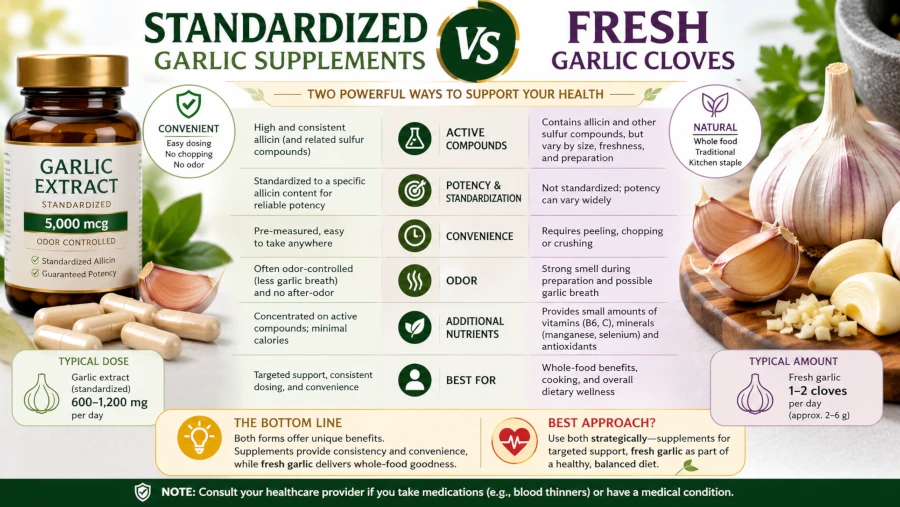
It’s worth being honest about the limits, though. A Cochrane review pointed out that the size of garlic’s effect falls within the normal variability of a blood pressure reading, which makes it hard to be certain how much it truly helps [NCCIH, 2024]. The trials also use concentrated supplements — aged garlic extract, garlic powder tablets standardized to allicin — not a clove on your dinner plate. Cooking garlic into food is fine and healthy, but it’s not the same dose the studies used.
What to know before trying it: Garlic supplements are generally well tolerated. The main caution is bleeding: garlic can increase bleeding risk in people taking anticoagulant (“blood thinner”) medication, and it can interfere with how some drugs work [NCCIH, 2024]. Stop garlic supplements before any scheduled surgery, and talk to your doctor first if you take warfarin or another blood thinner.
Hibiscus (roselle / sour tea)
Hibiscus — sold as roselle, sour tea, or Hibiscus sabdariffa — is the other herb with a respectable evidence base, and it’s one of the few that’s pleasant to take as a tea. NCCIH lists roselle among the supplements that may help reduce blood pressure [NCCIH, 2024], and pooled analyses of clinical trials back that up. A meta-analysis of randomized trials found that sour tea consumption significantly reduced systolic blood pressure, by roughly 5 mm Hg on average [Najdi, 2020]. A larger 2025 review of 26 trials found that hibiscus reduced both systolic and diastolic pressure in a dose-dependent way, with the clearest effect in adults over 50 and in studies lasting more than four weeks [Bahmani, 2025].
The effect is modest and the same caveat applies — it won’t match a prescription. But a few cups of unsweetened hibiscus tea a day is a low-risk, inexpensive thing to try, and unlike a lot of items on these lists, it tastes good and you’re also getting hydration instead of a sugary drink.
What to know before trying it: Hibiscus is generally safe in tea amounts. It may lower blood pressure enough to matter if you’re already on medication, so monitor your readings. There isn’t enough safety data to recommend it during pregnancy, and animal studies raise enough questions that it’s reasonable to avoid medicinal amounts if you’re pregnant or trying to conceive. As with garlic, loop in your doctor if you’re on blood pressure drugs.
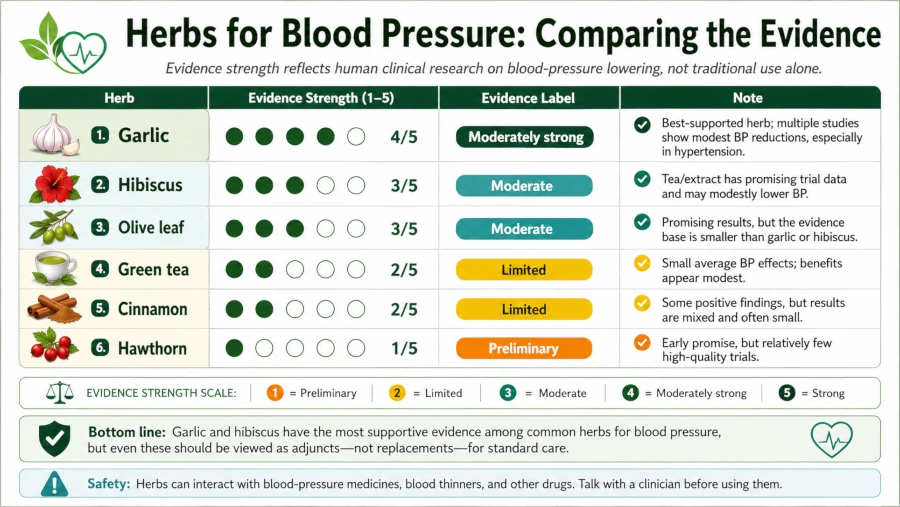
Here’s how the better-studied options compare:
| Herb / supplement | Evidence quality | Typical effect | Main caution |
| Garlic (extract / tablets) | Moderate — multiple RCT meta-analyses | ~5–8 mm Hg systolic in hypertensives | Bleeding risk with anticoagulants |
| Hibiscus / roselle tea | Moderate — RCT meta-analyses | ~4–6 mm Hg systolic | Avoid medicinal doses in pregnancy |
| Green/black tea, cocoa, flaxseed | Limited / mixed | Small | Caffeine in tea; generally low risk |
| Olive leaf, hawthorn, linden, valerian | Weak or traditional-use only | Unproven for BP | Varies; few are well studied |
Herbs and foods with weaker or early evidence
Tea, cocoa, flaxseed, and beetroot
A handful of foods sit in the “promising but limited” category. NCCIH notes that cocoa, flaxseed, and green or black tea may modestly help with blood pressure [NCCIH, 2024], and beetroot juice has its own small body of supporting trials. None of these will transform your numbers, but they’re genuinely healthy foods, so working them into your diet is a reasonable, low-stakes move. Think of them as nudges, not treatments.
Olive leaf, hawthorn, linden, and the traditional remedies
This is where a lot of “best herbs” lists pad their word count, and where you should be most skeptical. Olive leaf extract, hawthorn, linden, valerian, marjoram, fumitory, corn silk, and similar plants show up constantly, usually with confident claims that they “balance” or “normalize” pressure. The reality is that human evidence for most of them is thin, preliminary, or limited to traditional use — not the kind of randomized-trial support garlic and hibiscus have.
That doesn’t make them worthless; it makes their blood-pressure claims unproven. Hawthorn, for example, has been studied more for heart failure than for hypertension, and the popular claim that it raises low pressure while lowering high pressure isn’t something good trials support. Valerian is studied mainly for sleep and anxiety, not blood pressure. If you enjoy these as teas, that’s fine — but don’t rely on them to control a serious condition, and don’t let a long list of names create the impression that the evidence is deeper than it is.
Herbs to be careful with — or avoid entirely
This is the section most natural-remedy articles leave out, and it’s the most important one.
Mistletoe (don’t use this one)
Mistletoe appears on a surprising number of blood pressure herb lists, and it shouldn’t. Mistletoe is toxic — the poisonous compounds are found throughout the plant, especially the leaves [MedlinePlus, 2025], and the European species (Viscum album) is the more dangerous of the two, with the rare deaths from mistletoe poisoning usually traced to people drinking tea brewed from the plant [WebMD, 2024]. Brewing mistletoe tea for your blood pressure is exactly the scenario poison-control sources warn against. Skip it entirely.
Licorice, ginseng, bitter orange, and ephedra
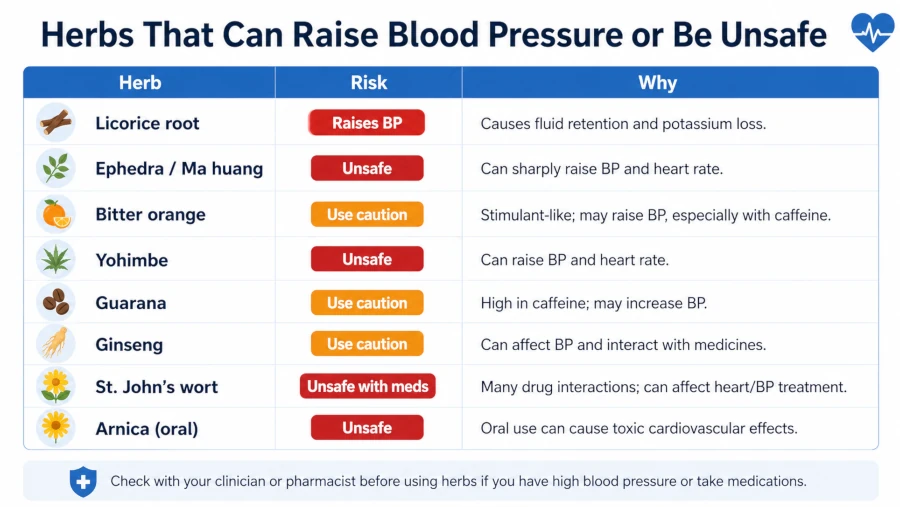
Some herbs can push your blood pressure the wrong way. NCCIH specifically flags bitter orange, ephedra, ginseng, and licorice root as supplements that may raise blood pressure, and some of these can interact harmfully with medications, including blood pressure drugs [NCCIH, 2024].
Licorice is the sneaky one — real licorice root (and licorice-flavored candy made with it) can raise blood pressure and drop your potassium with regular use. Ginseng, despite often being described as something that “normalizes” pressure, has inconsistent research and can affect blood pressure and interact with medication. If you have hypertension, these are worth actively avoiding rather than experimenting with.
How herbs interact with blood pressure medication
“Natural” doesn’t mean “no interactions.” It’s the opposite of what a lot of people assume: because herbs contain active compounds, they can stack with — or fight against — your prescriptions. An herb that lowers blood pressure on top of a medication that does the same can drop your pressure too far. An herb like garlic can increase bleeding risk alongside a blood thinner [NCCIH, 2024]. And some supplements blunt how well a drug works.
The practical rule is simple: tell your doctor and pharmacist about every herb and supplement you take, including teas you drink regularly. Pharmacists are especially good at catching interactions, and it costs you nothing to ask. If you start a new herb, check your blood pressure at home over the following couple of weeks so you and your clinician can see whether anything actually changed.
What actually lowers blood pressure
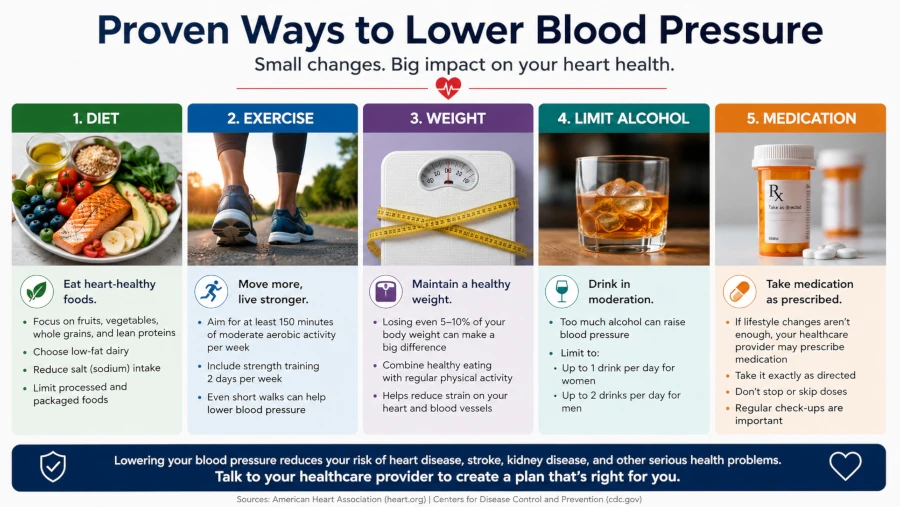
If you take one thing from this article, let it be this: the steps with the strongest evidence aren’t herbs at all. They’re not glamorous, but they work, and they work more reliably than anything on the shelf at a supplement store:
- Cut back on sodium and follow a DASH-style eating pattern — more vegetables, fruit, whole grains, beans, nuts, and lean protein; less processed food, salt, and added sugar.
- Get regular physical activity — even brisk walking most days lowers blood pressure over time.
- Lose a modest amount of weight if you’re carrying extra — even a small reduction helps.
- Limit alcohol, and don’t smoke.
- Take prescribed medication as directed if your doctor recommends it. CDC data show that a large number of adults who could benefit from blood pressure medication aren’t taking it [CDC, 2024] — and untreated high blood pressure is far riskier than the side effects most people worry about.
Herbs like garlic and hibiscus fit on top of this foundation. They don’t replace it.
When to call your doctor — and when to call 911
Because high blood pressure is usually silent, the most important habit is checking it — at home with a validated cuff, and at regular visits. Contact your healthcare professional if your readings are consistently elevated, if you’re starting or stopping any supplement, or if you’re not sure whether your current plan is working.
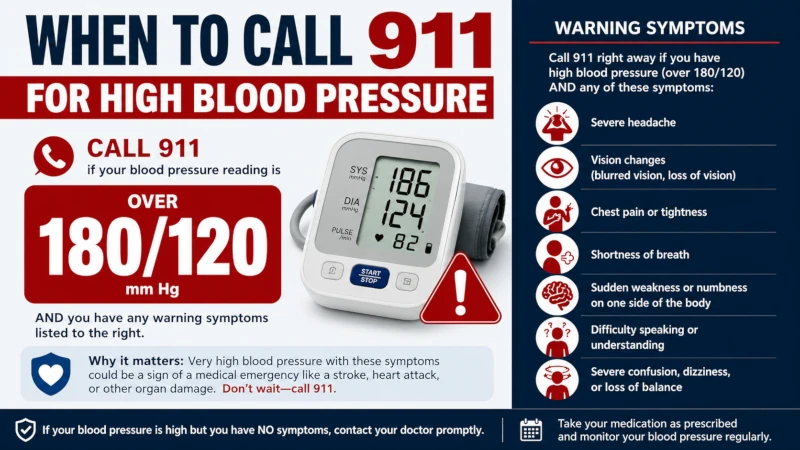
Some situations need emergency care. Call 911 if your blood pressure is 180/120 mm Hg or higher and you have symptoms such as chest pain, shortness of breath, back pain, numbness or weakness, vision changes, or difficulty speaking [AHA]. This is a hypertensive emergency — don’t wait to see whether the reading comes down on its own. If your reading is that high but you have no symptoms, recheck after a few minutes, and if it’s still elevated, contact your doctor promptly rather than waiting [AHA].
| A note on safety This article is for general education and isn’t a substitute for advice from a qualified healthcare professional. High blood pressure is a serious condition that often has no symptoms, so don’t use herbs to replace prescribed treatment or regular monitoring. Talk to your doctor or pharmacist before starting any herb or supplement — especially if you take medication, have a chronic condition, or are pregnant or breastfeeding. If you’re experiencing a possible hypertensive emergency, call 911. |
Frequently Asked Questions
Can herbs cure high blood pressure?
No. No herb cures hypertension. The best-studied options, garlic and hibiscus, may lower it modestly, but the effect is small and no supplement matches blood pressure medication [NCCIH, 2024]. Herbs are best used as an add-on to proven steps, not a cure.
What is the single best herb for high blood pressure?
If you want the one with the strongest evidence, it’s garlic — specifically standardized garlic supplements, which lowered blood pressure in several randomized-trial reviews, most clearly in people who already had hypertension [Ried, 2008] [Wang, 2015]. Hibiscus tea is a close, pleasant second.
Is hibiscus tea safe to drink every day?
For most people, a few cups of unsweetened hibiscus tea a day is low risk and may modestly help blood pressure [NCCIH, 2024]. Avoid medicinal amounts during pregnancy, and if you take blood pressure medication, monitor your readings so you don’t drop too low.
Are there herbs I should avoid if I have high blood pressure?
Yes. Bitter orange, ephedra, ginseng, and licorice root may raise blood pressure or interact with medications [NCCIH, 2024]. And avoid mistletoe entirely — it’s toxic and has caused poisonings when brewed as tea [MedlinePlus, 2025].
Can I take herbs instead of my blood pressure medication?
No. Don’t stop or replace prescribed medication with herbs. Untreated high blood pressure carries real risk of stroke, heart attack, and kidney damage. If side effects are your concern, talk to your doctor about adjusting your treatment rather than stopping it.
Will herbs interact with my blood pressure pills?
They can. Garlic can increase bleeding risk with blood thinners, BP-lowering herbs can stack with your medication and overshoot, and some supplements reduce how well drugs work [NCCIH, 2024]. Tell your doctor and pharmacist about everything you take.
References
- Centers for Disease Control and Prevention. High Blood Pressure Facts. 2024. View source
- National Center for Complementary and Integrative Health (NCCIH). Hypertension (High Blood Pressure). 2024. View source
- NCCIH. Complementary Health Approaches for Hypertension: What the Science Says. View source
- Ried K, et al. Effect of garlic on blood pressure: a systematic review and meta-analysis. BMC Cardiovasc Disord. 2008. View source
- Wang HP, et al. Garlic for hypertension: a systematic review and meta-analysis of RCTs. 2015. View source
- Ellis LR, et al. Effects of Hibiscus sabdariffa on blood pressure and cardiometabolic markers. Nutr Rev. 2022. View source
- Najdi N, et al. Sour tea (Hibiscus sabdariffa L.) on cardiovascular disease risk factors: meta-analysis of RCTs. Phytother Res. 2020. View source
- Efficacy and safety of Hibiscus sabdariffa in cardiometabolic health: dose-response meta-analysis. 2025. View source
- American Heart Association. When To Call 911 About High Blood Pressure. View source
- MedlinePlus (NLM). Mistletoe poisoning. 2025. View source
- WebMD. Mistletoe Poisoning: What to Know. 2024. View source
