
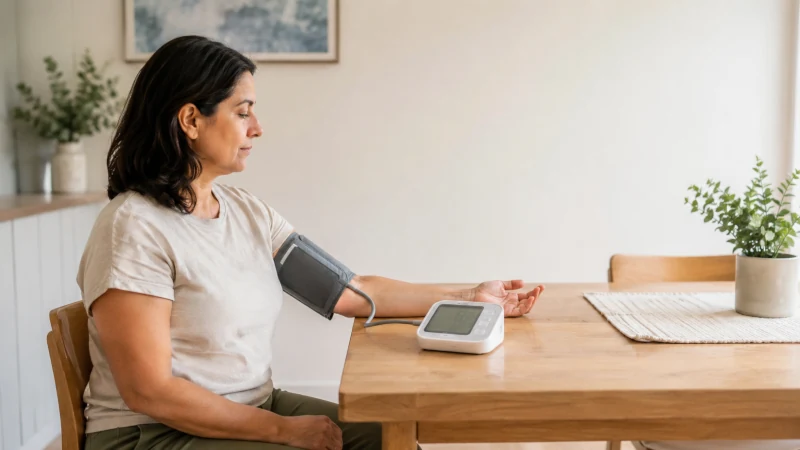
If you’re weighing a Welch Allyn blood pressure monitor, here’s the honest short version: Welch Allyn — now part of Baxter — is a diagnostics brand you’ve probably met at the doctor’s office, and the technology inside its monitors has been tested against recognized accuracy standards. For home use, the one to know is the Welch Allyn Home Blood Pressure Monitor, which runs that same core technology. The professional models you may have seen, like the Connex ProBP 3400, are clinical office devices, not something you’d buy for your bathroom counter.
A monitor is only as trustworthy as two things: whether your exact model has been validated for accuracy, and whether you use it correctly. Both matter more than the brand on the front. Here’s how Welch Allyn’s monitors measure up — and how to get readings you can actually rely on.
Why home readings matter in the first place
High blood pressure usually causes no symptoms, which is why nearly half of U.S. adults have it (about 48%, or 119.9 million people) and roughly one in six who have it don’t know it [CDC, 2026]. Only about one in four people with high blood pressure have it under control [CDC, 2026]. You can’t feel your way through this, and a single reading in a clinic can be misleading. Checking at home, over time, gives your doctor a truer picture — but only if the numbers are accurate.
What “Welch Allyn” means today
Welch Allyn is a long-standing medical-diagnostics brand. It’s now part of Hillrom, which Baxter acquired, so you’ll see the names used together — Baxter, Hillrom, and Welch Allyn [Baxter/Hillrom, 2026]. The equipment is best known in clinics and hospitals, and the company also makes a consumer-facing home monitor built on the same measurement engine.
The home monitor vs. the office monitors
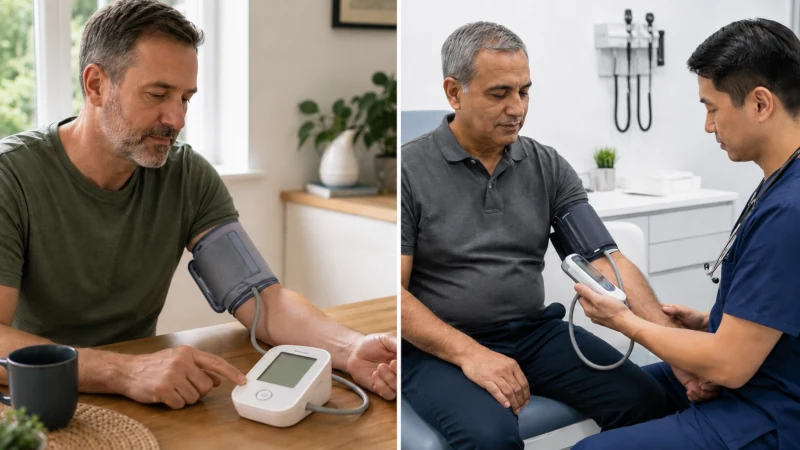
This is the distinction most product roundups blur. Welch Allyn’s home and professional monitors are different tools for different places.
| Welch Allyn Home BP Monitor | Connex ProBP / ProBP line | |
| Made for | Home / self-measurement | Clinics, hospitals, urgent care |
| Form | Upper-arm cuff + tabletop unit | Handheld device, professional cuffs |
| Technology | SureBP inflation-based algorithm | SureBP inflation-based algorithm |
| Extras | Bluetooth app, memory; 1700 Series adds irregular-heartbeat detection | FlexiPort cuffs, EMR/EHR connectivity |
| Buy for home? | Yes — the consumer option | No — professional equipment |
The Welch Allyn Blood Pressure Monitor
This is the consumer device. It uses a one-button, upper-arm cuff design, stores readings, and connects over Bluetooth to a free app so you can track trends and share them with your care team [Baxter/Hillrom, 2026]. It comes in a 1500 Series and a 1700 Series; the 1700 Series adds irregular-heartbeat detection. It runs on AA batteries and takes readings as the cuff inflates rather than as it deflates, which shortens the measurement.
The Connex ProBP and ProBP line
The Connex ProBP 3400 (and related ProBP models) are handheld devices for professional settings — primary care, specialty clinics, hospitals, urgent care. They use standardized FlexiPort cuffs and can push readings into an electronic health record [Baxter/Hillrom, 2026]. They’re excellent clinical instruments, but they aren’t sold as everyday home devices.
A note on availability: the Welch Allyn Home monitor is distributed mainly through medical suppliers and a provider-run remote-monitoring program rather than typical big-box retail. Check current availability, cuff sizes, and price with a medical-supply retailer or your own clinic.
How accurate is the SureBP technology?
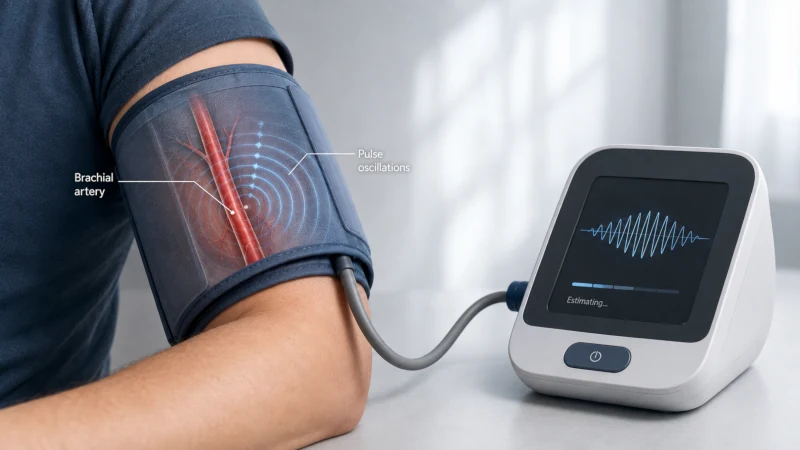
Welch Allyn monitors use an inflation-based algorithm called SureBP. Like most automatic cuff devices, it works on the oscillometric principle — the cuff senses tiny pressure oscillations from your pulse and an algorithm estimates your blood pressure from them [Front. Physiology, 2019]. What sets a good algorithm apart is how well it agrees with careful human measurement, and here the evidence is reasonably strong:
- In a published validation, the SureBP algorithm passed the AAMI accuracy standard and earned an “AA” grade under British Hypertension Society analysis, with mean differences of about −0.9 mm Hg (systolic) and −2.2 mm Hg (diastolic) versus trained observers, averaging around 15 seconds per reading [Alpert, Blood Pressure Monitoring, 2007].
- The Welch Allyn Home monitor (1700 Series), which carries that same algorithm, has its own published validation, including a test of accuracy during involuntary hand tremor [Alpert, Blood Pressure Monitoring, 2019].
- The professional Connex ProBP 3400 passed the AAMI SP10 standard and earned an “A” grade by BHS analysis, with mean differences of about −1.1 mm Hg (systolic) and −2.1 mm Hg (diastolic) [Blood Pressure Monitoring, 2011].
Two honest caveats. First, the relevant accuracy standards here are AAMI (a U.S. standards body) and the British Hypertension Society — not clinical-chemistry certification, which is unrelated to blood-pressure devices. Second, several device validation studies, including some of the above, are conducted or funded by the manufacturer. That doesn’t make them wrong, but it’s a reason to lean on an independent reference too — which brings us to the single most useful check you can make.
The one check that matters most: is your model on the validated list?
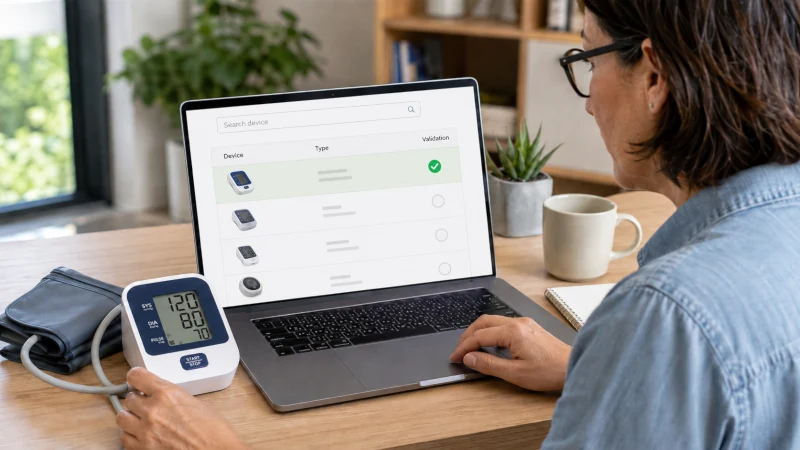
Many monitors advertise “FDA cleared.” That is not the same as validated for accuracy — the FDA clears a device to be sold, but doesn’t independently verify that its readings are accurate [American Heart Association, 2022]. For that, use the U.S. Blood Pressure Validated Device Listing, a free, independent resource from the American Medical Association at validatebp.org [AMA, 2023]. Hillrom–Welch Allyn is among the manufacturers with listed devices [AMA, 2020], but listings change, so search your exact model before you buy. Internationally, stridebp.org keeps a similar list.
Two more rules of thumb from the [American Heart Association, 2020]: choose an upper-arm cuff device (they’re more reliable than wrist models for most people), and make sure the cuff actually fits your arm. Research suggests more than 17 million U.S. adults can’t get an accurate reading from standard cuffs because the cuff is the wrong size [American Heart Association, 2024].
Getting a reading you can trust
Even a validated monitor gives bad numbers if your technique is off. The American Heart Association’s checklist is short and worth following every time [American Heart Association, 2026]:
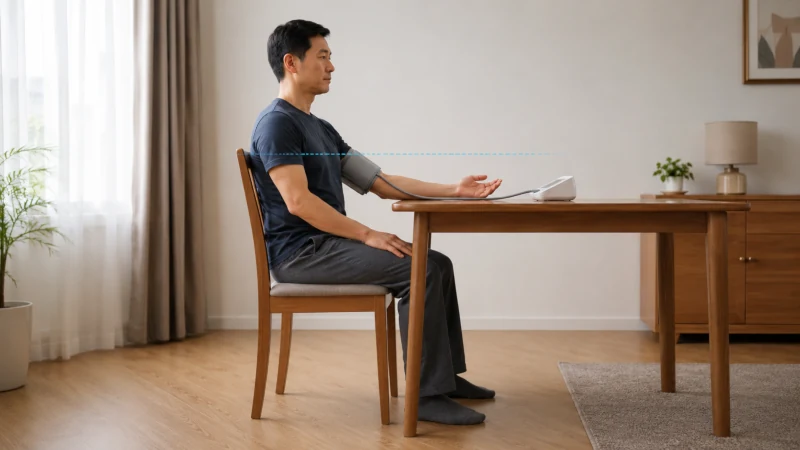
- Skip caffeine, exercise, and smoking for 30 minutes beforehand, and empty your bladder.
- Sit quietly for five minutes first — no TV, phone, or talking.
- Sit with your back supported, feet flat on the floor, legs uncrossed.
- Put the cuff on a bare arm (not over a sleeve), resting the arm on a table so the cuff is at heart level.
- Position the cuff just above the bend of your elbow, snug but not tight.
- Don’t talk during the reading.
- Take two or three readings a minute apart and average them; measure around the same times each day.
One more step people skip: take your monitor to an appointment once and have it checked against the office device, then re-check about once a year [American Heart Association, 2026]. Place the cuff on bare skin, and confirm your cuff size with your doctor if you’re unsure [Mayo Clinic, 2026].
What your numbers mean
Blood pressure is written as systolic (top) over diastolic (bottom), in mm Hg. Here’s how the American Heart Association groups the readings [American Heart Association, 2026]:
| Category | Systolic (top) | Diastolic (bottom) | |
| Normal | Less than 120 | and | Less than 80 |
| Elevated | 120–129 | and | Less than 80 |
| Stage 1 hypertension | 130–139 | or | 80–89 |
| Stage 2 hypertension | 140 or higher | or | 90 or higher |
| Hypertensive crisis | Higher than 180 | and/or | Higher than 120 |
A diagnosis isn’t made from one reading. It’s based on the average of several readings taken on different days [Mayo Clinic, 2024]. If about a week or two of properly taken home readings keep landing in the elevated or hypertension range, that’s the signal to talk with your doctor.
Red flags: when a reading is an emergency
If a reading is higher than 180/120 mm Hg, wait one minute and measure again. If it’s still that high and you have chest pain, shortness of breath, back pain, numbness or weakness, vision changes, or trouble speaking, call 911 — this is a hypertensive emergency [American Heart Association, 2026]. If it’s still that high without those symptoms, contact your doctor right away [American Heart Association, 2026]. And if your everyday readings are consistently at or above 130/80, make an appointment — a monitor detects a problem, but it doesn’t treat one.
Where a monitor fits in the bigger picture
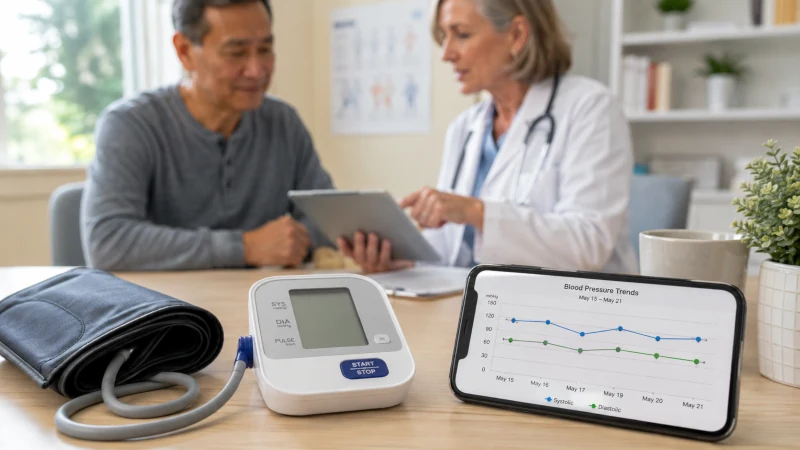
Measuring is step one, not the whole plan. The habits with the strongest evidence for blood pressure are a DASH-style eating pattern, cutting sodium, getting potassium from food, staying active, keeping a healthy weight, and limiting alcohol. If you want practical starting points, see our guides to foods that lower blood pressure and nitrate-rich foods for blood pressure. People who like a gentle add-on sometimes ask about hibiscus tea for high blood pressure — reasonable as a complement, never a replacement for treatment. A reliable home monitor is what tells you whether any of it is working.
Limitations and who should take extra care
- Wrong cuff size or sloppy technique are the most common causes of inaccurate home readings — fix these first.
- Oscillometric monitors can be less reliable if you have an irregular heart rhythm such as atrial fibrillation; confirm readings with your care team.
- During pregnancy, and for children, seniors, or people with specific conditions, choose a device validated for that group and follow your clinician’s monitoring plan.
- Wrist and cuffless devices (including smartwatches) are mostly unvalidated; upper-arm cuffs are preferred.
- Never adjust your medication based on home readings without talking to your doctor.
| Health Disclaimer: This article is for general education and information only. It is not medical advice and is not a substitute for diagnosis, treatment, or guidance from a qualified healthcare professional. High blood pressure can be dangerous even when you feel fine. A home monitor can help you track your numbers, but it cannot diagnose or treat anything on its own. Do not start, stop, or change any medication based on home readings. If you are pregnant or breastfeeding, have a heart-rhythm problem, or take prescription medication, talk with your doctor or pharmacist about which monitor fits your situation and how to use it. If a reading is higher than 180/120 mm Hg and comes with chest pain, shortness of breath, numbness or weakness, vision changes, or trouble speaking, call 911. |
Frequently Asked Questions
Is the Welch Allyn Home monitor accurate?
It uses the SureBP algorithm, which has passed the AAMI standard and earned high British Hypertension Society grades in published testing, and the Home 1700 Series has its own validation study. As with any monitor, accuracy also depends on correct cuff size and good technique — and it’s worth confirming your exact model on validatebp.org.
Can I buy a Welch Allyn monitor for home use?
Yes — the Welch Allyn Home Blood Pressure Monitor is the consumer option. It’s sold mainly through medical suppliers and provider programs rather than typical retail, so check availability and cuff sizes with a medical-supply retailer or your clinic. The Connex ProBP models are professional office devices, not home products.
What’s the difference between the 1500 and 1700 Series?
Both are upper-arm home monitors using the same core technology and app. The 1700 Series adds irregular-heartbeat detection. Choose based on the features you want and the cuff size that fits your arm.
Is a Welch Allyn monitor better than other brands?
The more useful question is whether your specific model is validated for accuracy and fits your arm. Several brands appear on the U.S. Validated Device Listing. A validated, correctly sized upper-arm monitor you’ll actually use is the right one.
How often should I check my blood pressure at home?
Ask your doctor for a plan. A common approach is two readings in the morning and two in the evening for about a week when you’re establishing a baseline or after a medication change, then less often once things are stable.
References
- Centers for Disease Control and Prevention. High Blood Pressure Facts. CDC (updated 2026). View source
- American Heart Association. Understanding Blood Pressure Readings. AHA (reviewed 2026). View source
- American Heart Association. How to Manage Blood Pressure — Life’s Essential 8 Fact Sheet. AHA (2026). View source
- American Heart Association. Monitoring Your Blood Pressure at Home. AHA (reviewed 2026). View source
- American Heart Association. How to Accurately Measure Blood Pressure at Home. AHA News (2020). View source
- American Heart Association. Monitoring Blood Pressure at Home Can Be Tricky. AHA News (2022). View source
- American Heart Association. Popular Home Blood Pressure Cuffs May Not Fit Millions of Adults. AHA News (2024). View source
- American Medical Association. The Validation of BP Measurement Devices for Clinical Accuracy. AMA (2023). View source
- American Medical Association. BP Monitoring You Can Count On — List of Validated Devices Grows. AMA (2020). View source
- U.S. Blood Pressure Validated Device Listing (VDL). ValidateBP.org, American Medical Association. View source
- Alpert BS. Clinical evaluation of the Welch Allyn SureBP algorithm for automated blood pressure measurement. Blood Pressure Monitoring. 2007;12(4):215–218. PMID 17625393. View source
- Alpert BS. Validation of the Welch Allyn Home blood pressure monitor (1700 Series) with the SureBP algorithm, including accuracy during involuntary (tremor) movement. Blood Pressure Monitoring. 2019;24(2):89–92. PMID 30724792. View source
- Validation of the Welch Allyn ProBP 3400: a device for professional use. Blood Pressure Monitoring. 2011;16(3). (LWW abstract.) View source
- Formulas to Explain Popular Oscillometric Blood Pressure Estimation Algorithms. Frontiers in Physiology. View source
- Baxter / Hillrom. Welch Allyn Home Blood Pressure Monitor (product page). View source
- Mayo Clinic. Get the Most Out of Home Blood Pressure Monitoring. Mayo Clinic (2026). View source
- Mayo Clinic. Blood Pressure Chart: What Your Reading Means. Mayo Clinic (2024). View source
