
If a sandwich leaves you bloated, crampy, or hunting for a bathroom, you’re not imagining it, and you’re far from alone. Often the trigger isn’t gluten at all but a carbohydrate in wheat called a fructan. Still, digestive problems with bread can also point to celiac disease, an autoimmune condition that damages the small intestine, or to a wheat allergy, which can be dangerous. Sorting out which one you have matters — and the order you do it in matters too, because cutting out bread before you’re tested can hide the condition you most need to catch.
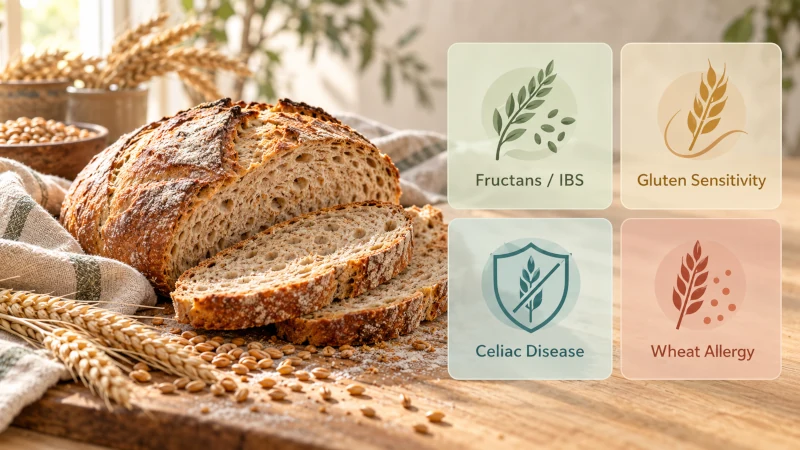
Digestive problems with bread: Four Common Culprits
Four different problems can make bread hard on your gut. They overlap in symptoms but differ sharply in how serious they are and what you should do.
| Cause | Common symptoms | Damages the gut? | How it’s identified |
| Fructans / IBS — a poorly absorbed carbohydrate in wheat | Bloating, gas, cramping, diarrhea or constipation | No | Structured elimination and reintroduction, ideally with a dietitian |
| Non-celiac gluten sensitivity | Abdominal pain, bloating, tiredness | No | By ruling out celiac disease and wheat allergy; no specific test exists |
| Celiac disease — autoimmune reaction to gluten | Bloating, chronic diarrhea, gas, constipation; also fatigue, anemia, rash, joint pain | Yes | Blood tests, usually confirmed by small-intestine biopsy — while still eating gluten |
| Wheat allergy — allergic reaction to wheat proteins | Hives, mouth or throat swelling, congestion, trouble breathing, vomiting, diarrhea; minutes to hours after eating | No | Evaluation by a healthcare professional, usually an allergist |
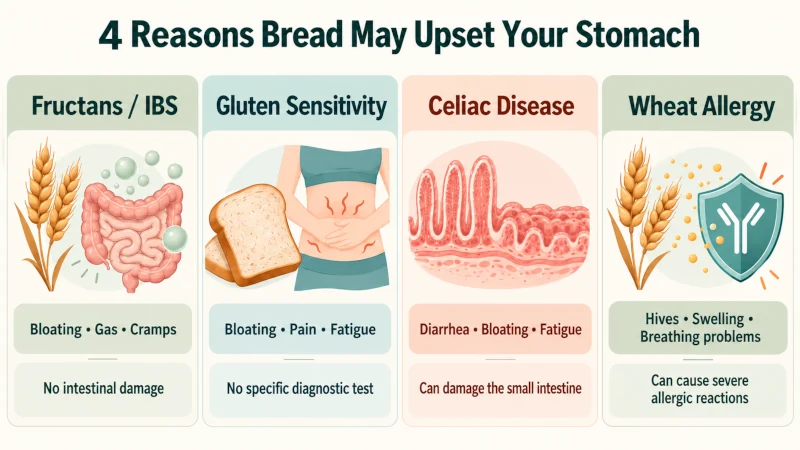
Sources: NIDDK, 2020a and 2020b; Mayo Clinic, 2025; ACG, 2026; Skodje et al., 2018.
Fructans: Often the Real Reason Bread Bloats You
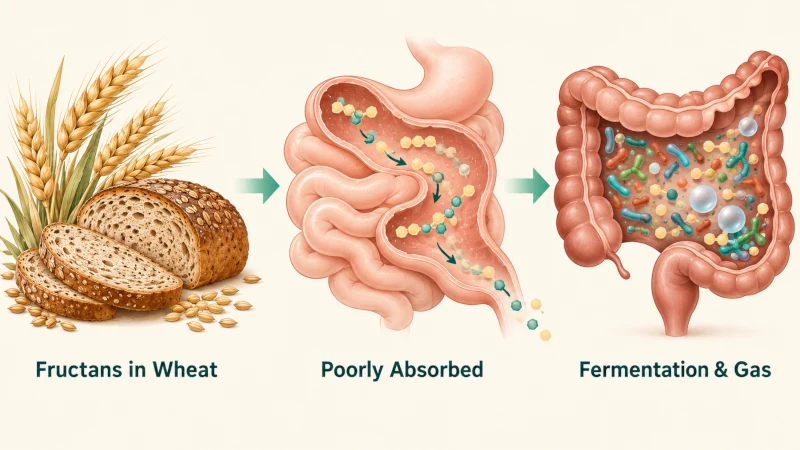
Wheat, rye, and barley are common sources of fructans, one of the FODMAP groups — short-chain carbohydrates that some people absorb poorly [ACG, 2026]. When they reach the colon, gut bacteria ferment them and make gas. That gas stretches the bowel wall and can cause bloating, cramping, pain, diarrhea, or constipation. FODMAPs aren’t unhealthy; a sensitive gut simply reacts to them more strongly.
The clearest evidence that fructans, not gluten, drive many bread complaints comes from a Norwegian trial of 59 people who believed they were gluten-sensitive and had celiac disease ruled out [Skodje et al., 2018]. Each person ate gluten, fructan, and a placebo in turn, without knowing which was which. Fructan caused more symptoms than gluten did, especially bloating, and gluten caused no more symptoms than placebo.
That’s one well-designed but small study, so treat it as strong evidence for some people rather than the last word. It does explain a familiar puzzle: someone who feels better on a gluten-free diet may still react to onions and garlic, two other high-FODMAP foods. If fructans are your problem, the kind of bread you eat — and how much — matters more than its gluten content.
Celiac Disease: The One to Rule Out First
Celiac disease is a chronic immune disorder in which gluten — a protein in wheat, barley, and rye — triggers damage to the small intestine [NIDDK, 2020a]. About 1 percent of people worldwide have it, many without a diagnosis, and it runs in families.
Its symptoms are all over the map. Bloating, chronic diarrhea, gas, constipation, nausea, and loose, greasy, foul-smelling stools are common. Many people also have problems outside the gut: fatigue, joint or bone pain, headaches, mouth sores, an itchy blistering rash called dermatitis herpetiformis, or fertility problems [NIDDK, 2020b]. Some have no symptoms at all and still develop complications over time, such as anemia, bone loss, and malnutrition [NIDDK, 2020a].
Celiac disease can’t be diagnosed from symptoms alone, because they look so much like IBS or lactose intolerance [NIDDK, 2020c]. Doctors use antibody blood tests, and in most patients confirm the diagnosis with small-intestine biopsies taken during an upper endoscopy [NIDDK, 2020c; Rubio-Tapia et al., 2023]. The treatment is a strict, lifelong gluten-free diet, and most people respond well to it [Rubio-Tapia et al., 2023]. For a practical list of where gluten hides, see our guide to foods to avoid with celiac disease.
Wheat Allergy: When Bread Becomes an Emergency
A wheat allergy is a different immune reaction: your body makes antibodies against proteins in wheat [Mayo Clinic, 2025]. Symptoms usually start within minutes to hours of eating wheat. They can include itching or swelling of the mouth or throat, hives, nasal congestion, headache, trouble breathing, cramps, nausea, vomiting, or diarrhea.
The real danger is anaphylaxis. Throat or chest tightness, serious trouble breathing, trouble swallowing, pale or bluish skin, dizziness, or fainting mean you should call 911 right away [Mayo Clinic, 2025]. In a rarer pattern called wheat-dependent, exercise-induced anaphylaxis, a reaction happens only when someone exercises within a few hours of eating wheat.
Wheat allergy is most common in babies and toddlers, and most children outgrow it by age 12 — but adults can develop it too [Mayo Clinic, 2025]. If you suspect it, see a healthcare professional, usually an allergist, rather than testing yourself at home.
Non-Celiac Gluten Sensitivity: Real Symptoms, Unclear Cause
Some people get genuine symptoms from wheat — abdominal pain, bloating, tiredness — yet test negative for both celiac disease and wheat allergy. This is usually called non-celiac gluten sensitivity. Unlike celiac disease, it doesn’t damage the small intestine [NIDDK, 2020a].
What actually triggers it is unsettled. There’s no biomarker for it [Skodje et al., 2018], and the fructan trial above suggests gluten isn’t the culprit for at least some people who carry the label. Your symptoms are real. But “gluten sensitivity” is a conclusion reached by ruling other things out, and you may not need a strict gluten-free diet to feel better.
Get Tested Before You Cut Out Gluten
A popular piece of advice says to cut wheat for a month and, if you feel better, wheat was the problem. That shortcut skips the most important step.
Celiac tests look for the immune response and intestinal damage that gluten causes. Stop eating gluten first, and the results can come back falsely normal. Doctors advise against starting a gluten-free diet before testing [NIDDK, 2020c], and the NHS tells patients to keep eating gluten until a specialist confirms the diagnosis — even after a positive blood test [NHS, 2023].
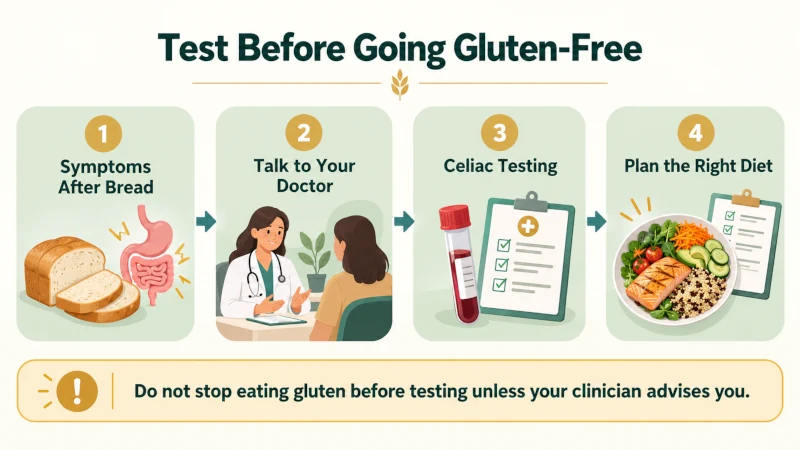
Feeling better off wheat also can’t tell you which problem you have. Fructan intolerance, gluten sensitivity, and celiac disease can all ease when bread disappears, but only celiac disease damages the intestine and calls for lifelong, strict avoidance. If you’ve already gone gluten-free and want answers, ask your doctor how to get tested before you reintroduce gluten on your own.
What Helps, Depending on the Cause
If you have celiac disease
You’ll need to avoid wheat, barley, and rye completely, including in hidden forms. Malt is made from barley, and corn flakes and rice puffs often contain malt extract or flavoring. Ordinary oats are easily contaminated, so choose oats labeled gluten-free. Traditional soy sauce, beer, and sauces thickened with flour also contain gluten [Celiac Disease Foundation].
Watch for cross-contact, too: shared toasters, cutting boards, colanders, and fryer oil used for breaded foods are common sources. And “wheat-free” doesn’t mean “gluten-free,” since a wheat-free product can still contain spelt, rye, or barley [Celiac Disease Foundation]. In the U.S., a food labeled gluten-free must contain less than 20 parts per million of gluten [FDA, 2018]. A registered dietitian who knows celiac disease can make the transition much easier.
If you have a wheat allergy
Avoid wheat in every form. It turns up in unexpected places — soy sauce, ice cream, hot dogs, natural flavorings, and modified food starch can all contain wheat proteins — and you may need medicine on hand in case you eat it by accident [Mayo Clinic, 2025]. Some people with wheat allergy also react to barley, oats, or rye, so ask your allergist which grains are safe for you.
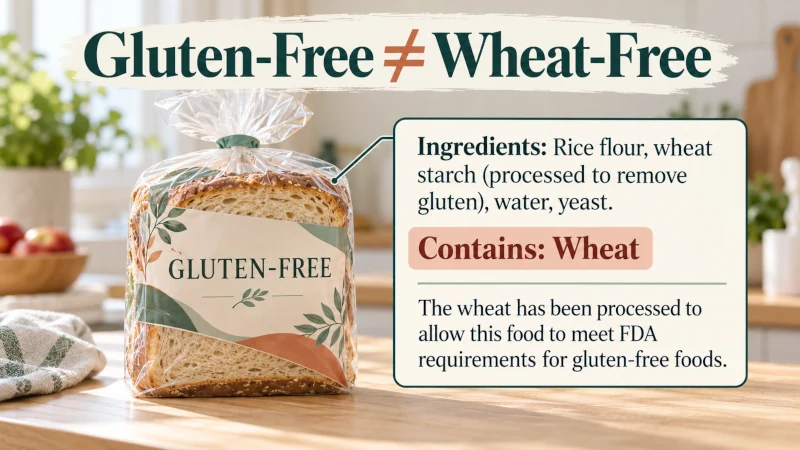
Don’t assume gluten-free means wheat-free. U.S. rules allow a gluten-free label on foods made with wheat starch that has been processed to remove gluten, as long as the label lists wheat and adds a statement explaining the processing [FDA, 2018; FDA Final Rule, 2013]. Read the ingredient list and “Contains” statement, rather than relying on the front of the package.
If fructans or IBS are the likely trigger
Here the goal is usually less, not none.
- Try traditional sourdough. During a long proving time — typically more than 12 hours — yeast and bacteria break down some of the FODMAPs in the flour. Monash University, where the low FODMAP diet was developed, found that some traditional sourdough breads, especially spelt sourdough, meet its low-FODMAP criteria [Monash University, 2017]. Quick-rise “sourdough-style” loaves may not.
- Keep in mind that spelt and wheat sourdough still contain gluten. They are not safe for celiac disease or wheat allergy [Celiac Disease Foundation].
- Mind your portions. Portion size can move a food from low to high FODMAP [ACG, 2026]. One slice may sit fine where three won’t.
- Consider a structured low FODMAP trial. High-FODMAP foods are removed for 2 to 4 weeks, added back one group at a time, and then only your true triggers stay off the menu [ACG, 2026]. It doesn’t cure IBS, but it can ease bloating and pain. A dietitian familiar with GI conditions improves your odds of success.

Despite the name, FODMAP refers to fermentable carbohydrates, not fermented foods — sourdough, a fermented bread, is often lower in FODMAPs than ordinary bread. For how the phases work in practice, see how the low FODMAP diet compares with an anti-inflammatory diet, and our list of IBS foods to avoid for other common triggers.
Who Should Be Careful With Elimination Diets
Restrictive diets aren’t right for everyone. The ACG cautions that a low FODMAP plan may not suit people with a history of eating disorders, people at risk of malnutrition, or those with complex medical histories [ACG, 2026]. Talk with a clinician or dietitian first if you’re pregnant or breastfeeding, if the diet is for a child or teen, or if you’re underweight.
If you’re trying to conceive and have unexplained fertility problems or repeated miscarriages alongside digestive symptoms, mention it to your doctor — untreated celiac disease is linked to reproductive problems [NIDDK, 2020b]. Gluten can also show up in some medications, vitamins, and supplements, so ask your pharmacist if you’ve been diagnosed with celiac disease [Celiac Disease Foundation].
When to See a Doctor

Call 911 for signs of anaphylaxis after eating wheat: throat or chest tightness, serious trouble breathing or swallowing, bluish skin, dizziness, or fainting [Mayo Clinic, 2025].
Make an appointment if you have any of these:
- Bloody or black stools, severe abdominal or rectal pain, or a fever above 102°F (39°C) [Mayo Clinic, 2023]
- Diarrhea lasting more than two days without improving, or signs of dehydration such as dark urine, dizziness, or very little urination [Mayo Clinic, 2023]
- Persistent unexplained bloating, stomach pain, or diarrhea; unintentional weight loss; ongoing fatigue; or unexplained iron-deficiency anemia [NHS, 2023]
- A parent, sibling, or child with celiac disease, or a diagnosis of type 1 diabetes or autoimmune thyroid disease — all reasons to ask about celiac testing [NHS, 2023]
- Symptoms that keep coming back even after you’ve changed what you eat
For more on what persistent loose stools can mean, see our guide to common causes of diarrhea and its warning signs.
| HEALTH DISCLAIMER: This article is for general education and is not a substitute for medical advice, diagnosis, or treatment from a qualified healthcare professional. Digestive symptoms after eating bread can have several causes, some of which need medical testing. Please don’t start a gluten-free diet before talking with your doctor about celiac testing. If you are pregnant, breastfeeding, managing a chronic illness, or making changes for a child, check with your clinician or a registered dietitian before starting any elimination diet. If you have signs of a severe allergic reaction, call 911. |
Frequently Asked Questions
Why can I eat sourdough but regular bread bloats me?
Traditional sourdough is left to ferment for a long time, typically more than 12 hours, and that process breaks down some of the fructans in the flour. Monash University found some traditional sourdough breads, particularly spelt sourdough, meet its low-FODMAP criteria [Monash University, 2017]. Sourdough made from wheat or spelt still contains gluten, so it isn’t an option for celiac disease or wheat allergy.
Can you develop a problem with bread as an adult?
Yes. Celiac disease affects children and adults [NIDDK, 2020a], and although wheat allergy is most common in young children, adults can develop it too [Mayo Clinic, 2025]. New or changing symptoms are worth discussing with your doctor.
Is gluten-free bread safe if I have a wheat allergy?
Not automatically. U.S. rules let some foods carry a gluten-free label even though they contain wheat starch processed to remove gluten, as long as wheat is declared on the label [FDA Final Rule, 2013]. Always check the ingredient list and the “Contains” statement.
Should I try going gluten-free to see if it helps?
Talk to your doctor about celiac testing first. Going gluten-free before testing can affect the results [NIDDK, 2020c], and the NHS advises continuing to eat gluten until a specialist confirms the diagnosis [NHS, 2023].
Is gluten sensitivity real?
The symptoms are real, but the cause is debated. There’s no biomarker for non-celiac gluten sensitivity, and in one blinded trial, fructans triggered more symptoms than gluten in people who believed they were gluten-sensitive [Skodje et al., 2018]. Unlike celiac disease, it doesn’t damage the small intestine [NIDDK, 2020a].
References
- National Institute of Diabetes and Digestive and Kidney Diseases (NIDDK). Definition & Facts for Celiac Disease. View source
- NIDDK. Symptoms & Causes of Celiac Disease. View source
- NIDDK. Diagnosis of Celiac Disease. View source
- NHS (UK). Coeliac disease: Diagnosis. View source
- Rubio-Tapia A, Hill ID, Semrad C, Kelly CP, Greer KB, Limketkai BN, Lebwohl B. American College of Gastroenterology Guidelines Update: Diagnosis and Management of Celiac Disease. View source
- Mayo Clinic Staff. Wheat allergy: Symptoms and causes. View source
- Skodje GI, Sarna VK, Minelle IH, Rolfsen KL, Muir JG, Gibson PR, Veierød MB, Henriksen C, Lundin KEA. Fructan, Rather Than Gluten, Induces Symptoms in Patients With Self-Reported Non-Celiac Gluten Sensitivity. Gastroenterology. View source
- American College of Gastroenterology. Low-FODMAP Diet (patient information). View source
- Collins L (Research Dietitian). Sourdough processing & FODMAPs. Monash University FODMAP blog. View source
- U.S. Food and Drug Administration. Gluten and Food Labeling. View source
- Food and Drug Administration. Food Labeling; Gluten-Free Labeling of Foods. View source
- Celiac Disease Foundation. Sources of Gluten. View source
- Mayo Clinic Staff. Diarrhea: When to see a doctor. View source


