
Organic apple cider vinegar powder is a convenient way to add vinegar’s tangy flavor to dry seasoning blends, marinades, sauces, and some supplements. It may contain acetic acid, but the amount varies by product—and research on liquid vinegar cannot simply be assumed to apply to every powder. If you are buying it for health reasons, the label matters more than the promises on the front of the package.

What organic apple cider vinegar powder actually is
Apple cider vinegar begins with fermented apple juice. Yeast converts apple sugars to alcohol, then acetic-acid bacteria convert the alcohol to acetic acid. That acid produces vinegar’s sharp taste. The finished liquid can be dried onto a carrier ingredient to make a free-flowing powder. Manufacturers may use maltodextrin, modified food starch, or another carrier, so many products are not pure dried vinegar.
The basic fermentation process is well established, as described by the Harvard T.H. Chan School of Public Health. The drying method, carrier, acetic-acid concentration, and serving size are manufacturer-specific. Two jars labeled “apple cider vinegar powder” may therefore deliver very different amounts of vinegar-derived material.
“Organic” describes how qualifying agricultural ingredients were produced and handled; it does not prove that a product is more effective or medically safer. Under USDA rules, labels must meet defined composition and certification requirements. Look for the USDA Organic seal and the certifier’s name rather than relying on green packaging or phrases such as “natural.”
Apple cider vinegar powder vs. liquid vinegar

Acetic acid is the useful comparison point
Most human studies have tested liquid vinegar or apple cider vinegar in measured amounts. To compare a powder with those products, you would need to know how much acetic acid a serving supplies. Many labels provide only the weight of a proprietary blend or powder, which does not answer that question.
The “mother” may not survive processing
The cloudy material called the “mother” contains cellulose and microorganisms formed during fermentation. A powder can be filtered, heated, dried, or mixed with carriers. Unless the manufacturer documents live cultures through the end of shelf life, do not assume a powder is probiotic or equivalent to raw, unfiltered liquid vinegar.
Convenience is the clearest advantage
Powder is portable, less likely to spill, and easy to distribute through dry rubs or seasoning blends. Liquid vinegar is easier to evaluate for acidity, and it usually has a shorter ingredient list. Neither format is automatically superior; choose based on the job you want it to do.
Potential benefits of organic apple cider vinegar powder
| Evidence check: The strongest available human evidence concerns vinegar or liquid apple cider vinegar—not organic powder as a distinct product. Any benefit depends on the powder delivering a relevant amount of acetic acid, which many labels do not disclose. |
Blood sugar: promising but not a substitute for care
Some small trials and reviews suggest vinegar taken with meals may modestly affect post-meal or fasting glucose in certain adults. The studies vary in design, dose, and population, and they do not establish powdered ACV as a diabetes treatment. If you monitor blood sugar levels or use glucose-lowering medication, discuss regular supplement use with your clinician; vinegar could add to a medication’s effect.
Weight management: effects appear small and uncertain
Some studies have reported modest changes in body weight or appetite, while clinical guidance continues to describe the evidence as limited. ACV should not replace adequate nutrition, movement, sleep, or a sustainable relationship with food. A practical intuitive eating approach is more useful than expecting a powder to drive meaningful weight loss.
Digestion, inflammation, skin, and hair: insufficient evidence
Claims that ACV powder improves the gut microbiome, treats reflux, reduces systemic inflammation, clears acne, or strengthens hair are not supported by good product-specific human evidence. Acidic products can worsen reflux or irritate skin. For persistent bloating or bowel symptoms, look at evidence-based options for digestive health and supplements and seek medical advice when symptoms continue.
How to choose a high-quality product
- Read the complete ingredient list. A carrier is common, but you should know what it is and whether sweeteners, flavors, or fillers are included.
- Look for an acetic-acid amount or standardized acidity per serving. “Equivalent to” claims are useful only when the basis is clearly explained.
- Verify organic status. The USDA Organic seal is meaningful; “made with organic” follows a different threshold and cannot use the seal in the same way.
- Prefer transparent testing. A recent certificate of analysis should identify the lot and report relevant identity, potency, and contaminant results.
- Check whether it is sold as food or as a dietary supplement. FDA does not approve dietary supplements for safety and effectiveness before sale, so manufacturer quality systems and independent verification deserve attention.
- Confirm allergens and dietary claims. Do not assume gluten-free or vegan status from the name alone, because carriers and processing facilities vary.
How to use apple cider vinegar powder
Start with the manufacturer’s directions. There is no universal conversion from powder to liquid vinegar because acidity and carrier content differ. A recipe ratio from one brand may make another recipe too weak, too sour, or chemically unbalanced.
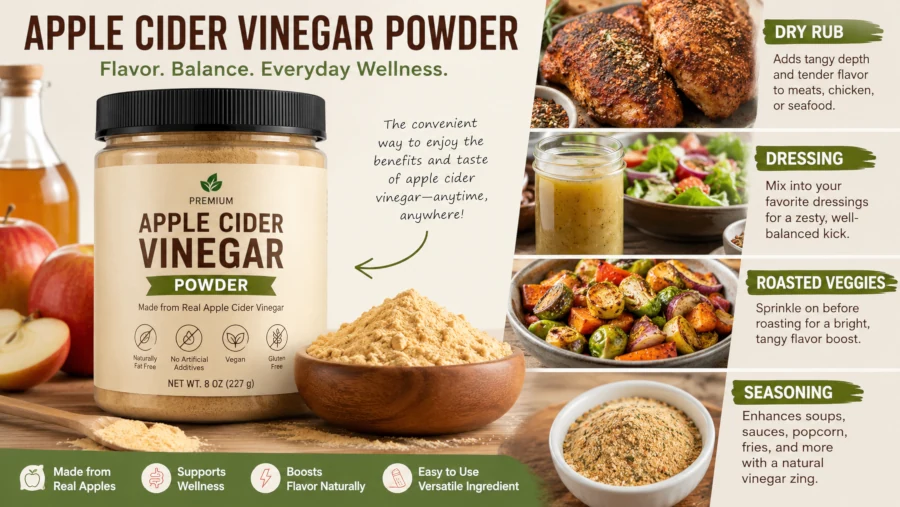
For cooking
- Stir a small amount into dry rubs, popcorn seasoning, roasted-vegetable seasoning, or snack mixes.
- Whisk it into marinades and dressings with water and oil, adjusting gradually for taste.
- Use it where tang is wanted without extra liquid, but do not rely on an unverified substitution ratio for canning, pickling, or food preservation.
For baking
Acid can react with baking soda, but successful baking depends on total acidity and moisture. Use a recipe developed for the specific powder or follow the manufacturer’s conversion. Do not replace liquid vinegar cup-for-cup or teaspoon-for-teaspoon unless the product gives that instruction.
As a drink or supplement
Do not swallow concentrated powder dry. Mix only as directed and stop if it causes burning, nausea, or stomach discomfort. Food use generally makes exposure easier to control than repeatedly taking a concentrated supplement.
Side effects, interactions, and who should avoid it
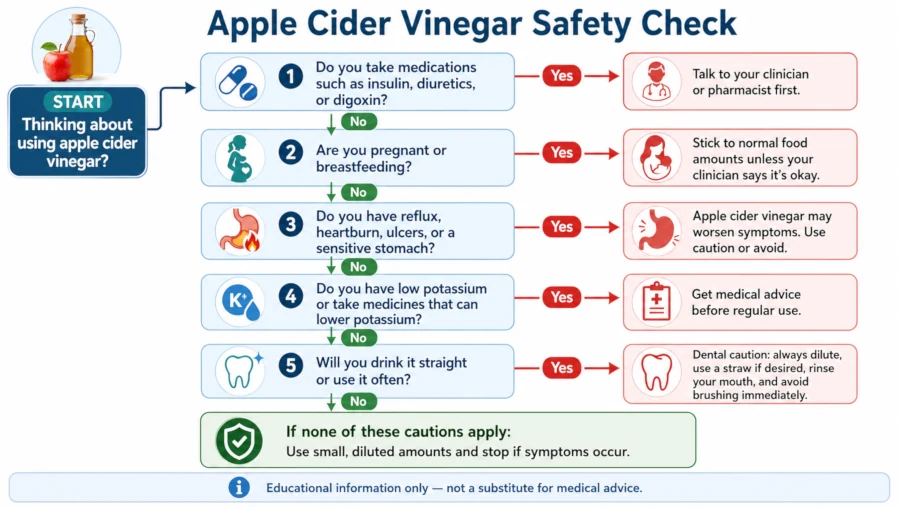
Apple cider vinegar is acidic. Depending on the formulation and how it is used, it may irritate the mouth, throat, esophagus, stomach, or skin. Repeated acid exposure can contribute to tooth-enamel erosion. Cleveland Clinic guidance also notes possible nausea, low potassium, delayed stomach emptying, and interactions with insulin, diuretics, laxatives, and some blood-pressure medicines.
Talk with a healthcare professional before regular use if you:
- take insulin or another medicine that can lower blood glucose;
- take a diuretic, laxative, digoxin, or medicine that affects potassium;
- have low potassium, kidney disease, gastroparesis, frequent reflux, swallowing problems, ulcers, or significant dental erosion;
- are pregnant or breastfeeding, because concentrated supplement use has not been adequately studied; or
- are considering giving it to a child.
If potassium is a concern, use clinician-guided testing rather than trying to correct symptoms with supplements or foods alone. This potassium-rich foods guide can help with meal planning after your care team confirms that increasing potassium is appropriate.
When to get urgent help
Stop using the product and seek urgent medical care for trouble breathing, swelling of the lips or throat, fainting, severe weakness, an irregular heartbeat, repeated vomiting, severe chest or abdominal pain, vomiting blood, black stools, or a suspected chemical burn. Contact Poison Control in the United States at 1-800-222-1222 for an ingestion exposure; call emergency services for severe symptoms.
| Health Disclaimer: This article is for education and is not a diagnosis or treatment plan. Organic apple cider vinegar powder varies substantially by brand. Follow the product label and ask a qualified healthcare professional or pharmacist about your conditions, medicines, pregnancy or breastfeeding, and appropriate use. Do not use this product in place of prescribed treatment. |
Frequently Asked Questions
Is apple cider vinegar powder as effective as liquid apple cider vinegar?
Not necessarily. Most clinical research has tested liquid vinegar. A powder might deliver less, more, or an unknown amount of acetic acid depending on its concentration and carrier ingredients.
Does organic mean the powder has more health benefits?
No. Organic certification addresses production and handling standards. It does not establish superior medical effectiveness.
Can I use ACV powder instead of liquid vinegar in recipes?
Sometimes, but use the conversion supplied by the manufacturer. Acidity varies, and you must also account for the liquid removed from the recipe.
Does apple cider vinegar powder contain probiotics or the mother?
You cannot assume that it does. Processing may remove or inactivate microorganisms. Look for strain names, a live-culture count through expiration, and storage instructions if probiotic content matters to you.
Can I take it every day?
There is no universal daily dose for all powders. Regular supplement use is a poor fit for some medicines and health conditions. Follow the label and check with a clinician if you plan to use it routinely.
References
- Harvard T.H. Chan School of Public Health. “Vinegar.” The Nutrition Source. View source
- Cleveland Clinic. “What Apple Cider Vinegar Can (and Can’t) Do for You.” Health Essentials, 2025. View source
- USDA Agricultural Marketing Service. “Labeling Organic Products.” View source
- U.S. Food and Drug Administration. “Questions and Answers on Dietary Supplements,” 2024. View source
