
Reaching for the triple antibiotic ointment is an understandable move when your bottom is burning at eleven at night. It is the tube everyone already owns. But it will not shrink a hemorrhoid, will not stop the bleeding, and will not do much for the itch beyond what any greasy ointment does. If you are wondering whether Neosporin for hemorrhoids is worth trying, the short answer is that it treats a problem you probably do not have, and the skin around the anus is one of the least forgiving places on the body to put it.
What the label actually says it is for
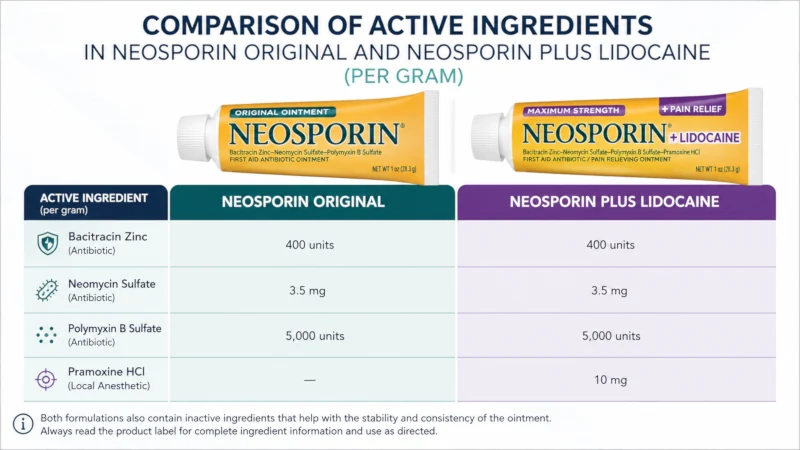
Neosporin Original is a first aid antibiotic. Its own FDA-registered label gives one use: first aid to help prevent infection in minor cuts, scrapes and burns. Hemorrhoids appear nowhere on it. Each gram contains bacitracin zinc 400 units, neomycin sulfate 3.5 mg and polymyxin B sulfate 5,000 units, carried in a petrolatum base with cottonseed oil, olive oil, cocoa butter, sodium pyruvate and vitamin E acetate.
One correction worth making, because it circulates widely: the pain-relief version sold today is Neosporin + Maximum Strength Lidocaine, and the numbing agent is lidocaine at 40 mg per gram. Older write-ups still name pramoxine. Check your own tube rather than trusting a description online.
The label also carries three instructions that matter a great deal here. Do not use it if you are allergic to any ingredient. Do not use it in the eyes. And do not use it over large areas of the body.
What it can plausibly do — and what it cannot
The ointment base does something real
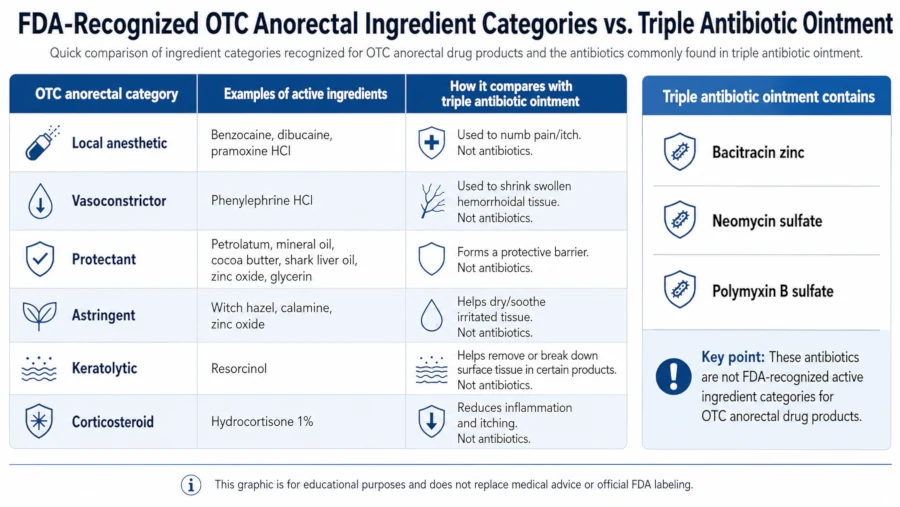
This is the part people are actually feeling when they say it helped. The FDA’s monograph for over-the-counter anorectal products recognises petrolatum, white petrolatum and cocoa butter as protectants — ingredients that form a physical barrier over irritated skin. A barrier reduces friction and takes the edge off stinging. That is a genuine mechanism, and it is well established.
It is also not coming from the antibiotics. Plain petroleum jelly gives you the same barrier with none of the allergy risk, for a fraction of the price.
Preventing infection solves a problem most people do not have
Hemorrhoids are swollen vascular cushions, not a bacterial infection. Uncomplicated ones do not typically get infected, even when scratching has broken the skin. No major treatment guideline recommends a topical antibiotic for them. This is not a case of weak or mixed evidence — there is simply no evidence of benefit to weigh.
The numbing version has a real anesthetic, bundled with three things you do not need
Here the picture is more interesting. Lidocaine at 40 mg per gram works out to 4%, and the FDA anorectal monograph does recognise lidocaine at 2 to 5% as a local anesthetic for this area. So the active ingredient sits in a plausible range. But the product is not labelled, tested or approved for anorectal use, and you cannot apply the lidocaine without also applying bacitracin, neomycin and polymyxin B. Dedicated hemorrhoid products give you the anesthetic on its own.
Why the anal area is a bad place for a triple antibiotic
Neomycin and bacitracin are among the most common causes of allergic contact dermatitis from topical medicines. In an analysis of North American Contact Dermatitis Group data from 2001 to 2018 covering 43,722 patch-tested patients, 14.6% had a positive reaction linked to a topical medication. Neomycin accounted for 29.4% of those reactions and bacitracin 29.1% — the two most common culprits by a wide margin.
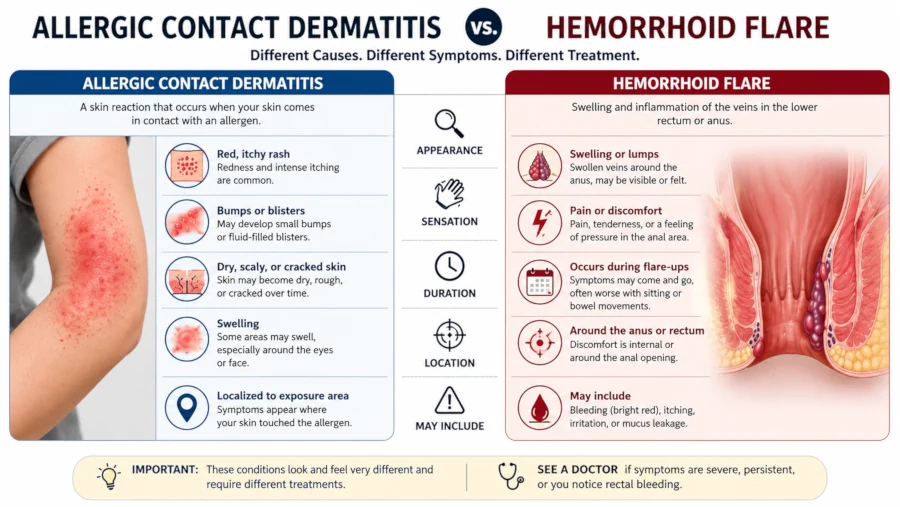
The finding that matters most for this article is the location. Patients with a topical medication allergy were twice as likely to have dermatitis involving the anal or genital region. That is exactly the skin you would be treating.
One important limitation: these are people referred for patch testing because contact dermatitis was already suspected. The percentages describe that group, not the general population. Most people who use triple antibiotic ointment never react. But the reaction, when it happens, produces itching, redness, burning and swelling — which is indistinguishable from a hemorrhoid flare getting worse. So the natural response is to apply more ointment, and the problem deepens.
Serious allergic reactions are rare but documented. MedlinePlus advises calling a doctor immediately for itching, rash, hives, or difficulty breathing or swallowing while using this combination.
What the evidence says actually helps
The 2024 American Society of Colon and Rectal Surgeons guideline puts dietary modification first: adequate fluid and fiber intake, plus counselling on toilet habits, as primary first-line therapy. That is a strong recommendation backed by moderate-quality evidence. Topical and oral medical treatments are graded far more cautiously — a weak recommendation, described as a mixed group of options offering minimal harm and a decent chance of relief. That is an honest summary of what creams and ointments do generally, and it is a lower bar than most product marketing implies.
For office procedures, banding is graded as the most effective option for grade I and II disease, and for selected grade III cases that have not responded to medical treatment.
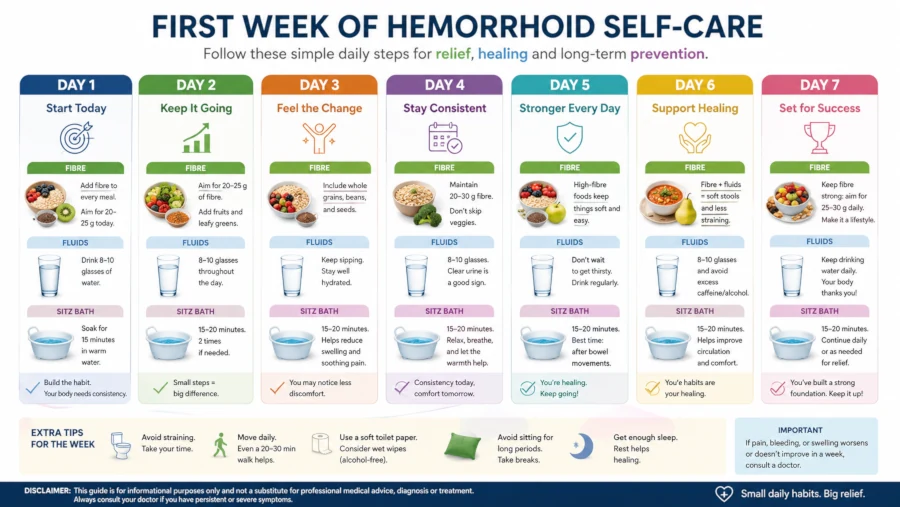
Practical measures with the best support:
- Fiber and fluid, consistently. This is the intervention that changes the underlying problem rather than masking it. Add fiber gradually to avoid gas. Softer stool means less straining, and less straining is what actually gives the tissue a chance to settle.
- Warm sitz baths. Mayo Clinic suggests soaking the area in plain warm water for 10 to 15 minutes, two or three times a day.
- A product designed for the job. Monograph-recognised options include local anesthetics, witch hazel at 10 to 50% as an astringent, protectants, and vasoconstrictors. Hydrocortisone reduces inflammation but can thin the skin if used beyond about a week.
- Time. Symptoms often settle within a week with home care. NIDDK advises following up with a doctor if over-the-counter products have not helped after a week, or if they cause dry skin or a rash around the anus.
Because straining is the engine driving most flares, the constipation side of the problem is worth addressing directly — psyllium and other bulk-forming approaches are covered in our guide to herbs and fiber sources for constipation. If you want to know how the traditional herbal remedies for this condition stack up, we cover those separately in our roundup of herbs traditionally used for hemorrhoids.
One place the official advice genuinely differs
Oral painkillers are a real point of disagreement between reputable sources, so it is worth naming rather than smoothing over. Mayo Clinic lists acetaminophen, aspirin or ibuprofen as reasonable short-term options. The NHS specifically advises against taking ibuprofen if your piles are bleeding, and against codeine-containing painkillers because they cause constipation. Both are credible bodies. If you are bleeding, or you take other medicines, ask a pharmacist which is right for you rather than picking the more convenient answer.
Safety, side effects and who should skip it
If you have already used it once or twice and nothing bad happened, you do not need to panic. The point is not to keep going.
- Common side effects: itching, rash, redness, swelling or burning that was not there before you applied it. Stop if any of these appear.
- Get medical advice promptly for: hives, or any difficulty breathing or swallowing.
- Cross-allergy: if you react to neomycin you may also react to other aminoglycosides — amikacin, gentamicin, kanamycin, paromomycin and tobramycin. Zinc sensitivity matters too, since the bacitracin is a zinc salt.
- Tell your doctor if you have ever had hearing problems or kidney disease before using this combination, and list every medicine and supplement you take.
- Pregnancy and breastfeeding: tell your doctor if you are pregnant, planning to be, or breastfeeding, and call if you become pregnant while using it. The NHS guidance on piles in pregnancy is blunter and more useful: do not use any cream or medicine without checking with your doctor, midwife or pharmacist first.
- Children: the lidocaine version says to ask a doctor for children under two. This combination should not be applied to a child’s diaper area, particularly if the skin is broken or raw, unless a doctor has said to.
- Skip it entirely if you are allergic to any ingredient or to aminoglycoside antibiotics, if you have reacted to a topical antibiotic before, or if the affected area is broken or raw across a wide patch.
- Stop and ask a doctor if you find yourself needing it longer than a week, if the condition persists or worsens, or if a rash develops. That instruction is on the label itself.
Red flags: stop self-treating and get seen
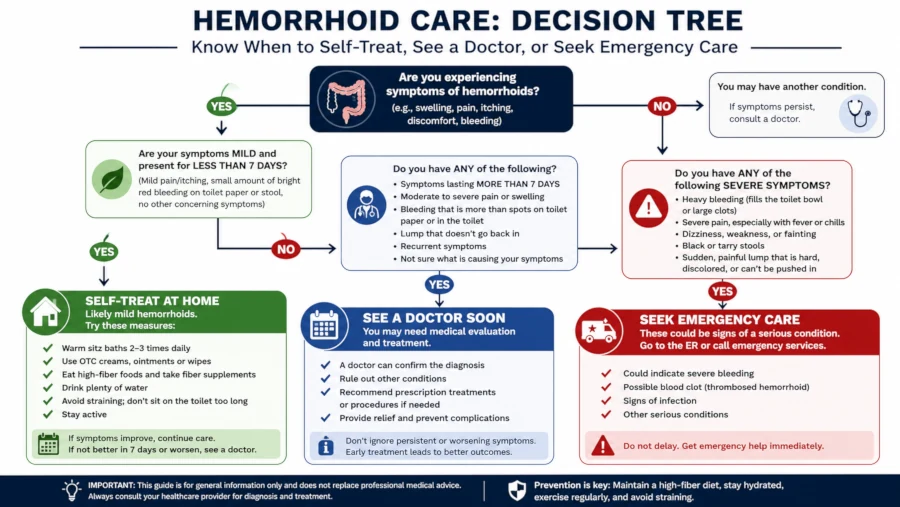
Rectal bleeding is the symptom people most readily explain away. It should not be assumed to be hemorrhoids, and colorectal specialists consider bleeding blamed on piles to be one of the most commonly missed routes to a cancer diagnosis. Getting it looked at is not an overreaction.
Ask for an urgent appointment (or your local equivalent) if you have piles and:
- a very high temperature, or you feel hot, cold, shivery and generally unwell
- painless bleeding from the bottom
- pus leaking from the piles
Seek emergency care if you are bleeding non-stop, if there is a lot of blood or you see large clots, or if you are in severe pain. Severe anal pain with rectal bleeding — particularly alongside abdominal pain, diarrhea or fever — also warrants care right away.
Make a routine appointment if symptoms are getting worse or have not improved with home treatment, if piles keep coming back, or if you notice any change around the anus that is not normal for you.
| Health Disclaimer: This article is for general education and is not a substitute for personal medical advice, diagnosis or treatment. Over-the-counter products can interact with prescription medicines and are not right for everyone, and hemorrhoid symptoms overlap with conditions that need proper assessment. Talk to a doctor, pharmacist or other qualified professional about your own situation — particularly if you are pregnant or breastfeeding, are treating a child, take other medicines, or have any bleeding. If your symptoms are severe or getting worse, seek medical care rather than waiting. |
Frequently Asked Questions
Can I put Neosporin on a bleeding hemorrhoid?
It will not stop the bleeding, and broken skin is where topical antibiotics are most likely to sensitise you. More to the point, bleeding is the symptom that deserves a proper look rather than a home fix. Get it assessed instead of treating it blind.
Is the lidocaine version better for hemorrhoids than the original?
It will numb more, because lidocaine is a genuine local anesthetic and 4% falls inside the range the FDA recognises for anorectal use. But you would be applying three antibiotics you have no use for in order to get it, and the product is not labelled for that area. A hemorrhoid product containing an anesthetic alone is the cleaner choice.
I have already been using it for a few days. What now?
Stop, and switch to something meant for the job. The label says to stop and ask a doctor if you need it beyond a week, if things are not improving, or if a rash appears. If the area has become itchier or redder since you started, mention that specifically — a reaction to the ointment can look exactly like the flare it was meant to treat.
Would plain petroleum jelly be better?
For the barrier effect alone, yes — same protectant, no antibiotics, no sensitisation risk. It will not treat the hemorrhoid either, but it will not work against you.
How long should hemorrhoid symptoms take to settle?
Often about a week with fiber, fluids, warm baths and a suitable over-the-counter product. If a week of sensible home care has not shifted things, that is the point to see someone rather than to try a fourth product.
Is it safe during pregnancy?
Do not decide this from an article. Piles are common in pregnancy and there are well-established ways to manage them, but the standing advice is not to use any cream or medicine on them without checking with your doctor, midwife or pharmacist first.
References
- DailyMed. Neosporin Original — bacitracin zinc, neomycin sulfate and polymyxin B sulfate. U.S. National Library of Medicine; label updated 2025. View source
- DailyMed. Neosporin Plus Lidocaine — bacitracin, neomycin, polymyxin B, lidocaine ointment. U.S. National Library of Medicine; label updated 2025. View source
- MedlinePlus. Neomycin, Polymyxin, and Bacitracin Topical. U.S. National Library of Medicine; revised 2024. View source
- Electronic Code of Federal Regulations. 21 CFR Part 346, Subpart B — Anorectal Drug Products for Over-the-Counter Human Use: Active Ingredients. U.S. Food and Drug Administration; current 2026. View source
- Warshaw EM, Shaver RL, DeKoven JG, et al. Patch Test Reactions Associated With Topical Medications: A Retrospective Analysis of the North American Contact Dermatitis Group Data (2001–2018). Dermatitis. 2022;33(2):144–154. PMID 34405832. View source
- Hawkins AT, Davis BR, Bhama AR, et al. The American Society of Colon and Rectal Surgeons Clinical Practice Guidelines for the Management of Hemorrhoids. Dis Colon Rectum. 2024;67(5):614–623. View source
- NHS. Piles (haemorrhoids). National Health Service; reviewed 2026. View source
- NHS. Piles in pregnancy. National Health Service; reviewed 2024. View source
- Mayo Clinic. Hemorrhoids — Diagnosis and treatment. Mayo Foundation for Medical Education and Research; 2025. View source
- National Institute of Diabetes and Digestive and Kidney Diseases. Treatment of Hemorrhoids. NIDDK, National Institutes of Health; last reviewed 2016. View source
