
If you have thinning bones, you probably want a clear list of foods to cut. Here’s the honest version: no single food causes osteoporosis, and very little needs to be banned. The worst foods for osteoporosis are really a handful of habits: a very salty diet, heavy drinking, lots of cola, and too much preformed vitamin A from liver or supplements. These either pull calcium out of your body or are linked to more fractures over time.
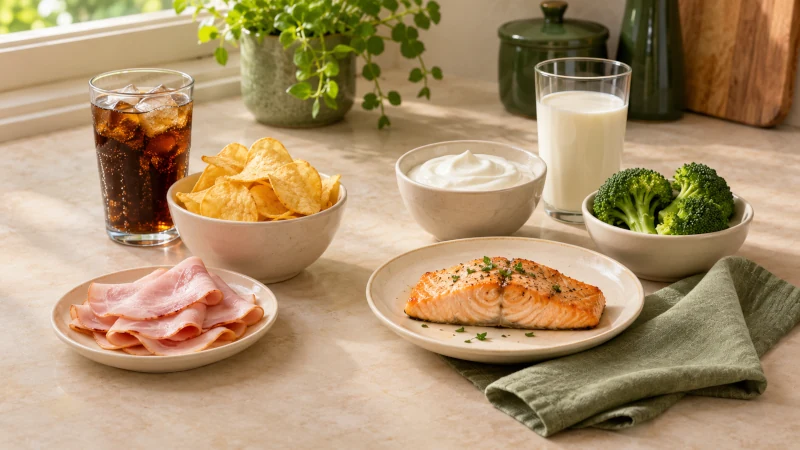
Two items that show up on almost every list, coffee and high-protein meals, matter far less than their reputation suggests. For many people the bigger problem isn’t eating the wrong thing. It’s not getting enough calcium, vitamin D and protein in the first place. [NIAMS, n.d.; BHOF, n.d.-a]
Worst foods for osteoporosis
Quick reference: what to limit, how strong the evidence is, and a sensible ceiling
| Food or habit | The concern | Evidence | Practical limit |
| Salt / high-sodium foods | More calcium lost in urine | Consistent for calcium loss; fracture data thin | No more than 2,300 mg sodium a day |
| Heavy drinking | Higher fracture risk, including hip | Strong above about 2 drinks a day | BHOF: 2–3 drinks a day at most; less is safer |
| Cola | Lower hip bone density in women | Observational, one large cohort | Swap most colas for milk, water or fortified drinks |
| Preformed vitamin A (liver, retinol supplements) | Higher hip fracture risk at high intakes | Observational; mixed | Stay under 3,000 mcg RAE a day |
| Phosphate additives | Slightly less calcium absorbed | Limited; experts disagree | Mostly a reason to eat fewer ultra-processed foods |
| Coffee / caffeine | Slightly less calcium absorbed | Mixed; no fracture rise in large cohorts | Up to about 3 cups of coffee a day |
| High-protein diets | Old worry about calcium loss | Reviews find no harm | Not a reason to cut protein |
Salty and heavily processed foods
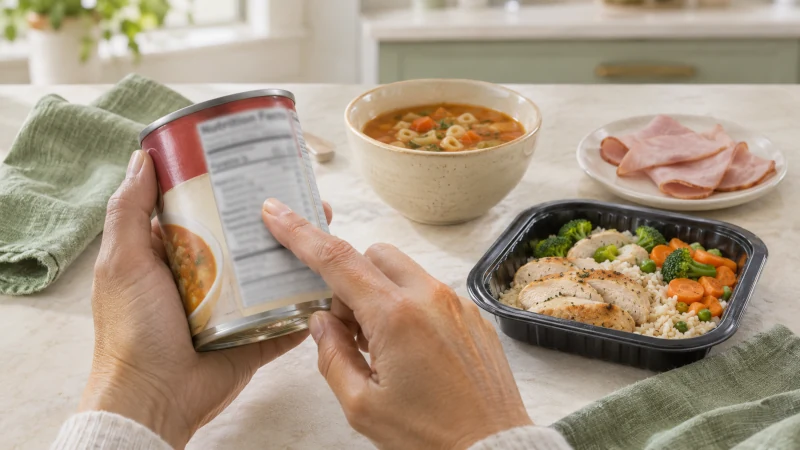
Salt is the item on this list with the clearest mechanism. Your kidneys handle sodium and calcium together, so when you eat a lot of salt, more calcium leaves in your urine. A 2025 systematic review found that high-sodium diets significantly raised urinary calcium in postmenopausal women. It also found only six studies that met its criteria, which is why the authors subtitled it “exposing the lack of studies.” [Imash et al., 2025]
One carefully controlled trial shows how this can matter. Eleven postmenopausal women ate set diets for five-week stretches. About 11 grams of salt a day, roughly what many people eat on a Western diet, raised calcium loss in urine and pushed bone calcium balance from positive to negative, even on a high-calcium diet. On a low-calcium diet, balance was negative whether salt was high or low. [Teucher et al., 2008] That is a small study measuring calcium balance, not fractures. Still, the direction is consistent, and cutting back on salt has no downside for bone.
The Bone Health & Osteoporosis Foundation (BHOF) suggests aiming for no more than 2,300 mg of sodium a day. It also suggests a simple label check: 20% or more of the Daily Value per serving means a food is high in sodium. [BHOF, n.d.-a] The biggest sources are usually packaged and canned foods, deli meats, frozen meals, salty snacks, and restaurant food, more than the salt shaker.
Heavy drinking
Alcohol has the strongest fracture evidence of anything here, but only at higher intakes. An analysis of nearly 17,000 men and women in three international cohorts found no significant rise in fracture risk at two units a day or less. Above that, risk went up: about 23% for any fracture and 68% for hip fracture, independent of bone density. [Kanis et al., 2005]
The National Institutes of Health lists chronic heavy drinking as a significant risk factor for osteoporosis and recommends drinking in moderation. [NIAMS, n.d.] BHOF puts the ceiling at no more than two to three drinks a day. [BHOF, n.d.-b] Because the fracture data show risk climbing above about two a day, and drink sizes vary, staying well under that ceiling is the safer reading. If you don’t drink, there’s no bone-related reason to start.
Cola, specifically, and not other soda
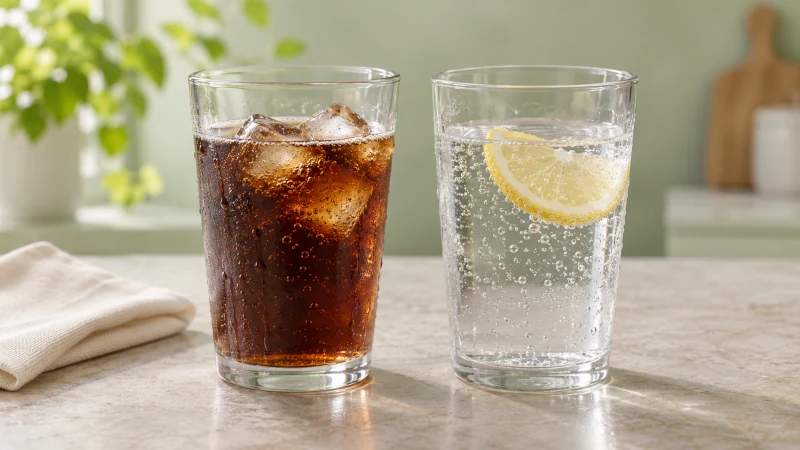
Soda gets lumped together, but the best-known study points at cola. In the Framingham Osteoporosis Study (1,413 women and 1,125 men), cola drinking was linked to lower bone density at all three hip sites in women. It was not linked at the spine, and not in men. Other carbonated drinks showed no link. [Tucker et al., 2006]
Researchers don’t know exactly why. Colas contain caffeine and phosphoric acid, and both have been suggested. BHOF says carbonation itself does not harm bone, and that much of the damage may come from drinking soda instead of milk or calcium-fortified drinks. [BHOF, n.d.-a] This is observational evidence, so it shows an association, not proof. Still, if you drink cola daily, it’s a reasonable thing to cut back on, and plain sparkling water is fine.
Too much preformed vitamin A
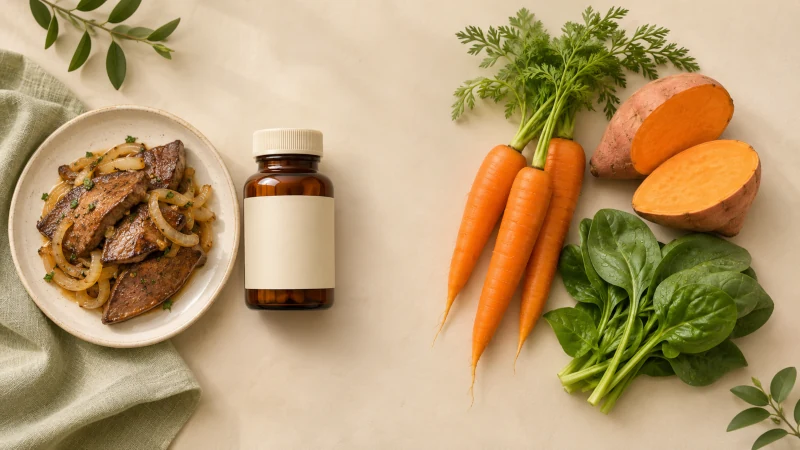
Vitamin A comes in two forms. Preformed vitamin A (retinol) is found in liver, fish, eggs, dairy and many supplements. Beta-carotene and related carotenoids come from orange and green plants. The bone concern is about retinol. [NIH ODS, n.d.]
A 2017 meta-analysis of cohort studies found that the highest retinol intakes were linked to about a 40% higher risk of hip fracture. Oddly, they were also linked to a slightly lower risk of fractures overall. [Zhang et al., 2017] That mixed picture means vitamin A isn’t a reason to fear eggs or dairy. It is a reason not to overdo concentrated sources.
The tolerable upper limit for preformed vitamin A in adults is 3,000 mcg RAE a day, and it doesn’t apply to beta-carotene. A single 3-ounce serving of pan-fried beef liver has about 6,582 mcg RAE, more than twice that limit. [NIH ODS, n.d.] In practice, keep liver occasional, and check your multivitamin and any other supplements for vitamin A listed as retinol or retinyl palmitate/acetate.
Phosphate additives in processed food
Phosphorus is part of bone, so it isn’t bad in itself. The worry is about the phosphate additives (listed as “phosphate” or “phosphoric acid”) in colas and many processed foods. [BHOF, n.d.-a] The NIH says phosphorus, like caffeine, reduces calcium absorption only to a small extent. Low vitamin D has a much bigger effect. [NIH ODS, 2026]
So phosphate isn’t a strong reason to avoid a particular food. It’s one more reason to eat fewer ultra-processed foods, which also tend to be high in salt. For a breakdown of where phosphorus comes from naturally, see our guide to foods high in phosphorus. If you have kidney disease, phosphorus is a different matter: your care team may set a specific limit, which we explain in what phosphorus does and when too much is a problem.
Foods that block calcium but aren’t bad for you
These foods often appear on “worst” lists. They don’t harm bone. They just make it easy to overestimate how much calcium you’re getting.
Spinach and other high-oxalate greens
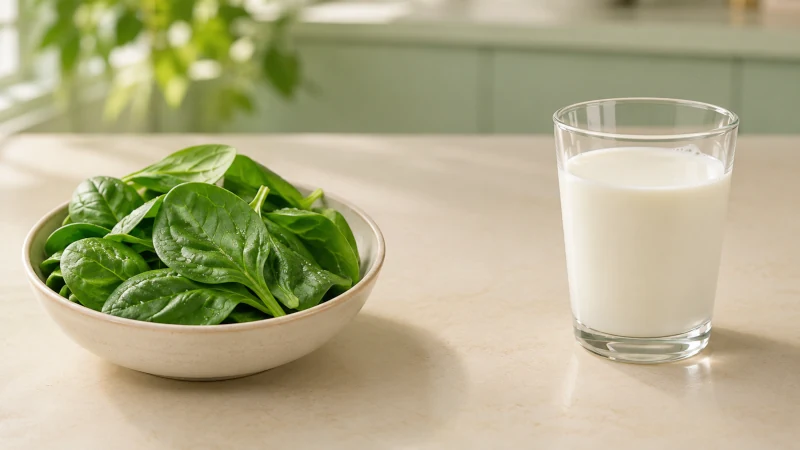
Oxalates bind calcium. Your body absorbs only about 5% of the calcium in spinach, compared with about 27% from milk. [NIH ODS, 2026] BHOF names rhubarb, beet greens and some beans as other high-oxalate foods. They’re still worth eating for other nutrients, but don’t count them toward your calcium. [BHOF, n.d.-b]
100% wheat bran and beans
Phytates work the same way. Pure wheat bran appears to reduce absorption of calcium from other foods eaten at the same meal. Ordinary bread contains much less and is unlikely to matter. If you take a calcium supplement, take it at least two hours before or after a 100% bran cereal. Soaking dried beans for several hours and cooking them in fresh water lowers their phytate content. [BHOF, n.d.-b] The NIH adds that in a mixed diet these effects probably have little nutritional impact. [NIH ODS, 2026]
Less of a problem than you’ve heard
Coffee and caffeine
Caffeine does slightly reduce calcium absorption. [NIH ODS, 2026] But the largest studies haven’t found that this leads to broken bones. In a Swedish cohort of 61,433 women followed for about two decades, drinking more coffee was not linked to more fractures or hip fractures. Very high intake was linked to a small drop in bone density that didn’t translate into fractures. [Hallström et al., 2013] A matching study of nearly 43,000 Swedish men also found no link with fracture risk. [Hallström et al., 2014]
BHOF’s guidance is that more than three cups of coffee a day may interfere with calcium absorption, so moderation makes sense. [BHOF, n.d.-a] If you drink two or three cups and get enough calcium, coffee is very unlikely to be your problem.
High-protein diets
The idea that protein leaches calcium from bone is mostly outdated. BHOF notes that many older adults don’t get enough protein, which may harm bone and muscle. It says very high-protein diets can raise calcium loss, but getting enough calcium offsets that. [BHOF, n.d.-a]
Systematic reviews lean the other way from the old worry. One found that higher protein intake was linked to a 16% lower risk of hip fracture in cohort studies. [Wallace & Frankenfeld, 2017] A larger review found little benefit from extra protein in healthy adults, but also no sign of harm. [Darling et al., 2019] If you’re over 60 and eating lightly, cutting protein is more likely to hurt than help.
What to eat more of instead
Most of bone nutrition is about what you add, not what you cut. The NIH’s daily calcium targets are: [NIH ODS, 2026]
| Group | Calcium per day (RDA) | Upper limit |
| Women 51–70 | 1,200 mg | 2,000 mg |
| Men 51–70 | 1,000 mg | 2,000 mg |
| Everyone 71 and older | 1,200 mg | 2,000 mg |
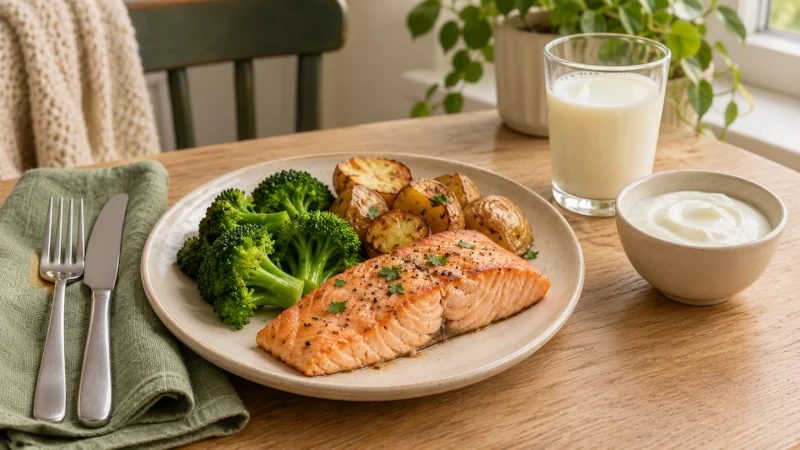
Three to four servings of milk, yogurt, cheese, or calcium-fortified juice or plant milk can cover a day’s calcium. Fatty fish such as salmon, sardines and mackerel, along with fortified foods, add vitamin D. [BHOF, n.d.-a] Our lists of calcium-rich foods and how much you actually absorb and the best foods for osteoporosis are good places to build a menu. For the nutrients that work alongside calcium, see our guides to vitamin D and magnesium. Food works best alongside regular weight-bearing exercise such as walking. [NIAMS, n.d.]
Safety notes if you take supplements
If you fill gaps with supplements, a few interactions are worth knowing. All of these come from the NIH’s calcium fact sheet:
- Levothyroxine (thyroid medicine): calcium carbonate can block absorption. Keep the two at least 4 hours apart.
- Quinolone antibiotics (such as ciprofloxacin): take the antibiotic 2 hours before or 2 hours after calcium.
- Dolutegravir (HIV medicine): take it 2 hours before or 6 hours after calcium.
- Lithium: long-term use can raise blood calcium, and adding calcium may increase that risk. [NIH ODS, 2026]
More isn’t better: stay under the 2,000 mg calcium upper limit from food and supplements combined. [NIH ODS, 2026] If you are pregnant, could become pregnant, or are breastfeeding, avoid vitamin A supplements above 3,000 mcg RAE (10,000 IU) a day, because high preformed vitamin A can cause birth defects. [NIH ODS, n.d.] People with kidney disease should get calcium, phosphorus and supplement advice from their care team, not from a general list.
When to see a doctor, and when to get urgent care
Osteoporosis is often called a silent disease because it usually causes no symptoms until a bone breaks. [NIAMS, n.d.] Diet alone can’t tell you where you stand. Talk to your doctor about your fracture risk and whether a bone density test makes sense if you have a parent who had a hip fracture, take steroid (glucocorticoid) medicines, drink heavily, or have gone through menopause. [NIAMS, n.d.]
Make an appointment soon if you notice: a fracture from a minor fall or from everyday movements like bending, lifting or coughing; new loss of height; or a stooped, hunched posture. [NIAMS, n.d.]
Get urgent care for: severe back pain, which can signal a spinal fracture, [NIAMS, n.d.] or any fall that leaves you in severe pain or unable to put weight on a leg.
If you’ve already been diagnosed, keep taking any medicine your doctor prescribed. Food supports bone, but prescribed treatment is what lowers fracture risk for people with osteoporosis. [NIAMS, n.d.]
HEALTH DISCLAIMER: This article is for general education and isn’t a substitute for advice, diagnosis or treatment from a qualified healthcare professional. Diet changes and supplements can interact with medicines and health conditions. Talk with your doctor, pharmacist or a registered dietitian before changing supplements, especially if you are pregnant, breastfeeding, have kidney disease, or take prescription medication.
Frequently Asked Questions
Is coffee bad for osteoporosis?
Not in moderate amounts. Caffeine slightly reduces calcium absorption, but large Swedish studies of women and men found no rise in fracture risk with higher coffee intake. BHOF suggests keeping coffee to about three cups a day. [Hallström et al., 2013; Hallström et al., 2014; BHOF, n.d.-a]
Can I still drink sparkling water?
Yes. Carbonation itself doesn’t harm bone. The concern in research is cola, and drinking soda in place of milk or fortified drinks. [BHOF, n.d.-a]
Should I stop eating spinach?
No. Spinach is nutritious. Just don’t count it as a calcium source, because only about 5% of its calcium is absorbed. [NIH ODS, 2026]
How much alcohol is safe for my bones?
Fracture risk did not rise significantly at two units a day or less in a large international analysis, but it did above that. [Kanis et al., 2005] BHOF advises no more than two to three drinks a day; less is safer.
Can changing my diet reverse osteoporosis?
Food can support bone health and help slow bone loss, but it doesn’t cure osteoporosis. If you’ve been diagnosed, prescribed medication is what helps prevent fractures. Use diet alongside it. [NIAMS, n.d.]
References
- National Institute of Arthritis and Musculoskeletal and Skin Diseases (NIH). Osteoporosis. “Last reviewed” field blank on page. View source
- Bone Health & Osteoporosis Foundation. Osteoporosis Diet & Nutrition: Foods for Bone Health. View source
- Bone Health & Osteoporosis Foundation. More Tips for Eating for Good Bone Health (Your Guide to a Bone Healthy Diet). View source
- NIH Office of Dietary Supplements. Calcium: Fact Sheet for Health Professionals. View source
- NIH Office of Dietary Supplements. Vitamin A and Carotenoids: Fact Sheet for Health Professionals. View source
- Imash D, Gusmanov A, Chan MY. High salt intake and bone health in postmenopausal women: exposing the lack of studies – a systematic review and meta-analysis. View source
- Teucher B, Dainty JR, Spinks CA, et al. Sodium and bone health: impact of moderately high and low salt intakes on calcium metabolism in postmenopausal women. View source
- Kanis JA, Johansson H, Johnell O, et al. Alcohol intake as a risk factor for fracture. View source
- Tucker KL, Morita K, Qiao N, Hannan MT, Cupples LA, Kiel DP. View source
- Hallström H, Byberg L, Glynn A, Lemming EW, Wolk A, Michaëlsson K. View source
- Hallström H, Wolk A, Glynn A, Michaëlsson K, Byberg L. View source
- Zhang X, Zhang R, Moore JB, et al. The effect of vitamin A on fracture risk: a meta-analysis of cohort studies. View source
- Wallace TC, Frankenfeld CL. Dietary protein intake above the current RDA and bone health: a systematic review and meta-analysis. View source
- Darling AL, Manders RJF, Sahni S, et al. Dietary protein and bone health across the life-course: View source


