The most honest answer to “what are the nettle tea benefits?” is this: the leaf of Urtica dioica is genuinely nutrient-dense, the plant has some real anti-inflammatory and antihistamine activity, and a few small clinical trials suggest it may help with hay fever, joint pain, and urinary symptoms in men with enlarged prostates. The complication is that almost every well-designed study used a concentrated extract or capsule — not the brewed tea you make at home. So the effects are real, but milder in a teacup than headlines suggest.
This guide separates the claims you can take to the bank from the ones that sound impressive but lean on weak evidence, and walks through how to brew nettle tea, when it can help, who should skip it, and which medications it can interfere with. For background on the plant itself, our companion guide to stinging nettle covers history, plant identification, and other preparations.
What Nettle Tea Actually Is
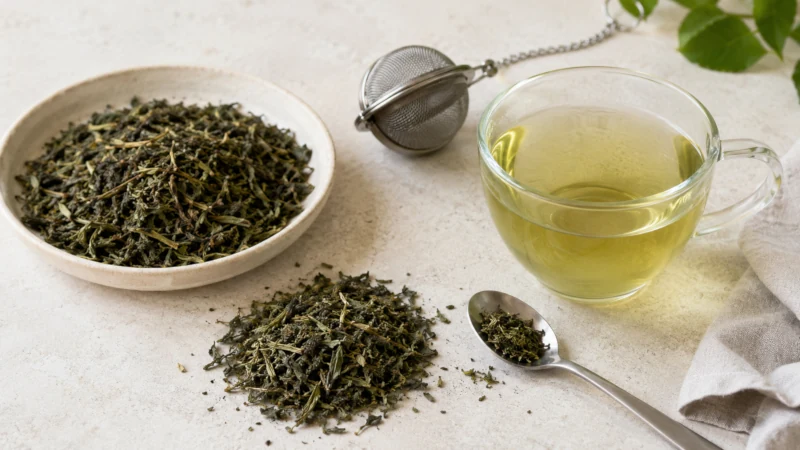
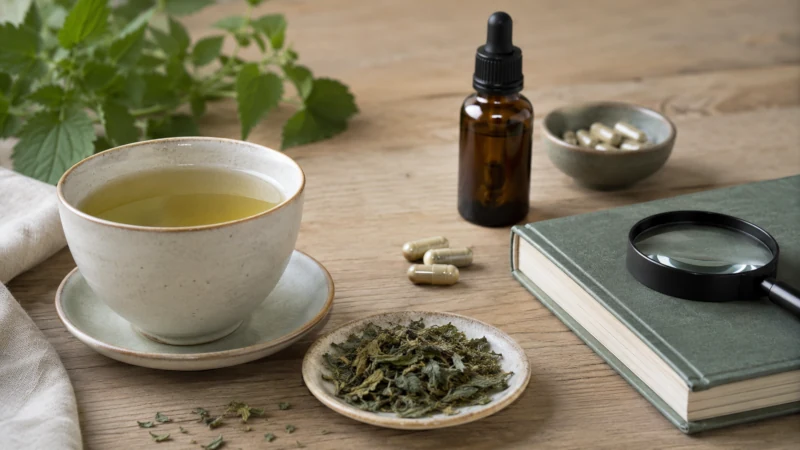
Nettle tea is an infusion of the dried leaves of the stinging nettle plant, Urtica dioica, brewed in hot water. The drying or heating process destroys the formic acid and histamine in the plant’s stinging hairs, so the tea itself doesn’t sting [NIH LiverTox, 2023].
One distinction matters before going any further: nettle leaf and nettle root are not interchangeable. Most of the urinary and prostate research uses root extracts in capsule form, while research on allergies and inflammation uses leaf extracts. Brewed leaf tea sits closer to the leaf side of that fence [MSK Integrative Medicine, 2021]. When you see a headline that says “nettle helps the prostate,” it almost always refers to a standardized root extract — not a cup of tea.
Nettle leaf brings a meaningful nutrient load. A USDA-listed serving of blanched nettles is about 83% water, with 14% protein by dry weight — high for a leafy green — and contains vitamins A, C, and K plus iron, calcium, and magnesium [USDA FoodData Central]. A cup of brewed tea gives you a small fraction of the leaf’s nutrients, because most minerals stay in the spent leaves. The tea is still a contributor — just not a megadose.
Nettle Tea Benefits, Ranked by Evidence
The table below gives the short version. The sections that follow explain each one.
| Possible benefit | Evidence level | How it may work | Main caveat |
| Hay-fever symptoms | Limited but promising | Blocks histamine-1 receptors, stabilizes mast cells, inhibits COX-1/COX-2 (in vitro) | Tested as freeze-dried capsules, not brewed tea |
| Osteoarthritis joint pain | Limited | Anti-inflammatory phenolics; topical sting alters local nerve signaling | Strongest evidence is for topical or capsule use |
| BPH urinary symptoms | Moderate (root, not leaf) | May reduce 5-α-reductase activity and prostate inflammation | Tea is leaf-based; root extracts in capsules are the studied form |
| Lower blood sugar | Limited | May slow carbohydrate absorption; affects insulin signaling | Most trials small; can interact with diabetes drugs |
| Lower blood pressure | Limited / early | Mild diuretic effect; possible calcium-channel activity | Avoid stacking with diuretics or BP medications |
| Antioxidant intake | Indirect | Polyphenols, carotenoids, vitamin C from leaf | Effects are modest in a brewed cup |
| Iron, vitamin K, vitamin A | Nutritional | Naturally present in the leaf | A cup of tea is not a meaningful iron source |
Allergic rhinitis (hay fever)
This is one of the few benefits with mechanism studies behind it. A laboratory study by Roschek and colleagues showed that a standardized nettle leaf extract blocked the histamine-1 receptor, inhibited mast-cell tryptase release, and suppressed COX-1, COX-2, and prostaglandin D2 synthase — the same inflammatory pathways modern antihistamines target [Roschek et al., 2009].
On the clinical side, Mittman ran a small randomized, double-blind trial of freeze-dried nettle leaf against placebo in 98 people with allergic rhinitis. After one week, 58% of participants rated nettle moderately or highly effective, versus 37% for placebo [Mittman, 1990]. The effect was real but modest, the trial was small, and again the form tested was freeze-dried capsules, not tea.
Practical takeaway: nettle leaf has plausible anti-allergy activity, but brewed tea contains less of the active compounds than a standardized capsule. If you tolerate it, drinking a cup or two during pollen season is reasonable. It is not a replacement for an antihistamine if your symptoms are severe.
Joint pain and osteoarthritis
Nettle has been used for arthritis since antiquity. Riehemann and colleagues showed that nettle extract inhibits NF-κB, a master switch for inflammatory gene expression — a plausible mechanism for the joint-pain benefit [Riehemann et al., 1999].
The most-cited clinical trial is by Randall and colleagues at the University of Plymouth: a randomized, double-blind crossover study in 27 patients with osteoarthritis of the base of the thumb. Patients applied fresh stinging nettle leaf to the painful joint for one week, then a placebo (white deadnettle) for one week after a five-week washout. Pain and disability scores fell significantly more with the stinging nettle, with P-values of 0.026 and 0.0027 [Randall et al., 2000]. Two caveats: the sample was tiny, and the form was topical sting application — not internal tea.
Drinking nettle tea probably contributes a mild systemic anti-inflammatory effect, but it is not a proven treatment for arthritis pain on its own.
Urinary symptoms in BPH (mostly root, not leaf)
This is where the evidence is strongest — but it is also where the evidence applies least to brewed leaf tea. Benign prostatic hyperplasia (BPH) is a non-cancerous enlargement of the prostate gland that causes urinary frequency, urgency, weak stream, and nocturia.
Safarinejad ran a six-month, double-blind, placebo-controlled crossover trial of Urtica dioica extract in 620 men with BPH. By the end of the trial, 81% of the nettle group reported improvement in lower urinary tract symptoms compared with 16% on placebo. The International Prostate Symptom Score dropped from 19.8 to 11.8 with nettle, versus 19.2 to 17.7 with placebo (P = 0.002) [Safarinejad, 2005]. A second double-blind RCT in 100 BPH patients reported similar improvement in IPSS scores at eight weeks [Ghorbanibirgani et al., 2013]. Combined nettle-and-saw-palmetto products have also shown benefit over long-term use [Lopatkin et al., 2007].
NCCIH summarizes the position carefully: there is limited but consistent evidence that Urtica dioica may improve some symptoms of BPH, generally with mild side effects [NCCIH, 2023].
The catch is that essentially all of this research used nettle root extract in standardized capsules, not leaf tea. Drinking nettle tea may help support urinary comfort, but if you have BPH, the studied product is a standardized root extract — talk to a urologist before substituting tea for a treatment plan.
Blood sugar regulation
Several small trials have looked at nettle for type 2 diabetes. Bhusal and colleagues’ 2022 review summarized the available data: nettle leaf appears to lower fasting and post-meal glucose modestly in some — but not all — short trials, with effect sizes that are clinically interesting only as an adjunct to standard care [Bhusal et al., 2022].
If you are taking insulin, sulfonylureas, or other glucose-lowering drugs, adding daily nettle tea can theoretically push your blood sugar lower than expected. Monitor your numbers and let your prescriber know if you start drinking it regularly.
Blood pressure
Animal and small human studies suggest nettle has a mild blood-pressure-lowering effect, possibly through diuretic activity and calcium-channel-like action [Bhusal et al., 2022]. The effect is small. The bigger concern is the interaction problem: nettle’s mild diuretic effect can stack with prescription diuretics like furosemide or hydrochlorothiazide, and Memorial Sloan Kettering specifically flags this risk [MSK Integrative Medicine, 2021].
Inflammation and antioxidants
Nettle leaf contains polyphenols, flavonoids (notably quercetin and kaempferol derivatives), and carotenoids — compounds with antioxidant activity in laboratory assays. Brewed tea extracts much less of these than a concentrated supplement, so the antioxidant load per cup is modest [Bhusal et al., 2022]. It is a pleasant, low-calorie beverage that contributes to overall polyphenol intake — that’s the honest framing.
Nutrition: iron, vitamin K, calcium
Per USDA data, blanched nettles are a real source of iron, calcium, magnesium, and vitamin K. But here’s the catch readers rarely hear: most of those minerals stay locked in the leaf during brewing. A cup of tea provides a small fraction of the iron in the leaves themselves [USDA FoodData Central]. If you actually want the nutrient profile, eat the cooked leaves like spinach. For iron specifically, see our list of foods rich in iron; for magnesium, see magnesium-rich foods.
One small nutrient consideration: nettle leaf contains vitamin K, which can interact with warfarin and similar anticoagulants. If you are on a blood thinner, the amount in a daily cup is unlikely to change your INR significantly, but you should not start or stop nettle tea without telling your prescriber [NIH LiverTox, 2023].
Where the Evidence Is Weakest
Some popular claims should be treated with skepticism. Three in particular:
- “Nettle tea detoxes the body.” The liver and kidneys handle detoxification. Nettle’s mild diuretic effect increases urine output, which is not the same thing as removing toxins. No major medical body endorses nettle as a detoxification therapy.
- “Nettle tea regrows hair.” Most claims trace back to nettle root extract (not tea), to non-human studies, or to anecdotal reports. There is no high-quality clinical trial of brewed nettle tea for hair loss.
- “Nettle tea clears acne and eczema.” Topical and anti-inflammatory effects exist in lab work, but human trials of brewed tea for acne or eczema are essentially absent. Treat this as plausible but unproven.
How to Brew Nettle Tea
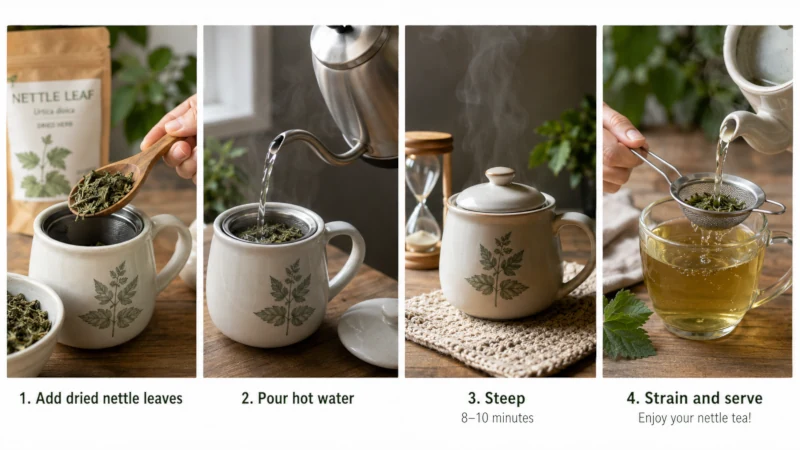
A simple, repeatable cup:
- Use 1 to 2 teaspoons of dried nettle leaf (about 1 to 2 g) per cup, or a small handful of fresh leaves if you have access to safe, clean plants.
- Pour 1 cup (about 240 mL) of boiling water over the leaves.
- Cover and steep 10 to 15 minutes. Longer steeping pulls more minerals and flavonoids out of the leaf.
- Strain. Add a small amount of honey or a squeeze of lemon if you like — the tea is grassy and earthy on its own.
- A typical traditional dose used in herbal practice is 1 to 3 cups per day, which corresponds to roughly 2 to 6 g of dried leaf [NIH LiverTox, 2023]. There is no formally established dose for brewed tea — these numbers come from traditional use and clinical extract data adjusted downward.
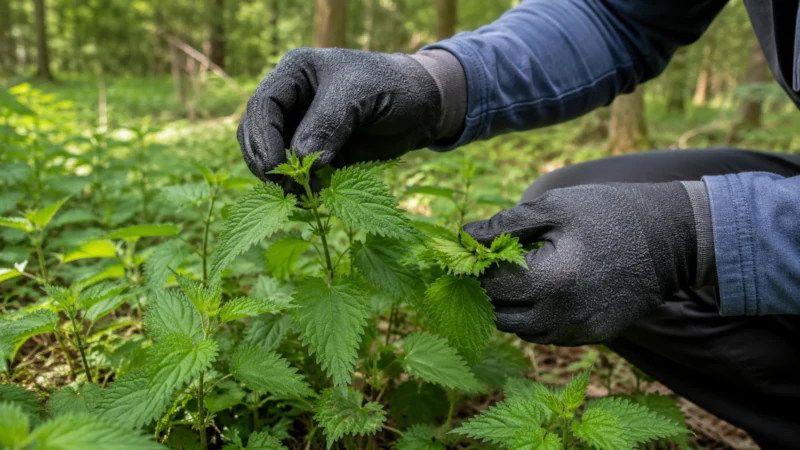
If you are foraging your own, wear gloves until the leaves are dried or cooked, and pick from clean ground — not roadsides or sprayed pastures. For more on the plant, see our stinging nettle plant guide.
Side Effects and Safety
Nettle tea is well-tolerated by most adults. The NIH LiverTox monograph reports no documented cases of liver injury from oral nettle products at typical doses [NIH LiverTox, 2023]. Reported side effects, when they happen, are mild and uncommon:
- Mild stomach upset or diarrhea
- Increased urination from the diuretic effect
- Sweating
- Allergic-type reactions — skin rash, hives, itching, or swelling — particularly in people allergic to nettle pollen or to other plants in the Urticaceae family
Memorial Sloan Kettering also lists two unusual case reports linked to oral nettle products: gynecomastia (breast tissue enlargement) in a man and galactorrhea (nipple discharge) in a woman who drank nettle tea. These are rare and the mechanism is not well understood, but they are worth knowing about [MSK Integrative Medicine, 2021].
Who should avoid nettle tea
Skip nettle tea, or talk to your doctor first, if any of the following apply to you:
- Pregnant or trying to become pregnant. Nettle has historical use as an emmenagogue (uterine stimulant). Safety data in pregnancy is limited, and major herbal authorities advise against it.
- Breastfeeding. A case report links a mother’s topical nettle use to hives in her breastfed infant. Internal use during lactation is poorly studied [MSK, 2021].
- Children. There is no established pediatric dose; safety data is lacking.
- Low blood pressure, or on blood-pressure medication. Additive effects are possible.
- Diabetes on glucose-lowering medication. Nettle can lower blood sugar; combined effects may produce hypoglycemia.
- Kidney disease. The diuretic effect may stress impaired kidneys.
- Known plant or pollen allergies, especially to ragweed family plants. Cross-reactivity has been reported.
Drug interactions
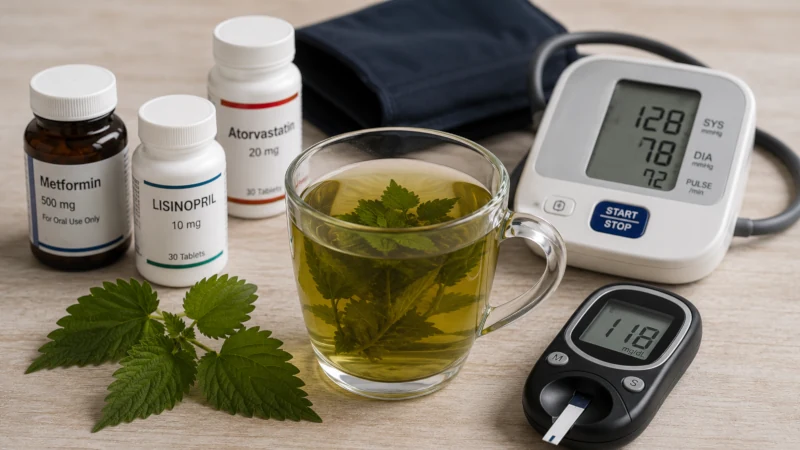
Document the herbs you drink the same way you’d document a supplement. Tell your prescriber if you take any of the following:
- Diuretics (furosemide, hydrochlorothiazide, spironolactone) — additive fluid and electrolyte effects.
- Blood pressure medications — additive lowering effect.
- Blood-sugar–lowering drugs (insulin, sulfonylureas, metformin) — possible additive hypoglycemia.
- Warfarin and other anticoagulants — nettle is a source of vitamin K and can theoretically reduce warfarin’s effect.
- Lithium — diuretic activity can affect lithium clearance.
- Iron supplements — nettle tannins can reduce non-heme iron absorption if taken with the same meal [NCCIH, 2023].
Pregnancy and breastfeeding
Major integrative medicine resources advise against nettle tea during pregnancy and recommend caution while breastfeeding because of limited safety data and a single case report of infant skin reaction tied to topical maternal use [MSK Integrative Medicine, 2021]. If you are pregnant or nursing, choose a tea your obstetrician has reviewed.
Realistic Expectations
Nettle tea is a pleasant, mineral-containing herbal infusion with mild anti-inflammatory and antihistamine activity. It is not a treatment for any disease. The clinical effect of a daily cup is real but modest — measurable in head-to-head trials of concentrated extracts, much smaller in a teacup.
If your goals are seasonal allergy support, mild urinary comfort, or simply rotating in a low-calorie herbal beverage, it is a reasonable choice. If you are looking for an evidence-based supplement for a specific symptom — stress, sleep, joint pain — a standardized product such as one of the better-studied adaptogens like ashwagandha or a clinician-recommended therapy is likely to give you a stronger effect than a cup of leaf tea.
If you enjoy the taste and tolerate it, drink a cup or two a day during pollen season or as part of a varied herbal-tea rotation alongside our overview of teas with research behind them for constipation or roman chamomile for digestion and rest. Don’t expect it to replace medical care.

When to Talk to Your Doctor
Reach out to a clinician — don’t self-treat with tea — if you have any of these:
- Persistent or worsening urinary symptoms (especially blood in urine, painful urination, fever, or inability to urinate)
- New or worsening joint swelling or stiffness
- Severe seasonal allergy symptoms (asthma flare, swelling, breathing difficulty)
- Unexplained breast changes or nipple discharge while drinking nettle tea regularly
- Signs of low blood sugar (sweating, shakiness, confusion) if you have diabetes
- Pregnancy or planning pregnancy
- Any new prescription or change in your current medications
| Health Disclaimer: This article is for educational purposes only and is not a substitute for medical advice, diagnosis, or treatment from a qualified healthcare professional. Nettle tea is not a cure for any disease and is not a substitute for medications prescribed for diabetes, high blood pressure, allergies, arthritis, or benign prostatic hyperplasia. The studies on nettle are small, mixed in quality, and most have looked at concentrated extracts or capsules rather than tea brewed at home — so the size of any real-world effect from drinking tea is uncertain. Talk to your doctor or pharmacist before drinking nettle tea regularly if you are pregnant or breastfeeding, are taking diuretics, blood thinners, blood-pressure or blood-sugar medications, or have a known plant allergy. Stop using it and seek medical care if you develop hives, swelling, shortness of breath, or worsening urinary symptoms. |
Frequently Asked Questions
Is it safe to drink nettle tea every day?
For most healthy adults, one to three cups a day is generally well-tolerated [NIH LiverTox, 2023]. If you take diuretics, blood-pressure or blood-sugar medications, or anticoagulants, talk to your prescriber before making it a daily habit.
Does nettle tea actually help allergies?
Possibly. Lab studies show nettle leaf extract blocks histamine receptors and inhibits inflammatory enzymes, and a small clinical trial of freeze-dried nettle capsules outperformed placebo for hay-fever symptoms [Roschek et al., 2009; Mittman, 1990]. The effect from brewed tea is likely milder than from a capsule. It is not a substitute for prescription antihistamines if your symptoms are severe.
Is nettle tea good for high blood pressure?
Can men with an enlarged prostate use nettle tea?
The clinical evidence for Urtica dioica in BPH is mostly for standardized root extracts in capsule form, not leaf tea [Safarinejad, 2005]. Tea may add some symptomatic comfort, but if you have BPH, the studied product is a root extract. Talk to a urologist about adding either form to your treatment plan.
Will nettle tea help me lose weight?
No. Nettle tea is essentially calorie-free, and like any unsweetened beverage it can replace higher-calorie drinks. Beyond that, there is no good clinical evidence that nettle tea causes weight loss.
References
- LiverTox: Clinical and Research Information on Drug-Induced Liver Injury. Stinging Nettle. Bethesda (MD): National Institute of Diabetes and Digestive and Kidney Diseases; updated 2023. → View source
- National Center for Complementary and Integrative Health (NCCIH). Benign Prostatic Hyperplasia and Complementary and Integrative Approaches: What the Science Says. NIH, 2023. → View source
- Memorial Sloan Kettering Cancer Center. Integrative Medicine: Nettle — Purported Benefits, Side Effects & More. Last updated December 2021. → View source
- Safarinejad MR. Urtica dioica for treatment of benign prostatic hyperplasia: a prospective, randomized, double-blind, placebo-controlled, crossover study. J Herb Pharmacother. 2005;5(4):1-11. → View source
- Ghorbanibirgani A, Khalili A, Zamani L. The Efficacy of Stinging Nettle (Urtica Dioica) in Patients with Benign Prostatic Hyperplasia: A Randomized Double-Blind Study in 100 Patients. Iran Red Crescent Med J. 2013;15(1):9-10. → View source
- Lopatkin N, Sivkov A, Walther C, et al. Long-term efficacy and safety of a combination of Sabal and Urtica extract for lower urinary tract symptoms — a placebo-controlled, double-blind, multicenter trial. World J Urol. 2007;25(5):427-36. → View source
- Roschek B Jr, Fink RC, McMichael M, Alberte RS. Nettle extract (Urtica dioica) affects key receptors and enzymes associated with allergic rhinitis. Phytother Res. 2009;23(7):920-6. DOI: 10.1002/ptr.2763. → View source
- Mittman P. Randomized, double-blind study of freeze-dried Urtica dioica in the treatment of allergic rhinitis. Planta Med. 1990;56(1):44-7. → View source
- Randall C, Randall H, Dobbs F, Hutton C, Sanders H. Randomized controlled trial of nettle sting for treatment of base-of-thumb pain. J R Soc Med. 2000;93(6):305-9. DOI: 10.1177/014107680009300607. → View source
- Riehemann K, Behnke B, Schulze-Osthoff K. Plant extracts from stinging nettle (Urtica dioica), an antirheumatic remedy, inhibit the proinflammatory transcription factor NF-kappaB. FEBS Lett. 1999;442(1):89-94. → View source
- Bhusal KK, Magar SK, Thapa R, et al. Nutritional and pharmacological importance of stinging nettle (Urtica dioica L.): A review. Heliyon. 2022;8(6):e09717. → View source
- U.S. Department of Agriculture, Agricultural Research Service. FoodData Central — Nutrient profile of Stinging Nettles, blanched. → View source
- National Institutes of Health Office of Dietary Supplements (ODS). Iron — Fact Sheet for Health Professionals. Updated 2024. → View source
