
Natural Health Message — Herbs, Remedies & Nutrition for Whole-Body Wellness.
  • Health Conditions
    • Cancer & Prevention
    • Cardiovascular Health
    • Digestive Health
    • Eye & Vision
    • Immune & Infections
    • Metabolic Health
    • Musculoskeletal Health
    • Nervous System
    • Reproductive Health
    • Respiratory Health
    • Skin Health
    • Urinary Health
  • Nutrition
    • Diet
    • Foods
    • Recipes
  • Remedies
    • Alternative Treatments
    • Herbal Remedies
    • Herbs
    • Lifestyle & Habits
  • Supplements and Reviews
    • General Supplements
    • Minerals
    • Nitric Oxide
    • Reviews
    • Vitamins
Home | Herbs | Unlock the Secrets of the Cinchona Tree
Herbs

Unlock the Secrets of the Cinchona Tree

by Donald Rice Updated: November 12, 2024
written by Donald Rice Published: September 4, 2021Updated: November 12, 2024
Naturalhealthmessage.com receives compensation from some of the companies, products, and services listed on this page. Advertising Disclosure
0FacebookTwitterPinterestTumblrVKWhatsappEmail
1.9K

Contents

  • 1 Cinchona Tree Scientific Facts
  • 2 Healing Properties and Warning
  • 3 Other Cinchona Tree Species
  • 4 How to use Cinchona
        • 4.0.0.1 REFERENCES

The cinchona tree is a true natural wealth for Andean South American countries. It is believed that the Incas knew about these extraordinary febrifuge properties for a long time but kept them secret so that the Spanish conquistadors would become weakened by malarial fever.

The Counts of Chinchon, who were rulers of Peru, brought to Spain a vast pack of cinchona bark in the 17th century. Because of its beautiful results in decreasing fever and as a stimulating substance, its use quickly spread throughout Europe as powder, extract, and decoction. In 1920, the French pharmacists Pelletier and Caventou managed to isolate the active components of the cinchona bark, which are two alkaloids known as quinine and cinchonine, and some others.
Related Products

Browse practical items related to herbal routines.

Browse Herbal Tools

As an Amazon Associate I earn from qualifying purchases.

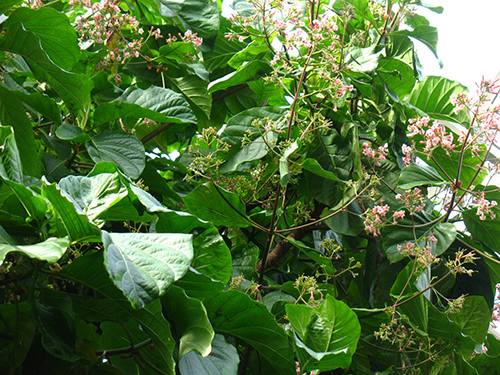
cinchona tree uses
C20H24N2O2 is the chemical formula of quinine, the most important of the 20 alkaloids in the cinchona tree bark. With quinine and its derivatives, several medicines with antimalarial properties are made. Quinine is also found in minuscule amounts inside tonic water.

Currently, millions of people use the cinchona tree and its derivatives for individual prophylaxis (prevention) and malaria treatment.

Cinchona Tree Scientific Facts

  1. Scientific name: Cinchona officinalis L.
  2. Other names: Peruvian bark, cinchona.
  3. French: Quinquina.
  4. Spanish: Quino.
  5. Environment: It grows wild in mountain regions of Ecuador, Peru, Bolivia, and northern Colombia between 1500 and 2000 m altitude. The best cinchona trees grow in the province of Loja, Ecuador. It is also cultivated in the West Indies, Indonesia (Java), Australia, and tropical regions of Africa.
  6. Description: Shrub or tree of the Rubiaceae family, growing up to 30 m high. The cinchona bark is reddish or ochre, and large green opposite leaves form the top. It has white or pink flowers.
  7. Parts of the plant used medicinally: The bark of the trunk and branches, especially, and that of the root, ground up.

Healing Properties and Warning

Cinchona tree bark contains more than 20 alkaloids, among which there are two pairs of isomers: quinine-quinidine and cinchonine-cinchonidine. These alkaloids give the plant febrifuge antimalarial, stimulating properties, and a bitter taste. Cinchona bark contains catechic tannin, strongly astringent and essences, bitter components, and starch. The most critical applications of the bark are the following:
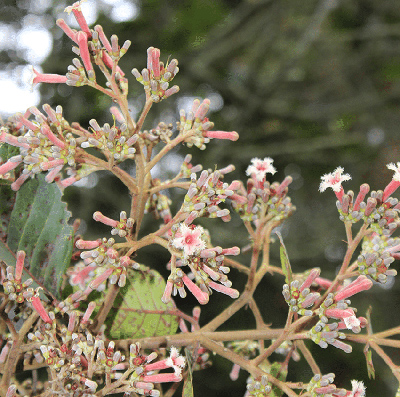
quinine plant for malaria
  1. Malaria: This is likely to be the disease affecting the most extensive number of people worldwide. It manifests as high fever, profuse sweating, sleepiness, headaches, nausea, and anemia. The causative agents are various protozoa of the plasmodium genus, which attack the red blood cells after being injected by the anopheles mosquito bite. Cinchona bark alkaloids are beneficial in treating acute phases of malaria attacks. They decrease fever, alleviate headache and nausea, and eliminate the general discomfort this disease causes. Cinchona bark has been used for these purposes since the times of the Incas. Since the mid-20th century, pharmaceutical research has developed synthetic antimalarial medicines, such as chloroquine and primaquine, preventing the disease. However, the quinine obtained from cinchona bark is still successfully used, especially in rural South America and Asia.
  2. Febrile condition: Cinchona bark decreases the fever caused by many other infectious diseases besides malaria. Its beneficial effects are enhanced because it promotes the elimination of blood toxins, both through the skin and through the urine (depurative properties). Its use is recommended for influenza, viral infections, and any chronic infections.
  3. Lack of appetite: All cinchona bark, mainly obtained from the red cinchona tree, has a marked appetizer and invigorator effect. Moreover, they are digestive and successfully fight intestinal fermentation.
  4. Cicatrizant: In external applications, quinine is an excellent antiseptic and promotes healing. It is used for stomatitis (mucosa inflammation), mouth sores, pyorrhea, and pharyngitis. It is also applied as compresses on any wounds.
  5. Hair invigorator: When applied as compresses, it renders good results in certain types of hair loss.

WARNING! Never exceed the recommended dose in internal use since it can provoke nausea and vomiting.

Other Cinchona Tree Species

There are several species of trees of the genus Cinchona of the Rubiaceae family. Some 18 to 23 species are known; however, the most used and cultivated are the following ones:

  • Cinchona officinalis L. is the most commonly employed and the first species used. It is pretty standard in Ecuador.
  • Cinchona succuba Pavon, also known as red cinchona, is cultivated because it has a superior invigorator effect on digestive functions compared to other cinchona species. It grows wild in the Quito (Ecuador) and Peru areas.
  • Cinchona calisaya Weed. Also called yellow cinchona, it grows wild in Bolivia and Peru.
  • All cinchona species, with the exception made of the red cinchona, have the same properties. The variation between one and another is due to their different quinine concentrations (their active component).
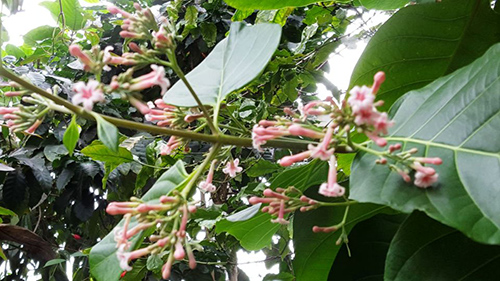
cinchona flower benefits

How to use Cinchona

  1. Cold extract: Steep 20-30 g of cinchona tree bark in one liter of water for one hour. Drink a cup before every meal.
  2. Infusion: Add half a teaspoonful of ground cinchona tree bark per cup of water. Drink one cup before every meal, never exceeding four cups daily.
  3. Compresses with a decoction of 30-40 g of bark per liter of water. Boil for 10 minutes. Soak the compresses in the resulting liquid and apply them to the scalp for 10 minutes, thrice daily.
  4. Gargles and mouth rinse with the decoction mentioned above.

DISCLAIMER: All content on this website is presented solely for educational and informational objectives. Do not rely on the information provided as a replacement for advice, diagnosis, or treatment from a qualified medical expert. If you are pregnant, nursing, or have any preexisting medical concerns, talk to your doctor before using any herbal or natural medicines.

REFERENCES
  1. George D. Pamplona-Roger, M.D. “Encyclopedia of Medicinal Plants.” George D. Pamplona-Roger, M.D. Encyclopedia of Medicinal Plants. Ed. Francesc X. Gelabert. vols. 2 San Fernando de Henares: Editorial Safeliz, 2000. 752, 753. Print.
  2. NCBI: https://www.ncbi.nlm.nih.gov/pmc/articles/PMC6316520/
  3. WebMD https://www.webmd.com/vitamins/ai/ingredientmono-406/cinchona
  4. RxList https://www.rxlist.com/supplements/cinchona.htm
  5. Red List https://www.iucnredlist.org/

Related posts:

  1. Foods For Healthy Blood
  2. Boost Your Liver Health: 10 Best Foods for The Liver
  3. Stinging Nettle: An Amazing Plant That Defends Itself and Us
  4. Lavender Benefits: Amazing Fragrance, Invigorating and Medicinal
bark of cinchona tree is used for the treatment of which diseasecinchona bark benefitscinchona bark powdercinchona bark powder benefitscinchona flower benefitscinchona officinalis homeopathycinchona officinalis usescinchona tree usesquinine plantquinine plant for malaria
0 FacebookTwitterPinterestTumblrVKWhatsappEmail
Donald Rice
Donald Rice

Donald Rice is a natural health advocate and health writer focused on nutrition, wellness, and alternative health education. He creates clear, research-based content designed to help readers better understand health topics through reputable sources, including peer-reviewed studies, academic institutions, government health agencies, and established medical organizations.

previous post
Unlock the Health Benefits of Black Elder Plant
next post
Herbs For Medicinal Uses Demystified

You may also like

Ashwagandha Benefits: What the Evidence Actually Supports

Updated: June 1, 2026

How to Make a Nervine Tea Blend for Stress

Published: November 11, 2025

The Best Adaptogenic Herbs for Social Anxiety

Published: November 1, 2025

Discover The Benefits of Mugwort Tea

Published: October 29, 2025

The Best Herbs for Male Stamina

Updated: October 14, 2025

Yohimbe Benefits for Men: What the Science Actually Says About Fat Loss, Energy,...

Updated: May 20, 2026
Best Health and Wellness Blogs - OnToplist.com

Recent Posts

  • Best Exercises for Flat Feet in Adults

  • What Are Flat Feet? Causes, Types, and Common Symptoms

  • Flat Feet and Fallen Arches: Causes, Symptoms, and What Helps

  • Cardiovascular and Pulmonary Disease: What Every Patient Should Know

  • Acerola Cherry Supplements: 7 Important Things to Look for Before You Buy

Random Articles

Yellow Bedstraw Benefits Unveiled
9 Amazing and Calming Foods to Eat For IBS
Sapota Health Benefits: Powerful Anti-Anemic and Astringent

Discover the healing power of the High Mallow plant

Recent Articles

The Caimito Plant Health Benefits
Carline Thistle Plant Health Benefits
Natural Remedies for Post COVID Fatigue

Featured

14 Amazing Angina Foods to Eat
Belladonna Plant Health Benefits
Cherimoya Health Benefits

@2024 – All Right Reserved. Natural Health Message.

  • About Us
  • Contact Us
  • Advertising Disclosure
  • Medical Advice Disclaimer
We use cookies on our website to give you the most relevant experience by remembering your preferences and repeat visits. By clicking “Accept All”, you consent to the use of ALL the cookies. However, you may visit "Cookie Settings" to provide a controlled consent.
Cookie SettingsAccept All
Manage consent

Privacy Overview

This website uses cookies to improve your experience while you navigate through the website. Out of these, the cookies that are categorized as necessary are stored on your browser as they are essential for the working of basic functionalities of the website. We also use third-party cookies that help us analyze and understand how you use this website. These cookies will be stored in your browser only with your consent. You also have the option to opt-out of these cookies. But opting out of some of these cookies may affect your browsing experience.
Necessary
Always Enabled
Necessary cookies are absolutely essential for the website to function properly. These cookies ensure basic functionalities and security features of the website, anonymously.
CookieDurationDescription
cookielawinfo-checkbox-analytics11 monthsThis cookie is set by GDPR Cookie Consent plugin. The cookie is used to store the user consent for the cookies in the category "Analytics".
cookielawinfo-checkbox-functional11 monthsThe cookie is set by GDPR cookie consent to record the user consent for the cookies in the category "Functional".
cookielawinfo-checkbox-necessary11 monthsThis cookie is set by GDPR Cookie Consent plugin. The cookies is used to store the user consent for the cookies in the category "Necessary".
cookielawinfo-checkbox-others11 monthsThis cookie is set by GDPR Cookie Consent plugin. The cookie is used to store the user consent for the cookies in the category "Other.
cookielawinfo-checkbox-performance11 monthsThis cookie is set by GDPR Cookie Consent plugin. The cookie is used to store the user consent for the cookies in the category "Performance".
viewed_cookie_policy11 monthsThe cookie is set by the GDPR Cookie Consent plugin and is used to store whether or not user has consented to the use of cookies. It does not store any personal data.
Functional
Functional cookies help to perform certain functionalities like sharing the content of the website on social media platforms, collect feedbacks, and other third-party features.
Performance
Performance cookies are used to understand and analyze the key performance indexes of the website which helps in delivering a better user experience for the visitors.
Analytics
Analytical cookies are used to understand how visitors interact with the website. These cookies help provide information on metrics the number of visitors, bounce rate, traffic source, etc.
Advertisement
Advertisement cookies are used to provide visitors with relevant ads and marketing campaigns. These cookies track visitors across websites and collect information to provide customized ads.
Others
Other uncategorized cookies are those that are being analyzed and have not been classified into a category as yet.
SAVE & ACCEPT
Natural Health Message — Herbs, Remedies & Nutrition for Whole-Body Wellness.
  • Health Conditions
    • Cancer & Prevention
    • Cardiovascular Health
    • Digestive Health
    • Eye & Vision
    • Immune & Infections
    • Metabolic Health
    • Musculoskeletal Health
    • Nervous System
    • Reproductive Health
    • Respiratory Health
    • Skin Health
    • Urinary Health
  • Nutrition
    • Diet
    • Foods
    • Recipes
  • Remedies
    • Alternative Treatments
    • Herbal Remedies
    • Herbs
    • Lifestyle & Habits
  • Supplements and Reviews
    • General Supplements
    • Minerals
    • Nitric Oxide
    • Reviews
    • Vitamins