
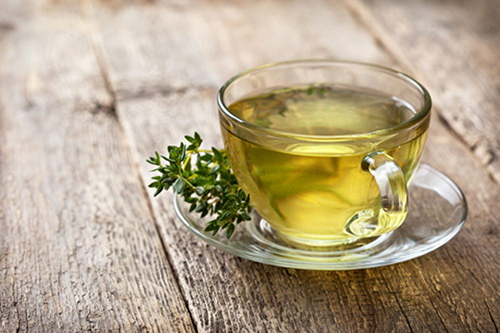
The thyme plant’s health benefits are real, but they’re narrower than much of the internet suggests. The strongest evidence supports thyme as a remedy for chesty, productive coughs and as an ingredient in oral-care products. Bolder claims — that it cures serious infections, lowers cholesterol, or treats asthma — rest on laboratory work or old tradition, not on solid human trials.
Thyme (Thymus vulgaris) has been used in cooking and folk medicine for thousands of years. Ancient Egyptians used it in embalming, and 19th-century clinicians nicknamed it the “disinfectant of the poor” before antibiotics existed. That history is interesting, but it isn’t proof. Below, you’ll find what researchers have actually shown, what’s still unproven, and how to use thyme safely if you want to try it.
What’s actually in thyme
Thyme’s medicinal reputation comes mostly from its essential oil, which makes up roughly 1–2% of the dried herb. Two compounds dominate: thymol and carvacrol, both phenols with measurable antiseptic and antioxidant activity in the lab [Nieto, 2020]. Thyme also supplies flavonoids such as apigenin and luteolin, plus rosmarinic acid.
Thymol is familiar even to people who’ve never brewed thyme tea: it’s an active ingredient in some antiseptic mouthwashes and dental products [McCormick Science Institute, 2016]. That’s a useful anchor — thyme’s chemistry is genuinely active, which is exactly why dose and form matter. Garden thyme is sometimes confused with its close relative wild thyme, also called mother of thyme, which has a similar but distinct profile.
Thyme plant health benefits: what the evidence shows
Easing a chesty cough — the best-supported use
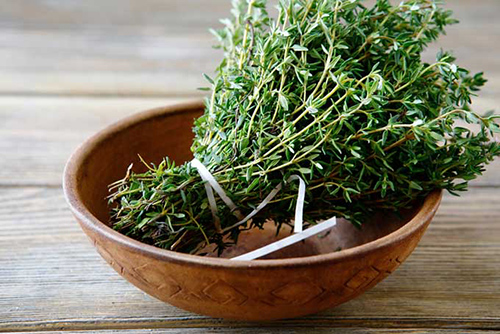
This is where thyme has the most credible human evidence. The EMA’s Committee on Herbal Medicinal Products recognizes thyme preparations as a traditional treatment for productive (“chesty”) coughs linked to colds — long-standing use supports it, even though large modern trials are limited [EMA, 2014].
The most-cited trial tested thyme combined with ivy leaf, not thyme alone. In a double-blind study of 361 adults with acute bronchitis, the thyme–ivy syrup cut coughing fits by 68.7% by days 7–9, versus 47.6% for placebo, and people improved about two days faster [Kemmerich, 2006]. The catch: a 2021 systematic review found this was the only well-designed placebo-controlled trial, and most other studies had serious methodological flaws [Sierocinski, 2021]. So thyme looks helpful for short-term cough relief, especially with ivy, but the evidence is thinner than the popularity of these syrups implies.
Bottom line for daily life: a warm thyme tea or a regulated thyme–ivy cough syrup may ease a productive cough during a cold. It won’t shorten the underlying infection, and it is not a treatment for asthma or any chronic lung disease. For broader support while you recover, see foods that help during a cold or flu.
Sore throat and oral care
Thymol’s antiseptic action is established enough that it appears in commercial mouthwashes [McCormick Science Institute, 2016]. A warm thyme gargle is a reasonable home option for a scratchy throat, and the herb has long traditional use for inflamed gums. The evidence is mainly about thymol as an oral antiseptic rather than thyme tea specifically, so treat a gargle as soothing comfort care, not a cure.
Antibacterial and antifungal effects — mostly in the lab
This is the area most often overstated. In test tubes, thymol and carvacrol kill or slow a wide range of bacteria and fungi, including some drug-resistant strains and Candida yeast [Nieto, 2020]. Those results are real, and they’re why thyme oil is studied as a food preservative and surface disinfectant.
But killing microbes in a petri dish is not the same as curing an infection in the body. Lab concentrations are far higher than anything tea delivers, and swallowing thyme does not put thymol into your blood at antibiotic-like levels. Older herbal texts claimed thyme acts on the bacteria behind typhoid, diphtheria, tuberculosis, and meningitis. There is no clinical evidence that thyme treats any of these serious diseases, and using it instead of medical care would be dangerous.
Antioxidant activity and early research
Thyme is a strong antioxidant in laboratory tests, and its compounds are being studied for effects on blood pressure, inflammation, and tumor cells [Nieto, 2020]. A few small human studies hint at modest effects — one small trial suggested thyme might slightly lower blood pressure — but these are early and don’t justify using thyme as a treatment for any chronic condition. Claims that it reliably lowers cholesterol or fights cancer in people aren’t supported; that work is mostly in cells and animals [MNT, 2024].
Skin and scalp
Properly diluted, thyme oil has traditional use for minor skin complaints, and its lab antifungal activity has prompted interest in problems like athlete’s foot. The evidence is preliminary. Thyme also turns up among topical herbs people try for thinning hair, but the often-cited scalp study used a blend of several essential oils, not thyme alone, so don’t expect thyme by itself to regrow hair. Always dilute essential oils before they touch skin.
Claims that go further than the evidence
A quick way to keep thyme’s reputation honest — the left column is what you’ll often read online; the right column is what the research actually supports.
| Claim you’ll see | What the evidence actually shows |
| Relieves productive coughs from colds | Reasonable. Traditional use recognized by EU regulators; one good RCT (thyme with ivy). Best for short-term relief. |
| Soothes sore throat and gums | Plausible comfort care. Thymol is a proven oral antiseptic; a gargle can soothe. |
| Kills bacteria and fungi | True in the lab only. Not shown to cure infections in people at amounts you’d actually consume. |
| Treats typhoid, TB, diphtheria, meningitis | No clinical evidence. Never use in place of medical care — these are emergencies. |
| Lowers cholesterol | Not proven in humans. Mostly animal and cell data. |
| Treats asthma | Not supported. Strong aromatic oils can even irritate airways in some people. |
| Expels intestinal worms | Traditional and lab use only. Not a proven dewormer for people. |
| Eases anxiety, depression, insomnia | No reliable human evidence. |
How to use thyme safely
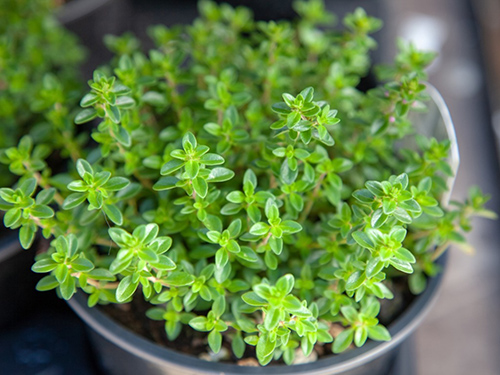
For most people, the simplest and safest options are food and tea.
Thyme tea: steep 1–2 teaspoons of dried thyme (or a few fresh sprigs) in a cup of just-boiled water, covered, for 5–10 minutes. The EMA notes thyme preparations are generally intended for adults and children over 12, with only some suitable from age 4; if symptoms last more than a week or worsen, see a clinician [EMA, 2014]. Two to three cups a day during a cold is a typical short course.
Gargle: let the same tea cool to a safe temperature and gargle for a sore throat.
Steam inhalation: add a little dried thyme to a bowl of hot water and drape a towel over your head. Keep your face far enough away to avoid scalding, and skip this for young children.
Cooking: there’s no downside to seasoning food generously with thyme.
For stronger preparations — tinctures, fluid extracts, or capsules — follow the product label and ideally ask a pharmacist, since potency varies widely. For background on infusions, decoctions, and poultices, see how to prepare herbs for medicinal use.
Realistic expectations matter. Thyme is comfort care for everyday coughs, sore throats, and mild digestive upset — not a substitute for antibiotics, an asthma inhaler, or any prescribed treatment.
Safety, side effects, and interactions
Side effects and allergies
Culinary thyme and ordinary thyme tea are well tolerated by most people. The main concern is allergy: thyme is in the mint family (Lamiaceae), so anyone allergic to oregano, basil, sage, lavender, or mint may react. Reactions can include skin irritation from handling the plant and digestive upset — nausea, heartburn, or diarrhea — after eating or drinking it [WebMD, 2024].
Thyme essential oil: handle with care
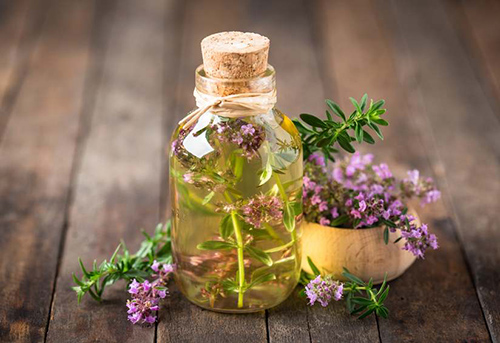
Thyme essential oil is not the same thing as thyme tea. It’s highly concentrated, can be toxic if swallowed undiluted, and can irritate skin and mucous membranes; too much has been linked to a drop in blood pressure [WebMD, 2024]. Never take thyme essential oil by mouth without professional guidance, always dilute it for skin use, and don’t apply strong aromatic oils to or near the face of babies and young children [EMA oil, 2024].
Medication interactions
Check with your doctor or pharmacist before using medicinal amounts of thyme if you take any of the following:
- Anticoagulant or antiplatelet (“blood-thinning”) drugs — thyme may add a small bleeding risk.
- Blood-pressure medication — possible additive lowering of blood pressure.
- Hormone-sensitive treatments — thyme has shown weak estrogen-like activity in lab studies [WebMD mono, n.d.].
Because of the possible effects on bleeding and blood pressure, stop medicinal thyme at least two weeks before scheduled surgery [WebMD, 2024].
Who should avoid concentrated thyme
- People allergic to mint-family plants (oregano, sage, basil, lavender, mint).
- Pregnant or breastfeeding people — culinary amounts are fine, but avoid medicinal doses and the essential oil unless a clinician approves.
- Children — follow age limits on any thyme medicine (many are not for under-12s), and never give essential oil to infants.
- Anyone on blood thinners or blood-pressure drugs, or facing surgery.
- People with hormone-sensitive conditions, as a precaution.
When to see a doctor
Thyme is for minor, self-limiting complaints. Get medical care — don’t rely on home remedies — if you have:
- A cough lasting more than three weeks, or one that worsens after a week of a cold.
- A high fever, shortness of breath, chest pain, or you’re coughing up blood.
- Wheezing, or a known lung condition such as asthma or COPD.
- Signs of serious infection — a stiff neck with fever and a rash, a severe headache, or confusion. These can signal meningitis and need emergency care immediately.
Thyme cannot treat these conditions, and delaying real treatment can be harmful.
| Health Disclaimer This article is for general education and information only. It is not medical advice and is not a substitute for diagnosis or treatment by a qualified healthcare professional. Thyme can interact with medications and is not appropriate for everyone. If you are pregnant or breastfeeding, give thyme to a child, take prescription medication, or have an ongoing health condition, talk to your doctor or pharmacist before using thyme as a remedy. Seek prompt medical care for severe, persistent, or worsening symptoms. |
Frequently asked questions
Is thyme tea good for a cough?
For short-term relief of a chesty, productive cough during a cold, yes — and the strongest evidence is for thyme combined with ivy leaf [Kemmerich, 2006]. It soothes symptoms but doesn’t shorten the infection, and it isn’t a treatment for asthma.
Can thyme fight infections the way antibiotics do?
No. Thymol kills microbes in the lab, but there’s no clinical evidence that drinking or eating thyme cures bacterial infections in people. Never use it in place of prescribed antibiotics [Nieto, 2020].
Is thyme essential oil safe to swallow?
Not without professional guidance. It’s highly concentrated, can be toxic undiluted, and may lower blood pressure [WebMD, 2024]. Thyme tea is the safer everyday option.
Can I use thyme during pregnancy?
Using thyme as a food or seasoning is fine. Avoid medicinal doses, concentrated extracts, and the essential oil unless your clinician approves, since safety data at those amounts is limited.
How much thyme tea can I drink a day?
A common approach is two to three cups a day as a short 5–7 day course during a cold [EMA, 2014]. If symptoms last beyond a week or get worse, see a doctor.
References
- Medical News Today. Thyme: Benefits, history, and forms (updated 2024). → View source
- European Medicines Agency (HMPC). Thyme — herbal medicine summary for the public (Thymus vulgaris L. or Thymus zygis L., herba), 2014. → View source
- Kemmerich B, Eberhardt R, Stammer H. Efficacy and tolerability of a fluid extract combination of thyme herb and ivy leaves vs placebo in adults with acute bronchitis. Arzneimittelforschung. 2006;56(9):652–660. → View source
- Sierocinski E, Holzinger F, Chenot JF. Ivy leaf (Hedera helix) for acute upper respiratory tract infections: an updated systematic review. Eur J Clin Pharmacol. 2021;77(8):1113–1122. → View source
- Nieto G. A review on applications and uses of Thymus in the food industry. Plants (Basel). 2020;9(8):961. → View source
- WebMD. Health Benefits of Thyme (reviewed 2024). → View source
- WebMD. Thyme — Uses, Side Effects, and More (vitamins & supplements monograph). → View source
- McCormick Science Institute. Potential Health Benefits of Thyme, 2016. → View source
- European Medicines Agency (HMPC). Thymi aetheroleum (thyme oil) — herbal medicinal product overview. → View source
