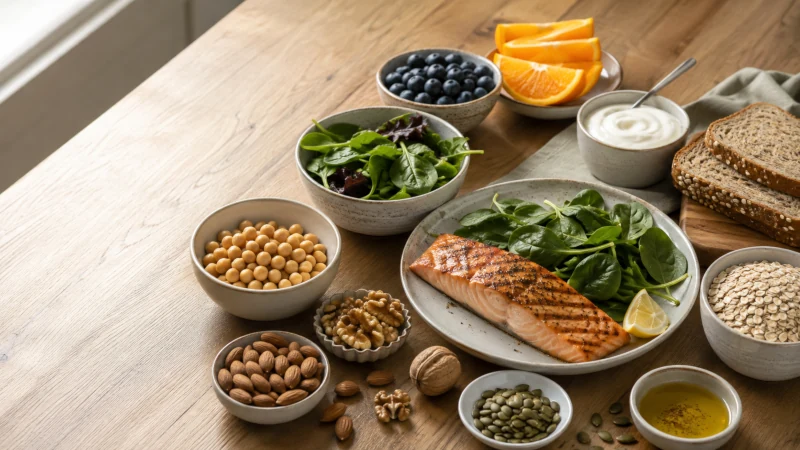
The foods that reduce stress most reliably aren’t exotic superfoods. They’re the fish, leafy greens, nuts, beans, whole grains, and fermented foods that already anchor a Mediterranean-style diet. No single meal shuts off the stress response. But what you eat across weeks shapes the raw materials your brain uses to make mood-regulating chemicals, how steady your blood sugar stays, and how well your gut and nervous system communicate.
Here’s the part most food lists skip: the strongest evidence points to overall eating patterns, not magic ingredients. A few nutrients — omega-3 fats, magnesium, B vitamins — have human trials behind them, but the effects are usually modest and clearest in people who were running low to begin with. Diet supports stress management. It doesn’t replace sleep, movement, therapy, or medication when those are needed.
What follows separates what’s well supported from what’s promising but thin, names specific foods and amounts, and flags when stress is something to take to a doctor rather than a grocery store.
How food actually affects your stress response
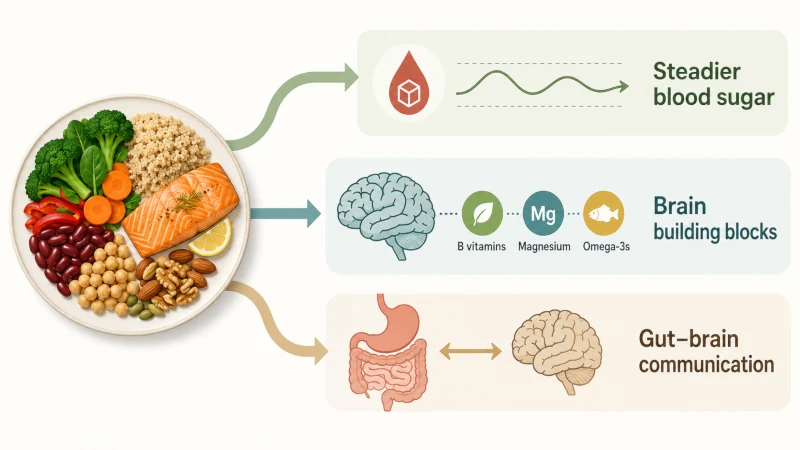
Under pressure, your body runs the hypothalamic-pituitary-adrenal (HPA) axis — a chain that ends in the release of cortisol and adrenaline. It’s built to switch on fast and switch off once the pressure passes. Food nudges that system in a few practical ways.
Blood sugar is the most immediate lever. Refined carbs and sugary snacks spike glucose and then drop it, and that crash can feel a lot like anxiety — shaky, irritable, on edge. Complex carbohydrates digest slowly and hold blood sugar steadier, which nutritional psychiatry links to a calmer baseline [Harvard Health]. Skipping meals does the same thing in reverse.
Your brain needs raw materials. Building serotonin, dopamine, and GABA — the chemicals that regulate mood and calm — depends on nutrients like B vitamins, which act as cofactors in neurotransmitter synthesis [Kennedy, 2016]. Run short on the inputs and the machinery works less smoothly.
The gut talks back. Much of the body’s serotonin is produced by cells in the digestive tract, and roughly 95% of serotonin receptors line the gut [Harvard Health]. The gut and brain trade signals constantly along the gut-brain axis — which is why the bacteria you feed, with fiber and fermented foods, has become a real area of stress research.
Foods that may help your body handle stress
The list below moves roughly from strongest to weakest evidence. None of these is a cure. Think of them as stacking small, low-risk advantages.
Oily fish and other omega-3 sources
Salmon, sardines, mackerel, and trout are the richest food sources of the long-chain omega-3 fats EPA and DHA, which your brain uses to build cell membranes and help keep inflammation in check. A 2024 dose-response meta-analysis of 23 randomized trials (2,189 participants) found omega-3 supplementation modestly reduced anxiety symptoms, with the greatest improvement around 2 grams a day and little effect below that — though the authors rated the overall certainty of the evidence as very low and called for better trials [BMC Psychiatry, 2024]. An earlier analysis of 19 trials in JAMA Network Open reached a similar conclusion, with stronger effects in people who had a diagnosed condition [Su et al., 2018].
In practice: two servings of oily fish a week is a sensible, well-tolerated habit with benefits well beyond stress. Plant sources — walnuts, flaxseed, chia — supply ALA, a shorter omega-3 the body converts to EPA and DHA inefficiently, so they help but don’t fully stand in for fish.
Leafy greens, nuts, and seeds for magnesium
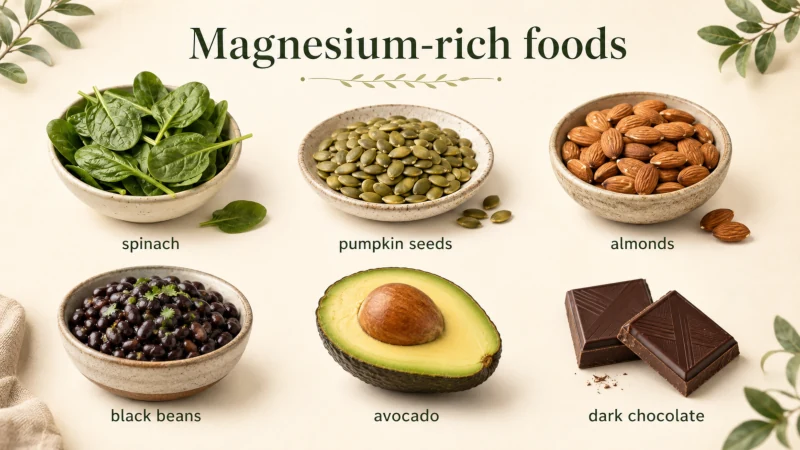
Magnesium takes part in more than 300 enzyme reactions, including ones that regulate the nervous system, and national surveys suggest many adults fall short of the 310–420 mg a day most adults need [NIH Office of Dietary Supplements]. A systematic review of 18 studies found magnesium supplementation may modestly ease subjective anxiety — but mainly in people already vulnerable to it (mild anxiety, PMS, high blood pressure), and the authors judged the quality of the evidence as poor [Boyle, Lawton & Dye, 2017].
The takeaway is unglamorous: magnesium is more likely to help if you’re low, and food is the safest way to top up. Good sources include spinach and Swiss chard, pumpkin seeds, almonds, cashews, black beans, edamame, whole grains, avocado, and dark chocolate. For a fuller list, see these magnesium-rich foods. If you’re weighing a supplement, this evidence-cautious look at magnesium and ashwagandha is a useful reality check.
Whole grains and complex carbohydrates
Oats, brown rice, quinoa, and whole-grain bread release glucose slowly, keeping energy and mood steadier through the day. Steady blood sugar is one of the more reliable, if undramatic, ways food supports a calmer state [Harvard Health]. Complex carbs also support serotonin production, part of why a warm bowl of oatmeal genuinely soothes many people.
Nuts and seeds, specifically
Walnuts and almonds top every stress-food list, and there’s real research under the hype. In a small Penn State study of 22 adults, a diet rich in walnuts and walnut oil blunted blood-pressure responses to stress [Penn State, 2010] — a cardiovascular marker, not a mood score, so read it as “supports how your body weathers stress,” not “cures anxiety.” Almonds and pine nuts add magnesium, vitamin E, B vitamins, and healthy fats. A small daily handful is a reasonable, evidence-aligned habit, and these foods for the nervous system round out the picture.
Beans, lentils, and chickpeas
Legumes are quietly among the best stress foods: they pair slow-digesting carbohydrate with plant protein, fiber, magnesium, and B vitamins in one package. Chickpeas in particular supply B6 and folate, which the body uses as cofactors to make serotonin and other neurotransmitters [Kennedy, 2016]. The fiber also feeds gut bacteria, tying back to the gut-brain connection.
Fermented foods and the gut connection
Yogurt with live cultures, kefir, sauerkraut, kimchi, and miso deliver bacteria that may support gut health and, through the gut-brain axis, mood. A 2015 survey of 710 young adults found those who ate more fermented foods reported fewer social-anxiety symptoms — an association strongest in people high in neuroticism [Hilimire et al., 2015]. It’s cross-sectional, so it can’t prove cause and effect, and the field is young. Still, fermented foods are low-risk and worth a regular place on the plate.
At a glance
| Food group | Key nutrients | What the research suggests | Strength of evidence |
| Oily fish (salmon, sardines, mackerel) | EPA & DHA omega-3s | May modestly lower anxiety; clearest near 2 g/day | Moderate, but rated low-certainty |
| Leafy greens, nuts, seeds | Magnesium | May ease anxiety mainly if you’re running low | Limited / poor quality |
| Whole grains, oats | Complex carbs, B vitamins | Steadier blood sugar, calmer baseline | Indirect / mechanistic |
| Legumes (chickpeas, lentils, beans) | Fiber, plant protein, B6, folate | Supply neurotransmitter building blocks; feed gut bacteria | Indirect / mechanistic |
| Fermented foods (yogurt, kefir, kimchi) | Live cultures (probiotics) | Linked to fewer social-anxiety symptoms | Early / observational |
| Berries, citrus | Vitamin C, antioxidants | May buffer oxidative stress | Early / mixed |
Berries and citrus deserve a brief mention: vitamin C and plant antioxidants may help buffer oxidative stress, but human evidence tying them directly to lower stress is early and mixed. They earn their place in a healthy diet on other merits.
The pattern matters more than any single food
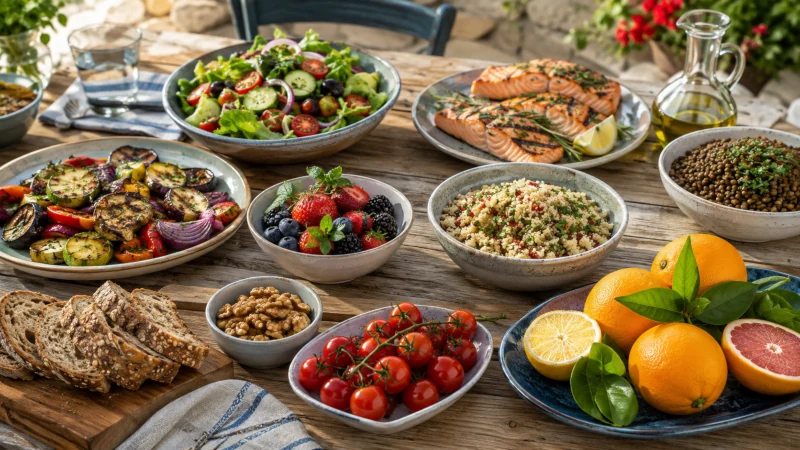
If you take one thing from this page, make it this: dietary patterns have stronger evidence than any individual food. The clearest demonstration is the SMILES trial, the first randomized controlled trial to test diet as a treatment for depression. Sixty-seven adults with moderate-to-severe depression were assigned either a modified Mediterranean diet (more vegetables, fruit, whole grains, legumes, fish, olive oil, and nuts; less processed food and sugar) plus dietitian support, or social support alone, for 12 weeks. About a third of the diet group reached remission, versus roughly 8% of the control group [Jacka et al., 2017].
Depression isn’t the same as everyday stress, and one modest trial isn’t the last word — it was small, and researchers have debated its methods. But it points the same way as the rest of the research: the benefit comes from the overall shape of your diet, not from chasing a single “anti-stress” ingredient.
Foods and drinks that can make stress worse

Some habits quietly raise the baseline.
Caffeine. It’s a stimulant, and in sensitive people a large dose can trigger the same racing heart and jitteriness as anxiety while disrupting the sleep that helps you cope. You don’t have to quit — watch the afternoon cup and your total daily load.
Alcohol. The first drink can feel calming, but as your body clears it, alcohol tends to leave you more anxious and to fragment your sleep; limiting it is standard advice for managing anxiety [Harvard Health]. Using it to unwind tends to backfire over time.
Added sugar and ultra-processed foods. Beyond the blood-sugar roller coaster, higher intakes of ultra-processed food have been linked in observational studies to more depression and anxiety symptoms. Refined sweets also crowd out the very nutrients — B vitamins, magnesium — a stressed body draws on. It’s worth understanding the wider effects of cutting back on added sugar.
What to realistically expect
Food is a slow lever. Dietary changes take weeks, not minutes, to show up in how you feel, and the effect is a nudge rather than a switch. The people most likely to notice a difference are those correcting a real shortfall or shifting from a heavily processed diet toward whole foods.
Treat better eating as one part of a larger toolkit — alongside sleep, physical activity, time outdoors, social connection, and, when needed, therapy or medication. If stress is severe or persistent, food alone won’t be enough, and that isn’t a failure of willpower.
Safety, side effects, and who should be cautious
Whole foods carry essentially no risk for most people. The cautions below apply mostly to supplements and a few specific situations.
- Magnesium supplements. Extra magnesium from food is safe — healthy kidneys clear the excess. Supplements are different: above the upper limit of 350 mg a day from supplements, magnesium commonly causes diarrhea, nausea, and cramping, and people with kidney disease can build up dangerous levels [NIH Office of Dietary Supplements]. Get it from food first.
- Omega-3 supplements. High doses (generally above 3 g/day) can thin the blood slightly, which matters if you take an anticoagulant such as warfarin or are heading into surgery. Talk to your doctor or pharmacist before high-dose fish oil; food sources don’t carry this concern.
- Caffeine and alcohol. Both can worsen the very symptoms you’re trying to calm, as covered above.
- Pregnancy and breastfeeding. Oily fish is encouraged, but limit high-mercury fish (shark, swordfish, king mackerel, marlin), and clear any supplement or herbal product with your doctor. These natural approaches to anxiety during pregnancy are a cautious starting point.
- Allergies. Nuts, fish, and soy-based fermented foods are common allergens; the advice here assumes you can eat them safely.
When to talk to a doctor
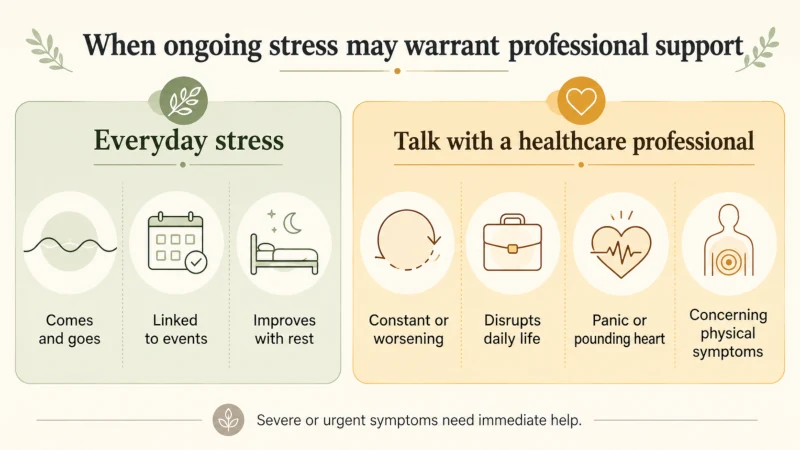
Everyday stress is normal. Reach out for professional help if stress or anxiety is constant, interferes with work, sleep, or relationships, or comes with physical symptoms like chest pain, a pounding heart, or panic attacks. If you ever have thoughts of harming yourself, treat it as urgent — call or text 988 (the Suicide and Crisis Lifeline) or call 911. Diet is a genuine support, but these are signs stress has moved beyond what food can address — and effective treatments exist.
| Health disclaimer: This article is for general education and isn’t medical advice. It’s not a substitute for diagnosis or treatment from a qualified professional. Talk to your doctor, a registered dietitian, or a pharmacist before making major changes to your diet or starting any supplement — especially if you’re pregnant or breastfeeding, manage a chronic condition, or take prescription medication. If you’re in crisis or having thoughts of harming yourself, call or text 988 (the Suicide and Crisis Lifeline) or call 911 right away. |
Frequently Asked Questions
What is the single best food for stress?
There isn’t one. Oily fish, leafy greens, legumes, nuts, and fermented foods each contribute something, but the research consistently favors the overall pattern of your diet over any standout ingredient.
How quickly do stress-reducing foods work?
Expect weeks, not minutes. A steadier blood-sugar day can feel better quickly, but the broader benefits build gradually as eating habits change.
Can magnesium supplements calm anxiety?
They may help if you’re actually low or in a vulnerable group, but the evidence is limited and the effect modest [Boyle, Lawton & Dye, 2017]. Food first; if you supplement, stay at or below 350 mg a day from supplements unless your doctor or pharmacist advises otherwise.
Is dark chocolate good for stress?
A small amount of dark chocolate supplies magnesium and plant flavanols, and many people find it comforting. The direct stress research is early, and chocolate also carries sugar and some caffeine — so enjoy it in modest amounts rather than as a remedy.
Do I have to give up coffee?
No. For most people moderate caffeine is fine. If you’re anxiety-prone or sleeping poorly, cut back on afternoon and evening cups and watch your total intake.
Can diet replace therapy or medication?
No. Diet is a support that works alongside — not instead of — sleep, exercise, counseling, and any treatment your doctor recommends.
References
- Naidoo, U. Nutritional strategies to ease anxiety. Harvard Health Publishing. → View source
- Bafkar, N., Zeraattalab-Motlagh, S., Jayedi, A., & Shab-Bidar, S. (2024). Efficacy and safety of omega-3 fatty acids supplementation for anxiety symptoms: a systematic review and dose-response meta-analysis of randomized controlled trials. BMC Psychiatry, 24, 455. doi:10.1186/s12888-024-05881-2 (PMC11186166). → View source
- Su, K-P., Tseng, P-T., Lin, P-Y., et al. (2018). Association of use of omega-3 polyunsaturated fatty acids with changes in severity of anxiety symptoms: a systematic review and meta-analysis. JAMA Network Open, 1(5), e182327. doi:10.1001/jamanetworkopen.2018.2327 (PMC6324500). → View source
- Boyle, N. B., Lawton, C., & Dye, L. (2017). The effects of magnesium supplementation on subjective anxiety and stress — a systematic review. Nutrients, 9(5), 429. doi:10.3390/nu9050429 (PMC5452159). → View source
- Kennedy, D. O. (2016). B vitamins and the brain: mechanisms, dose and efficacy — a review. Nutrients, 8(2), 68. doi:10.3390/nu8020068 (PMC4772032). → View source
- Jacka, F. N., O’Neil, A., Opie, R., et al. (2017). A randomised controlled trial of dietary improvement for adults with major depression (the ‘SMILES’ trial). BMC Medicine, 15, 23. doi:10.1186/s12916-017-0791-y (PMC5282719). → View source
- Hilimire, M. R., DeVylder, J. E., & Forestell, C. A. (2015). Fermented foods, neuroticism, and social anxiety: an interaction model. Psychiatry Research, 228(2), 203–208. doi:10.1016/j.psychres.2015.04.023. → View source
- West, S. G., et al. (2010). Walnuts, walnut oil improve reaction to stress. Penn State News (study published in the Journal of the American College of Nutrition). → View source
- National Institutes of Health, Office of Dietary Supplements. Magnesium — Fact Sheet for Health Professionals. → View source
