
Having some knowledge of the many foods that are good for your skin is more useful than it might seem — what you eat has a measurable effect on one of the body’s most metabolically active organs, and a handful of nutrients play direct roles in collagen production, wound healing, and keeping the skin barrier intact.
What you eat has a measurable effect on your skin. The outermost layer of your body is also one of its most metabolically active — skin cells turn over constantly, the skin barrier requires a steady supply of fatty acids and proteins to stay intact, and several vitamins play direct roles in collagen production, wound healing, and protection against oxidative damage.
That said, no single food dramatically transforms your complexion overnight, and diet is only one piece of a larger picture that includes genetics, sun protection, sleep, and medical care. What the evidence does support is that a diet consistently rich in certain nutrients tends to be associated with healthier skin — and that deficiencies in a handful of key nutrients can clearly cause skin problems.
This guide covers the foods most strongly supported by evidence, the nutrients they provide, and what the research actually shows — including where the evidence is strong and where it is still limited. For a broader overview of skin conditions and what drives them, see our skin health condition guides.
Why Diet Affects Skin Health
Your skin has some properties that make it particularly responsive to nutrition.
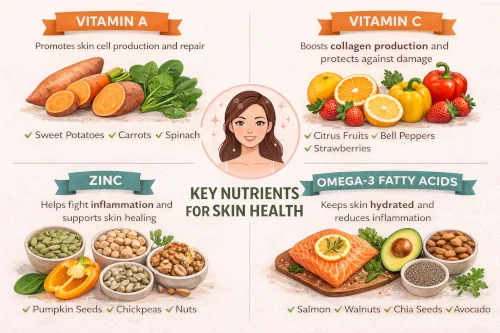
Skin cells replicate continuously, and that process requires protein, zinc, vitamin A, and several B vitamins. The skin barrier — the outermost layer that keeps moisture in and irritants out — depends heavily on essential fatty acids. Collagen, which gives skin its firmness, requires vitamin C for its synthesis. And because the skin is exposed to ultraviolet radiation and environmental pollutants, antioxidant nutrients such as vitamins C and E play a role in limiting oxidative damage.
Deficiencies in these nutrients produce recognizable skin changes. Vitamin A deficiency leads to dry, rough skin. Severe niacin (vitamin B3) deficiency causes pellagra, a condition defined in part by a scaly, inflamed rash. Zinc deficiency impairs wound healing and can cause acne-like lesions. These are well-established clinical findings [NIH Office of Dietary Supplements, 2023].
The connection between typical dietary patterns and everyday skin quality — not clinical deficiency — is less straightforward. Research in this area is growing, but most studies are observational, meaning they show associations rather than proving that eating a specific food causes specific skin improvements. Keep that in mind as you read.
Key Nutrients Skin Relies On
| Nutrient | Primary Skin Role | Deficiency Signs |
| Vitamin A | Cell turnover, barrier maintenance | Dryness, scaling, rough texture |
| Vitamin C | Collagen synthesis, antioxidant | Poor wound healing, dull skin |
| Vitamin E | Antioxidant, barrier support | Uncommon in isolation; seen in fat-malabsorption |
| Niacin (B3) | Cell energy, barrier function | Dermatitis, scaling (pellagra in severe cases) |
| Zinc | Wound healing, anti-inflammatory | Slow healing, acne-like lesions |
| Essential Fatty Acids | Skin barrier, inflammation regulation | Dryness, increased inflammation |
| Protein | Structural support, cell repair | Slow healing, hair and nail changes |
Foods That Are Good for Your Skin
Fatty Fish and Other Omega-3 Sources
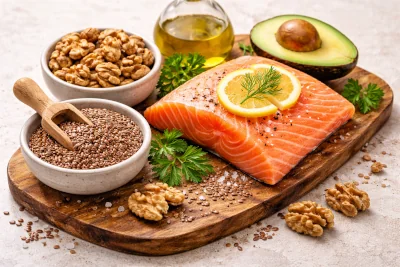
Fatty fish — salmon, mackerel, sardines, herring — are among the most well-studied foods for skin health. They are rich in long-chain omega-3 fatty acids (EPA and DHA), which appear to reduce inflammatory signaling in skin and may help maintain the skin barrier [Calder, 2020].
A 2021 review published in Nutrients found that omega-3 supplementation was associated with improvements in skin hydration and reduced markers of inflammatory skin conditions, though authors noted that more large-scale human trials are still needed [Huang et al., 2021].
Plant-based omega-3 sources include walnuts, flaxseeds, and chia seeds. These provide ALA (alpha-linolenic acid), which the body converts to EPA and DHA at a limited rate — so they contribute, but fatty fish remains the more direct source.
Evidence quality: Moderate — supported by multiple human trials, but most are small; more research is ongoing.
Mangoes and Other Vitamin A-Rich Foods
Mangoes are one of the richest plant-based sources of beta-carotene, a precursor to vitamin A that the body converts as needed. Vitamin A is essential for normal skin cell production and turnover, and deficiency is well established as a cause of dry, scaly skin [NIH Office of Dietary Supplements, 2023].
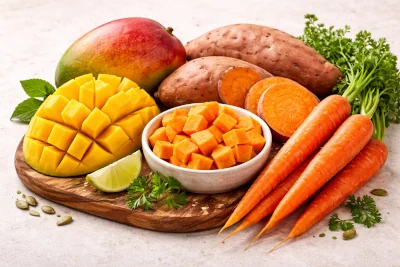
Other good sources of beta-carotene include sweet potatoes, carrots, butternut squash, and dark leafy greens. Preformed vitamin A (retinol) is found in liver, dairy products, and eggs.
Beyond skin, mangoes offer a range of nutritional benefits — see our full guide to mango health benefits for a deeper look.
It is worth noting that the research here is strongest around correcting deficiency rather than showing that high intakes beyond normal needs provide additional cosmetic benefit. Eating plenty of vitamin A-rich foods supports normal skin function; that is a reasonable and well-supported goal.
Evidence quality: Strong for deficiency correction; more limited for above-adequate intake and cosmetic skin improvement.
Citrus Fruits, Bell Peppers, and Vitamin C
Vitamin C is required for collagen synthesis — without it, the structural protein that gives skin its firmness cannot form properly. It also acts as a direct antioxidant in skin tissue, helping to neutralize free radicals generated by UV exposure [Pullar et al., 2017].
Good dietary sources include red and yellow bell peppers, kiwifruit, strawberries, broccoli, and citrus fruits. Bell peppers are particularly concentrated — a single medium red bell pepper provides more vitamin C than an orange.
Research suggests that dietary vitamin C intake is associated with lower likelihood of a wrinkled appearance and skin dryness in population studies, though separating diet from other lifestyle factors in these studies is difficult [Cosgrove et al., 2007].
Evidence quality: Strong for vitamin C’s biochemical role in collagen production; observational data on diet and skin appearance is promising but not definitive.
Beans and Legumes (Niacin, Zinc, and Protein)
Beans and legumes contribute to skin health through several nutrients at once. They are reliable sources of niacin (vitamin B3), zinc, and plant-based protein.
Niacin plays a role in the energy reactions that power skin cells, and its deficiency is one of the clearest examples of a nutrient-skin connection in clinical medicine. Pantothenic acid (vitamin B5), also found in legumes, is involved in the synthesis of coenzyme A, a compound central to fatty acid metabolism — including the fats that form the skin barrier.
Zinc deserves particular attention. It supports wound healing, has mild anti-inflammatory properties, and is involved in regulating sebum production. Studies have shown that people with acne often have lower zinc levels, and some trials have found zinc supplementation modestly reduces acne — though evidence compared to prescription treatments is mixed [Decker & Graber, 2012].
Broad beans are a particularly good example of a legume with strong skin-relevant nutrients — read our detailed guide to broad beans for skin and overall nutrition for more.
Lentils, chickpeas, black beans, and edamame are all good legume options.
Evidence quality: Strong for niacin deficiency and skin; moderate for zinc and wound healing; mixed for zinc and acne.
Sunflower Seeds and Other Vitamin E Sources
Sunflower seeds are one of the most concentrated dietary sources of vitamin E, specifically alpha-tocopherol. Vitamin E is a fat-soluble antioxidant concentrated in cell membranes, including skin cells, where it helps protect against oxidative damage.
Research on dietary vitamin E and skin outcomes in generally healthy people is limited compared to what is known about topical vitamin E. However, vitamin E and vitamin C are known to work synergistically as antioxidants — eating foods rich in both likely provides more protection than either alone [Pullar et al., 2017].
Other food sources of vitamin E include almonds, wheat germ, hazelnuts, and avocado. Sunflower seeds are also a source of linoleic acid, an omega-6 fatty acid that is important for maintaining the skin barrier.
Evidence quality: Vitamin E’s antioxidant role in skin is well-established biochemically; clinical trial evidence on dietary intake and visible skin outcomes is more limited.
Cucumbers and High-Water Foods
Hydration affects skin. Research has found that both total water intake and dietary water from food sources are associated with improved skin hydration and elasticity, particularly in people who were previously consuming low amounts of water [Palma et al., 2015].

Cucumbers are approximately 96% water by weight and contribute to overall fluid intake when eaten regularly. Applied topically, cucumbers do have a mild soothing effect — largely attributed to their cooling temperature and high water content — which is why cucumber slices are a traditional remedy for puffy eyes and mild skin irritation. This is cosmetic rather than therapeutic.
For a full breakdown of what cucumbers offer nutritionally and topically, see our guide to the health benefits of cucumbers.
Claims that cucumbers ‘cleanse the bloodstream’ or have special detoxifying properties beyond what any hydrating food provides are not supported by clinical evidence. The kidneys and liver handle detoxification.
Evidence quality: Hydration and skin health — moderate; cucumber-specific skin benefits — limited to anecdotal and traditional use.
Artichokes and Liver-Supporting Vegetables
The connection between liver health and skin is recognized in dermatology, though it is most clearly documented in cases of liver disease. Artichokes contain cynarin and silymarin-related compounds that have shown liver-protective effects in some animal and human studies.
For a detailed look at what artichokes contain and how they have been studied, see our guide to the health benefits of artichokes.
The claim that artichokes will resolve chronic eczema or allergic skin conditions is not supported by controlled clinical data. However, as part of a diet rich in vegetables, they may contribute to overall health in ways that indirectly benefit skin.
Evidence quality: Animal and some human data support artichoke’s liver effects; direct evidence for skin outcomes is limited.
Broccoli and Cruciferous Vegetables
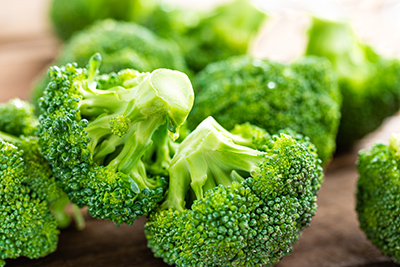
Broccoli and related vegetables (cauliflower, kale, Brussels sprouts) are rich in vitamin C, vitamin K, folate, and sulforaphane — a compound that has shown antioxidant and anti-inflammatory activity in laboratory research.
Sulforaphane has been studied for potential protective effects against UV-induced skin damage in cell and animal models. Early human research is encouraging, but large clinical trials are still limited [Talalay et al., 2007]. Broccoli is also a source of lutein and zeaxanthin, carotenoids that appear in skin tissue.
Evidence quality: Sulforaphane and UV protection — early-stage human evidence; vitamin C content well-established.
Nutrients That Deserve Special Attention for Skin
| Nutrient | Best Food Sources | Evidence for Skin | Evidence Quality |
| Omega-3 fatty acids | Salmon, mackerel, sardines, walnuts, flaxseed | Barrier support, reduced inflammation | Moderate |
| Vitamin A / beta-carotene | Sweet potato, carrots, mango, liver, eggs | Cell turnover, dryness prevention | Strong (deficiency); moderate (dietary intake) |
| Vitamin C | Bell peppers, kiwi, strawberries, broccoli | Collagen production, antioxidant | Strong (biochemical); moderate (dietary) |
| Vitamin E | Sunflower seeds, almonds, avocado | Antioxidant, barrier support | Moderate |
| Zinc | Beans, pumpkin seeds, meat, shellfish | Wound healing, anti-inflammatory | Moderate |
| Niacin (B3) | Legumes, peanuts, meat, fish | Cell energy, barrier function | Strong (deficiency) |
| Water / dietary water | Water, cucumbers, watermelon, soups | Skin hydration and elasticity | Moderate |
What About Skin Conditions Like Eczema, Psoriasis, or Acne?
Diet’s role in specific skin conditions varies considerably by condition.
Eczema (atopic dermatitis): Research on elimination diets and eczema shows benefit mainly in cases of confirmed food allergies or sensitivities, particularly in children. Anti-inflammatory dietary patterns may reduce overall inflammation, but evidence that specific foods treat eczema in adults without allergies is limited [Schlichte et al., 2016].
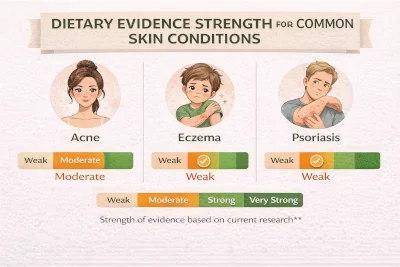
Psoriasis: Observational studies have associated psoriasis with obesity, alcohol consumption, and diets high in processed foods. A Mediterranean-style diet may be beneficial, and some studies have found omega-3 supplementation modestly reduces psoriasis severity, though results are inconsistent [Barrea et al., 2019]. Dietary change should complement, not replace, prescribed treatments.
Acne: The strongest dietary evidence in acne research relates to high-glycemic diets and dairy — particularly skim milk — which some studies associate with increased acne severity. Evidence is growing but still considered moderate, and individual responses vary significantly [Fiedler et al., 2017].
If you have a diagnosed skin condition, speak with a dermatologist before making significant dietary changes to manage it. Diet can be a useful support, but it is rarely sufficient as a standalone treatment.
For condition-specific information, browse our skin health condition guides.
Foods and Habits That May Harm Skin Health
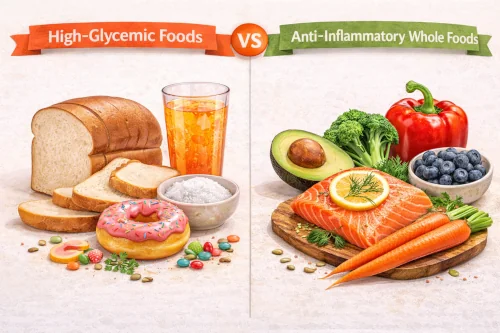
Just as some foods appear to support skin health, certain dietary patterns are associated with worse skin outcomes:
- High-glycemic diets: Diets high in refined sugars and white flour may increase inflammatory markers and have been linked to greater acne severity in some studies.
- Excessive alcohol: Alcohol affects skin hydration, can trigger rosacea flares, and is associated with reduced levels of zinc and B vitamins.
- Very low-fat diets: Essential fatty acids are required for the skin barrier. Extremely low-fat eating can compromise barrier function.
- Highly processed foods: Diets heavy in ultra-processed foods tend to displace the vegetables, fruits, and whole foods that provide skin-supportive nutrients.
Realistic Expectations: What Diet Can and Cannot Do for Your Skin
Diet is not a substitute for proven skincare, sunscreen, or medical treatment.
What diet can reasonably support:
- Correcting nutrient deficiencies that are causing skin problems
- Maintaining the skin barrier and hydration through adequate fat and water intake
- Reducing overall inflammatory burden through an anti-inflammatory dietary pattern
- Supporting collagen production through adequate protein and vitamin C
What diet alone is unlikely to accomplish:
- Reversing significant photodamage or deep wrinkles
- Clearing moderate to severe acne without additional treatment
- Treating eczema or psoriasis without medical management
- Producing dramatic changes in skin tone or texture within weeks
The skin responds to dietary changes, but it does so slowly. Consistent patterns over months matter more than any single food or short-term change. For more food-specific nutrition guides, browse our foods and nutrition articles.
When to See a Healthcare Professional
Seek medical evaluation if you experience:
- Sudden, unexplained skin changes such as new rashes, lesions, or pigmentation changes
- Skin symptoms accompanied by fever, joint pain, or other systemic symptoms
- Worsening eczema, psoriasis, or acne that is not responding to self-care
- Signs of possible nutritional deficiency, including hair loss, brittle nails, fatigue, or poor wound healing
- Any skin growth that changes in size, color, or shape — see a dermatologist promptly
Diet and nutrition can be part of a conversation with your healthcare provider or a registered dietitian, particularly if you are managing a chronic skin condition.
Frequently Asked Questions
How long does it take for dietary changes to affect skin?
Skin cell turnover takes roughly 28 to 40 days in younger adults, longer as we age. Noticeable changes from dietary improvements — when they occur — typically take at least 8 to 12 weeks of consistent eating patterns. Hydration-related changes may be among the fastest to respond.
Are supplements better than food for skin health?
For most people eating a varied diet, whole foods are preferable to supplements. Food provides nutrients in combinations and forms that the body absorbs well, along with fiber and other compounds not found in pills. Supplements may be appropriate if a deficiency is confirmed — speak with a healthcare provider before starting any supplement regimen.
Does drinking more water improve skin?
Research suggests that increasing water intake improves skin hydration in people who are drinking below-adequate amounts. The effect is less clear in people who are already well-hydrated. Water from food — fruits, vegetables, soups — counts toward total fluid intake.
Can certain foods cause or worsen acne?
Evidence suggests that high-glycemic diets and, to a lesser extent, certain dairy products — particularly skim milk — may worsen acne in some people. These effects appear to be individual. Eliminating a food for 4 to 6 weeks and monitoring your skin can help identify personal triggers. A dermatologist can guide this process.
Is a Mediterranean diet good for skin?
The Mediterranean dietary pattern — rich in vegetables, fruits, legumes, whole grains, fish, and olive oil — is consistently associated with lower levels of systemic inflammation and is among the most studied dietary patterns for skin-related outcomes, including psoriasis and skin aging. It aligns well with most of what is known about skin-supportive nutrition.
| Medical disclaimer: Supplements may affect people differently and may interact with medications or medical conditions. This content is for educational purposes only and is not intended to diagnose, treat, cure, or prevent any disease. Always consult a qualified healthcare professional before starting any new supplement. |
References
Barrea, L., et al. (2019). Environmental risk factors in psoriasis. International Journal of Environmental Research and Public Health, 16(5), 743. https://www.ncbi.nlm.nih.gov/pmc/articles/PMC6427851/
Calder, P. C. (2020). Omega-3 fatty acids and inflammatory processes: From molecules to man. Biochemical Society Transactions, 45(5), 1105-1115. https://doi.org/10.1042/BST20160474
Cosgrove, M. C., et al. (2007). Dietary nutrient intakes and skin-aging appearance among middle-aged American women. American Journal of Clinical Nutrition, 86(4), 1225-1231. https://doi.org/10.1093/ajcn/86.4.1225
Decker, A., & Graber, E. M. (2012). Over-the-counter acne treatments: A review. Journal of Clinical and Aesthetic Dermatology, 5(5), 32-40. https://www.ncbi.nlm.nih.gov/pmc/articles/PMC3366450/
Fiedler, F., et al. (2017). Acne and nutrition: A systematic review. Acta Dermato-Venereologica, 97(1), 7-9. https://doi.org/10.2340/00015555-2450
Huang, T. H., et al. (2021). Cosmetic and therapeutic applications of fish oil’s EPA and DHA. Marine Drugs, 16(8), 256. https://www.ncbi.nlm.nih.gov/pmc/articles/PMC6116050/
NIH Office of Dietary Supplements. (2023). Vitamin A – Health Professional Fact Sheet. https://ods.od.nih.gov/factsheets/VitaminA-HealthProfessional/
NIH Office of Dietary Supplements. (2023). Zinc – Health Professional Fact Sheet. https://ods.od.nih.gov/factsheets/Zinc-HealthProfessional/
Palma, L., et al. (2015). Dietary water affects human skin hydration and biomechanics. Clinical, Cosmetic and Investigational Dermatology, 8, 413-421. https://www.ncbi.nlm.nih.gov/pmc/articles/PMC4529263/
Pullar, J. M., et al. (2017). The roles of vitamin C in skin health. Nutrients, 9(8), 866. https://www.ncbi.nlm.nih.gov/pmc/articles/PMC5579659/
Schagen, S. K., et al. (2012). Discovering the link between nutrition and skin aging. Dermato-endocrinology, 4(3), 298-307. https://www.ncbi.nlm.nih.gov/pmc/articles/PMC3583891/
Schlichte, M. J., et al. (2016). Diet and eczema: A review of dietary supplements for the treatment of atopic dermatitis. Dermatology Practical & Conceptual, 6(3), 23-29. https://www.ncbi.nlm.nih.gov/pmc/articles/PMC5006549/
Talalay, P., et al. (2007). Sulforaphane mobilizes cellular defenses that protect skin against damage by UV radiation. PNAS, 104(44), 17500-17505. https://doi.org/10.1073/pnas.0708710104
