Yerba santa earned its reputation honestly. Indigenous Californian communities, and later American physicians, used its resinous leaves to loosen chest congestion and quiet coughs — and that traditional role as a respiratory herb is the part of its story standing on the firmest ground.
Most of the bigger claims you’ll find online go well past what anyone has shown. Yerba santa “boosts immunity,” “heals eczema,” “fixes your gut,” “melts away anxiety”: these read well and rest on very little. This guide sorts what the plant is genuinely useful for from what’s been oversold, and covers how it’s taken and who should leave it alone.
What Is Yerba Santa?
Where it grows and what family it’s really in
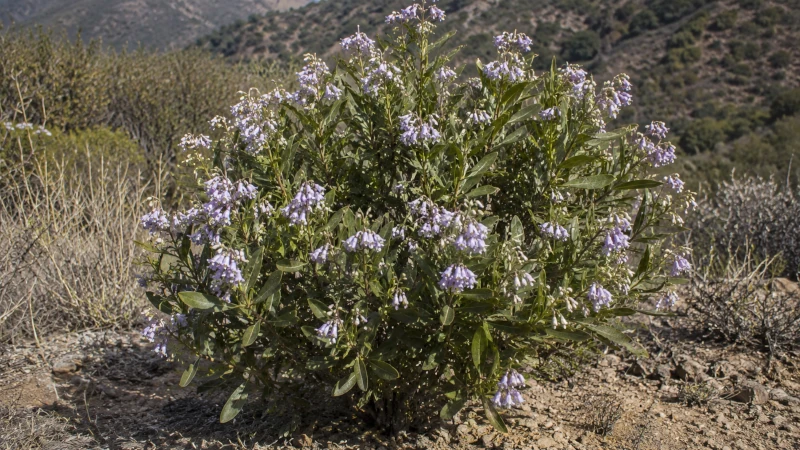
Yerba santa (Eriodictyon californicum) is an aromatic evergreen shrub native to California and Oregon, with sticky, resin-coated leaves and clusters of small bell-shaped flowers ranging from white to lavender [USDA Forest Service]. You’ll sometimes see it called mountain balm, bear’s weed, or consumptive’s weed.
One correction worth making up front, because it’s repeated everywhere: yerba santa is not a mint. Botanists place it in the waterleaf and borage group (order Boraginales), a lineage with reclassifications still in progress, but nowhere near the mint family [USDA Forest Service]. Spanish priests gave the plant its name — “holy herb” — after learning of its medicinal use from Native Californians [Drugs.com, 2026].
A long history as a respiratory remedy
The Chumash and other tribes brewed the leaves into tea for coughs, colds, and chest complaints, and applied crushed leaves as poultices for bruises, sprains, and wounds [Drugs.com, 2026]. From the late 1800s into the mid-1900s, yerba santa appeared in U.S. and British medical practice as an expectorant for conditions including bronchitis and asthma. It largely fell out of mainstream pharmacy once efficacy standards tightened and drugs had to prove they worked [Drugs.com, 2026].
That history is the honest core of yerba santa’s reputation: a bitter, aromatic, resinous leaf traditionally used to help move mucus and soothe an irritated throat.
What Yerba Santa Is Actually Used For
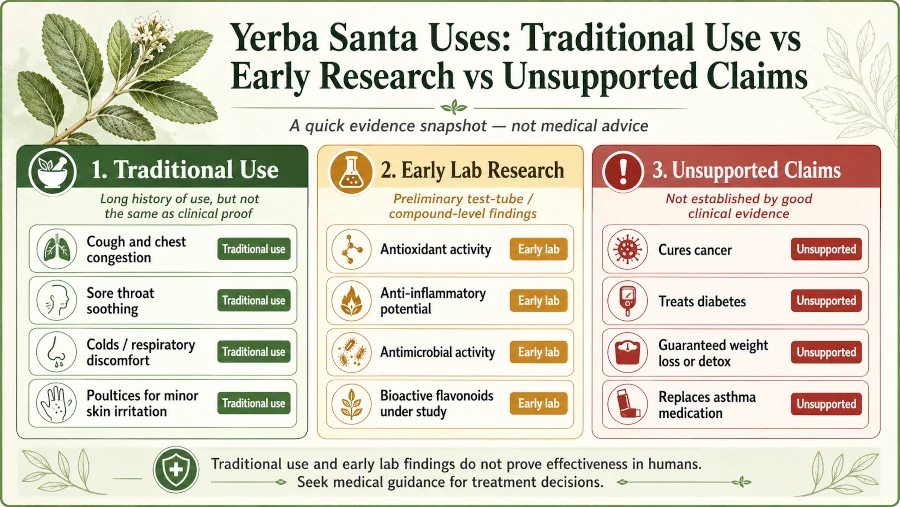
The most consistent traditional use, across centuries and sources, is as a respiratory expectorant — something taken to loosen and clear chest congestion, calm a cough, and ease throat irritation [Drugs.com, 2026]. It was also applied topically to bruises and sore muscles and used to relieve dry mouth.
Here’s the part most articles skip: traditional use is not the same as proven effectiveness. A plant can have a long and genuine folk history and lack the modern clinical trials that would let anyone say it reliably treats a condition. For yerba santa, that’s exactly where things stand. The pharmacy reference Drugs.com, reviewed by medical professionals, puts it plainly: clinical studies are limited, and yerba santa cannot be recommended for any specific medical indication [Drugs.com, 2026]. Traditional use tells you what people have reached for. It doesn’t tell you it will work for you.
What the Science Shows — and Doesn’t
Sterubin and the Alzheimer’s research
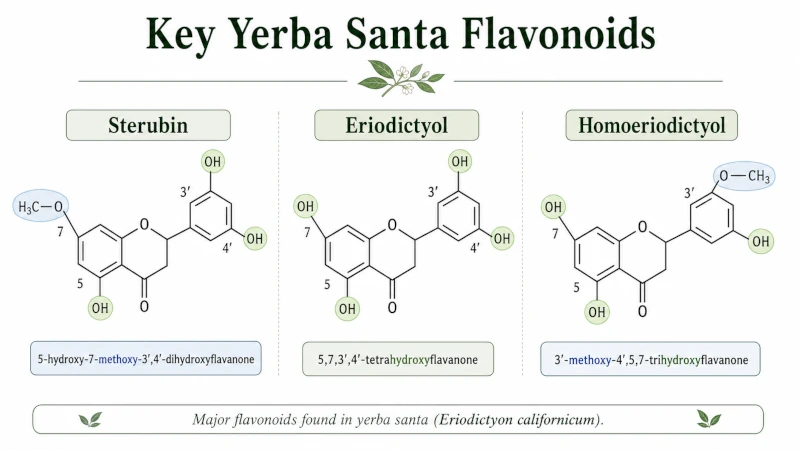
The most interesting modern work on yerba santa has nothing to do with coughs. Researchers at the Salk Institute, screening a library of plant extracts for compounds that protect aging brain cells, found that a yerba santa extract was one of the most potent — and traced the effect to a flavonoid called sterubin [Salk Institute, 2019]. In laboratory and mouse studies, sterubin showed strong antioxidant and anti-inflammatory activity, protected nerve cells against several triggers of cell death, and, in a short-term mouse model of Alzheimer’s, helped preserve memory [Fischer et al., 2019]; [Liang & Maher, 2022].
This is real, peer-reviewed science, and it’s genuinely promising. It is also early. These are cell and animal findings, not human trials, and the researchers themselves have noted that any future testing would need sterubin from plants grown under tightly controlled conditions — not whatever concentration happens to be in a tea or capsule [Salk Institute, 2019]. Drinking yerba santa tea is not a way to treat or prevent Alzheimer’s, and no honest reading of this research suggests otherwise.
Antioxidant chemistry and a small weight study
Yerba santa leaves are rich in flavonoids — sterubin, eriodictyol, and homoeriodictyol among them — which gives the plant measurable antioxidant activity in the lab [Liang & Maher, 2022]. One small clinical trial took this a step further: 50 overweight or obese women took either a standardized E. californicum extract (400 mg twice daily) or a placebo for 12 weeks, and the extract group lost a modest amount of weight, around 2 kg on average [Mödinger et al., 2021].
Read that result carefully. It’s a single, small study, it was funded by the company that makes the extract, and it tested one specific standardized product — not loose-leaf tea or a generic capsule. That’s a reason for curiosity, not a reason to buy yerba santa as a weight-loss aid. Independent replication would need to come first.
Claims that run ahead of the evidence
A lot of what circulates about yerba santa simply isn’t backed by clinical evidence in humans. There’s no reliable trial data showing it treats eczema or psoriasis, strengthens the immune system, improves gut health, relieves anxiety, or works as an antibacterial in the body. You’ll also see the suggestion that burning the leaves “purifies the air” — burning any plant produces smoke, which is the opposite of cleaner air. Where the evidence is genuinely thin, the honest summary is: not enough is known [Drugs.com, 2026].
How People Use Yerba Santa
Tea, tincture, and topical use
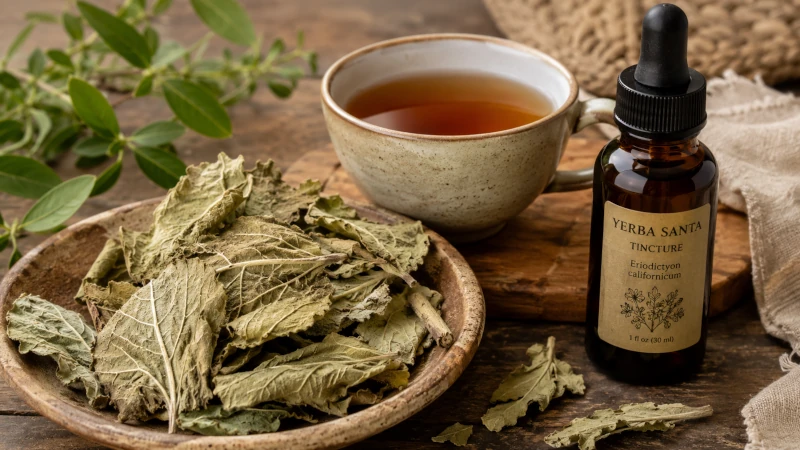
Traditionally, the dried or fresh leaves are steeped into a tea, taken as a fluid extract or tincture, or applied to the skin. The plant is bitter and resinous, which is also why a different, regulated use exists: U.S. regulators permit yerba santa fluid extract as a flavoring agent, including to mask the bitterness of medicines [Drugs.com, 2026]; [Ley et al., 2005]. That clearance covers its use as a flavor in small amounts. It is not a verdict that the herb is safe or effective at the larger doses people use medicinally — a distinction the “it’s FDA-approved and totally safe” framing gets wrong.
How much do people take?
There’s no clinically established dose for yerba santa, because the trials that would set one haven’t been done [Drugs.com, 2026]. What you’ll find are traditional and study-based amounts: classically, about 1 gram of leaf was used as an expectorant; tinctures are often taken at 1–2 mL up to three times daily; and tea is typically made with 1–2 teaspoons of dried leaf steeped in hot water for 10–15 minutes. The weight-management study used 400 mg of a standardized extract twice daily [Mödinger et al., 2021]. If you do try it, starting low is sensible, and traditional guidance limits continuous use to short stretches rather than indefinite daily intake.
Safety, Side Effects, and Who Should Avoid It
For most healthy adults, yerba santa appears to be reasonably well tolerated, and reviews of the literature find few reports of significant adverse effects from oral or topical use [Drugs.com, 2026]. Worth noting: allergic contact dermatitis has been documented with a close botanical relative, Eriodictyon parryi (poodle-dog bush), so a skin reaction isn’t impossible, especially with topical use [Drugs.com, 2026].
Drug interactions and medical conditions
Here honesty cuts against the usual scare list. Authoritative monographs report no well-documented drug interactions and no firmly identified contraindications for yerba santa [Drugs.com, 2026]. You’ll see claims elsewhere that it lowers blood sugar, slows clotting, or affects liver-processed medications — but these aren’t established for yerba santa specifically; they tend to be generic cautions borrowed from other herbs. The more accurate takeaway is that yerba santa simply hasn’t been studied enough to map its interactions, which is itself a reason for caution if you take prescription medications or manage a chronic condition. Talk to a pharmacist or doctor before combining it with your medicines.
Who should avoid it:
- Pregnant and breastfeeding people. There isn’t enough safety information, so the standard guidance is to avoid use [Drugs.com, 2026].
- Children, for the same reason — it hasn’t been studied in them.
- Anyone on prescription medications or with a chronic illness, until they’ve checked with a clinician.
When to skip the herb and call a professional
Yerba santa is, at most, a mild traditional soother. It is not a treatment for asthma, pneumonia, bronchitis, or any serious respiratory illness, and using it in place of real care can be dangerous. Seek prompt medical attention — not herbs — if you have:
- difficulty breathing, shortness of breath, or wheezing
- chest pain or tightness
- coughing up blood
- a high or persistent fever
- a cough or respiratory symptoms lasting more than about 10 days, or getting worse rather than better
If your symptoms are mild and self-limiting, a soothing tea is low-stakes. If they’re not, self-care is not enough.
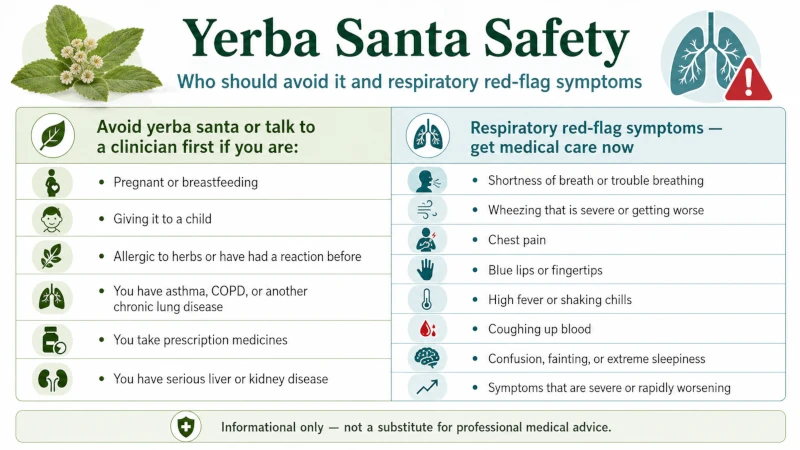
| Health disclaimer This article is for general education and is not medical advice. Yerba santa has a real traditional history and some interesting early laboratory research, but clinical evidence in humans remains limited, and it should not replace professional care for any respiratory, skin, or other medical condition. If you are pregnant, breastfeeding, giving it to a child, taking prescription medications, or managing a health condition, talk with a qualified healthcare professional before using yerba santa or any herbal product. Seek urgent care for breathing difficulty, chest pain, coughing up blood, or a high or persistent fever. |
Frequently Asked Questions
Is yerba santa safe to drink as a tea?
For most healthy adults, occasional yerba santa tea appears well tolerated, with few significant side effects reported in the literature [Drugs.com, 2026]. That said, it hasn’t been rigorously studied, so it’s not a guaranteed “safe for everyone” — pregnant or breastfeeding people, children, and anyone on medications should check with a professional first.
Does yerba santa actually help with a cough or congestion?
It has a long traditional use as an expectorant for loosening chest congestion and easing coughs, and that’s its most credible role [Drugs.com, 2026]. But there are no strong modern clinical trials confirming it works, so treat it as a traditional soother, not a proven medicine. A cough that lingers beyond about 10 days or worsens needs a doctor.
What is sterubin, and can yerba santa treat Alzheimer’s?
Sterubin is a flavonoid in yerba santa that showed potent neuroprotective and anti-inflammatory effects in Salk Institute cell and mouse studies [Fischer et al., 2019]; [Salk Institute, 2019]. It’s a promising research lead — but it’s early-stage and not human-tested, and drinking yerba santa is not a treatment for Alzheimer’s.
Can yerba santa help with weight loss?
One small, industry-funded trial found a standardized extract led to modest weight loss over 12 weeks [Mödinger et al., 2021]. A single sponsored study of one specific product isn’t enough to recommend yerba santa for weight loss, and it doesn’t apply to ordinary tea.
Who should not use yerba santa?
Pregnant and breastfeeding people, children, and anyone taking prescription medications or managing a chronic condition should avoid it or use it only under professional guidance, because its safety and interactions in these groups haven’t been established [Drugs.com, 2026].
Is yerba santa FDA-approved?
Its fluid extract is permitted as a flavoring agent, partly to mask the bitter taste of medicines [Drugs.com, 2026]; [Ley et al., 2005]. That’s a clearance for use as a flavor in small amounts — not an FDA endorsement of yerba santa’s safety or effectiveness as a therapeutic supplement.
References
- Drugs.com. Yerba Santa: Uses, Benefits & Dosage. Medically reviewed; updated April 21, 2026. View source
- Salk Institute for Biological Studies. Native California medicinal plant may hold promise for treating Alzheimer’s. 2019. View source
- Fischer W, Currais A, Liang Z, Pinto A, Maher P. Old age-associated phenotypic screening for Alzheimer’s disease drug candidates identifies sterubin as a potent neuroprotective compound from Yerba santa. Redox Biology. 2019;21:101089. (Indexed via PubMed.) View source
- Liang Z, Maher P. Structural Requirements for the Neuroprotective and Anti-Inflammatory Activities of the Flavanone Sterubin. Antioxidants. 2022;11(11):2197. View source
- Mödinger Y, Schön C, Wilhelm M, Pickel C, Grothe T. A Food Supplement with Antioxidative Santa Herba Extract Modulates Energy Metabolism and Contributes to Weight Management. Journal of Medicinal Food. 2021. View source
- Ley JP, Krammer G, Reinders G, Gatfield IL, Bertram H-J. Evaluation of bitter masking flavanones from Herba Santa (Eriodictyon californicum). Journal of Agricultural and Food Chemistry. 2005;53:6061–6066. (Indexed via PubMed.) View source
- USDA Forest Service, Fire Effects Information System. Eriodictyon californicum. View source
