
The health benefits of peaches come mostly from what the whole fruit packs into a small, low-calorie serving: water, fiber, vitamin C, potassium, and a mix of plant antioxidants — all for roughly 60 calories in one medium peach [USDA FoodData Central]. That makes them an easy, useful addition to most diets. You will also find peaches credited online with curing heart disease, reversing kidney failure, and melting away weight. Those claims run far ahead of the science. What follows is a grounded look at what peaches actually do for your body, where the evidence is solid, where it is still preliminary, and who should take a little care.
What is actually in a peach
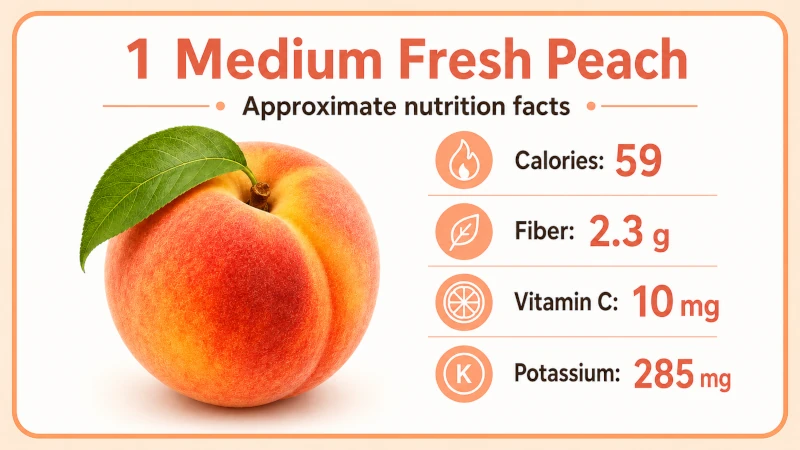
A peach is mostly water — about 89% by weight — which is part of why it feels refreshing and fills you up without many calories [USDA FoodData Central]. The rest is a modest but genuinely useful spread of nutrients. One medium peach (around 150 grams) gives you roughly 2 grams of fiber, close to 10 milligrams of vitamin C, and about 285 milligrams of potassium, plus small amounts of vitamin A, vitamin E, magnesium, and several B vitamins [USDA FoodData Central]; [Rutgers NJAES]. Fat and sodium are both near zero.
None of those numbers is dramatic on its own. A peach is not a vitamin C powerhouse the way an orange or a kiwi is. What it offers is a clean, hydrating, naturally sweet way to eat more whole fruit — and eating more whole fruit is one of the better-supported habits in all of nutrition.
What one medium peach (~150 g) gives you
| Nutrient | Amount |
| Calories | ~58 kcal |
| Water | ~134 g (about 89%) |
| Fiber | ~2.2 g |
| Natural sugars | ~12.6 g |
| Protein | ~1.4 g |
| Fat | ~0.4 g |
| Vitamin C | ~10 mg (about 11% DV) |
| Potassium | ~285 mg (about 6% DV) |
| Vitamin A | ~24 µg RAE |
| Magnesium | ~14 mg |
| Sodium | ~0 mg |
Values are approximate and rounded from USDA FoodData Central data for raw peach; exact amounts vary by size and ripeness.
Fiber, digestion, and feeling full
The fiber in a peach does two jobs. Insoluble fiber adds bulk and helps move things through your gut, which supports regularity. Soluble fiber dissolves into a gel and feeds the bacteria in your large intestine [Cleveland Clinic, 2021]. Most people in the US fall short of the recommended fiber intake, so a peach — skin on — is a low-effort way to close part of that gap.
Fiber and water together also make peaches reasonably filling for their calories, which is why they fit eating patterns aimed at weight management. That is a sensible role for the fruit, not a fat-burning effect. Peaches sometimes turn up on weight-loss lists next to herbal products such as Fucus vesiculosus, but a peach earns its place for a plain reason: fiber and water make it filling for very few calories. No food melts away weight; lower-calorie, higher-fiber foods just make it easier to eat less overall.
Antioxidants and heart health: promising, mostly preliminary
Peaches contain antioxidants, including vitamin C and the carotenoid pigments behind the yellow-orange flesh, plus polyphenols concentrated in the skin [WebMD, 2023]. Antioxidants help limit the cell damage caused by unstable molecules called free radicals.
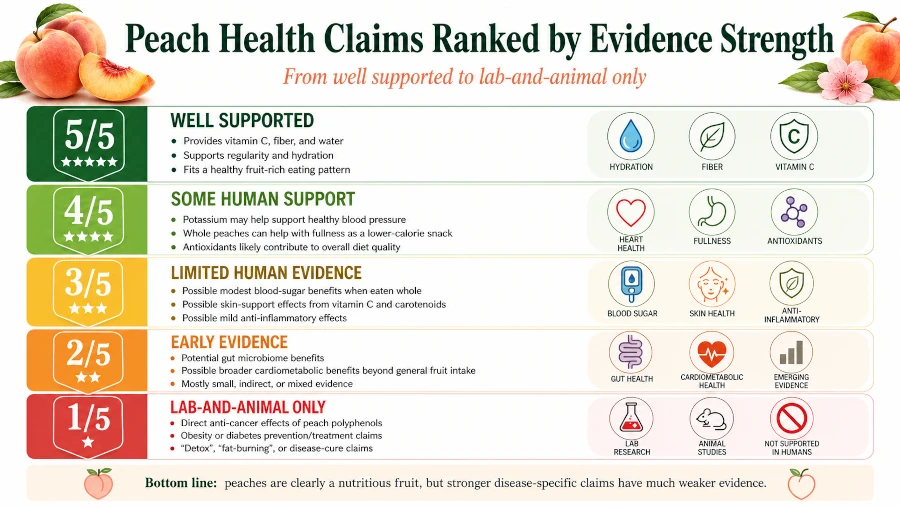
Here is where it pays to be precise. Several studies suggest peach compounds can bind bile acids, nudge cholesterol downward, and ease blood pressure — but most of that work was done in test tubes or in rats, not in people [Healthline, 2025]. Encouraging signals in a dish or a rodent often do not hold up in humans. So the accurate statement is this: peaches belong in a heart-healthy way of eating, and diets rich in fruit are clearly linked to lower rates of heart disease and stroke [Rutgers NJAES] — but a peach is not a treatment for any heart condition, and it will not unclog an artery.
Older folk traditions describe peaches, like many blood-cleansing herbs, as “depurative.” Your body already filters waste through the liver and kidneys; food supports that work rather than replacing it.
Potassium, hydration, and blood pressure
Potassium helps balance the effects of sodium and supports normal blood pressure and muscle function. A peach is a moderate source — useful as part of a varied diet, though not as concentrated as some other fruits. If you are eating specifically for potassium, bananas and several other fruits deliver more per serving [Cleveland Clinic, 2021]. For most people that potassium is a benefit. For a smaller group it is a reason for caution, which the safety section covers.
Vitamin C, skin, and immunity: keep expectations modest
Vitamin C contributes to collagen production and normal immune function, and the vitamin C in peaches counts toward your daily total. But a medium peach covers only a small share of what you need in a day, so treat peaches as one contributor among many rather than your main source [WebMD, 2023].
Fresh versus canned
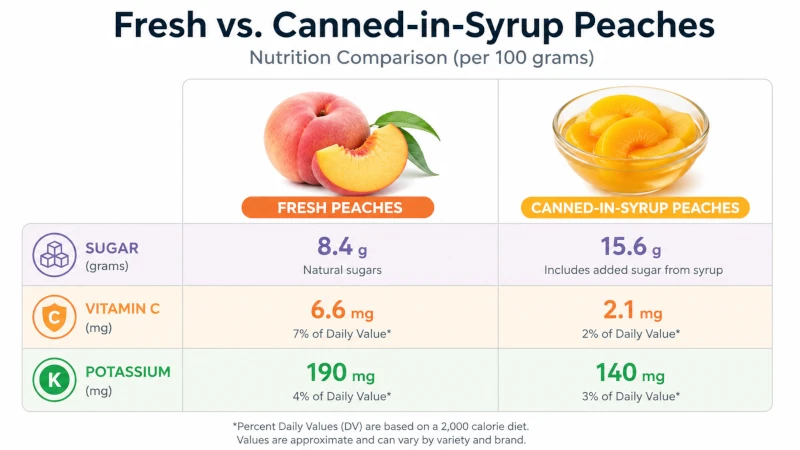
Fresh, ripe peaches hold more vitamin C and antioxidants than canned ones, because processing and storage take a toll [Healthline, 2025]. Even so, canned peaches still count as fruit, and out of season they are a fine choice — just read the label. Pick peaches packed in water or 100% juice rather than heavy syrup, which roughly doubles the sugar for no nutritional gain. If syrup-packed is all you have, drain and rinse them.
| Per 100 g | Fresh, raw | Canned in syrup |
| Calories | 39 | 74 |
| Sugars | 8.4 g | 16 g |
| Fiber | 1.5 g | 1 g |
| Vitamin C | 6.6 mg | 2.4 mg |
| Potassium | 190 mg | 97 mg |
| Sodium | 0 mg | 5 mg |
Approximate USDA-based values. Canned-in-juice or no-sugar-added options sit closer to fresh on sugar.
How to pick and enjoy them
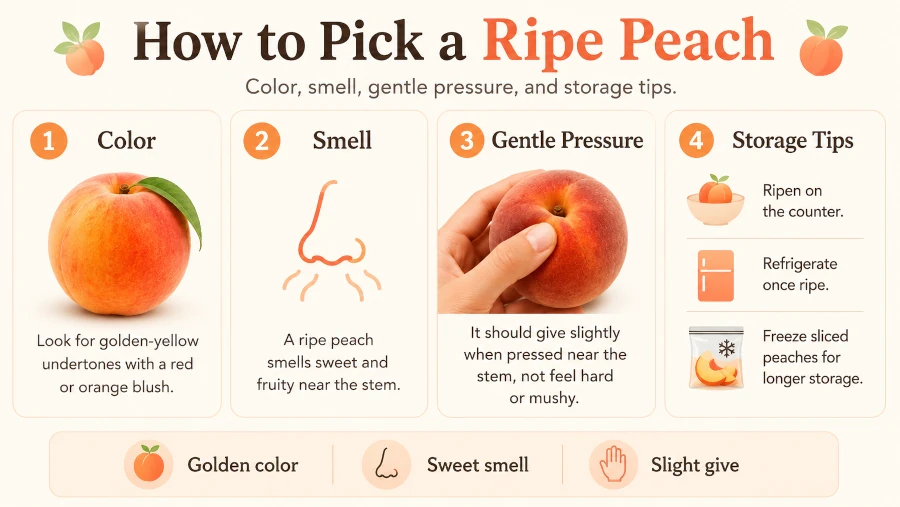
Peaches do not get sweeter after picking, but they do get softer and juicier. Look for fruit with a warm background color rather than green, a real peach smell, and a little give when you press gently near the stem. Keep firm peaches on the counter to ripen, then move ripe ones to the fridge to slow them down.
Wash every peach under plain running water before eating, even if you plan to peel it — rinsing first keeps dirt and residue from transferring to the flesh when you cut. Skip soap and produce washes; the FDA advises against them [FDA]. The skin carries extra fiber and antioxidants, so eat it if it agrees with you.
Safety, side effects, and who should be careful
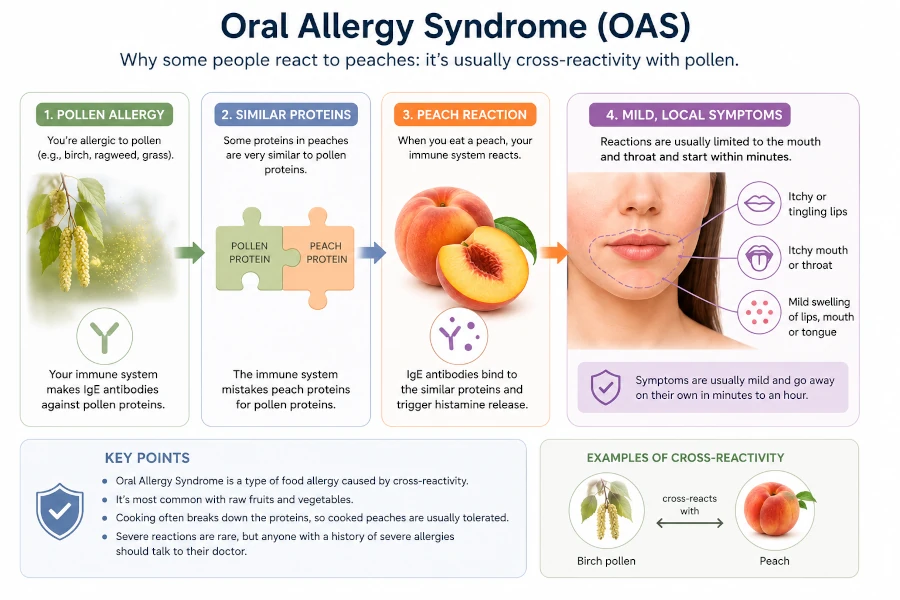
An itchy mouth? It may be oral allergy syndrome
Some people get an itchy or tingly mouth, lips, or throat after eating raw peaches. This is usually oral allergy syndrome (also called pollen-food allergy syndrome), a cross-reaction between peach proteins and birch or grass pollen in people who have hay fever [ACAAI]. Symptoms are typically mild and stay in the mouth, and cooking or peeling the fruit often removes the trigger. Rarely, reactions are more serious. If your lips or throat swell or you struggle to breathe, treat it as an emergency and seek care immediately.
Pesticide residue and washing
Peaches have soft, fuzzy skin that tends to hold pesticide residue, and they land near the top of the Environmental Working Group’s “Dirty Dozen,” an advocacy-group ranking built from US Department of Agriculture residue testing [EWG, 2026]. Washing under running water reduces residue but does not remove all of it. If that concerns you, organic peaches are an option — but the more important point, which the EWG itself stresses, is to keep eating fruit either way. The benefit of eating produce outweighs the small risk from trace residues.
Sugar, potassium, and kidney considerations
Peaches contain natural sugar. For most people that is no problem, but if you have diabetes, count the carbohydrates and pair fruit with protein or fat to soften the blood-sugar rise. The fiber in a whole peach already flattens that curve compared with juice.
Potassium is where one group needs to pay attention. People with advanced kidney disease or on dialysis are often told to limit potassium, and anyone on a potassium-restricted or fluid-restricted plan should follow their care team’s guidance on fruit portions, peaches included. For healthy kidneys, the potassium in peaches is a benefit, not a hazard.
Eat the flesh, not the pit
The kernel inside a peach pit contains amygdalin, a naturally occurring compound that can release cyanide when chewed or crushed. Accidentally swallowing a whole pit is generally harmless, but peach kernels are not a food and should not be eaten or ground into homemade preparations.
Pregnancy and breastfeeding
Peaches are a safe, healthy choice during pregnancy and breastfeeding as part of a normal diet — just wash them well, as you would any fresh produce [FDA].
When to talk to a healthcare professional
A peach is food, not medicine, so most questions about it are simple. Reach out to a professional if you get mouth or throat symptoms after eating raw fruit and want them sorted out; if you have kidney disease or diabetes and are unsure how fruit fits your plan; or if you ever react beyond a mildly itchy mouth — especially swelling or breathing trouble, which needs urgent care.
| Health Disclaimer This article is for general education and information only. It is not medical advice and is not a substitute for diagnosis or treatment from a qualified healthcare professional. Peaches are a food, not a remedy for any disease. If you have a food allergy, kidney disease, diabetes, or another medical condition—or if you are pregnant or breastfeeding—talk with your doctor or a registered dietitian before making notable changes to your diet. If you have swelling of the lips, mouth, or throat or any trouble breathing after eating, seek emergency care. |
Frequently asked questions
Are peaches good for you?
Yes. Peaches are low in calories and fat, contain fiber, vitamin C, and potassium, and are an easy way to eat more whole fruit — a habit strongly linked to better long-term health.
How many peaches can I eat a day?
For most people, one to two medium peaches a day fits comfortably within a varied fruit intake, and more is fine if you enjoy them. If you manage diabetes or kidney disease, ask your clinician or dietitian about portions.
Are canned peaches healthy?
They still count as fruit. Choose peaches packed in water or 100% juice instead of heavy syrup, which roughly doubles the sugar. Draining and rinsing syrup-packed peaches helps.
Should I peel peaches?
The skin adds fiber and antioxidants, so keep it on if you like it. Peel if the fuzzy skin bothers you or triggers an itchy mouth — and wash the fruit under running water first either way.
Can peaches lower blood pressure or cholesterol?
The direct evidence in humans is limited; most cholesterol and blood-pressure findings come from lab and animal studies. Peaches support a heart-healthy diet, but they are not a treatment for high blood pressure or high cholesterol.
References
- U.S. Department of Agriculture, Agricultural Research Service. FoodData Central — nutrient data for raw peach. → View source
- Ensle K. Rutgers NJAES, “Health Benefits of Peaches: A Delicious Summer Fruit.” → View source
- Cleveland Clinic. “All the Health Benefits of Eating Peaches” (2021). → View source
- Healthline (medically reviewed). “The Many Health Benefits of Peaches” (updated 2025). → View source
- WebMD. “Peaches: Health Benefits, Nutrients per Serving, and More” (2023). → View source
- Environmental Working Group. “Shopper’s Guide to Pesticides in Produce / Dirty Dozen” (2026). → View source
- American College of Allergy, Asthma & Immunology (ACAAI). “Pollen Food Allergy Syndrome.” → View source
- U.S. Food and Drug Administration. “Selecting and Serving Produce Safely.” → View source
